





How to Check Tyre Pressure Correctly (Complete Guide for Beginners & Drivers)
Did you know that incorrect tyre pressure can significantly increase your fuel costs while also putting your safety at risk on roads?
Many drivers overlook tyre pressure, assuming it’s a minor detail. In reality, it plays a crucial role in how your vehicle performs. From braking efficiency to fuel consumption, even small changes in pressure can have a noticeable impact. According to the Driver and Vehicle Standards Agency, poorly maintained tyres are one of the most common vehicle defects found during inspections, highlighting how important basic maintenance really is.
If you’re looking to improve your car care knowledge, understanding tyre pressure is one of the first and most essential skills. In fact, it’s a core topic covered in professional training such as the Car Mechanic and Repair Training Diploma, where learners develop a deeper understanding of vehicle safety and performance systems.
In this complete guide, you’ll learn exactly how to check tyre pressure, why it matters, and how to maintain it properly to keep your vehicle safe, efficient, and road-ready.
Table of Contents
What Is Tyre Pressure and Why It Matters for Your Car?
What does tyre pressure actually mean?
Tyre pressure refers to the amount of air inside your tyres, measured in PSI (pounds per square inch) or BAR. These measurements determine how much your tyres expand and how they interact with the road surface.
In most of the countries, vehicles display recommended tyre pressure in both PSI and BAR. Understanding this helps ensure you’re inflating tyres correctly, whether at home or at a petrol station.
Why is the correct tyre pressure essential
Maintaining correct tyre pressure is not just about compliance. It directly affects your vehicle’s safety, performance, and long-term costs.
● Improved road safety
Correct tyre pressure ensures optimal grip, reducing the risk of accidents, especially in wet or slippery conditions.
● Better fuel efficiency
Underinflated tyres increase rolling resistance, forcing your engine to work harder and consume more fuel.
● Longer tyre lifespan
Incorrect pressure leads to uneven wear, meaning you’ll need to replace tyres sooner than expected.
● Enhanced driving performance
Proper inflation improves handling, steering response, and braking distance.
According to the RAC, poorly maintained tyres can significantly impact braking and handling, increasing the likelihood of breakdowns or accidents.
How to Check Tyre Pressure (Step-by-Step Guide)
Checking tyre pressure is straightforward once you know the process. You don’t need advanced tools, just a basic understanding and the right equipment.
Tools you need
Before you begin, make sure you have access to:
●Tyre pressure gauge: Digital or analogue gauges provide accurate readings and are easy to use.
● Petrol station inflator: Most UK petrol stations offer air machines with built-in gauges.
● Vehicle handbook: This helps you identify the correct pressure for your specific car.
Step-by-step process to check tyre pressure
Follow these steps to check tyre pressure correctly:
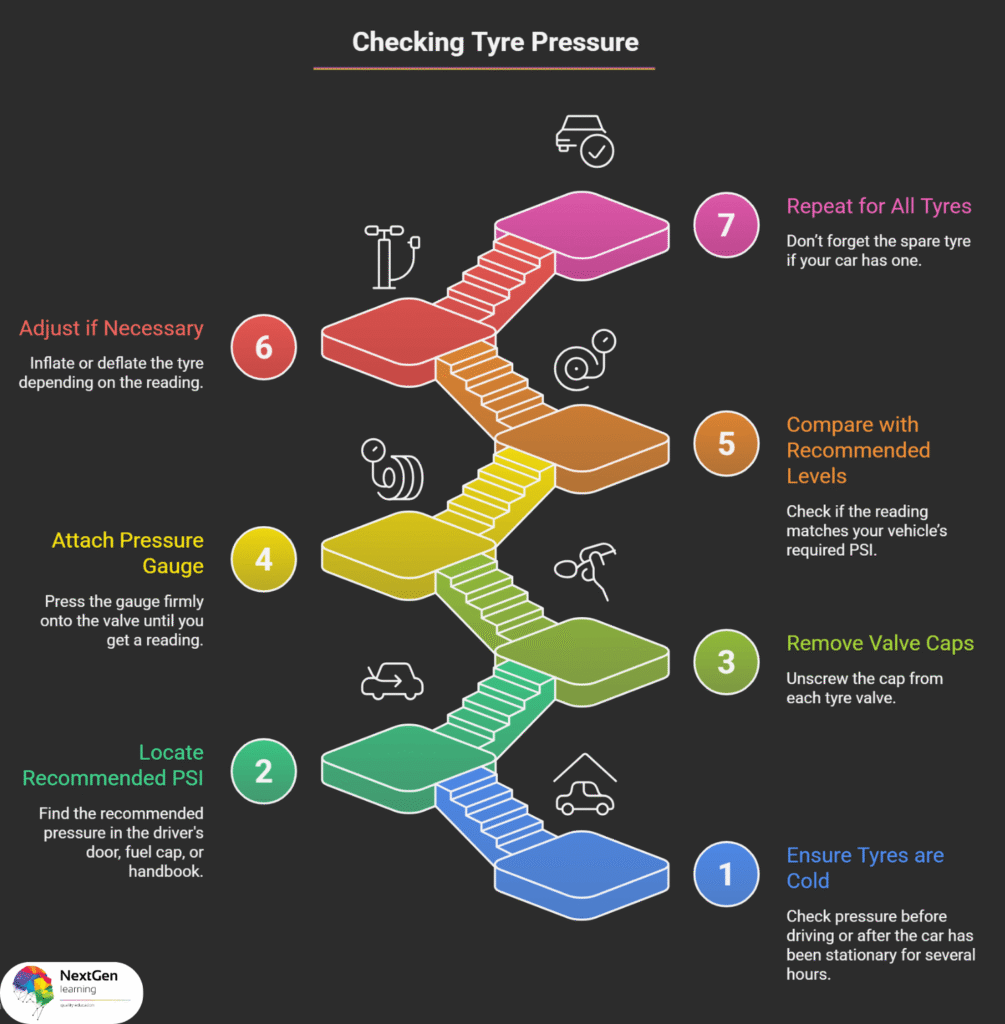
● Ensure tyres are cold
Always check pressure before driving or after the car has been stationary for several hours.
● Locate the recommended PSI
Check inside the driver’s door, fuel cap, or your vehicle handbook.
● Remove valve caps
Unscrew the cap from each tyre valve.
● Attach the pressure gauge
Press the gauge firmly onto the valve until you get a reading.
● Compare with recommended levels
Check if the reading matches your vehicle’s required PSI.
● Adjust if necessary
Inflate or deflate the tyre depending on the reading.
● Repeat for all tyres
Don’t forget the spare tyre if your car has one.
This simple routine can prevent costly repairs and improve your vehicle’s overall performance.
Where to Find the Correct Tyre Pressure for Your Car
Common locations to check
Many drivers are unsure where to find the correct tyre pressure. Fortunately, manufacturers make this information easily accessible.
Driver’s door frame: One of the most common places for a pressure sticker.
Fuel cap: Some vehicles display tyre pressure information here.
Vehicle handbook: Provides detailed guidance, including pressure for different load conditions.
Why tyre pressure varies by vehicle
Not all vehicles use the same tyre pressure, as it depends on several important factors. One of the key considerations is vehicle weight, where heavier vehicles typically require higher tyre pressure to support the additional load effectively. Load conditions also play a significant role, as carrying passengers or heavy luggage may require adjustments to maintain optimal performance and safety. In addition, the type of vehicle matters, particularly when comparing electric and petrol vehicles. Electric vehicles often need higher tyre pressure due to the extra weight of their batteries. For accurate and vehicle-specific recommendations, tools and guidance from organisations like Kwik Fit can help determine the correct tyre pressure for your car.
How to Inflate and Deflate Tyres Properly
Keeping your tyres at the correct pressure goes beyond simply checking them. It’s equally important to understand how to adjust the pressure properly and safely. When inflating tyres, always begin by securely attaching the air hose to the valve so no air escapes. Set the correct PSI based on your vehicle’s recommendation, as most inflators allow you to input this value. Inflate the tyres gradually in short bursts, checking the pressure regularly to avoid overfilling. Once done, recheck the pressure to ensure it matches the required level.
On the other hand, if your tyres are overinflated, releasing excess air must be done carefully. Use a pressure gauge or a release pin to let out small amounts of air at a time, and continuously monitor the reading to avoid dropping below the recommended pressure. Overinflation can be just as risky as low pressure, affecting grip and overall vehicle control.
There are also a few common mistakes that drivers should avoid. Checking tyre pressure when tyres are hot can lead to inaccurate readings, so always measure when they are cold. Ignoring manufacturer guidelines is another frequent issue, as each vehicle has specific requirements. Additionally, overinflating tyres in an attempt to improve fuel economy can actually reduce road grip and increase safety risks, making it an unsafe practice.
What Happens If Tyre Pressure Is Too Low or Too High?
Understanding the consequences of incorrect tyre pressure helps reinforce why regular checks are essential.
Effects of low tyre pressure
● Increased fuel consumption
The engine works harder due to higher rolling resistance.
● Poor handling and control
Low pressure reduces stability, especially during cornering.
● Higher risk of punctures
Underinflated tyres are more vulnerable to damage.
● Uneven tyre wear
Tyres wear out faster on the edges.
Effects of high tyre pressure
● Reduced grip on the road
Overinflated tyres have less surface contact.
● Uneven wear in the centre
This shortens tyre lifespan.
● Increased stopping distance
Braking becomes less effective.
At this stage, understanding tyre pressure goes beyond basic driving knowledge. It becomes a practical skill that contributes to vehicle safety and maintenance. Learners who want to take this further often explore structured training like the Car Maintenance Course, which covers essential checks and real-world vehicle care techniques in more detail.
How Often Should You Check Tyre Pressure?
Maintaining correct tyre pressure is not a one-time task. It requires regular attention to ensure your vehicle remains safe and efficient on the road.
Every 2–4 weeks: Experts recommend checking tyre pressure at least once every two to four weeks to maintain optimal performance.
Before long journeys: Always check your tyres before motorway driving or long-distance travel to avoid unexpected issues.
During seasonal changes: Temperature fluctuations can affect tyre pressure. Cold weather can reduce pressure, while warmer conditions may increase it.
After carrying heavy loads: If your vehicle is loaded with passengers or luggage, tyre pressure should be adjusted accordingly.
According to the National Highways, regular tyre checks are essential for maintaining road safety and reducing breakdown risks.
Pro Tips for Maintaining Correct Tyre Pressure
To go beyond the basics and truly optimise your vehicle’s performance, follow these expert tips:
● Always check tyres when cold
Cold tyres provide the most accurate pressure readings, ensuring proper inflation.
● Invest in a digital pressure gauge
Digital gauges offer precise readings and are easier for beginners to use.
● Monitor TPMS alerts
Modern vehicles are equipped with a Tyre Pressure Monitoring System. Never ignore warning lights.
● Adjust pressure for load conditions
Heavier loads require higher tyre pressure. Always refer to your vehicle handbook.
● Check all tyres, including the spare
Many drivers forget the spare tyre, which can be critical in emergencies.
Developing these habits can significantly reduce maintenance costs and improve safety. These foundational skills are also part of structured automotive Car Mechanic and Repair Training Diploma, where learners build practical, real-world vehicle maintenance knowledge.
Tyre Pressure Checklist for Drivers (Quick Summary)
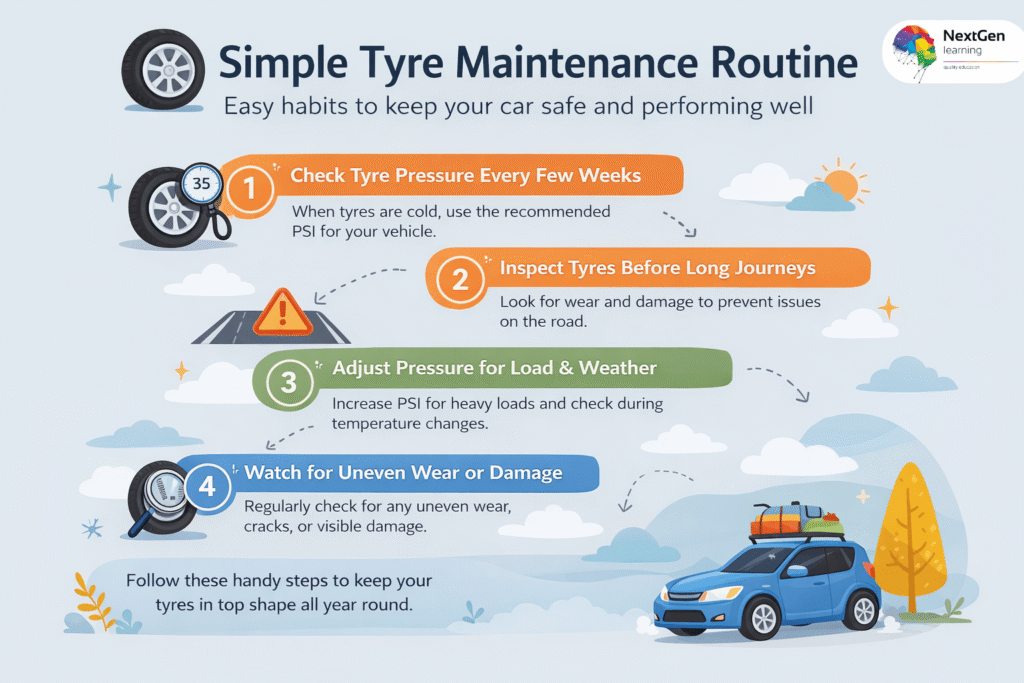
If you want a simple way to stay on top of your car’s tyre condition, think of this as your quick routine rather than a strict checklist. Keeping these small habits in mind can make a big difference in safety and performance.
Start by checking your tyre pressure every few weeks so problems don’t build up unnoticed. Always do this when the tyres are cold, as this gives you the most accurate reading. Instead of guessing, rely on the manufacturer’s recommended PSI, which is specifically designed for your vehicle.
Before heading out on a long journey, take a moment to inspect your tyres. This quick step can help prevent unexpected issues on the road. It’s also important to adjust tyre pressure when carrying extra weight or during seasonal temperature changes, as both can affect performance.
Finally, keep an eye on your tyres for any signs of uneven wear or visible damage. Spotting these early can help you avoid costly repairs and ensure your car remains safe to drive.
This approach keeps tyre maintenance simple, practical, and easy to follow for any driver, even without technical knowledge.
When to Seek Professional Help
While checking tyre pressure is a basic task, some situations require expert attention.
Persistent pressure loss: This may indicate a slow puncture or valve issue.
Uneven tyre wear: Could signal alignment or suspension problems.
Frequent warning lights: Your TPMS system may need inspection.
Visible tyre damage: Cracks, bulges, or embedded objects should be assessed immediately.
Professional inspections ensure that minor issues do not turn into major safety risks. If you’re interested in understanding these problems in depth, practical training through a Car Maintenance Course can help you confidently diagnose and address such issues.
Learn Professional Car Maintenance Skills (Upgrade Your Knowledge)
Understanding tyre pressure is just one part of a much bigger picture when it comes to vehicle care.
Modern vehicles are becoming more advanced, and basic maintenance skills are increasingly valuable. Whether you’re a car owner, a beginner, or someone considering a career in the automotive industry, learning these skills can be highly beneficial.
Courses like 👉 the Car Mechanic and Repair Training Diploma and Car Maintenance Course provide structured learning that goes beyond simple checks. You’ll gain insights into vehicle systems, diagnostics, and real-world maintenance practices, helping you build confidence and practical expertise.
Instead of relying solely on garages, you can develop the skills to understand and manage your vehicle more effectively.
Conclusion
Checking tyre pressure may seem like a small task, but it plays a vital role in your vehicle’s safety, efficiency, and overall performance.
By following the steps outlined in this guide, you can ensure your tyres remain in optimal condition, reduce fuel costs, and avoid unnecessary repairs. More importantly, you’ll be taking an active role in maintaining your vehicle, which is an essential skill for every driver.
For those looking to go beyond basic knowledge, learning professional car maintenance skills can open new opportunities. Whether for personal use or career growth, developing expertise in vehicle care is a valuable investment. Start with simple checks like tyre pressure, and build your knowledge step by step into real automotive confidence.
FAQs – Tyre Pressure Guide
To check tyre pressure, use a tyre pressure gauge at home or a petrol station. First, ensure your tyres are cold, then attach the gauge to the valve and read the PSI. If the pressure is low, use an air pump to inflate the tyre gradually until it reaches the recommended level. Always double-check the reading after inflating.
Low tyre pressure can be identified through warning lights on your dashboard or changes in driving performance. You may notice heavier steering, reduced fuel efficiency, or uneven tyre wear. Visually, tyres may appear slightly deflated. Regular checks are the most reliable way to confirm pressure levels.
Most petrol stations have air machines where you can set the desired PSI. Attach the hose to the tyre valve and allow air to flow until the machine indicates the correct pressure. These machines are simple to use and often include automatic stop features. Always check your vehicle’s recommended PSI before starting.
While it may be possible to drive with slightly low tyre pressure, it is not recommended. Even a small drop can affect handling, braking, and fuel efficiency. Over time, it can also cause tyre damage and increase the risk of punctures. It’s best to correct the pressure as soon as possible.
Yes, tyre pressure has a direct impact on fuel efficiency. Underinflated tyres increase rolling resistance, causing your engine to use more fuel. Maintaining correct tyre pressure helps reduce fuel consumption and lower running costs. This is particularly important for regular drivers and long-distance travel.



0 responses on "How to Check Tyre Pressure Correctly (Complete Guide for Beginners & Drivers)"