



How to Write a Safeguarding Policy
Every group that works with children needs a clear plan for keeping them safe. If you’re wondering how to write a safeguarding policy.
Here’s the short answer: Name a safeguarding lead, look closely at the risks in your activities, follow the guidance for your part of the UK, write a short policy statement and clear procedures, get it signed off, then train everyone and review it every year.
This guide is for charities, sports clubs, youth and faith groups, holiday clubs, tutors and other organisations without a dedicated safeguarding team. It takes you through each step in plain English, with a list of what to include, the mistakes to avoid and quick answers to common questions.
Feel Ready to Act on a Child Protection Concern
Our online Child Protection and Safeguarding course covers signs of abuse, responding to a worried child and reporting concerns the right way.
Table of Contents
Who Needs a Safeguarding Policy?
Before getting into how to write a safeguarding policy, it helps to be clear on who needs one. The simple answer is any organisation that works with children, whatever its size. A five-person youth club needs one just as much as a national charity.
For some settings, it’s a legal duty. Schools and colleges in England must have a child protection policy under Keeping Children Safe in Education, the Department for Education’s statutory guidance. Early years providers registered with Ofsted must have safeguarding policies and procedures under the EYFS statutory framework.
For many other groups, no single law says you must have a written policy. However, charity trustees must take reasonable steps to protect people from harm, and the Charity Commission’s safeguarding guidance expects charities to have suitable policies in place. Funders, insurers, councils, sports governing bodies and venues often ask to see one too.
Rules vary between settings and between England, Scotland, Wales and Northern Ireland, so treat this as a starting point rather than legal advice.
Sitting on a charity board? Safeguarding Training for Charities and Trustees sets out exactly what trustees are responsible for and the training that supports it.
What to Include in a Safeguarding Policy
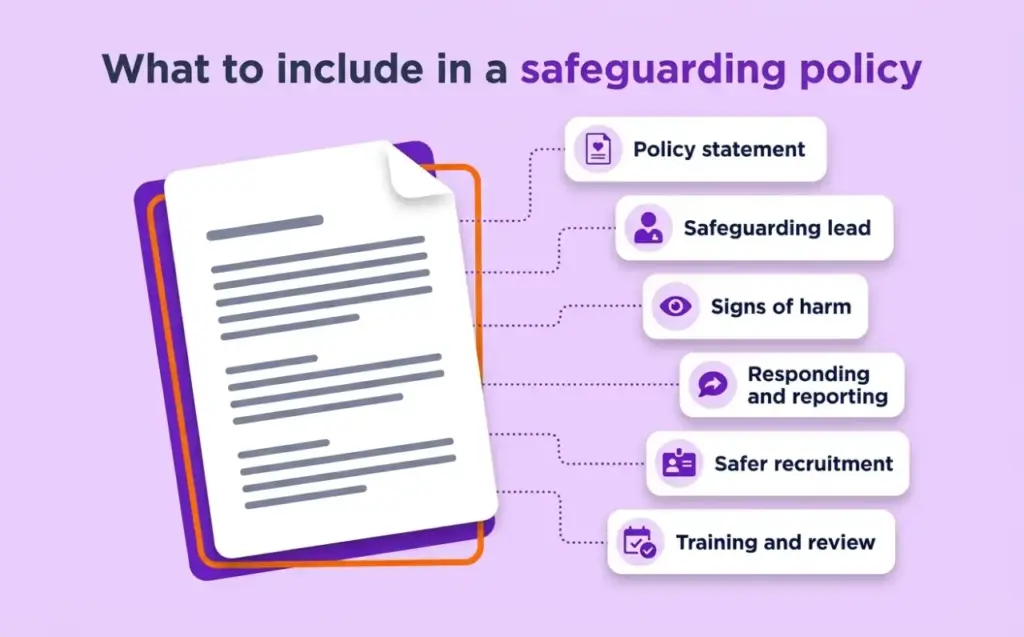
A big part of how to write a safeguarding policy is deciding what goes in it. Most strong policies cover these areas:
| Section | What it covers |
|---|---|
| Purpose and scope | Why the policy exists and who it applies to |
| Policy statement | Your commitment to keeping children safe |
| Law and guidance | The rules you follow in your UK nation |
| Safeguarding lead | Names and contact details for your lead and deputy |
| Signs of harm | Physical, emotional and sexual abuse, neglect, exploitation and online abuse |
| Responding and reporting | What to do if a child tells you something or you’re worried |
| Recording | How to write down concerns and store records safely |
| Allegations against adults | What happens if a staff member or volunteer is the concern |
| Safer recruitment | How you choose and vet people, including DBS checks where eligible |
| Code of conduct | How adults should behave with children, in person and online |
| Information sharing and whistleblowing | When to share information and how to raise concerns about the organisation |
| Training and review | Who needs training, plus approval and review dates |
Don’t want to start from a blank page? Safeguarding Policy Template for Small Organisations sets out a ready-made structure you can adapt to your own group.
How to Write a Safeguarding Policy in 7 Steps
Here’s how to write a safeguarding policy that fits your organisation, one step at a time.
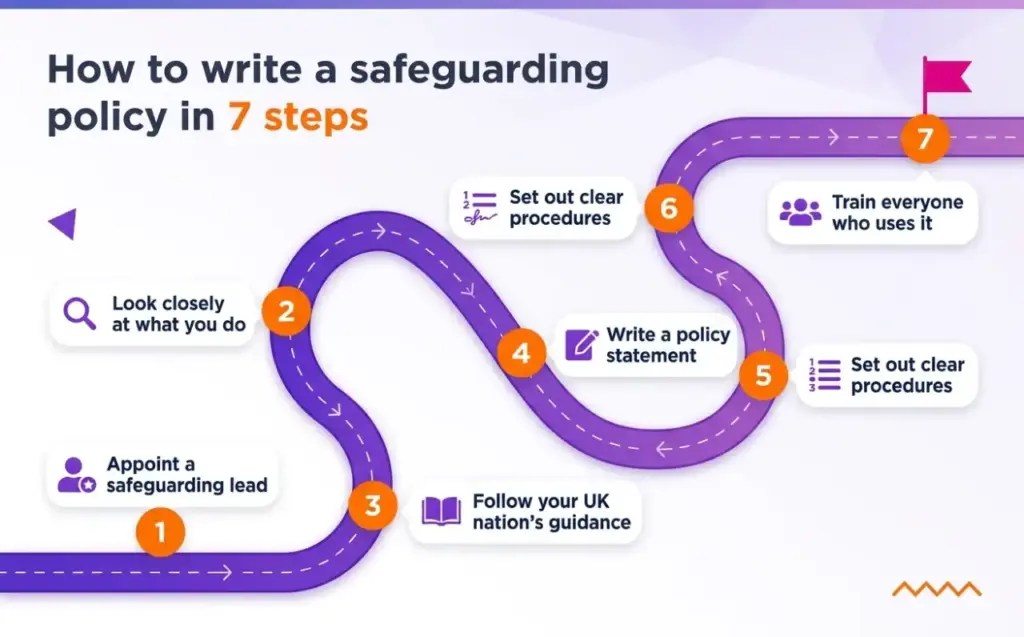
1. Appoint a Safeguarding Lead
Choose one person to lead on safeguarding. Many organisations call this role the designated safeguarding lead (DSL) or safeguarding officer. Name a deputy too, so someone is always available. In a charity, it also helps to have a trustee who leads on safeguarding at board level. Your lead should guide the writing of the policy, because they’re the person everyone will turn to when there’s a worry.
2. Look Closely at What You Do
A good policy matches your real activities. List everything you do with children and ask where things could go wrong, such as:
- one-to-one time, like tutoring or mentoring;
- trips, transport and overnight stays;
- changing rooms and toilets;
- messaging, video calls and social media;
- taking photos or filming.
A football club that travels to away matches faces different risks from an online tutor, so your policy should reflect your own risks, not someone else’s.
Coaching young players? Safeguarding in Sports Clubs: UK Coaches’ Guide looks at what keeping children safe means on the pitch, in the clubhouse and on trips.
3. Follow the Guidance for Your Part of the UK
Each UK nation has its own child protection guidance, and your policy should name the one that applies to you.
| Nation | Main child protection guidance |
|---|---|
| England | Working Together to Safeguard Children |
| Scotland | National Guidance for Child Protection in Scotland |
| Wales | Working Together to Safeguard People and the Wales Safeguarding Procedures |
| Northern Ireland | Co-operating to Safeguard Children and Young People in Northern Ireland |
If you also work with adults at risk, you’ll need to cover adult safeguarding as well. The rules for adults are different, for example, the Care Act 2014 in England.
4. Write a Short Policy Statement
Your policy statement opens the policy. Keep it to a page or two, in plain English that parents and young people can follow. Say why you work with children, that their safety comes first, who the policy covers, which guidance you follow and who to contact with a concern. Finish with the approval date and the next review date.
5. Set Out Clear Procedures
Procedures turn promises into actions. They tell people exactly what to do when something worries them: how to respond if a child tells them about abuse, who to report to, how to record it, and when to contact children’s social care or the police. If a child is in immediate danger, call 999.
Add local contact details, including your council’s children’s services team. In England and Wales, also include your Local Authority Designated Officer (LADO), who handles concerns about adults working with children. Data protection law doesn’t stop you sharing information to keep a child safe, as the ICO’s guide to sharing information to safeguard children makes clear.
6. Get It Signed Off and Shared
Ask your trustees, committee or owner to approve and sign the policy. Then make it easy to find: share it with staff and volunteers, publish it on your website and display key contacts where you meet. A short, child-friendly version shows young people who they can talk to.
7. Train Everyone Who Uses It

A policy only works if people act on it. Brief new staff and volunteers before they start, and offer regular refresher training. Everyone should be able to spot signs of harm, respond calmly and report concerns quickly. An online option such as our Child Protection and Safeguarding course can help your team feel confident with the basics.
Not sure what training your volunteers need? Safeguarding Training for Volunteers: What You Need and Where to Get It sets out the options in plain English.
Help Your Team Put Your Policy into Practice
A written policy protects children only when people act on it. This online course helps staff and volunteers spot and report concerns.
Common Mistakes to Avoid
Even well-meaning groups slip up. When working out how to write a safeguarding policy, watch out for these:
- Copying a template word for word. A template is a starting point. Change it to fit your activities and risks.
- Leaving out local contacts. Without phone numbers for children’s services, precious time is lost in a crisis.
- No named lead. If everyone is responsible, no one is.
- Following the wrong nation’s guidance. A club in Cardiff should follow Welsh guidance, not England’s.
- Filing it away. If nobody has read the policy, it can’t protect anyone.
- Never updating it. Old contacts and outdated guidance cause confusion when it matters most.
Reviewing and Updating Your Policy
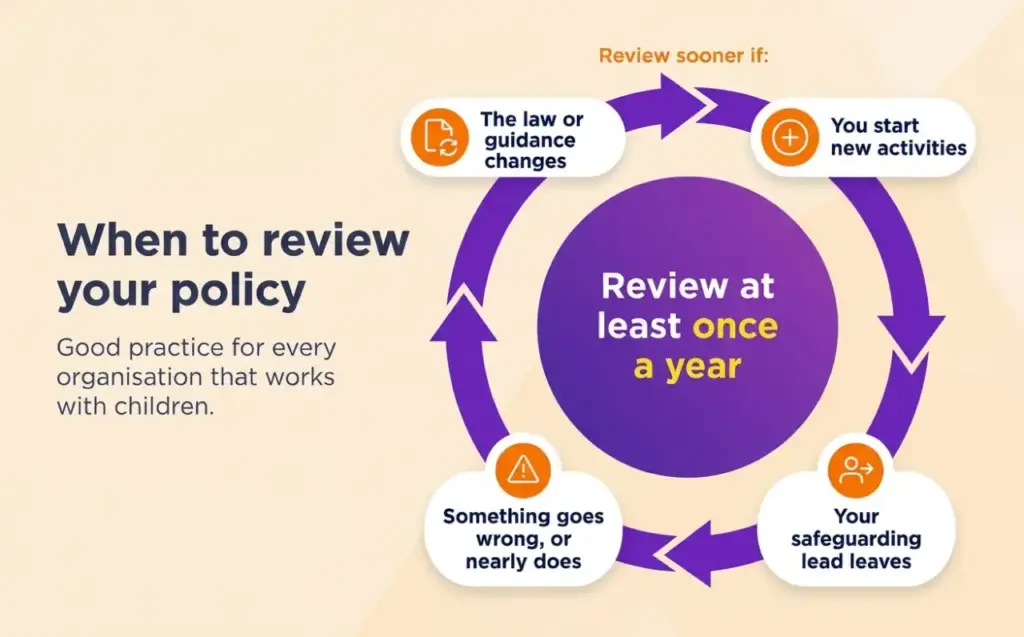
Review your policy at least once a year. Keeping Children Safe in Education expects schools in England to do this, and it’s good practice for every organisation. Review it sooner if:
- The law or guidance changes;
- You start new activities
- Your safeguarding lead leaves
- Something goes wrong, or nearly does.
Involve your lead, trustees, staff and volunteers, and where you can, ask children and families what’s working. Note what you changed and set the next review date. Once you’ve worked out how to write a safeguarding policy, keeping it up to date is what keeps it useful.
Frequently Asked Questions
Safeguarding means protecting children from harm and abuse and helping them grow up safe and healthy. It includes spotting problems early and acting quickly when something is wrong.
A safeguarding policy sets out how your organisation keeps children safe and what everyone must do if they’re worried. It makes roles clear and shows families you take safety seriously.
There’s no official list, but a strong policy usually has three parts: a statement of commitment, clear procedures for handling concerns, and named people responsible for safeguarding.
A safeguarding statement is a short document setting out your organisation’s promise to protect children. It explains who the policy covers, which guidance you follow and who to contact.
State why you work with children and your commitment to their safety. Add who it covers, the guidance you follow, safeguarding contacts, approval and review dates, and a signature.
Common procedures cover responding to a disclosure, reporting and recording concerns, handling allegations against adults, safer recruitment, online safety, information sharing and whistleblowing. Choose ones that match your activities.