




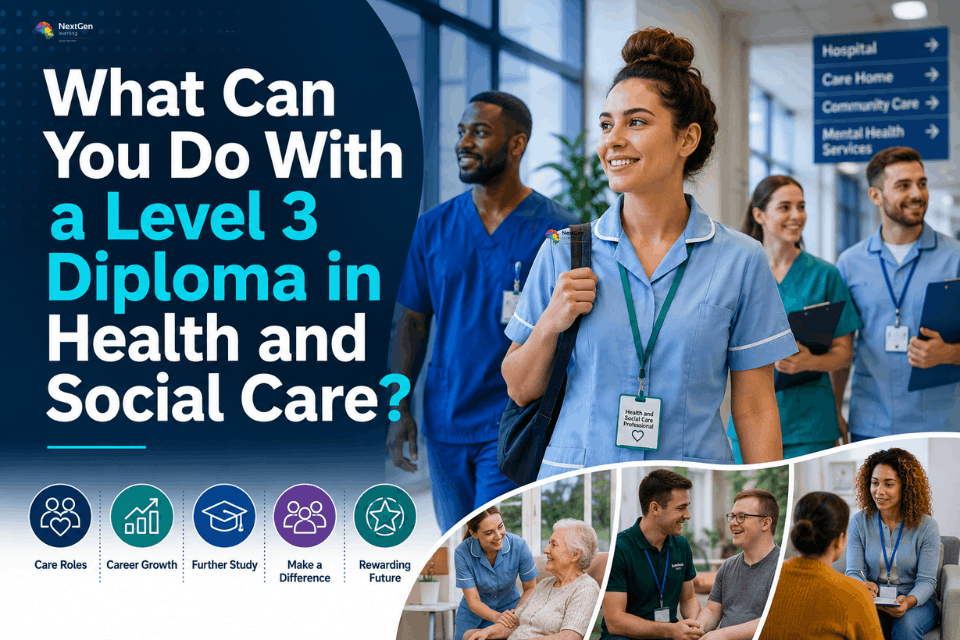
What Can You Do With a Level 3 Health and Social Care Diploma?
A Level 3 Diploma in Health and Social Care can open the door to a wide range of rewarding careers across the UK’s growing care sector. With demand for qualified care professionals continuing to rise, employers are actively seeking individuals who have the skills and knowledge to support vulnerable adults, children, and people with complex care needs. Whether you’re starting your first career or looking to progress in an existing care role, this qualification can help you take the next step.
With a Level 3 Diploma in Health and Social Care, you may be eligible for roles such as Healthcare Assistant, Support Worker, Care Assistant, Residential Care Worker, or Community Support Worker. Moreover, the qualification can provide a pathway into specialist areas including mental health, learning disabilities, dementia care, and rehabilitation services. It can also support progression into senior care positions, management qualifications, and university courses such as nursing, social work, or occupational therapy.
In this guide, you’ll discover exactly what jobs you can get with a Level 3 Diploma in Health and Social Care, how much you could earn, and the career progression opportunities available. By the end, you’ll have a clear understanding of where this qualification can take you and how it can help build a long-term career in one of the UK’s most essential industries.
Table of Contents
Why a Level 3 Health and Social Care Diploma Matters Right Now

Health and social care services across the UK are under sustained pressure, and demand continues to rise year after year. As a result, employers are actively recruiting trained staff who can step into roles quickly and deliver safe, person-centred support. Moreover, an ageing population and increasing long-term health conditions are placing additional strain on services, particularly within the NHS and residential care sector.
For this reason, a Level 3 Health and Social Care Diploma has become a highly relevant starting point for anyone entering the sector. It provides structured CPD-certified training that demonstrates practical understanding of safeguarding, communication, and duty of care. Importantly, employers increasingly prioritise candidates who already understand regulated care environments, as this reduces onboarding time and improves service quality.
According to Skills for Care, the adult social care sector continues to require significant workforce growth each year to meet demand. In addition, services linked to the NHS are also experiencing staffing shortages, particularly in entry-level support roles where trained assistants are essential to patient care delivery.
Why this qualification matters in practice
- It aligns with real workforce shortages across UK care services
- It supports entry into both NHS and private care environments
- It demonstrates readiness for safeguarding and person-centred care responsibilities
- It improves employability for fast-moving entry-level roles
- It provides a structured pathway into long-term care careers
Consequently, whether you are starting your first role in care or formalising existing experience, the Level 3 Diploma creates a clear and accessible route into a stable and essential sector.
What Does the Level 3 Health & Social Care Diploma Cover?
The Level 3 Health and Social Care Diploma is designed to build both practical capability and professional understanding for real-world care environments. In particular, the CPD-accredited programme focuses on equipping learners with the knowledge needed to deliver safe, ethical, and person-centred support in line with UK care standards.
Moreover, the course goes beyond basic theory and introduces the core principles that underpin high-quality care delivery. These principles are essential whether you work in residential care, community support, or NHS-linked services.
Core topics covered in the diploma
The curriculum is structured to reflect the everyday responsibilities of care professionals, including:
- Safeguarding adults and children from harm and abuse
- Dementia care and disability awareness in diverse support settings
- Infection prevention alongside essential health and safety procedures
- Duty of care responsibilities and person-centred care planning
- Communication skills and confidentiality in sensitive environments
As a result, learners develop a strong foundation in both legal responsibilities and compassionate care practice. This ensures they are better prepared for the expectations of employers across the UK care sector.
Building real job-ready confidence
This qualification is not limited to theoretical understanding. Instead, it focuses on practical readiness, helping learners understand how to respond appropriately in real care situations. This includes working with vulnerable individuals, supporting independence, and maintaining dignity in everyday care delivery.
Flexible learning designed for real life
The course is delivered entirely online, making it accessible to a wide range of learners. Importantly, it is self-paced and flexible, which allows individuals to study around work, family, or other commitments.
This makes it particularly suitable for:
- Career changers entering the health and social care sector
- Job seekers looking to improve employability quickly
- Working adults balancing training with existing responsibilities
Consequently, the Level 3 Diploma offers a practical and accessible route into a sector where trained, compassionate professionals are consistently in demand.
Understanding the Course’s Recognition
It is important to distinguish between course level and regulated qualification status. A course described as Level 3 is not automatically an Ofqual-regulated RQF qualification.
NextGen Learning’s Level 3 Health and Social Care course is CPD accredited and QLS endorsed, with learning designed around Level 3 health and social care knowledge. It should not be confused with an Ofqual-regulated occupational qualification.
If a particular job, apprenticeship, university programme or progression route requires a regulated qualification, check the employer or education provider’s exact requirements and confirm regulated qualifications through the official Register of Regulated Qualifications.
What Jobs Can You Get With a Level 3 Diploma in Health & Social Care?

Completing a Level 3 Diploma in Health and Social Care opens the door to a wide range of entry-level and support roles across the UK care sector. Importantly, demand for trained care staff remains consistently high due to ongoing workforce shortages, with Skills for Care highlighting that hundreds of thousands of new care roles are needed over the coming years.
As a result, learners who hold a recognised CPD-accredited qualification are often seen as more job-ready by employers, particularly in environments where safeguarding, communication, and person-centred care are essential.
Below are the most common job roles you can apply for after completing the qualification.
Care Assistant (Residential or Nursing Home)
A Care Assistant role is often the first step into the care profession. In this position, you support individuals with daily living while ensuring dignity, independence, and wellbeing are maintained at all times.
Typical responsibilities include:
- Supporting personal care such as washing, dressing, and toileting
- Assisting with meals, hydration, and mobility needs
- Providing companionship and emotional reassurance
- Reporting changes or concerns to senior staff or healthcare professionals
Importantly, this role helps you develop core care skills that are transferable across all health and social care settings.
- Average UK salary: £20,000 – £24,000
Support Worker (Community or Residential)
Support Workers play a vital role in helping individuals live more independently, particularly those with learning disabilities, autism, mental health conditions, or physical disabilities. Moreover, the role is highly person-centred and varies depending on individual care plans.
Common duties include:
- Supporting daily routines, budgeting, and social activities
- Encouraging independence and confidence-building
- Administering medication (after appropriate training)
- Working alongside families, social workers, and healthcare teams
- Average salary: £21,000 – £26,000
Domiciliary Carer (Home Care Assistant)
Domiciliary care involves providing support directly in people’s homes. In contrast to residential care, this role offers more independence and flexibility, as you travel between clients and deliver one-to-one support.
Key responsibilities include:
- Providing personal care and medication prompts
- Preparing meals and completing light household tasks
- Supporting mobility and daily routines
- Offering companionship to reduce isolation
- Salary range: £20,000 – £25,000
Healthcare Support Worker (HCSW) – NHS Entry Route
With a Level 3 diploma, you can apply for Healthcare Support Worker roles within the NHS, where you’ll assist nurses and clinical teams in delivering frontline care. You can explore current NHS Healthcare Support Worker roles and requirements here.
Core responsibilities include:
- Monitoring and recording vital signs
- Assisting patients with eating, hygiene, and mobility
- Providing emotional support during treatment
- Preparing equipment and care environments
- NHS Pay Band: Band 2–3 (depending on experience and location)
Overall, these roles provide accessible entry points into the care sector while also offering clear progression pathways into senior, specialist, or management positions.
Is the Level 3 Diploma Enough to Start Working?
In most cases, yes — a Level 3 Health and Social Care Diploma is enough to begin applying for entry-level roles in the care sector. Importantly, many employers actively recruit candidates who have completed structured CPD-certified training, especially when they need staff who can start quickly and adapt to regulated care environments.
While some advanced positions (such as senior care or specialist supervisory roles) may require additional workplace-based qualifications or NVQ/RQF assessments, the majority of Care Assistant and Support Worker roles are open to applicants with Level 3 training alone.
Moreover, employers often prioritise readiness over long formal pathways when filling urgent vacancies in both private care settings and community services.
Why employers value Level 3 CPD training
Care providers increasingly prefer candidates who already understand core care principles. As a result, CPD-certified qualifications are seen as a strong indicator of job readiness, particularly when they demonstrate knowledge of:
- Health and safety procedures in care environments
- Safeguarding responsibilities for vulnerable individuals
- Person-centred care approaches and dignity in support delivery
In addition, providers recognise that online learners often bring flexibility, motivation, and a willingness to upskill quickly on the job.
What employers are really looking for
Most care employers are not just looking for qualifications alone. Instead, they want candidates who can demonstrate practical awareness and a strong ethical approach to care work. This includes:
- The ability to follow care plans accurately
- Clear understanding of safeguarding responsibilities
- Strong communication and empathy skills
- Reliability and willingness to work shifts
Consequently, a Level 3 Diploma can significantly improve employability, especially when combined with a positive attitude and willingness to gain hands-on experience.
Where this qualification is most effective
A Level 3 Diploma is particularly valuable when applying for roles in:
- Residential care homes
- Home care (domiciliary services)
- Community support organisations
- Entry-level NHS support roles within the NHS
Summary
Overall, the Level 3 Diploma provides a strong and practical entry point into the care sector. While it may not replace advanced vocational pathways, it is widely accepted for starting roles and is often enough to secure your first position in a growing and in-demand industry.
Not Sure Whether Level 3 Is the Right Care Training Route?
Level 3 Health and Social Care is only one possible learning route. Depending on your goal, broader Health and Social Care training, Nursing Assistant training or Care Certificate learning may be more relevant.
Before choosing, use our Best Health and Social Care Courses UK comparison to compare these options and understand which type of training best matches your learning goals.
Salary Expectations and NHS Pay Bands Explained
A common question among learners is how much they can realistically earn after completing a Level 3 Health and Social Care Diploma. Importantly, the answer depends on several factors, including job role, geographical location, experience level, and whether you work in the private sector or within the NHS.
Overall, the Level 3 qualification provides access to a range of entry-level care roles that offer stable income and clear progression pathways. Moreover, many positions include opportunities for overtime, shift enhancements, and structured salary growth as experience increases.
As a result, most learners entering the sector can expect competitive entry-level salaries with clear opportunities to increase earnings through experience and additional responsibilities.
| 💼 Job Role | 💷 Starting Salary | 📈 With Experience | 🏥 NHS Pay Band |
|---|---|---|---|
| Care Assistant | £20,000 – £22,000 | Up to £24,000+ | Band 2–3 |
| Support Worker | £21,000 – £23,000 | £26,000+ | Band 3 |
| Domiciliary Carer | £20,000 | £25,000+ (with overtime/bonuses) | Varies (private sector) |
| Healthcare Support Worker (NHS) | £22,383 | £25,147+ | Band 2–3 |
📊 How NHS pay bands work
Within the UK healthcare system, pay is structured under the NHS Agenda for Change framework. In simple terms, this system ensures that roles are assigned a pay band based on responsibility, skills, and experience.
With a Level 3 qualification, you are typically eligible for Band 2 or Band 3 roles. In addition, progression to higher bands is possible through experience, further training, or internal promotion pathways within the NHS.
Key points to understand:
- Band 2–3 roles are most common for entry-level support positions
- Pay increases are structured and transparent within NHS roles
- Experience and additional training significantly improve progression potential
- Internal NHS development schemes support long-term career growth
🚀 Can you increase your salary over time?
Yes — and often faster than many expect. Importantly, the care sector rewards experience, reliability, and further professional development.
Career progression routes often include:
- Completing a Level 4 or Level 5 Health and Social Care Diploma
- Moving into Senior Carer or Team Leader positions
- Progressing through internal NHS development programmes
- Working towards Registered Manager roles in regulated services
For example, completing a Level 5 Diploma in Health and Social Care Management can lead to roles earning approximately £32,000–£45,000, particularly in leadership positions regulated by the Care Quality Commission.
🧭 Real-world salary insight
According to Skills for Care, the average salary for direct care workers in the UK was around £21,700 in 2023. However, this figure increases significantly with experience, additional responsibilities, and specialist training in areas such as safeguarding, dementia care, or complex needs support.
Consequently, while starting salaries may appear modest, the long-term earning potential in the sector is strong, especially for individuals who commit to continuous professional development.
Where Can You Work With a Level 3 Health & Social Care Diploma?
One of the key strengths of a Level 3 Health and Social Care Diploma is the wide range of employment opportunities it unlocks across the UK care sector. Importantly, this qualification is recognised by both public and private employers, meaning you are not limited to a single type of organisation or working environment.
As a result, learners gain access to a flexible career pathway that spans hospitals, residential settings, community care, and specialist support services. Moreover, this variety allows you to choose a role that matches your interests, strengths, and long-term career goals.
🏥 NHS Hospitals and Health Services
Working within the NHS offers structured career development and exposure to clinical environments. With a Level 3 qualification, you can apply for entry-level support roles where you assist healthcare professionals in delivering patient care.
Typical roles include:
Healthcare Support Worker
Ward Assistant
Nursing Assistant (Band 3 roles)
In these positions, you work directly with patients under the supervision of registered nurses and clinical staff. Additionally, you play a vital role in maintaining patient comfort, dignity, and safety within hospital and community healthcare settings.
🏠 Residential Care Homes
Residential care homes are one of the most common starting points for new care professionals. In this setting, you provide ongoing support to individuals who require assistance with daily living in a safe, structured environment.
Common roles include:
Care Assistant
Night Care Worker
Senior Carer (with experience)
Importantly, these environments offer stability and strong team support, making them ideal for those building confidence in care work.
🏘️ Domiciliary & Home Care Services
Home care roles involve visiting individuals in their own homes to provide personalised support. In contrast to residential care, this setting offers greater independence and flexibility in your working day.
You may support:
Older adults living independently
Individuals with physical or learning disabilities
Clients requiring palliative or long-term care support
As a result, domiciliary care is often suited to individuals who prefer one-to-one care and varied daily routines.
🤝 Supported Living & Community Care
Supported living roles focus on empowering individuals to live as independently as possible. Moreover, this type of care is highly person-centred and often involves helping people build essential life skills.
Typical support areas include:
Autism and learning disability support
Mental health care and emotional wellbeing
Daily living skills such as budgeting and shopping
Consequently, this sector is both rewarding and varied, with a strong emphasis on independence and dignity.
📚 Specialist & Voluntary Sector Services
Beyond traditional care settings, your qualification can also lead to roles in charities, rehabilitation centres, and specialist support organisations. For example, organisations such as Mencap and Turning Point often recruit support workers with CPD-certified training and provide structured progression routes.
🧭 Career Flexibility Across the Sector
Overall, a Level 3 Health and Social Care Diploma opens doors across multiple sectors, including:
Public sector organisations such as the NHS and local authorities
Private care providers and agencies
Charities and non-profit organisations
Community-based and home-care services
In summary, this qualification acts as a practical entry point into a wide-ranging and essential workforce, offering both flexibility and long-term career potential.
Career Progression from Level 3 to Level 5 in Health & Social Care
One of the strongest advantages of starting with a Level 3 Health and Social Care Diploma is that it does not limit your career — it builds a clear progression pathway. Importantly, this qualification acts as the foundation for long-term development within the UK care sector, rather than a single standalone credential.
As a result, learners can move from entry-level care roles into senior, supervisory, and even management positions over time. Moreover, each level introduces more responsibility, deeper knowledge, and significantly improved earning potential.
1️⃣ Level 3 Diploma in Health & Social Care
Best for: Beginners, career changers, and entry-level care workers
At this stage, learners develop the essential knowledge needed to start working in care settings. In particular, the focus is on building confidence in core principles such as safeguarding, communication, and person-centred support.
Covers:
- Safeguarding adults and children
- Dementia awareness and disability support
- Communication in care environments
- Health, safety, and duty of care responsibilities
Prepares you for:
- Care Assistant
- Domiciliary Carer
- Support Worker
2️⃣ Level 4 Diploma in Health & Social Care
Best for: Experienced care workers ready to take on supervisory responsibilities
At Level 4, the focus shifts toward leadership and more complex care situations. In addition, learners begin to develop the skills needed to oversee teams and contribute to care planning processes.
Covers:
- Complex care needs and risk management
- Leadership and supervision principles
- Safeguarding responsibilities in senior roles
- Team communication and coordination
Prepares you for:
- Senior Carer
- Care Coordinator
- Team Leader
Importantly, this stage allows you to begin influencing care delivery more directly while supporting junior staff in their roles.
3️⃣ Level 5 Diploma in Health & Social Care Management
Best for: Professionals aiming for management or regulated service leadership roles
At Level 5, the qualification becomes focused on strategic management and regulatory responsibility. Moreover, it aligns closely with the expectations of regulated care services overseen by the Care Quality Commission.
Covers:
- Service management and operational leadership
- Regulatory compliance and auditing
- Budgeting and resource management
- Staff supervision and performance management
Prepares you for:
- Registered Manager
- Care Service Manager
- Compliance Lead
As a result, this level is ideal for individuals who want to lead teams, manage services, or operate within regulated healthcare environments.
❓ Can You Skip a Level?
Progression is flexible depending on your experience. In some cases, learners may progress directly from Level 3 to Level 5 if they already have substantial hands-on experience in supervisory or leadership roles.
- Experienced professionals may fast-track to Level 5
- Newer learners may benefit from completing Level 4 first for confidence building
Importantly, this flexibility allows learners to tailor their progression to their career background and goals.
🚀 From Entry-Level to Leadership — Fully Flexible Learning
Overall, the progression pathway from Level 3 to Level 5 is designed to support long-term career growth in health and social care. In addition, online CPD learning makes it easier to upskill without needing to leave employment or complete traditional placements.
Whether you are starting your first care role or aiming to manage a regulated service, this pathway provides a structured route toward leadership within the sector.
Is a Level 3 Health & Social Care Diploma Really Worth It?
If you are still considering whether to enrol, the key question is simple: what tangible difference will this qualification make to your career, confidence, and long-term earning potential? In most cases, the answer is a clear yes — especially for those entering the UK care sector for the first time or looking for a structured career change.
Importantly, the Level 3 Health and Social Care Diploma is designed to bridge the gap between theoretical learning and real-world employability. As a result, it plays a direct role in helping learners secure entry-level positions and build a long-term career pathway.
🎯 It makes you job-ready — quickly
The Level 3 Diploma focuses on practical, workplace-relevant knowledge that employers actively look for. In particular, it prepares you for roles where understanding safety, dignity, and structured care delivery is essential.
With this qualification, you can:
- Apply for Care Assistant, Support Worker, and Domiciliary Carer roles
- Demonstrate structured CPD-certified training to employers
- Show clear understanding of safeguarding and duty of care responsibilities
- Present yourself as job-ready without extensive prior experience
Moreover, this route is significantly faster than traditional qualification pathways that rely heavily on placements or lengthy assessment periods. Consequently, it is often preferred by learners who want to enter the workforce quickly.
🔎 What the sector data shows
According to Skills for Care, a large proportion of new entrants to adult social care do not come from prior care backgrounds. However, employers continue to hire based on demonstrated training, core skills, and attitude.
As a result, CPD-certified qualifications are increasingly recognised as a strong indicator of readiness for entry-level care roles, even without extensive prior experience.
📈 It supports salary growth and career progression
A Level 3 Diploma is not just an entry requirement — it is the foundation of a structured career pathway. In addition, it opens access to both immediate employment and long-term advancement opportunities.
With this qualification, you can:
- Progress into higher-paid roles such as NHS Healthcare Support Worker (Band 3) within the NHS
- Move into Senior Carer or Team Leader positions with experience
- Continue your studies through Level 4 and Level 5 qualifications
- Work towards leadership roles such as Registered Manager earning £35,000+ annually
Consequently, the qualification provides both short-term employability and long-term earning potential.
💡 It is flexible, accessible, and widely recognised
One of the key advantages of this qualification is its accessibility. Importantly, learners can complete the course entirely online, at their own pace, without needing formal placements.
This makes it suitable for:
- Career changers balancing existing commitments
- Job seekers looking for fast entry into employment
- Working adults seeking structured professional development
In addition, learners receive a CPD-accredited certificate upon completion, which is widely recognised by care employers across the UK sector.
🧭 Final perspective
Overall, the Level 3 Health and Social Care Diploma offers a practical and realistic route into a growing and essential workforce. While it does not guarantee employment on its own, it significantly strengthens employability and provides a clear foundation for long-term progression in care.
Therefore, for most learners entering the sector, it represents a valuable and strategic first step into a stable, flexible, and people-focused career.
Final Thought
If you are serious about starting a meaningful, in-demand career in health and social care — or you want to progress without having to leave your current job — the Level 3 Diploma is often the most practical first step you can take. Importantly, it gives you a structured entry point into a sector that continues to grow across both public and private services in the UK.
Moreover, this qualification is not just about gaining knowledge. It is about building real employability in a field where trained, compassionate workers are consistently needed. As a result, it can act as a strong foundation for both immediate job opportunities and long-term career development.
It is also worth recognising that this is more than just an academic course. Instead, it represents access to a workforce that plays a vital role in supporting vulnerable individuals every day — from hospitals to community care settings.
- It supports entry into an essential and growing sector
- It provides flexibility for learners balancing work and personal commitments
- It creates a clear pathway into senior and management roles over time
- It helps build confidence for real-world care responsibilities
In conclusion, the Level 3 Diploma is not simply a qualification — it is an entry point into a stable, flexible, and people-focused profession that continues to expand year after year.
Choosing Your Next Health and Social Care Training Step
If Level 3 Health and Social Care already matches the knowledge you want to develop, you can review the curriculum, study format and certification options for our Level 3 Health and Social Care course.
If you are still deciding between Health and Social Care Level 3, Nursing Assistant training and Care Certificate learning, compare them first in our Best Health and Social Care Courses UK guide.
Frequently Asked Questions
A Level 3 Diploma in Health and Social Care can help you access a variety of roles, including Care Assistant, Support Worker, Healthcare Assistant, Residential Care Worker, Community Support Worker, and Mental Health Support Worker. With experience, you may also progress into senior care and supervisory positions.
Yes. Many NHS employers recruit candidates with Level 3 qualifications for roles such as Healthcare Assistant, Rehabilitation Assistant, Therapy Support Worker, and Mental Health Support Worker. Additional training and experience can also lead to Nursing Associate and nursing career pathways.
No. A Level 3 Diploma is broadly equivalent to an A-Level qualification. However, it can provide a recognised pathway into higher education and professional degree programmes such as nursing, social work, and occupational therapy.
A Level 3 Diploma can support your application for nursing-related courses and university programmes. Entry requirements vary between institutions, but many learners use this qualification alongside relevant work experience to progress into nursing careers.
Salaries vary depending on the role, employer, and location. Entry-level care positions often start between £22,000 and £28,000 per year, while senior care workers, care coordinators, and management professionals can earn significantly more with experience and further qualifications.
You can work across a range of settings, including care homes, hospitals, supported living services, community care organisations, and private healthcare providers. The qualification can also lead to specialist careers in mental health, dementia care, learning disabilities support, and rehabilitation services.
Many learners progress to Level 4 and Level 5 Health and Social Care qualifications, leadership and management courses, or university degrees in nursing, social work, midwifery, public health, and other healthcare-related subjects.
No. Level 3 is below degree level. Regulated Level 3 qualifications sit at the same qualification level as A levels in England, although qualifications at the same level can differ in their content, size and purpose. A course using “Level 3” in its title is not automatically an Ofqual-regulated Level 3 qualification. If you need a qualification for university entry or a specific career route, check the exact entry requirements before enrolling.


0 responses on "What Can You Do With a Level 3 Health and Social Care Diploma?"