




Top 20 Most Important Trade Routes in the World
Every product you buy — your phone, your clothes, your car — almost certainly crossed at least one of the world’s major trade routes before it reached you. In fact, approximately 90% of all traded goods travel by sea, according to the International Maritime Organisation. That single statistic reveals just how much of modern life depends on a handful of shipping corridors, canals, and straits scattered across the globe.
These routes are not simply lines on a nautical chart. They are the circulatory system of the global economy. When the container ship Ever Given ran aground in the Suez Canal in March 2021, blocking one of the world’s most critical waterways for six days, it cost the global economy an estimated $9.6 billion per day in delayed trade. The disruption was a stark reminder that the global supply chain, for all its sophistication, is only as strong as its most vulnerable chokepoint.
Understanding the world’s most important trade routes matters not only for logistics professionals and maritime economists, but for anyone who wants to grasp how global commerce actually works. These routes determine which goods arrive on time and which face delays. They influence oil prices, freight rates, and the cost of consumer goods. They sit at the intersection of economics and geopolitics — nowhere more clearly than in the South China Sea, the Strait of Hormuz, or the increasingly ice-free waters of the Arctic.
In this guide, we cover the 15 most important maritime trade routes in the world. For each route, we explain its strategic significance, the goods it carries, the chokepoints it depends on, and the real-world risks that threaten it. We also look ahead at how climate change, geopolitical tension, and the push for green shipping are beginning to reshape the map of global maritime trade.
Whether you are a logistics manager planning supply chain resilience, a student studying international trade, or simply someone curious about how the world moves goods, this is the complete picture.
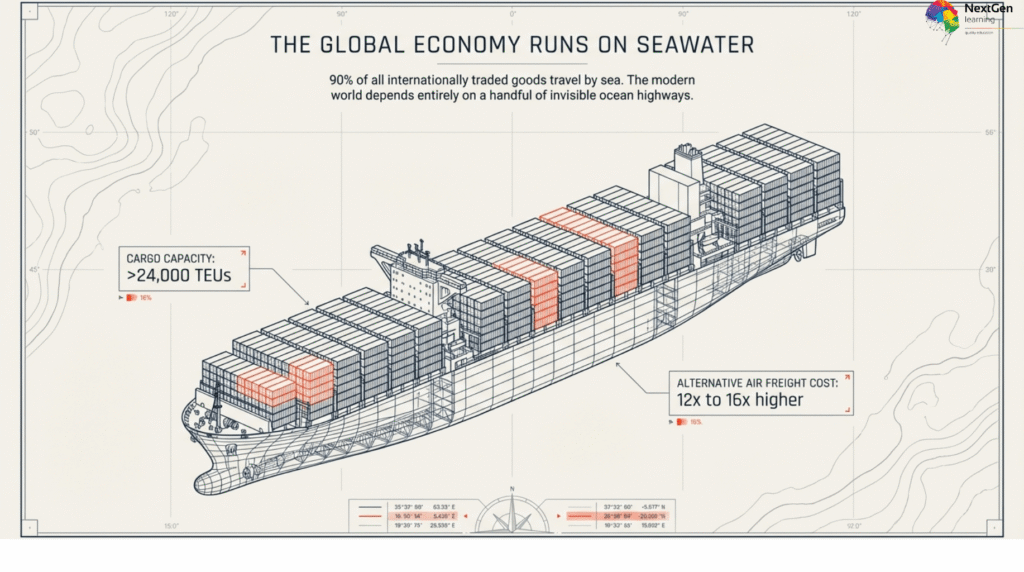
Table of Contents
Why Sea Trade Routes Are the Backbone of the Global Economy
The global economy runs on seawater. It is not a metaphor — it is a logistical reality. According to the International Maritime Organisation, roughly 90% of all internationally traded goods travel by sea. No other mode of transport comes close to matching the scale, cost-efficiency, or carrying capacity of maritime shipping. A single Ultra Large Container Vessel (ULCV) can carry over 24,000 twenty-foot equivalent units (TEUs) of cargo. Moving the same volume by air freight would cost approximately 12 to 16 times more and would require thousands of flights.
However, the sheer scale of maritime trade also creates a critical vulnerability. Because so much commerce flows through so few routes, disruptions at key points can ripple across the entire global economy within days. The 2021 Suez Canal blockage demonstrated this with uncomfortable clarity. The Ever Given, a 400-metre container ship, ran aground for just six days — yet it delayed over $54 billion worth of goods, stranded hundreds of vessels, and sent freight rates surging across multiple trade lanes simultaneously.
This vulnerability stems from the geographic reality of maritime trade. The world’s major shipping corridors are not evenly distributed. Instead, they converge at a relatively small number of narrow passages — straits, canals, and channels — known as maritime chokepoints. These are the pressure points of global commerce. When they function smoothly, trade flows freely. When they face disruption — whether from accidents, geopolitical conflict, extreme weather, or piracy — the consequences spread far beyond the immediate region.
Moreover, the importance of sea routes extends well beyond economics. These corridors are also instruments of geopolitical power. Nations that control key chokepoints, or that possess the naval capacity to threaten them, hold significant leverage in international relations. The ongoing tensions in the South China Sea, the recurring threats to the Strait of Hormuz, and the strategic ambitions surrounding the Arctic’s Northern Sea Route all reflect this reality. Consequently, understanding the world’s most important trade routes means understanding not just how goods move, but how global power operates.
The routes covered in this guide collectively support tens of trillions of dollars in annual trade. Together, they connect raw material producers with manufacturers, manufacturers with consumers, and energy exporters with the economies that depend on their output. In short, they are the arteries of modern civilisation — and knowing how they work, where they are vulnerable, and how they are evolving is essential knowledge for anyone operating in or studying the global economy.

Understanding Maritime Chokepoints — What They Are and Why They Matter
Before exploring individual trade routes, it is important to understand the concept that shapes them most fundamentally: the maritime chokepoint. A chokepoint is a narrow, strategically critical passage through which a disproportionately large volume of maritime traffic must pass. Because they concentrate trade flows into a single, constrained corridor, chokepoints are simultaneously the most efficient and the most fragile points in the global shipping network.
Chokepoints exist for geographic reasons. Continents, islands, and coastlines force vessels into specific corridors. However, they are amplified by economic logic. Ships follow the most cost effective path, which typically means the shortest navigable route between two major markets. As a result, traffic naturally concentrates at the narrow passages that offer the quickest connection — even when those passages carry significant risk.

Maritime chokepoints fall into two broad categories. Primary chokepoints are passages for which there is no cost effective alternative. Closure forces vessels onto dramatically longer routes, causing significant increases in transit time, fuel consumption, and freight rates. The Suez Canal, the Strait of Malacca, and the Panama Canal fall into this category. For example, a vessel travelling from Shanghai to Rotterdam via the Suez Canal covers approximately 11,000 nautical miles. Rerouting around the Cape of Good Hope adds roughly 3,500 nautical miles and seven to ten additional days — a cost increase that quickly runs into hundreds of thousands of dollars per voyage.
Secondary chokepoints, by contrast, do have alternatives — but those alternatives involve meaningful detours. The Strait of Dover, the Strait of Taiwan, and the Magellan Passage fall into this category. Their closure is disruptive but not catastrophic in the same way that the closure of a primary chokepoint would be.
Furthermore, some chokepoints serve as the sole maritime access point to enclosed or semi enclosed seas with major economic significance. The Strait of Hormuz, for instance, is the only sea route out of the Persian Gulf — and the Persian Gulf contains roughly 30% of the world’s proven oil reserves. Similarly, the Bosphorus Strait is the only maritime gateway to the Black Sea, through which substantial volumes of grain, steel, and energy products flow. Therefore, any instability affecting these passages has immediate consequences not just for shipping companies, but for global energy prices and food security.
Understanding chokepoints is not merely academic. For logistics managers, it informs contingency planning and insurance decisions. For policymakers, it shapes naval strategy and diplomatic priorities. And for anyone seeking to understand the most important trade routes in the world, the chokepoints are the essential starting point — because they are precisely where the global economy is most exposed.
Quick Reference Summary Table
Before diving into each route in detail, the table below provides a fast reference guide to all 20 of the world’s most important trade routes. Use it to compare routes by region, cargo type, annual trade value, and key chokepoint at a glance.
| # | Route | Regions Connected | Primary Goods | Est. Annual Trade Value | Key Chokepoint |
|---|---|---|---|---|---|
| 1 | Strait of Malacca | Indian Ocean ↔ South China Sea | Oil, electronics, consumer goods | Over $3.5 trillion | Strait of Malacca |
| 2 | Suez Canal Route | Europe ↔ Asia | Containers, oil, raw materials | Over $1.3 trillion | Suez Canal / Bab el Mandeb |
| 3 | Trans-Pacific Route | East Asia ↔ North America | Electronics, automobiles, retail goods | Over $2.5 trillion | None (open ocean) |
| 4 | North Atlantic Route | North America ↔ Europe | Machinery, pharmaceuticals, vehicles | Over $1 trillion | Dover Strait |
| 5 | Panama Canal Route | Atlantic ↔ Pacific | Containers, LNG, agricultural goods | Over $270 billion | Panama Canal |
| 6 | Asia-Europe Route | Asia ↔ Europe (via Suez) | Electronics, textiles, machinery | Over $1 trillion | Suez Canal, Malacca |
| 7 | Strait of Hormuz | Persian Gulf ↔ Arabian Sea | Crude oil, LNG | Over $1.2 trillion | Strait of Hormuz |
| 8 | South China Sea | Northeast ↔ Southeast Asia | Oil, gas, electronics, textiles | Over $3.5 trillion | Strait of Malacca |
| 9 | Cape of Good Hope | Europe ↔ Asia (alternative) | Oil, bulk cargo | £400–500 billion | None (open ocean) |
| 10 | Red Sea / Bab el Mandeb | Mediterranean ↔ Indian Ocean | Containers, oil, LNG | Over $700 billion | Bab el Mandeb Strait |
| 11 | English Channel | UK ↔ Continental Europe | Industrial goods, vehicles, consumer goods | Over $500 billion | Dover Strait |
| 12 | Indian Ocean Route | Africa ↔ Middle East ↔ Asia | Energy, food, textiles | Over $500 billion | Hormuz, Malacca |
| 13 | Mediterranean Route | Southern Europe ↔ North Africa ↔ Middle East | Oil, petrochemicals, food | Over $600 billion | Strait of Gibraltar |
| 14 | Northern Sea Route | Asia ↔ Europe (Arctic) | Energy, containers | $30–50 billion (growing) | None (ice dependent) |
| 15 | Baltic Sea Route | Northern Europe ↔ Russia ↔ Scandinavia | Timber, steel, machinery | ~$250 billion | Danish Straits |
| 16 | Intra-Asia Route | East Asia ↔ Southeast Asia ↔ South Asia | Electronics, machinery, textiles | Over $1 trillion | Malacca, Taiwan Strait |
| 17 | South America–Asia Route | South America ↔ Asia | Soybeans, iron ore, copper | Over $200 billion | Cape Horn |
| 18 | Australia–Asia Route | Australia ↔ Asia | Iron ore, coal, LNG | Over $400 billion | Torres Strait |
| 19 | Gulf of Guinea / West Africa Route | West Africa ↔ Europe ↔ Asia | Crude oil, LNG, cocoa | Over $150 billion | None (open coast) |
| 20 | Strait of Gibraltar Route | Atlantic ↔ Mediterranean | Oil, general cargo, containers | Over $300 billion | Strait of Gibraltar |
The Top 20 Most Important Trade Routes in the World
Route 1: The Strait of Malacca — The World’s Most Critical Maritime Chokepoint
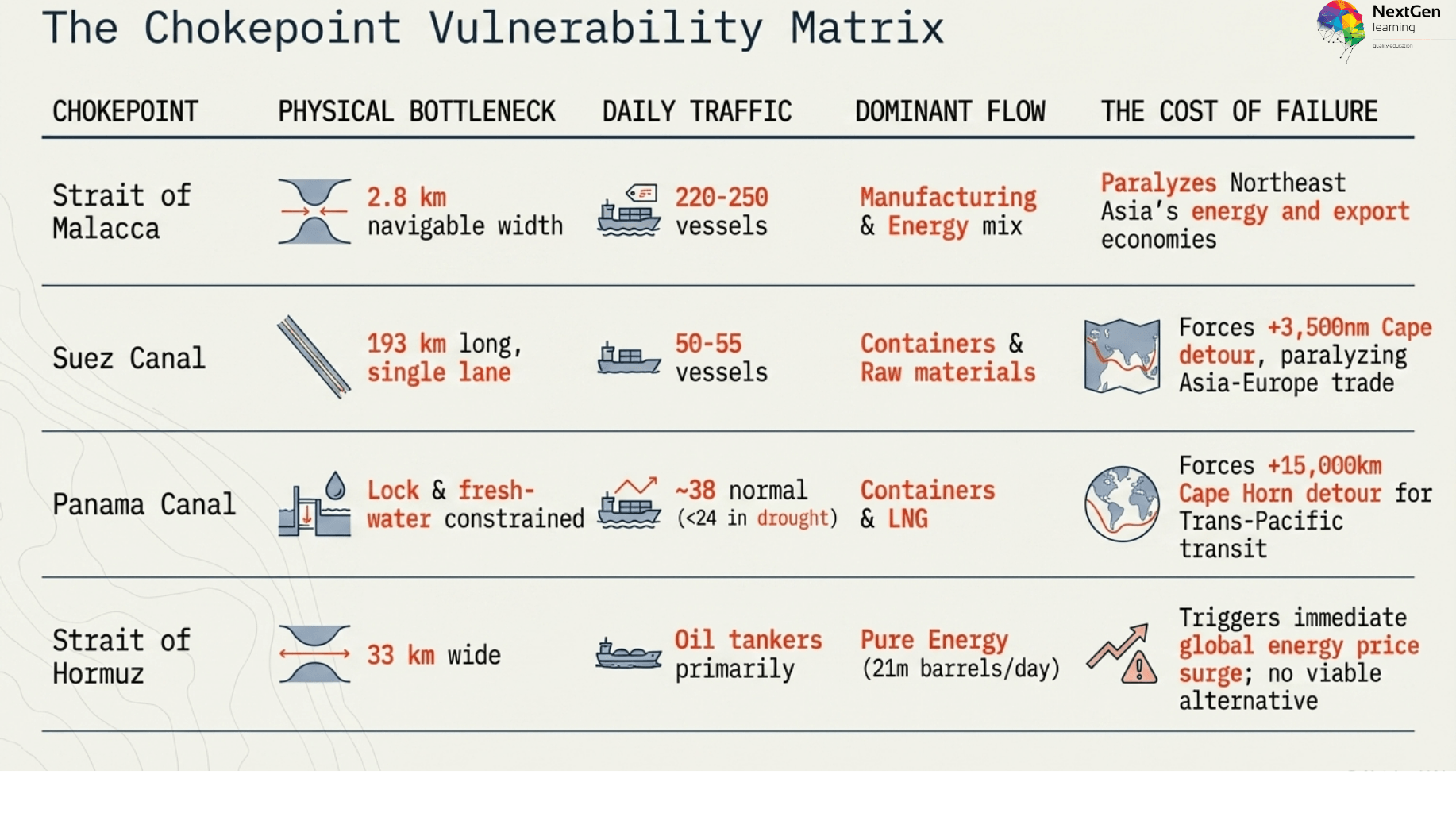
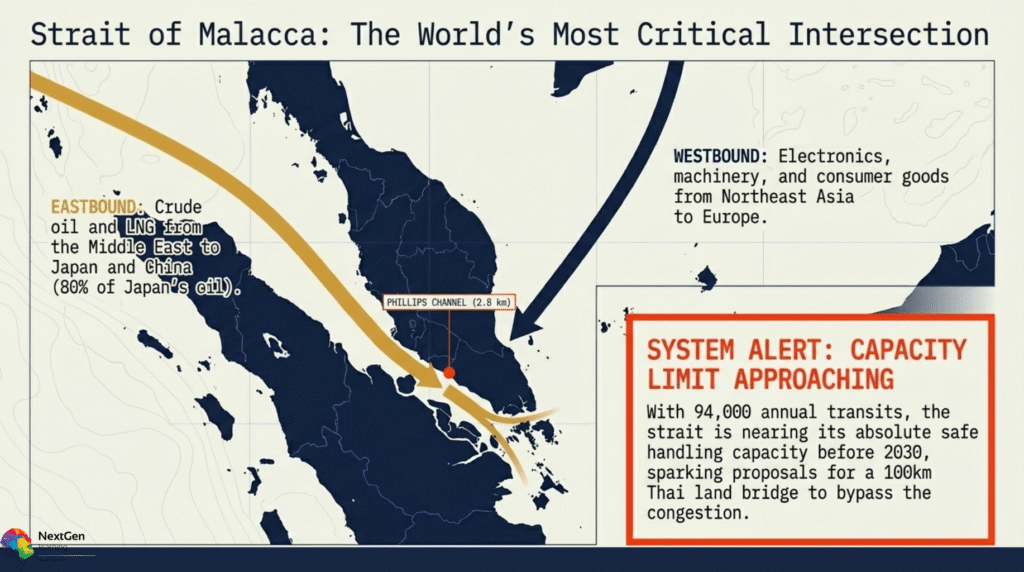
Of all the most important trade routes in the world, the Strait of Malacca stands apart. It is the single most strategically significant maritime passage on the planet — a narrow waterway stretching approximately 800 kilometres between the Malay Peninsula and the Indonesian island of Sumatra. At its narrowest point, near the Phillips Channel off Singapore, the strait is just 2.8 kilometres wide. Through this slender corridor, an extraordinary volume of global commerce passes every single day.
Approximately 94,000 vessels transit the Strait of Malacca annually, according to the Maritime and Port Authority of Singapore. That figure represents roughly one-third of all globally traded goods and nearly 25% of the world’s oil trade. For the major economies of Northeast Asia — China, Japan, and South Korea — the strait is not merely important; it is existential. Japan, for instance, imports over 80% of its oil through this passage. Disruption here would not simply raise shipping costs. It would threaten the energy security of some of the world’s largest economies almost immediately.
The Strait handles an enormous diversity of cargo. Crude oil and liquefied natural gas (LNG) from the Middle East and Africa flow eastward towards Asian refineries and power stations. Meanwhile, manufactured goods — electronics, machinery, textiles, and consumer products — travel westward from China, Vietnam, and South Korea towards Europe, the Middle East, and beyond. In many respects, the Strait of Malacca is the point at which two of the world’s greatest trade flows intersect.
However, this concentration of traffic creates significant vulnerabilities. The strait has historically been one of the most piracy-prone waterways in the world, particularly around the waters of Indonesia and the southern approaches. Whilst coordinated naval patrols by Malaysia, Indonesia, and Singapore have substantially reduced piracy incidents since the mid-2000s, the threat has never disappeared entirely. Beyond security risks, the sheer volume of vessel traffic means the strait is approaching its practical capacity. The International Maritime Organisation has warned that the strait may exceed its safe handling capacity before the end of this decade if traffic growth continues at its current rate.
In response, Thailand has proposed an ambitious infrastructure solution — a 100-kilometre land bridge across the narrowest section of the Malay Peninsula, connecting the Andaman Sea with the Gulf of Thailand. If constructed, the project would allow cargo to bypass the Strait of Malacca entirely via a rail and road corridor, significantly reducing congestion. However, the proposal remains at the planning stage and faces substantial financing and political challenges.
Key facts at a glance:
● Daily vessel density: approximately 220–250 vessels
● Annual transits: approximately 94,000
● Estimated annual trade value: over $3.5 trillion
● Primary goods: crude oil, LNG, electronics, consumer goods, machinery
● Primary risk factors: piracy, near-capacity congestion, geopolitical tension in South China Sea
Route 2: The Suez Canal Route — The Shortest Path Between Europe and Asia
The Suez Canal is arguably the single most economically transformative piece of engineering in maritime history. Completed in 1869 under French direction during Egypt’s Khedivate period, the canal carved a 193-kilometre passage through the Isthmus of Suez, connecting the Mediterranean Sea to the Red Sea. In doing so, it eliminated the need for vessels travelling between Europe and Asia to circumnavigate the entire African continent — a detour that adds approximately 7,000 kilometres and up to ten additional days of sailing time.
Today, the Suez Canal handles an estimated 12–15% of global trade by volume, making it one of the most important trade routes in the world by any measure. Over 20,000 vessel crossings occur annually, carrying everything from European-manufactured goods and pharmaceuticals to Asian electronics and petrochemicals. The Suez Canal Authority (SCA) reported revenues exceeding $9.4 billion in the financial year 2022–23, reflecting the canal’s extraordinary commercial significance — not just to global shipping, but to the Egyptian national economy.
The route’s strategic importance, however, also makes it a focal point for disruption. The most dramatic recent example came in March 2021, when the 400-metre container vessel Ever Given ran aground in the canal’s single-lane southern section, blocking the waterway entirely for six days. The blockage stranded approximately 369 vessels and delayed an estimated $54 billion in goods. Global freight rates surged in the immediate aftermath, and supply chain disruptions were felt across industries for months. It was a vivid demonstration of how dependent the world’s most important trade routes are on the reliable functioning of a single narrow passage.
More recently, the canal has faced a different form of disruption. From late 2023 onwards, Houthi militant attacks on commercial vessels in the Red Sea — the southern approach to the Suez Canal via the Bab el-Mandeb Strait — caused a dramatic diversion of shipping traffic. Major container lines, including Maersk, MSC, and CMA CGM, rerouted vessels around the Cape of Good Hope rather than risk transit through the Red Sea. As a result, Suez Canal revenues fell sharply in early 2024, and average Asia-Europe shipping freight rates more than doubled.
This vulnerability highlights a structural weakness of the Suez Canal route: it is not just the canal itself that matters, but the entire corridor from the Bab el-Mandeb Strait in the south to the Mediterranean in the north. Any disruption along this corridor — whether at the canal, in the Red Sea, or at the Bab el-Mandeb chokepoint — can redirect enormous volumes of trade almost overnight.
Key facts at a glance:
● Canal length: 193 kilometres
● Daily vessel transits: approximately 50–55 vessels
● Annual transits: over 20,000
● Estimated annual trade value: over $1.3 trillion
● Primary goods: containers, crude oil, LNG, raw materials, consumer goods
● Primary risk factors: blockage risk, Red Sea security threats, Houthi attacks, geopolitical instability
Route 3: The Trans-Pacific Route — The Engine of Consumer Trade
The Trans-Pacific route is the world’s busiest container shipping corridor by volume, and one of the most economically consequential of all the most important trade routes in the world. Stretching approximately 9,000 kilometres across the Pacific Ocean, it connects the manufacturing powerhouses of East Asia — primarily China, South Korea, Japan, and Vietnam — with the consumer markets of North America’s West Coast, centred on the ports of Los Angeles and Long Beach in California.
The economic logic underpinning this route is straightforward. East Asia, led by China, is the world’s dominant manufacturer of electronics, automobiles, textiles, furniture, and consumer goods. North America, led by the United States, is the world’s largest single consumer market. The Trans-Pacific route is the primary physical connection between producer and consumer — and the volumes it carries reflect this relationship on an enormous scale. The US alone imported approximately 28 million TEUs of containerised cargo across this route in 2022, according to industry data from Alphaliner.
The goods flowing along this corridor are extraordinarily diverse. Outbound from Asia, vessels carry smartphones, laptops, televisions, automotive components, clothing, footwear, and household appliances. Returning westbound, ships carry agricultural commodities — soybeans, grain, cotton, and timber — alongside recycled materials, chemicals, and industrial equipment. Importantly, the westbound leg has historically carried significantly less cargo by volume than the eastbound leg, creating a structural imbalance in container utilisation that affects freight pricing across the entire route.
Seasonal demand surges add another layer of complexity. Retailers in North America place the bulk of their Asian-sourced orders ahead of the fourth quarter — the holiday shopping season. This creates pronounced peaks in Trans-Pacific shipping demand between July and October each year, driving up freight rates, causing port congestion, and stretching vessel capacity. The post-pandemic period illustrated this dynamic with particular intensity: record consumer demand in 2020–2021 combined with pandemic-related port disruptions to produce historic backlogs at Los Angeles and Long Beach, with some vessels waiting three weeks or more at anchor before berthing.
Geopolitical factors also shape this route in important ways. The ongoing US-China trade tensions, which began with tariff escalations in 2018 and have continued in various forms, have altered sourcing patterns significantly. Many manufacturers have shifted production to Vietnam, Mexico, and other countries to reduce their exposure to US-China tariffs — a trend sometimes described as “China plus one” sourcing strategy. Consequently, the Trans-Pacific route now encompasses not just the China-US corridor but an increasingly diversified network of Asian origin ports feeding North American demand.
Key facts at a glance:
● Route length: approximately 9,000 kilometres
● Daily vessel density: approximately 300–500 vessels
● Estimated annual trade value: over $2.5 trillion
● Primary goods: electronics, automobiles, textiles, furniture, agricultural commodities
● Primary risk factors: US-China trade tensions, seasonal port congestion, labour disputes at US West Coast ports
Route 4: The North Atlantic Route — The Transatlantic Trade Powerhouse
The North Atlantic route is one of the oldest and most historically significant of all the most important trade routes in the world. Connecting the eastern seaboard of North America — principally the ports of New York, Norfolk, Baltimore, and Boston — with the major commercial hubs of Northern Europe, including Rotterdam, Hamburg, Antwerp, and Felixstowe, this corridor has underpinned transatlantic commerce for centuries. Today, it remains a pillar of global trade, carrying over $1 trillion in goods annually between two of the world’s most economically integrated regions.
The goods that travel along this route reflect the complementary nature of the North American and European economies. Eastbound from North America, vessels carry pharmaceuticals, agricultural products, chemicals, aerospace components, and increasingly, liquefied natural gas (LNG). The latter has become particularly significant since Russia’s invasion of Ukraine in February 2022 accelerated Europe’s efforts to reduce dependence on Russian natural gas. American LNG exports to Europe surged in 2022 and 2023, adding a major new cargo category to a route already handling enormous volumes of containerised goods.
Westbound from Europe, the cargo mix includes luxury vehicles — Germany is the world’s largest exporter of premium automobiles — alongside industrial machinery, speciality chemicals, wines and spirits, and high-end consumer goods. The UK, despite its departure from the European Union, remains deeply embedded in transatlantic trade flows. British exports of whisky, financial services-related logistics, pharmaceuticals, and aerospace components continue to travel this corridor in substantial volumes, with the port of Felixstowe handling a significant share of UK containerised trade.
The North Atlantic is also notable for its relative stability compared to other major trade routes. It does not pass through contested chokepoints or politically volatile regions. However, it is not without risk. Atlantic weather systems, particularly between November and March, can create severe sea conditions that delay sailings, damage cargo, and increase insurance costs. Furthermore, the route passes through the Dover Strait — the world’s busiest shipping lane in terms of vessel density per square kilometre — where approximately 500 vessels transit daily in both directions. Traffic management in the Dover Strait is carefully coordinated by the Maritime and Coastguard Agency in the UK and French maritime authorities to prevent collisions in what is, in effect, a motorway for ships.
Key facts at a glance:
● Route length: approximately 6,000 kilometres
● Daily vessel density: approximately 400 vessels
● Estimated annual trade value: over $1 trillion
● Primary goods: pharmaceuticals, machinery, LNG, vehicles, agricultural products, luxury goods
● Primary risk factors: Atlantic weather disruption, Dover Strait congestion, post-Brexit customs complexity
Route 5: The Panama Canal Route — The Atlantic-Pacific Shortcut
The Panama Canal is one of the greatest engineering achievements in human history, and one of the most strategically important nodes in the global maritime network. Stretching just 82 kilometres across the Isthmus of Panama, the canal connects the Atlantic and Pacific Oceans — eliminating the need for vessels to sail around Cape Horn at the southern tip of South America, a detour that adds approximately 15,000 kilometres and several weeks of additional sailing time. Since its opening in 1914, the canal has fundamentally shaped the geography of global trade.
Today, the Panama Canal handles approximately 14,000 vessel transits annually, connecting nearly 2,000 ports across 170 countries. It is particularly vital for trade between Asia and the US East Coast, between North and South America, and for the movement of liquefied natural gas (LNG) from US Gulf Coast export terminals to Asian markets. The canal operates through a system of locks that physically lift and lower vessels as they cross the continental divide — a mechanism that imposes strict constraints on vessel size and, consequently, on the volumes that can transit at any given time.

The canal’s 2016 expansion was a watershed moment in maritime history. The addition of a new set of wider locks — known as Neo-Panamax locks — allowed vessels of up to 14,000 TEU capacity to transit, nearly tripling the maximum size of ships able to use the waterway. This expansion significantly increased the canal’s strategic relevance for container shipping, enabling a new generation of large vessels to connect Asian manufacturing centres with US East and Gulf Coast ports without the need to call at West Coast ports and use overland rail. Consequently, ports such as Savannah, Houston, and New York have grown substantially in importance since the expansion.
However, the canal faces a vulnerability that no amount of engineering can fully address: its dependence on rainfall. The Panama Canal’s lock system requires enormous volumes of fresh water — over 200,000 cubic metres per transit — drawn from the Gatun and Miraflores lakes that sit at the canal’s heart. In 2023, an exceptionally severe drought, linked to the El Niño weather pattern, reduced lake water levels to critically low levels. As a result, the Panama Canal Authority was forced to reduce the maximum draft of transiting vessels and cut the number of daily transits from approximately 36–38 to fewer than 24. The disruption caused vessel queues of over 100 ships at both entrances and added weeks of delay to affected supply chains, sending shockwaves through global freight markets.
This climate-driven disruption underscored a growing concern among maritime analysts: as climate change intensifies drought patterns in Central America, the Panama Canal’s reliable operation cannot be taken for granted. The Canal Authority has responded with water conservation measures and is exploring reservoir expansion projects. Nevertheless, the 2023 crisis demonstrated that even the most critical of the world’s most important trade routes can be profoundly vulnerable to environmental forces.
Key facts at a glance:
● Canal length: 82 kilometres
● Annual transits: approximately 14,000
● Estimated annual trade value: over $270 billion in direct canal trade; significantly higher for connected corridors
● Primary goods: containerised goods, LNG, agricultural products, vehicles, bulk cargo
● Primary risk factors: drought and water level constraints, climate change, lock capacity limitations, vessel size restrictions
Route 6: The Asia-Europe Route — The Mega-Container Superhighway
The Asia-Europe route is the world’s longest regularly serviced container shipping corridor and, by many measures, the most commercially significant of all the most important trade routes in the world. Stretching approximately 12,000 nautical miles from major Asian export hubs — Shanghai, Ningbo, Busan, Singapore, and Hong Kong — to the major ports of Northern Europe, principally Rotterdam, Hamburg, Antwerp, and Felixstowe, this route is the physical backbone of the global consumer economy.
What makes this route unique is the sheer scale and diversity of the trade flows it sustains. Eastbound from Europe, vessels carry luxury automobiles, industrial machinery, pharmaceuticals, chemicals, and high-value manufactured components. Westbound from Asia, the cargo volumes are even greater — electronics, smartphones, computers, clothing, footwear, toys, furniture, and household appliances destined for European consumers. Over a billion tonnes of cargo are estimated to transit this corridor annually, generating trade values in excess of $1 trillion.
The Asia-Europe route is not a single lane but rather a network of services operated by the world’s largest container shipping alliances — including the 2M Alliance (Maersk and MSC), Ocean Alliance, and THE Alliance. These carriers deploy the world’s largest vessels on this corridor, including ultra-large container ships (ULCVs) with capacities exceeding 24,000 TEUs. The economies of scale achieved on vessels of this size are central to keeping the cost of transporting a single container between Asia and Europe commercially viable.
At its heart, this route depends entirely on two chokepoints: the Strait of Malacca at the eastern end and the Suez Canal at the western end. Both of these passages are explored separately in this guide, but it is worth noting here that the Asia-Europe route is uniquely exposed to disruption at multiple points simultaneously. When Houthi attacks on Red Sea shipping began in late 2023, the entire Asia-Europe container corridor was effectively disrupted, forcing vessels to reroute around the Cape of Good Hope. Average Asia-Europe freight rates more than doubled within weeks, and transit times increased by approximately ten days — demonstrating the extraordinary fragility of even the world’s best-established shipping lanes.
China’s Belt and Road Initiative (BRI) has also reshaped the Asia-Europe corridor in important ways. Through massive investments in port infrastructure — including the acquisition of significant stakes in Piraeus in Greece, Hambantota in Sri Lanka, and numerous African and European ports — China has strategically positioned itself to influence the flow of goods along this corridor. The BRI’s maritime component, often described as the 21st Century Maritime Silk Road, effectively mirrors the Asia-Europe sea route and reflects China’s ambition to secure its export supply chains through direct infrastructure ownership.
Key facts at a glance:
● Route length: approximately 12,000 nautical miles
● Estimated annual trade value: over $1 trillion
● Primary goods: electronics, machinery, textiles, vehicles, pharmaceuticals, consumer goods
● Key chokepoints: Strait of Malacca, Suez Canal, Bab el-Mandeb Strait
● Primary risk factors: Red Sea security threats, Suez Canal disruption, geopolitical tensions, port congestion at Rotterdam and Hamburg
Route 7: The Strait of Hormuz — The World’s Oil Artery

No single waterway on earth carries a greater concentration of energy resources than the Strait of Hormuz. Wedged between Iran to the north and Oman and the United Arab Emirates to the south, this narrow passage connects the Persian Gulf — home to approximately 30% of the world’s proven oil reserves — with the Gulf of Oman and the broader Arabian Sea. Every day, an estimated 21 million barrels of crude oil and petroleum products pass through this strait, representing approximately 20–21% of total global oil consumption. The strait also carries roughly 20% of the world’s liquefied natural gas (LNG) trade, much of it from Qatar, the world’s second-largest LNG exporter.
The Strait of Hormuz is, in the most literal sense, the energy lifeline of the modern world. The major oil-exporting nations of the Persian Gulf — Saudi Arabia, Iraq, Kuwait, Iran, the UAE, and Qatar — have no viable alternative export route of comparable capacity. The only partial alternative, the Saudi East-West Pipeline (Petroline), can carry approximately 5 million barrels per day — less than a quarter of the volume that transits the strait daily. Consequently, any significant disruption to the Strait of Hormuz would send oil prices surging globally within hours and would place enormous pressure on the energy security of importing nations, particularly in Asia and Europe.
This geopolitical reality has made the strait a persistent flashpoint in international relations. Iran, acutely aware that its geographic position gives it the theoretical ability to disrupt or close the strait, has repeatedly used this leverage as a diplomatic and military instrument. During periods of heightened tension with the United States and its allies — most notably following the reimposition of US sanctions on Iran in 2018 and the assassination of General Qasem Soleimani in January 2020 — Iran threatened to block the strait entirely. Whilst a full closure has never occurred, Iranian forces have seized and harassed commercial vessels in the strait and the broader Gulf on multiple occasions, driving up war risk insurance premiums significantly.
To manage the extraordinary volume of tanker traffic safely, the strait operates a two-lane traffic separation scheme. Inbound vessels use a two-mile-wide lane on the Iranian side, whilst outbound vessels use a corresponding lane on the Omani side, separated by a two-mile buffer zone. Even so, at its narrowest navigable point, the strait is just 33 kilometres wide — a remarkably tight margin for the volume of traffic it handles.
Key facts at a glance:
● Strait width at narrowest navigable point: 33 kilometres
● Daily oil transit: approximately 21 million barrels
● Estimated annual trade value: over $1.2 trillion
● Primary goods: crude oil, LNG, petroleum products, petrochemicals
● Primary risk factors: Iran-US geopolitical tensions, vessel seizures, war risk insurance costs, absence of viable alternative routes
Route 8: The South China Sea Route — High Volume, High Stakes
The South China Sea is one of the most heavily trafficked and geopolitically contested bodies of water on earth. As a maritime trade route, it connects the ports of Northeast Asia — principally China, Japan, South Korea, and Taiwan — with those of Southeast Asia, South Asia, the Middle East, and Europe. Approximately $3.5 trillion worth of goods passes through the South China Sea annually, according to estimates from the Centre for Strategic and International Studies. In terms of sheer trade value, it ranks among the most important trade routes in the world.
The South China Sea functions as a vast maritime highway serving multiple overlapping trade corridors simultaneously. Vessels travelling between the Strait of Malacca and East Asian ports must pass through it. Ships connecting the Trans-Pacific route with Southeast Asian ports call at its periphery. The energy flows from the Middle East and Africa to China, Japan, and South Korea — some of the world’s largest oil and LNG importers — transit through it in both directions. In essence, the South China Sea is not a single route but a convergence zone for multiple critical shipping lanes, which makes its stability of exceptional importance to global commerce.
However, the South China Sea is also one of the most contested maritime spaces in the world. China claims sovereignty over approximately 90% of the sea through its controversial “nine-dash line” — a claim that overlaps with the exclusive economic zones of Vietnam, the Philippines, Malaysia, Brunei, and Taiwan. The construction of artificial islands and military installations on disputed reefs, China’s deployment of coast guard and maritime militia vessels to enforce its claims, and the recurring standoffs between Chinese forces and those of neighbouring nations have created a persistent undercurrent of instability. In 2016, the Permanent Court of Arbitration ruled that China’s nine-dash line had no basis in international law — a ruling China has consistently rejected.
For the shipping industry, the practical consequences of this geopolitical tension are significant. Whilst commercial vessel traffic has continued largely unimpeded to date, the risk of escalation is real. A serious military incident in the South China Sea — particularly one involving the Taiwan Strait, through which approximately 48% of the global container fleet passes annually — would have catastrophic implications for global trade. Maritime insurers, logistics companies, and naval strategists all monitor the South China Sea with considerable attention.
Key facts at a glance:
● Daily vessel density: approximately 300–350 vessels
● Estimated annual trade value: over $3.5 trillion
● Primary goods: oil, gas, electronics, textiles, manufactured goods, agricultural products
● Primary risk factors: China’s territorial claims, Taiwan Strait tension, freedom of navigation disputes, risk of military escalation
Route 9: The Cape of Good Hope Route — The Strategic Backup Lane
The Cape of Good Hope route, rounding the southernmost tip of the African continent, is the world’s most important alternative maritime corridor. Under normal circumstances, it is longer, slower, and more expensive than the Suez Canal route — adding approximately 3,500 nautical miles and seven to ten days of sailing time to a typical Asia-Europe voyage. However, when the Suez Canal is unavailable, congested, or too dangerous to use, the Cape of Good Hope route becomes indispensable. It is, in the most practical sense, the global shipping system’s safety valve.
The route’s historical significance is immense. Before the opening of the Suez Canal in 1869, all maritime trade between Europe and Asia travelled via the Cape of Good Hope. It was along this route that Vasco da Gama sailed in 1497–98, establishing the first direct sea link between Europe and India and transforming the global economy in the process. For nearly four centuries, it was the primary artery of global commerce, facilitating the spice trade, the colonial era, and the early industrial age.
In the modern era, the Cape route has experienced two major periods of revival. The first came between 1967 and 1975, when the Suez Canal was closed following the Six-Day War, forcing all Asia-Europe traffic around Africa. The second, and more recent, revival came in late 2023 and into 2024, when Houthi militant attacks on commercial vessels in the Red Sea made the southern approach to the Suez Canal too dangerous for many shipping companies to navigate. Major carriers including Maersk, Hapag-Lloyd, and CMA CGM diverted their Asia-Europe services around the Cape, dramatically increasing vessel utilisation, voyage times, and freight costs. At the peak of the diversion in early 2024, an estimated 20–25% of global container capacity had been rerouted around Africa.
The Cape of Good Hope route does not pass through any major chokepoints, which is simultaneously its greatest strength and an indicator of why it is rarely preferred under normal conditions. Without the time savings offered by the Suez Canal, the economics of the route are significantly less attractive. Fuel costs increase substantially, vessel utilisation cycles lengthen, and the additional time at sea increases crew costs and charter expenses. For time-sensitive cargo — perishables, fast fashion, consumer electronics — the Cape route can render commercial propositions unviable.
Key facts at a glance:
● Route length: approximately 12,000 kilometres (Europe to Asia)
● Daily vessel density: approximately 100–120 vessels (significantly higher during Suez Canal disruptions)
● Estimated annual trade value: approximately $400–500 billion under normal conditions
● Primary goods: oil, bulk cargo, containers (during diversions), raw materials
● Primary risk factors: extended transit times, higher fuel costs, Southern Ocean weather conditions
Route 10: The Red Sea and Bab el-Mandeb Route — The Gateway Under Threat
The Red Sea corridor, including the strategically critical Bab el-Mandeb Strait at its southern entrance, is one of the most important — and, in recent years, one of the most troubled — of all the world’s major trade routes. Stretching approximately 1,900 kilometres from the Bab el-Mandeb Strait in the south to the Suez Canal in the north, the Red Sea serves as the vital connecting passage between the Indian Ocean and the Mediterranean Sea. Without it, the Suez Canal would be inaccessible from the east, and the entire Asia-Europe sea route via the canal would cease to function.
The Bab el-Mandeb Strait — whose name translates from Arabic as “Gate of Grief” — is arguably the most evocative name in maritime geography, and events in recent years have given the label renewed relevance. The strait is just 29 kilometres wide at its narrowest point, between Yemen on the Arabian Peninsula and Djibouti and Eritrea on the Horn of Africa. Through this narrow passage, an estimated 17,000–21,000 vessels pass annually, carrying containerised goods, oil, LNG, and bulk cargo between Asia and Europe.
From October 2023 onwards, Houthi forces in Yemen — backed by Iran — began launching drone and missile attacks on commercial vessels transiting the Red Sea, targeting ships they claimed had links to Israel in response to the conflict in Gaza. The attacks rapidly escalated in frequency and sophistication, hitting vessels of multiple nationalities with no meaningful connection to the conflict. By early 2024, the Red Sea had become one of the most dangerous maritime zones in the world. The United States, United Kingdom, and allied naval forces launched Operation Prosperity Guardian and subsequent military operations against Houthi infrastructure in Yemen, but the attacks continued with diminished but persistent intensity throughout 2024.
The economic consequences were substantial. As major shipping lines diverted away from the Red Sea, global container freight rates surged dramatically. The Drewry World Container Index, a key industry benchmark, recorded Asia-Europe spot freight rates increasing by over 200% between December 2023 and February 2024. Suez Canal revenues fell sharply. Egyptian foreign currency earnings from the canal — a critical source of national income — declined significantly, adding pressure to an already strained economy. The disruption also demonstrated, with uncomfortable clarity, how deeply the world’s most important trade routes depend on the security of relatively small, geographically constrained passages.
Key facts at a glance:
● Bab el-Mandeb Strait width: 29 kilometres at the narrowest point
● Annual vessel transits: approximately 17,000–21,000
● Estimated annual trade value: over $700 billion
● Primary goods: containers, crude oil, LNG, consumer goods
● Primary risk factors: Houthi attacks, Yemen conflict, geopolitical instability, piracy in the Gulf of Aden
Route 11: The English Channel — The World’s Most Trafficked Waterway
The English Channel holds a distinction that surprises many people when they first encounter it: it is the busiest shipping lane in the world, not by trade value, but by vessel density. More than 500 ships transit the Channel every single day, navigating a waterway that at its narrowest point — the Dover Strait — is just 33 kilometres wide. This extraordinary concentration of traffic makes the Dover Strait, in the words of the Maritime and Coastguard Agency, effectively a motorway at sea, with vessels travelling in both directions through strictly managed traffic separation schemes.
The Channel’s importance to British and European trade cannot be overstated. It connects the North Sea to the Atlantic Ocean and separates the United Kingdom from continental Europe across its roughly 560-kilometre length. Every year, over 16 million passengers and approximately 5 million lorries cross the Channel through its ports and harbours. Major ports including Dover, Felixstowe, Portsmouth, Le Havre, Calais, Rotterdam, and Antwerp all depend on the Channel as their primary maritime corridor. Felixstowe alone — the UK’s largest container port — handles approximately 48% of Britain’s containerised trade, the vast majority of which transits the Channel in some form.
The goods moving through the English Channel reflect the deep economic integration between the United Kingdom and its European neighbours. Industrial components, vehicles, pharmaceuticals, food products, retail goods, and raw materials flow in both directions continuously. For the UK specifically, the Channel is not merely a shipping lane — it is the primary physical connection to its largest trading partners. Even following Britain’s departure from the European Union, the European Union collectively remains the UK’s single largest trade partner, accounting for approximately 42% of UK goods exports and 52% of goods imports in 2023, according to the Office for National Statistics.
Brexit has, however, added a layer of complexity to Channel trade that was previously absent. The introduction of customs checks, regulatory divergence, and new border control requirements has increased friction for goods crossing between the UK and the European Union. Lorry queues at Dover — once a reliable indicator of Channel disruption during storms or industrial action — have become a more frequent feature of post-Brexit trade logistics, as customs processing times have lengthened. For time-sensitive goods such as fresh produce, pharmaceuticals, and automotive components operating on just-in-time supply chains, these delays carry real commercial cost.
The Channel also faces persistent environmental challenges. It is one of the most heavily monitored stretches of water in the world from an environmental perspective, and the concentration of vessel traffic creates significant air and water quality concerns. The International Maritime Organisation’s designation of the English Channel and North Sea as an Emission Control Area (ECA) means that vessels operating in these waters must use low-sulphur fuels or alternative emission reduction technologies — adding operational costs but contributing to meaningful improvements in air quality along heavily populated coastlines.
Key facts at a glance:
● Daily vessel transits: over 500
● Annual vessel transits: approximately 145,000
● Channel length: approximately 560 kilometres
● Narrowest point (Dover Strait): 33 kilometres
● Estimated annual trade value: over $500 billion
● Primary goods: containerised goods, vehicles, pharmaceuticals, food products, industrial components
● Primary risk factors: extreme weather disruption, post-Brexit customs complexity, collision risk in Dover Strait, emission control compliance costs
Route 12: The Indian Ocean Route — The Emerging Trade Corridor
The Indian Ocean route is, in many respects, the connective tissue of the eastern hemisphere’s trade network. Spanning the world’s third-largest ocean, it links the eastern coast of Africa, the Arabian Peninsula, the Indian subcontinent, and Southeast Asia in a vast maritime web that carries an extraordinary diversity of goods and serves an increasingly important role in global commerce. As the economies of South Asia, East Africa, and the Gulf states continue to grow, the Indian Ocean corridor is becoming progressively more significant — and progressively more contested.
The route’s most fundamental function is energy distribution. The Indian Ocean serves as the primary transit corridor for oil and LNG flowing from the Persian Gulf — through the Strait of Hormuz — to the major importing economies of South and Southeast Asia, including India, Pakistan, Bangladesh, Sri Lanka, and the ASEAN nations. India alone imported approximately 4.6 million barrels of oil per day in 2023, the vast majority of which arrived via Indian Ocean tanker routes. For these economies, the reliability of Indian Ocean shipping lanes is directly linked to energy security, industrial output, and economic stability.
Beyond energy, the Indian Ocean route carries substantial volumes of containerised goods, agricultural commodities, and raw materials. The ports of Mumbai, Chennai, Colombo, Mombasa, Dar es Salaam, Durban, and Djibouti serve as the primary gateways for their respective nations and regions, connecting local economies to global supply chains via Indian Ocean feeder services. Colombo, in particular, has emerged as a major transshipment hub, handling cargo from South Asian ports too small to accommodate large ocean-going vessels and transferring it to mainline services connecting Asia, Europe, and Africa.
China’s growing strategic interest in the Indian Ocean is one of the defining geopolitical dynamics of the 21st century. Through the Belt and Road Initiative, China has invested heavily in port infrastructure across the Indian Ocean rim — including the Hambantota Port in Sri Lanka (on a 99-year lease), the Gwadar Port in Pakistan, and port developments in Djibouti, Kenya, and Tanzania. Indian strategists and Western analysts have described this pattern of investment as a “string of pearls” — a network of Chinese-linked port facilities that could, in a conflict scenario, serve dual commercial and military purposes. Whether or not that assessment is accurate, China’s maritime infrastructure investments have fundamentally altered the geopolitics of the Indian Ocean route.
India, conscious of its own strategic interests in what it considers its home ocean, has responded with a parallel programme of port development, naval expansion, and maritime diplomacy. The competition between China and India for influence over Indian Ocean trade routes and port infrastructure is one of the most consequential strategic rivalries in contemporary international relations — and it is playing out directly across one of the world’s most important trade corridors.
Key facts at a glance:
● Estimated annual trade value: over $500 billion
● Primary goods: crude oil, LNG, containerised goods, agricultural commodities, raw materials
● Key chokepoints: Strait of Hormuz, Bab el-Mandeb, Strait of Malacca
● Primary risk factors: China-India strategic competition, piracy in Gulf of Aden and East African waters, geopolitical instability in Yemen and Horn of Africa, infrastructure gaps in African ports
Route 13: The Mediterranean Route — Europe’s Internal Trade Artery
The Mediterranean Sea has served as a highway of human commerce for over three millennia. Today, it remains one of the most important trade routes in the world — not merely as a transit corridor between Asia and Europe via the Suez Canal, but as a significant trading zone in its own right. Enclosed by three continents and bordered by over 20 nations, the Mediterranean carries an estimated $600 billion in annual trade, connecting the industrialised economies of Southern Europe with the markets of North Africa, the Middle East, and the broader Mediterranean basin.
The Mediterranean route encompasses several distinct trade flows operating simultaneously. The most significant, by volume, is the transit traffic passing through the sea between the Suez Canal in the east and the Strait of Gibraltar in the west — vessels making the full Asia-Europe passage and simply crossing the Mediterranean as one segment of a much longer voyage. However, alongside this transit traffic, there is a substantial intra-Mediterranean trade in its own right, connecting ports such as Barcelona, Marseille, Genoa, Piraeus, Alexandria, Tunis, Algiers, and Beirut in a dense regional network.
The port of Piraeus in Greece deserves particular attention in any discussion of the Mediterranean route. Having been substantially acquired by the Chinese state-owned shipping company COSCO in 2016, Piraeus has been transformed from a mid-sized regional port into the Mediterranean’s largest container port by throughput. COSCO’s investment has made Piraeus a major transshipment hub for cargo arriving from Asia via the Suez Canal and destined for Central and Eastern European markets — effectively creating a new gateway into Europe that bypasses the historically dominant Northern European port range of Rotterdam, Hamburg, and Antwerp. This development has profound implications for the future geography of European trade.
The Mediterranean also plays a critical role in European energy security. Significant volumes of natural gas arrive via undersea pipelines and LNG tankers at Mediterranean terminals, feeding the energy systems of Italy, Spain, France, and Greece. Following Russia’s invasion of Ukraine, European nations accelerated their efforts to diversify gas supply sources, with Mediterranean LNG terminals playing a central role in receiving shipments from Algeria, Libya, Qatar, and the United States. The strategic importance of these energy flows has given the Mediterranean route an additional dimension of geopolitical significance that goes well beyond its traditional commercial role.
Key facts at a glance:
● Daily vessel density: approximately 200–300 vessels
● Route length: approximately 3,900 kilometres (east to west)
● Estimated annual trade value: approximately $600 billion
● Primary goods: oil, LNG, petrochemicals, food products, vehicles, containerised goods
● Key chokepoints: Strait of Gibraltar (western entrance), Suez Canal (eastern exit)
● Primary risk factors: geopolitical instability in North Africa and Middle East, Suez Canal disruption, piracy in eastern Mediterranean approaches
Route 14: The Northern Sea Route — The Arctic Trade Frontier
The Northern Sea Route (NSR) is the most future-oriented of all the most important trade routes in the world — a corridor whose significance is growing not because of deliberate commercial development, but as a direct consequence of climate change. Running along the Arctic coast of Russia, from the Kara Sea in the west to the Bering Strait in the east, the NSR connects the Atlantic and Pacific Oceans through waters that were, until relatively recently, navigable only by specially equipped icebreaker vessels for a few summer months each year.
As Arctic sea ice has retreated — a consequence of global warming that has progressed approximately three times faster in the Arctic than the global average — the Northern Sea Route has become navigable for a longer season and by a wider range of vessel types. In 2023, the Russian state nuclear energy corporation Rosatom, which manages the NSR, reported that cargo volumes along the route reached a record 36.2 million tonnes — up from just 4 million tonnes a decade earlier. Russia has invested heavily in nuclear-powered icebreaker capacity, new Arctic port infrastructure, and digital navigation systems to support the route’s development, driven partly by commercial ambition and partly by the strategic desire to develop an alternative to the Suez Canal-dominated Asia-Europe corridor.
The commercial logic of the Northern Sea Route is compelling on paper. The distance from the port of Yokohama in Japan to Hamburg in Germany via the NSR is approximately 11,400 nautical miles — compared to approximately 14,500 nautical miles via the Suez Canal. That distance saving translates to approximately ten to fifteen days of sailing time and significant fuel savings for vessels that can make the passage. For the movement of Siberian energy resources — oil, gas, and coal from Russia’s vast Arctic and sub-Arctic reserves — the NSR offers a logistically direct path to Asian markets, particularly China and Japan.
However, significant obstacles limit the NSR’s near-term commercial viability as a mainstream global trade route. The route remains seasonal, with reliable navigation typically possible only between July and November for non-icebreaker vessels. Infrastructure along the route is sparse — there are few ports capable of handling commercial vessels in distress, and search-and-rescue capacity in the remote Arctic is extremely limited. Insurance costs for Arctic voyages remain substantially higher than for conventional routes. Furthermore, Western sanctions on Russia following the invasion of Ukraine have complicated the participation of European and American shipping companies in NSR development, creating geopolitical barriers alongside the physical ones.
Key facts at a glance:
● Route length: approximately 6,500 kilometres
● Current annual cargo volume: approximately 36 million tonnes (2023)
● Estimated annual trade value: $30–50 billion (growing)
● Primary goods: LNG, oil, coal, containers (seasonal)
● Primary risk factors: sea ice conditions, extreme Arctic weather, limited rescue infrastructure, high insurance costs, geopolitical restrictions following Russia-Ukraine conflict
Route 15: The Baltic Sea Route — Northern Europe’s Industrial Corridor
The Baltic Sea route connects the industrialised economies of Northern Europe — Germany, Sweden, Finland, Denmark, Poland, Estonia, Latvia, and Lithuania — with each other and, historically, with Russia. Whilst geographically enclosed and relatively short compared to the oceanic trade routes examined elsewhere in this guide, the Baltic Sea carries an estimated $250 billion in annual trade and plays a disproportionately important role in the movement of industrial goods, energy products, and raw materials across Northern Europe.
The Baltic Sea has been a commercial waterway of significance since the Hanseatic League dominated Northern European trade in the medieval period. Today, its major ports — Hamburg, Lübeck, Gothenburg, Helsinki, Tallinn, Riga, Gdańsk, and Kaliningrad — handle substantial volumes of containerised cargo, bulk commodities, and roll-on roll-off (RoRo) traffic. The port of Hamburg, despite its location on the River Elbe rather than the Baltic coast itself, functions as the primary deep-water gateway for Baltic trade, handling cargo transshipped from smaller Baltic feeder vessels onto mainline ocean services.
The Baltic route’s geopolitical character has been fundamentally transformed by Russia’s invasion of Ukraine in February 2022 and the subsequent accession of Finland and Sweden to NATO. Prior to 2022, Russia was a major participant in Baltic trade, with substantial volumes of oil, gas, timber, grain, and fertiliser flowing through Russian Baltic ports — principally St Petersburg and Ust-Luga — to European markets. Western sanctions imposed in response to the Ukraine invasion have dramatically reduced this trade, fundamentally restructuring Baltic cargo flows. Moreover, the sabotage of the Nord Stream gas pipelines beneath the Baltic Sea in September 2022 — an act of sabotage whose perpetrators remain officially unconfirmed — underscored the vulnerability of critical undersea infrastructure to deliberate attack.
The Baltic is accessed from the North Sea through the Danish Straits — the Great Belt, the Little Belt, and the Øresund — which function as the route’s primary chokepoints. The Øresund, in particular, is notable for the Øresund Bridge, which imposes a height restriction limiting the size of vessels that can use the direct Copenhagen-Malmö passage. Denmark’s geographic control over access to the Baltic gives it significant strategic leverage, a position that has gained renewed relevance in the context of NATO’s expanded Baltic Sea presence.
Key facts at a glance:
● Daily vessel density: approximately 150–200 vessels
● Route length: approximately 1,500 kilometres
● Estimated annual trade value: approximately $250 billion
● Primary goods: containerised goods, oil products, timber, steel, machinery, grain
● Key chokepoints: Danish Straits (Great Belt, Øresund)
● Primary risk factors: geopolitical tensions following Russia-Ukraine war, undersea infrastructure vulnerability, seasonal ice in northern Baltic, sanctions-driven trade restructuring
Route 16: The Intra-Asia Route — The Backbone of Asian Manufacturing
The Intra-Asia route is, by sheer volume of vessel movements, one of the busiest maritime corridors in the world — yet it receives far less attention in mainstream trade commentary than the long-haul routes connecting Asia with Europe or North America. This is partly because it operates as a network of overlapping shorter services rather than a single defined corridor, and partly because its significance is largely invisible to Western consumers. Nevertheless, the Intra-Asia route is the essential foundation upon which Asian manufacturing supply chains are built — and without it, the goods that travel the Trans-Pacific and Asia-Europe routes could not be assembled, processed, or consolidated in the first place.
The route connects the major commercial and manufacturing hubs of East Asia — China, Japan, South Korea, and Taiwan — with the rapidly growing economies of Southeast Asia, including Vietnam, Thailand, Malaysia, Indonesia, and the Philippines, as well as ports in South Asia including India, Sri Lanka, Bangladesh, and Pakistan. Together, these economies represent the world’s most productive manufacturing region, responsible for an extraordinary share of global output in electronics, automotive components, textiles, chemicals, and consumer goods. The Intra-Asia route is the circulatory system that connects these production nodes, enabling the movement of components, sub-assemblies, and finished goods between factories, ports, and distribution centres across the region.
The rise of Vietnam as a major manufacturing hub — accelerated by the US-China trade war and the broader “China plus one” diversification trend — has significantly increased Intra-Asia trade volumes in recent years. Companies relocating production from China to Vietnam still rely heavily on Chinese components and raw materials, which travel to Vietnamese factories via Intra-Asia services before being consolidated into finished goods for export to Western markets. This pattern of regional supply chain integration means that disruption to Intra-Asia services can cascade rapidly into disruptions on the Trans-Pacific and Asia-Europe routes that serve Western consumers.
Key facts at a glance:
● Estimated annual trade value: over $1 trillion
● Primary goods: electronics, machinery, textiles, automotive components, chemicals, agricultural products
● Key chokepoints: Strait of Malacca, Taiwan Strait, South China Sea
● Primary risk factors: port congestion at major Asian hubs, Taiwan Strait tensions, South China Sea territorial disputes, seasonal typhoon disruption
Route 17: The South America–Asia Route — The Commodities Superconnector
The South America–Asia route is one of the most economically consequential of all the most important trade routes in the world, yet it remains relatively underappreciated in mainstream discussions of global maritime commerce. Stretching approximately 9,000–12,000 nautical miles across the southern Pacific Ocean — depending on the specific ports of origin and destination — this corridor connects the agricultural and mineral wealth of South America with the insatiable resource demands of Asia’s rapidly industrialising economies. It is, in the most fundamental sense, a route that feeds and builds Asia.
Brazil is the dominant origin point for this trade corridor. The country is the world’s largest exporter of soybeans, beef, sugar, coffee, iron ore, and crude oil — and China is, by a considerable margin, its largest trading partner. According to Brazil’s Ministry of Economy, China absorbed approximately $104 billion of Brazilian exports in 2023, the vast majority of which travelled by sea via the South America–Asia route. The port of Santos, located near São Paulo, is the busiest port in Latin America and the primary gateway for this trade, handling container ships, bulk carriers, and tankers in enormous volumes throughout the year. Argentine ports — principally Rosario and Buenos Aires — contribute additional volumes of soybeans, corn, and beef, particularly during the Southern Hemisphere’s harvest season between February and June.
The cargo flowing along this route is dominated by bulk commodities rather than containerised goods. Iron ore, soybeans, corn, copper, crude oil, and sugar travel in massive bulk carriers and tankers — vessels specifically designed to carry enormous single-commodity loads at the lowest possible cost per tonne. The return journey from Asia to South America carries a very different cargo mix: manufactured goods, electronics, machinery, vehicles, and consumer products from Chinese, South Korean, and Japanese factories destined for South American markets. This asymmetry between bulk commodity exports and manufactured good imports reflects the broader structural relationship between Asia’s manufacturing economies and South America’s resource-rich nations.
One of the route’s defining geographic challenges is the absence of a convenient chokepoint or shortcut. Vessels travelling between Brazilian ports and Chinese ports must either transit the Panama Canal — which imposes size restrictions that exclude the largest bulk carriers — or sail around Cape Horn at the southern tip of South America, one of the most challenging stretches of open ocean in the world. The Drake Passage around Cape Horn is notorious for extreme weather, with powerful Southern Ocean swells, strong winds, and unpredictable conditions presenting genuine navigational hazards. Consequently, the South America–Asia route demands vessels of exceptional seaworthiness and adds significant time and cost compared to routes that benefit from canal shortcuts.
China’s strategic interest in this route extends well beyond simply purchasing Brazilian soybeans. Through a series of port investment agreements and bilateral trade deals, Chinese state-owned enterprises have acquired stakes in port facilities across South America — including terminals at Santos, Paranaguá, and Bahia Blanca in Argentina. These investments give China direct influence over the infrastructure through which its most critical food and resource imports travel, reflecting a broader pattern of resource supply chain security that underpins Chinese foreign economic policy.
Key facts at a glance:
● Route length: approximately 9,000–12,000 nautical miles
● Estimated annual trade value: over $200 billion
● Primary goods: soybeans, iron ore, copper, crude oil, beef, sugar (southbound); electronics, machinery, vehicles (northbound)
● Key chokepoints: Panama Canal (for smaller vessels), Cape Horn (for larger bulk carriers)
● Primary risk factors: Cape Horn weather conditions, Panama Canal capacity constraints, commodity price volatility, currency fluctuations in Brazil and Argentina
Route 18: The Australia–Asia Route — The Resource Conveyor
The Australia–Asia route is one of the most specialised and, in terms of raw material volumes, one of the most significant of all the most important trade routes in the world. Connecting Australia’s resource-rich western and northern coastline with the industrial economies of Northeast Asia — principally China, Japan, and South Korea — this corridor carries the iron ore, coal, and liquefied natural gas that fuel Asia’s steel mills, power stations, and manufacturing plants. In many respects, Australia functions as Asia’s resource hinterland, and the Australia–Asia route is the maritime conveyor belt that makes this relationship possible.
The numbers involved are extraordinary. Australia is the world’s largest exporter of iron ore, shipping approximately 900 million tonnes annually — the vast majority destined for Chinese steel mills. The port of Port Hedland in Western Australia is the world’s largest bulk export port by tonnage, loading iron ore onto massive Capesize bulk carriers that are too large to transit either the Panama or Suez Canals and must therefore sail directly across the Indian Ocean to Chinese ports. Australia is also the world’s second-largest exporter of LNG, with the bulk of its production from the North West Shelf, Gorgon, Ichthys, and Prelude facilities shipped to Japan, South Korea, China, and Taiwan via long-term contracts worth hundreds of billions of dollars.
The trade relationship underpinning this route is characterised by a high degree of mutual dependency that creates both stability and vulnerability. China depends on Australian iron ore for approximately 60% of its iron ore imports — a dependency that became acutely apparent in 2020 when China imposed trade restrictions on a range of Australian exports following a diplomatic dispute. Whilst iron ore itself was spared from formal restrictions — China had no viable alternative supplier of comparable scale — the episode demonstrated how geopolitical tensions can rapidly transform established trade routes into instruments of economic coercion.
Japan and South Korea’s dependency on the Australia–Asia route is equally profound, though driven primarily by energy rather than raw materials. Both countries are among the world’s largest importers of LNG, and Australia is their primary supplier. Long-term LNG supply contracts between Australian producers and Japanese and Korean utilities typically run for fifteen to twenty years, providing commercial certainty for the enormous capital investments required to develop offshore gas fields and liquefaction facilities. These contracts effectively lock the Australia–Asia route into the energy infrastructure of Northeast Asia for decades at a time.
The route does not pass through any major chokepoints in the traditional sense, which is one of its distinctive characteristics. Vessels travel directly across the Indian Ocean or through the relatively open waters of the Timor Sea and Banda Sea, avoiding the congestion and geopolitical risks associated with the Strait of Malacca or the Strait of Hormuz. However, this openness comes with its own navigational challenges. The route traverses some of the most remote stretches of ocean in the world, where emergency response times are long and weather conditions — particularly during the Australian cyclone season between November and April — can be severe.
Key facts at a glance:
● Estimated annual trade value: over $400 billion
● Primary goods: iron ore, coal, LNG, agricultural products, gold
● Key ports: Port Hedland, Dampier, Darwin, Gladstone (Australia); Shanghai, Ningbo, Qingdao, Nagoya, Busan (Asia)
● Primary risk factors: Australia-China diplomatic tensions, commodity price volatility, cyclone season disruption, remote location limiting emergency response
Route 19: The Gulf of Guinea and West Africa Coastal Route — The Emerging Energy Corridor
The Gulf of Guinea and West Africa coastal route is perhaps the least well-known of the twenty routes covered in this guide among general readers, yet it is one of the most strategically important emerging trade corridors in the world. Stretching along the western coastline of Africa from Senegal in the north to Angola in the south, this route serves as the primary maritime artery for West Africa’s substantial oil and gas exports and is becoming increasingly significant as the region’s economies grow and diversify.
West Africa is a major hydrocarbon province of global significance. Nigeria is Africa’s largest oil producer, with output of approximately 1.5 million barrels per day, and is also a significant LNG exporter through the Nigeria LNG facility on Bonny Island. Angola is Africa’s second-largest oil producer, contributing approximately 1.1 million barrels per day. Ghana, Gabon, Equatorial Guinea, and the Republic of Congo add further volumes to a regional total that makes West Africa one of the world’s most important oil-exporting regions. The vast majority of this production travels by sea via the Gulf of Guinea route, loaded onto Very Large Crude Carriers (VLCCs) at offshore terminals and single-point mooring systems anchored in deep water off the coast.
The primary destinations for West African crude oil have shifted significantly over the past two decades. Europe, historically the dominant importer of West African crude, has been increasingly supplanted by Asia — particularly China and India — as the largest buyers. China’s National Petroleum Corporation (CNOOC) and Sinopec have made substantial investments in West African oil production, and Chinese demand has been a primary driver of the route’s growing volumes. India, seeking to diversify its oil import sources away from the Middle East, has also increased purchases of West African crude significantly. Consequently, the Gulf of Guinea route now connects not just to European refineries but to a network of Asian destinations via the Cape of Good Hope, adding a new dimension to the global energy trade map.
The route faces serious and persistent security challenges. The Gulf of Guinea has, for the past decade, been the world’s most dangerous maritime zone for piracy and armed robbery against vessels — surpassing even the Gulf of Aden and the waters off Somalia that drew international attention in the 2000s. Unlike Somali piracy, which primarily targeted vessels for ransom, Gulf of Guinea pirates have typically engaged in cargo theft — particularly crude oil siphoned directly from tankers — and crew kidnapping for ransom. Whilst a coordinated regional response involving the navies of Nigeria, Ghana, Benin, and Togo — along with international naval support — has contributed to a reduction in incidents since 2021, the security environment remains challenging and continues to add meaningful costs to vessel operations in the region.
Key facts at a glance:
● Estimated annual trade value: over $150 billion
● Primary goods: crude oil, LNG, cocoa, coffee, timber, agricultural products
● Key ports: Lagos/Apapa (Nigeria), Luanda (Angola), Abidjan (Côte d’Ivoire), Tema (Ghana), Dakar (Senegal)
● Primary risk factors: piracy and armed robbery, political instability in producing nations, oil infrastructure sabotage, limited port infrastructure capacity
Route 20: The Strait of Gibraltar Route — The Gateway Between Two Oceans
The Strait of Gibraltar is one of the most historically resonant and strategically critical maritime passages in the world. Separating the Iberian Peninsula from the northern coast of Morocco, and connecting the Atlantic Ocean with the Mediterranean Sea, the strait is just 14 kilometres wide at its narrowest point — between Punta Marroquí in Spain and Punta Cires in Morocco. Through this slender passage, approximately 300 vessels transit every single day, making it one of the busiest maritime chokepoints in the world and an indispensable gateway for trade flowing between the Atlantic and the Mediterranean.
Every vessel entering or leaving the Mediterranean must pass through the Strait of Gibraltar — there is no alternative. This makes it, in a very practical sense, the lock on the door of European maritime trade. Tankers carrying Middle Eastern crude oil to Southern European refineries, container ships loaded with Asian electronics bound for Mediterranean ports, bulk carriers delivering grain from the Americas to North African markets, and LNG tankers supplying gas to Spanish and Italian terminals all must navigate this narrow passage. The strait is, consequently, the point at which the trade flows of the North Atlantic, the Mediterranean, and the broader global maritime network converge.
The strategic importance of the Strait of Gibraltar has been recognised since antiquity. The ancient Greeks knew the passage as the Pillars of Hercules — the boundary of the known world. In the modern era, it was Britain’s control of the Rock of Gibraltar — a British Overseas Territory on the northern side of the strait — that gave the Royal Navy the ability to dominate access to the Mediterranean during the age of sail and steam. Today, Gibraltar remains a British Overseas Territory, though its precise status has been a recurring source of diplomatic tension between the United Kingdom and Spain, a dynamic that has gained additional complexity in the post-Brexit period.
Morocco has recognised the strategic and commercial potential of its position on the southern shore of the strait and has invested substantially in port infrastructure at Tanger Med, located just 45 kilometres east of the strait’s narrowest point. Since its opening in 2007, Tanger Med has grown to become the largest container port in Africa and the Mediterranean, handling over 9 million TEUs annually. Its position at the mouth of the strait makes it an ideal transshipment hub — vessels arriving from Asia or the Americas can offload containers at Tanger Med for redistribution to smaller Mediterranean and West African ports via feeder services, avoiding the need to enter the congested ports of Southern Europe.
Key facts at a glance:
● Strait width at narrowest point: 14 kilometres
● Daily vessel transits: approximately 300
● Estimated annual trade value: over $300 billion directly; indirectly critical for all Mediterranean trade
● Primary goods: crude oil, LNG, containerised goods, bulk agricultural commodities, general cargo
● Key ports: Algeciras (Spain), Tanger Med (Morocco), Gibraltar
● Primary risk factors: vessel collision risk in narrow passage, geopolitical tensions over Gibraltar sovereignty, weather disruption from Atlantic storms, smuggling and illegal migration

Key Challenges Threatening the World's Most Important Trade Routes Today
Understanding the world’s most important trade routes requires more than mapping where goods flow. It demands an honest reckoning with the forces that threaten to disrupt those flows — forces that are growing in number, severity, and complexity. The challenges facing global maritime trade in 2025 are not merely operational inconveniences. Several represent systemic risks capable of reshaping the entire architecture of global commerce.
Piracy and Maritime Security Threats
Piracy remains one of the most persistent threats to global shipping, though its geographic centre of gravity has shifted considerably over the past decade. The Gulf of Guinea off West Africa has emerged as the world’s most dangerous maritime zone for piracy, with armed gangs targeting tankers for cargo theft and crew kidnapping. Meanwhile, the threat in the Gulf of Aden and off the Horn of Africa — which captured global attention in the late 2000s — has re-emerged in a new form with the Houthi attacks on Red Sea shipping that began in late 2023. These attacks are qualitatively different from traditional piracy, employing military-grade drones, anti-ship missiles, and naval mines rather than small-boat boarding tactics. They represent the most serious security threat to global shipping lanes since the tanker wars of the 1980s.
Geopolitical Tensions and Route Disruption
The geopolitical environment surrounding the world’s most important trade routes has deteriorated significantly in recent years. Tensions in the South China Sea — centred on China’s territorial claims and the risk of conflict over Taiwan — represent perhaps the most consequential long-term threat to global maritime trade. A military confrontation in the Taiwan Strait, through which approximately 48% of the global container fleet passes annually, would disrupt trade flows on a scale that dwarfs any previous maritime crisis. Similarly, the ongoing conflict in Ukraine has restructured Baltic Sea trade, disrupted Black Sea grain exports, and accelerated European energy diversification — all with lasting implications for multiple trade corridors simultaneously.
Climate Change and Environmental Disruption
Climate change is reshaping the operational environment of global shipping in ways that are simultaneously opening new possibilities and closing established ones. The 2023 Panama Canal drought — which reduced daily transits from approximately 36 to fewer than 24 — demonstrated how climate-driven changes in precipitation patterns can disrupt even the most established trade chokepoints. Simultaneously, the retreat of Arctic sea ice is gradually opening the Northern Sea Route to broader commercial use, potentially offering a significant alternative to the Suez Canal corridor for Asia-Europe trade in the decades ahead. More broadly, rising sea levels threaten low-lying port infrastructure globally, whilst intensifying tropical cyclone activity — particularly in the western Pacific and the Australian region — adds operational risk to routes in those areas.
Port Congestion and Infrastructure Constraints
The COVID-19 pandemic exposed deep structural vulnerabilities in the world’s port infrastructure. When consumer demand surged in 2020–2021 whilst port operations were disrupted by illness, social distancing requirements, and labour shortages, the result was the worst global port congestion crisis in living memory. Vessel queues stretched for weeks outside major ports, including Los Angeles, Long Beach, Felixstowe, Rotterdam, and Shanghai. Container equipment became stranded in the wrong locations, driving equipment shortages that constrained trade for months. Whilst the acute crisis has passed, the structural issues it exposed — insufficient berth capacity, outdated handling equipment, fragmented data systems, and inadequate inland transport connectivity — remain largely unresolved at many of the world’s most critical ports.
Cybersecurity Threats
The maritime industry’s increasing reliance on digital systems has created a significant and growing cybersecurity vulnerability. The 2017 NotPetya ransomware attack on Maersk — the world’s largest container shipping company — disabled the company’s global IT systems, disrupting operations at 76 ports and causing an estimated $300 million in losses. More recently, attacks on port management systems in South Africa, Iran, and Australia have demonstrated that port infrastructure is a high-value target for state-sponsored and criminal cyber actors. As vessels become increasingly reliant on digital navigation, engine management, and cargo tracking systems, the potential consequences of a successful cyberattack at sea — as opposed to ashore — become increasingly serious.
The Energy Transition and Fuel Costs
The maritime industry faces a fundamental challenge in the coming decades: decarbonising a sector that currently accounts for approximately 2.5% of global greenhouse gas emissions whilst maintaining the commercial viability and reliability of global trade. The International Maritime Organisation’s revised greenhouse gas strategy, adopted in 2023, sets ambitious targets — net-zero emissions from international shipping by or around 2050, with intermediate milestones in 2030 and 2040. Meeting these targets requires a wholesale transition away from conventional heavy fuel oil towards alternative fuels, including LNG, methanol, ammonia, and eventually green hydrogen. Each of these transitions carries substantial costs, technical challenges, and infrastructure requirements that will reshape the economics of operating on the world’s most important trade routes.
The Future of the World's Most Important Trade Routes
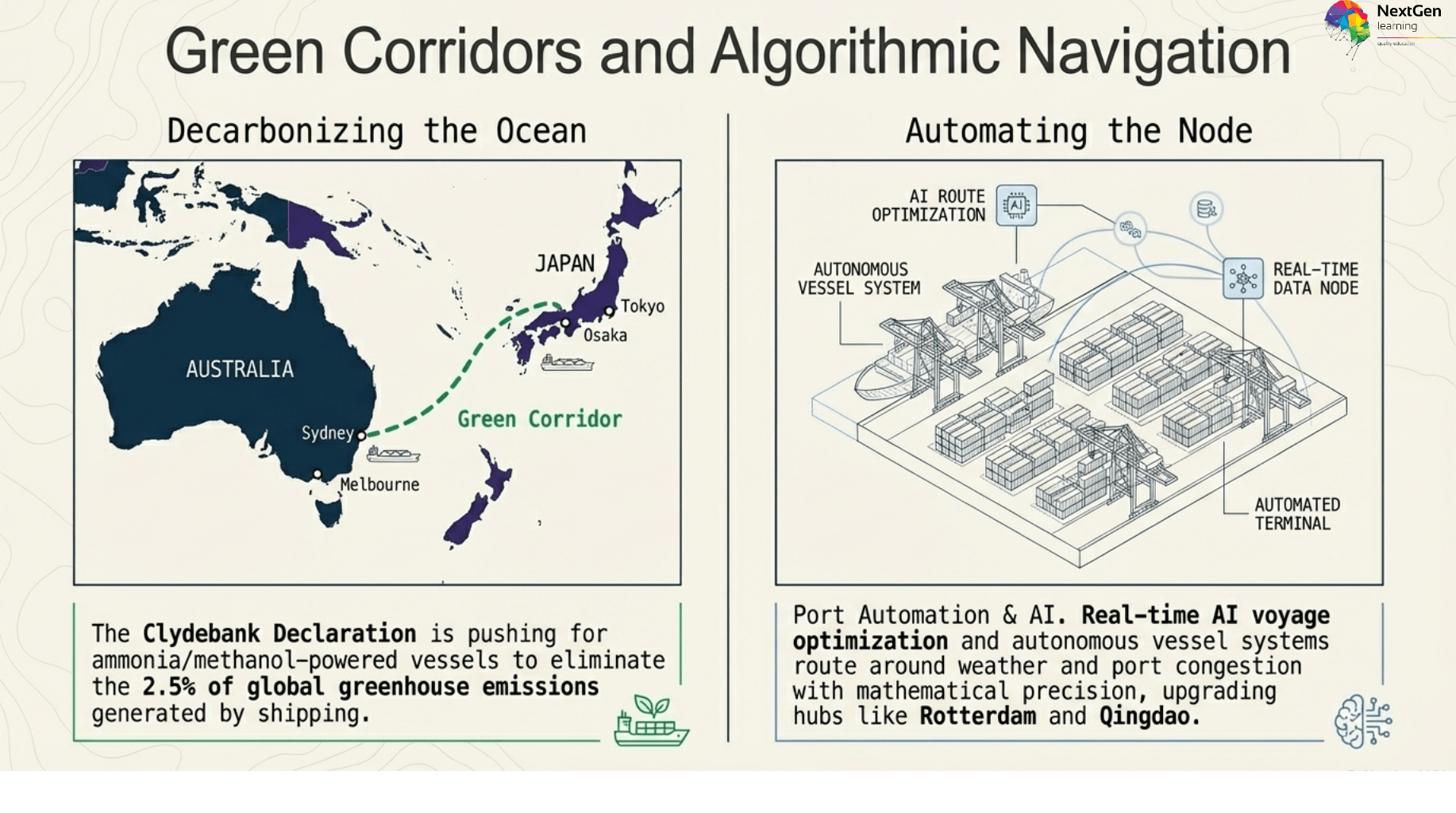
The map of global maritime trade is not static. Over the coming decades, several converging forces — climate change, geopolitical realignment, technological innovation, and the global energy transition — will reshape which routes matter most, how goods flow along them, and what it costs to keep those flows moving.
The Northern Sea Route is the most dramatic example of climate-driven trade route transformation. As Arctic ice retreats, the NSR will become navigable for longer seasons and by a broader range of vessels. Russian projections suggest year-round navigation may be possible along sections of the route by 2030–2035. If this timeline proves accurate, the NSR could emerge as a genuine alternative to the Suez Canal corridor for certain cargo types — particularly energy shipments from Russia’s Arctic fields to Asian markets. However, geopolitical complications surrounding Russia’s control and management of the route will significantly affect its accessibility to Western shipping companies.
Green shipping corridors represent another transformative development. A growing number of governments and port authorities are designating specific routes as green corridors — zones in which decarbonised shipping will be prioritised, incentivised, and eventually mandated. The Clydebank Declaration, signed at COP26 in Glasgow in 2021, committed fifteen nations to establishing at least six green shipping corridors by 2025. Early corridor proposals include the Australia–Japan route for green ammonia-powered vessels, the North Sea corridor for methanol-powered ships, and trans-Pacific corridors for zero-emission container services. Whilst implementation remains in early stages, green corridors signal a fundamental shift in how trade routes will be designed and regulated in the future.
Digital and AI-driven route optimisation is already transforming how vessels navigate the world’s most important trade routes. Advanced weather routing algorithms, real-time port congestion data, and AI-powered voyage optimisation systems are enabling shipping companies to reduce fuel consumption, minimise delays, and improve schedule reliability in ways that were not possible even five years ago. As these technologies mature and integrate with autonomous vessel systems — which are already undergoing advanced trials in Norwegian and Japanese waters — the operational paradigm of maritime shipping will change fundamentally.
Port automation is reshaping the competitive dynamics of the global port industry. Highly automated terminals at Rotterdam, Singapore, Shanghai, and Qingdao are demonstrating throughput rates, precision, and cost efficiency that traditional manually operated terminals cannot match. As automation technology matures and its capital costs decline, the ports that adopt it most effectively will strengthen their positions as preferred calling points for the world’s largest container services — whilst those that lag behind risk losing relevance in an increasingly competitive global port hierarchy.

Frequently Asked Questions About the World's Most Important Trade Routes
The Strait of Malacca is widely considered the single most important trade route in the world by strategic significance, as approximately one-third of all globally traded goods and nearly 25% of the world’s oil trade pass through it annually. However, by annual trade value, the South China Sea route — of which the Strait of Malacca is the primary chokepoint — carries over $3.5 trillion in goods per year.
According to the International Maritime Organisation, approximately 90% of internationally traded goods travel by sea. This figure has remained broadly consistent for decades, reflecting the unmatched cost-efficiency and carrying capacity of maritime shipping compared to air, rail, or road transport across intercontinental distances.
Maritime chokepoints are narrow, strategically critical passages through which a disproportionately large volume of shipping must pass. They matter because their disruption — whether through accident, conflict, weather, or deliberate blockage — can immediately affect global freight rates, energy prices, and supply chains far beyond the immediate region. Primary chokepoints include the Strait of Malacca, the Suez Canal, the Strait of Hormuz, and the Panama Canal.
The Suez Canal route is the primary passage between Europe and Asia, saving approximately 7,000 kilometres and seven to ten days compared to sailing around Africa via the Cape of Good Hope. The Cape of Good Hope route is longer, more expensive, and more exposed to Southern Ocean weather, but it serves as the critical alternative when the Suez Canal is unavailable — as demonstrated during the 2021 Ever Given blockage and the 2023–2024 Red Sea security crisis.
The Strait of Hormuz carries the greatest concentration of oil of any maritime passage, with approximately 21 million barrels of crude oil and petroleum products transiting daily — representing roughly 20–21% of global oil consumption. The Strait of Malacca is second, handling approximately 16 million barrels per day.
In March 2021, the container vessel Ever Given ran aground in the Suez Canal’s southern section, blocking the waterway entirely for six days. The blockage stranded approximately 369 vessels and delayed an estimated $54 billion in goods. Global freight rates surged immediately, and supply chain disruptions in sectors including electronics, automotive, and consumer goods persisted for months. The incident highlighted the extraordinary vulnerability of global commerce to disruption at a single maritime chokepoint.
Climate change is affecting shipping routes in multiple ways. The retreat of Arctic sea ice is gradually opening the Northern Sea Route to broader commercial use, offering a shorter path between Asia and Europe. Conversely, drought driven by climate change severely disrupted the Panama Canal in 2023, reducing daily transits and increasing global freight costs. Rising sea levels threaten low-lying port infrastructure globally, whilst intensifying tropical storms add operational risk to routes in affected regions.
China’s Belt and Road Initiative (BRI) involves substantial investment in port infrastructure, shipping facilities, and maritime trade corridors across Asia, Africa, Europe, and Latin America. Through BRI investments, China has acquired significant stakes or operational interests in ports including Piraeus in Greece, Hambantota in Sri Lanka, and Gwadar in Pakistan — effectively building a network of Chinese-linked maritime infrastructure along the world’s most important trade routes. Critics argue this network could serve strategic military purposes in addition to its commercial function.


0 responses on "Top 20 Most Important Trade Routes in the World"