





What Is Multi-Agency Working in Safeguarding? Roles, Benefits & Best Practices
Safeguarding children and vulnerable adults requires far more than isolated action from a single professional or organisation. In many cases, abuse, neglect, exploitation, or mental health concerns develop across multiple areas of a person’s life. Therefore, schools, healthcare providers, social workers, police services, and support agencies must work together to identify risks early and respond effectively.
Multi-agency working in safeguarding refers to a collaborative approach where professionals from different sectors share information, coordinate responsibilities, and create joint action plans to protect individuals at risk. Although one agency may first notice safeguarding concerns, effective protection often depends on combined expertise, faster communication, and shared decision-making.
Importantly, modern safeguarding frameworks across the United Kingdom strongly encourage inter-agency collaboration because serious case reviews repeatedly show that communication failures between organisations can place children and vulnerable adults in danger. As a result, multi-agency safeguarding has become a core principle within child protection, early intervention, and adult safeguarding procedures.
In practice, multi-agency working helps professionals build a fuller understanding of an individual’s circumstances. Instead of viewing concerns in isolation, practitioners can identify patterns, assess risks more accurately, and provide coordinated support that improves long-term outcomes.
Effective multi-agency safeguarding typically involves:
- Sharing safeguarding concerns quickly and securely
- Coordinating assessments and interventions
- Identifying risks at an earlier stage
- Reducing duplication between services
- Supporting children, families, and vulnerable adults holistically
- Creating clear accountability among professionals
- Improving communication between agencies
However, successful collaboration does not happen automatically. Agencies often face challenges involving confidentiality, communication barriers, differing priorities, and unclear professional responsibilities. Consequently, organisations must establish strong safeguarding procedures, shared goals, and consistent communication systems to protect those at risk effectively.
Table of Contents
What Is Multi-Agency Working in Safeguarding?

Multi-agency working in safeguarding is a collaborative approach where professionals from different organisations work together to protect children, young people, and vulnerable adults from harm. Instead of operating independently, agencies share information, coordinate interventions, and make joint decisions to improve safeguarding outcomes.
In safeguarding environments, no single professional usually sees the complete picture. For example, a teacher may notice repeated absences, while a healthcare worker identifies signs of neglect, and police officers respond to domestic abuse incidents within the home. Individually, these concerns may appear manageable. However, when agencies combine their knowledge, they can identify serious safeguarding risks much earlier.
As a result, multi-agency working creates a more effective and child-centred safeguarding system. It allows professionals to respond faster, reduce risks, and provide coordinated support tailored to an individual’s needs.
Definition of Multi-Agency Safeguarding
Multi-agency safeguarding involves cooperation between multiple services that share responsibility for protecting individuals from abuse, neglect, exploitation, or harm. These agencies work toward common safeguarding goals while maintaining their individual professional responsibilities.
Typically, multi-agency safeguarding includes:
- Information sharing between organisations
- Joint safeguarding assessments
- Collaborative risk management
- Multi-disciplinary meetings
- Coordinated intervention plans
- Shared safeguarding responsibilities
- Ongoing monitoring and review
Importantly, effective collaboration depends on clear communication, accountability, and mutual trust between professionals. Without these elements, safeguarding concerns can escalate quickly.
Why Collaborative Safeguarding Matters
Children and vulnerable adults often experience complex challenges that affect several areas of their lives simultaneously. Consequently, one agency alone may not have enough information, authority, or resources to manage safeguarding risks effectively.
Collaborative safeguarding helps professionals:
- Build a complete understanding of risk factors
- Identify hidden patterns of abuse or neglect
- Deliver earlier interventions
- Prevent safeguarding concerns from worsening
- Improve emotional, physical, and social outcomes
- Reduce gaps in support services
Moreover, multi-agency working strengthens decision-making because professionals contribute different perspectives, experiences, and expertise. This broader understanding often leads to safer and more informed safeguarding actions.
For instance, a school safeguarding lead may identify behavioural concerns, while mental health professionals recognise trauma-related symptoms and social workers assess family risks. Together, these insights help agencies develop a stronger safeguarding response.
Key Objectives of Multi-Agency Working
Although safeguarding cases vary significantly, most multi-agency partnerships share several core objectives. These goals focus on prevention, protection, and long-term well-being.
The primary objectives include:
- Protecting children and vulnerable adults from harm
- Promoting welfare and emotional well-being
- Identifying safeguarding concerns early
- Coordinating support services efficiently
- Reducing duplication between agencies
- Improving communication and accountability
- Supporting families through integrated interventions
- Achieving better long-term safeguarding outcomes
Importantly, effective multi-agency working does not simply involve sharing information. Professionals must also take coordinated action, monitor progress consistently, and adapt safeguarding plans when risks change.
Why Is Multi-Agency Working Important in Safeguarding?
Multi-agency working plays a critical role in protecting children, young people, and vulnerable adults from abuse, neglect, and exploitation. Safeguarding concerns rarely exist in isolation. Instead, they often involve complex social, emotional, educational, medical, and environmental factors that require coordinated professional support.
Because of this complexity, organisations cannot rely on isolated safeguarding responses. A fragmented approach increases the likelihood of missed warning signs, delayed interventions, and ineffective support plans. In contrast, collaborative safeguarding allows professionals to combine expertise, share responsibility, and make better-informed decisions that prioritise the individual’s welfare.
Importantly, serious case reviews across the United Kingdom have repeatedly identified poor communication and weak inter-agency coordination as major contributing factors in safeguarding failures. Consequently, modern safeguarding systems place strong emphasis on partnership working and shared accountability.
Early Intervention and Prevention
One of the most important benefits of multi-agency safeguarding is early intervention. When agencies communicate effectively, professionals can identify concerns before situations become severe or life-threatening.
For example, early warning signs may include:
- Frequent school absences
- Sudden behavioural changes
- Poor hygiene or neglect
- Signs of emotional distress
- Domestic abuse concerns
- Substance misuse within the household
- Repeated police callouts
- Mental health deterioration
Individually, these indicators may not always trigger immediate safeguarding action. However, when agencies combine information, patterns become easier to identify. As a result, professionals can intervene earlier and reduce the risk of long-term harm.
Early intervention also helps families access support services before safeguarding concerns escalate into crises. Therefore, multi-agency collaboration improves both prevention and long-term protection.
Protecting Vulnerable Children and Adults
Safeguarding professionals often work with individuals who cannot fully protect themselves due to age, disability, mental health conditions, trauma, or dependency on others. Consequently, these individuals require coordinated protection from multiple services.
Multi-agency working improves protection by:
- Creating shared safeguarding plans
- Monitoring high-risk situations consistently
- Reducing gaps between services
- Ensuring concerns are not overlooked
- Providing holistic support for families
- Coordinating emergency safeguarding responses
Moreover, collaborative safeguarding helps professionals understand the wider context surrounding abuse or neglect. This broader perspective improves risk assessments and strengthens safeguarding decisions.
For instance, healthcare professionals may identify physical injuries, while schools observe emotional withdrawal and social workers assess home conditions. Together, these insights provide a clearer understanding of safeguarding risks.
Faster and More Coordinated Safeguarding Responses
Safeguarding situations often require urgent action. Delays in communication or confusion about responsibilities can place vulnerable individuals at greater risk. Therefore, coordinated multi-agency systems help organisations respond more efficiently.
Effective partnership working supports:
- Faster safeguarding referrals
- Immediate information sharing
- Quicker risk assessments
- Joint emergency planning
- Consistent safeguarding decisions
- Better crisis management
Importantly, clear communication pathways reduce duplication and confusion between agencies. Professionals understand their responsibilities more clearly, which improves accountability and decision-making throughout the safeguarding process.
Improving Long-Term Outcomes
Multi-agency safeguarding does not focus only on immediate protection. It also aims to improve long-term well-being, stability, and life outcomes for vulnerable individuals.
Collaborative support can help improve:
- Educational achievement
- Mental health and emotional well-being
- Family stability
- Physical safety
- Social development
- Access to healthcare services
- Long-term independence and resilience
In addition, coordinated interventions often reduce repeated safeguarding incidents because agencies can address root causes rather than only responding to immediate concerns.
For example, professionals may combine child protection measures with mental health support, parenting assistance, housing services, and educational interventions. This integrated approach creates stronger and more sustainable safeguarding outcomes.
Ultimately, multi-agency working strengthens safeguarding systems by ensuring professionals work together rather than separately. As a result, vulnerable individuals receive more effective, consistent, and person-centred protection.
Who Is Involved in Multi-Agency Safeguarding?
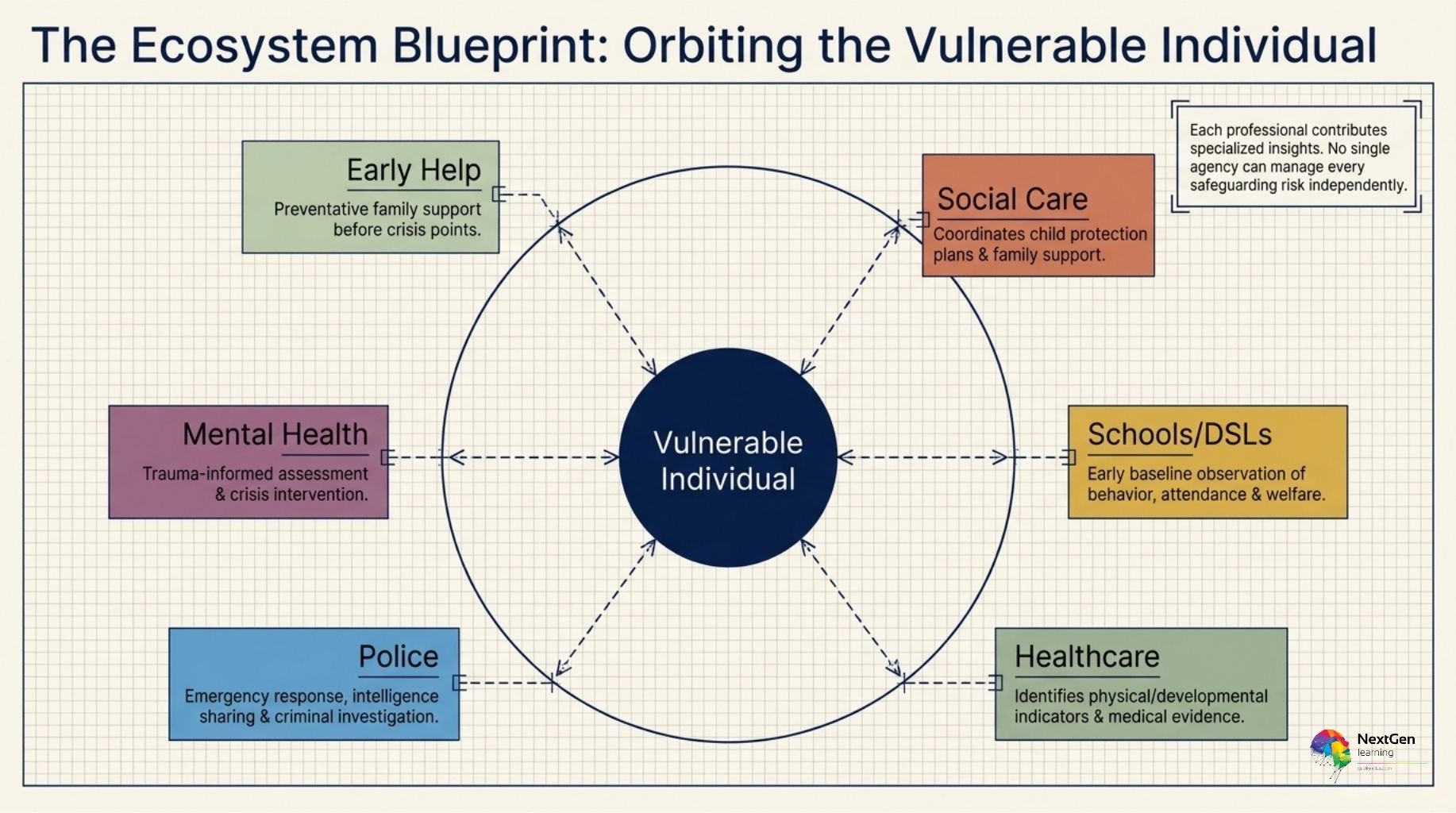
Multi-agency safeguarding depends on cooperation between professionals from different sectors who each contribute specialist knowledge, responsibilities, and support services. Although every organisation has its own safeguarding duties, collaborative working ensures that vulnerable individuals receive coordinated protection rather than fragmented care.
Importantly, safeguarding professionals often work with overlapping concerns involving education, health, mental health, domestic abuse, criminal activity, housing instability, or substance misuse. Therefore, no single agency can manage every safeguarding risk independently.
Effective multi-agency safeguarding usually includes professionals from:
- Education services
- Social care
- Healthcare organisations
- Police and law enforcement
- Mental health services
- Youth support agencies
- Early help teams
- Housing services
- Voluntary safeguarding organisations
Each professional contributes different insights that strengthen safeguarding decisions and improve intervention planning.
Social Workers
Social workers play a central role in safeguarding coordination. They assess risks, investigate concerns, support families, and coordinate child protection or adult safeguarding plans.
Their responsibilities often include:
- Conducting safeguarding assessments
- Managing child protection cases
- Coordinating multi-agency meetings
- Supporting vulnerable families
- Monitoring safeguarding interventions
- Escalating serious safeguarding concerns
- Developing protection plans
Moreover, social workers frequently act as key coordinators between agencies. As a result, they help ensure safeguarding actions remain consistent and focused on the individual’s welfare.
Schools and Designated Safeguarding Leads (DSLs)
Educational settings are often among the first places where safeguarding concerns become visible. Teachers and school staff regularly observe children’s behaviour, attendance, emotional well-being, and physical condition. Consequently, schools play a critical role in early identification and intervention.
A Designated Safeguarding Lead (DSL) typically oversees safeguarding procedures within schools and colleges.
Their responsibilities include:
- Managing safeguarding referrals
- Recording safeguarding concerns
- Liaising with external agencies
- Supporting vulnerable pupils
- Coordinating safeguarding policies
- Monitoring attendance and welfare concerns
- Providing safeguarding guidance to staff
Importantly, schools often share vital safeguarding information that helps other professionals identify risks more accurately.
Healthcare Professionals
Healthcare workers frequently identify physical, emotional, or developmental indicators of abuse and neglect. Because they work closely with children, families, and vulnerable adults, they can recognise safeguarding concerns that other agencies may not immediately detect.
Professionals involved may include:
- General practitioners (GPs)
- Nurses
- Paediatricians
- Midwives
- Health visitors
- Emergency department staff
- Occupational therapists
- Physiotherapists
Healthcare professionals contribute by:
- Identifying injuries or neglect
- Recording medical evidence
- Assessing physical and mental health risks
- Sharing safeguarding concerns
- Supporting recovery and treatment plans
In many safeguarding cases, medical evidence plays an essential role in risk assessment and intervention planning.
Police and Law Enforcement
Police services protect individuals from criminal harm and investigate safeguarding-related offences such as domestic abuse, child exploitation, neglect, trafficking, or sexual abuse.
Their safeguarding responsibilities may involve:
- Responding to emergency incidents
- Investigating criminal offences
- Gathering evidence
- Conducting welfare checks
- Supporting safeguarding investigations
- Sharing intelligence with partner agencies
- Managing immediate protection risks
Moreover, police information often helps agencies understand the severity and frequency of safeguarding concerns within households or communities.
Mental Health Services
Mental health professionals support individuals experiencing psychological distress, trauma, behavioural difficulties, or emotional instability. Safeguarding concerns frequently overlap with mental health challenges, particularly in cases involving abuse, neglect, addiction, or domestic violence.
Mental health teams may assist by:
- Assessing emotional well-being
- Identifying trauma-related behaviours
- Supporting crisis interventions
- Providing therapy and counselling
- Monitoring high-risk individuals
- Supporting family mental health needs
Consequently, mental health input strengthens safeguarding plans and improves long-term recovery outcomes.
Early Help and Family Support Services
Early help services focus on preventing safeguarding concerns from escalating. Rather than waiting until families reach crisis point, these teams provide targeted support during the early stages of difficulty.
Early help professionals may support:
- Parenting challenges
- School attendance issues
- Behavioural concerns
- Financial hardship
- Housing instability
- Emotional well-being
- Family conflict
This preventative approach reduces long-term safeguarding risks while helping families access support before serious harm occurs.
Why Multi-Professional Collaboration Matters
Each safeguarding professional sees only part of a person’s situation. However, when agencies share information and coordinate actions, they develop a more complete understanding of risks and support needs.
Strong multi-professional collaboration helps:
- Improve safeguarding accuracy
- Reduce communication gaps
- Deliver faster interventions
- Strengthen accountability
- Prevent duplicated efforts
- Improve long-term outcomes
Ultimately, effective safeguarding depends on professionals working together with shared responsibility, clear communication, and a consistent focus on protecting vulnerable individuals.
How Does Multi-Agency Working Actually Work?

Multi-agency safeguarding works through structured collaboration between professionals who share responsibility for protecting children and vulnerable adults. Although each organisation maintains its own duties and procedures, agencies coordinate their actions to ensure individuals receive effective, consistent, and timely support.
In practice, safeguarding collaboration involves continuous communication, joint assessments, shared planning, and ongoing monitoring. Rather than responding separately, professionals work together to build a complete understanding of risks and decide how best to protect the individual.
Importantly, effective multi-agency safeguarding follows clear procedures because poor coordination can delay interventions and increase safeguarding risks.
Information Sharing
Information sharing forms the foundation of successful multi-agency safeguarding. Without accurate and timely communication, professionals may miss critical warning signs or fail to recognise escalating risks.
Agencies typically share information about:
- Safeguarding concerns
- Behavioural changes
- Attendance issues
- Medical concerns
- Domestic abuse incidents
- Mental health risks
- Criminal activity
- Family circumstances
- Previous safeguarding history
For example, a school may notice repeated absences, while healthcare professionals identify untreated injuries and police respond to domestic abuse callouts at the family home. Individually, these incidents may seem unrelated. However, when agencies combine information, safeguarding risks become far clearer.
Importantly, professionals must share information lawfully and responsibly. Safeguarding teams usually follow strict confidentiality and data protection procedures to protect sensitive information while ensuring vulnerable individuals remain safe.
Risk Assessments
Once agencies identify safeguarding concerns, professionals conduct risk assessments to evaluate the level of danger and determine appropriate interventions.
Risk assessments help professionals understand:
- The severity of safeguarding concerns
- Immediate safety risks
- Long-term vulnerabilities
- Family and environmental factors
- Patterns of abuse or neglect
- Protective factors already in place
- Urgency of intervention
Effective assessments rely on contributions from multiple agencies because safeguarding risks often affect several areas of a person’s life simultaneously.
Consequently, collaborative assessments provide:
- More accurate safeguarding decisions
- Better prioritisation of risks
- Stronger intervention planning
- Improved protection strategies
In high-risk cases, agencies may hold urgent safeguarding meetings to assess immediate dangers and coordinate emergency responses.
Safeguarding Referrals
When professionals identify serious concerns, they may submit safeguarding referrals to children’s social care, adult safeguarding teams, or specialist safeguarding services.
Safeguarding referrals usually include:
- Details of the concern
- Observed behaviours or injuries
- Risk factors
- Previous incidents
- Information from other agencies
- Immediate safety concerns
Importantly, referrals trigger formal safeguarding procedures that help agencies determine whether further investigation or intervention is required.
Effective referral systems improve safeguarding because they:
- Escalate concerns quickly
- Reduce delays in intervention
- Ensure accountability
- Create documented safeguarding records
- Support coordinated decision-making
Multi-Agency Meetings
Safeguarding professionals often hold multi-agency meetings to discuss cases, share updates, and agree on intervention plans.
These meetings may include:
- Social workers
- Teachers or DSLs
- Healthcare professionals
- Police officers
- Mental health specialists
- Early help practitioners
- Family support workers
During meetings, professionals typically:
- Review safeguarding concerns
- Share evidence and observations
- Discuss risk levels
- Assign responsibilities
- Agree on action plans
- Monitor safeguarding progress
Moreover, regular meetings help agencies maintain consistent communication throughout the safeguarding process.
In many areas across the United Kingdom, safeguarding partnerships also use Multi-Agency Safeguarding Hubs (MASH). These teams bring professionals together to improve communication, speed up decision-making, and strengthen safeguarding coordination.
Action Planning and Intervention
After assessing risks, agencies develop coordinated safeguarding plans tailored to the individual’s needs. These plans outline what support is required, who is responsible for each action, and how progress will be monitored.
Safeguarding action plans may involve:
- Child protection interventions
- Mental health support
- Educational assistance
- Parenting support programmes
- Domestic abuse services
- Healthcare treatment
- Housing support
- Crisis intervention services
Importantly, safeguarding plans should remain person-centred. Professionals must consider the individual’s wishes, circumstances, emotional well-being, and long-term safety needs throughout the process.
Monitoring and Reviewing Outcomes
Safeguarding work does not end after the first intervention. Agencies must continually monitor outcomes to ensure support remains effective and risks are properly managed.
Professionals regularly review:
- Changes in risk levels
- Family engagement
- Emotional well-being
- Educational progress
- Health outcomes
- Compliance with safeguarding plans
- Emerging safeguarding concerns
If risks increase or circumstances change, agencies may revise safeguarding strategies or escalate interventions accordingly.
Continuous monitoring improves safeguarding because it allows professionals to respond proactively rather than reactively. As a result, vulnerable individuals receive more stable and consistent protection over time.
Ultimately, multi-agency safeguarding works best when professionals communicate openly, share responsibility, and maintain a shared commitment to protecting individuals from harm.
Key Principles of Effective Multi-Agency Working

Effective multi-agency safeguarding depends on far more than multiple organisations simply working alongside one another. Successful collaboration requires clear communication, mutual accountability, shared safeguarding goals, and strong professional relationships. Without these foundations, safeguarding systems can become fragmented, inconsistent, and ineffective.
Importantly, safeguarding professionals often work in high-pressure environments where decisions directly affect the safety and well-being of vulnerable individuals. Therefore, agencies must establish structured collaboration processes that support timely decision-making and coordinated interventions.
When organisations apply strong multi-agency principles consistently, safeguarding outcomes improve significantly.
Clear and Consistent Communication
Communication remains one of the most important elements of effective safeguarding collaboration. Poor communication is repeatedly identified as a major factor in safeguarding failures because critical information may not reach the professionals who need it most.
Effective safeguarding communication involves:
- Sharing concerns promptly
- Recording information accurately
- Providing clear updates between agencies
- Using consistent safeguarding terminology
- Escalating urgent risks immediately
- Confirming actions and responsibilities
- Maintaining professional transparency
Moreover, professionals should avoid assumptions when communicating safeguarding concerns. Instead, agencies must ensure information remains factual, detailed, and evidence-based.
For example, vague descriptions such as “family difficulties” may minimise serious risks. In contrast, clear safeguarding records help professionals understand the severity of concerns and respond appropriately.
Strong communication systems also reduce:
- Delays in intervention
- Confusion about responsibilities
- Repeated assessments
- Gaps in safeguarding support
- Misunderstandings between professionals
Consequently, clear communication strengthens both accountability and safeguarding effectiveness.
Shared Safeguarding Goals
Multi-agency safeguarding works best when professionals focus on a shared objective: protecting the welfare and safety of vulnerable individuals.
Although agencies may have different operational priorities, safeguarding teams must work toward common outcomes, including:
- Preventing abuse and neglect
- Reducing safeguarding risks
- Supporting emotional well-being
- Improving long-term outcomes
- Promoting stability and safety
- Delivering person-centred interventions
Importantly, shared goals help agencies avoid conflicting approaches that may delay safeguarding progress. They also improve coordination because professionals understand how their individual responsibilities contribute to wider safeguarding plans.
Accountability and Defined Responsibilities
In effective safeguarding systems, every professional must clearly understand their role and responsibilities. Without accountability, safeguarding actions may become delayed, duplicated, or overlooked entirely.
Clear accountability includes:
- Defined professional responsibilities
- Agreed safeguarding procedures
- Assigned intervention tasks
- Accurate record-keeping
- Escalation pathways for concerns
- Regular safeguarding reviews
Moreover, professionals should challenge poor practice when necessary. Constructive professional challenge helps agencies identify weaknesses, improve decision-making, and maintain safeguarding standards.
For example, if one agency fails to act on serious concerns, other professionals must escalate the issue rather than assume someone else will intervene.
Strong accountability frameworks reduce safeguarding failures by ensuring agencies remain proactive and responsive.
Mutual Respect Between Professionals
Safeguarding teams often include professionals from different organisational cultures, disciplines, and working environments. Consequently, disagreements and communication barriers can develop if agencies fail to respect each other’s expertise.
Effective multi-agency relationships require professionals to:
- Value different professional perspectives
- Listen actively during safeguarding discussions
- Respect specialist expertise
- Share information openly
- Collaborate professionally under pressure
- Maintain a child-centred or person-centred focus
Importantly, respectful collaboration improves trust between agencies. As a result, professionals communicate more openly and coordinate safeguarding interventions more effectively.
Confidentiality and Information Protection
Safeguarding work involves highly sensitive personal information. Therefore, agencies must balance information sharing with confidentiality and data protection responsibilities.
Professionals should:
- Share only relevant safeguarding information
- Follow legal information-sharing guidance
- Maintain secure safeguarding records
- Protect personal confidentiality
- Explain safeguarding procedures clearly where appropriate
- Document decisions carefully
However, confidentiality should never prevent professionals from acting when someone faces serious harm. Safeguarding responsibilities take priority when individuals are at risk of abuse, neglect, or exploitation.
Professional Training and Continuous Learning
Safeguarding risks evolve continuously. Therefore, professionals require regular training to maintain effective safeguarding knowledge and collaborative working skills.
Training often supports:
- Safeguarding awareness
- Risk identification
- Information-sharing procedures
- Trauma-informed practice
- Domestic abuse recognition
- Child protection responsibilities
- Multi-agency communication skills
In addition, joint safeguarding training helps agencies build stronger professional relationships and improve consistency across organisations.
Child-Centred and Person-Centred Practice
The most effective safeguarding systems always prioritise the needs, wishes, and welfare of the individual receiving support. Although agencies manage procedures and legal responsibilities, safeguarding should never become overly process-driven or impersonal.
Professionals must consider:
- The individual’s lived experiences
- Emotional well-being
- Cultural and social circumstances
- Communication needs
- Personal safety concerns
- Long-term support requirements
Importantly, child-centred and person-centred approaches help professionals deliver safeguarding interventions that are compassionate, practical, and sustainable.
Benefits of Multi-Agency Working in Safeguarding

Multi-agency working delivers significant benefits for children, vulnerable adults, families, and safeguarding professionals. When organisations collaborate effectively, they create a more coordinated safeguarding system that identifies risks earlier, improves decision-making, and delivers stronger long-term outcomes.
In contrast, isolated safeguarding approaches often create communication gaps, duplicated efforts, and inconsistent interventions. Consequently, vulnerable individuals may not receive the level of protection or support they need.
By combining expertise, resources, and professional perspectives, multi-agency safeguarding creates a more comprehensive and effective response to abuse, neglect, exploitation, and welfare concerns.
Better Decision-Making
One of the strongest advantages of multi-agency collaboration is improved decision-making. Safeguarding professionals from different backgrounds contribute unique observations, experiences, and specialist knowledge that help agencies assess risks more accurately.
Collaborative decision-making helps professionals:
- Identify hidden safeguarding concerns
- Recognise patterns of abuse or neglect
- Evaluate risks more thoroughly
- Avoid assumptions or incomplete assessments
- Develop stronger intervention strategies
- Make balanced safeguarding decisions
For example, a teacher may notice behavioural changes in a child, while healthcare professionals identify physical injuries and police officers provide information about domestic incidents within the household. Together, this information creates a clearer understanding of the safeguarding risk.
As a result, agencies can respond more confidently and effectively.
Earlier Identification of Safeguarding Concerns
Effective information sharing allows professionals to detect safeguarding concerns at an earlier stage. Early intervention is critical because abuse, neglect, and exploitation often escalate over time when concerns remain unnoticed or unaddressed.
Multi-agency safeguarding supports early identification by:
- Combining observations from multiple services
- Monitoring repeated warning signs
- Identifying environmental risk factors
- Recognising behavioural and emotional indicators
- Escalating concerns before crises develop
Importantly, earlier interventions often reduce the long-term impact of safeguarding issues on children and vulnerable adults.
Holistic Support for Individuals and Families
Safeguarding concerns rarely affect only one area of a person’s life. Many individuals experiencing abuse or neglect also face challenges involving mental health, education, housing, finances, or family instability.
Multi-agency working allows professionals to provide holistic support that addresses multiple needs simultaneously.
This coordinated approach may include:
- Educational support
- Mental health services
- Medical treatment
- Parenting assistance
- Domestic abuse interventions
- Housing support
- Substance misuse services
- Financial guidance
Consequently, individuals receive more balanced and sustainable support rather than isolated interventions that only address part of the problem.
Faster and More Coordinated Responses
Safeguarding situations often require urgent action. Delays in communication or confusion between agencies can increase risks significantly. Therefore, coordinated safeguarding systems help professionals respond more efficiently.
Multi-agency collaboration improves response times by:
- Streamlining safeguarding referrals
- Reducing duplicated assessments
- Clarifying professional responsibilities
- Improving communication pathways
- Coordinating emergency interventions
- Supporting quicker decision-making
Moreover, professionals can act with greater confidence because they understand what other agencies are doing and how interventions are progressing.
Improved Protection for Vulnerable Individuals
The primary goal of safeguarding is to protect individuals from harm. Multi-agency working strengthens protection because professionals monitor risks collaboratively rather than independently.
This improves safeguarding by:
- Increasing oversight of high-risk situations
- Preventing critical information from being missed
- Reducing safeguarding gaps between services
- Improving risk management strategies
- Supporting continuous safeguarding monitoring
Importantly, collaborative safeguarding creates stronger safety networks around vulnerable individuals, particularly in complex or high-risk cases.
Better Use of Professional Expertise and Resources
Every safeguarding agency has different strengths, specialist knowledge, and operational capabilities. Multi-agency collaboration allows organisations to combine these resources more effectively.
Professionals benefit from:
- Shared expertise
- Specialist safeguarding knowledge
- Joint problem-solving
- Reduced workload duplication
- Improved professional support
- Better access to specialist services
In addition, agencies can learn from each other’s experiences and improve safeguarding practices across organisations.
Stronger Long-Term Outcomes
Effective safeguarding should not only stop immediate harm. It should also improve long-term well-being, stability, and resilience.
Coordinated safeguarding interventions often lead to better outcomes involving:
- Emotional well-being
- Educational achievement
- Family relationships
- Physical safety
- Mental health recovery
- Social development
- Long-term independence
Furthermore, early and coordinated interventions may reduce repeated safeguarding incidents by addressing underlying causes rather than only managing immediate risks.
Improved Professional Accountability
Multi-agency safeguarding creates clearer accountability because agencies document decisions, assign responsibilities, and review interventions collectively.
This improves safeguarding standards by:
- Clarifying professional duties
- Supporting transparent decision-making
- Encouraging consistent safeguarding practices
- Reducing professional isolation
- Strengthening oversight and review processes
As a result, safeguarding systems become more reliable, structured, and responsive.
Common Challenges in Multi-Agency Safeguarding

Although multi-agency working provides significant safeguarding benefits, it also presents several operational and organisational challenges. When agencies fail to communicate effectively or coordinate responsibilities properly, safeguarding interventions can become delayed, inconsistent, or ineffective.
Importantly, many serious safeguarding case reviews have identified weaknesses in inter-agency collaboration as contributing factors in safeguarding failures. Therefore, organisations must recognise these challenges early and develop strategies to overcome them.
Effective safeguarding depends not only on collaboration itself, but also on the quality, consistency, and accountability of that collaboration.
Communication Breakdowns
Poor communication remains one of the biggest barriers to effective safeguarding. When professionals fail to share critical information promptly or accurately, agencies may overlook serious risks.
Communication problems often occur because:
- Agencies use different reporting systems
- Information is shared too late
- Professionals make assumptions
- Records lack detail or clarity
- Staff fail to escalate concerns
- Updates are not communicated consistently
For example, one agency may view a safeguarding concern as low risk while another identifies serious warning signs. Without effective communication, professionals may fail to build a complete understanding of the situation.
Consequently, communication breakdowns can lead to:
- Delayed interventions
- Missed safeguarding opportunities
- Inconsistent support plans
- Increased risks to vulnerable individuals
- Confusion between agencies
Strong communication systems are therefore essential for effective safeguarding coordination.
Role Confusion and Accountability Issues
Multi-agency safeguarding involves many professionals with different responsibilities, procedures, and organisational structures. However, when roles are unclear, safeguarding actions may become duplicated or overlooked entirely.
Role confusion often develops when:
- Agencies fail to define responsibilities clearly
- Professionals assume others will act
- Teams lack safeguarding leadership
- Escalation pathways remain unclear
- Agencies interpret safeguarding thresholds differently
As a result, professionals may delay important decisions or fail to take ownership of safeguarding actions.
Effective safeguarding requires:
- Clear professional responsibilities
- Defined decision-making processes
- Strong leadership
- Consistent accountability systems
- Shared safeguarding expectations
Without these safeguards, collaboration becomes fragmented and less effective.
Information-Sharing Barriers
Although information sharing is essential in safeguarding, professionals sometimes hesitate to share concerns because of confidentiality worries or uncertainty around legal responsibilities.
Common barriers include:
- Fear of breaching data protection laws
- Unclear information-sharing policies
- Organisational restrictions
- Lack of confidence in decision-making
- Poor understanding of safeguarding legislation
However, professionals must understand that safeguarding responsibilities often outweigh confidentiality concerns when someone faces significant harm.
Importantly, agencies should provide clear guidance on:
- Lawful information sharing
- Data protection responsibilities
- Consent procedures
- Risk escalation processes
- Safeguarding documentation standards
When professionals feel uncertain about these procedures, safeguarding responses may become slower and less effective.
Different Organisational Cultures
Safeguarding professionals work across organisations with different priorities, working styles, and operational structures. Consequently, collaboration can become difficult when agencies approach safeguarding from conflicting perspectives.
For example:
- Healthcare services may prioritise clinical risks
- Schools may focus on attendance and welfare
- Police services may prioritise criminal investigations
- Social care teams may focus on family risk assessments
These differences are not necessarily negative. However, they can create tension if agencies fail to understand each other’s roles and responsibilities.
Challenges linked to organisational culture often include:
- Conflicting priorities
- Different communication styles
- Varying response times
- Professional disagreements
- Inconsistent safeguarding thresholds
Therefore, agencies must develop mutual respect and shared safeguarding goals to maintain effective collaboration.
Delayed Decision-Making
Because multi-agency safeguarding involves several professionals and services, decision-making can sometimes become slow or overly complicated.
Delays may occur due to:
- Scheduling difficulties
- Incomplete information
- Disagreements between agencies
- Complex risk assessments
- Limited staffing resources
- High safeguarding caseloads
Unfortunately, safeguarding delays can increase risks significantly, particularly in high-risk abuse or neglect cases.
To reduce delays, agencies should:
- Establish clear escalation procedures
- Prioritise urgent safeguarding concerns
- Maintain regular communication
- Use structured safeguarding frameworks
- Assign responsibilities clearly
Fast and coordinated decision-making is especially important when immediate safety concerns exist.
Resource and Staffing Pressures
Many safeguarding organisations operate under significant financial and staffing pressures. High workloads, staff shortages, and limited resources can affect the quality of safeguarding interventions and inter-agency coordination.
Common resource challenges include:
- High caseloads
- Limited safeguarding staff
- Training shortages
- Burnout and stress
- Reduced service capacity
- Delayed assessments
Consequently, professionals may struggle to attend meetings, complete safeguarding reviews promptly, or maintain consistent communication with partner agencies.
Sustained investment in safeguarding services is therefore essential for maintaining effective multi-agency collaboration.
Professional Disagreements
Safeguarding professionals may sometimes disagree about:
- Risk levels
- Intervention strategies
- Safeguarding thresholds
- Information interpretation
- Appropriate next steps
While professional challenge can improve decision-making, unresolved conflict may damage collaboration and delay interventions.
Effective agencies encourage:
- Respectful professional discussion
- Evidence-based decision-making
- Clear escalation procedures
- Shared safeguarding standards
- Open communication
Importantly, constructive challenge should strengthen safeguarding practice rather than create unnecessary conflict between professionals.
Maintaining Consistent Long-Term Support
Safeguarding support often continues for extended periods, particularly in complex cases involving trauma, neglect, or family instability. However, maintaining consistent long-term collaboration between agencies can be difficult.
Challenges may include:
- Staff turnover
- Changing family circumstances
- Inconsistent follow-up
- Reduced engagement from services
- Communication gaps over time
As a result, safeguarding plans may lose effectiveness if agencies fail to review and adapt interventions consistently.
Real Examples of Multi-Agency Working in Safeguarding

Real-world safeguarding situations often involve overlapping risks that affect several areas of a person’s life simultaneously. Therefore, professionals from different agencies must work together to assess concerns, share information, and coordinate interventions effectively.
Importantly, practical safeguarding examples help professionals understand how multi-agency collaboration operates in everyday situations. They also demonstrate why communication, accountability, and joint decision-making are essential for protecting vulnerable individuals.
Child Neglect Case Example
A primary school teacher notices that an eight-year-old child regularly arrives at school hungry, tired, and wearing unwashed clothing. In addition, the child’s attendance has declined significantly over several weeks.
Initially, the school’s Designated Safeguarding Lead reviews attendance records and speaks with the child. During the conversation, the child mentions frequent arguments and limited food at home.
At the same time:
- Healthcare professionals identify missed medical appointments
- Social workers receive concerns about poor home conditions
- Police records show repeated domestic disturbance callouts
- Early help services identify financial hardship within the household
Individually, each issue may appear manageable. However, once agencies combine information, professionals recognise a broader pattern of neglect and family instability.
As a result, the safeguarding team may:
- Conduct a joint risk assessment
- Arrange a multi-agency safeguarding meeting
- Develop a child protection plan
- Provide family support services
- Monitor school attendance closely
- Support the child’s emotional well-being
- Assess ongoing home safety risks
This coordinated response helps professionals intervene earlier and reduce the risk of further harm.
Domestic Abuse Safeguarding Example
A healthcare worker treating a parent for repeated injuries becomes concerned about possible domestic abuse. Although the parent initially denies any safeguarding concerns, police records later reveal several previous domestic violence incidents at the family home.
Meanwhile:
- Teachers observe behavioural changes in the children
- Mental health professionals identify trauma symptoms
- Social workers receive reports of emotional distress
- Housing services identify temporary accommodation concerns
Because domestic abuse can significantly affect children’s safety and emotional development, agencies work collaboratively to assess risks and coordinate protection measures.
The multi-agency response may involve:
- Domestic abuse risk assessments
- Emergency safeguarding referrals
- Mental health support
- Safe accommodation planning
- Child welfare monitoring
- Ongoing police involvement
- Family support interventions
Importantly, safeguarding professionals must consider both immediate safety risks and the long-term emotional impact of domestic abuse on children and vulnerable adults.
Early Help Intervention Example
Not every safeguarding concern requires immediate child protection action. In many situations, early intervention services can support families before problems escalate into serious safeguarding risks.
For example, a secondary school notices that a student’s attendance and behaviour have deteriorated following parental separation. Although there is no immediate evidence of abuse, professionals identify emotional distress, anxiety, and increasing family pressure.
The school may involve:
- Early help practitioners
- Mental health support services
- School safeguarding staff
- Family support workers
- Youth support organisations
Together, agencies develop an early support plan focused on improving stability and emotional well-being.
Support may include:
- Counselling services
- Attendance support
- Parenting guidance
- Emotional well-being programmes
- Regular safeguarding reviews
- Family mediation support
Consequently, professionals can reduce risks early and prevent the situation from developing into a more serious safeguarding concern.
Multi-Agency Safeguarding Hubs (MASH) in Practice
Many safeguarding systems across the United Kingdom now use Multi-Agency Safeguarding Hubs (MASH) to improve information sharing and safeguarding coordination.
MASH teams typically include professionals from:
- Social care
- Police services
- Healthcare organisations
- Education services
- Probation teams
- Mental health services
These teams work together to:
- Review safeguarding referrals quickly
- Share intelligence securely
- Assess risks collaboratively
- Prioritise urgent safeguarding concerns
- Coordinate interventions efficiently
As a result, safeguarding decisions become faster, more accurate, and better coordinated.
Why Real Safeguarding Examples Matter
Practical examples demonstrate that safeguarding rarely involves a single issue or isolated concern. Instead, abuse, neglect, exploitation, and family difficulties often overlap in complex ways.
Real examples help professionals:
- Understand safeguarding processes clearly
- Recognise early warning signs
- Improve professional judgement
- Strengthen collaborative practice
- Apply safeguarding procedures more effectively
Moreover, case-based learning strengthens safeguarding training because professionals can better understand how communication failures or delayed interventions may place vulnerable individuals at greater risk.
Legal Frameworks Supporting Multi-Agency Working

Multi-agency safeguarding does not operate informally or without structure. Across the United Kingdom, safeguarding professionals follow legal frameworks, statutory guidance, and national safeguarding policies designed to protect children and vulnerable adults from harm.
These frameworks establish:
- Safeguarding responsibilities
- Information-sharing duties
- Child protection procedures
- Accountability standards
- Inter-agency collaboration requirements
- Early intervention expectations
Importantly, safeguarding legislation exists because historical safeguarding failures revealed the dangers of poor communication and weak coordination between agencies. Consequently, modern safeguarding systems strongly emphasise collaborative working and shared accountability.
The Children Act 2004
The Children Act 2004 remains one of the most important legal foundations for multi-agency safeguarding in the UK.
The legislation strengthened safeguarding responsibilities following serious concerns about failures in child protection systems. It introduced clearer expectations for organisations to work together in order to safeguard and promote children’s welfare.
The Children Act 2004 established several important safeguarding principles, including:
- Shared safeguarding responsibilities
- Stronger inter-agency cooperation
- Improved accountability
- Early intervention approaches
- Child-centred safeguarding practices
- Better information sharing between agencies
Importantly, the Act also supported the development of safeguarding partnerships and integrated working practices across education, healthcare, police services, and social care.
As a result, multi-agency collaboration became a core safeguarding expectation rather than an optional approach.
Working Together to Safeguard Children
Working Together to Safeguard Children provides statutory guidance for organisations and professionals working with children.
This guidance explains how agencies should cooperate to:
- Identify safeguarding concerns
- Assess risks
- Share information
- Coordinate interventions
- Protect children effectively
- Review safeguarding outcomes
Importantly, the guidance emphasises that safeguarding is everyone’s responsibility. No single professional or organisation can fully protect children without support from partner agencies.
The framework promotes:
- Early help services
- Multi-agency safeguarding assessments
- Clear referral pathways
- Professional accountability
- Child-focused decision-making
- Continuous safeguarding reviews
Moreover, the guidance highlights the importance of listening to children and considering their experiences throughout safeguarding processes.
Information Sharing Guidance
Effective safeguarding depends heavily on lawful and appropriate information sharing. However, professionals sometimes hesitate to share concerns because they fear breaching confidentiality or data protection laws.
Safeguarding guidance clarifies that professionals should share relevant information when doing so helps protect individuals from harm.
Information-sharing frameworks help agencies:
- Exchange safeguarding concerns legally
- Protect sensitive information securely
- Maintain accurate safeguarding records
- Understand consent requirements
- Escalate serious safeguarding risks appropriately
Importantly, professionals should never allow uncertainty about confidentiality to delay action when someone may face abuse, neglect, or exploitation.
Good safeguarding practice requires agencies to balance:
- Individual privacy rights
- Confidentiality responsibilities
- Public protection duties
- Immediate safeguarding needs
Safeguarding Partnerships and Local Authorities
Local safeguarding systems typically operate through safeguarding partnerships that coordinate multi-agency child protection and safeguarding activity within specific regions.
These partnerships often involve:
- Local authorities
- Police services
- Healthcare organisations
- Education providers
- Social care teams
- Community safeguarding services
Their responsibilities may include:
- Developing safeguarding policies
- Reviewing safeguarding performance
- Coordinating safeguarding training
- Managing serious case reviews
- Improving inter-agency communication
- Monitoring safeguarding outcomes
Consequently, safeguarding partnerships help create more consistent and accountable safeguarding systems across local communities.
The Role of Serious Case Reviews
Serious case reviews examine safeguarding incidents where children or vulnerable adults have experienced serious harm or death. These reviews help organisations identify failures and improve safeguarding systems.
Many reviews have highlighted recurring problems such as:
- Poor communication between agencies
- Delayed safeguarding referrals
- Incomplete information sharing
- Weak professional accountability
- Lack of coordinated intervention planning
As a result, safeguarding legislation and guidance increasingly emphasise stronger collaboration and more effective multi-agency working practices.
Importantly, serious case reviews help agencies learn from previous safeguarding failures and improve future protection strategies.
Safeguarding Responsibilities Across Organisations
Although safeguarding laws apply differently across sectors, all professionals working with vulnerable individuals share certain responsibilities.
These responsibilities generally include:
- Identifying safeguarding concerns
- Reporting risks promptly
- Maintaining accurate records
- Sharing information appropriately
- Following safeguarding procedures
- Participating in multi-agency collaboration
- Prioritising the welfare of vulnerable individuals
Moreover, organisations must ensure staff receive appropriate safeguarding training and understand how to escalate concerns effectively.
Why Legal Frameworks Matter in Safeguarding
Legal and statutory safeguarding frameworks create consistency, accountability, and structure across multi-agency systems. Without these frameworks, safeguarding responses could become inconsistent and unreliable.
Strong safeguarding legislation helps:
- Clarify professional responsibilities
- Strengthen child protection systems
- Improve information sharing
- Support coordinated interventions
- Reduce safeguarding failures
- Protect vulnerable individuals more effectively
Ultimately, legal frameworks ensure that safeguarding agencies work collaboratively, responsibly, and consistently to protect children and vulnerable adults from harm.
Best Practices for Effective Multi-Agency Collaboration

Successful multi-agency safeguarding requires more than regular meetings or information sharing. Effective collaboration depends on structured systems, strong professional relationships, and a consistent commitment to protecting vulnerable individuals.
When safeguarding agencies apply clear best practices, they improve communication, strengthen accountability, and reduce the likelihood of safeguarding failures. Moreover, strong collaborative systems help professionals respond more confidently in complex or high-risk situations.
Importantly, safeguarding best practices should remain consistent across all organisations involved in child protection and adult safeguarding.
Establish Clear Communication Pathways
Clear communication systems are essential for effective safeguarding coordination. Without structured communication processes, important concerns may become delayed, misunderstood, or overlooked entirely.
Agencies should establish:
- Clear safeguarding reporting procedures
- Consistent information-sharing systems
- Defined escalation pathways
- Secure communication channels
- Standardised safeguarding documentation
- Regular case review meetings
In addition, professionals should record safeguarding concerns accurately and share updates promptly. Delayed or incomplete communication can significantly increase safeguarding risks.
Effective communication also requires professionals to:
- Use factual and evidence-based language
- Avoid assumptions
- Escalate concerns immediately when risks increase
- Confirm actions and responsibilities clearly
- Maintain accurate safeguarding records
Consequently, structured communication systems improve both safeguarding efficiency and accountability.
Promote Strong Professional Relationships
Trust and mutual respect between professionals strengthen multi-agency safeguarding significantly. When agencies maintain positive working relationships, professionals communicate more openly, challenge concerns appropriately, and collaborate more effectively.
Strong professional relationships encourage:
- Better teamwork
- Open safeguarding discussions
- Faster problem-solving
- Shared accountability
- Greater professional confidence
- More coordinated interventions
Importantly, professionals should respect the expertise and responsibilities of partner agencies even when perspectives differ.
For example, healthcare professionals, teachers, police officers, and social workers may approach safeguarding concerns differently because of their professional backgrounds. However, collaborative safeguarding works best when agencies value these different viewpoints rather than compete against them.
Prioritise Child-Centred and Person-Centred Practice
Effective safeguarding should always focus on the needs, safety, and well-being of the individual rather than organisational convenience or administrative processes.
Professionals should consistently consider:
- The individual’s voice and experiences
- Emotional well-being
- Cultural and social circumstances
- Communication needs
- Personal safety concerns
- Long-term support requirements
Moreover, safeguarding professionals should involve children, vulnerable adults, and families appropriately within decision-making processes whenever safe and practical.
Person-centred safeguarding improves outcomes because interventions become more relevant, compassionate, and sustainable.
Deliver Regular Safeguarding Training
Safeguarding risks and professional responsibilities evolve continuously. Therefore, agencies must provide regular safeguarding training to maintain high professional standards and strengthen collaborative practice.
Training should cover:
- Safeguarding legislation
- Abuse indicators
- Information-sharing procedures
- Domestic abuse awareness
- Trauma-informed safeguarding
- Risk assessment processes
- Multi-agency communication
- Professional accountability
Joint training sessions are particularly valuable because they help professionals understand each other’s roles, responsibilities, and safeguarding procedures more clearly.
As a result, agencies often collaborate more effectively during real safeguarding situations.
Encourage Professional Challenge
Effective safeguarding environments allow professionals to raise concerns, question decisions, and challenge poor practice respectfully.
Constructive professional challenge helps agencies:
- Improve safeguarding decisions
- Prevent oversight errors
- Strengthen accountability
- Reduce unsafe practice
- Improve risk assessments
For example, if one agency believes safeguarding risks are being underestimated, professionals should escalate concerns appropriately rather than remain silent.
Importantly, professional challenge should remain respectful, evidence-based, and focused on safeguarding outcomes rather than organisational conflict.
Maintain Accurate Safeguarding Records
Detailed safeguarding records support continuity, accountability, and effective communication between agencies. Poor documentation can create confusion, delay interventions, and weaken safeguarding responses.
Safeguarding records should include:
- Observed concerns
- Dates and times
- Actions taken
- Risk assessments
- Information shared
- Professional decisions
- Follow-up actions
Moreover, agencies should ensure records remain secure, confidential, and accessible to authorised safeguarding professionals where necessary.
Good record-keeping strengthens safeguarding because professionals can review previous concerns, identify patterns, and monitor long-term progress more effectively.
Use Early Intervention Approaches
Early intervention remains one of the most effective safeguarding strategies. When professionals identify concerns early and provide timely support, they can often prevent situations from escalating into serious harm.
Agencies should focus on:
- Identifying early warning signs
- Supporting families proactively
- Coordinating early help services
- Monitoring low-level concerns consistently
- Escalating risks promptly when needed
Early intervention not only improves safeguarding outcomes but also reduces pressure on crisis services and emergency safeguarding systems.
Strengthen Multi-Agency Accountability
Every professional involved in safeguarding should clearly understand their responsibilities and safeguarding duties. Without accountability, agencies risk duplication, delays, and inconsistent interventions.
Strong accountability frameworks include:
- Defined professional roles
- Clear decision-making processes
- Regular safeguarding reviews
- Leadership oversight
- Escalation procedures
- Performance monitoring
Importantly, accountability should apply across all safeguarding agencies equally. Effective collaboration depends on every organisation contributing consistently and responsibly.
Continuously Review Safeguarding Practice
Safeguarding systems should evolve continuously based on learning, feedback, and case review outcomes. Agencies that regularly evaluate their safeguarding practices are better equipped to identify weaknesses and improve collaboration.
Continuous improvement may involve:
- Reviewing safeguarding outcomes
- Analysing communication failures
- Updating safeguarding procedures
- Delivering additional staff training
- Learning from serious case reviews
- Improving inter-agency coordination systems
Consequently, organisations can strengthen safeguarding quality over time and reduce the likelihood of repeated failures.
Ultimately, effective multi-agency collaboration depends on clear communication, strong leadership, professional accountability, and a shared commitment to protecting vulnerable individuals. When agencies apply these best practices consistently, safeguarding systems become safer, faster, and more effective for everyone involved.
Frequently Asked Questions About Multi-Agency Working in Safeguarding
The main purpose of multi-agency working is to protect children and vulnerable adults through coordinated support. Professionals work together to identify risks, share information, and deliver effective safeguarding interventions.
Key benefits include:
- Earlier risk identification
- Better safeguarding decisions
- Faster interventions
- Improved long-term outcomes
A common example is child neglect.
In these cases:
- Teachers may notice attendance issues
- Healthcare workers may identify medical concerns
- Police may respond to domestic abuse incidents
- Social workers may assess family risks
Together, agencies create a safeguarding plan to protect the child and support the family.
Safeguarding is a shared responsibility between all agencies working with vulnerable individuals.
Professionals may include:
- Social workers
- Teachers and DSLs
- Police officers
- Healthcare staff
- Mental health professionals
Effective safeguarding depends on collaboration and shared accountability.
Information sharing helps professionals identify risks quickly and respond effectively.
Without communication:
- Warning signs may be missed
- Interventions may be delayed
- Risks may increase
Therefore, safeguarding agencies must share relevant information responsibly.
Common challenges include:
- Communication breakdowns
- Role confusion
- Delayed decisions
- Information-sharing barriers
- Resource pressures
Strong leadership and clear procedures help reduce these issues.
A MASH is a safeguarding team where agencies work together to review concerns and coordinate responses.
Teams often include:
- Social care
- Police
- Healthcare professionals
- Education staff
MASH teams improve communication and speed up safeguarding decisions.
Early intervention helps prevent safeguarding concerns from becoming more serious.
It can reduce:
- Emotional harm
- Family instability
- Abuse and neglect risks
- Educational disruption
Early support often leads to better long-term outcomes.
Multi-agency safeguarding improves child protection by helping professionals:
- Identify risks earlier
- Share information effectively
- Coordinate interventions
- Monitor safeguarding concerns consistently
Final Thoughts
Multi-agency working in safeguarding plays a vital role in protecting children, vulnerable adults, and families from abuse, neglect, exploitation, and long-term harm. Because safeguarding concerns often involve complex emotional, social, medical, and environmental factors, no single organisation can provide effective protection independently.
By working collaboratively, safeguarding professionals can share information, identify risks earlier, coordinate interventions, and deliver more comprehensive support. Consequently, multi-agency safeguarding improves decision-making, strengthens accountability, and creates safer long-term outcomes for vulnerable individuals.
However, successful collaboration requires more than good intentions alone. Agencies must establish strong communication systems, clear safeguarding procedures, shared responsibilities, and consistent professional training. In addition, organisations must remain committed to continuous improvement, early intervention, and person-centred safeguarding practices.
Across the United Kingdom, safeguarding legislation and statutory guidance continue to emphasise the importance of collaborative working because serious safeguarding failures often occur when agencies fail to communicate effectively or coordinate actions properly.
Ultimately, effective multi-agency safeguarding creates stronger protection systems, improves professional collaboration, and helps vulnerable individuals receive the support, safety, and care they need to achieve better outcomes in life.

Safeguarding Vulnerable Adults Level 5

0 responses on "What Is Multi-Agency Working in Safeguarding? Roles, Benefits & Best Practices"