




Assistive personnel nurses, or nursing support workers, provide direct support to patients, helping with daily tasks like bathing, feeding, and dressing. They also assist with patient mobility, monitor vital signs, and report any changes in patient conditions to the nursing team.

Nursing Assistive Personnel: Roles, Duties & Career Overview
Have you ever wondered who ensures patients are comfortable, supported and well cared for in a healthcare setting, often behind the scenes? Nursing assistive personnel are the unsung heroes of the healthcare team. They provide essential support to nurses and play a major role in delivering safe, effective patient care. Additionally, these team members help maintain a steady workflow, making them vital contributors to overall nursing team roles.
Nursing assistive personnel include roles such as nursing support workers, unlicensed assistive personnel, and healthcare support workers. These professionals assist with daily tasks like personal care, monitoring vital signs and helping with patient mobility. Because of their involvement in essential duties, assistive personnel ensure that everything runs smoothly across hospitals, clinics and care homes. Their work also supports the nursing assistant and wider nursing support staff, creating a more coordinated care environment.
In this blog, we’ll cover:
The key roles and responsibilities of nursing assistive personnel
The difference between nursing assistive personnel and other healthcare roles
career pathways and growth opportunities within the field
training and qualifications required for these roles
Table of Contents
What is Nursing Assistive Personnel?
Nursing assistive personnel refers to healthcare workers who provide essential support in patient care under the supervision of licensed nurses. This group includes nursing support workers, assistive personnel, and unlicensed assistive personnel, who help with daily activities, monitor vital signs and maintain a safe environment for patients. Because these roles support frontline care, they are central to many nursing team roles across hospitals, clinics and community settings.
Unlike registered nurses or a fully trained nursing assistant, nursing assistive personnel do not have the same level of formal medical training or licensure. Their role focuses on supporting patient care rather than performing medical procedures or making clinical decisions. However, their contribution remains essential, as they handle routine tasks that ensure continuity of care.
Nursing assistive personnel play a critical role in healthcare by helping bridge the gap between patients and registered nurses. Their work ensures patients receive continuous attention and support, while nurses can focus on more complex responsibilities. Additionally, this coordinated approach helps the entire nursing support staff deliver smoother and more effective care, improving the overall patient experience.
Key Roles and Responsibilities of Nursing Assistive Personnel
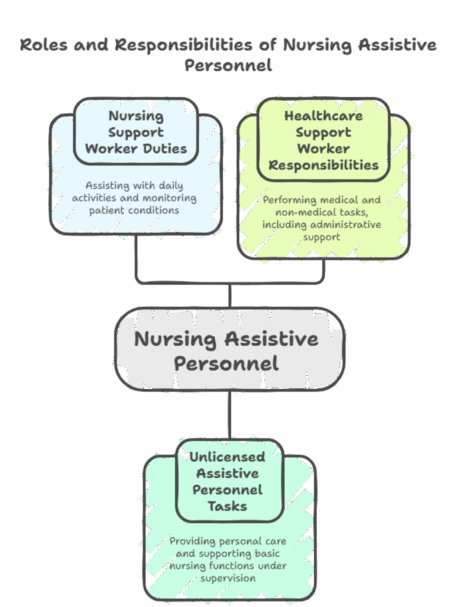
Building on the essential role of nursing assistive personnel, let’s explore the key roles and responsibilities they take on in healthcare settings. These duties support both patients and healthcare teams, and they form the foundation of effective nursing team roles across the sector.
Nursing Support Worker Duties
Nursing support workers are primarily responsible for providing hands-on patient care. Their duties include:
Assisting with daily activities like bathing, dressing, feeding and personal hygiene, ensuring patient comfort and dignity.
Monitoring patient conditions and reporting any changes to healthcare staff for appropriate action.
Assisting with patient mobility, helping individuals move from bed to chair or supporting physical exercises that promote recovery and independence.
These duties highlight the essential contribution of every nursing support worker, especially within busy hospital and care-home environments.
Unlicensed Assistive Personnel Tasks
Unlicensed assistive personnel perform tasks similar to those of nursing support workers, although their duties are more limited in scope. They are responsible for:
Providing personal care such as bathing, grooming and feeding under the supervision of licensed staff.
Assisting patients with mobility and basic movements, ensuring a safe and comfortable experience.
Supporting basic nursing functions like monitoring vital signs, but always under the supervision of registered nurses or a nursing assistant.
Although they cannot perform medical procedures, assistive personnel are essential in offering continuous care and reinforcing the work of the wider nursing support staff.
Healthcare Support Worker Responsibilities
Healthcare support workers take on a broader range of duties, which include both medical and non-medical tasks. Their responsibilities are:
Assisting with patient care by helping with personal tasks or administering basic support under supervision.
Maintaining hygiene and cleanliness in patient areas, which is vital for infection control and overall safety.
Supporting administrative tasks, such as preparing patient records and assisting in medical procedures when needed.
Ensuring a safe and comfortable environment, helping patients feel at ease during their care journey.
These responsibilities reflect the importance of the healthcare support worker in maintaining smooth operations across wards, clinics and community services.
The Difference Between Nursing Assistive Personnel and Other Healthcare Roles
Nursing assistive personnel play a vital role in the healthcare system, but their responsibilities and level of training differ from those of other healthcare professionals, such as nursing assistants and registered nurses. Because the distinctions can sometimes seem unclear, here’s a comparison to help clarify these differences:
Role | Nursing Assistive Personnel | Nursing Assistants | Registered Nurses | Assistant Nurse |
Training | Basic training focused on supporting patient care under supervision. | More formal training, usually including certification programs. | Extensive formal education (diploma/degree) and licensure. | Mid-level qualification; provides clinical support under nurse supervision. |
Responsibilities | Assist with daily patient care (e.g., feeding, mobility, personal hygiene). | Provide direct care under the supervision of registered nurses. | Assess, diagnose, plan care, and administer medications. | Assist in patient care and supervision of other staff in certain settings. |
Medical Authority | Cannot perform medical procedures; supports tasks under supervision. | Can perform more medical tasks, like taking vital signs and assisting with simple treatments. | Full medical authority to diagnose, prescribe, and perform procedures. | Limited authority often focuses on assisting with clinical duties and oversight. |
Scope of Duties | Primarily focused on basic care and comfort, assisting with non-medical tasks. | Direct care involves patient observation, basic medical tasks, and supporting daily needs. | Broad scope of duties, including patient assessments, diagnoses, and advanced medical procedures. | Supports nursing staff in clinical settings but has a narrower scope of responsibility than registered nurses. |
Nursing Assistive Personnel vs. Registered Nurses and Nursing Assistants
Nursing assistive personnel differ from nursing assistants and registered nurses mainly in training, duties and responsibility levels. Assistive personnel usually receive basic training to support non-medical tasks, such as helping patients move, feeding them and assisting with personal hygiene. Additionally, they are not trained to perform medical procedures and always work under the supervision of licensed professionals.
In contrast, a nursing assistant has more structured training, often including certifications, and may help with tasks such as taking vital signs or supporting simple clinical procedures. Registered nurses (RNs), however, undergo extensive education and hold full licensure. They diagnose, prescribe treatments and perform complex medical procedures. Unlike nursing assistive personnel, RNs have full medical authority and clinical decision-making responsibility.
Other Key Roles in the Nursing Team
Nursing assistive personnel work closely with other healthcare workers, such as care support workers and nursing support staff, to ensure effective patient care. This collaboration supports smooth teamwork and strengthens overall nursing team roles across all settings.
Nursing support staff assist with personal care, basic clinical support and administrative tasks. Because of this, they help nurses and nursing assistants manage workloads efficiently.
Care support workers focus more on non-medical tasks, including hygiene, companionship and mobility assistance. Their support allows nursing staff to concentrate on direct medical care.
All these roles work together to ensure patients are well cared for and that the healthcare system functions smoothly. This teamwork also highlights the importance of healthcare support workers within modern service delivery.
Career Pathways for Nursing Assistive Personnel
Once you start working as nursing assistive personnel — for example, as a nursing support worker or healthcare support worker — there are excellent opportunities to grow. With experience and further learning, you could move into more advanced roles, such as an assistant nurse role, or even progress beyond that. Additionally, these pathways help you develop your skills while strengthening your position within wider nursing team roles.
Advancement Opportunities
If you already work as a support worker or part of the assistive personnel, these diplomas can help you step into an assistant nurse role or other senior support positions.
With extra qualifications, you may also qualify for roles that involve more responsibility — in hospitals, care homes or community health settings.
Some people use these courses as a stepping stone toward further education or more specialised care support worker roles.
Training and Qualifications
To begin as nursing assistive personnel, you usually need basic training in patient care. This includes helping with daily tasks, hygiene, mobility and basic monitoring under supervision. Additionally, understanding safety and communication standards prepares you to work effectively with nurses and the wider nursing support staff.
But if you want to take a clear step forward in your career, consider these courses:
Level 3 Diploma in Health and Social Care
Level 3 Diploma in Nursing Assistant
These diplomas are often CPD-accredited and can help you build a recognised credential, increase your confidence and stand out to employers. They also support progression into more advanced assistive personnel roles or further training for anyone aiming to grow beyond a standard support position.
Challenges Faced by Nursing Assistive Personnel
Nursing assistive personnel face several challenges in their roles, including heavy workloads, emotional stress and the need for strong support systems. Although each challenge can feel overwhelming at times, understanding them clearly helps nursing assistive personnel stay prepared and maintain high-quality care.
Workload and Emotional Stress
Nursing assistive personnel, including every nursing support worker, often manage heavy workloads that can lead to emotional stress. Because patient care is physically demanding, these professionals regularly assist with mobility, feeding and personal hygiene. These tasks can become exhausting over time. Additionally, the emotional toll of caring for patients—especially those with long-term illnesses or critical conditions—can contribute to burnout. This stress affects both the mental well-being of assistive personnel and the quality of care they provide. Therefore, supporting healthcare support workers and care support workers is essential in preventing fatigue and maintaining safe care.
Job Satisfaction and Support
A strong support system within the healthcare team is essential to reduce stress and improve job satisfaction. Teamwork, communication and effective leadership all play a major role in providing emotional support and ensuring that nursing assistive personnel feel valued. When workers receive clear guidance, regular feedback and a supportive environment, they are more likely to remain motivated. Additionally, encouraging collaboration between nursing support staff and senior team members helps prevent burnout and ensures continued focus on patient care. These elements are crucial for the long-term success of anyone working toward an assistant nurse role or other advanced nursing team roles.
Level 3 Diploma in Nursing Assistant Complete Training
Learn key patient care skills and prepare for essential nursing assistant jobs.
View CourseLevel 3 Diploma in Health and Social Care
Completing this course will prepare you for a rewarding career in social services and healthcare.
View CourseHealthcare Assistant Training
Healthcare Assistant Training – build essential care skills for patient support roles.
View CourseCare Certificate (15 Standards)
Care Certificate – complete 15 standards to validate key skills for care support roles.
View CourseMental Health Nursing
Mental Health Nursing – gain specialist skills to support mental wellbeing and recovery.
View CourseFinal Thoughts
Nursing assistive personnel are a vital part of the healthcare system, providing essential support to ensure patients receive quality care. Their contributions—ranging from helping with daily tasks to monitoring health—are crucial for smooth operations. Additionally, their work strengthens the entire team and supports both the nursing support worker and the nursing assistant in delivering safe, efficient care.
With experience and further training, there are ample opportunities for career advancement. Nursing assistive personnel can move into higher roles, expanding their responsibilities and professional growth within the healthcare field. Furthermore, continued development allows many assistive personnel to progress into more advanced nursing team roles or even transition into an assistant nurse role, depending on their training and long-term goals.
Frequently Asked Questions
Assistive personnel refers to healthcare workers who support licensed nurses and other healthcare professionals by performing non-medical tasks like helping patients with personal care, monitoring vital signs, and assisting with mobility. They work under the supervision of licensed staff.
Nursing assistants perform tasks like taking vital signs, assisting with medical procedures, helping patients with personal hygiene, and providing emotional support. They monitor patients’ conditions and report changes to registered nurses or other healthcare professionals.
A UAP (Unlicensed Assistive Personnel) supports patient care by performing tasks like bathing, feeding, and helping with mobility. While their duties are similar to those of nursing assistants, UAPs are limited in their medical tasks and work under supervision.
A nursing support worker focuses primarily on assisting with patient care in healthcare settings, such as helping with hygiene, mobility, and monitoring health. A healthcare support worker may have broader responsibilities, including administrative tasks, supporting non-medical staff, and assisting with daily patient care duties.
To become a nursing assistant or nursing support worker, basic training in patient care is required, which may include certification programs. Specific qualifications depend on the role but often involve learning how to assist with personal care, take vital signs, and perform other supportive tasks.
Yes, nursing assistive personnel can advance to become registered nurses by pursuing further education, such as a nursing degree or diploma, and passing licensure exams. Many nursing support workers choose to continue their education to gain the necessary qualifications and clinical experience for becoming registered nurses.



Level 3 Diploma in Nursing Assistant Complete Training
Certificate:
yes
Accreditation:
Level 3 CPD Certificate
Access:
Lifetime
0 responses on "Nursing Assistive Personnel: Roles, Duties & Career Overview"