




Auxiliary nursing refers to providing basic patient care and support under the supervision of registered nurses. Moreover, it includes tasks like feeding, hygiene, and assisting with mobility and observations.

Nursing Auxiliaries and Assistants: Duties and Requirements
Nursing auxiliaries and assistants are vital support staff in health care, working under the supervision of nurses and doctors to provide frontline patient care. In the United Kingdom, these roles are officially classified under occupation code 6131 Nursing Auxiliaries and Assistants. Additionally, they go by various titles: a healthcare assistant (HCA), nursing auxiliary, or auxiliary nurse all refer to the same important job of assisting healthcare professionals in caring for patients. (In some countries like the United States, a similar position requires certification and is known as a Certified Nursing Assistant (CNA).) Regardless of the title, nursing assistants play a key role in keeping patients comfortable, safe, and supported during their care.
Nursing auxiliaries and assistants often form the backbone of patient care in hospitals, clinics, nursing homes, and community care settings. Moreover, they typically handle the routine, day-to-day needs of patients, allowing nurses and doctors to focus on higher level medical tasks. Furthermore, their work ranges from helping with basic daily activities to observing patient health indicators, all done with kindness, patience, and professionalism. The following sections outline the core duties these assistants perform and the typical requirements and qualifications needed to become one.
Table of Contents
Key Duties of Nursing Auxiliaries and Assistants
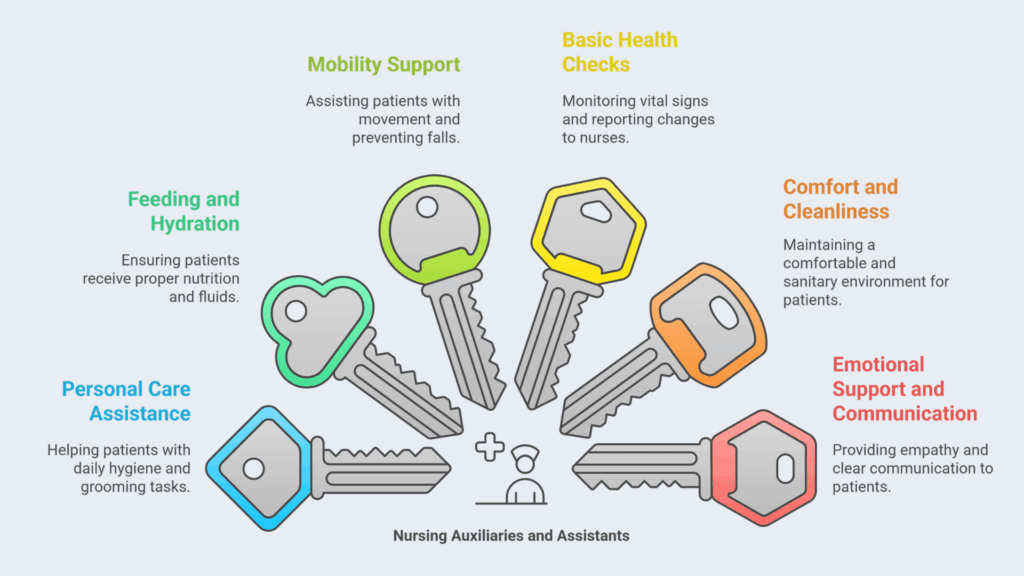
Nursing auxiliaries and assistants handle a wide range of tasks to support patient care. Common duties include:
Personal Care Assistance
Helping patients with activities of daily living such as bathing, washing, dressing, toileting, and grooming. For example, a nursing auxiliary may help a senior patient get dressed or assist with bathing to maintain the patient’s hygiene and comfort.
Feeding and Hydration
Assisting patients during mealtimes, including serving meals and sometimes even physically helping them eat or drink if they have difficulty doing so on their own. This duty ensures patients receive proper nutrition and hydration, especially those who are very weak or immobilised.
Mobility Support
Safely helping patients move and stay mobile. This can involve repositioning someone in bed to prevent pressure ulcers, helping patients walk to the bathroom or get into a wheelchair, and in general assisting with mobility and transfers. Nursing assistants are often trained in proper moving and handling techniques. So that patients are moved safely and the caregiver avoids injury.
Basic Health Checks
Performing simple clinical tasks under supervision, such as taking and recording vital signs (measuring temperature, pulse, respiration, blood pressure) and monitoring patients’ conditions. Moreover, they observe and report any changes in a patient’s condition to the nursing staff. These routine checks help the medical team track recovery progress or spot any concerns early.
Ensuring Comfort and Cleanliness
Keeping patients comfortable and their environment clean. Moreover, this includes making or changing beds, fluffing pillows, tidying up bed spaces, and ensuring hygiene and safety standards are maintained in the ward. Nursing assistants may also sterilise equipment and clean used medical instruments, helping to prevent infection.
Emotional Support and Communication
Providing a friendly ear and emotional support to patients. Auxiliaries often spend more time with patients than busy nurses or doctors, so they chat with patients, listen to their concerns, and provide reassurance. A healthcare assistant might comfort a worried patient or keep them company, helping reduce anxiety. They also assist in educating patients or family members on basic care. For instance, explaining how to use a call bell or why a certain diet is needed. Moreover, they act as a communication bridge in the care team.
These duties can vary depending on the setting and patient needs. For example, a health and social care assistant in a community or residential care home might focus more on helping clients with social activities and daily living at home. While a hospital auxiliary nurse may deal with more clinical tasks on a ward. In all cases, nursing auxiliaries work closely with the health care team to ensure patients receive kind, quality care.
Requirements to Become a Nursing Auxiliary or Assistant

Becoming a nursing auxiliary or healthcare assistant is one of the most accessible ways to start a career in healthcare. There are generally no strict formal requirements to become a nursing assistant, as many positions are entry-level. However, employers do set their own criteria and typically look for a combination of basic education, relevant training, and personal qualities suited to caregiving. Below are the typical requirements and qualifications:
Education and Qualifications
Most employers expect candidates to have a basic secondary education. In the UK, this usually means having a few GCSEs (high school-level qualifications) in subjects like English and maths. While a full university degree is not required, having good foundational education shows you have essential literacy and numeracy skills for the job (for tasks such as reading care plans or measuring fluids). Some aspiring nursing auxiliaries pursue college courses or diplomas in health and social care to boost their knowledge.
For instance, a Level 3 Diploma in Nursing Assistant Complete Training (CPD-accredited) provides preparation in patient care techniques and healthcare knowledge. Furthermore, it helps learners build confidence for the role. Similarly, a Level 3 Diploma in Health and Social Care can be beneficial. This qualification gives a broader understanding of working in both health care and community care settings.
Training and Certification
Many nursing auxiliaries receive on the job training once hired – you will typically go through an induction and learn practical skills under the guidance of experienced staff. Additionally, in UK healthcare settings, new healthcare assistants in hospitals or care homes usually work toward the Care Certificate, which is a standard training program introduced to ensure all support workers have the same basic skills and knowledge for quality care. While the UK does not require formal licensing for nursing assistants, other countries do have certification processes.
For example, in the United States, you generally must complete a state approved training program and pass an exam to become a Certified Nursing Assistant (CNA). Overall, having some form of professional training or certification (even if optional) is highly recommended, as it improves your competence and employability. Apprenticeships are another pathway. One can enter via a Healthcare Support Worker apprenticeship, earning a Level 2 or 3 diploma while gaining practical experience. Whether through formal courses or on the job learning, acquiring solid training in patient care, infection control, and basic medical procedures is an important requirement for the role.
Background Checks
Working in health and social care means you’ll be dealing with vulnerable people (sick, children, etc.). So employers will require a background check. In the UK, this is done through the Disclosure and Barring Service (DBS) to ensure you have no disqualifying criminal record.
Similar checks exist in other countries (for example, FBI background check in the US or police clearance in others). This is a standard requirement to protect patients, and you must pass these checks before you can start work. Additionally, being up to date with immunisations (like hepatitis B, TB tests, or COVID-19 vaccines) is often required or recommended for healthcare staff for safety reasons.
Skills and Personal Qualities
Beyond education and training, soft skills and personal attributes are perhaps the most crucial requirements for a nursing auxiliary. Compassion and empathy are at the heart of this job. You need to genuinely care about the well-being of others and be patient and kind when assisting people who may be in pain or distress. Additionally, good communication skills are essential. Nursing assistants must listen to patients’ needs, converse in a friendly manner, and clearly report information to nurses or family members. Strong observation and attention to detail are also important. For instance, noticing a small change in a patient’s condition (like reduced appetite or a new skin sore) and reporting it can make a big difference in care.
Physical stamina and the ability to handle the job’s demands are needed, as you’ll be on your feet most of the day, lifting or moving patients, and generally performing active tasks. Finally, teamwork and reliability are key qualities. Moreover, nursing auxiliaries are part of a larger multidisciplinary team. So you must work well with colleagues, follow instructions from supervisors, and maintain a positive, can do attitude even in busy or challenging situations.
Final Thoughts
In summary, nursing auxiliaries and assistants (6131 nursing auxiliaries and assistants in official UK terms) fulfill an essential role in healthcare by providing hands on patient care and support. Furthermore, their duties range from basic caregiving tasks to important observational responsibilities. All of which keep health care facilities running smoothly and patients well looked after. The requirements to enter this field are relatively accessible. Often a caring personality, some basic education, and a willingness to learn on the job are the main starting points.
However, to truly excel and progress, aspiring auxiliary nurses benefit from gaining relevant training and qualifications, such as the Level 3 diplomas in Nursing Assistant or Health and Social Care, to deepen their knowledge and skills. With experience and further training, a healthcare assistant can advance to senior support roles and even pathways like nursing associate or registered nurse in the future.
Embarking on a career as a nursing auxiliary or assistant is ideal for those who are compassionate, hardworking, and eager to make a difference in people’s lives. Moreover, these unsung heroes of health care ensure that patients receive respectful, attentive care every day. Furthermore, by meeting the job’s requirements and continually developing your skills, you can succeed in this rewarding role and become a valued member of the health and social care team.
Level 3 Diploma in Nursing Assistant Complete Training
Learn key patient care skills and prepare for essential nursing assistant jobs.
View CourseLevel 3 Diploma in Health and Social Care
Online CPD-accredited course preparing learners for compassionate, professional roles in health and social care.
View CourseFrequently Asked Questions Of Nursing Auxiliaries and Assistants
In the UK, nursing auxiliaries and assistants typically earn between £20,000 and £26,000 per year, depending on experience, location, and NHS Band level (usually Band 2 or 3).
A nursing assistant is a healthcare support worker who helps with daily patient care such as bathing, feeding, moving, and monitoring basic health indicators under the guidance of a nurse.
Under occupation code 6131, nurse auxiliaries and assistants support medical staff by helping patients with everyday needs, performing simple clinical tasks, and ensuring comfort and hygiene.
Occupation code 6131 in the UK refers to “Nursing Auxiliaries and Assistants,” a category of healthcare workers who provide direct patient support in hospitals, care homes, and community settings.
Auxiliary nurses in the UK usually earn between £10 and £13 per hour, which can total around £20,000–£27,000 annually depending on shifts, experience, and NHS pay bands.
Yes, with appropriate training, auxiliary nurses or healthcare assistants may be allowed to take blood samples (phlebotomy), especially in NHS settings or as part of an extended role.
An auxiliary nursing course provides foundational training in patient care, hygiene, mobility assistance, basic health checks, and communication. Moreover, courses like the Level 3 Diploma in Nursing Assistant Complete Training prepare learners for healthcare roles with practical knowledge and confidence.
To become an auxiliary nurse, you typically need a basic secondary education (like GCSEs in English and maths). While formal qualifications aren’t always required, completing a course such as the Level 3 Diploma in Health and Social Care can improve job prospects and readiness for the role.



Level 3 Diploma in Nursing Assistant Complete Training
Certificate:
yes
Accreditation:
Level 3 CPD Certificate
Access:
Lifetime
0 responses on "Nursing Auxiliaries and Assistants: Duties and Requirements"