





Recognising Signs of Deterioration in Elderly Patients: Complete Healthcare Guide UK
Recognising deterioration early is one of the most important responsibilities in healthcare and social care. In elderly patients, health decline often begins with small and subtle changes rather than obvious medical emergencies. A missed meal, unusual tiredness, increased confusion, slower movement, or sudden withdrawal from conversation may all signal that something is wrong. Although these signs can appear minor initially, they may quickly develop into serious health complications if ignored.
In many healthcare settings, elderly patients live with frailty, multiple long-term conditions, reduced mobility, or cognitive challenges. Therefore, recognising early signs of deterioration helps healthcare professionals, carers, and support workers provide safer, faster, and more person-centred care. Early action can reduce hospital admissions, improve patient safety, support emotional well-being, and prevent avoidable complications.
Healthcare professionals must remain alert to:
- physical warning signs
- behavioural and cognitive changes
- hydration and nutrition concerns
- reduced mobility and functional decline
- soft signs that indicate early deterioration
Importantly, deterioration does not always present through dramatic changes in vital signs. In elderly patients, conditions such as infection, dehydration, respiratory illness, or sepsis may first appear through confusion, fatigue, poor appetite, or changes in normal behaviour. As a result, observation skills and professional judgement play a major role in protecting patient health and safety.
This complete healthcare guide explains:
- what deterioration means in elderly patients
- common warning signs to monitor
- soft signs vs hard signs
- healthcare tools such as NEWS2 and SBAR
- escalation procedures and patient support strategies
- how healthcare professionals can respond effectively
Understanding these early warning signs helps healthcare staff move from reactive care to proactive care while improving safety, dignity, comfort, and long-term healthcare outcomes across UK healthcare settings.
Table of Contents
What Is Deterioration in Elderly Patients?
Deterioration in elderly patients refers to a decline in physical health, mental well-being, cognitive function, or daily functioning compared to the person’s usual condition or baseline. In healthcare settings, deterioration may happen suddenly over a few hours or develop gradually over several days. Although some warning signs are obvious, many early signs appear quietly and are easy to overlook.
In elderly patients, even small changes can indicate that the body is struggling. A person who suddenly becomes quieter, weaker, more confused, less mobile, or less interested in food may already be showing early signs of clinical deterioration. Therefore, healthcare professionals and carers must pay close attention to subtle changes in behaviour, communication, mobility, and routine.
Types of Deterioration in Healthcare
| Type of Decline | Description |
|---|---|
| Rapid Deterioration | Sudden health decline over hours or a short period |
| Gradual Deterioration | Slow decline developing over days or weeks |
| Cognitive Deterioration | Changes in memory, confusion, or awareness |
| Functional Deterioration | Reduced mobility or difficulty with daily tasks |
Why Baseline Health Matters
Every elderly patient has a different normal baseline. Some individuals may already live with frailty, dementia, reduced mobility, or chronic health conditions. Consequently, recognising deterioration often depends on identifying changes from what is normal for that specific person.
Healthcare professionals should monitor:
- usual mobility and walking ability
- eating and drinking habits
- communication patterns
- emotional and social behaviour
- sleep and energy levels
A small change from the patient’s usual behaviour may sometimes be more important than a dramatic change in observations.
Common Causes of Deterioration
Elderly patients may deteriorate because of:
- infections and sepsis
- dehydration and poor nutrition
- respiratory illnesses
- medication side effects
- falls and injuries
- worsening chronic illnesses
- reduced mobility and frailty
Additionally, emotional distress, loneliness, confusion, or sudden environmental changes may also contribute to deterioration in vulnerable individuals.
Why Early Recognition Is Important
Early recognition allows healthcare professionals to respond before the condition becomes severe. When deterioration is identified quickly, healthcare teams can:
- increase monitoring
- provide earlier treatment
- reduce complications
- prevent hospital admissions
- improve patient safety and comfort
Importantly, recognising deterioration early also helps maintain dignity, emotional well-being, and independence for elderly patients receiving healthcare or social care support.
Why Early Recognition of Deterioration Matters

Early recognition of deterioration is one of the most important parts of patient safety and healthcare monitoring. In elderly patients, health conditions can worsen very quickly, especially when frailty, chronic illnesses, or reduced physical reserves are already present. Therefore, recognising subtle warning signs early allows healthcare professionals to respond before the condition becomes severe or life-threatening.
In many situations, the first signs of deterioration are not dramatic. A patient may become more tired, confused, withdrawn, weaker, or less interested in food and fluids. Although these changes may initially seem minor, they often indicate that the body is struggling to cope with illness, infection, dehydration, or other medical problems.
Benefits of Early Recognition
| Benefit | Positive Healthcare Outcome |
|---|---|
| Faster Intervention | Allows earlier treatment and support |
| Improved Patient Safety | Reduces risk of serious complications |
| Better Recovery Outcomes | Helps patients recover more effectively |
| Reduced Hospital Admissions | Prevents avoidable emergency situations |
| Better Quality of Care | Supports comfort, dignity, and reassurance |
Helps Prevent Rapid Health Decline
Elderly patients can deteriorate faster than younger individuals because their bodies may not respond as strongly to illness or stress. Consequently, small health concerns can quickly lead to:
- infections becoming severe
- dehydration worsening rapidly
- increased falls and injuries
- breathing difficulties
- confusion and delirium
When healthcare professionals identify these warning signs early, they can provide support before the patient becomes critically unwell.
Improves Patient Safety and Clinical Outcomes
Recognising deterioration early improves patient safety significantly. Healthcare teams can monitor the patient more closely, communicate concerns sooner, and begin treatment more effectively.
Early Action May Include:
- Increasing observations and monitoring vital signs
- Encouraging fluids and nutritional support
- Reviewing medications and treatment plans
- Escalating concerns using SBAR or NEWS2
These early interventions often reduce complications and improve long-term healthcare outcomes.
Reduces Hospital Admissions and Complications
Hospital admissions can sometimes be distressing for elderly patients, especially when confusion, frailty, or mobility problems are already present. Early recognition of deterioration may help prevent avoidable admissions by managing concerns sooner within care homes, community settings, or healthcare facilities.
Early intervention can also reduce risks such as:
- delirium and confusion
- pressure damage
- falls and fractures
- worsening infections
- emotional distress
As a result, patients often remain safer, more comfortable, and more stable.
Supports Person-Centred Healthcare
Early recognition is not only about medical treatment. It also supports dignity, emotional well-being, reassurance, and compassionate care. Healthcare professionals who notice small changes early can provide calmer, more supportive care while involving families and carers appropriately.
This person-centred approach helps:
- reduce anxiety and distress
- maintain patient comfort
- improve communication
- strengthen trust between carers and patients
Recognising deterioration early ultimately helps healthcare professionals provide safer, faster, and more compassionate support across all healthcare and social care settings.
Common Signs of Deterioration in Elderly Patients

Recognising deterioration in elderly patients often begins with noticing small changes from their normal behaviour, physical condition, or daily routine. In many cases, elderly patients may not show obvious symptoms immediately. Instead, deterioration may first appear through subtle physical, cognitive, emotional, or functional changes.
Healthcare professionals, carers, and support workers should remain alert because even minor changes can indicate serious underlying health concerns such as infection, dehydration, respiratory illness, medication complications, or worsening chronic conditions.
Main Warning Signs of Deterioration
| Type of Sign | Common Warning Indicators |
|---|---|
| Physical Changes | Breathing difficulties, weakness, pain, dizziness |
| Cognitive Changes | Confusion, agitation, memory problems |
| Functional Decline | Reduced mobility, falls, difficulty with daily tasks |
| Hydration & Nutrition Changes | Poor appetite, dehydration, weight loss |
Physical Warning Signs
Physical changes are often among the earliest signs that a patient’s health is declining. Although some symptoms appear gradually, they should never be ignored.
Healthcare professionals should monitor:
- faster or shallow breathing
- new breathlessness
- dizziness or faintness
- unusual tiredness or weakness
- sudden pain or discomfort
- changes in temperature
- reduced oxygen levels
- changes in pulse or blood pressure
Even a slight increase in respiratory rate can sometimes indicate early clinical deterioration.
Cognitive and Behavioural Changes
Changes in behaviour or cognition are extremely important in elderly patients because confusion or withdrawal may appear before physical symptoms become obvious.
Common Cognitive and Behavioural Signs Include:
- New confusion or disorientation
- Increased agitation or irritability
- Withdrawal from conversations or activities
- Increased sleepiness or reduced alertness
- Sudden emotional or mood changes
These symptoms may indicate infection, dehydration, delirium, medication issues, or reduced oxygen levels.
Functional Decline
Functional decline refers to a reduction in the patient’s ability to perform normal daily activities safely or independently. Although these changes may initially appear mild, they often indicate worsening health or frailty.
Healthcare professionals should watch for:
- slower walking or reduced mobility
- increased falls or near-falls
- difficulty standing or transferring
- needing more assistance with personal care
- reduced strength or balance
A sudden decline in mobility should always be investigated carefully.
Hydration and Nutrition Concerns
Changes in eating and drinking habits are common early indicators of deterioration. Poor nutrition and dehydration can quickly worsen physical health, confusion, weakness, and recovery outcomes in elderly patients.
Important Hydration and Nutrition Signs Include:
- Reduced appetite or missed meals
- Drinking less than usual
- Dry mouth or dark urine
- Unplanned weight loss
- Increased fatigue or dizziness
These warning signs may appear before more serious medical symptoms develop.
Why Small Changes Matter
In elderly patients, deterioration often develops gradually. Therefore, healthcare professionals must pay close attention to both soft signs and physical observations. Small behavioural or physical changes may provide the earliest opportunity to intervene, escalate concerns, and prevent serious complications.
Early recognition helps improve:
- patient safety
- emotional well-being
- recovery outcomes
- healthcare communication
- long-term quality of care
Soft Signs vs Hard Signs of Deterioration
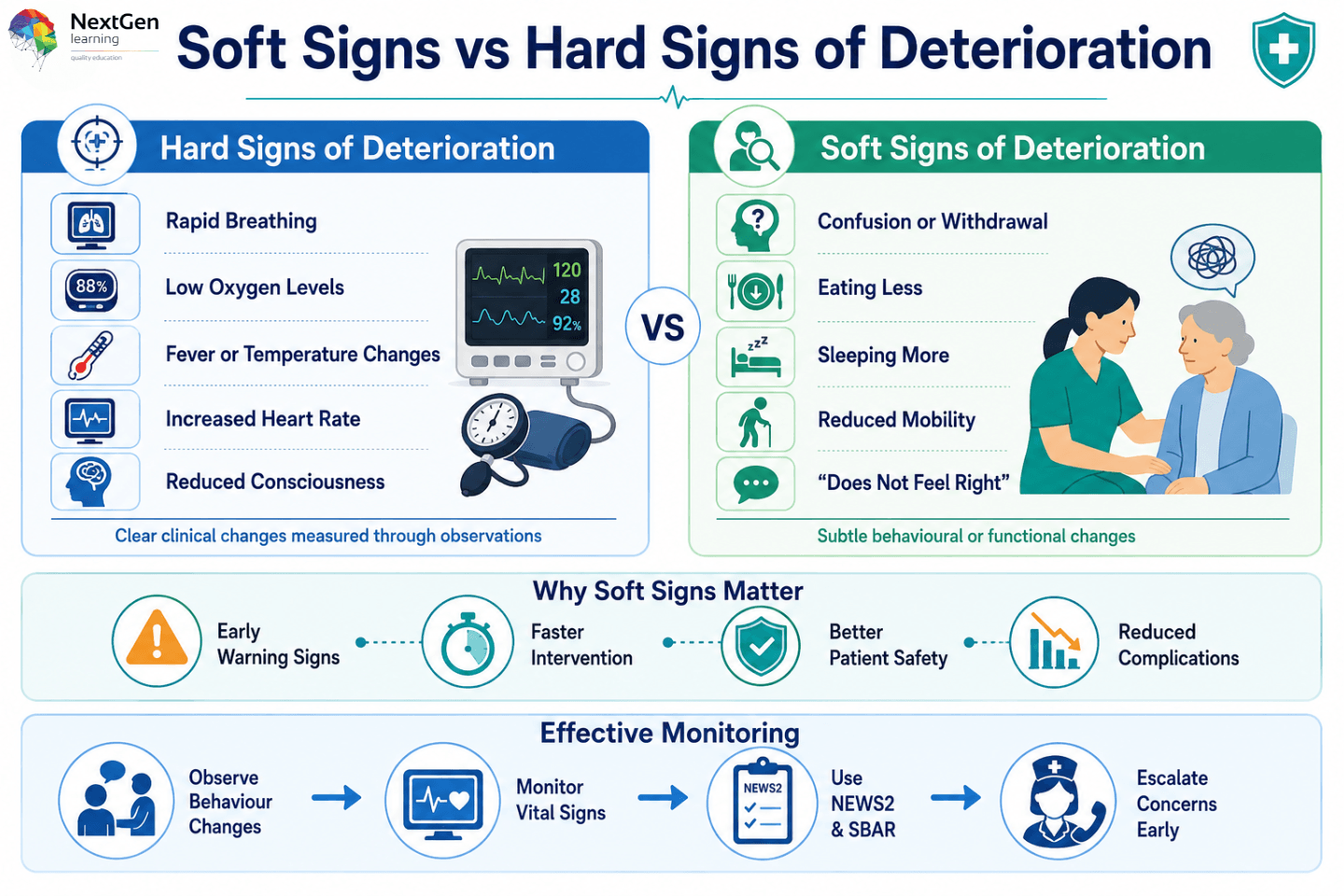
When monitoring elderly patients, healthcare professionals often look for both hard signs and soft signs of deterioration. Hard signs are clear clinical symptoms that can usually be measured through observations or medical equipment. Soft signs, however, are subtle behavioural or functional changes that may appear before vital signs become abnormal.
Importantly, elderly patients frequently show soft signs earlier than obvious physical symptoms. Therefore, recognising both types of warning signs is essential for early intervention, patient safety, and person-centred care.
Difference Between Soft Signs and Hard Signs
What Are Hard Signs of Deterioration?
Hard signs are physical symptoms that healthcare professionals can often measure objectively. These signs usually indicate that the patient’s condition is already becoming clinically unstable.
Common hard signs include:
- rapid breathing
- low oxygen saturation
- abnormal blood pressure
- increased heart rate
- fever or temperature changes
- reduced consciousness
- chest pain or severe weakness
Healthcare tools such as NEWS2 help professionals identify and monitor these clinical warning signs more effectively.
What Are Soft Signs of Deterioration?
Soft signs are subtle changes in behaviour, communication, mobility, mood, or routine that may indicate early deterioration before observations become abnormal.
Common Soft Signs Include:
- Becoming quieter or withdrawn
- Eating or drinking less than usual
- Sleeping more frequently
- New confusion or forgetfulness
- Reduced mobility or slower walking
- Saying they “do not feel right”
Although these changes may seem minor, they are often among the earliest signs that an elderly patient is becoming unwell.
Why Soft Signs Matter in Elderly Patients
Elderly patients do not always present illness in typical ways. Infections, dehydration, respiratory illness, or sepsis may first appear through confusion, weakness, reduced appetite, or behavioural changes rather than fever or severe pain.
Consequently, healthcare professionals should:
- compare changes with the patient’s normal baseline
- monitor subtle behavioural differences carefully
- communicate concerns early
- escalate unusual changes promptly
Paying attention to soft signs can prevent delayed treatment and reduce serious complications.
Using Both Signs Together
The safest approach is to combine soft signs with clinical observations. Healthcare professionals should never rely only on equipment or scores when assessing deterioration in elderly patients.
Effective Monitoring Includes:
- Observing physical and behavioural changes together
- Using NEWS2 alongside professional judgement
- Listening to carers and family concerns
- Escalating concerns early using SBAR communication
This balanced approach improves patient safety, healthcare decision-making, and early intervention outcomes.
Risk Factors That Increase Deterioration
Certain health conditions, lifestyle factors, and physical limitations can increase the risk of deterioration in elderly patients. Although some individuals remain stable for long periods, others may become unwell quickly because ageing often reduces the body’s ability to recover from illness, infection, dehydration, or physical stress.
Understanding these risk factors helps healthcare professionals recognise vulnerable patients earlier and provide safer, more proactive care.
Common Risk Factors for Deterioration
| Risk Factor | Why It Increases Risk |
|---|---|
| Frailty | Reduces physical strength and recovery ability |
| Multiple Long-Term Conditions | Creates complex healthcare needs |
| Reduced Mobility | Increases falls, weakness, and pressure damage |
| Poor Nutrition or Dehydration | Weakens physical and cognitive health |
| Cognitive Conditions | Makes symptoms harder to recognise early |
Frailty and Age-Related Decline
Frailty is one of the biggest risk factors for deterioration. Frail patients often have reduced strength, lower energy levels, slower recovery, and increased vulnerability to illness.
Healthcare professionals may notice:
- slower movement
- reduced balance
- weakness and fatigue
- increased falls
- difficulty recovering from minor illnesses
Even small infections or dehydration can lead to rapid decline in frail elderly patients.
Multiple Long-Term Health Conditions
Many elderly patients live with several chronic health conditions at the same time. Conditions such as diabetes, heart disease, respiratory illness, arthritis, dementia, or kidney disease can interact and make healthcare management more complex.
Common Long-Term Conditions Linked to Deterioration Include:
- Heart disease and heart failure
- Chronic respiratory conditions
- Dementia and cognitive disorders
- Diabetes and kidney disease
- Neurological and mobility conditions
These conditions often increase the risk of hospital admissions and sudden health decline.
Reduced Mobility and Falls Risk
Patients with limited mobility are more vulnerable to deterioration because physical inactivity may lead to muscle weakness, pressure injuries, poor circulation, and reduced independence.
Healthcare professionals should monitor:
- increased falls or near-falls
- reduced walking ability
- difficulty standing or transferring
- longer periods spent in bed or chairs
Falls can also indicate hidden problems such as dehydration, infection, dizziness, or medication complications.
Poor Nutrition and Dehydration
Dehydration and poor nutrition are common but serious risk factors in elderly patients. Reduced appetite, swallowing difficulties, illness, confusion, or reduced fluid intake can quickly affect physical and cognitive health.
Warning signs may include:
- dry mouth
- dizziness
- fatigue
- confusion
- weight loss
- dark urine
Without early intervention, dehydration can rapidly worsen deterioration.
Cognitive and Mental Health Conditions
Conditions such as dementia, delirium, depression, or confusion can make it harder for patients to communicate symptoms or ask for help. Consequently, deterioration may go unnoticed for longer periods.
Healthcare professionals should pay close attention to:
- sudden confusion
- withdrawal or isolation
- agitation or distress
- reduced communication
- unusual behaviour changes
Monitoring emotional and cognitive health is essential for recognising deterioration early and maintaining patient safety.
Tools Used to Recognise Clinical Deterioration
Healthcare professionals use several observation and communication tools to recognise deterioration early and respond more effectively. These tools help improve patient safety, support clinical decision-making, and ensure healthcare teams communicate concerns clearly and consistently.
Although professional judgement remains extremely important, structured healthcare tools help staff identify warning signs earlier and escalate concerns more confidently.
Common Healthcare Tools for Recognising Deterioration
| Tool | Main Purpose |
|---|---|
| NEWS2 | Monitors vital signs and clinical deterioration |
| SBAR | Improves healthcare communication and escalation |
| RESTORE2 | Helps care homes identify early deterioration |
| Frailty Scales | Assesses frailty and baseline health risks |
NEWS2 (National Early Warning Score 2)
NEWS2 is widely used across NHS hospitals, care homes, and healthcare settings to monitor patients for signs of clinical deterioration. The tool uses vital signs to identify patients who may require urgent medical attention.
NEWS2 monitors:
- respiratory rate
- oxygen saturation
- pulse rate
- blood pressure
- temperature
- level of consciousness
Importantly, even small score changes can be significant in elderly patients, especially when combined with soft signs such as confusion or reduced mobility.
SBAR Communication Tool
SBAR stands for:
- Situation
- Background
- Assessment
- Recommendation
Healthcare professionals use SBAR to communicate concerns clearly when escalating patient deterioration. This structured format reduces misunderstandings and helps clinical teams respond more quickly.
SBAR Helps Healthcare Staff:
- Share concerns clearly and professionally
- Communicate important patient information quickly
- Improve escalation and decision-making
- Reduce communication errors during emergencies
Effective communication is essential when a patient’s condition begins to worsen.
RESTORE2 in Care Home Settings
RESTORE2 is commonly used in UK care homes to help carers and healthcare staff recognise early signs of deterioration in elderly patients. It combines:
- soft signs monitoring
- NEWS2 observations
- SBAR communication guidance
This tool is especially useful for identifying subtle changes before severe clinical deterioration develops.
Frailty Assessment Tools
Frailty scales help healthcare professionals understand how vulnerable a patient may be to illness, falls, or rapid decline. These tools are important because frail patients may deteriorate more quickly than others.
Frailty assessments may consider:
- mobility and balance
- daily functioning
- long-term conditions
- physical strength
- cognitive health
Knowing the patient’s baseline helps professionals recognise meaningful changes earlier.
Why These Tools Matter
Healthcare tools improve consistency, communication, and patient safety across healthcare environments. However, they should always be used alongside professional judgement, patient observation, and person-centred care.
Combining Tools and Observation Helps:
- Identify deterioration earlier
- Improve patient safety and escalation
- Support faster healthcare intervention
- Reduce avoidable complications and hospital admissions
Using structured tools effectively helps healthcare professionals deliver safer and more responsive care for elderly patients.
How Healthcare Professionals Should Respond

Recognising deterioration is only the first step. Healthcare professionals must also respond quickly, calmly, and appropriately to protect patient safety and prevent further decline. In elderly patients, even small changes can worsen rapidly if action is delayed. Therefore, early intervention, communication, monitoring, and escalation are all essential parts of effective healthcare support.
A structured response helps healthcare teams remain organised while ensuring patients receive timely and person-centred care.
Immediate Actions After Recognising Deterioration
When healthcare professionals notice signs of deterioration, they should:
- remain calm and observant
- assess the patient carefully
- compare changes with the patient’s normal baseline
- increase monitoring and observations
- document findings clearly
- escalate concerns early when needed
Even if symptoms initially appear mild, early action often prevents serious complications later.
Increase Monitoring and Observation
After identifying warning signs, healthcare professionals may need to monitor the patient more closely. This helps determine whether the condition is improving, remaining stable, or becoming worse.
Monitoring May Include:
- Repeating vital signs regularly
- Observing breathing, mobility, and alertness
- Monitoring food and fluid intake
- Watching for increasing confusion or weakness
- Recording all changes clearly and accurately
Good documentation supports continuity of care and improves communication between healthcare teams.
Escalate Concerns Early
Healthcare professionals should never ignore gut feelings or unusual changes in a patient’s condition. Escalating concerns early often leads to faster treatment and better healthcare outcomes.
Signs that may require escalation include:
- worsening breathing difficulties
- sudden confusion or drowsiness
- reduced oxygen levels
- repeated falls
- reduced urine output
- severe weakness or collapse
- rapid NEWS2 score changes
Early escalation helps reduce delays in treatment and improves patient safety significantly.
Use Clear Communication
Clear communication is essential when reporting deterioration. Healthcare professionals should communicate observations accurately using structured methods such as SBAR.
Effective Communication Helps:
- Reduce misunderstandings between healthcare teams
- Support faster medical decision-making
- Provide accurate patient information quickly
- Improve continuity and coordination of care
Good communication ensures concerns are taken seriously and acted upon promptly.
Maintain Patient Comfort and Safety
While awaiting medical review or further support, healthcare professionals should continue focusing on patient comfort, reassurance, and safety.
This may involve:
- helping the patient sit comfortably
- encouraging fluids if appropriate
- reducing noise and distress
- staying nearby for reassurance
- supporting safe mobility
- preventing falls or injury
These supportive actions help reduce anxiety and maintain dignity during periods of deterioration.
Work as a Multidisciplinary Team
Responding to deterioration often requires teamwork between:
- nurses
- carers
- doctors
- therapists
- pharmacists
- support workers
- emergency healthcare services
Collaborative care helps ensure all physical, emotional, and healthcare needs are managed safely and effectively.
Importance of Early and Compassionate Response
A fast and compassionate response can significantly improve outcomes for elderly patients experiencing deterioration. Early intervention not only protects physical health but also reduces distress, improves emotional well-being, and supports safer long-term care across healthcare and social care settings.
Supporting Elderly Patients During Deterioration

When an elderly patient begins to deteriorate, healthcare professionals and carers must provide calm, safe, and compassionate support. Although medical treatment is important, emotional reassurance, communication, comfort, and patient safety also play a major role during periods of health decline.
Elderly patients may feel frightened, confused, weak, or emotionally distressed when their condition changes suddenly. Therefore, supportive and person-centred care helps reduce anxiety while improving comfort and overall well-being.
Provide Calm Reassurance
Healthcare professionals should remain calm and speak clearly when supporting a deteriorating patient. A reassuring presence often helps reduce fear, confusion, and emotional distress.
Healthcare staff should:
- speak slowly and calmly
- explain actions clearly
- provide emotional reassurance
- avoid creating unnecessary panic
- maintain respectful communication
Simple reassurance can make patients feel safer and more supported during difficult situations.
Maintain Safety and Prevent Falls
Deterioration often increases weakness, dizziness, confusion, and reduced mobility. Consequently, elderly patients may become more vulnerable to falls and injuries.
Safety Support May Include:
- Helping patients move safely and slowly
- Keeping pathways and surroundings clear
- Providing mobility support when necessary
- Monitoring patients more closely during movement
- Reducing risks of slips, falls, or accidents
Preventing injury is an important part of patient safety during deterioration.
Support Hydration and Nutrition
Poor appetite and dehydration commonly worsen deterioration in elderly patients. Encouraging safe food and fluid intake may help maintain stability and prevent further decline.
Healthcare professionals may:
- encourage small amounts of fluids regularly
- monitor eating and drinking
- support comfortable meal positioning
- report reduced intake promptly
- observe signs of dehydration carefully
Good hydration and nutrition support both physical and cognitive health.
Reduce Confusion and Distress
Some elderly patients experience confusion, delirium, or agitation during illness or deterioration. A calm and familiar environment may help reduce emotional distress and improve communication.
Healthcare staff should:
- reduce excessive noise or stimulation
- maintain familiar routines where possible
- support hearing aids or glasses use
- communicate clearly and patiently
- offer reassurance frequently
These supportive approaches help maintain dignity and emotional comfort.
Involve Families and Carers
Family members and regular carers often understand the patient’s normal behaviour and baseline better than anyone else. Their observations can help healthcare professionals recognise important changes earlier.
Family Involvement Can Help:
- Identify unusual behaviour or symptoms
- Provide emotional reassurance for patients
- Improve communication with healthcare teams
- Support person-centred decision-making
Collaborative communication improves continuity and quality of care.
Continue Observation and Escalation
Supporting elderly patients during deterioration also requires ongoing observation and timely escalation when symptoms worsen. Healthcare professionals should continue monitoring:
- breathing and oxygen levels
- confusion or alertness
- hydration and nutrition
- pain and discomfort
- mobility and weakness
Prompt communication and escalation help ensure patients receive appropriate treatment and support quickly.
Importance of Compassionate Care
Compassionate support is just as important as clinical intervention during deterioration. Elderly patients often feel vulnerable during illness, and respectful care helps maintain dignity, trust, emotional well-being, and comfort throughout the healthcare journey.
Observation Skills and Healthcare Training
Observation skills are one of the most important parts of healthcare and social care. Healthcare professionals, carers, and support workers must recognise subtle physical, emotional, behavioural, and cognitive changes that may indicate deterioration in elderly patients. Strong observation skills help professionals respond earlier, improve patient safety, and reduce avoidable complications.
In many healthcare settings, carers spend the most time with patients during daily activities such as meals, medication rounds, mobility support, and personal care. Therefore, they are often the first people to notice small but important changes.
Important Observation Skills in Healthcare
Healthcare professionals should learn how to:
- recognise soft signs of deterioration
- monitor physical and behavioural changes
- identify risks such as dehydration or falls
- communicate concerns clearly
- escalate deterioration early
- document observations accurately
These skills help improve both patient safety and healthcare decision-making.
Why Observation Skills Matter
Good observation skills allow healthcare professionals to identify deterioration before serious complications develop. Early recognition often improves:
- patient outcomes
- safeguarding and safety
- communication between healthcare teams
- emotional support and reassurance
- continuity of care
Even small observations may prevent severe illness or emergency hospital admissions.
Areas Commonly Covered in Healthcare Training
Healthcare Observation Training Often Includes:
- Recognising signs of deterioration
- Understanding soft signs and behavioural changes
- Using NEWS2 and SBAR communication tools
- Monitoring hydration, nutrition, and mobility
- Supporting patient safety and safeguarding
Healthcare training helps professionals develop confidence while improving clinical awareness and patient-centred care skills.
Who Can Benefit From Observation Skills Training?
Observation and healthcare training can support:
- carers and support workers
- healthcare assistants
- nursing students
- care home staff
- community healthcare workers
- social care professionals
These skills are valuable across hospitals, residential care homes, rehabilitation services, and community healthcare settings throughout the UK.
Benefits of Professional Healthcare Training
Healthcare training not only improves knowledge but also strengthens confidence and professional practice.
Key Benefits Include:
- Improving patient observation and monitoring skills
- Supporting safer and faster escalation procedures
- Strengthening communication and documentation skills
- Helping professionals deliver more compassionate care
- Improving confidence within healthcare environments
Developing strong observation skills helps healthcare professionals provide safer, more responsive, and more person-centred care for elderly patients across all healthcare settings.
FAQs About Recognising Signs of Deterioration in Elderly Patients
Early signs of deterioration may include confusion, unusual tiredness, reduced appetite, weakness, slower movement, increased sleepiness, breathing changes, or withdrawal from normal activities. In elderly patients, these subtle changes often appear before serious physical symptoms develop.
Elderly patients may deteriorate more quickly because ageing reduces the body’s ability to recover from illness, infection, dehydration, or physical stress. Frailty, chronic illnesses, reduced mobility, and cognitive conditions can also increase vulnerability to rapid health decline.
Soft signs are subtle behavioural or functional changes that may indicate early health decline before vital signs become abnormal. Examples include confusion, reduced appetite, unusual quietness, withdrawal, poor mobility, increased sleepiness, or saying they “do not feel right.”
Hard signs are measurable clinical symptoms that usually indicate worsening health. These may include rapid breathing, low oxygen levels, abnormal blood pressure, fever, reduced consciousness, chest pain, or sudden weakness.
Early recognition helps healthcare professionals provide treatment and support before the condition becomes severe. It improves patient safety, reduces complications, prevents avoidable hospital admissions, and supports better long-term healthcare outcomes.
Healthcare professionals commonly use tools such as NEWS2, SBAR, RESTORE2, and frailty assessments to recognise and communicate signs of deterioration more effectively. These tools improve patient monitoring, escalation, and healthcare communication.
Healthcare professionals should assess the patient carefully, increase monitoring, document observations, communicate concerns clearly, and escalate symptoms early when needed. Providing reassurance, hydration support, and patient safety measures is also important during deterioration.
Carers can support elderly patients by remaining calm, monitoring symptoms closely, encouraging fluids and nutrition, preventing falls, reducing distress, and communicating concerns promptly with healthcare professionals. Emotional reassurance and compassionate care are also essential.



0 responses on "Recognising Signs of Deterioration in Elderly Patients: Complete Healthcare Guide UK"