


Safeguarding Training for Childminders: What Ofsted Expects
Choosing the right safeguarding training is an important step when starting or running a childminding business. You need training that develops your confidence, supports your daily responsibilities and meets the relevant requirements.
Safeguarding training for childminders is mandatory in England under the Early Years Foundation Stage (EYFS). Childminders must complete training covering the relevant EYFS criteria, including the additional responsibilities of a designated safeguarding lead (DSL). Training must be renewed at least every two years.
But does Ofsted expect Level 2 or Level 3 training? Can you study online? And what should you look for when choosing a safeguarding course?
This guide explains the requirements, what suitable training should cover and how to choose an option that supports your childminding practice.
Table of Contents
What Safeguarding Training Does Ofsted Expect Childminders to Have?
Ofsted expects registered early years childminders to understand their safeguarding responsibilities and apply them effectively within their childcare settings.
The EYFS statutory framework for childminders, updated on 1 September 2026, sets out the safeguarding and welfare requirements for early years childcare providers in England.
Under the framework, childminders must demonstrate secure safeguarding knowledge and complete training that meets the criteria in Annex C.
Is Safeguarding Training Mandatory for Childminders?
Yes. Childminders working under the EYFS must undertake appropriate safeguarding and child protection training.
The Ofsted childminder registration policy confirms that applicants to the Early Years Register must have attended child protection training that helps them identify, understand and respond to possible abuse and neglect.
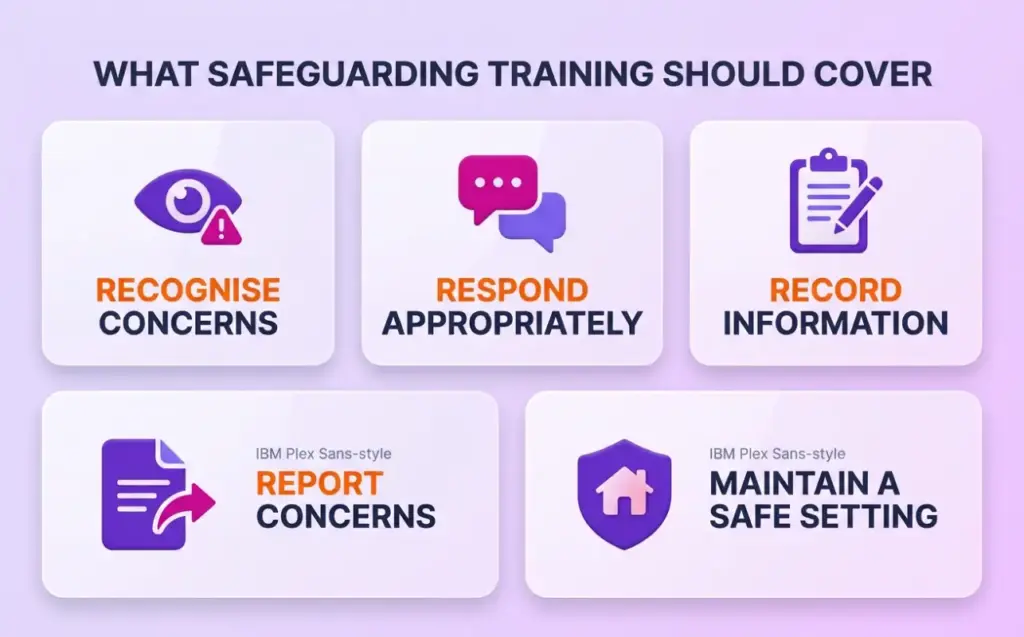
Appropriate training should prepare you to:
- Recognise signs of abuse, neglect and potential harm.
- Respond appropriately when a child raises a concern.
- Record and report safeguarding concerns.
- Follow relevant child protection procedures.
- Understand your responsibilities as a designated safeguarding lead.
These skills are important whether you are preparing to register as a childminder or already providing childcare.
Does Ofsted Require a Particular Safeguarding Course?
Ofsted does not require every childminder to purchase the same commercial safeguarding course.
Instead, the training must meet the applicable EYFS criteria and prepare you to fulfil your responsibilities.
Before choosing a course, review its syllabus, check whether it covers DSL responsibilities and consider any additional advice provided by your local authority or safeguarding partners.
What Should Safeguarding Training for Childminders Cover?
A suitable safeguarding course should provide practical knowledge that childminders can apply when caring for children.
Annex C of the EYFS establishes the training criteria, covering safeguarding awareness, recognising concerns, responding appropriately and additional responsibilities for safeguarding leads.
Recognising Abuse, Neglect and Safeguarding Concerns
Childminders often build close, trusting relationships with children and families. This puts them in a position to notice changes that may require attention.
Training should help you recognise possible indicators of abuse or neglect, including:
- Unexplained injuries or concerning physical signs.
- Significant changes in behaviour or emotional wellbeing.
- Signs that a child’s basic needs are not being met.
- Comments or disclosures that suggest possible harm.
Childminders should understand the different forms of child abuse and know when concerns need to be reported.
Childminders should understand the different forms of child abuse and know when concerns need to be reported.
The purpose is to recognise potential problems and take appropriate action, rather than investigate allegations independently.
Responding to Disclosures and Reporting Concerns
Recognising a safeguarding concern is only the first step. You must also know how to respond.
For example, if a child shares something concerning, you should listen calmly, avoid leading questions and follow the relevant reporting procedures.
Effective training should explain how to record concerns accurately, share information appropriately and contact the relevant safeguarding services.
Understanding how child protection concerns are handled can also help childminders recognise the importance of accurate records, appropriate referrals and timely action.
Understanding the distinction between safeguarding and child protection is also useful. Safeguarding includes wider preventative measures, while child protection focuses on protecting children who are suffering, or are at risk of suffering, significant harm.
Understanding Wider Safeguarding Risks
Safeguarding training should also address relevant risks such as exploitation, unsafe adult behaviour, inappropriate digital content and concerns involving people responsible for children’s care.
The Department for Education’s safeguarding guidance explains the importance of clear safeguarding procedures and appropriate responses to concerns.
Do Childminders Need Designated Safeguarding Lead Training?
Yes. Under the EYFS, the childminder acts as the designated safeguarding lead (DSL) within their setting.
This means childminders need training covering both general safeguarding knowledge and the additional criteria associated with safeguarding leadership.
Why Childminders Have DSL Responsibilities
A designated safeguarding lead takes responsibility for managing safeguarding concerns and ensuring appropriate procedures are followed.
For childminders, this includes:
- Understanding safeguarding referral procedures.
- Maintaining suitable safeguarding policies.
- Managing concerns and recording relevant information.
- Communicating with children’s services when necessary.
- Supporting assistants with safeguarding responsibilities.
The additional DSL training criteria are included in section 3 of Annex C.
Understanding the responsibilities of a designated safeguarding lead can help you develop a clearer picture of safeguarding leadership, although school and childminder requirements differ.
Consequently, when comparing courses, check that the training addresses the full range of responsibilities relevant to your role.
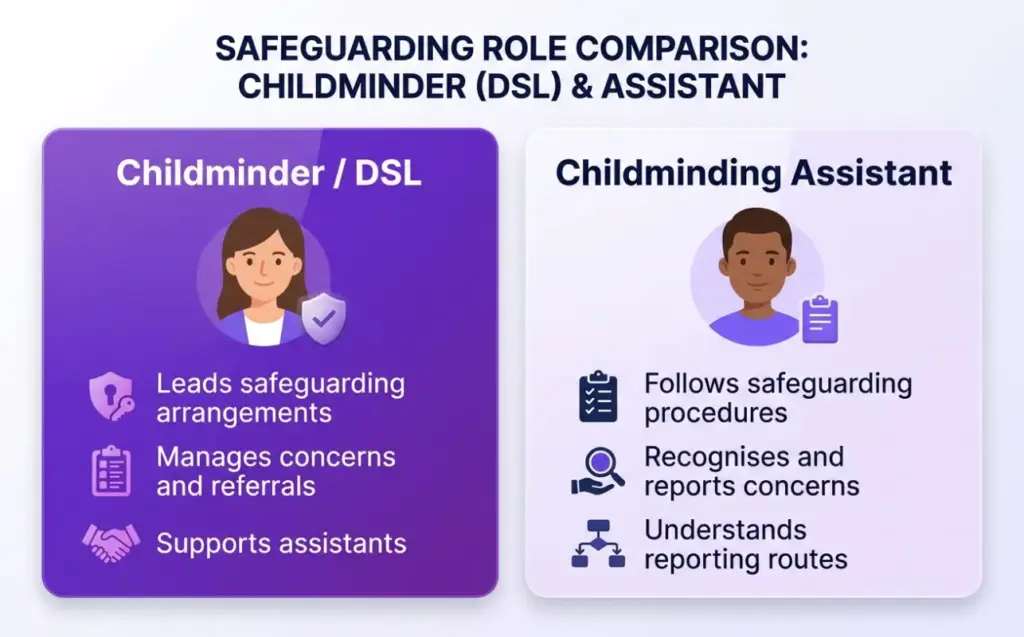
What About Childminding Assistants?
Assistants must also receive safeguarding training and understand the setting’s safeguarding procedures.
However, their responsibilities differ from those of the childminder.
| Childminder Acting as DSL | Childminding Assistant |
|---|---|
| Completes general safeguarding training and additional training appropriate to the DSL role. | Completes relevant general safeguarding training. |
| Leads safeguarding arrangements within the childminding setting. | Follows established safeguarding policies and procedures. |
| Manages safeguarding concerns and makes appropriate referrals when required. | Recognises and promptly reports safeguarding concerns. |
| Supports assistants in understanding their safeguarding responsibilities. | Understands when and how to raise or escalate safeguarding concerns. |
Some local safeguarding frameworks recommend courses described as Level 2 or Level 3.
However, the national EYFS requirements are based on the relevant training criteria rather than a universally prescribed commercial course level.
When selecting training, consider both the EYFS and any relevant local guidance.
How Often Must Childminders Renew Safeguarding Training?
Childminders and their assistants must undertake safeguarding training that meets the EYFS criteria at least every two years.
For example, if you complete your training in November 2026, you would normally need to undertake it again by November 2028.
Keeping Safeguarding Knowledge Up to Date
The EYFS also advises childminders to consider whether annual refresher training would help them maintain their knowledge between required training sessions.
Regular updates can be useful when:
- Safeguarding guidance changes.
- Local reporting procedures are updated.
- New safeguarding concerns arise within a setting.
- Assistants need additional support or training.
Keeping a record of training completion dates and refresher activities helps you plan future development.
It is also worth reviewing your safeguarding knowledge periodically rather than relying entirely on a certificate obtained several years earlier.
How Can Childminders Demonstrate Safeguarding Knowledge to Ofsted?
Completing safeguarding training provides an important foundation. Childminders should also be able to explain how they apply their knowledge in everyday situations.
Keeping Evidence of Safeguarding Training
Maintain organised records of your safeguarding development, including:
- Training certificates and completion dates.
- Course details and relevant learning outcomes.
- Refresher training and professional development.
- Current safeguarding policies and reporting procedures.
- Relevant safeguarding training completed by assistants.
These records help demonstrate your commitment to maintaining appropriate safeguarding knowledge.
Applying Safeguarding Knowledge in Practice
Consider whether you could confidently explain how you would respond to common safeguarding situations.

For example:
If a child disclosed abuse: You should understand how to listen appropriately, document the information and follow the relevant reporting procedures.
If you noticed a safeguarding concern: You should know which local service to contact and how to record the concern accurately.
If you worked with an assistant: You should be able to explain how they receive training and understand their safeguarding responsibilities.
These examples can help you review how effectively your training supports your daily practice.
Can Childminders Complete Safeguarding Training Online?
relevant EYFS requirements.
For self-employed childminders, online learning offers the flexibility to study around childcare commitments and revisit important topics.
However, choosing the right course involves more than looking at its duration or certificate.
What to Check Before Choosing Online Training
Before enrolling, compare the course content with your safeguarding responsibilities.
| What to Check | Why It Matters |
|---|---|
| Current EYFS coverage | Training should reflect applicable safeguarding requirements. |
| Annex C criteria | The course should address the required safeguarding knowledge. |
| DSL responsibilities | Childminders need additional safeguarding lead training, where applicable. |
| Practical content | Training should explain how to respond to disclosures, record concerns and report safeguarding issues. |
| Assessments | Learning checks can help reinforce understanding and assess knowledge. |
| Certification | Completion records provide evidence of the training undertaken. |
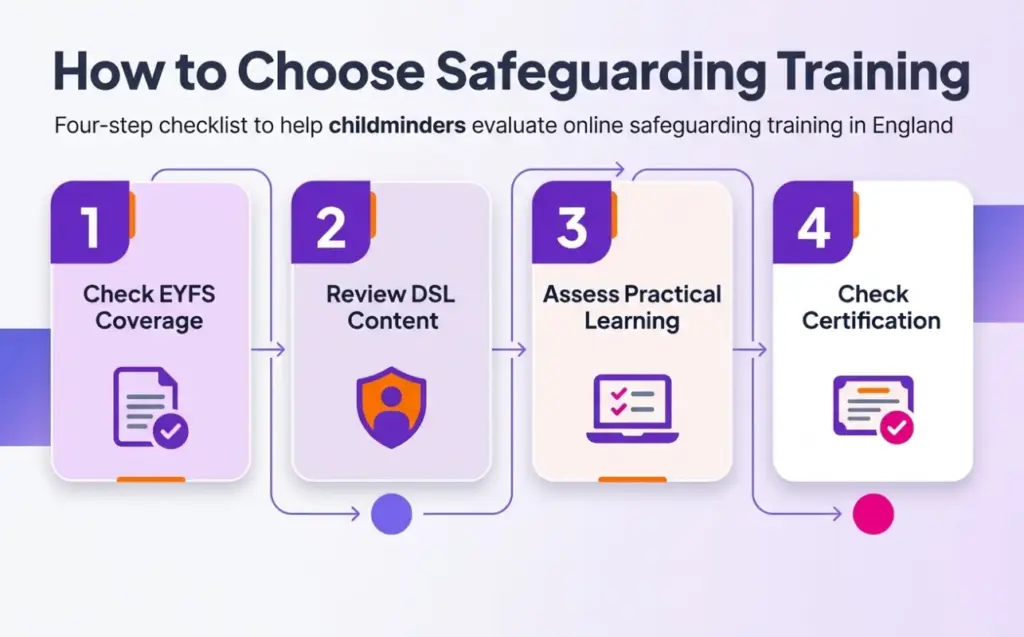
If you’re comparing training options, understanding what to look for in an online safeguarding course can help you assess course content, learning formats and certificates.
The Department for Education also provides free early years safeguarding training, developed with the NSPCC.
This training covers sections 1 and 2 of Annex C. Childminders acting as DSLs also need training covering the additional criteria in section 3.
Reviewing these requirements before purchasing training will help you choose a suitable learning option.
Explore NextGen Learning’s Safeguarding Children Course
If you want to build your safeguarding knowledge through flexible online learning, NextGen Learning offers a Safeguarding Children course.
The course includes modules covering:
- Introduction to safeguarding.
- Relevant laws and guidance.
- Child abuse and child sexual exploitation.
- Responding to disclosures and reporting concerns.
- Risks and risk assessment.
- Actions following referrals.
- Safeguarding record keeping.
You can study at your own pace using an internet-connected device, making it convenient to develop safeguarding knowledge alongside your existing commitments.
The course is accredited by CPD Quality Standards. Following successful completion, learners can choose a CPD certificate, with PDF and hard-copy options available for an additional fee.
A Quality Licence Scheme (QLS) endorsed certificate option is also available for non-regulated learning.
If you are choosing training to meet childminder registration or DSL requirements, compare the published syllabus with the current EYFS Annex C criteria and relevant local guidance to ensure your overall training covers the necessary responsibilities.
How Can Childminders Put Safeguarding Training Into Practice?
Safeguarding knowledge is most valuable when it informs everyday decisions.
Imagine a normally cheerful child becomes withdrawn and makes a concerning comment during an activity. Appropriate training helps you recognise the concern, respond sensitively, record relevant information and follow the correct reporting procedures.
Practical safeguarding also involves maintaining professional boundaries, understanding children’s individual needs and creating a safe childcare environment.
Online safety is another important consideration, particularly when children use tablets, smartphones or other internet-connected devices.
Understanding how to keep children safe online can help childminders create appropriate digital safety arrangements within their childcare setting.
Childminders should understand age-appropriate digital safety, recognise potential online risks and remain aware of warning signs associated with online grooming.
Being able to recognise warning signs of online grooming is another useful part of developing safeguarding awareness.
Keeping safeguarding knowledge current helps you respond appropriately as children’s needs and circumstances change.
Frequently Asked Questions
Yes. Childminders working under the EYFS in England must complete appropriate safeguarding training, including the additional criteria relevant to their designated safeguarding lead responsibilities.
Local safeguarding frameworks may recommend training labelled Level 2 or Level 3. The national EYFS requirements focus on meeting the applicable Annex C criteria, including additional DSL training. Check local guidance and course content before enrolling.
A CPD certificate can provide evidence of completed safeguarding training. Its suitability depends on the course content and whether the training meets the relevant EYFS requirements.
The free DfE safeguarding training package covers Annex C sections 1 and 2. Childminders acting as DSLs also need training covering the additional criteria in section 3.
Conclusion
Safeguarding training for childminders is an essential part of providing safe, responsible childcare in England.
The right training should help you recognise safeguarding concerns, understand your DSL responsibilities and follow appropriate procedures confidently.
Whether you are preparing to register as a childminder or reviewing your existing training, choose learning that supports your responsibilities and reflects the current EYFS requirements. Developing practical safeguarding knowledge is an important investment in the quality of care you provide.