




Roles and Responsibilities of a Designated Safeguarding Lead?
A safeguarding concern can become a serious risk when warning signs are missed, information is poorly recorded or action is delayed. Schools need someone who can recognise these risks and ensure the right response.
A designated safeguarding lead (DSL) is a senior member of staff responsible for leading child protection and safeguarding arrangements within a school or college.
The DSL helps turn safeguarding concerns into timely decisions, appropriate referrals and coordinated support for children who may be at risk.
In this blog, you will learn the main roles and responsibilities of a designated safeguarding lead, how safeguarding concerns are handled, which laws apply and what training is needed to perform the role effectively.
Table of Contents
What Are the Main Roles and Responsibilities of a Designated Safeguarding Lead?
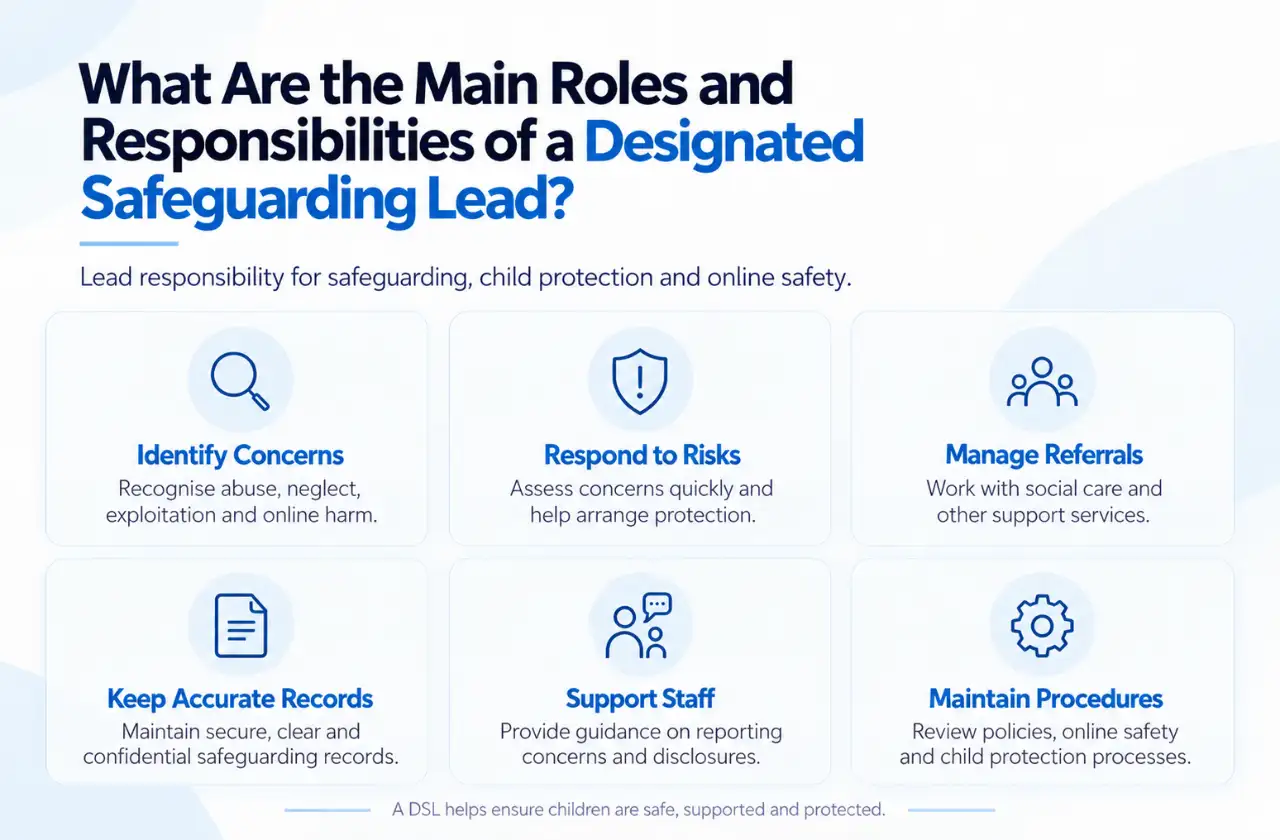
A designated safeguarding lead has lead responsibility for safeguarding and child protection, including online safety. Their role combines responding to individual concerns with helping the school maintain effective procedures.
Understanding what safeguarding means is essential because protecting children involves more than responding to confirmed abuse. It includes identifying risks early, preventing harm and ensuring children receive appropriate support.
Identifying and Responding to Safeguarding Concerns
DSLs assess concerns involving physical abuse, emotional abuse, sexual abuse, neglect, exploitation and online harm.
Warning signs may include unexplained injuries, sudden behavioural changes, persistent absence or a child expressing fear about returning home.
A DSL must consider the child’s circumstances rather than relying on one warning sign alone. The aim is to understand the concern and arrange suitable protection, not personally investigate allegations.
Managing Child Protection Referrals
When a child may need statutory intervention, the DSL coordinates contact with children’s social care and other appropriate services.
This involves presenting relevant information, understanding referral thresholds and following up when necessary.
The DSL may also help identify children who would benefit from early support before their circumstances become more serious.
Maintaining Safeguarding Records and Confidentiality
Accurate records help professionals recognise patterns that might otherwise remain unnoticed.
DSLs oversee secure child protection records containing concerns, actions taken, decisions, reasons and outcomes.
Information must be shared with appropriate professionals when necessary to safeguard a child. Confidentiality is important, but it must not prevent lawful, necessary information-sharing.
Supporting Staff and Providing Safeguarding Guidance
Teachers, teaching assistants and support staff often notice concerns first.
The DSL provides advice on recognising harm, reporting disclosures and following school procedures. They also help staff understand that safeguarding concerns should be raised promptly rather than investigated independently.
Working with Parents and External Safeguarding Agencies
Safeguarding frequently requires cooperation between schools, families, social workers, healthcare professionals and the police.
Effective multi-agency working in safeguarding helps professionals combine information and coordinate support.
DSLs should involve parents and carers where appropriate, while recognising that contacting them may sometimes increase the risk to a child.
Maintaining Safeguarding Policies and Procedures
DSLs contribute to reviewing child protection arrangements, including reporting procedures, online safety and responses to child-on-child abuse.
They also help ensure staff understand the school’s procedures and that safeguarding information is considered when pupils move between schools.
How Does a Designated Safeguarding Lead Handle a Safeguarding Concern?
Consider a pupil who becomes withdrawn and repeatedly arrives at school with unexplained bruises. A teacher reports the concern after the child says they feel unsafe at home.
The DSL’s response must prioritise the child’s welfare without making assumptions or attempting to establish guilt.
Receiving and Recording a Safeguarding Concern
The DSL reviews the teacher’s report, including observations and the child’s own words.
Any disclosure should be listened to calmly. Staff must not promise secrecy or ask leading questions that could affect subsequent enquiries.
The record should distinguish observed facts from professional concerns.
Assessing Risks and Taking Appropriate Action
The DSL considers whether the child faces immediate danger, whether previous incidents have been recorded and whether specialist support is required.
Where a child is in immediate danger, emergency services should be contacted on 999.
The DSL must not wait for conclusive proof of abuse before seeking appropriate safeguarding advice or making a necessary referral.
Making Referrals and Following Up on Concerns
Where the circumstances meet the relevant threshold, the DSL contacts local authority children’s social care.
They record the referral, any advice received and subsequent actions. The school continues supporting the child and follows up where necessary.
The table below shows how a concern may progress.
| Stage | DSL Action |
|---|---|
| Concern reported | Review the information and prioritise safety. |
| Risk considered | Check available records and assess urgency. |
| Support or referral | Contact appropriate services where needed. |
| Follow-up | Record decisions and monitor the child’s welfare. |
What Safeguarding Laws and Guidance Must a DSL Follow?
In England, DSL responsibilities are shaped by statutory safeguarding guidance and children’s welfare legislation.
Keeping Children Safe in Education (KCSIE)
The Department for Education’s Keeping Children Safe in Education 2026 sets out safeguarding expectations for schools and colleges.
It covers safeguarding leadership, responding to concerns, safer recruitment, staff responsibilities and child protection arrangements.
DSLs must understand the relevant requirements and ensure their safeguarding knowledge remains current.
Working Together to Safeguard Children
Working Together to Safeguard Children 2026 explains how organisations should cooperate to help, support and protect children.
For DSLs, this means understanding local referral arrangements and maintaining effective communication with safeguarding partners.
They should also understand relevant duties under the Prevent guidance for DSLs, particularly when responding to concerns about radicalisation.
The Children Act and Information-Sharing Responsibilities
The Children Act 1989 and Children Act 2004 provide important foundations for protecting children’s welfare.
DSLs must also understand when safeguarding information can and should be shared.
The Department for Education’s Information Sharing to Safeguard Children and Young People guidance explains relevant duties and arrangements.
Its updated statutory guidance reflects the information-sharing duty introduced on 30 September 2026.
These particular school DSL requirements apply to England. Scotland, Wales, and Northern Ireland have their own safeguarding arrangements.
What Qualifications and Training Does a Designated Safeguarding Lead Need?
Becoming a DSL requires appropriate professional responsibility, specialist knowledge and the ability to make informed safeguarding decisions.
Skills and Experience Required for a DSL
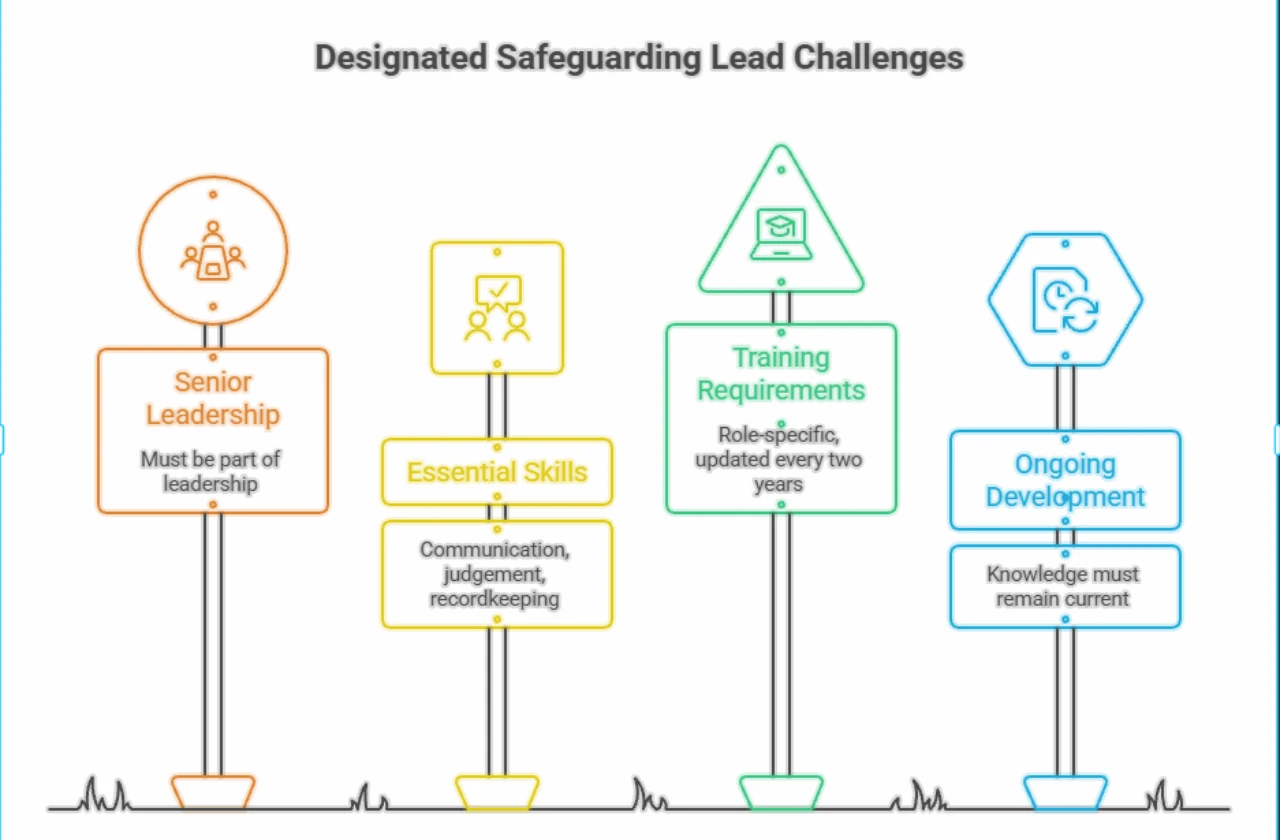
Under England’s school and college safeguarding arrangements, the DSL should be an appropriate member of the senior leadership team.
Strong communication, sound judgement, accurate recordkeeping, and the confidence to challenge decisions are important.
A DSL must also listen sensitively to children and cooperate effectively with other professionals.
Designated Safeguarding Lead Training Requirements
DSLs and their deputies should receive role-specific safeguarding training, updated at least every two years.
This should cover recognizing abuse, managing referrals, understanding children’s vulnerabilities, and working with relevant agencies.
Professionals seeking to strengthen their knowledge can explore Level 3 safeguarding training, which supports broader understanding of child protection responsibilities.
However, completing an online course does not automatically qualify someone to become a school DSL. Appointment depends on the role requirements and the school’s arrangements.
Ongoing Safeguarding Training and Professional Development
Safeguarding knowledge must remain current as guidance, risks and local procedures change.
Alongside formal training, DSLs should refresh their knowledge at least annually through relevant updates, professional discussions and safeguarding resources.
The NSPCC’s safeguarding resources for schools provide further support for professionals working with children.
Develop Your Safeguarding Knowledge
Strengthen your understanding of child protection, reporting procedures and safeguarding responsibilities through Designated Safeguarding Lead (DSL) Training.
What Is the Difference Between a Designated Safeguarding Lead and a Deputy DSL?
A DSL holds lead responsibility for the school’s safeguarding and child protection arrangements. A deputy DSL supports this work and can carry out designated safeguarding duties when required.
Both need appropriate training, knowledge and sufficient time to fulfil their responsibilities.
| Designated Safeguarding Lead | Deputy DSL |
|---|---|
| Holds overall lead safeguarding responsibility | Supports the DSL with safeguarding duties |
| Provides safeguarding leadership and oversight | Handles delegated concerns and referrals |
| Reports to the headteacher or principal as appropriate | Provides cover and continuity when required |
Both need appropriate training, knowledge and sufficient time to fulfil their responsibilities.The DSL retains ultimate lead responsibility, even when certain activities are delegated.
Why Is the Designated Safeguarding Lead Important in Schools?
Children may disclose concerns to different adults or display warning signs over several weeks. Without coordinated safeguarding arrangements, important information can remain disconnected.
A DSL helps bring these concerns together, recognize patterns, and ensure decisions are documented and followed through.
The role also builds confidence among school staff by providing a clear point of contact for safeguarding advice.
Most importantly, safeguarding leadership helps children receive appropriate support when concerns first arise, rather than allowing risks to escalate.
Conclusion
A designated safeguarding lead plays a central role in protecting children within schools and colleges. Their responsibilities include responding to concerns, coordinating referrals, maintaining accurate records, guiding staff, and working with safeguarding agencies.
Effective DSL practice depends on timely action, specialist knowledge, and a child-centered approach.
If you work in education and want to develop your understanding of these responsibilities, explore our Designated Safeguarding Lead (DSL) Training course to support your professional learning.
Frequently Asked Questions
The five main responsibilities are identifying safeguarding concerns, managing referrals, maintaining child protection records, supporting staff and coordinating safeguarding arrangements with external agencies.
Yes. Schools and colleges in England covered by Keeping Children Safe in Education must appoint an appropriate senior leadership member to the DSL role and arrange suitable safeguarding cover.
DSLs and deputies should update their formal safeguarding training at least every two years. Their knowledge and skills should also be refreshed at least annually.
The DSL should ensure the child is listened to, their disclosure is accurately recorded, immediate risks are considered and appropriate safeguarding action is taken. Staff should not investigate the allegation themselves or promise confidentiality.
A teaching assistant is not normally eligible for the school DSL role solely through safeguarding training. The role must be held by an appropriate member of the senior leadership team. A teaching assistant may support safeguarding arrangements within their responsibilities.

0 responses on "Roles and Responsibilities of a Designated Safeguarding Lead?"