




Signs of Online Grooming Every Parent and Teacher Should Know
A child suddenly becomes secretive about their phone. They seem anxious after receiving messages or mention of an online friend they refuse to discuss. These changes might have innocent explanations, but they can also signal a safeguarding concern.
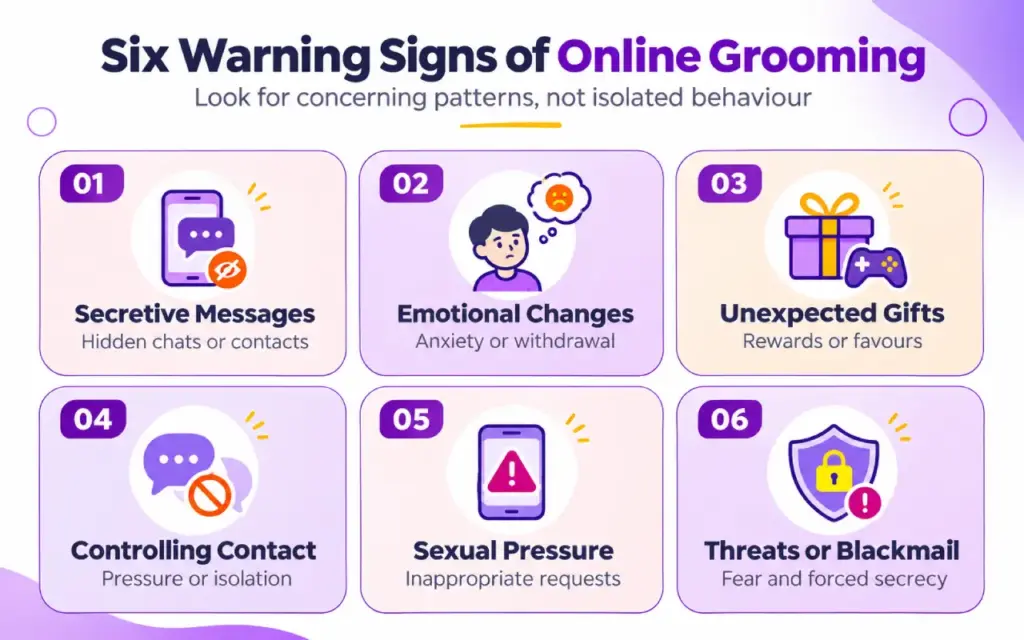
Signs of online grooming include secretive online communication, unexplained gifts, emotional withdrawal, pressure to keep relationships hidden, sexualised messages and threats. Parents and teachers should look for patterns rather than treating one behaviour as proof. Calm conversations, appropriate safeguarding procedures and early reporting can help protect children from exploitation.
Table of Contents
What Is Online Grooming?
Online grooming happens when someone uses digital communication to gain a child’s trust with the intention of manipulating, exploiting or sexually abusing them. It can involve different forms of child abuse, so recognising the four categories of child abuse can help parents and teachers understand the wider safeguarding risks.
A person may pretend to be a friend, romantic partner or supportive mentor. They might offer compliments, gifts or emotional support before introducing secrecy, pressure or inappropriate requests.
Grooming can happen through:
- Social media and messaging applications.
- Online games and gaming voice chats.
- Group conversations and online communities.
- Video calls and livestreaming platforms.
- Private messaging services.
The person responsible may be an adult the child knows or someone they have never met. They may also misrepresent their age or identity.
According to the NSPCC’s guidance on grooming, children may experience complicated feelings towards the person exploiting them, including affection, fear, loyalty or confusion.
This helps explain why some children find it difficult to recognise grooming or ask for support.
What Are the Warning Signs of Online Grooming?
Online grooming warning signs generally fall into three areas: changes in communication, emotional or behavioural changes, and attempts to control or exploit the child.
Not every sign means grooming is occurring. However, several concerning changes, particularly alongside suspicious online contact, deserve attention.
1. Secretive Online Communication
A child might become unusually protective of their phone or avoid discussing people they communicate with.
Possible warning signs include:
- Quickly closing conversations when an adult approaches.
- Hiding online friendships or using unfamiliar accounts.
- Receiving frequent messages from someone they will not discuss.
- Becoming distressed when unable to contact a particular person.
- Being instructed to delete messages or keep conversations secret.
Privacy is a normal part of growing up. The concern is not simply wanting personal space, but secrecy linked to pressure, distress or unsafe relationships.
2. Sudden Emotional or Behavioural Changes
A child experiencing grooming might appear anxious, withdrawn, distracted or unusually upset after using a device.
You may notice changes in sleep, school engagement, friendships or confidence.
For example, a pupil who previously enjoyed group activities might become withdrawn after receiving repeated private messages.
These changes can have many causes, including bullying, family difficulties or other emotional concerns. They should prompt a supportive conversation, not an immediate accusation.
The NSPCC’s guidance on recognising grooming identifies secrecy, unexplained gifts and changes in behaviour among possible indicators.
3. Unexplained Gifts, Money or Online Rewards
Groomers sometimes use gifts or rewards to gain trust and create a sense of obligation.
These may include:
- Gaming credits or virtual items.
- Money or vouchers.
- New devices or accessories.
- Special privileges within online communities.
- Promises of opportunities or exclusive friendships.
A child might feel they owe someone attention, photographs or personal information in return.
An unexpected gift does not automatically indicate abuse. However, adults should pay attention when gifts accompany secrecy, pressure or an unfamiliar relationship.
4. An Online Friend Who Demands Constant Attention
Someone grooming a child may create an unusually intense relationship.
They might message repeatedly, become angry when the child does not respond or suggest that nobody else understands them.
Other warning signs include:
- Asking the child to keep their friendship hidden.
- Discouraging contact with family or friends.
- Claiming the child must prove their loyalty.
- Becoming possessive or controlling.
- Pressuring the child to communicate privately.
These behaviours are concerning because they can gradually reduce a child’s willingness to seek help.
5. Sexualised Conversations or Requests for Images
A particularly serious warning sign is an online contact introducing sexual topics, requesting intimate photographs or pressuring a child to participate in sexual conversations or activities.
The person might initially describe these requests as jokes, expressions of affection or normal behaviour within a relationship.
They may also send inappropriate images themselves.
The CEOP Education online grooming guidance explains how grooming can involve sexual messages, private conversations and pressure to share images.
Such concerns require prompt safeguarding action. Adults should not wait for repeated incidents before seeking appropriate help.
6. Threats, Blackmail or Pressure to Keep Secrets
Some groomers threaten to reveal private conversations or images unless the child follows further demands.
This can include threats to:
- Share intimate images.
- Contact the child’s friends or family.
- Reveal private information.
- End the relationship or withdraw affection.
- Cause embarrassment or reputational harm.
Threats involving intimate images may form part of sextortion.
Children may feel frightened or ashamed, especially if they previously trusted the person.
Reassure them that exploitation is never their responsibility and that they deserve protection.
How Does Online Grooming Happen Through Games and Social Media?
Online grooming does not always begin with an obviously inappropriate message.
Someone may initially communicate through a shared interest, such as gaming, music or an online community.
Consider this illustrative situation:
A child regularly plays an online game with someone who offers advice and gaming rewards. Over time, that person asks to move conversations into a private messaging application, requests personal details and insists that the friendship remains secret.
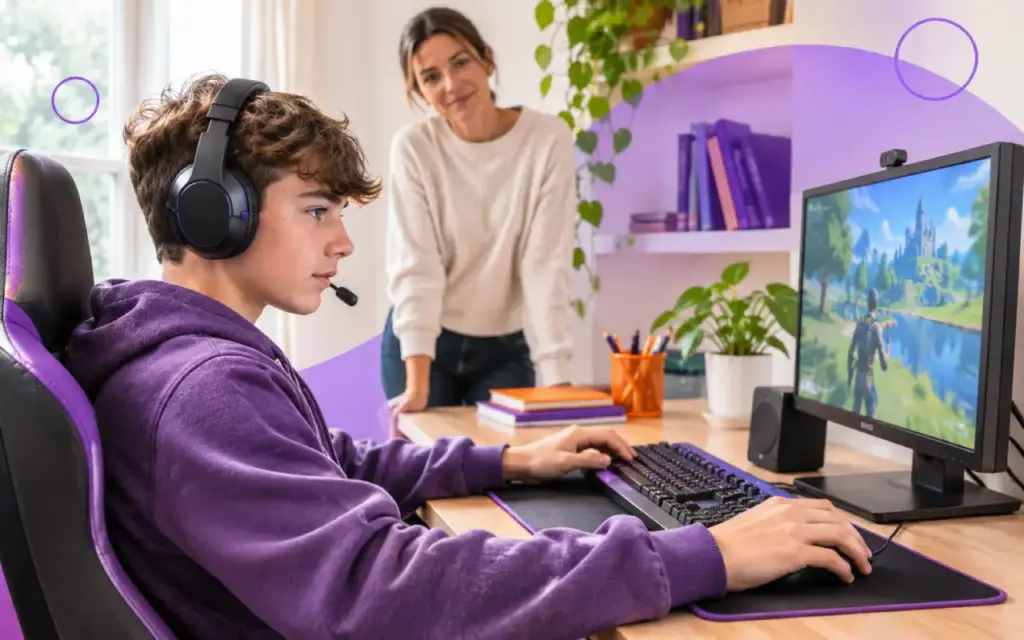
The concern is not the game itself. It is the developing pattern of secrecy, manipulation and control.
Groomers may also use false profile photographs, misleading information or AI-generated content to misrepresent themselves.
Parents and staff should encourage children to question unexpected requests and understand that an online profile does not necessarily establish someone’s identity.
How Can Parents Talk to a Child About Suspected Grooming?
A calm response can make it easier for children to explain what is happening.
Instead of demanding access to every message immediately, begin with an open conversation.
Useful questions include:
- “Is there anyone online who makes you feel uncomfortable?”
- “Has someone asked you to keep a conversation secret?”
- “Do you ever feel pressured to reply to messages?”
- “Has anyone asked you to send something you didn’t want to send?”
Listen without interrupting or blaming the child.
Avoid statements suggesting they caused the situation by using a particular application or speaking to someone online.
If the child discloses inappropriate contact, thank them for telling you. Explain that you will help keep them safe and may need support from appropriate safeguarding professionals.
Do not promise complete secrecy.
Most importantly, avoid questioning the child repeatedly or attempting to investigate the suspected offender yourself.
What Should Teachers Do if They Suspect Online Grooming?
Teachers, teaching assistants and school support staff have an important role in recognising online safeguarding concerns.
A pupil might disclose inappropriate messages, appear distressed after online contact or mention a relationship involving secrecy and pressure.
Staff should respond calmly and follow their school’s safeguarding procedures. Knowing the difference between safeguarding and child protection also helps staff distinguish everyday preventive responsibilities from actions needed when a child may be at risk of significant harm.
Recognise and Report Concerns
In England, Keeping Children Safe in Education 2026 requires school and college staff to read Part One in full and follow their institution’s safeguarding policies.
Staff should report safeguarding concerns promptly to the designated safeguarding lead (DSL) or deputy.
They should not wait until they can prove that grooming has occurred.
Procedures vary across the UK, so professionals in Scotland, Wales and Northern Ireland must follow their applicable safeguarding guidance and organisational policies.
Record Information Accurately
Where required by school procedures, record:
- What the child said, using their own words where possible.
- The date, time and relevant circumstances.
- Any immediate safety concerns.
- Who received the report.
- Actions taken under the safeguarding procedure.
Avoid assumptions or personal conclusions.
Never investigate a child’s online contacts independently or circulate suspected child sexual abuse imagery.
Support the Child Without Blame
Children may worry about punishment, losing their devices or getting someone they care about into trouble.
Reassure them that speaking up was the right decision. Maintaining appropriate confidentiality, sharing concerns through authorised channels and following the DSL’s guidance are essential parts of effective safeguarding practice.
What Should You Do if You Suspect Online Grooming?
The priority is to protect the child, listen carefully and use the correct reporting route.
| Situation | Appropriate Response |
|---|---|
| A child describes suspicious online contact | Listen calmly, check immediate safety and report the concern to the appropriate safeguarding professional. |
| A child reports sexual pressure or threats | Act promptly, record the disclosure and report through safeguarding procedures. Contact the police where appropriate. |
| A pupil discloses grooming at school | Report immediately to the Designated Safeguarding Lead (DSL) or follow the school’s escalation procedure. |
| A child faces immediate danger | Call 999 and request emergency assistance. |
| A parent suspects online sexual grooming | Report the concern to CEOP or the police. Call 999 if the child is in immediate danger. |
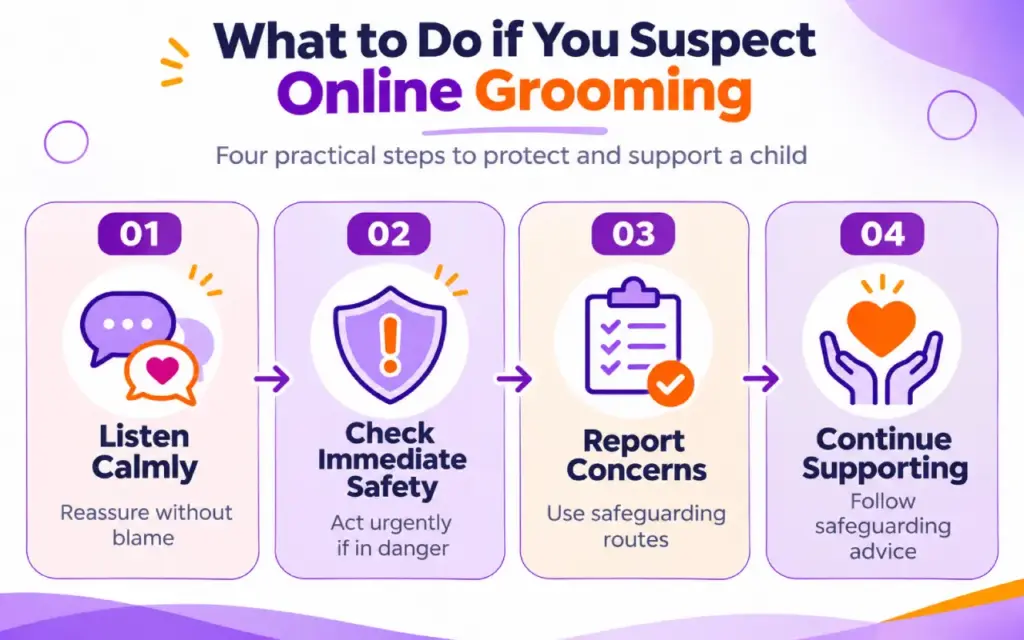
Parents and carers can use the CEOP reporting guidance for concerns about online child sexual abuse or grooming.
Professionals working with children should follow their local safeguarding procedures rather than use the public CEOP Safety Centre reporting form.
CEOP does not handle ordinary cyberbullying, fake accounts or account hacking.
Make a note of relevant usernames, account details and what the child has disclosed, following safeguarding or police advice. Do not download, screenshot, forward or share suspected child sexual abuse imagery.
Children can also seek confidential help through Childline’s grooming support or call 0800 1111.
How Can Adults Reduce the Risk of Online Grooming?
Prevention involves communication, appropriate privacy settings and helping children recognise unsafe behaviour.
Parents and staff can encourage children to:
- 1. Keep personal details and location information private.
- 2. Question unexpected requests from online contacts.
- 3. Avoid sharing intimate images or responding to sexual pressure.
- 4. Tell a trusted adult when someone asks them to keep unsafe secrets.
- 5. Use blocking and reporting features when appropriate.
- 6. Never arrange to meet an unfamiliar online contact without appropriate adult involvement and safety precautions.
Adults should also review privacy settings and discuss online friendships regularly.
Parental controls can help reduce exposure to some risks, but they cannot replace trust and communication. Teaching children how to stay safe online also helps them recognise suspicious behaviour, protect their personal information and make safer decisions when interacting with others.
The aim is not to discourage every online friendship. It is to give children the confidence to recognise manipulation and seek help.
Frequently Asked Questions
Early signs may include unusual secrecy, intense communication with an online contact, unexplained gifts or pressure to keep a relationship hidden. No single behaviour proves grooming. Adults should consider patterns, listen to the child and seek appropriate safeguarding advice when concerned.
Yes. Grooming can begin through gaming chats, voice communication or online communities. Someone might offer rewards, establish a friendship and later request private contact. The risk comes from manipulative behaviour rather than gaming itself.
Yes. Online grooming can involve manipulation, sexual requests, image sharing and coercion without any face-to-face meeting. A physical meeting is not necessary for serious online harm to occur.
Reassure your child, avoid blaming them and do not comply with demands. Report suspected sexual exploitation to CEOP or the police. Do not forward intimate imagery. If there is immediate danger, call 999.
No. Teachers should not confront or independently investigate a suspected offender. They should follow school safeguarding procedures, report concerns promptly to the DSL and preserve appropriate factual information through authorised channels.
Parents can contact CEOP about suspected online sexual grooming, speak to the police or seek advice from the NSPCC helpline on 0808 800 5000. Children can contact Childline on 0800 1111. In an emergency, call 999.
Develop Your Safeguarding Knowledge
Recognising grooming is part of a wider responsibility to identify and respond to child protection concerns.
Nextgen Learning’s Safeguarding Children course covers child abuse, child sexual exploitation, responding to disclosures, reporting, risk assessment and record keeping.
The self-paced online course offers optional CPD certificates for an additional fee, alongside a separately available QLS-endorsed certificate. QLS endorsement is non-regulated and does not replace role-specific mandatory safeguarding training.
Final Thoughts
Recognising online grooming means noticing concerning patterns, taking disclosures seriously and knowing when to act.
Parents and teachers do not need to investigate suspected abuse themselves. A supportive conversation, prompt safeguarding response and appropriate professional help can make an important difference to a child’s safety.

0 responses on "Signs of Online Grooming Every Parent and Teacher Should Know"