





Signs Your Clutch Is Going Bad: Symptoms, Costs & Fixes
Have you noticed your car struggling to accelerate, making strange noises, or feeling different when you press the clutch pedal? These are often early clutch slipping symptoms drivers experience, and ignoring them can lead to expensive repairs or even dangerous driving conditions.
In fact, clutch-related issues are among the most common mechanical problems in manual cars. According to the Driver and Vehicle Standards Agency, regular vehicle maintenance and early fault detection play a crucial role in preventing breakdowns and ensuring road safety. That means recognising the warning signs early can save you both time and money.
This guide will walk you through the signs of a bad clutch, explain why clutch problems happen, and help you understand when to repair or replace it. Whether you are a car owner or considering a career in vehicle maintenance, this article will give you clear, practical insights.
Table of Contents
What Does a Clutch Do in a Car? (Beginner-Friendly Guide)
Before identifying problems, it’s important to understand how your clutch works. The clutch is a key component that connects your engine to the gearbox. It allows you to change gears smoothly and prevents the engine from stalling when the car is stationary.
How the Clutch Works
● Transfers engine power: It connects the engine to the transmission system
● Enables smooth gear changes: Helps shift gears without damaging components
● Controls vehicle movement: Allows gradual acceleration and stopping
The main parts of a clutch system include:
● Clutch plate: Transfers power from engine to gearbox
● Pressure plate: Applies force to engage the clutch
● Flywheel: Maintains engine rotation and connects components
When functioning properly, these parts work together seamlessly. However, over time, wear and tear can lead to worn clutch symptoms that affect performance.
Manual vs Automatic Cars: Do All Vehicles Have a Clutch?
Not all vehicles use a traditional clutch system.
● Manual cars: Use a physical clutch pedal to change gears
● Automatic cars: Use internal clutch packs and torque converters
● Electric vehicles: Typically do not require a clutch at all
Understanding these differences helps drivers better identify whether a clutch issue applies to their vehicle.
Top Clutch Slipping Symptoms Drivers Should Never Ignore
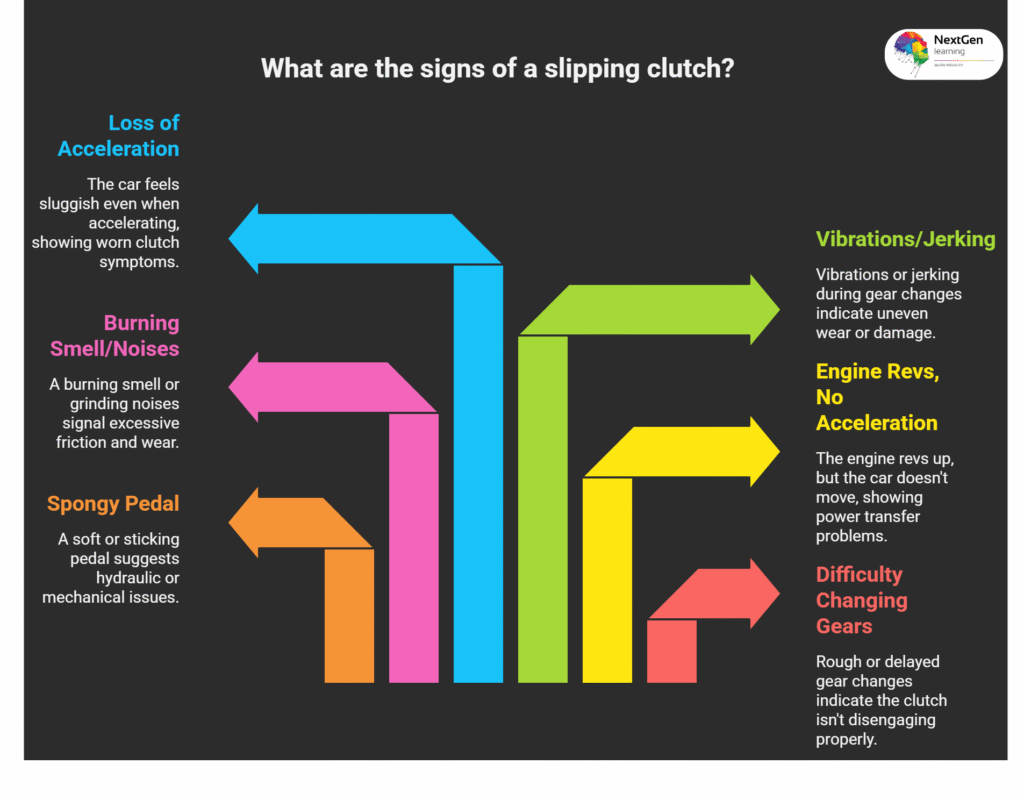
Recognising problems early is essential. Below are the most common slipping clutch signs you should watch for.
Difficulty Changing Gears: One of the earliest warning signs is trouble shifting gears. If your gear changes feel rough, delayed, or resistant, it may indicate a clutch issue.
This often happens when the clutch does not fully disengage, putting pressure on the gearbox.
Clutch Pedal Feels Spongy or Sticks: A healthy clutch pedal should feel firm and responsive. If it becomes soft, spongy, or sticks when pressed, it could signal hydraulic or mechanical problems.
This is one of the most reported clutch pedal spongy symptoms in vehicles.
Engine Revs but Car Doesn’t Accelerate: If your engine revs increase but the car does not accelerate accordingly, you are likely experiencing a slipping clutch.
This happens when the clutch cannot properly transfer power to the wheels.
Burning Smell or Strange Noises: A burning smell while driving may indicate excessive friction within the clutch system. Similarly, grinding or squeaking noises when pressing the pedal can signal internal wear.
These are serious clutch problems that should not be ignored.
Vibrations or Jerking Movements: If your car vibrates or jerks when changing gears, it could be due to uneven clutch wear or damage to internal components.
Loss of Acceleration Power: Another key symptom is reduced acceleration. Even when pressing the accelerator, the vehicle may feel sluggish.
This is a clear sign of worn clutch symptoms and requires immediate attention.
Why Is My Clutch Slipping? Common Causes Explained
Understanding the root cause helps you take the right action when dealing with clutch problems. One of the most common reasons is natural wear and tear, as clutches are designed to degrade over time, typically lasting between 60,000 and 100,000 miles depending on driving habits. Frequent stop-start driving, especially in urban areas, can significantly accelerate this process. Another major cause is riding the clutch, where keeping your foot partially on the pedal creates constant friction and leads to faster deterioration.
In addition, hydraulic system issues such as leaks or low fluid levels can negatively impact clutch performance, particularly if the master or slave cylinder becomes faulty. Finally, damaged components including the clutch plate, pressure plate, or release bearing can result in slipping and reduced efficiency. For more technical guidance and best practices, organisations like the Institute of the Motor Industry offer valuable insights into vehicle maintenance and repair standards.
Is It Dangerous to Drive with a Slipping Clutch?
The short answer is yes. Driving with a slipping clutch can lead to serious risks and should never be ignored.
● Reduced control: Difficulty accelerating or changing gears
● Increased wear: Damage to gearbox and engine components
● Breakdown risk: Sudden failure while driving
● Safety hazards: Especially dangerous on motorways or busy roads
According to the National Highways, mechanical faults are a contributing factor in many road incidents. A failing clutch can increase the likelihood of losing control, particularly during overtaking or sudden stops. If you notice any clutch slipping symptoms UK drivers commonly report, it’s best to have your vehicle checked immediately.
Clutch Replacement Cost UK – What Should You Expect?
One of the biggest concerns for drivers is cost.
Average Cost in the UK
The clutch replacement cost UK typically ranges between:
● £400 to £1,200+: Depending on the vehicle
● Labour costs: Vary based on complexity
● Premium vehicles: Larger or high-end cars may cost more
Factors That Affect Cost
● Car make and model: Some vehicles require more labour
● Parts quality: OEM vs aftermarket components
● Garage location: Prices vary across the UK
● Additional damage: Gearbox or flywheel issues increase cost
You can explore general vehicle maintenance cost insights via the RAC website, which provides up-to-date repair guidance.
When Should You Replace Your Clutch? (Warning Signs Checklist)
Knowing when to act can save you money and prevent breakdowns.
● Early warning signs: Slight slipping or delayed acceleration
● Moderate issues: Difficulty changing gears regularly
● Severe problems: Complete clutch failure or inability to drive
If multiple symptoms appear together, replacement is usually the best option.
Can You Fix a Slipping Clutch or Do You Need a Mechanic?
Many drivers wonder whether they can fix the issue themselves.
When a Fix Might Be Possible
● Minor adjustments in older vehicles
● Fluid top-up in hydraulic systems
● Driving habit improvements
When You Need a Mechanic
● Severe slipping or burning smell
● Gearbox-related issues
● Worn clutch plate or internal damage
In most cases, professional repair is required.
Learn to Diagnose and Fix Clutch Problems (Practical Skills for Beginners)
Understanding how a clutch works and recognising faults is not just useful for car owners, it’s also a valuable career skill.
If you want to gain hands-on knowledge of diagnosing issues like slipping clutches, gear problems, and vehicle faults, structured training can make a big difference.
For example, the Car Mechanic and Repair Training Diploma covers essential systems such as clutches, engines, and vehicle diagnostics in a clear, beginner-friendly way. Similarly, Car Mechanic Training helps learners build practical understanding of car maintenance and repair, making it easier to identify problems before they become costly. Rather than guessing or relying on trial and error, having structured knowledge allows you to approach car issues with confidence.
How to Prevent Clutch Problems and Extend Its Lifespan
Preventing clutch issues is far easier and cheaper than repairing them. With the right driving habits and maintenance routine, you can significantly extend the life of your clutch.
● Avoid riding the clutch: Keeping your foot partially on the pedal creates constant friction and accelerates wear
●Use neutral when stationary: Holding the clutch down at traffic lights adds unnecessary strain
●Change gears smoothly: Aggressive shifting increases pressure on clutch components
● Avoid overloading your vehicle: Extra weight forces the clutch to work harder
● Schedule regular inspections: Early diagnosis prevents expensive repairs
According to the National Careers Service, understanding basic vehicle maintenance is an essential skill for both drivers and aspiring mechanics. Even simple awareness can help prevent major mechanical failures.
Clutch Repair vs Replacement: What’s the Best Option?
When facing clutch issues, many drivers wonder whether repair is enough or full replacement is necessary.
When Repair Might Be Enough
● Minor hydraulic issues: Fluid leaks or low levels can sometimes be fixed easily
● Adjustments needed: Older vehicles may only require clutch cable adjustment
● Early-stage wear: Slight slipping can sometimes be corrected temporarily
When Replacement Is the Better Choice
● Severe slipping clutch symptoms: Power loss and poor acceleration
● Burning smell or noise: Indicates internal damage
● High mileage wear: Clutch plates naturally degrade over time
In most real-world cases, once clear worn clutch symptoms appear, replacement is the most cost-effective long-term solution.
How a Failing Clutch Impacts Other Car Components
A faulty clutch doesn’t just affect gear changes, it can cause wider mechanical damage if ignored. Such as:
Gearbox Damage
When the clutch doesn’t disengage properly, it puts extra pressure on the gearbox. Over time, this can lead to costly transmission repairs.
Engine Strain
A slipping clutch forces the engine to work harder without delivering power efficiently, reducing performance and fuel efficiency.
Flywheel Wear
Excessive friction can damage the flywheel, which is often one of the most expensive components to replace alongside the clutch.
Increased Repair Costs
Delaying action can turn a simple clutch replacement into a much larger repair bill involving multiple components.
This is why recognising clutch slipping symptoms UK drivers face early is critical.

Real-World Driving Scenario: What Happens When Your Clutch Fails?
Imagine driving on a motorway when suddenly:
● Your engine revs increase but the car slows down
● You struggle to change gears
● The car begins to jerk or lose power
This is a classic example of clutch failure.
In severe cases:
● You may be unable to shift gears
● The vehicle could stall unexpectedly
● You risk losing control in traffic
Why Learning Car Mechanics Is a Valuable Skill Today
With rising vehicle repair costs and increasing demand for skilled technicians, understanding car mechanics is becoming more valuable than ever. The UK automotive repair market continues to grow, driven by increased vehicle usage and longer car lifespans. This creates strong opportunities for individuals with mechanical knowledge.
If you’re interested in learning how to diagnose issues like clutch slipping, gearbox faults, and engine problems, structured learning can help you build confidence step by step.
For example, the 👉 Car Mechanic and Repair Training Diploma provides a comprehensive introduction to vehicle systems, fault detection, and repair fundamentals.Likewise, the 👉 Car Mechanic Training is designed for beginners and career changers who want to understand how cars work and how to fix common problems.
These types of courses are especially useful if you want to:
Diagnose faults confidently: Identify clutch and gearbox issues early
Reduce repair costs: Handle basic maintenance yourself
Start a career in automotive repair: Build job-ready skills
Improve technical knowledge: Understand how modern vehicles function
Conclusion: Don’t Ignore the Signs of a Failing Clutch
Your clutch is one of the most important components in your car. When it starts to fail, it doesn’t just affect performance, it can impact your safety and lead to costly repairs.
By recognising early slipping clutch signs, understanding the causes, and taking action quickly, you can avoid major issues and keep your vehicle running smoothly.
At the same time, gaining knowledge about how these systems work can be incredibly valuable. Whether you want to maintain your own car or explore a career in automotive repair, learning these skills gives you a clear advantage.
FAQs About Clutch Problems (Drivers Guide)
The first signs of clutch failure usually include difficulty changing gears, a spongy clutch pedal, and reduced acceleration. You may also notice unusual noises or a burning smell. These early clutch slipping symptoms UK drivers experience should not be ignored, as they often worsen quickly.
In most cases, a clutch gives warning signs before failing completely. However, if ignored, these issues can escalate rapidly. Severe wear or hydraulic failure can sometimes cause sudden breakdowns.
Clutch problems typically involve slipping, poor acceleration, or pedal issues. Gearbox problems often include grinding noises or difficulty selecting gears even when the clutch feels normal. A professional diagnosis is usually required to confirm the exact issue.
A clutch typically lasts between 60,000 and 100,000 miles, depending on driving habits. Frequent stop-start driving and poor clutch control can shorten its lifespan. Regular maintenance can help extend its durability.
Clutches rarely fail instantly without warning, but they can deteriorate quickly once symptoms begin. If ignored, the clutch may stop functioning while driving, which can be dangerous.
The clutch replacement cost UK generally ranges from £400 to £1,200 or more. Costs depend on your car model, labour time, and whether additional parts need replacing.



0 responses on "Signs Your Clutch Is Going Bad: Symptoms, Costs & Fixes"