





Why Site Management Safety Training Is Essential for Construction Site Managers in the UK
Construction is widely recognised as one of the most hazardous industries in the United Kingdom. Every day, thousands of workers operate in environments that involve heavy machinery, working at height, electrical systems, and constantly changing site conditions. Without proper planning and safety leadership, even small mistakes can lead to serious injuries or costly project delays.
According to the Health and Safety Executive (HSE), the construction industry consistently reports a significant number of workplace injuries each year. Many of these incidents occur due to poor risk management, lack of safety awareness, or inadequate supervision on site. Because of this, safety leadership has become a critical responsibility for construction managers.
This is where Site Management Safety Training becomes essential. By developing strong knowledge of risk management, safety regulations, and site leadership, construction managers can reduce accidents, maintain compliance, and create safer working environments. Programmes such as SMSTS training are designed specifically to help site leaders understand their responsibilities and manage construction safety effectively.
Table of Contents
The Importance of Safety Leadership on Construction Sites
Construction sites involve a wide range of hazards that must be carefully managed every day. Unlike many industries, construction environments are constantly changing. New equipment, subcontractors, materials, and structural elements are introduced regularly, creating potential risks that require continuous monitoring.
Common construction site hazards include:
- Heavy machinery and equipment operation
- Working at height on scaffolding or structures
- Electrical installations and temporary power systems
- Moving vehicles and plant equipment
- Structural instability or falling materials
Because of these risks, safety leadership plays a critical role in preventing accidents. Site managers are responsible for ensuring that safety procedures are followed, risks are assessed, and workers understand how to perform tasks safely.
The Role of a Construction Site Manager
The construction site manager responsibilities UK framework goes far beyond managing project timelines. Site managers must ensure that operations run efficiently while maintaining strict health and safety standards.
Key responsibilities include:
Overseeing daily site operations – Ensuring all construction activities are organised and carried out safely.
Managing workers and subcontractors – Coordinating teams and ensuring everyone understands safety procedures.
Ensuring regulatory compliance – Following UK health and safety regulations throughout the project.
Monitoring risk assessments – Identifying hazards and implementing safety controls.
Maintaining safe working conditions – Ensuring equipment, materials, and processes meet safety requirements.
Managers who lack proper construction safety training for site managers may struggle to identify risks or implement effective safety systems. As a result, structured training programmes are becoming increasingly important in the modern construction industry.
Why Safety Leadership Starts at Management Level
Safety culture on construction sites begins with leadership. Workers are far more likely to follow safety procedures when site managers actively demonstrate and enforce them.
Strong safety leadership helps to:
- Set clear expectations for safe behaviour
- Improve communication between teams
- Encourage reporting of hazards or incidents
- Promote accountability across the workforce
When site managers understand safety regulations and risk management practices, they create an environment where workers feel responsible for maintaining safety standards. This leadership approach significantly reduces workplace accidents.
Understanding Site Management Safety Training (SMSTS)
To address the growing need for safety leadership in construction, specialised training programmes have been developed for site managers and supervisors. One of the most recognised programmes is Site Management Safety Training, commonly known as SMSTS training.
This training programme is designed to provide construction professionals with the knowledge and skills required to manage site safety effectively.
What Is the Site Management Safety Training Scheme?
The Site Management Safety Training Scheme (SMSTS) is a recognised construction safety training programme developed to help site managers understand health and safety responsibilities within construction environments.
The course focuses on areas such as:
- Construction risk management
- Health and safety legislation
- Site safety planning
- Hazard identification and prevention
- Accident reporting and investigation
Through structured learning, SMSTS training helps site leaders develop a comprehensive understanding of safety management and compliance requirements.
Professionals who want to develop these skills can explore structured programmes such as the Site Management Safety Training Scheme (SMSTS) course .This type of SMSTS course UK helps construction professionals strengthen their knowledge of safety regulations and develop practical leadership skills that are essential on modern construction sites.
Key Skills Covered in Site Management Safety Training
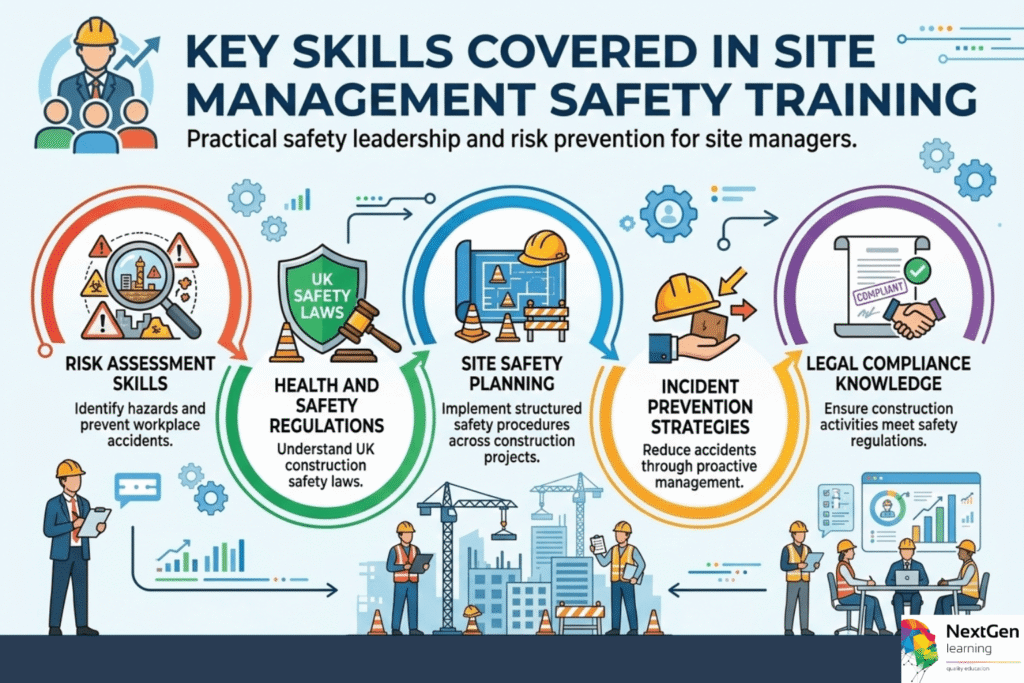
Site Management Safety Training focuses on practical safety leadership and risk prevention. The training equips site managers with skills that directly impact workplace safety.
- Risk Assessment Skills – Identify hazards and prevent workplace accidents.
- Health and Safety Regulations – Understand UK construction safety laws.
- Site Safety Planning – Implement structured safety procedures across construction projects.
- Incident Prevention Strategies – Reduce accidents through proactive management.
- Legal Compliance Knowledge – Ensure construction activities meet safety regulations.
By mastering these areas, construction professionals can significantly improve their ability to manage site safety and protect workers.
Why Construction Site Managers in the UK Need Safety Training
Safety training is not simply a professional development opportunity. In the UK construction sector, it is often a fundamental requirement for responsible site management.
Construction managers must ensure that all work activities comply with national safety regulations and industry standards. Without adequate training, it can be difficult to maintain compliance or effectively manage risks.
Compliance With UK Health and Safety Regulations
Construction safety regulations in the UK are designed to protect workers and reduce workplace accidents. Employers and site managers have legal responsibilities to ensure safe working conditions.
The Health and Safety Executive provides detailed guidance on construction safety standards, risk assessments, and employer responsibilities. These regulations require construction projects to implement proper safety management systems.
For more information about UK construction safety regulations, you can review official guidance from the HSE. Through health and safety training construction UK, site managers learn how to interpret regulations, conduct risk assessments, and implement effective safety controls.
This knowledge helps ensure that construction projects remain compliant with construction safety regulations UK, reducing the risk of legal penalties or project shutdowns.
Reducing Workplace Accidents
Workplace accidents in construction often occur due to poor planning or inadequate supervision. Falls from height, machinery incidents, electrical hazards, and manual handling injuries remain among the most common risks.
Safety training equips site managers with the tools needed to prevent these incidents.
By applying construction risk management training, managers can:
- Identify hazards before work begins
- Implement safety procedures and controls
- Ensure workers follow proper safety protocols
- Monitor site activities to prevent unsafe practices
When safety leadership improves, accident rates typically decrease. This not only protects workers but also helps construction companies avoid financial losses and project delays.
Benefits of Site Management Safety Training for Construction Professionals
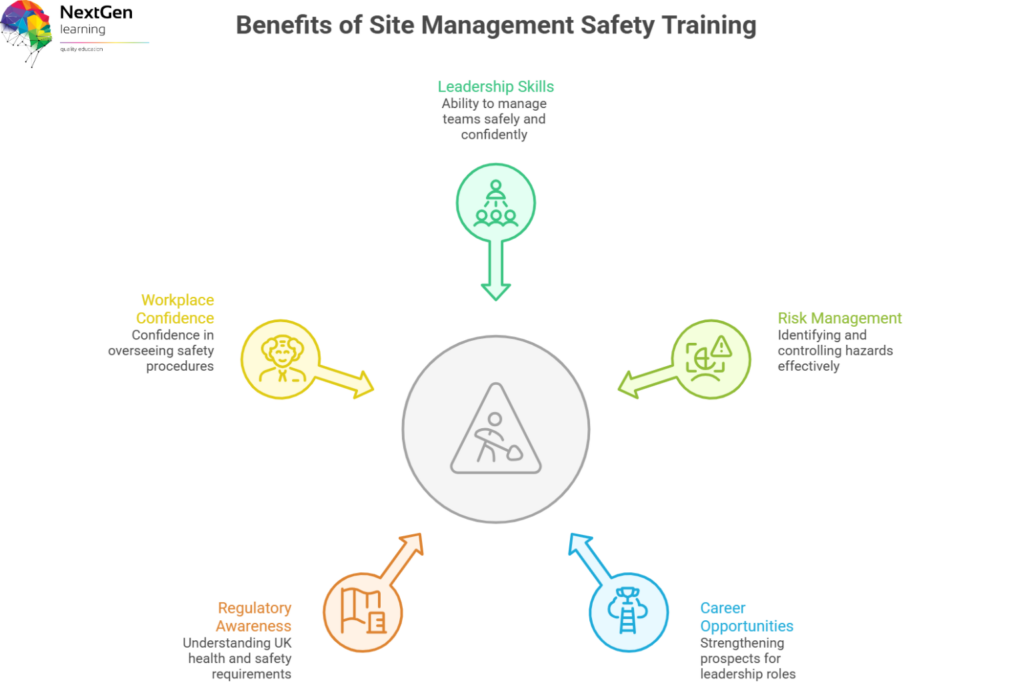
Construction professionals who complete Site Management Safety Training (SMSTS) gain practical knowledge that helps them manage site risks, lead teams effectively, and maintain regulatory compliance. In a high-risk industry like construction, these skills are essential for both safety and career development.
SMSTS training equips managers with the expertise needed to make informed decisions about workplace safety while maintaining efficient project operations.
Key SMSTS certification benefits include:
- Enhanced Leadership Skills – Develop the ability to manage teams safely and confidently on construction sites.
- Better Risk Management – Identify hazards early and implement effective safety controls using structured construction risk management training principles.
- Improved Career Opportunities – Safety training strengthens career prospects for construction professionals moving into leadership roles.
- Regulatory Awareness – Understand key health and safety requirements that apply to construction projects in the UK.
- Increased Workplace Confidence – Gain the confidence to oversee safety procedures and respond effectively to workplace incidents.
Many construction professionals pursue structured Site Management Safety Programmes to gain these capabilities. This type of SMSTS course UK helps managers strengthen their understanding of site safety planning, risk management, and legal compliance.
How Safety Training Improves Construction Project Efficiency
Safety training does more than prevent accidents. It also improves project efficiency and operational performance.
When construction sites operate safely, projects run more smoothly and workers can perform tasks with greater confidence.
Site Management Safety Training supports project efficiency by improving several areas:
- Better project planning and hazard identification
- Improved communication between teams and supervisors
- Stronger risk management practices
- Increased worker confidence and awareness
Accidents on construction sites can cause serious disruptions. For example:
- Project delays due to investigations or site shutdowns
- Increased insurance costs
- Legal penalties or regulatory enforcement
- Loss of productivity and worker morale
The Health and Safety Executive highlights that effective safety management significantly reduces workplace incidents and improves operational performance. By completing construction safety training for site managers, professionals learn how to prevent these problems and maintain efficient construction operations.
Who Should Take Site Management Safety Training?
Site Management Safety Training is designed for professionals responsible for managing safety on construction sites. As construction projects become more complex and safety regulations become stricter, trained safety leaders are increasingly valuable.
This training is particularly beneficial for:
- Construction Site Managers – Responsible for overseeing safety procedures and managing site operations.
- Site Supervisors – Coordinate workers and ensure safety standards are followed during daily tasks.
- Construction Project Managers – Manage safety policies across multiple construction projects.
- Health and Safety Officers – Ensure compliance with workplace safety regulations.
- Professionals Moving Into Management Roles – Prepare for leadership responsibilities and improve safety knowledge.
These professionals often pursue construction safety training for site managers to strengthen their understanding of workplace safety, risk assessment, and regulatory compliance.

Developing Safety Expertise Through Professional Training
As the construction industry becomes more regulated and safety-focused, professional training has become essential for construction leaders. Site managers are now expected to understand risk management, safety planning, and regulatory compliance while also leading teams effectively. Because of this, many construction professionals pursue structured Site Management Safety Training programmes to strengthen their expertise and ensure they can manage complex site safety responsibilities.
Through professional training, site managers develop practical knowledge that helps them maintain safe construction environments and meet industry regulations. These programmes typically help learners build skills in areas such as:
- Construction Risk Management – Identify hazards early and implement effective safety controls on site.
● Safety Leadership and Communication – Lead teams confidently and promote a strong safety culture.
● Legal Responsibilities of Site Managers – Understand duties under UK construction safety laws.
● Incident Investigation and Prevention – Analyse incidents and implement strategies to prevent future accidents.
● Site Safety Planning and Compliance – Ensure construction activities follow required safety procedures.
Professionals looking to build these capabilities often enrol in structured training such as the Site Management Safety Training Scheme (SMSTS) course . Programmes like this provide a strong foundation in Site Management Safety Training, helping construction professionals strengthen their leadership skills and improve safety management on construction sites.
The Future of Safety Leadership in the Construction Industry
The role of construction site managers is continuing to evolve as safety regulations and industry expectations become more advanced. Modern construction projects require leaders who understand both operational management and safety compliance.
Several trends are shaping the future of safety leadership:
- Increasing health and safety regulations across construction projects
- Greater accountability for managers responsible for site safety
- Growing emphasis on professional training and certification
- Stronger focus on risk management and accident prevention
Organisations are increasingly recognising that trained safety leaders reduce risks, improve productivity, and strengthen project outcomes.
Because of this, Site Management Safety Training is becoming a valuable professional development pathway for construction managers who want to advance their careers while maintaining safe workplaces.
Conclusion
Construction remains one of the most complex and high-risk industries in the UK. Managing safety effectively requires strong leadership, regulatory knowledge, and practical risk management skills.
Construction site managers play a central role in maintaining safe working environments. Their decisions directly impact worker safety, project performance, and legal compliance.
Through Site Management Safety Training, construction professionals gain the knowledge needed to identify hazards, implement safety procedures, and create safer construction environments.
For professionals looking to strengthen their safety leadership skills, structured training programmes such as the Site Management Safety Training Scheme (SMSTS) course provide valuable knowledge in construction safety management, regulatory compliance, and site risk prevention.
Developing these skills helps construction professionals lead safer projects and build stronger careers in the construction industry.
Frequently Asked Questions About Nursing Jobs in the UK
Site Management Safety Training is a structured training programme designed to help construction site managers understand safety regulations, risk management, and leadership responsibilities on construction sites.
SMSTS training is designed for construction site managers, supervisors, project managers, and health and safety professionals responsible for managing workplace safety on construction projects.
SMSTS training teaches risk assessment, safety leadership, accident prevention, regulatory compliance, and site safety planning.
Training improves hazard awareness, risk assessment skills, and safety leadership, which helps prevent accidents before they occur.
SMSTS certification improves safety knowledge, strengthens leadership skills, enhances career opportunities, and supports compliance with construction safety regulations.



0 responses on "Why Site Management Safety Training Is Essential for Construction Site Managers in the UK"