





Statutory vs Mandatory Training: Key Differences, Legal Requirements and Workplace Examples
Workplace training plays an essential role in maintaining safe, compliant, and productive organisations. However, many employees and employers often become confused when they hear the terms statutory training and mandatory training. At first glance, both appear similar because they involve training that employees must complete. Nevertheless, these two types of training serve different purposes within workplace compliance and professional development.
Statutory and mandatory training are both important components of employee training programmes. However, the key difference lies in who requires the training and why it must be completed. Statutory training is required by law or legislation, meaning organisations must provide it to comply with legal regulations. In contrast, mandatory training is required by organisations themselves to ensure employees perform their roles safely, effectively, and in line with company policies.
Understanding the distinction between these two forms of training is crucial for employers, HR professionals, and employees. Organisations must ensure they provide the correct training to meet legal obligations, reduce workplace risks, and protect employee wellbeing. At the same time, employees benefit from training that improves workplace safety, professional competence, and regulatory compliance.
In this guide, we clearly explain the difference between statutory and mandatory training, including how each type works in the workplace.
You will also discover real examples, legal requirements, and industry practices that show how organisations use training to maintain compliance and operational standards.
In this article, you will learn:
• What statutory training means and why it is legally required
• What mandatory training is and how organisations use it
• The key differences between statutory and mandatory training
• Examples of common workplace compliance training
• Why these training programmes are important for organisations and employees
Table of Contents
What is Statutory and Mandatory Training?

Statutory and mandatory training are two essential components of workplace learning programmes. Although the terms are often used interchangeably, they refer to different types of employee training requirements. Understanding the distinction helps organisations maintain legal compliance while ensuring employees develop the knowledge and skills necessary to perform their duties safely and effectively.
In simple terms, statutory training is required by law, whereas mandatory training is required by the organisation. Both types of training aim to protect employees, customers, and organisations from risks. However, the authority behind each requirement differs.
Statutory Training in Simple Terms
Statutory training refers to training that employees must complete because legislation or government regulations require it. Employers must provide this training to comply with workplace laws and safety regulations. Without proper statutory training, organisations risk legal penalties, workplace incidents, and regulatory action.
Statutory training often focuses on health, safety, and legal compliance. Therefore, many industries require specific training to ensure employees understand the risks associated with their roles.
Common characteristics of statutory training include:
• Required by legislation – Laws or regulations mandate the training
• Focused on legal compliance – Ensures organisations meet regulatory standards
• Industry-specific requirements – Different sectors require different statutory training
• Employer responsibility – Organisations must ensure employees receive appropriate training
Mandatory Training in Simple Terms
Mandatory training, on the other hand, is required by an organisation rather than by law. Employers decide which training employees must complete in order to maintain operational standards, improve performance, and reduce workplace risks.
Although mandatory training is not always required by legislation, it still plays a crucial role in ensuring employees understand company policies, procedures, and workplace expectations. In many cases, organisations introduce mandatory training to support compliance with industry standards and organisational policies.
Typical features of mandatory training include:
• Required by the organisation – Employers determine which courses employees must complete
• Supports workplace policies – Helps employees follow internal rules and procedures
• Improves job performance – Ensures staff understand responsibilities and standards
• Reduces organisational risks – Minimises mistakes, misconduct, and safety incidents
Why People Often Confuse the Two
The confusion between statutory and mandatory training occurs because both involve training that employees must complete. In many workplaces, statutory training is also included within the organisation’s mandatory training programme. As a result, employees may not realise that some training is required by law while other training is required by company policy.
However, the difference becomes clear when we consider who sets the requirement. If the training is legally required under workplace legislation, it is statutory training. If the organisation decides employees must complete the training to maintain standards or reduce risks, it is mandatory training.
Because both types of training contribute to workplace safety, compliance, and professional development, organisations typically implement them together as part of a comprehensive employee training strategy.
What is Statutory Training?

Statutory training refers to employee training that is required by law. Governments introduce workplace regulations to protect employees, customers, and the public from potential risks. Therefore, organisations must ensure their employees receive the necessary training to comply with these legal requirements.
In many industries, statutory training focuses on health, safety, and regulatory compliance. Employees must understand workplace hazards, follow safety procedures, and operate within legal guidelines. As a result, statutory training helps reduce accidents, protect employee wellbeing, and ensure organisations meet their legal responsibilities.
Importantly, employers are responsible for ensuring that employees receive appropriate statutory training before performing certain tasks. If organisations fail to provide this training, they may face legal penalties, workplace incidents, or regulatory investigations. Consequently, statutory training forms a critical part of workplace compliance programmes.
UK Laws Behind Statutory Training
In the United Kingdom, several laws and regulations require organisations to provide statutory training. These regulations aim to create safe working environments and ensure employees understand their responsibilities under workplace legislation.
Key laws that influence statutory training include:
• Health and Safety at Work Act 1974 – Requires employers to provide information, instruction, and training to protect employee health and safety
• Management of Health and Safety at Work Regulations 1999 – Requires employers to assess risks and provide appropriate safety training
• Control of Substances Hazardous to Health (COSHH) Regulations – Requires training for employees handling hazardous substances
• Food Safety Regulations – Requires food handlers to receive food hygiene and safety training
• Manual Handling Operations Regulations 1992 – Requires training to prevent workplace injuries from lifting and moving objects
Because these laws apply to many industries, statutory training often becomes a fundamental requirement for workplace operations.
Examples of Statutory Training
The type of statutory training required depends on the industry and the specific job role. However, several types of training are commonly required across different sectors to ensure legal compliance and workplace safety.
Common examples include:
• Fire safety training – Teaches employees how to prevent fires and respond safely during emergencies
• Manual handling training – Helps employees move heavy objects safely and prevent injuries
• Health and safety training – Introduces workplace hazard awareness and safety procedures
• COSHH training – Explains how to handle hazardous substances safely
• Risk assessment training – Helps employees identify and manage workplace risks
These courses ensure that employees understand workplace hazards, safety procedures, and legal responsibilities.
Who Must Complete Statutory Training?
Statutory training applies to both employees and employers. Organisations must identify the risks associated with different job roles and provide appropriate training to ensure legal compliance.
Typically, statutory training applies to:
• Employees working in high-risk environments such as construction or manufacturing
• Staff handling hazardous substances or specialised equipment
• Workers responsible for food preparation or hygiene
• Employees responsible for health, safety, or risk management tasks
In many organisations, statutory training is completed during employee onboarding and refreshed regularly to ensure staff remain compliant with updated regulations.
Ultimately, statutory training ensures that employees have the knowledge and skills necessary to work safely, follow legal requirements, and reduce workplace risks.
What is Mandatory Training?

Mandatory training refers to training that an organisation requires employees to complete in order to perform their roles effectively and follow workplace policies. Unlike statutory training, which is required by law, mandatory training is established by employers based on organisational needs, risk management, and operational standards.
Organisations implement mandatory training programmes to ensure employees understand company procedures, workplace expectations, and professional responsibilities. Although the law may not directly require this training, it often supports compliance with regulations and helps organisations maintain a safe and productive working environment.
Importantly, mandatory training helps organisations reduce operational risks, improve employee performance, and maintain consistent service standards. For this reason, many companies include mandatory training as part of their employee onboarding programmes and ongoing professional development strategies.
Why Organisations Require Mandatory Training
Employers introduce mandatory training to ensure that employees have the knowledge and skills required to perform their duties responsibly. In addition, mandatory training helps organisations maintain consistent standards across teams and departments.
Organisations typically require mandatory training to:
• Ensure employees follow workplace policies and procedures
• Reduce workplace risks and operational errors
• Promote safe and responsible work practices
• Improve employee competence and job performance
• Support regulatory compliance and organisational standards
Consequently, mandatory training becomes an important part of organisational governance and workforce development.
Common Examples of Mandatory Training
Although mandatory training varies between organisations and industries, several types of training are commonly required across workplaces. These programmes help employees understand both workplace expectations and professional responsibilities.
Examples of mandatory training often include:
• Health and safety training – Ensures employees understand workplace hazards and safety procedures
• Equality, diversity, and inclusion training – Promotes respectful and inclusive workplaces
• Data protection and GDPR training – Helps employees handle personal data responsibly
• Safeguarding training – Protects vulnerable individuals in sectors such as education and healthcare
• Customer service training – Improves communication and service quality
In many organisations, mandatory training also includes compliance, ethics, and workplace conduct training to ensure employees act responsibly and professionally.
How Mandatory Training Supports Workplace Compliance
Although mandatory training is not always legally required, it often supports organisations in meeting broader regulatory obligations. For example, employers may require employees to complete training on workplace safety, equality legislation, or data protection to ensure they understand relevant regulations.
Furthermore, mandatory training helps organisations demonstrate that they have taken reasonable steps to educate employees about workplace policies and legal responsibilities. This can be important when organisations need to show evidence of compliance during audits, inspections, or legal proceedings.
For these reasons, mandatory training works alongside statutory training to create a comprehensive employee training framework that supports both workplace safety and organisational effectiveness.
Statutory vs Mandatory Training: What is the Difference?
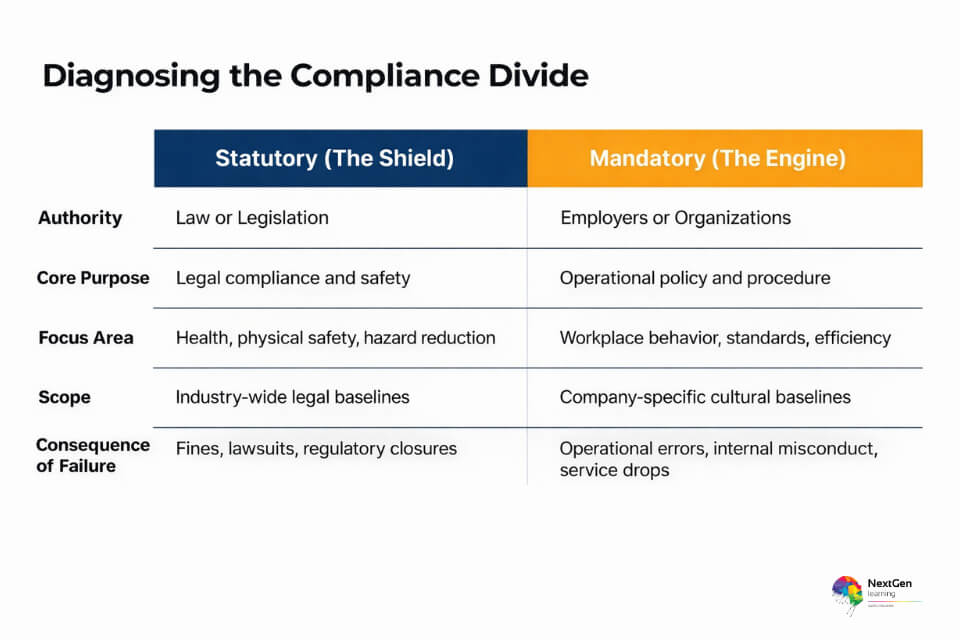
Although statutory training and mandatory training are both required forms of workplace training, the main difference lies in who establishes the requirement. Statutory training is required by law or government regulations, whereas mandatory training is required by organisations based on internal policies and operational needs.
Because both types of training are often compulsory for employees, many people assume they are the same. However, the purpose and authority behind each training type differ. Statutory training ensures organisations comply with legal obligations, while mandatory training helps employers maintain workplace standards, safety, and operational efficiency.
Understanding this distinction is important for employers, HR professionals, and employees. Organisations must ensure they provide statutory training to remain legally compliant. At the same time, mandatory training helps organisations manage risks, maintain professional standards, and support employee development.
Key Differences Between Statutory and Mandatory Training
The following comparison highlights the core differences between these two training types.
Statutory Training | Mandatory Training |
Required by law or legislation | Required by employers or organisations |
Ensures organisations comply with legal regulations | Ensures employees follow company policies and procedures |
Often related to health, safety, and legal compliance | Often related to workplace behaviour, policies, and performance |
Requirements vary depending on industry regulations | Requirements vary depending on organisational policies |
Employers must provide training to meet legal obligations | Employers provide training to support operational standards |
How the Two Types of Training Work Together
In practice, statutory and mandatory training often work together within an organisation’s broader training strategy. Employers typically combine both types of training to ensure employees understand legal responsibilities as well as internal policies.
For example, an organisation may require employees to complete training programmes such as:
• Fire safety training to comply with workplace safety regulations
• Manual handling training to prevent workplace injuries
• Equality and diversity training to promote respectful workplace behaviour
• Data protection training to ensure employees handle personal information responsibly
In this scenario, some courses may be statutory because legislation requires them, while others may be mandatory because the organisation requires them for operational reasons.
Why Understanding the Difference Matters
Recognising the difference between statutory and mandatory training helps organisations design more effective employee training programmes. When employers clearly identify which training is legally required and which training is organisationally required, they can manage compliance more effectively.
Understanding the distinction also helps organisations:
• Ensure legal compliance with workplace regulations
• Develop structured employee training programmes
• Reduce workplace risks and operational errors
• Improve employee knowledge and professional competence
Ultimately, statutory and mandatory training both play a vital role in ensuring that workplaces remain safe, compliant, and professionally managed.
Examples of Statutory and Mandatory Training in the Workplace
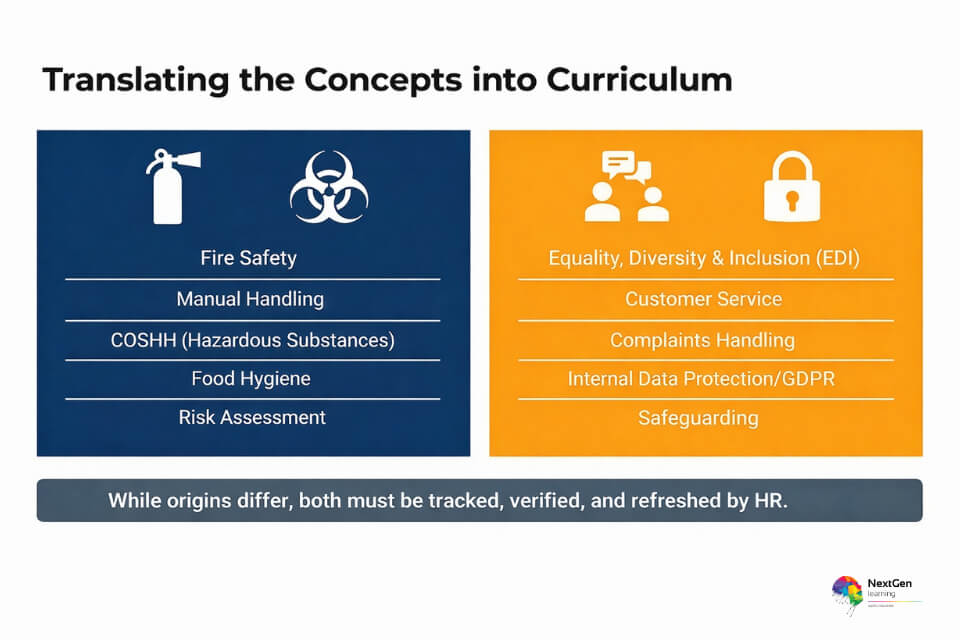
Statutory and mandatory training requirements often vary depending on the industry, job role, and workplace environment. While some training programmes are required by law, others are introduced by organisations to ensure employees follow internal policies and maintain professional standards.
In most workplaces, employers implement a combination of statutory and mandatory training to create a comprehensive compliance and development framework. This approach ensures employees understand both legal responsibilities and organisational expectations.
Below are some common examples of statutory and mandatory training used across different sectors.
Examples of Statutory Training
Statutory training focuses primarily on legal compliance and workplace safety. Employers must provide this training when legislation requires employees to understand specific risks or regulatory responsibilities.
Common statutory training examples include:
• Fire safety training – Educates employees on fire prevention, evacuation procedures, and emergency response
• Manual handling training – Teaches safe lifting techniques to reduce workplace injuries
• Health and safety training – Helps employees identify hazards and follow workplace safety procedures
• COSHH training – Explains how to safely handle hazardous substances and chemicals
• Food hygiene and safety training – Required for employees working in food preparation and catering environments
These training programmes help organisations comply with workplace regulations while protecting both employees and the public.
Examples of Mandatory Training
Mandatory training focuses on organisational policies, professional conduct, and operational standards. Employers introduce this training to ensure employees understand company expectations and follow established procedures.
Common examples of mandatory training include:
• Equality, diversity, and inclusion training – Promotes respectful and inclusive workplace behaviour
• Data protection and GDPR training – Ensures employees understand how to handle personal data responsibly
• Safeguarding training – Protects vulnerable individuals in sectors such as healthcare and education
• Customer service training – Helps employees develop communication and service skills
• Complaints handling training – Teaches staff how to manage customer concerns professionally
Although this training may not always be legally required, it plays an important role in maintaining organisational compliance, professional behaviour, and service quality.
Industry Examples of Workplace Training
Different industries often require specific combinations of statutory and mandatory training to ensure employees meet both legal requirements and operational standards.
Examples across industries include:
• Healthcare sector – Infection control training, safeguarding training, patient safety training
• Construction industry – Site safety training, working at height training, equipment safety training
• Hospitality sector – Food hygiene training, customer service training, health and safety training
• Education sector – Safeguarding training, data protection training, equality and diversity training
• Office environments – Data protection training, workplace health and safety training, cyber security awareness training
These examples demonstrate how organisations tailor training programmes based on industry risks, legal obligations, and organisational policies.
By combining statutory and mandatory training, employers ensure employees understand both legal compliance requirements and workplace expectations, which ultimately helps organisations maintain safe, efficient, and responsible operations.
Why Statutory and Mandatory Training is Important

Statutory and mandatory training play a crucial role in maintaining safe, compliant, and well-managed workplaces. Organisations rely on these training programmes to ensure employees understand their responsibilities, follow workplace regulations, and perform their roles effectively.
Without proper training, employees may lack the knowledge required to identify risks, follow procedures, or comply with legal obligations. Consequently, organisations that invest in statutory and mandatory training help protect both employees and the organisation itself.
Protecting Employee Health and Safety
One of the primary reasons for statutory and mandatory training is to protect the health and safety of employees. Many workplace accidents occur because employees are unaware of hazards or do not know how to respond in dangerous situations. Therefore, training programmes help employees recognise risks and follow appropriate safety procedures.
Training contributes to safer workplaces by helping employees:
• Identify potential workplace hazards
• Follow correct safety procedures and protocols
• Respond effectively during emergencies
• Use equipment safely and responsibly
As a result, organisations can significantly reduce workplace accidents and injuries.
Ensuring Legal Compliance
Statutory training ensures organisations meet legal requirements established by workplace regulations. Employers must provide appropriate training to employees so they can perform their duties safely and in accordance with the law.
When organisations fail to provide required training, they may face:
• Legal penalties or regulatory fines
• Workplace inspections and investigations
• Liability for workplace accidents or incidents
Therefore, statutory training helps organisations demonstrate that they are taking reasonable steps to comply with workplace legislation.
Improving Employee Performance
Mandatory training also supports professional development and job performance. When employees understand company policies, procedures, and expectations, they can perform their duties more efficiently and confidently.
Mandatory training helps employees:
• Understand organisational policies and standards
• Develop workplace communication and teamwork skills
• Follow professional and ethical workplace practices
• Deliver consistent service or operational quality
Consequently, organisations benefit from more competent and productive employees.
Reducing Organisational Risks
Training programmes also help organisations reduce operational and reputational risks. When employees receive appropriate training, they are less likely to make mistakes that could result in safety incidents, legal issues, or customer complaints.
Effective training can help organisations:
• Prevent workplace accidents and injuries
• Reduce compliance violations
• Protect organisational reputation
• Improve overall workplace culture
For these reasons, statutory and mandatory training form an essential part of modern workforce management and compliance strategies.
What Training is Legally Required for UK Employees?
In the United Kingdom, employers have a legal responsibility to ensure that employees receive appropriate training to work safely and comply with workplace regulations. While not every training programme is required by law, certain types of training become necessary when legislation requires employees to understand specific risks, responsibilities, or workplace procedures.
UK workplace laws focus heavily on health, safety, and employee protection. Therefore, employers must provide training that helps staff recognise hazards, follow safety procedures, and carry out their duties responsibly. The specific training required often depends on the industry, the job role, and the level of risk associated with the work environment.
Key Legal Frameworks Influencing Workplace Training
Several laws and regulations influence statutory training requirements in the UK. These regulations ensure that employers provide employees with the knowledge and skills necessary to maintain safe and compliant workplaces.
Important legislation includes:
• Health and Safety at Work Act 1974 – Requires employers to provide information, instruction, and training to ensure employee safety
• Management of Health and Safety at Work Regulations 1999 – Requires employers to assess workplace risks and provide appropriate safety training
• Manual Handling Operations Regulations 1992 – Requires training for employees involved in lifting or moving heavy objects
• Control of Substances Hazardous to Health (COSHH) Regulations – Requires training for employees who work with hazardous substances
• Food Safety and Hygiene Regulations – Requires food handlers to receive appropriate food safety training
These laws ensure that organisations provide the necessary training to prevent accidents, protect public health, and maintain safe working environments.
Examples of Training Often Required for UK Employees
Although the exact training requirements depend on the workplace environment, several training programmes are commonly required across many industries.
Examples include:
• Health and safety training – Introduces employees to workplace hazards and safety procedures
• Fire safety training – Teaches employees how to prevent fires and respond during emergencies
• Manual handling training – Helps employees safely lift and move objects to prevent injuries
• Food hygiene training – Required for employees involved in food preparation and handling
• Risk assessment training – Helps employees identify and manage workplace hazards
Employers must evaluate the risks within their organisation and ensure employees receive the appropriate statutory training based on their job roles.
Employer Responsibilities for Workplace Training
Employers are legally responsible for ensuring that employees receive the training required to perform their work safely. In many cases, training must be provided before employees begin certain tasks, particularly when the work involves safety risks or regulatory responsibilities.
Employers are responsible for:
• Identifying workplace hazards and training needs
• Providing appropriate statutory training for employees
• Ensuring employees understand safety procedures and responsibilities
• Maintaining records of completed training programmes
By fulfilling these responsibilities, organisations can demonstrate that they are actively working to protect employees, comply with regulations, and maintain safe working conditions.
How Often Should Statutory and Mandatory Training Be Updated?

Workplace training is not a one-time activity. Instead, organisations must regularly update statutory and mandatory training to ensure employees remain aware of current regulations, workplace risks, and organisational policies. Over time, laws may change, new safety risks may emerge, and company procedures may evolve. Therefore, refresher training helps employees stay informed and maintain compliance with both legal and organisational requirements.
Although there is no single rule that applies to all training programmes, many organisations follow regular training cycles. Some training must be refreshed annually, while other courses may be updated every two or three years depending on the level of risk involved in the job role.
Typical Refresher Training Intervals
Different types of workplace training require updates at different intervals. Employers usually determine refresher schedules based on risk levels, legal guidance, and industry best practices.
Common refresher timelines include:
• Annual training updates – Often used for high-risk topics such as health and safety or safeguarding
• Every two to three years – Common for manual handling or workplace safety refresher training
• Policy update training – Required whenever company policies or regulations change
• Role-specific updates – Provided when employees move into new responsibilities or departments
Regular refresher training ensures that employees continue to follow safe and compliant working practices.
Factors That Determine Training Frequency
The frequency of statutory and mandatory training depends on several factors. Employers must consider workplace risks, legal obligations, and organisational requirements when planning training schedules.
Training frequency is often influenced by:
• Industry regulations and legal requirements
• Level of risk associated with job roles
• Changes in workplace procedures or policies
• New equipment, technology, or operational systems
• Feedback from safety audits or workplace incidents
By reviewing these factors regularly, organisations can ensure that employees receive training that reflects current workplace conditions and regulatory expectations.
Why Refresher Training Matters
Refresher training helps reinforce important knowledge and ensures that employees continue to apply best practices in their daily work. Over time, employees may forget procedures or become less attentive to safety guidelines. Therefore, regular training updates help maintain awareness and reinforce workplace standards.
Refresher training supports organisations by helping them:
• Maintain compliance with workplace regulations
• Reduce accidents and operational risks
• Ensure employees remain confident in their roles
• Keep training aligned with updated laws and policies
For these reasons, organisations often include refresher training as part of their long-term compliance and workforce development strategies.
How Organisations Deliver Statutory and Mandatory Training
Organisations use several methods to deliver statutory and mandatory training to employees. The training format often depends on factors such as workplace size, industry requirements, training complexity, and employee schedules. In recent years, many organisations have adopted flexible training solutions that allow employees to complete training efficiently while maintaining compliance with workplace regulations.
Employers typically choose training delivery methods that ensure employees can understand the material clearly and apply it in real workplace situations. As a result, organisations often combine different training approaches to create effective learning programmes.
Classroom-Based Training
Traditional classroom training remains a common method for delivering workplace training. In this format, employees attend sessions led by instructors or training specialists who provide explanations, demonstrations, and practical exercises.
Classroom training is often used for topics that require hands-on learning or group interaction.
Benefits of classroom training include:
• Direct interaction with instructors for questions and clarification
• Practical demonstrations and hands-on exercises
• Group discussions and collaborative learning
• Immediate feedback during training sessions
However, classroom training may require employees to be physically present at a specific location, which can make scheduling more challenging for large organisations.
Online Training and E-Learning
Online learning has become one of the most popular methods for delivering statutory and mandatory training. Many organisations now use digital learning platforms that allow employees to complete training courses remotely at their own pace.
Online training offers several advantages for organisations managing large teams or remote workforces.
Key benefits include:
• Flexible learning schedules for employees
• Easy access to training materials from any location
• Automated tracking of training completion and certificates
• Scalable training solutions for growing organisations
Because of these advantages, online training platforms have become widely used for compliance training, safety training, and professional development courses.
Blended Learning Approaches
Many organisations combine both classroom and online training to create blended learning programmes. This approach allows employees to learn theoretical concepts online while also participating in practical sessions where necessary.
Blended learning can include:
• Online modules for foundational knowledge
• Instructor-led workshops for practical training
• Scenario-based learning and simulations
• Assessment and certification after course completion
By combining different training methods, organisations can ensure that employees receive comprehensive and engaging training experiences.
Why Many Organisations Prefer Online Training
Online training has become particularly popular for statutory and mandatory training because it allows organisations to manage training more efficiently. Digital platforms enable employers to deliver training consistently across teams while also maintaining clear records of completed courses.
Online training solutions help organisations:
• Train large numbers of employees efficiently
• Maintain accurate training records for compliance audits
• Provide accessible training for remote or distributed teams
• Update training content quickly when regulations change
As workplace learning continues to evolve, many organisations are increasingly adopting online training platforms to support ongoing compliance and professional development.
Frequently Asked Questions
No. Statutory training is required by law, while mandatory training is required by organisations. Both may be compulsory for employees, but statutory training ensures legal compliance, whereas mandatory training supports workplace policies and operational standards.
Yes. Statutory training is mandatory because it is required by law. Employers must provide it when legislation requires certain training for a job role. However, some mandatory training is set by organisations and may not be legally required.
Mandatory training is decided by employers, HR teams, or compliance managers. Organisations choose training programmes based on workplace policies, industry standards, and operational risks to ensure employees follow procedures and maintain professional standards.
If employees do not complete statutory training, organisations may face legal penalties, safety risks, or regulatory investigations. Employees may also be unable to perform certain tasks legally until the required training is completed.
Health and safety training is often statutory because UK workplace laws require employers to provide information, instruction, and training to protect employees. The exact training required depends on the workplace risks and job roles.
Final Thoughts
Understanding the difference between statutory and mandatory training is essential for both employers and employees. Firstly, statutory training focuses on legal compliance and workplace safety, while mandatory training supports organisational policies, professional standards, and operational effectiveness.
Organisations typically combine both forms of training to create a structured learning framework that helps employees work safely, responsibly, and efficiently. Moreover, by providing appropriate training, employers can ensure they meet legal obligations, reduce workplace risks, and support employee development.
Ultimately, statutory and mandatory training are key components of a well-managed and compliant workplace. As a result, organisations can maintain high standards of safety, professionalism, and regulatory responsibility. Therefore, effective training programmes remain essential for long-term organisational success.


0 responses on "Statutory vs Mandatory Training: Key Differences, Legal Requirements and Workplace Examples"