




STLS Qualification: What Is the Level 3 Award in Supporting Teaching and Learning in Schools?
The Level 3 Award in Supporting Teaching and Learning in Schools, often called the STLS qualification, is a knowledge-based course for people who want to understand how schools support children and young people. It can suit beginners, career changers, volunteers and existing support staff who want a recognised foundation before progressing further.
However, this Award does not usually prove full workplace competence in the same way as a larger Certificate, Diploma or apprenticeship. Instead, it focuses on areas such as safeguarding, child development, professional communication and how schools operate.
Therefore, learners should understand exactly what the qualification includes before enrolling. This guide explains the units, assessment process, placement requirements, recognition, career value and progression routes. It also compares the STLS Award with broader Level 3 Teaching Assistant qualifications so you can choose the route that best matches your goals.
Table of Contents
What Does STLS Stand For?

STLS stands for Supporting Teaching and Learning in Schools. In this context, it refers to the Level 3 Award in Supporting Teaching and Learning in Schools, a recognised knowledge-based qualification for people who want to understand school-support roles.
The term usually appears in Teaching Assistant course titles. However, some providers also use STALIS as an alternative abbreviation. Both terms generally refer to the same subject area, although learners should always check the exact qualification title and awarding organisation before enrolling.
Importantly, STLS is not a job title. Instead, it describes a qualification that introduces key knowledge about child development, safeguarding, professional relationships and how schools operate. Therefore, it can provide a useful starting point for people exploring Teaching Assistant or wider learning-support careers.
What Is the Level 3 Award in Supporting Teaching and Learning in Schools?
The Level 3 Award in Supporting Teaching and Learning in Schools is a knowledge-based qualification for people who want to understand how support staff contribute to children’s education. The Focus Awards Level 3 STLS qualification is designed for learners who work, or wish to work, in school-support roles and covers communication, safeguarding, child development and the school context. It introduces the principles behind effective Teaching Assistant practice without requiring learners to prove full occupational competence in a school.
The qualification typically covers primary, secondary and special-school settings. Moreover, it focuses on four core areas: professional communication, school organisation, child development and safeguarding. As a result, learners gain a stronger understanding of how support roles operate within the wider education system.
However, the Award should not be confused with a larger Level 3 Certificate, Diploma or apprenticeship. Those routes may include broader content and practical workplace evidence. Therefore, the STLS Award is best viewed as a recognised foundation rather than a complete guarantee of Teaching Assistant employment.
Some versions are regulated by Ofqual through approved awarding organisations. Consequently, learners should check the exact qualification title, number and awarding body before enrolling.
What Are the Four STLS Units?
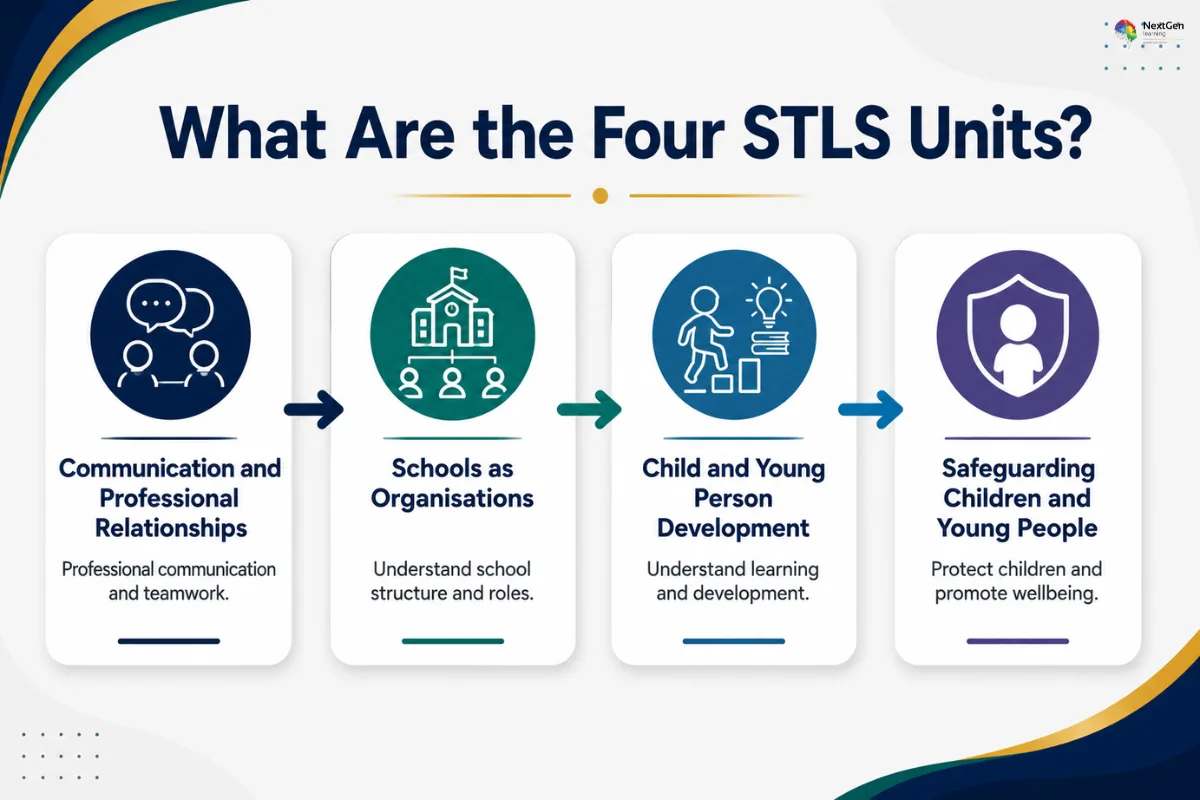
The STLS Award usually includes four core units. Together, they build the knowledge needed to understand how schools support children, families and learning.
Communication and Professional Relationships
This unit explains how support staff communicate with children, young people and adults. Moreover, it covers professional boundaries, confidentiality, teamwork and respectful communication with parents and colleagues.
Schools as Organisations
Learners explore how schools operate, including leadership structures, staff responsibilities, policies and external influences. Therefore, this unit helps you understand where a Teaching Assistant fits within the wider school team.
Child and Young Person Development
This unit covers physical, cognitive, emotional, social and communication development. In addition, learners examine how development can vary and how different factors may affect progress.
Safeguarding Children and Young People
Safeguarding forms a central part of school-support work. Consequently, this unit explains signs of possible harm, reporting procedures, online safety and the importance of following school policies.
These units focus on essential knowledge rather than full workplace performance. However, they still provide a strong foundation for understanding everyday Teaching Assistant responsibilities.
STLS Award vs Certificate vs Diploma
The words Award, Certificate and Diploma describe different qualification sizes and levels of learning. However, they do not automatically indicate that one course is better than another. Instead, the right option depends on your experience, career goal and need for practical evidence.
| Qualification Type | Main Focus | Typical Suitability |
|---|---|---|
| Award | Foundational knowledge across a smaller number of units | Beginners, volunteers and career changers |
| Certificate | Broader knowledge with additional learning outcomes | Learners seeking stronger Teaching Assistant preparation |
| Diploma | Wider occupational learning and practical competence | Learners working towards substantial classroom responsibilities |
The STLS Award can introduce essential concepts without requiring a school placement. Therefore, it may suit learners who want to explore the profession before committing to a larger programme.
In contrast, a Certificate or Diploma may provide more detailed preparation and may require workplace assessment. Consequently, learners targeting jobs that demand practical competence should check employer expectations before selecting the shorter Award.
How Is the STLS Award Assessed?
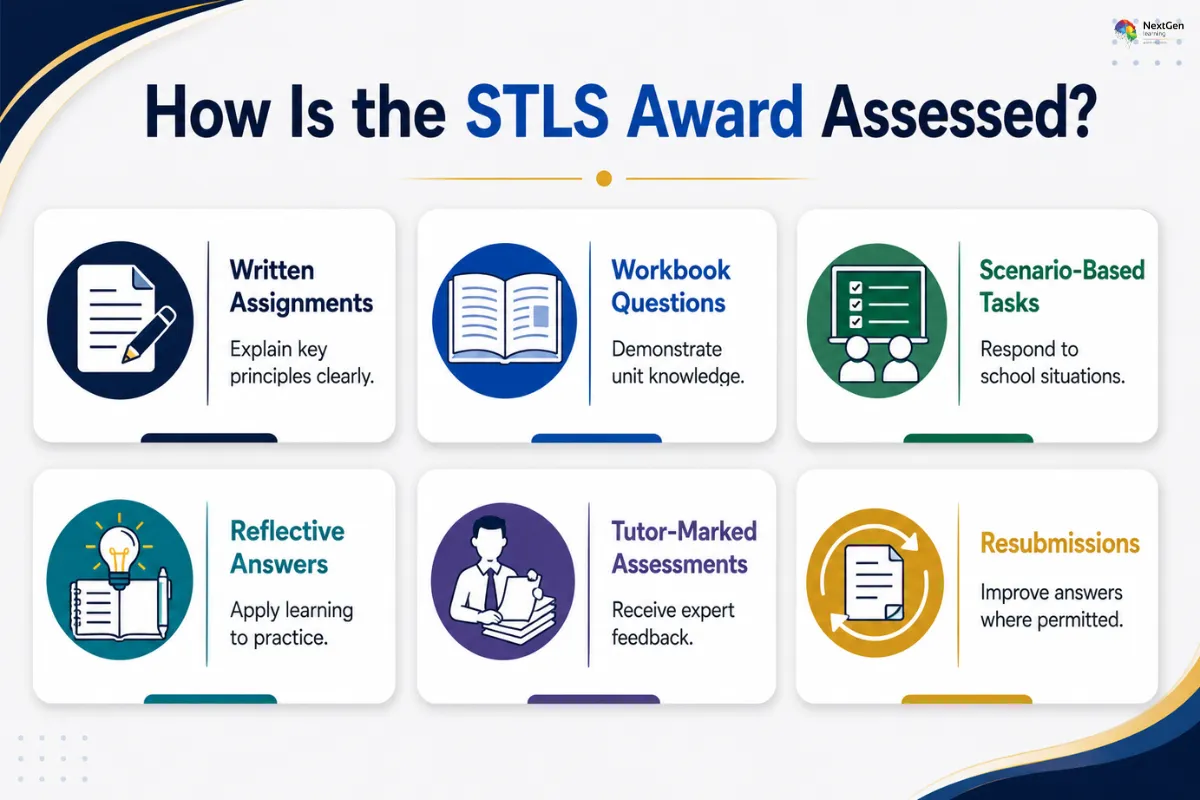
The Level 3 STLS Award is usually assessed through written, knowledge-based tasks. Therefore, learners do not normally need to complete live classroom observations for this specific Award.
Assessment methods may include:
- Written assignments: Explain key principles in your own words.
- Workbook questions: Show understanding of each unit.
- Scenario-based tasks: Describe how you would respond to realistic school situations.
- Reflective answers: Connect course knowledge to previous experience or future practice.
- Tutor-marked assessments: Receive feedback on accuracy, clarity and depth.
- Resubmissions: Improve incomplete answers where the provider allows further attempts.
For example, you may explain how to report a safeguarding concern or describe how communication should change according to a child’s age and needs.
However, assessment rules can vary between providers and awarding organisations. Therefore, check the required evidence, marking process, feedback times and resubmission policy before enrolling.
Can the STLS Award Help You Become a Teaching Assistant?
The STLS Award can strengthen your knowledge and support your first steps towards a Teaching Assistant role. The National Careers Service Teaching Assistant profile explains that Teaching Assistants support classroom learning and that people may enter the role through college courses, apprenticeships, volunteering or direct applications. For example, it shows that you understand safeguarding, child development, school structures and professional communication. As a result, it can add relevant evidence to your CV.
However, the qualification does not guarantee employment. Schools set their own recruitment requirements and may also look for:
- Classroom experience: Show that you can work effectively with children.
- Strong communication: Explain how you support pupils, teachers and parents.
- Safeguarding awareness: Demonstrate that you understand reporting procedures.
- English and maths skills: Meet the school’s preferred academic requirements.
- References or volunteering: Provide evidence of reliability and suitability.
Therefore, the STLS Award works best when combined with volunteering, school experience or further practical training. It can open the door, but your experience and overall suitability will still influence employment decisions.
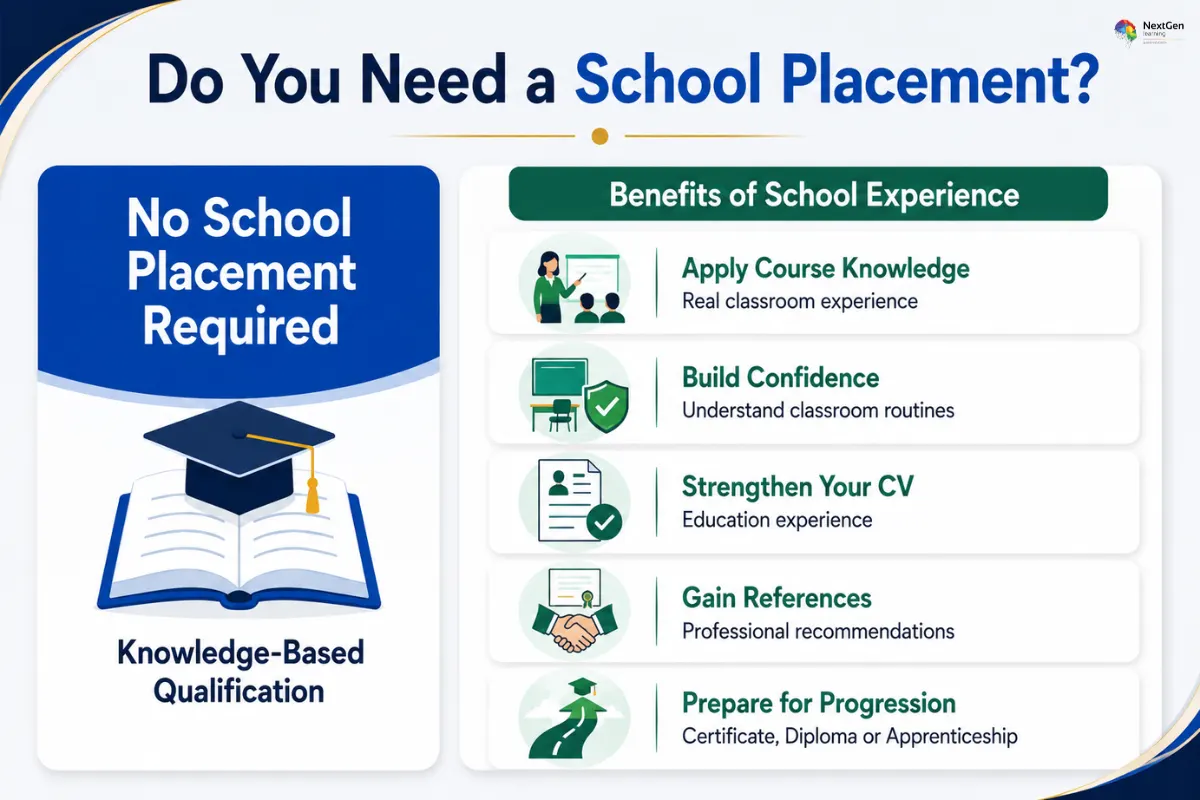
Do You Need a School Placement?
You do not usually need a school placement to complete the Level 3 Award in Supporting Teaching and Learning in Schools because it is mainly knowledge-based. Therefore, beginners and career changers may be able to study without current employment in a school.
However, practical experience can still improve the value of the qualification. For example, volunteering in a classroom can help you understand school routines, pupil behaviour, safeguarding procedures and professional communication more clearly.
A placement may help you:
- Apply course knowledge: Connect written assignments with real school situations.
- Build confidence: Become familiar with classroom routines and support duties.
- Strengthen your CV: Show employers that you have worked with children in an education setting.
- Gain references: Develop professional relationships with teachers or school leaders.
- Prepare for progression: Build experience before taking a competence-based Certificate, Diploma or apprenticeship.
Importantly, larger Teaching Assistant qualifications may require workplace observations and practical evidence. Consequently, you should confirm whether the course is the knowledge-based Award or a broader occupational qualification before enrolling.
Who Is the Qualification Best Suited To?
The Level 3 STLS Award is best suited to learners who want a recognised introduction to school-support work without immediately committing to a larger practical qualification. Therefore, it can be especially useful for beginners who need confidence, core knowledge and a clearer understanding of Teaching Assistant responsibilities.
| Strong Fit | Consider Another Route |
|---|---|
| Beginners exploring school-support careers | Learners who need full workplace competence |
| Career changers without a current placement | Candidates whose employer requires a Certificate or Diploma |
| Volunteers building education knowledge | Learners seeking HLTA status immediately |
| Existing support staff refreshing theory | Candidates expecting guaranteed employment |
| Parents or carers considering school roles | Learners needing assessed classroom practice |
Moreover, the Award may suit people who want to test whether education is the right career before investing in a longer programme. However, it may offer limited value if your main goal is to prove practical competence in a real classroom.
Consequently, you should compare the course with local job requirements and your intended progression route before enrolling.
What Can You Progress To After STLS?
After completing the STLS Award, you can move into further study, school experience or entry-level support opportunities. However, the best next step depends on whether you want broader knowledge, practical competence or long-term career progression.
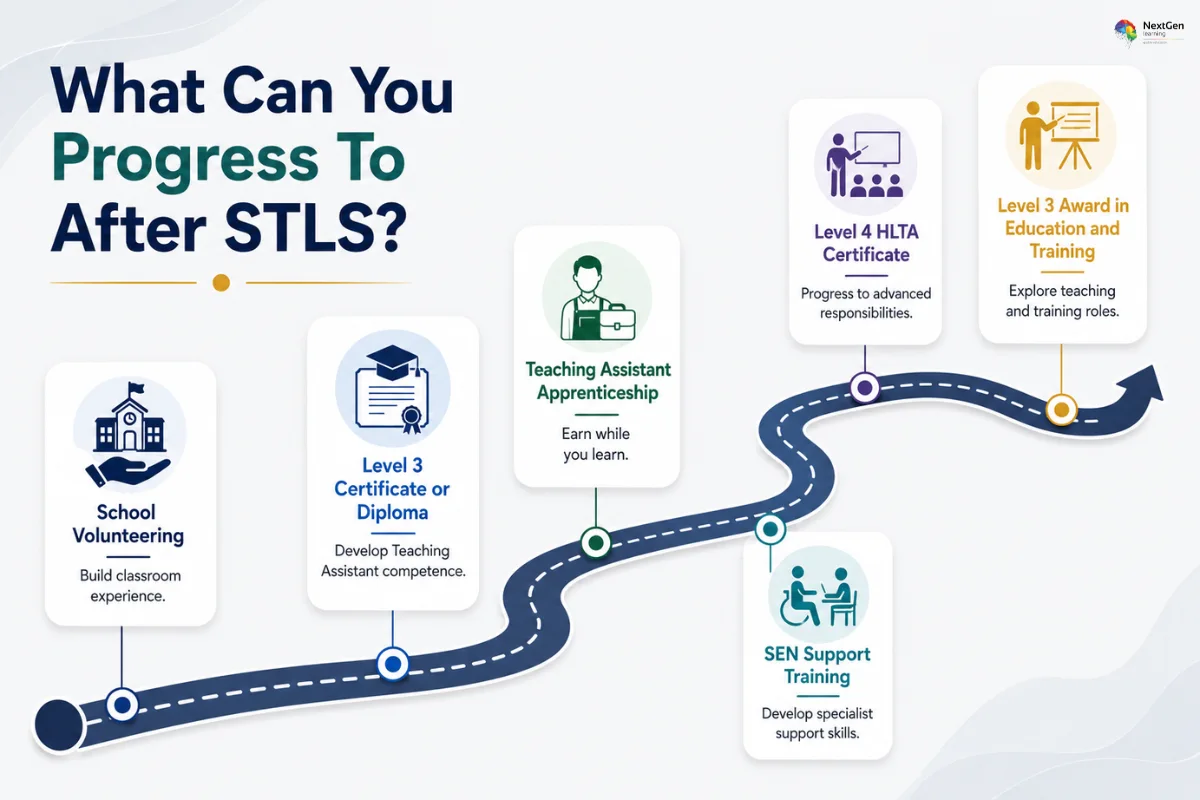
Possible progression routes include:
- School volunteering: Build classroom experience and strengthen future job applications.
- Level 3 Certificate or Diploma: Develop broader knowledge and practical Teaching Assistant competence.
- Teaching Assistant apprenticeship: Combine paid employment with structured workplace training.
- SEN support training: Build specialist knowledge for supporting pupils with additional needs.
- Level 4 Certificate for Higher Level Teaching Assistants: Progress towards advanced classroom responsibilities after gaining suitable Teaching Assistant experience.
- Level 3 Award in Education and Training: Explore teaching or training roles outside mainstream school support.
Therefore, the STLS Award can act as a useful foundation rather than a final career qualification. Moreover, combining it with practical experience usually creates a stronger progression route than relying on the Award alone.
Is the STLS Qualification Worth It?
The Level 3 Award in Supporting Teaching and Learning in Schools can be worth it for beginners who want recognised knowledge before applying for school-support roles. It covers essential topics and may be completed without a placement, which makes it accessible to career changers and learners who are not yet employed in education.
The qualification is particularly worthwhile when you:
- Need a structured introduction: Learn the foundations of safeguarding, development and school organisation.
- Want to strengthen your CV: Show employers that you have completed relevant education training.
- Cannot access a placement yet: Study the theory before moving into workplace-based learning.
- Plan to gain experience: Combine the Award with volunteering or an entry-level school role.
- Understand its limitations: Treat it as a starting point rather than proof of full classroom competence.
However, it may not be the best option if an employer requires assessed workplace skills, a larger Level 3 Certificate or an apprenticeship. Moreover, it does not guarantee a Teaching Assistant job, HLTA status or a salary increase.
Therefore, the STLS Award offers good value when it matches your current stage. It provides a credible foundation, but practical experience and further progression may still be necessary for long-term employment.
Frequently Asked Questions
STLS stands for Supporting Teaching and Learning in Schools. Some providers also use the abbreviation STALIS. However, the exact course title, awarding organisation and qualification number matter more than the abbreviation. Therefore, always check the full qualification details before enrolling.
Some versions are regulated by Ofqual through recognised awarding organisations. For example, the competitor offers a Focus Awards qualification with the reference number 601/6103/6. Nevertheless, learners should verify the specific qualification listed by their chosen provider.
Yes, a knowledge-based STLS Award can often be completed online through assignments and tutor-marked assessments. However, online delivery does not guarantee employment or practical classroom competence.
You do not usually need previous Teaching Assistant experience for the knowledge-based Award. Therefore, it can suit beginners and career changers. Even so, volunteering or school experience can strengthen your understanding and future job applications.
The Award itself may not require a placement. However, providers set their own delivery and assessment rules. In contrast, larger competence-based qualifications may require workplace evidence or observations.
It can support your application by showing relevant knowledge. However, schools set their own recruitment requirements. Consequently, employers may also expect classroom experience, suitable references, English and maths skills, safeguarding awareness and confidence working with children.



0 responses on "STLS Qualification: What Is the Level 3 Award in Supporting Teaching and Learning in Schools?"