




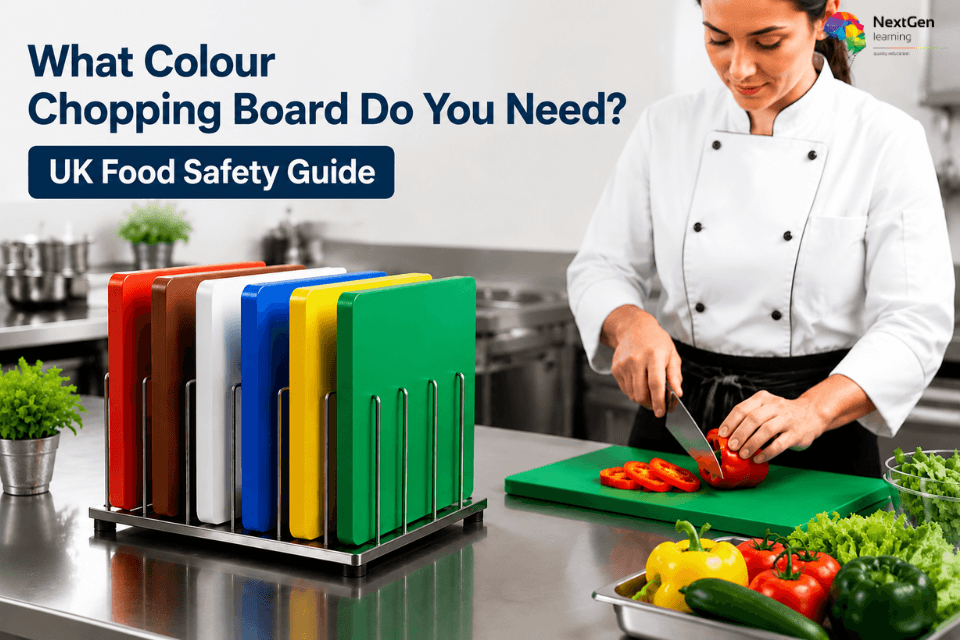
What Colour Chopping Board Do You Need? UK Food Safety Guide
Chopping boards are one of the most frequently used tools in any kitchen. However, many people still underestimate how important chopping board colours are for food hygiene and kitchen safety. Whether you work in a restaurant, café, catering business, school kitchen, or home environment, using the correct chopping board can significantly reduce the risk of cross-contamination.
Importantly, different foods naturally carry different types of bacteria. Raw meat, seafood, dairy products, vegetables and allergen-free foods all require separate preparation areas. Therefore, using a colour-coded chopping board system helps prevent harmful bacteria from spreading from one food group to another.
In the UK, colour-coded chopping boards form an essential part of food hygiene procedures. Many commercial kitchens use this system to support HACCP compliance, improve kitchen organisation and maintain high food safety standards. Moreover, Environmental Health Officers (EHOs) often expect businesses to demonstrate safe food preparation practices during inspections.
Using the wrong chopping board may seem like a small mistake. However, it can lead to serious health risks, including food poisoning, bacterial contamination and allergen cross-contact. As a result, understanding chopping board colour meanings is essential for anyone handling food professionally or at home.
In this complete UK food safety guide, you will learn:
- What each chopping board colour means
- Which board should be used for different foods
- How colour-coded systems prevent contamination
- Common food hygiene mistakes to avoid
- HACCP and EHO inspection requirements
- How to clean and maintain chopping boards safely
- The best chopping board materials for commercial kitchens
Additionally, this guide will explain practical kitchen safety tips used in real catering environments. Therefore, by the end of this article, you will clearly understand how to choose, use and maintain chopping boards correctly while improving overall food hygiene standards.
Table of Contents
Why Chopping Board Colours Matter for Food Safety

Food safety starts long before cooking begins. In most kitchens, the biggest food hygiene risks happen during food preparation. This is where chopping board colours become extremely important. A proper colour-coded chopping board system helps prevent harmful bacteria, allergens and contaminants from spreading between different food groups.
Cross-contamination happens when bacteria transfer from one surface, utensil, or food item to another. For example, if someone cuts raw chicken on a chopping board and then uses the same board for salad preparation without proper cleaning, dangerous bacteria such as Salmonella or Campylobacter can spread to ready-to-eat foods.
Consequently, this can lead to serious foodborne illnesses. In commercial kitchens, it may also result in poor hygiene ratings, customer complaints, legal penalties, or even temporary business closure.
Colour-coded chopping boards reduce these risks by assigning a specific board colour to each food category. Therefore, kitchen staff can quickly identify which board should be used for each task without confusion.
How Colour-Coded Chopping Boards Prevent Cross-Contamination
Using separate chopping boards creates a safer and more organised food preparation process. Moreover, it supports consistent hygiene practices across busy kitchens.
A colour-coded system helps:
- Separate raw and cooked foods safely
● Prevent bacteria from transferring between foods
● Reduce allergen cross-contact risks
● Improve kitchen workflow and organisation
● Support HACCP food safety procedures
● Help staff follow hygiene rules more easily
● Reduce food poisoning risks
● Improve EHO inspection readiness
Importantly, commercial kitchens often handle multiple food types at the same time. Without a clear system, mistakes can happen very quickly. Therefore, colour-coded equipment acts as a visual safety measure that helps staff make safer decisions during food preparation.
Why Cross-Contamination Is Dangerous
Many harmful bacteria are invisible to the naked eye. Even a clean-looking chopping board may still contain dangerous microorganisms hidden inside knife grooves or scratches.
Some common foodborne bacteria include:
- Salmonella
● E. coli
● Campylobacter
● Listeria
● Staphylococcus aureus
These bacteria can spread rapidly if food preparation equipment is not separated properly. As a result, consumers may suffer symptoms such as:
- Food poisoning
● Vomiting
● Diarrhoea
● Stomach pain
● Fever
● Severe allergic reactions
In vulnerable individuals, including children, older adults, pregnant people and individuals with weakened immune systems, food contamination can become extremely serious.
Why Chopping Board Colours Matter in Commercial Kitchens
In professional catering environments, speed and organisation are essential. Kitchen staff often prepare meat, seafood, vegetables, dairy products and cooked foods simultaneously. Therefore, a colour-coded chopping board system helps maintain consistency and hygiene during busy service periods.
Additionally, UK food hygiene regulations strongly encourage businesses to implement effective contamination control measures. Many food businesses integrate colour-coded boards into their HACCP food safety management systems.
Environmental Health Officers may also check whether:
- Staff understand the colour-coding system
● Boards are used correctly
● Equipment remains clean and well-maintained
● Cross-contamination risks are controlled
● Food preparation procedures follow hygiene standards
Consequently, proper chopping board management is not only a safety practice but also an important part of regulatory compliance and kitchen professionalism.
Are Colour-Coded Chopping Boards Required by Law?
UK food hygiene regulations do not specifically state that kitchens must use coloured chopping boards. However, food businesses are legally required to prevent contamination and maintain safe food handling procedures.
Because of this, colour-coded chopping boards have become an industry-standard hygiene practice across:
- Restaurants
● Hotels
● Cafés
● Catering businesses
● School kitchens
● Hospitals
● Care homes
● Food manufacturing environments
Importantly, using a recognised colour-coding system demonstrates that a business takes food safety seriously and actively works to reduce contamination risks.
UK Standard Chopping Board Colour Chart

In UK kitchens, colour-coded chopping boards help staff quickly identify which board should be used for specific food groups. This system plays an important role in preventing cross-contamination and maintaining food hygiene standards.
Although some kitchens may slightly adapt their systems, the standard UK chopping board colour chart remains widely recognised across catering, hospitality, healthcare and food manufacturing environments.
Importantly, every member of the kitchen staff should fully understand these colour meanings. Otherwise, using the wrong board can increase contamination risks and compromise food safety procedures.
Standard Chopping Board Colour Meanings
Chopping Board Colour | Food Type | Main Purpose |
Red | Raw meat | Prevent raw meat contamination |
Blue | Raw fish and seafood | Separate seafood bacteria |
Green | Salad, fruit, and vegetables | Protect ready-to-eat produce |
Yellow | Cooked meat | Separate cooked and raw foods |
Brown | Root vegetables | Prevent soil contamination |
White | Dairy and bakery products | Reduce contamination risks |
Purple | Allergen-free foods | Prevent allergen cross-contact |
This colour-coded system helps kitchens maintain a safer and more organised workflow. Moreover, it allows staff to identify food preparation areas instantly during busy service periods.
Red Chopping Board: Raw Meat
The red chopping board is used for raw meat preparation. This includes foods that may carry dangerous bacteria before cooking.
Common foods prepared on red boards include:
- Raw beef
● Raw lamb
● Raw pork
● Raw chicken
● Raw turkey
● Raw minced meat
Raw meat can contain harmful bacteria such as Salmonella, E. coli and Campylobacter. Therefore, using a dedicated red chopping board helps stop these bacteria from spreading to ready-to-eat foods.
Importantly, staff should clean and sanitise the board immediately after use. Deep knife grooves can trap bacteria very easily if boards are not maintained properly.
Blue Chopping Board: Raw Fish and Seafood
The blue chopping board is designed for raw fish, seafood and shellfish preparation.
Typical foods include:
- Raw fish fillets
● Salmon
● Tuna
● Shellfish
● Prawns
● Mussels
● Oysters
Seafood products can contain harmful microorganisms and strong odours. Consequently, separating fish preparation areas reduces contamination risks and improves kitchen hygiene.
After handling raw fish, kitchen staff should thoroughly sanitise both the board and surrounding preparation surfaces.
Green Chopping Board: Fruit and Vegetables
The green chopping board is used for fruits, salads, herbs and vegetables.
Common examples include:
- Lettuce
● Cucumbers
● Tomatoes
● Apples
● Garlic
● Onions
● Fresh herbs
Many vegetables are eaten raw. Therefore, contamination from meat or seafood can become extremely dangerous if separate boards are not used.
Additionally, green boards help kitchens maintain cleaner preparation stations for ready-to-eat produce.
Yellow Chopping Board: Cooked Meat
The yellow chopping board is used for cooked meats and prepared foods.
Examples include:
- Cooked chicken
● Ham
● Roast beef
● Cooked turkey
● Sliced steak
● Smoked meats
Importantly, cooked food must stay separate from raw food at all times. Otherwise, bacteria from raw products can transfer onto fully cooked items and create serious food safety risks.
Because cooked foods are often ready to eat immediately, contamination can become especially dangerous.
Brown Chopping Board: Root Vegetables
Brown chopping boards are used for root vegetables and unwashed produce.
This includes:
- Potatoes
● Carrots
● Parsnips
● Beetroot
● Radishes
● Turnips
Root vegetables may carry soil, pesticides and bacteria from farming environments. Therefore, using a separate board helps prevent dirt and contamination from spreading to other foods.
Many commercial kitchens wash root vegetables before preparation. However, a dedicated brown board still supports safer food preparation procedures.
White Chopping Board: Dairy and Bakery Products
The white chopping board is used for dairy products and bakery items.
Common foods include:
- Cheese
● Bread
● Cakes
● Pastries
● Tofu
● Butter
These foods usually require cleaner preparation conditions because they are often ready to eat immediately.
Additionally, separating dairy products can help reduce allergen contamination risks in kitchens handling multiple food types.
Purple Chopping Board: Allergen-Free Foods
Purple chopping boards are used for allergen-free or “free-from” food preparation.
This may include foods that are:
- Gluten-free
● Nut-free
● Dairy-free
● Egg-free
Food allergies can become life-threatening for some individuals. Therefore, kitchens must take allergen management extremely seriously.
Using dedicated purple chopping boards helps reduce the risk of allergen cross-contact during food preparation. Moreover, many professional kitchens combine purple boards with separate utensils and preparation areas for additional protection.
Why Consistency Matters in Colour-Coding
A colour-coded system only works if staff use it consistently. Therefore, businesses should ensure:
- Staff receive proper food hygiene training
● Chopping boards are clearly labelled
● Damaged boards are replaced quickly
● Kitchen procedures remain standardised
● Staff understand allergen risks
● Boards are cleaned and sanitised properly
Importantly, consistency helps improve both food safety and operational efficiency. In busy kitchens, clear visual systems reduce confusion and help staff work more confidently and safely.
What Happens If You Use the Wrong Chopping Board?
Using the wrong chopping board can create serious food safety hazards. Although the mistake may seem minor, it can quickly lead to cross-contamination, bacterial spread, allergen exposure and food poisoning.
In both home and commercial kitchens, contamination often happens silently. Bacteria are invisible and many harmful microorganisms spread through tiny food particles, knife marks and surface contact. Therefore, even a clean-looking chopping board may still transfer harmful bacteria to other foods.
For example, if someone uses a red chopping board for raw chicken and then prepares salad on the same board without proper sanitisation, dangerous bacteria can contaminate ready-to-eat foods immediately.
As a result, customers, family members, or vulnerable individuals may become seriously ill.
Common Risks of Using the Wrong Chopping Board
Different foods carry different contamination risks. Therefore, colour-coded systems exist to keep those risks separated during food preparation.
Using the wrong board may cause:
- Cross-contamination between raw and cooked foods
● Transfer of harmful bacteria onto ready-to-eat foods
● Allergen cross-contact
● Food poisoning outbreaks
● Failed food hygiene inspections
● Legal and reputational damage for food businesses
● Poor hygiene ratings
● Increased health risks for vulnerable individuals
Importantly, contamination does not only happen through food itself. Knives, gloves, cloths and kitchen surfaces can also spread bacteria when staff use incorrect preparation procedures.
How Cross-Contamination Happens
Cross-contamination occurs when bacteria or allergens transfer from one surface or food item to another.
This commonly happens through:
- Shared chopping boards
● Dirty knives
● Unwashed hands
● Contaminated kitchen cloths
● Improper board cleaning
● Poor kitchen organisation
For example, raw chicken naturally carries bacteria such as Campylobacter and Salmonella. If those bacteria spread onto cooked meat, salad, bread, or dairy products, consumers may eat contaminated food without realizing it.
Consequently, foodborne illness can develop very quickly.
Foods Most at Risk
Some foods become especially dangerous after contamination because they are usually eaten without further cooking.
These include:
- Salad
● Fruit
● Sandwich fillings
● Bread
● Cheese
● Cooked meats
● Desserts
● Ready-to-eat meals
Cooking often kills bacteria. However, ready-to-eat foods do not receive additional heat treatment. Therefore, contamination risks become significantly higher.
Real Kitchen Example of Cross-Contamination
Imagine a busy restaurant kitchen during lunch service.
A staff member cuts raw chicken on a red chopping board. Afterwards, they quickly rinse the board instead of properly sanitising it. A second staff member then uses the same board to slice tomatoes for sandwiches.
Although the board may appear clean, bacteria can remain hidden inside knife grooves and scratches. As a result, contaminated tomatoes may expose customers to harmful bacteria.
This type of mistake is one of the most common causes of foodborne illness in commercial kitchens.
Allergen Risks from Incorrect Chopping Board Use
Cross-contamination does not only involve bacteria. Allergens can also spread between foods very easily.
For example:
- Nuts may contaminate allergen-free foods
● Dairy traces may spread onto vegan meals
● Gluten may transfer onto gluten-free products
● Seafood allergens may contaminate other dishes
For individuals with severe allergies, even tiny amounts of allergens can trigger dangerous reactions.
Symptoms may include:
- Breathing difficulties
● Skin reactions
● Swelling
● Vomiting
● Anaphylaxis
Therefore, many professional kitchens use purple chopping boards specifically for allergen-free food preparation.
Business Consequences of Poor Chopping Board Practices
In commercial kitchens, using incorrect chopping boards can damage both safety standards and business reputation.
Possible consequences include:
- Poor Food Hygiene Ratings
● Negative customer reviews
● Failed EHO inspections
● Legal penalties
● Loss of customer trust
● Food safety investigations
● Temporary closure notices
Additionally, food businesses have a legal responsibility to protect customers from contamination risks. Therefore, proper chopping board procedures form an important part of UK food hygiene compliance.
Warning Signs Your Chopping Board Is Unsafe
Even when staff use the correct colour, damaged chopping boards may still become unsafe over time.
You should replace a chopping board if it has:
- Deep knife grooves
● Cracks or splits
● Warped surfaces
● Permanent stains
● Strong lingering odours
● Difficult-to-clean scratches
Deep cuts can trap bacteria and make effective cleaning almost impossible. Consequently, older boards often become a hidden contamination risk inside kitchens.
How to Reduce Chopping Board Contamination Risks
Proper kitchen procedures greatly reduce contamination risks. Therefore, businesses and home cooks should follow consistent hygiene practices.
Important safety measures include:
- Always use the correct colour-coded board
● Clean and sanitise boards immediately after use
● Separate raw and cooked foods completely
● Train staff regularly on food hygiene procedures
● Replace damaged boards quickly
● Store chopping boards properly
● Use separate knives for different food groups
● Maintain strong HACCP procedures
Importantly, prevention is always easier than dealing with food poisoning incidents or failed inspections later.
HACCP and Colour-Coded Chopping Boards Explained
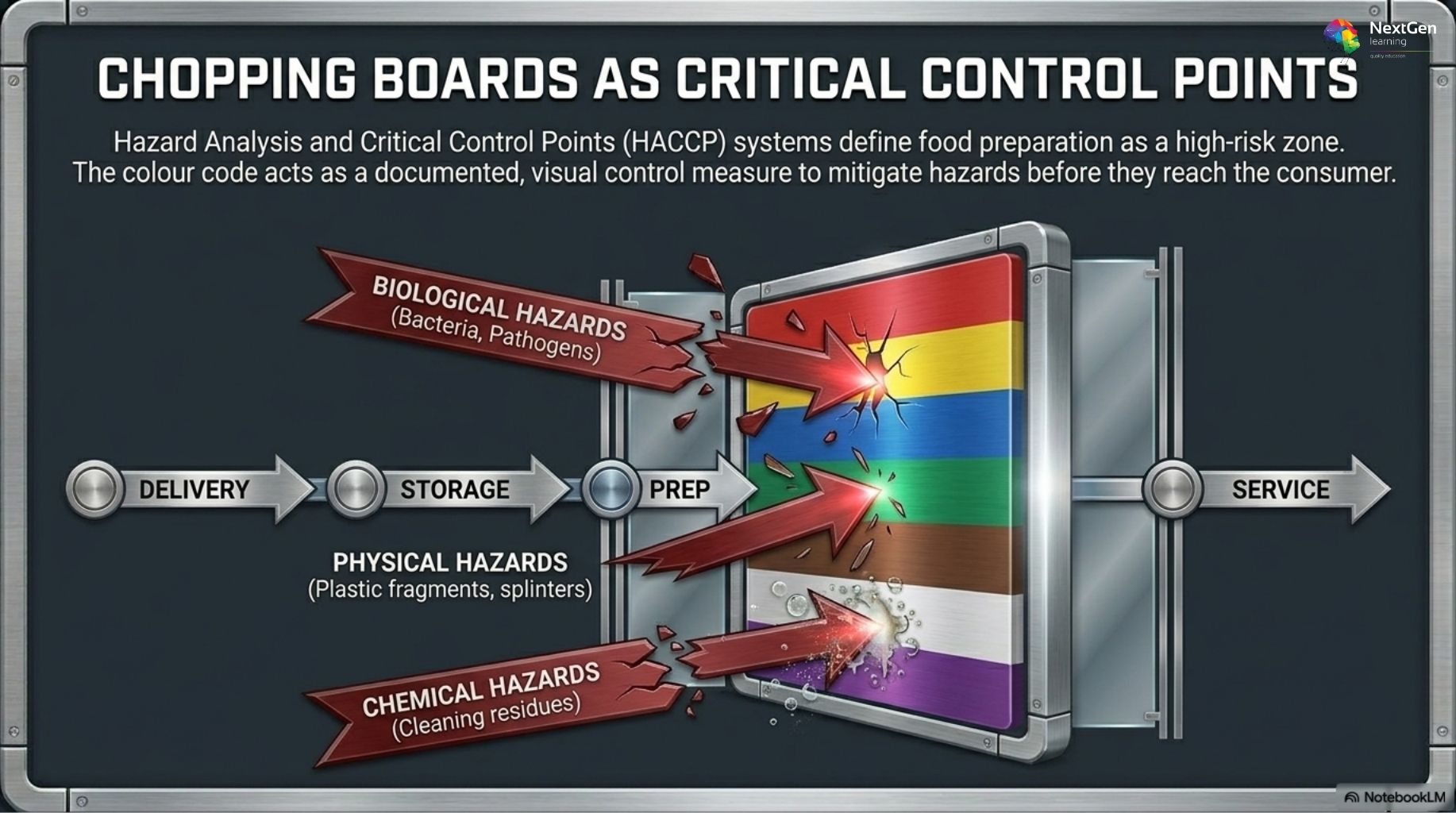
HACCP plays a major role in modern food safety management. In commercial kitchens across the UK, colour-coded chopping boards are often used as part of HACCP procedures to reduce contamination risks and maintain safe food preparation standards.
HACCP stands for Hazard Analysis and Critical Control Points. It is a structured food safety system designed to identify, monitor and control hazards throughout food preparation processes.
Importantly, contamination prevention is one of the core principles of HACCP. Therefore, using separate chopping boards for different food groups helps businesses control one of the most common food safety risks in kitchens.
What Is HACCP?
HACCP is a preventative food safety management system used across:
- Restaurants
● Cafés
● Catering businesses
● Hotels
● Food manufacturing facilities
● Hospitals
● School kitchens
● Care homes
Rather than reacting to food safety problems after they happen, HACCP focuses on preventing hazards before they occur.
The system helps businesses identify:
- Biological hazards
● Chemical hazards
● Physical hazards
● Allergen risks
● Cross-contamination points
Consequently, businesses can create safer food handling procedures and reduce the risk of foodborne illness.
Why Chopping Boards Matter in HACCP Systems
Food preparation areas are one of the highest-risk contamination zones in any kitchen. Raw meat, seafood, vegetables, cooked foods and allergens often move through the same workspace throughout the day.
Without clear separation procedures, bacteria can spread very easily.
Therefore, colour-coded chopping boards support HACCP by:
- Separating raw and ready-to-eat foods
● Reducing bacterial transfer risks
● Supporting allergen control procedures
● Improving staff consistency
● Creating safer kitchen workflows
● Supporting documented hygiene systems
● Helping monitor contamination control measures
Importantly, colour-coding acts as a visual control point. Staff can instantly recognise which equipment belongs to each food group.
How Colour-Coded Boards Help Prevent Critical Food Safety Hazards
Under HACCP principles, businesses must identify “critical control points” where contamination risks are highest.
Food preparation is considered one of those major control points because:
- Raw meat contains harmful bacteria
● Seafood can carry dangerous pathogens
● Soil on vegetables may contain contaminants
● Allergens can spread through shared equipment
● Ready-to-eat foods require extra protection
Consequently, separating chopping boards helps kitchens reduce these risks before contamination occurs.
For example, using a red board exclusively for raw chicken prevents bacteria from spreading onto cooked foods or salad ingredients.
Common HACCP Hazards Linked to Chopping Boards
Several food safety hazards are directly connected to poor chopping board management.
Biological Hazards
These involve harmful microorganisms such as:
- Salmonella
● E. coli
● Listeria
● Campylobacter
These bacteria commonly spread through improper food preparation practices.
Allergen Hazards
Allergen cross-contact can happen when the same equipment is used for multiple foods.
Common allergens include:
- Nuts
● Milk
● Eggs
● Gluten
● Fish
● Shellfish
Therefore, many kitchens use purple chopping boards for allergen-free food preparation.
Physical Hazards
Damaged chopping boards may create physical contamination risks.
Examples include:
- Plastic fragments
● Wood splinters
● Cracked board particles
Consequently, businesses should replace worn or damaged boards immediately.
HACCP Documentation and Chopping Board Procedures
Many UK food businesses include chopping board systems inside their documented food safety procedures.
This may include:
- Colour-coding policies
● Cleaning schedules
● Staff training records
● Sanitisation procedures
● Equipment replacement logs
● Allergen management systems
Keeping documented procedures helps businesses demonstrate compliance during food hygiene inspections.
Moreover, consistent documentation strengthens overall food safety management.
What EHOs Expect to See
Environmental Health Officers often review contamination control procedures during inspections.
They may check whether:
- Staff understand chopping board colours
● Boards are used correctly
● Cleaning procedures are followed properly
● Damaged boards are removed quickly
● Raw and cooked foods remain separated
● Allergen controls are effective
● HACCP procedures are documented
Importantly, inspectors usually assess both written procedures and real kitchen behaviour.
Therefore, staff training is just as important as having the correct equipment.
Staff Training and HACCP Compliance
Even the best colour-coded system will fail if staff do not understand how to use it properly.
Consequently, businesses should provide regular food hygiene training covering:
- Chopping board colour meanings
● Cross-contamination risks
● Cleaning procedures
● Allergen management
● Personal hygiene practices
● Kitchen workflow organisation
Training helps staff follow safer routines consistently during busy kitchen operations.
Additionally, strong staff awareness reduces the likelihood of costly food safety mistakes.
Why HACCP Compliance Matters for Food Businesses
Food safety failures can seriously damage a business.
Poor contamination control may lead to:
- Food poisoning incidents
● Customer illness
● Failed hygiene inspections
● Low food hygiene ratings
● Legal action
● Reputation damage
● Business closure notices
Therefore, implementing proper HACCP procedures is essential for both legal compliance and customer safety.
Best Chopping Board Materials for Food Safety
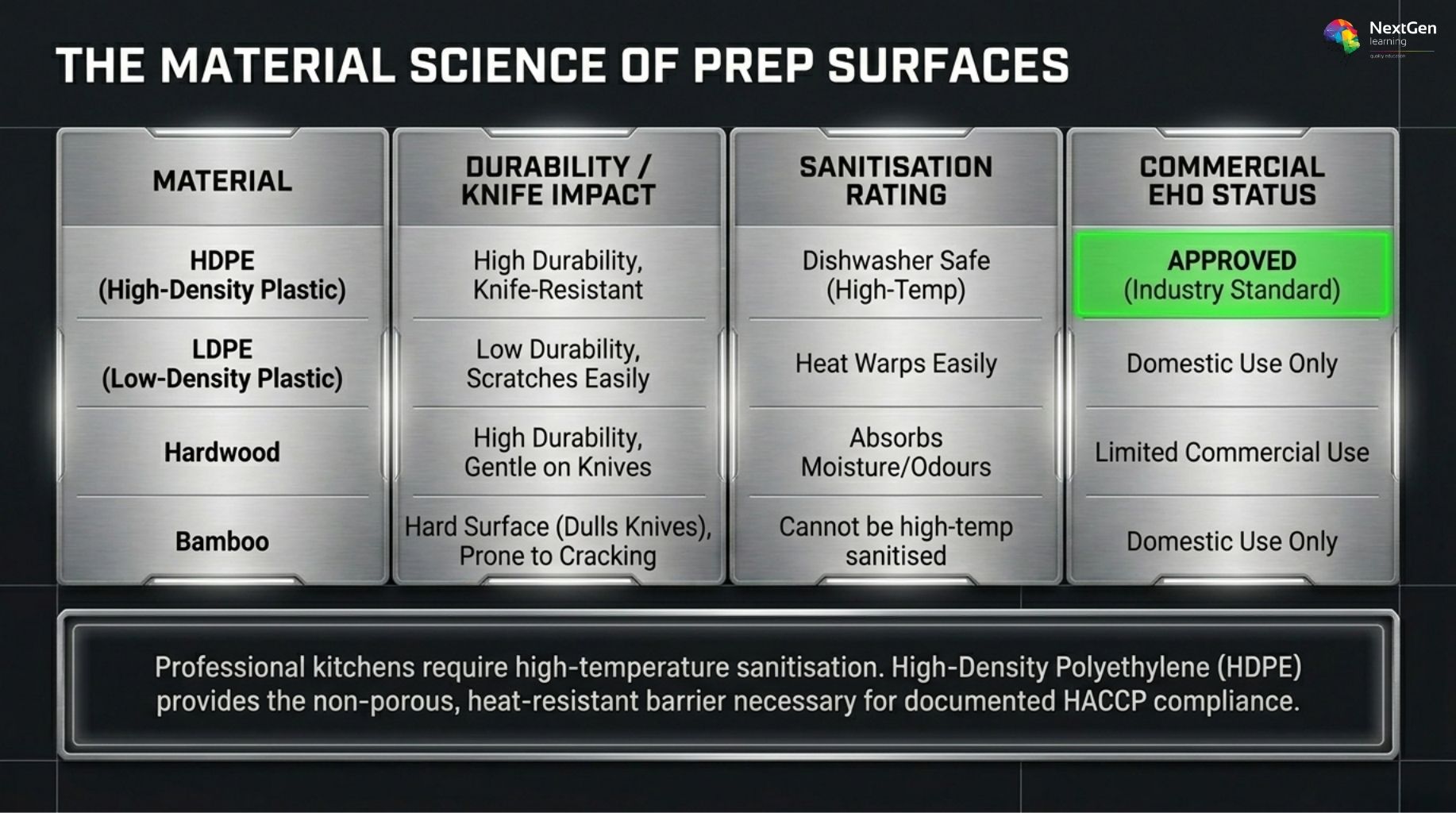
Choosing the right chopping board material is just as important as choosing the correct colour. Different materials affect hygiene, durability, cleaning and contamination control in different ways. Therefore, understanding the advantages and disadvantages of each type helps kitchens maintain safer food preparation standards.
In commercial kitchens across the UK, food-safe plastic chopping boards are usually preferred because they are durable, washable and easier to sanitise properly. However, many home kitchens still use wooden boards for certain preparation tasks.
Importantly, not all chopping boards provide the same level of hygiene protection. Some materials absorb moisture, trap bacteria more easily, or become damaged faster under heavy use.
The Most Common Chopping Board Materials
Most chopping boards are made from:
- Plastic
● Wood
● Bamboo
● Composite materials
● Rubber
Each material has different strengths and limitations depending on kitchen usage, hygiene requirements and maintenance routines.
Plastic Chopping Boards
Plastic chopping boards are the most common choice in professional kitchens. They are widely used in restaurants, catering businesses, hospitals and food manufacturing environments.
Most colour-coded chopping boards are made from food-grade plastic.
Advantages of Plastic Chopping Boards
Plastic boards offer several hygiene and operational benefits.
Food Safety Benefits
- Easy to clean and sanitise
● Suitable for colour-coding systems
● Less absorbent than wood
● Compatible with commercial dishwashers
● Resistant to moisture damage
● Widely approved for commercial kitchens
Additionally, plastic boards are available in many colours, sizes and thicknesses. Therefore, businesses can organise food preparation areas more efficiently.
Disadvantages of Plastic Chopping Boards
Despite their benefits, plastic boards still require careful maintenance.
Common issues include:
- Deep knife grooves can trap bacteria
● Cheap boards wear out quickly
● Warped boards may become unsafe
● Scratched surfaces are harder to sanitise
Consequently, kitchens should inspect boards regularly and replace damaged equipment immediately.
Wooden Chopping Boards
Wooden chopping boards remain popular in many home kitchens because they are attractive and gentle on knives.
However, commercial kitchens usually avoid wooden boards for high-risk food preparation tasks.
Advantages of Wooden Boards
Wooden boards provide several practical benefits.
Common Advantages
- Durable when maintained properly
● Less harsh on knife blades
● Traditional appearance
● Stable cutting surface
Some hardwood boards may also resist bacteria naturally to a limited degree. However, this does not eliminate contamination risks.
Disadvantages of Wooden Boards
Wood absorbs moisture more easily than plastic. As a result, bacteria may penetrate deeper into the surface over time.
Wooden boards may also:
- Crack or split
● Retain odours
● Absorb food liquids
● Become difficult to sanitise fully
● Develop mould under poor maintenance
Therefore, many UK food safety professionals recommend plastic boards for commercial food preparation environments.
Bamboo Chopping Boards
Bamboo boards have become increasingly popular because they are lightweight and environmentally friendly.
However, bamboo behaves similarly to hardwood in many ways.
Bamboo Board Benefits
- Eco-friendly material
● Lightweight design
● Attractive appearance
● Durable under moderate use
Bamboo Board Drawbacks
- Harder surface may damage knives
● Can crack over time
● Requires proper drying
● Less suitable for commercial sanitisation systems
Consequently, bamboo boards are more common in domestic kitchens than professional food businesses.
High-Density vs Low-Density Chopping Boards
Plastic chopping boards are generally divided into two main categories:
- High-density chopping boards
● Low-density chopping boards
These terms refer to the type and strength of plastic used during manufacturing.
What Are High-Density Chopping Boards?
High-density chopping boards are usually made from HDPE (High-Density Polyethylene).
These boards are commonly used in professional kitchens because they are strong, durable and resistant to heat.
Benefits of High-Density Boards
- Highly durable
● Suitable for heavy commercial use
● Resistant to cracking
● Dishwasher safe
● More resistant to deep cuts
● Longer lifespan
Because they withstand repeated cleaning and heavy knife use, HDPE boards are widely preferred in commercial catering environments.
What Are Low-Density Chopping Boards?
Low-density chopping boards are typically made from LDPE (Low-Density Polyethylene).
These boards are softer and thinner than HDPE alternatives.
Benefits of Low-Density Boards
- Lightweight
● Affordable
● Flexible
● Suitable for light domestic use
However, they are usually less durable than high-density boards.
Limitations of Low-Density Boards
- Wear out more quickly
● Scratch more easily
● Less resistant to heat
● More likely to warp
Therefore, low-density boards are generally better suited to home kitchens rather than busy commercial environments.
Plastic vs Wooden Chopping Boards: Which Is Safer?
For most commercial food safety situations, plastic chopping boards are considered the safer option.
Why Commercial Kitchens Prefer Plastic
Plastic boards support:
- Easier sanitisation
● Better contamination control
● Colour-coded systems
● Commercial dishwasher cleaning
● HACCP compliance
Additionally, Environmental Health Officers often expect businesses to use food-safe, easily cleanable surfaces during inspections.
Features to Look for When Buying Chopping Boards
Not all chopping boards meet professional hygiene standards. Therefore, kitchens should choose products carefully.
Important features include:
- Food-grade certification
● Non-slip surfaces
● Durable construction
● Dishwasher compatibility
● Heat resistance
● Easy-to-clean surfaces
● Clear colour identification
Importantly, businesses should avoid purchasing extremely cheap boards that wear out quickly under heavy use.
When Should You Replace a Chopping Board?
Even high-quality boards eventually become unsafe.
You should replace chopping boards when they develop:
- Deep knife grooves
● Cracks or splits
● Warped surfaces
● Permanent staining
● Strong odours
● Rough or damaged edges
Damaged boards become harder to sanitise effectively. Consequently, bacteria can build up inside scratches and create ongoing contamination risks.
How to Clean and Sanitise Chopping Boards Properly

Cleaning chopping boards correctly is essential for preventing cross-contamination and maintaining food safety standards. Even when kitchens use the correct colour-coded system, poor cleaning procedures can still allow bacteria and allergens to spread between foods.
Importantly, chopping boards develop small knife grooves over time. These tiny cuts can trap food particles, moisture, grease and bacteria. Therefore, simple rinsing is not enough to keep chopping boards hygienically safe.
Proper cleaning and sanitising procedures help reduce the risk of:
- Food poisoning
● Bacterial growth
● Cross-contamination
● Allergen transfer
● Bad odours
● Mould development
In commercial kitchens, effective cleaning procedures also support HACCP compliance and improve EHO inspection readiness.
Cleaning vs Sanitising: What Is the Difference?
Many people confuse cleaning with sanitising. However, they are not the same process.
Cleaning
Cleaning removes:
- Food residue
● Dirt
● Grease
● Visible contamination
This usually involves washing the chopping board using hot water and detergent.
Sanitising
Sanitising reduces harmful bacteria and microorganisms to safe levels.
This process often involves:
- Food-safe disinfectants
● Commercial sanitisers
● High-temperature dishwashing
● Antibacterial cleaning solutions
Importantly, sanitising should happen after proper cleaning. Otherwise, dirt and grease may prevent sanitisers from working effectively.
Step-by-Step Guide to Cleaning Chopping Boards Safely
Following a consistent cleaning routine helps reduce contamination risks significantly.
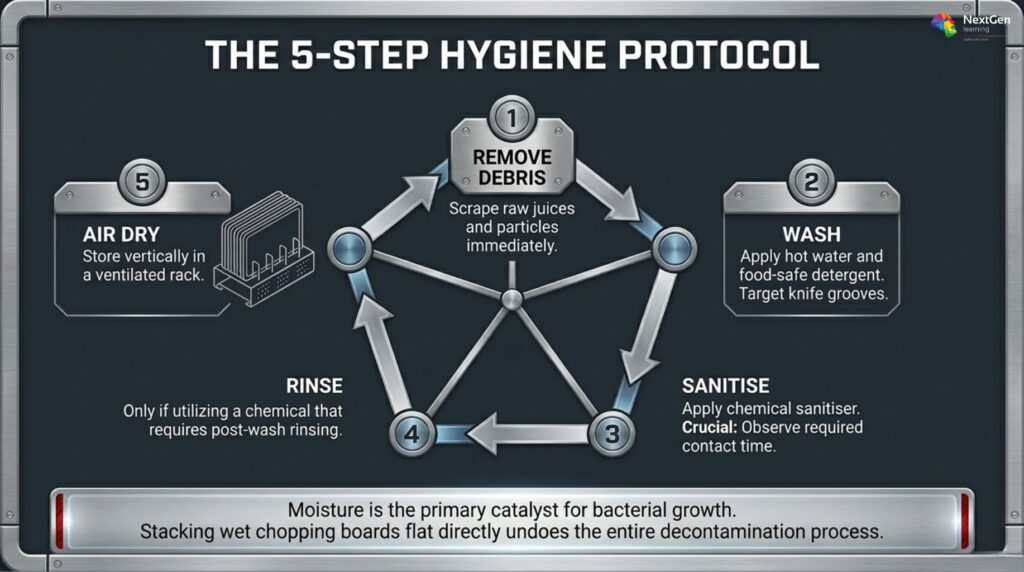
Step 1: Remove Food Debris Immediately
After food preparation, remove leftover food particles straight away.
Use:
- Disposable paper towels
● Food-safe scrapers
● Clean cloths
Importantly, never leave raw meat juices sitting on the board for long periods.
Step 2: Wash with Hot Water and Detergent
Wash the chopping board thoroughly using:
- Hot water
● Washing-up liquid or food-safe detergent
● A clean scrubbing brush or sponge
Pay extra attention to:
- Knife grooves
● Corners
● Edges
● Textured surfaces
Additionally, separate cleaning tools should be used for high-risk areas whenever possible.
Step 3: Sanitise the Board Properly
After cleaning, apply a food-safe sanitiser according to manufacturer instructions.
Commercial kitchens often use:
- Antibacterial sprays
● Chlorine-based sanitisers
● Food-safe disinfectants
● Commercial sanitising tablets
Allow the sanitiser enough contact time to kill bacteria effectively.
Consequently, wiping it off too quickly may reduce its effectiveness.
Step 4: Rinse if Required
Some sanitisers require rinsing after use, while others are no-rinse products.
Therefore, always follow product instructions carefully.
Improper chemical use may create additional food safety hazards.
Step 5: Dry the Board Completely
Moisture encourages bacterial growth. Therefore, chopping boards should always dry fully before storage.
You can:
- Air dry vertically
● Use clean disposable towels
● Store boards in ventilated racks
Avoid stacking wet chopping boards directly on top of each other.
How Often Should Chopping Boards Be Cleaned?
Chopping boards should be cleaned after every use.
However, some situations require immediate deep cleaning, especially after preparing:
- Raw chicken
● Raw seafood
● Allergen-containing foods
● Bloody meat products
● Strong-smelling foods
In busy commercial kitchens, sanitising may happen multiple times throughout a single shift.
Deep Cleaning Chopping Boards
Daily cleaning is important. However, deep cleaning also helps remove hidden bacteria and lingering odours.
How to Deep Clean Plastic Chopping Boards
For a deeper clean:
- Wash the board thoroughly first
● Soak it in food-safe sanitising solution
● Scrub grooves carefully
● Rinse properly
● Allow complete drying
Some commercial kitchens also use high-temperature dishwashers for additional sanitisation.
Can Dishwashers Sanitise Chopping Boards?
Many plastic chopping boards are dishwasher safe. High-temperature commercial dishwashers can help reduce bacterial contamination effectively.
Dishwasher cleaning offers several advantages:
- Consistent sanitisation
● Higher temperatures
● Faster cleaning processes
● Reduced manual handling
However, not all boards are dishwasher compatible. Therefore, always check manufacturer guidance before use.
Wooden boards usually should not go into dishwashers because heat and moisture may cause cracking or warping.
Common Chopping Board Cleaning Mistakes
Poor cleaning habits increase contamination risks significantly.
Some common mistakes include:
- Only rinsing boards with water
● Using dirty cleaning cloths
● Storing boards while wet
● Forgetting to sanitise after raw meat preparation
● Using damaged boards for food preparation
● Sharing cleaning tools between raw and ready-to-eat areas
Importantly, bacteria spread quickly when kitchens follow inconsistent cleaning procedures.
How to Prevent Bacteria Build-Up
Consistent maintenance helps chopping boards remain safer for longer.
Important prevention tips include:
- Replace damaged boards quickly
● Clean boards immediately after use
● Use separate boards for different foods
● Sanitise high-risk boards frequently
● Store boards properly
● Inspect boards regularly for damage
Additionally, staff training plays a major role in maintaining proper hygiene standards.
Signs Your Chopping Board Cannot Be Cleaned Properly
Some boards become too damaged for safe use.
Replace the board immediately if it develops:
- Deep knife cuts
● Cracks
● Warping
● Persistent smells
● Stubborn stains
● Peeling surfaces
Damaged surfaces trap bacteria more easily and reduce cleaning effectiveness.
Consequently, keeping worn boards in use creates unnecessary contamination risks.
Why Proper Chopping Board Hygiene Matters
Food safety depends heavily on preparation hygiene. Even excellent cooking practices cannot always fix contamination caused during food preparation.
Therefore, proper chopping board cleaning helps:
- Protect customer health
● Reduce food poisoning risks
● Improve kitchen hygiene standards
● Support legal compliance
● Maintain professional food safety practices
● Improve food hygiene inspection outcomes
In both home and commercial kitchens, consistent cleaning and sanitising procedures remain one of the most important foundations of safe food handling.
Common Chopping Board Mistakes to Avoid
Many kitchens use colour-coded chopping boards correctly most of the time. However, even small mistakes can still create serious food safety risks. In busy food preparation environments, contamination often happens because staff overlook simple hygiene procedures.
Importantly, cross-contamination does not only happen through raw meat. Allergens, dirty equipment, poor cleaning routines and damaged boards can also compromise food safety standards.
Understanding the most common chopping board mistakes helps kitchens improve hygiene, reduce contamination risks and maintain safer food preparation practices.
Using the Same Board for Multiple Food Types
One of the most dangerous mistakes is using the same chopping board for different food groups without proper cleaning and sanitising.
For example:
- Preparing raw chicken and salad on the same board
● Cutting cooked meat after raw fish preparation
● Using allergen-contaminated boards for “free-from” foods
This significantly increases the risk of bacterial transfer and allergen cross-contact.
Therefore, kitchens should always follow a strict colour-coded system consistently.
Failing to Clean Boards Properly
Many people rinse chopping boards quickly and assume they are safe to reuse. However, simple rinsing does not remove harmful bacteria effectively.
Common cleaning mistakes include:
- Washing with cold water only
● Skipping sanitisation
● Using dirty cloths or sponges
● Cleaning boards too slowly after raw meat use
● Forgetting to clean knife grooves properly
Consequently, bacteria can remain trapped inside scratches and continue spreading to other foods.
Using Damaged Chopping Boards
Old or heavily scratched chopping boards become increasingly difficult to sanitise properly.
Deep grooves can trap:
- Raw meat juices
● Food debris
● Moisture
● Harmful bacteria
Over time, this creates ongoing contamination risks.
Importantly, damaged boards should never remain in active food preparation areas.
Warning Signs a Board Should Be Replaced
Replace chopping boards immediately if you notice:
- Deep knife cuts
● Cracks or splits
● Warping
● Rough surfaces
● Permanent odours
● Peeling material
Regular inspections help kitchens maintain safer hygiene standards.
Ignoring Allergen Control Procedures
Allergen contamination is a growing concern in modern kitchens. Even tiny traces of allergens can trigger severe reactions in sensitive individuals.
Common allergen mistakes include:
- Using the same board for nut and nut-free foods
● Preparing gluten-free foods on contaminated surfaces
● Sharing utensils between allergen and non-allergen foods
● Poor staff awareness of allergen risks
Therefore, many kitchens use purple chopping boards specifically for allergen-free preparation.
Additionally, businesses should combine colour-coded systems with strong staff training and cleaning procedures.
Storing Chopping Boards Incorrectly
Improper storage can undo good cleaning practices very quickly.
Common storage mistakes include:
- Stacking wet boards together
● Leaving boards on contaminated surfaces
● Storing boards near raw food areas
● Allowing boards to remain damp for long periods
Moisture encourages bacterial growth. Consequently, chopping boards should always dry fully before storage.
Using Wooden Boards Improperly in Commercial Kitchens
Wooden chopping boards may look attractive, but they often require more careful maintenance than plastic alternatives.
Common issues include:
- Absorbing food liquids
● Cracking under heavy use
● Developing mould
● Retaining odours
● Becoming difficult to sanitise fully
Therefore, many commercial kitchens prefer food-grade plastic boards for high-risk food preparation tasks.
Poor Staff Training
Even the best colour-coded system becomes ineffective if staff do not understand how to use it properly.
Training failures may result in:
- Incorrect board usage
● Unsafe cleaning practices
● Allergen mistakes
● Inconsistent hygiene procedures
● Cross-contamination incidents
Importantly, regular food hygiene training helps staff maintain safer and more consistent food preparation standards.
Forgetting to Sanitise After Raw Meat Preparation
Raw meat presents one of the highest contamination risks in kitchens.
After preparing raw meat, kitchens should:
- Clean the board immediately
● Apply food-safe sanitiser
● Wash knives thoroughly
● Clean surrounding surfaces
● Wash hands properly
Failing to sanitise correctly allows harmful bacteria to spread rapidly throughout preparation areas.
Using Faded or Unclear Chopping Board Colours
Over time, chopping board colours may fade due to repeated washing and heavy use.
When colours become unclear:
- Staff may confuse board purposes
● Cross-contamination risks increase
● Kitchen organisation becomes weaker
Therefore, businesses should replace faded boards before they create confusion during busy service periods.
Using Chopping Boards on Unstable Surfaces
Safety is not only about contamination. Poor chopping board placement can also cause physical accidents.
Unsafe practices include:
- Using warped boards
● Placing boards on slippery counters
● Working on unstable surfaces
● Using boards without anti-slip support
Consequently, boards may slide during cutting and increase injury risks.
Simple Safety Tip
Place a damp cloth or anti-slip mat underneath the chopping board to improve stability during food preparation.
Why Avoiding These Mistakes Matters
Small hygiene mistakes can quickly create major food safety problems. Therefore, consistent procedures are essential in both home and commercial kitchens.
Avoiding common chopping board mistakes helps:
- Reduce food poisoning risks
● Improve kitchen organisation
● Support HACCP compliance
● Protect customers with allergies
● Improve food hygiene ratings
● Create safer working environments
Importantly, strong food safety habits protect both customers and businesses over the long term.
What Environmental Health Officers Check During Inspections
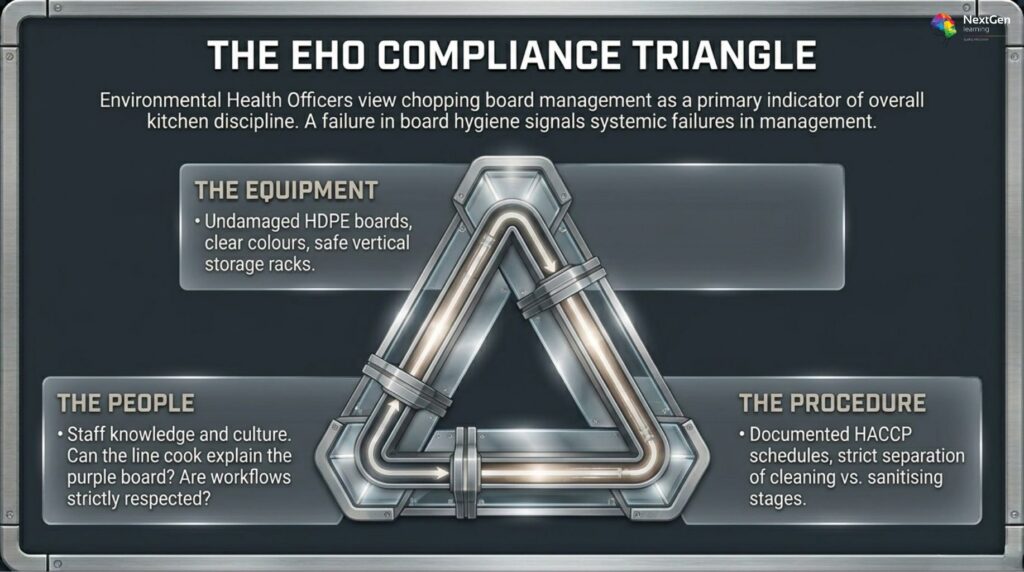
Environmental Health Officers (EHOs) play an important role in protecting public health and ensuring food businesses follow UK food hygiene regulations. During inspections, EHOs carefully assess whether kitchens handle food safely, prevent contamination and maintain proper hygiene standards.
Importantly, chopping board management is often viewed as a basic indicator of overall kitchen hygiene. If a business struggles to manage simple contamination controls properly, inspectors may question the effectiveness of wider food safety procedures.
Therefore, colour-coded chopping boards are not only practical tools but also visible evidence of food safety awareness and operational discipline.
Why EHOs Focus on Cross-Contamination Risks
Cross-contamination remains one of the most common causes of foodborne illness in commercial kitchens. Consequently, EHOs pay close attention to how kitchens separate different food groups during preparation.
Inspectors understand that bacteria can spread quickly through:
- Shared chopping boards
● Knives and utensils
● Kitchen cloths
● Hands and gloves
● Food preparation surfaces
Therefore, businesses must demonstrate clear contamination control procedures throughout the kitchen environment.
What EHOs Check Regarding Chopping Boards
During inspections, EHOs usually examine whether chopping boards are used correctly, maintained properly and integrated into the business’s food safety system.
Board Usage and Colour-Coding
Inspectors may check whether:
- Staff use the correct board colours
● Raw and cooked foods remain separated
● Allergen-free foods have dedicated preparation areas
● Kitchen staff understand colour meanings
● Colour-coded systems remain consistent throughout the kitchen
Importantly, confusion around chopping board colours may indicate weak staff training or poor management procedures.
Board Condition and Maintenance
EHOs also inspect the physical condition of chopping boards.
They often look for:
- Deep knife grooves
● Cracks or splits
● Warping
● Staining
● Damaged edges
● Faded colour coding
Damaged chopping boards become harder to clean effectively. Consequently, they create higher contamination risks.
Businesses should replace worn boards immediately rather than continuing to use unsafe equipment.
Cleaning and Sanitising Procedures
Cleaning procedures are another major inspection focus.
EHOs may evaluate:
- Whether boards are sanitised properly
● Cleaning schedules and routines
● Use of food-safe sanitisers
● Staff hygiene practices
● Storage conditions after cleaning
● Separation of dirty and clean equipment
Importantly, inspectors often assess whether staff follow procedures consistently during real kitchen operations rather than simply relying on written policies.
HACCP Documentation and Food Safety Systems
Many food businesses in the UK operate under HACCP-based food safety systems. EHOs frequently review whether contamination controls are documented and followed correctly.
Inspectors may request evidence of:
- HACCP procedures
● Cleaning schedules
● Staff training records
● Allergen management policies
● Equipment maintenance logs
● Corrective action procedures
Strong documentation helps demonstrate that the business actively manages food safety risks rather than reacting only when problems occur.
Staff Knowledge and Food Hygiene Awareness
EHOs often speak directly with kitchen staff during inspections.
They may ask questions such as:
- Which chopping board is used for raw meat?
● How do you clean boards after use?
● What happens if allergen contamination occurs?
● How do you prevent cross-contamination?
● When should chopping boards be replaced?
Therefore, staff training and awareness are extremely important.
Even excellent written procedures become ineffective if employees do not understand or follow them correctly.
Common Problems EHOs Frequently Identify
Some food hygiene issues appear repeatedly during inspections.
Common chopping board problems include:
- Incorrect colour usage
● Dirty or greasy boards
● Damaged equipment
● Poor allergen separation
● Inadequate sanitising procedures
● Staff confusion about contamination risks
● Improper board storage
● Lack of documented cleaning procedures
These issues may negatively affect food hygiene ratings and increase the likelihood of enforcement action.
Food Hygiene Ratings and Business Reputation
In the UK, food hygiene inspections can directly influence a business’s Food Hygiene Rating Scheme (FHRS) score.
Poor hygiene practices may lead to:
- Lower hygiene ratings
● Negative public perception
● Reduced customer trust
● Additional inspections
● Improvement notices
● Legal consequences in serious cases
Consequently, maintaining proper chopping board procedures supports both compliance and business reputation.
How Businesses Can Prepare for EHO Inspections
Good preparation helps businesses demonstrate professionalism and strong food safety standards.
Important preparation steps include:
- Train staff regularly on colour-coded systems
● Replace damaged chopping boards quickly
● Maintain written cleaning schedules
● Conduct internal hygiene checks
● Store equipment correctly
● Use food-safe cleaning chemicals
● Keep allergen controls updated
● Monitor contamination risks consistently
Additionally, managers should regularly observe staff practices during busy kitchen operations rather than relying only on formal training sessions.
Why Proper Chopping Board Management Matters During Inspections
EHOs often view chopping board practices as a reflection of overall kitchen management quality.
Strong chopping board procedures demonstrate:
- Good contamination control
● Effective staff training
● Organised kitchen systems
● HACCP awareness
● Professional hygiene standards
● Commitment to customer safety
Importantly, food safety inspections are not simply about avoiding penalties. They exist to protect public health and ensure businesses serve food safely and responsibly.
Frequently Asked Questions About Chopping Board Colours
A red chopping board is used for raw meat such as chicken, beef, lamb, pork, and turkey. It helps prevent harmful bacteria from spreading to ready-to-eat foods.
A blue chopping board is used for raw fish and seafood, including salmon, tuna, prawns, and shellfish.
A green chopping board is used for fruits, vegetables, herbs, and salad ingredients like lettuce, onions, tomatoes, and cucumbers.
A yellow chopping board is used for cooked meat and ready-to-eat cooked foods such as ham, roast beef, and cooked chicken.
A brown chopping board is used for root vegetables and unwashed produce like potatoes, carrots, and parsnips.
A white chopping board is used for dairy and bakery products including cheese, bread, tofu, cakes, and pastries.
A purple chopping board is used for allergen-free or “free-from” food preparation, including gluten-free and dairy-free foods.
Final Thoughts
Colour-coded chopping boards remain one of the simplest yet most effective food safety tools used in modern kitchens. Whether you work in a restaurant, catering business, café, healthcare kitchen, or home environment, using the correct chopping board significantly reduces contamination risks and improves food hygiene standards.
Importantly, food safety is not only about following rules. It is about protecting people from preventable illness, allergens and dangerous contamination. Therefore, strong chopping board practices should always form part of a wider hygiene and HACCP strategy.
By using the correct board colours, cleaning equipment properly, replacing damaged boards and training staff consistently, kitchens can create safer and more professional food preparation environments.
Ultimately, good chopping board management supports:
- Better food hygiene standards
● Safer kitchen operations
● Stronger HACCP compliance
● Improved inspection outcomes
● Greater customer trust
● Reduced contamination risks
Even small food safety habits can make a major difference over time. Therefore, maintaining a proper colour-coded chopping board system remains an essential part of responsible food handling in the UK.


0 responses on "What Colour Chopping Board Do You Need? UK Food Safety Guide"