




What Does a Car Mechanic Do? Skills, Duties & Career Opportunities
Have you ever wondered what really happens behind the scenes when your car goes in for a repair? Whether it’s a strange engine noise or a routine service, car mechanics play a vital role in keeping vehicles safe, efficient, and roadworthy.
With million of vehicles on roads and growing demand for reliable transportation, the need for skilled automotive professionals continues to rise. According to industry insights from the Institute of the Motor Industry, the automotive sector is experiencing a growing skills gap, particularly as new technologies like hybrid and electric vehicles become more common.
As a result, becoming a car mechanic is no longer just about fixing engines. It is a dynamic, future-focused career that combines technical expertise, problem-solving, and continuous learning. Many learners today are exploring structured training routes such as a Car Mechanic and Repair Training Diploma to build strong foundations and confidently enter this rewarding field.
In this guide, we will explore everything you need to know about the role, from daily responsibilities and essential skills to salary expectations and career progression opportunities.
Table of Contents
What Does a Car Mechanic Do?
At its core, a car mechanic is a skilled professional responsible for diagnosing, repairing, and maintaining vehicles. However, the role goes far beyond basic repairs. Today’s mechanics work with advanced diagnostic systems, electronic components, and increasingly complex automotive technologies.
Simply put, a car mechanic ensures that vehicles operate safely, efficiently, and in line with road standards. This includes everything from minor servicing tasks to major engine repairs.
Types of Vehicles They Work On
Car mechanics typically work on a wide range of vehicles, including:
- Passenger cars
- Vans and light commercial vehicles
- Hybrid and electric vehicles
- Diesel and petrol engines
As the automotive industry evolves, mechanics are also gaining expertise in newer technologies such as EV systems and onboard diagnostics. The Society of Motor Manufacturers and Traders highlights that electric vehicle adoption is rapidly increasing, making technical adaptability a crucial part of the job.
Why Their Role Matters
Car mechanics are essential for public safety. Without proper maintenance and repairs, vehicles can become dangerous on the road.
They help:
- Prevent accidents caused by mechanical failures
- Ensure vehicles meet legal safety standards
- Improve fuel efficiency and performance
- Extend vehicle lifespan
Therefore, their work directly impacts both individual drivers and the wider transport system.
Key Duties and Responsibilities of a Car Mechanic
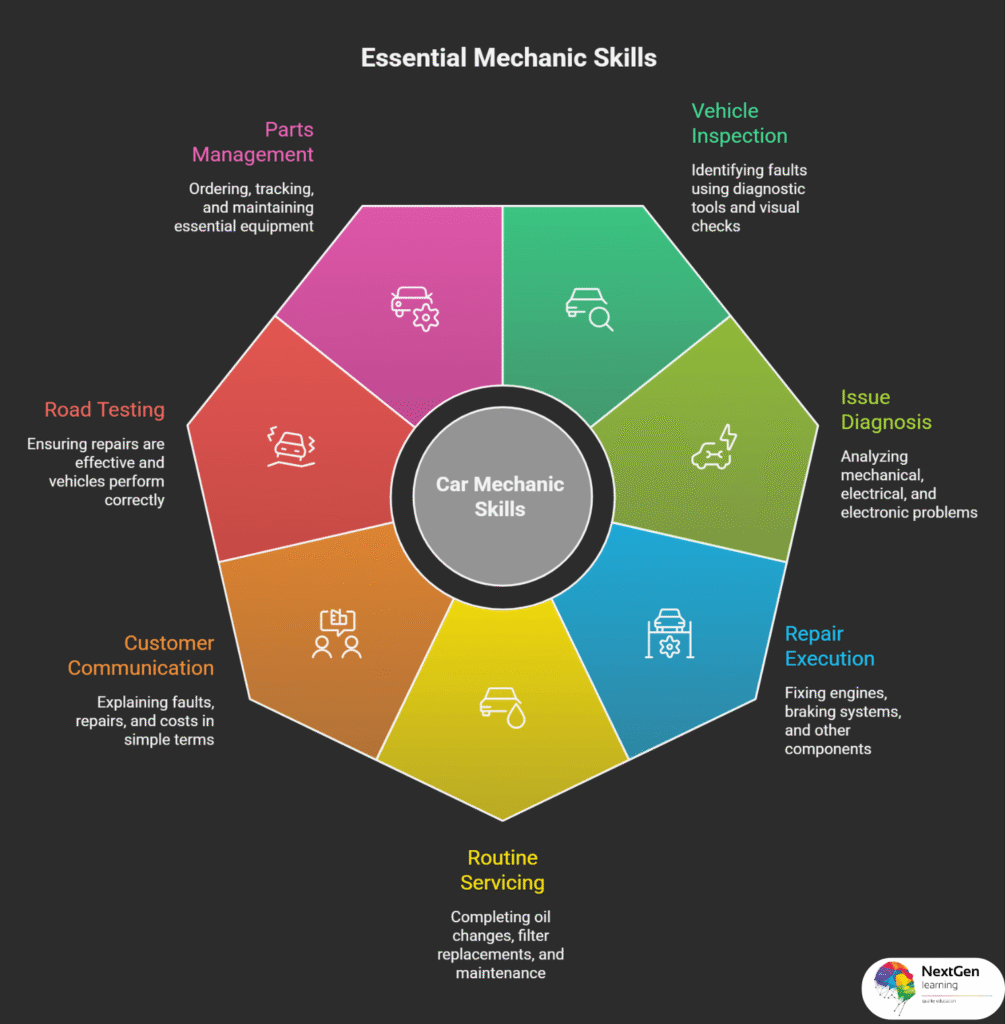
A typical day for a car mechanic involves a mix of technical tasks, diagnostics, and customer interaction. While responsibilities may vary depending on the workplace, the core duties remain consistent across the automotive sector.
Daily Tasks of a Car Mechanic
Inspect vehicles: Identify faults using modern diagnostic tools and visual checks
Diagnose issues: Analyse mechanical, electrical, and electronic problems accurately
Carry out repairs: Fix engines, braking systems, transmissions, and other components
Perform servicing: Complete oil changes, filter replacements, and routine maintenance
Communicate with customers: Explain faults, repairs, and costs in simple terms
Conduct road tests: Ensure repairs are effective and vehicles perform correctly
Manage parts and tools: Order, track, and maintain essential equipment and components
Additionally, mechanics must stay updated with evolving vehicle technologies. Resources such as the National Careers Service emphasise that modern vehicle technicians increasingly rely on computer-based diagnostics and software systems.
Because of this, structured learning through a recognised Car Mechanic and Repair Training Diploma programme can significantly improve both confidence and job readiness.
Essential Skills Every Car Mechanic Needs
To succeed as a car mechanic, you need a combination of technical expertise and strong interpersonal abilities. Employers are not only looking for hands-on skills but also professionals who can adapt to changing technologies and communicate effectively with customers.
Core Skills Required
● Mechanical knowledge: Understand vehicle systems, engines, and components
● Problem-solving skills: Diagnose faults quickly and efficiently
● Attention to detail: Ensure accuracy and maintain high safety standards
● Manual dexterity: Use tools precisely and handle delicate components
● Communication skills: Explain technical issues clearly to customers
● Customer service skills: Build trust and maintain client satisfaction
● Technical adaptability: Work with modern diagnostic tools and EV systems
Why These Skills Matter
The automotive industry is becoming increasingly technology-driven. Mechanics now work with onboard computers, sensors, and advanced software. Therefore, the ability to learn and adapt is just as important as traditional mechanical knowledge.
According to insights from the Automotive Council UK, future technicians must combine engineering skills with digital literacy to remain competitive.
This is why many learners choose structured courses that offer both theoretical knowledge and practical understanding. A well-designed training programme helps you develop these essential skills step by step, making the transition into the workforce smoother and more effective.
Working Environment of a Car Mechanic
Before choosing this career, it is important to understand what the working environment looks like. Car mechanics typically work in fast-paced, hands-on settings where precision and efficiency are key.
Where Car Mechanics Work
Most mechanics are employed in:
● Independent garages: Local workshops handling a wide range of repairs and servicing
● Car dealerships: Brand-specific service centres working with newer vehicles
● Vehicle service centres: Large-scale operations focused on maintenance and diagnostics
●Fleet maintenance companies: Maintaining vehicles for businesses and organisations
Some experienced professionals also choose to become self-employed or run their own workshops.
Working Conditions
The job is practical and physically active. Mechanics spend most of their time on their feet, using tools, inspecting vehicles, and performing repairs.
Typical working patterns include:
● Full-time hours: Usually 38 to 45 hours per week
● Shift work: Some garages offer weekend or evening shifts
● Hands-on tasks: Lifting, bending, and working in confined spaces
● Workshop environment: Exposure to noise, oil, and mechanical equipment
Realistic Expectations
While the work can be physically demanding, it is also highly rewarding. You get to solve real problems, work with modern technology, and see the immediate results of your efforts.
Moreover, as technology evolves, the role is becoming less about heavy labour and more about diagnostics and technical expertise. This shift makes training even more valuable for long-term success.
Salary and Job Demand for Car Mechanics
One of the most appealing aspects of becoming a car mechanic is the strong job demand and stable earning potential across the UK.
Average Salary in the UK
Salaries can vary depending on experience, qualifications, and location. However, typical ranges include:
● Entry-level: £22,000 to £26,000 per year
● Mid-level: £27,000 to £35,000 per year
● Experienced mechanics: £36,000 to £42,000+ per year
In major cities such as London, salaries tend to be higher due to increased demand and cost of living.
According to the Office for National Statistics, skilled trades such as vehicle technicians continue to offer competitive wages and long-term stability.
Job Demand and Industry Growth
The demand for car mechanics remains consistently high for several reasons:
● Growing number of vehicles: More cars on UK roads increase the need for maintenance and repairs
●Increasing complexity: Modern vehicles require advanced diagnostic and technical skills
● Rising EV demand: Growing need for electric and hybrid vehicle specialists
● Ongoing servicing needs: Regular maintenance ensures continuous demand for mechanics
Furthermore, the transition to electric vehicles is creating new opportunities. Mechanics who upskill in EV systems are likely to benefit from higher demand and better earning potential.
Career Stability
Unlike many industries affected by automation, car mechanics provide a service that will always be needed. Vehicles require regular maintenance, and human expertise is essential for diagnostics and repairs.
Therefore, choosing this career offers long-term security, especially for those who invest in continuous learning and professional development.
Career Opportunities and Progression
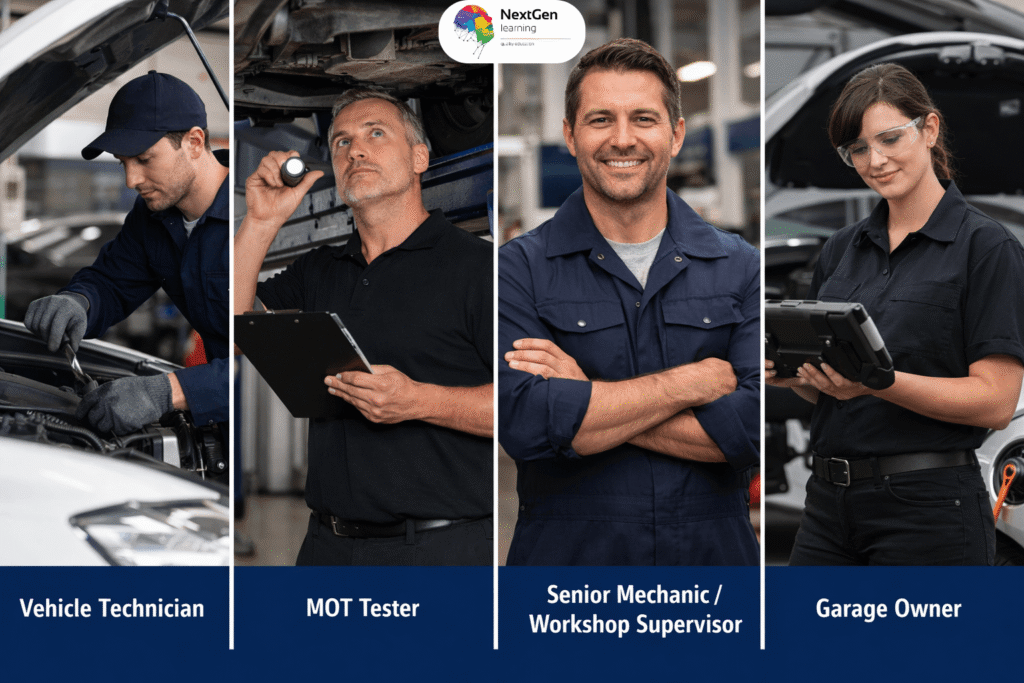
A career as a car mechanic is far from limited. In fact, it offers multiple pathways for growth, specialisation, and increased earning potential.
Common Career Paths
As you gain experience and skills, you can progress into roles such as:
- Vehicle Technician
- MOT Tester
- Senior Mechanic or Workshop Supervisor
- Garage Owner
- Automotive Specialist (EV or hybrid vehicles)
Specialisation Opportunities
Specialising in specific areas can significantly boost your career prospects. For example:
- Electric vehicle technology
- Advanced diagnostics
- Performance tuning
- Fleet maintenance
These areas are in high demand and often come with higher salaries.
Long-Term Growth
With the right training and experience, many mechanics move into management roles or start their own businesses. This makes the career not only stable but also highly scalable.
For learners looking to build a strong foundation and open up these opportunities, structured training such as a 👉 Car Mechanic and Repair Training Diploma can provide the essential knowledge needed to progress confidently.
How to Become a Car Mechanic
Becoming a car mechanic is a structured yet flexible process. Whether you are a school leaver, career changer, or someone exploring hands-on technical roles, there are multiple entry routes into this profession.
Step-by-Step Path to Becoming a Car Mechanic
● Complete basic education: GCSEs in maths, English, and science are helpful for understanding technical concepts
● Choose a learning pathway: Enrol in a college course or training programme focused on vehicle repair and maintenance
● Gain practical experience: Apprenticeships or hands-on learning help build real-world skills
● Achieve relevant qualifications: Level 2 or Level 3 automotive qualifications are common entry routes
● Develop specialised skills: Learn diagnostics, hybrid systems, or advanced repair techniques
●Continue professional development: Stay updated with new automotive technologies and industry standards
The National Careers Service highlights that apprenticeships are a popular route, combining work and study. However, not everyone has immediate access to apprenticeship opportunities.
Entry Routes Explained
There are three main ways to enter the automotive field:
● College courses: Provide theoretical knowledge and some practical training
● Apprenticeships: Offer paid, on-the-job learning with formal qualifications
●Online training programmes: Flexible learning options for beginners or career changers
Each pathway has its benefits, but combining learning with practical experience is often the most effective approach.
Why Training is Important for a Car Mechanic Career
While some people learn basic car repairs informally, professional training plays a crucial role in building a successful and sustainable career.
Structured Learning vs Self-Learning
Self-learning can introduce basic concepts, but it often lacks depth, structure, and industry alignment. In contrast, professional training provides:
● Clear learning pathways: Step-by-step progression from basic to advanced topics
● Industry-relevant knowledge: Aligned with modern vehicle technologies and UK standards
● Practical understanding: Real-world scenarios and problem-solving approaches
● Confidence building: Helps learners feel job-ready from the start
Importance of Certification
Employers in the UK automotive sector value recognised training and certifications. These demonstrate that you understand industry practices and can perform tasks safely and effectively.
According to guidance from the Institute of the Motor Industry, ongoing training is essential due to rapid changes in vehicle technology, particularly in electric and hybrid systems.
Role of CPD and Continuous Learning
Continuous Professional Development (CPD) ensures that mechanics stay updated with evolving tools, diagnostics, and safety standards. This is especially important as vehicles become more complex.
For beginners, enrolling in a structured programme like the Car Mechanic and Repair Training Diploma can provide a strong starting point, combining theory with practical insights to prepare learners for real-world challenges.
Who Should Consider a Car Mechanic Career?
A career in car mechanics is suitable for a wide range of individuals. It is particularly appealing to those who enjoy practical work, problem-solving, and working with technology.
Ideal Candidates for This Career
● Beginners: Starting a hands-on technical career with strong job prospects
● Career changers: Moving into a stable and in-demand trade
● Car enthusiasts: Turning passion for vehicles into a profession
● Job seekers: Looking for practical, employable skills in the UK market
Additionally, this career suits individuals who prefer active work environments rather than desk-based roles. It also offers clear progression opportunities, making it ideal for long-term career planning.
Conclusion
A career as a car mechanic offers a powerful combination of stability, hands-on work, and long-term growth opportunities. From diagnosing complex vehicle issues to working with advanced technologies, the role continues to evolve with the automotive industry.
With strong demand, competitive salaries, and clear progression pathways, becoming a car mechanic is an excellent choice for those seeking a practical and rewarding career. Whether you are just starting out or considering a career change, building the right skills is the key to success.
Taking the first step with structured training can make a significant difference in your journey. A well-designed course provides the knowledge, confidence, and direction needed to enter the industry and grow professionally.
Start your journey today with a Car Mechanic and Repair Training Diploma and take the first step towards building a future-ready career in the automotive industry.
Frequently Asked Questions
To become a car mechanic, you typically need a Level 2 or Level 3 qualification in vehicle maintenance and repair. However, entry routes can vary depending on your situation. Many learners begin with foundational training courses to build knowledge before moving into apprenticeships or employment. Employers often value practical skills and a willingness to learn alongside formal qualifications. Therefore, starting with a structured course can significantly improve your chances of entering the industry.
The time required to become a car mechanic depends on your chosen pathway. Apprenticeships usually take between two and three years to complete, while college courses may take one to two years. However, shorter training programmes can provide foundational knowledge in a few months. Many learners combine initial training with on-the-job experience to accelerate their progress. Ultimately, becoming fully skilled is an ongoing process that continues throughout your career.
Yes, being a car mechanic is considered a stable and rewarding career in the UK. There is consistent demand for skilled professionals due to the large number of vehicles on the road. Additionally, the shift towards electric and hybrid vehicles is creating new opportunities for specialised technicians. The role also offers clear career progression, from entry-level positions to supervisory or business ownership roles. Therefore, it is a strong choice for long-term career security.
Mechanics in the UK can earn between £22,000 and £42,000 per year, depending on experience and location. Entry-level roles typically start at lower salaries, while experienced professionals or specialists can earn significantly more. Mechanics working in major cities such as London often receive higher pay due to increased demand. Additionally, those who specialise in areas like electric vehicles or diagnostics may command higher salaries. Overall, the earning potential is competitive and grows with experience.
Yes, it is possible to learn car repair online, especially at a beginner or intermediate level. Online courses provide flexibility and allow learners to study at their own pace. They are particularly useful for understanding theory, tools, and basic repair techniques. However, practical experience is also essential for mastering hands-on skills. Therefore, many learners combine online training with real-world practice to build confidence and competence such as at NextGen Learning.



0 responses on "What Does a Car Mechanic Do? Skills, Duties & Career Opportunities"