





What Is the Role of an Adult Nurse? Complete Guide to Adult Nursing Careers
Adult nurses play a vital role in modern healthcare by supporting, treating, and caring for adults with a wide range of physical and emotional health needs. They work closely with patients across hospitals, care homes, GP surgeries, rehabilitation centres, and community healthcare settings. Therefore, adult nursing is one of the most important and respected careers within the healthcare sector.
An adult nurse does far more than administer medication or monitor vital signs. They assess patient conditions, develop care plans, provide emotional reassurance, support recovery, educate patients, and work collaboratively with multidisciplinary healthcare teams. As a result, adult nurses help improve patient safety, well-being, and overall quality of life every day.
Adult nurses often care for patients who:
- are recovering from surgery
- live with long-term conditions
- require rehabilitation support
- need emergency healthcare treatment
- require ongoing medical monitoring
Because healthcare environments can change quickly, adult nurses must combine clinical knowledge with compassion, communication, teamwork, and problem-solving abilities.
In the UK, adult nursing continues to be one of the most in-demand healthcare professions. Healthcare employers value nurses who can provide safe, person-centred care while supporting patients physically, emotionally, and professionally throughout their healthcare journey.
This complete guide explains:
- what adult nursing involves
- the responsibilities of adult nurses
- essential nursing skills and qualities
- the 6 C’s of nursing
- work environments for adult nurses
- qualifications and career opportunities
- professional development within adult nursing
By understanding the role of an adult nurse, aspiring healthcare professionals can gain clearer insight into this rewarding and meaningful healthcare career path.
Table of Contents
What Is Adult Nursing?
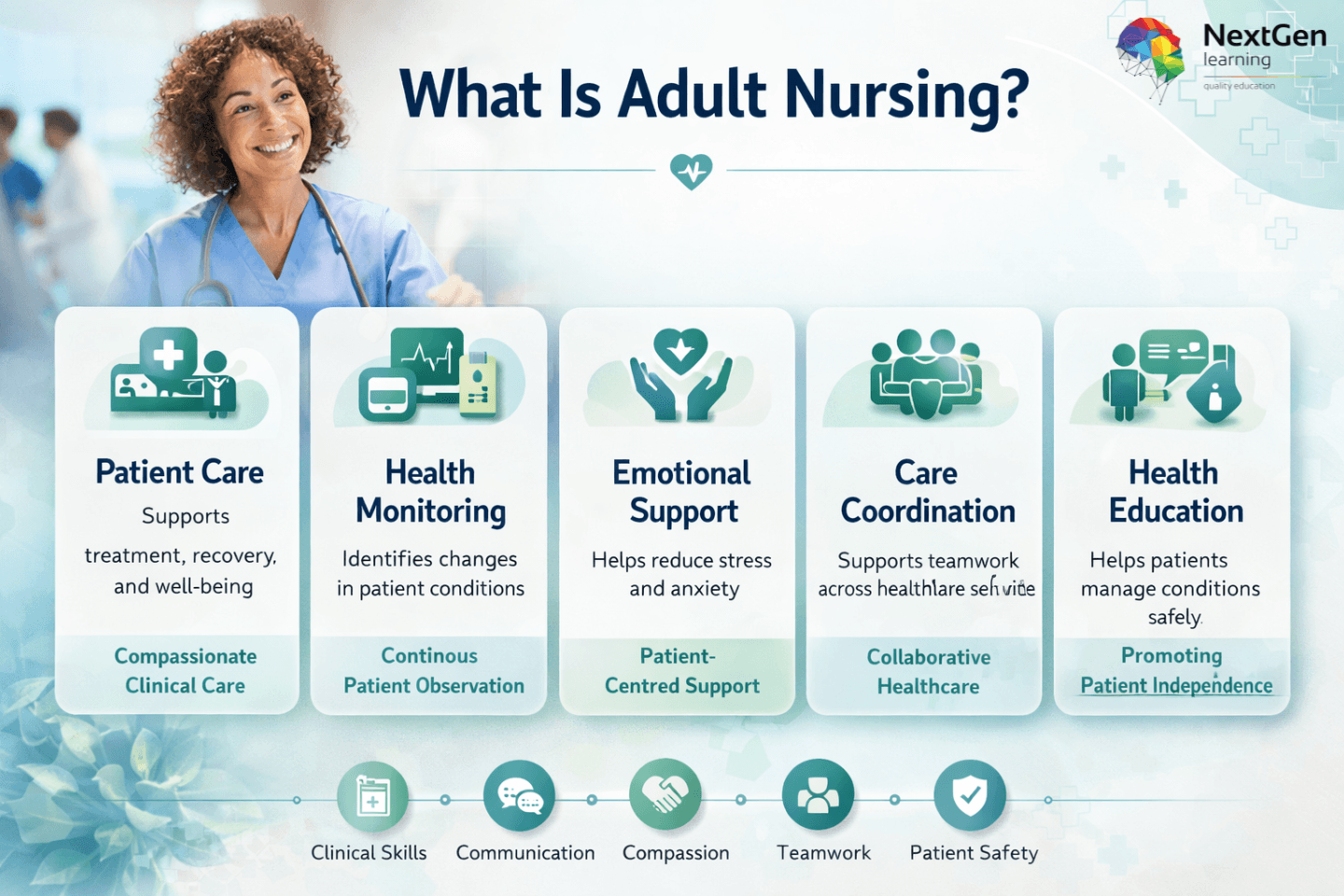
Adult nursing is a branch of healthcare that focuses on caring for adults aged 18 and over who have physical, emotional, or long-term healthcare needs. Adult nurses support patients across different stages of illness, treatment, recovery, and rehabilitation while helping them maintain dignity, comfort, and independence.
In modern healthcare, adult nurses are often one of the main points of contact for patients and families. Consequently, they play a major role in monitoring health conditions, coordinating care, providing emotional reassurance, and supporting patient recovery within fast-paced healthcare environments.
Adult nursing combines:
- clinical healthcare skills
- patient-centred care
- communication and teamwork
- emotional support
- healthcare observation and assessment
This combination allows adult nurses to deliver safe and compassionate care across a wide range of healthcare settings.
Main Purpose of Adult Nursing
| Purpose | Why It Matters |
|---|---|
| Patient Care | Supports treatment, recovery, and well-being |
| Health Monitoring | Identifies changes in patient conditions |
| Emotional Support | Helps reduce patient stress and anxiety |
| Care Coordination | Supports teamwork across healthcare services |
| Health Education | Helps patients manage their conditions safely |
What Adult Nurses Do Daily
Adult nurses manage many important responsibilities throughout the day. Although duties vary depending on the healthcare setting, the main goal always remains the same: providing safe, effective, and compassionate patient care.
Adult nurses commonly:
- monitor vital signs and patient conditions
- administer medications and treatments
- support mobility and personal care
- communicate with healthcare teams
- update healthcare records
- educate patients and families
- respond to emergencies quickly
Because patient conditions can change rapidly, adult nurses must remain observant, adaptable, and calm under pressure.
Difference Between Adult Nursing and Other Nursing Fields
Nursing includes several specialist areas, and adult nursing specifically focuses on caring for adult patients.
Adult Nursing Differs From Other Fields Such As:
- Children’s nursing, which focuses on infants and young people
- Mental health nursing, which supports psychological well-being
- Learning disability nursing, which supports individuals with learning disabilities
- Midwifery, which focuses on pregnancy and childbirth care
Adult nurses mainly work with adults experiencing physical health conditions, recovery needs, chronic illnesses, or rehabilitation support.
Why Adult Nursing Is Important
Adult nurses are essential to healthcare systems because they provide continuous support throughout the patient journey. They help patients recover from illness, manage chronic conditions, improve quality of life, and receive compassionate healthcare support during difficult situations.
Importantly, adult nurses also:
- improve patient safety
- support healthcare communication
- reduce healthcare risks
- provide emotional reassurance
- advocate for patient needs
Their contribution helps healthcare services operate more effectively while improving patient outcomes across hospitals, clinics, and community healthcare settings.
What Does an Adult Nurse Do?
Adult nurses care for patients with a wide range of physical and emotional healthcare needs. Their role involves monitoring patient conditions, providing treatments, supporting recovery, and ensuring patients receive safe and compassionate care throughout their healthcare journey.
Although many people associate nursing mainly with hospitals, adult nurses also work across GP surgeries, community healthcare services, rehabilitation centres, care homes, and patients’ homes. Therefore, the role is highly varied and requires both clinical expertise and strong interpersonal skills.
Adult nurses regularly support patients who:
- are recovering from surgery
- live with chronic illnesses
- require emergency treatment
- need rehabilitation support
- require ongoing healthcare monitoring
Because patient conditions can change quickly, adult nurses must remain observant, organised, and adaptable during every shift.
Main Duties of an Adult Nurse
| Responsibility | Purpose |
|---|---|
| Patient Assessment | Monitors patient health and symptoms |
| Treatment Support | Administers medication and clinical care |
| Care Planning | Coordinates personalised patient support |
| Emotional Support | Reassures patients and families |
| Documentation | Maintains accurate healthcare records |
Assessing Patients
Assessment is one of the first and most important nursing responsibilities. Adult nurses regularly monitor patient conditions to identify health concerns early and support safe treatment decisions.
Adult nurses commonly assess:
- temperature
- pulse rate
- blood pressure
- oxygen levels
- pain levels
- breathing patterns
These observations help healthcare teams respond quickly when patient conditions worsen.
Administering Treatments and Medication
Adult nurses are responsible for delivering many forms of treatment safely and accurately. Consequently, attention to detail and patient safety awareness are extremely important.
Treatments May Include:
- Administering medications and injections
- Supporting wound care and dressings
- Managing IV drips and oxygen therapy
- Monitoring patient reactions and side effects
- Assisting with healthcare procedures
Adult nurses must also document treatments carefully and report concerns immediately when necessary.
Creating and Managing Care Plans
Care plans help ensure patients receive personalised and coordinated healthcare support. Adult nurses work closely with doctors, therapists, and other healthcare professionals to create care plans tailored to individual patient needs.
Care plans may include:
- treatment goals
- mobility support
- nutrition and hydration needs
- medication schedules
- rehabilitation support
- discharge planning
These plans are regularly reviewed and adjusted based on patient progress.
Providing Emotional Support
Healthcare is not only physical. Many patients experience anxiety, fear, stress, or emotional distress during illness and treatment. Therefore, emotional reassurance is a major part of adult nursing.
Adult nurses often:
- comfort anxious patients
- support family members
- explain treatments clearly
- provide reassurance during recovery
- support patients during difficult healthcare situations
Compassion and communication help build trust between nurses and patients.
Maintaining Accurate Healthcare Records
Documentation is an essential nursing responsibility because accurate records support patient safety, communication, and continuity of care.
Adult nurses record:
- patient observations
- medications administered
- treatment updates
- care plans
- patient progress
- healthcare concerns
Clear documentation helps healthcare teams work together more effectively while reducing risks and misunderstandings.
Why the Role of an Adult Nurse Is So Important
Adult nurses are central to patient care across the healthcare system. They support patients physically, emotionally, and professionally while helping healthcare services operate safely and efficiently.
Their work helps:
- improve patient outcomes
- maintain patient dignity
- support healthcare safety
- strengthen communication
- enhance quality of care
Adult nursing is therefore both highly skilled and deeply rewarding within modern healthcare.
Main Responsibilities of an Adult Nurse

Adult nurses manage many important responsibilities to ensure patients receive safe, effective, and compassionate healthcare support. Their role involves monitoring health conditions, administering treatments, supporting recovery, communicating with healthcare teams, and helping patients emotionally throughout their healthcare journey.
Although responsibilities vary across healthcare settings, adult nurses always focus on patient safety, dignity, comfort, and quality of care.
Patient Assessment and Monitoring
Adult nurses regularly assess patients to identify health concerns early and support fast clinical decision-making.
They commonly monitor:
- temperature
- blood pressure
- pulse rate
- oxygen levels
- breathing patterns
- pain levels
Careful monitoring helps nurses recognise deterioration quickly and escalate concerns when necessary.
Administering Medication and Treatments
Adult nurses safely administer medications and treatments while monitoring patients for side effects or reactions.
Common Responsibilities Include:
- Administering medication and injections
- Supporting wound care and dressing changes
- Managing oxygen therapy and medical equipment
- Monitoring treatment effectiveness
- Reporting changes in patient condition promptly
These responsibilities help maintain patient safety and healthcare quality.
Developing Care Plans
Adult nurses work closely with healthcare teams to create personalised care plans based on patient needs and recovery goals.
Care plans may include:
- treatment support
- mobility assistance
- medication schedules
- nutrition and hydration needs
- rehabilitation planning
Nurses regularly review and adjust care plans according to patient progress.
Providing Emotional Support
Adult nurses also provide emotional reassurance because many patients experience stress, fear, or anxiety during illness and treatment.
Emotional Support Includes:
- Listening to patient concerns carefully
- Providing reassurance during recovery
- Supporting families with healthcare information
- Helping patients feel safe and respected
Compassionate communication strengthens trust and improves patient well-being.
Maintaining Healthcare Records
Accurate documentation is an essential nursing responsibility because it supports communication, continuity of care, and patient safety.
Adult nurses regularly record:
- patient observations
- medications administered
- treatment progress
- healthcare concerns
- care plan updates
Good record keeping helps healthcare teams work together more effectively.
Working Within Healthcare Teams
Adult nurses collaborate with doctors, healthcare assistants, physiotherapists, pharmacists, and community healthcare professionals to deliver coordinated patient care.
Strong teamwork helps improve:
- patient safety
- healthcare communication
- recovery outcomes
- person-centred support
Adult nurses therefore play a vital role across hospitals, clinics, care homes, rehabilitation centres, and community healthcare services throughout the UK.
Key Skills and Qualities of Adult Nurses
Successful adult nurses need both clinical knowledge and strong personal qualities to provide safe and compassionate patient care. Because healthcare environments can be fast-paced and emotionally demanding, nurses must communicate effectively, remain calm under pressure, and work well within healthcare teams.
Adult nurses regularly support patients during stressful and challenging situations. Therefore, healthcare employers highly value nurses who are professional, compassionate, adaptable, and emotionally resilient.
Communication Skills
Strong communication is essential because adult nurses regularly interact with patients, families, doctors, and healthcare teams.
Adult nurses must:
- explain healthcare information clearly
- listen carefully to patient concerns
- provide reassurance during stressful situations
- communicate professionally with colleagues
- update healthcare teams accurately
Good communication improves patient understanding, teamwork, and overall healthcare coordination.
Teamwork and Collaboration
Adult nurses work closely with multidisciplinary healthcare teams to provide coordinated and effective patient care.
Adult Nurses Commonly Work With:
- Doctors and specialist consultants
- Healthcare assistants and carers
- Physiotherapists and rehabilitation teams
- Pharmacists and community healthcare staff
Strong teamwork improves patient safety and healthcare outcomes.
Problem-Solving and Critical Thinking
Healthcare situations can change quickly. Therefore, adult nurses must think critically and respond safely under pressure.
Problem-solving skills help nurses:
- identify patient deterioration early
- respond during emergencies
- prioritise patient needs effectively
- escalate healthcare concerns quickly
Quick decision-making is essential for maintaining patient safety.
Emotional Resilience
Adult nursing can sometimes be emotionally challenging because nurses support patients experiencing illness, anxiety, pain, or end-of-life care situations.
Emotional Resilience Helps Nurses:
- Remain calm during stressful situations
- Support distressed patients compassionately
- Maintain professionalism under pressure
- Manage emotional healthcare challenges effectively
Strong emotional resilience supports both patient care and professional well-being.
Attention to Detail and Compassion
Adult nurses must remain accurate and attentive because small mistakes within healthcare environments can have serious consequences.
Important qualities include:
- accurate documentation
- careful patient monitoring
- safe medication administration
- compassion and empathy
- respectful patient support
These qualities help adult nurses provide safe, respectful, and person-centred healthcare support across all healthcare settings.
The 6 C’s of Nursing Explained

The 6 C’s of nursing are a set of core values that guide professional nursing practice within modern healthcare. These principles help adult nurses provide safe, compassionate, and person-centred care while maintaining professionalism and trust across healthcare environments.
The 6 C’s are:
- Care
- Compassion
- Competence
- Communication
- Courage
- Commitment
Together, these values form the foundation of high-quality nursing practice and support positive patient experiences throughout healthcare settings.
Why the 6 C’s Matter in Adult Nursing
The 6 C’s help adult nurses:
- improve patient care quality
- strengthen healthcare communication
- maintain professional standards
- support patient dignity and safety
- build trust with patients and families
These principles influence daily nursing decisions, patient interactions, teamwork, and professional behaviour.
The Core Values of the 6 C’s
| The 6 C’s | Meaning in Nursing |
|---|---|
| Care | Providing safe and person-centred healthcare support |
| Compassion | Showing empathy, kindness, and emotional understanding |
| Competence | Using professional knowledge and clinical skills safely |
| Communication | Sharing information clearly and effectively |
| Courage | Speaking up and making safe healthcare decisions |
| Commitment | Staying dedicated to patient care and professionalism |
Care
Care is the foundation of nursing because every healthcare action should focus on improving patient well-being, comfort, safety, and dignity.
Adult nurses provide care by:
- supporting recovery and treatment
- monitoring patient conditions
- assisting with daily healthcare needs
- maintaining patient comfort
- protecting patient safety
Person-centred care ensures patients feel respected and supported throughout their healthcare journey.
Compassion
Compassion means understanding the emotional experiences of patients while responding with empathy, patience, and kindness.
Compassion in Nursing Includes:
- Listening carefully to patient concerns
- Providing reassurance during difficult situations
- Supporting emotional well-being respectfully
- Treating patients with dignity and understanding
Compassion helps patients feel safer, calmer, and more comfortable during treatment and recovery.
Competence
Competence refers to the knowledge, clinical skills, and professional judgement needed to deliver safe healthcare support. Adult nurses must continually develop their skills to provide effective patient care within changing healthcare environments.
Competence includes:
- clinical nursing skills
- patient assessment abilities
- healthcare observation
- safe medication administration
- accurate documentation
Maintaining competence improves patient safety and healthcare quality significantly.
Communication
Good communication is essential because adult nurses regularly interact with patients, families, and multidisciplinary healthcare teams.
Strong communication helps:
- explain treatments clearly
- reduce patient anxiety
- improve teamwork
- prevent misunderstandings
- support safer healthcare decisions
Clear and compassionate communication strengthens trust throughout healthcare settings.
Courage
Courage in nursing means doing the right thing even during difficult situations. Adult nurses often need confidence to escalate concerns, advocate for patients, and respond calmly during emergencies.
Courage Helps Nurses:
- Speak up about patient safety concerns
- Make important clinical decisions quickly
- Handle challenging healthcare situations professionally
- Support patients during stressful moments
Professional courage protects both patients and healthcare standards.
Commitment
Commitment reflects dedication to nursing, patient care, and continuous professional development. Adult nurses show commitment by maintaining high standards, improving their knowledge, and consistently supporting patients compassionately.
Committed nurses:
- continue developing healthcare skills
- maintain professional behaviour
- prioritise patient well-being
- support healthcare teamwork
- provide reliable patient care consistently
This dedication helps strengthen healthcare quality and patient trust over time.
Why the 6 C’s Remain Important in Healthcare
The 6 C’s continue to guide modern nursing because they combine professional healthcare practice with compassion and human understanding. These values help adult nurses deliver safer, more respectful, and more effective healthcare support across hospitals, clinics, care homes, and community healthcare environments.
Where Do Adult Nurses Work?

Adult nurses work across a wide range of healthcare environments where they support patients with different medical, emotional, and rehabilitation needs. Although hospitals are one of the most common workplaces, adult nurses also provide care within community healthcare services, care homes, GP surgeries, rehabilitation centres, and patients’ homes.
One of the biggest advantages of adult nursing is career flexibility. Nurses can choose healthcare settings that match their interests, skills, and long-term career goals while continuing to make a meaningful difference in patient care.
Main Work Environments for Adult Nurses
| Workplace | Main Focus |
|---|---|
| Hospitals | Acute treatment, surgery, emergency care |
| Community Healthcare | Long-term support and home-based care |
| GP Surgeries & Clinics | Routine healthcare and chronic condition management |
| Care Homes | Ongoing support for older adults and vulnerable patients |
| Specialist Healthcare Services | Rehabilitation, hospice, or specialist patient care |
Hospitals
Many adult nurses begin their careers in hospitals because these environments provide broad clinical experience and fast-paced healthcare exposure.
Hospital nurses may work in:
- emergency departments
- surgical wards
- intensive care units
- rehabilitation wards
- outpatient departments
Hospital nursing often involves:
- monitoring acutely ill patients
- administering treatments quickly
- responding to emergencies
- collaborating with multidisciplinary teams
These environments help nurses develop strong clinical and decision-making skills.
Community Healthcare and Home Care
Community nursing focuses on supporting patients outside hospital settings. Adult nurses may visit patients in their homes or work within local healthcare services to support recovery, rehabilitation, and long-term condition management.
Community Nursing Responsibilities Include:
- Monitoring long-term health conditions
- Supporting recovery after hospital discharge
- Providing wound care and medication support
- Educating patients and families about healthcare management
Community nursing often allows nurses to build stronger long-term relationships with patients.
GP Surgeries and Healthcare Clinics
Adult nurses working within GP practices and clinics usually support preventative healthcare, chronic condition management, and routine patient care.
Responsibilities may include:
- health checks and screenings
- vaccinations and injections
- wound care
- chronic illness monitoring
- patient education and lifestyle advice
These healthcare settings often provide more structured schedules while still offering important patient interaction.
Care Homes
Care home nurses support older adults and patients with long-term healthcare needs who require ongoing medical and personal care support.
Care Home Nursing Often Involves:
- Administering medication and monitoring health conditions
- Supporting mobility, nutrition, and personal care
- Responding to healthcare emergencies promptly
- Providing emotional reassurance and person-centred care
These roles require strong compassion, patience, and communication skills.
Specialist Healthcare Services
Some adult nurses choose specialist areas that focus on specific patient groups or healthcare needs.
Specialist nursing roles may include:
- hospice and palliative care
- oncology nursing
- rehabilitation nursing
- mental health support services
- specialist community healthcare
These positions may require additional training but often provide valuable career progression opportunities.
Why Work Environment Flexibility Matters
The variety of healthcare environments available within adult nursing allows professionals to:
- explore different healthcare specialties
- develop wider clinical skills
- find roles suited to their strengths
- improve long-term career opportunities
- maintain career flexibility over time
This diversity makes adult nursing one of the most adaptable and rewarding healthcare careers within the UK healthcare sector.
Qualifications Needed to Become an Adult Nurse
Becoming an adult nurse requires a combination of healthcare education, clinical training, practical experience, and professional registration. Adult nurses must develop both clinical knowledge and person-centred care skills to support patients safely and effectively across healthcare settings.
In the UK, adult nurses are regulated healthcare professionals. Therefore, they must complete approved nursing education and register with the Nursing and Midwifery Council (NMC) before practising professionally.
Main Requirements to Become an Adult Nurse
| Qualification Area | Purpose |
|---|---|
| Nursing Degree | Builds clinical knowledge and healthcare skills |
| Clinical Placement Training | Provides practical healthcare experience |
| NMC Registration | Allows legal professional nursing practice |
| Healthcare Skills Development | Strengthens patient care and communication abilities |
| Ongoing Professional Development | Maintains nursing competence and safety |
Completing an Adult Nursing Degree
The most common pathway into adult nursing is completing an approved nursing degree programme. These programmes combine academic learning with practical healthcare placements to prepare students for professional nursing roles.
Adult nursing degree programmes typically include:
- patient care principles
- anatomy and physiology
- healthcare communication
- safeguarding and patient safety
- medication management
- healthcare ethics and professionalism
Students also complete practical placements across different healthcare environments.
Clinical Placement Experience
Clinical placements are an essential part of nursing education because they help students apply healthcare knowledge within real healthcare settings.
Clinical Placements Help Students:
- Develop practical patient care skills
- Build communication and teamwork experience
- Learn professional healthcare procedures
- Gain confidence within clinical environments
- Understand patient-centred nursing practice
Placements may take place in hospitals, care homes, community healthcare services, or rehabilitation settings.
Nursing and Midwifery Council (NMC) Registration
After completing approved nursing education, nurses must register with the Nursing and Midwifery Council (NMC) to practise legally in the UK.
NMC registration helps ensure nurses:
- meet professional standards
- maintain patient safety
- follow healthcare ethics
- remain professionally accountable
- continue developing healthcare competence
Professional registration is essential for maintaining trust and safety within healthcare environments.
Important Skills Needed During Training
Adult nursing education focuses on developing both technical and interpersonal healthcare skills.
Important nursing skills include:
- patient assessment
- communication and teamwork
- healthcare observation
- medication administration
- emotional resilience
- safeguarding awareness
- clinical documentation
These skills help prepare nurses for demanding and fast-paced healthcare environments.
Alternative Healthcare Pathways
Some individuals begin their healthcare journey through:
- healthcare assistant roles
- support worker positions
- adult care training
- healthcare diplomas
- nursing support experience
These pathways can help learners gain valuable healthcare exposure before progressing toward professional nursing qualifications.
Importance of Ongoing Professional Development
Healthcare constantly evolves because of changing patient needs, medical technologies, and healthcare standards. Therefore, adult nurses must continue learning throughout their careers.
Ongoing Development May Include:
- Specialist nursing training
- Patient safety and safeguarding updates
- Leadership and management development
- Advanced clinical skills training
- Healthcare communication improvement
Continuous professional development helps nurses maintain high standards of patient care and long-term career growth.
Why Nursing Qualifications Matter
Professional qualifications ensure adult nurses have the knowledge, competence, and clinical confidence needed to deliver safe, effective, and compassionate healthcare support. Proper training not only improves patient outcomes but also strengthens healthcare professionalism across hospitals, clinics, care homes, and community healthcare services.
Career Opportunities in Adult Nursing
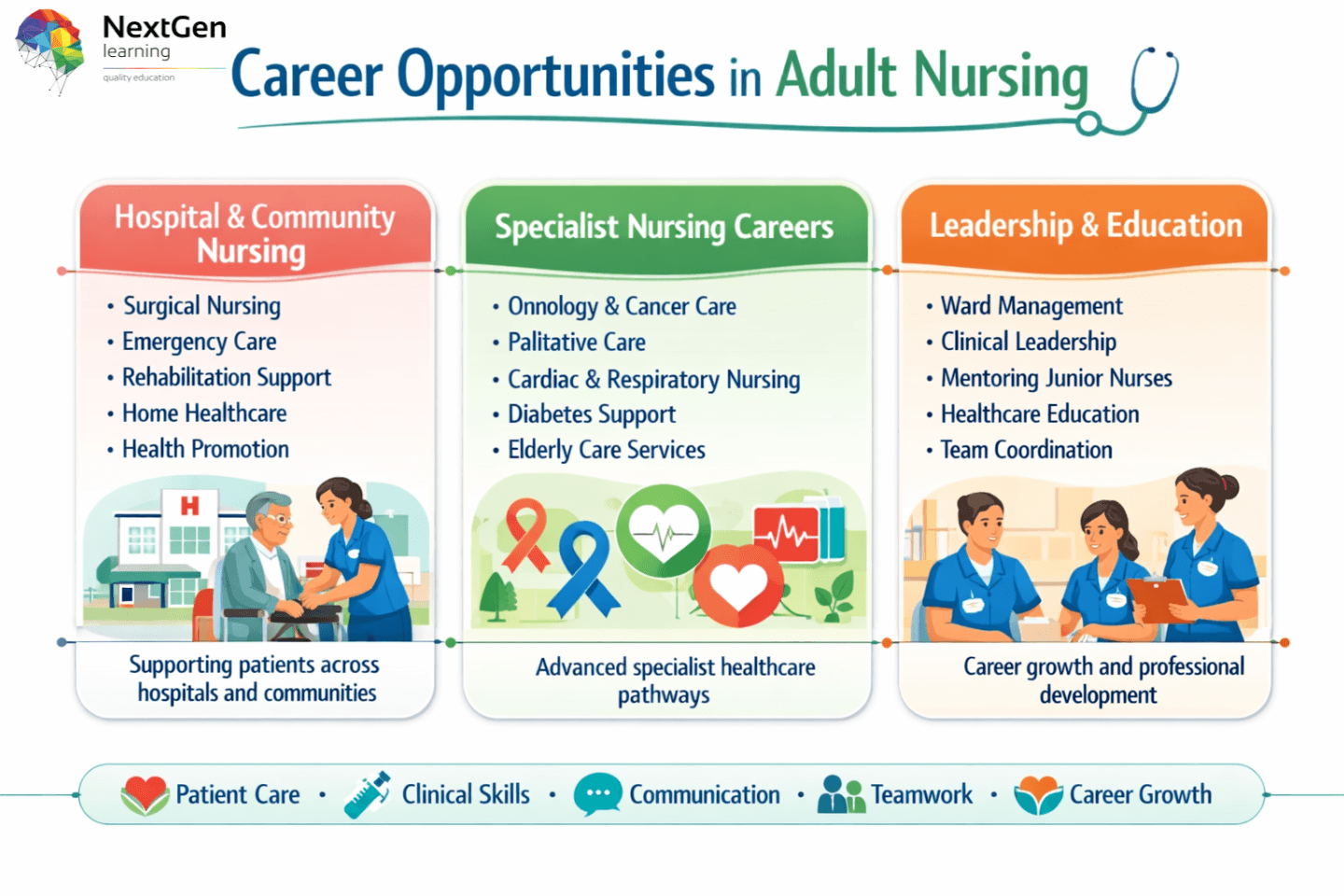
Adult nursing offers a wide range of career opportunities across hospitals, community healthcare services, care homes, rehabilitation centres, and specialist healthcare settings. Because healthcare demand continues to grow across the UK, qualified adult nurses remain highly valuable within both public and private healthcare sectors.
One of the biggest advantages of adult nursing is career flexibility. Nurses can develop specialist skills, progress into leadership roles, or move into healthcare education and training over time.
Hospital and Community Nursing Careers
Many adult nurses begin their careers in hospitals, where they gain experience in areas such as:
- surgical nursing
- emergency care
- rehabilitation support
- medical ward nursing
Others work within community healthcare services, supporting patients at home or within local clinics. Community nursing often focuses on:
- long-term condition management
- rehabilitation and recovery
- patient education
- health promotion
These roles help nurses build strong patient relationships while supporting independence and recovery.
Specialist Nursing Opportunities
As nurses gain experience, many choose specialist healthcare areas that match their interests and career goals.
Specialist Areas May Include:
- Oncology and cancer care
- Palliative and end-of-life care
- Respiratory and cardiac nursing
- Diabetes and rehabilitation support
- Care services for older adults
Specialist nursing can provide deeper clinical expertise and advanced career progression opportunities.
Leadership and Education Roles
Experienced adult nurses may progress into leadership, management, or healthcare education roles.
Career progression may include:
- senior nursing positions
- ward management
- clinical team leadership
- mentoring junior nurses
- healthcare training and education
These roles allow nurses to influence healthcare quality and support future healthcare professionals.
Why Adult Nursing Is a Strong Career Choice
Adult nursing offers meaningful work, strong healthcare demand, and long-term career stability. Nurses regularly make positive differences in patients’ lives while continuing to develop professionally within different healthcare environments.
Benefits of Adult Nursing Include:
- Strong career progression opportunities
- Flexible healthcare work environments
- Continuous professional development
- Meaningful patient-centred work
- Long-term healthcare career stability
For individuals passionate about patient care and healthcare support, adult nursing can become both a rewarding profession and a fulfilling lifelong career.
Healthcare Training and Nursing Development
Healthcare training plays an important role in helping adult nurses provide safe, effective, and compassionate patient care. Because healthcare environments constantly evolve, nurses must continue improving their clinical knowledge, communication abilities, and professional skills throughout their careers.
Continuous professional development helps adult nurses:
- improve patient safety
- strengthen clinical confidence
- develop communication and teamwork
- maintain professional healthcare standards
- adapt to changing healthcare practices
Adult nurses regularly complete training in areas such as:
- patient assessment
- medication safety
- infection control
- safeguarding awareness
- healthcare documentation
- emergency response procedures
Communication and emotional support training are also essential because nurses regularly support patients and families during stressful healthcare situations.
Important Benefits of Nursing Development Include:
- Improving patient care quality
- Supporting long-term career progression
- Strengthening professional confidence
- Maintaining healthcare competence and safety
- Improving teamwork and healthcare communication
As nurses gain experience, many also progress into specialist nursing, leadership, mentoring, or healthcare education roles. Therefore, lifelong learning remains one of the most important parts of building a successful adult nursing career.
FAQs About Adult Nursing
An adult nurse supports and cares for adults with physical or emotional healthcare needs. Their role includes patient assessment, administering treatment, monitoring recovery, providing emotional support, and maintaining patient safety across healthcare settings.
Adult nurses work in hospitals, GP surgeries, care homes, rehabilitation centres, community healthcare services, and patients’ homes. Some also work within specialist healthcare areas such as oncology, palliative care, or rehabilitation support.
Adult nurses assess patients, administer medications, monitor health conditions, create care plans, maintain healthcare records, and support patients emotionally throughout treatment and recovery.
Adult nursing is considered a highly rewarding healthcare career because nurses make a meaningful difference in patients’ lives while benefiting from strong career demand, progression opportunities, and flexible healthcare work environments.
Yes, adult nurses can specialise in areas such as emergency care, intensive care, oncology, rehabilitation, palliative care, diabetes care, respiratory nursing, and community healthcare services.
Good communication helps nurses explain treatments clearly, reassure patients, reduce misunderstandings, improve teamwork, and provide safer patient-centred healthcare support.
In the UK, adult nurses usually complete an approved nursing degree and register with the Nursing and Midwifery Council (NMC). Clinical placements and healthcare training are important parts of professional nursing education.



0 responses on "What Is the Role of an Adult Nurse? Complete Guide to Adult Nursing Careers"