




Nursing Assistants are responsible for maintaining safe patient environments, preventing infection, following manual handling guidance, reporting hazards and using PPE correctly. Workplace safety is a core part of the Nursing Assistant role across UK hospitals, care homes and community settings.

Workplace Safety for Nursing Assistants: Key Practices to Follow
Working as a Nursing Assistant in the UK is one of the most rewarding ways to support patient care, yet it also comes with significant safety responsibilities. Whether you work in a hospital, care home, GP practice or community setting, you face a wide range of risks every day. Because of these demands, workplace safety becomes essential—not only for protecting yourself, but also for ensuring that every patient receives high-quality, secure and compassionate care. Many people entering Healthcare Assistant jobs or beginning careers as a Care Assistant quickly realise that strong safety knowledge is just as important as clinical skill. This is why training such as Manual Handling Training and Infection Control Training is considered essential from the very start.
The UK’s healthcare system relies heavily on both the Nursing Assistant and the Healthcare Assistant, since these roles form the backbone of hands-on patient support. As patient needs grow, new staff must not only learn the clinical basics, but also develop a strong understanding of how to keep themselves and others safe. Whether someone begins their journey as a Care Assistant or progresses towards more advanced responsibilities, safety principles remain central. This comprehensive guide explores the key safety practices that every Nursing Assistant must follow, ensuring you enter or continue your career with confidence, awareness and professionalism.
Table of Contents
Understanding Workplace Safety for Nursing Assistants
A Nursing Assistant plays a vital role in maintaining safe environments across healthcare settings. Because you work closely with patients, you are often the first person to notice hazards, emotional changes, equipment issues or signs of deteriorating health. Although nurses oversee clinical decision-making, your observations and actions directly contribute to safety.
You are responsible for following workplace policies, reporting concerns, maintaining hygiene and supporting safe patient activities in line with the Health and Safety at Work Act. Since the UK heavily depends on roles like the Healthcare Assistant, employers expect consistency and reliability from staff. Therefore, understanding safety responsibilities early ensures strong performance and builds trust within your team. By appreciating these expectations, a Nursing Assistant can help create a safer workplace for everyone.
Infection Control in Workplace Safety for Nursing Assistants
Infection control is one of the most important pillars of workplace safety. Any Nursing Assistant who provides direct personal care must practise excellent hygiene at all times. Because infectious illnesses can spread rapidly in healthcare environments, strong infection prevention measures protect both staff and patients, as emphasised in the NHS infection prevention and hygiene guidance.
Hand hygiene is the foundation of all infection control. Washing hands thoroughly before and after patient contact, after touching potentially contaminated surfaces and before performing clean procedures is essential. As a Nursing Assistant, you must also follow all guidance related to the correct use of alcohol-based hand sanitiser. PPE, including gloves, aprons and masks, must be used and removed safely to prevent contamination.
Furthermore, regular infection control training helps staff remain up to date with NHS protocols and emerging risks. This training reinforces the responsibilities of both the Nursing Assistant and the Healthcare Assistant in managing infection safely. By staying informed, you help reduce outbreak risks and maintain a safe environment for vulnerable individuals.
Manual Handling Safety for the Nursing Assistant
Manual handling is a major part of daily duties for any Nursing Assistant, and it is especially important for people applying for Healthcare Assistant Jobs across the UK. Because supporting patients to move, stand, turn or transfer carries physical risk, completing Manual Handling Training is essential for maintaining safety. Many employers state clearly that candidates looking for Healthcare Assistant Jobs must have a solid understanding of safe movement techniques. This makes Manual Handling Training one of the most valuable qualifications for anyone entering the profession.
Before you assist any patient, you must assess their mobility level, understand their risks and choose the correct equipment. Skills taught during Manual Handling Training—such as maintaining good posture, bending correctly, using balanced movements and avoiding twisting—play a crucial role in preventing injury. These techniques are also commonly highlighted in Healthcare Assistant Jobs descriptions, as staff must demonstrate confidence in supporting patients safely. Employers expect that those who have completed Manual Handling Training can use hoists, slide sheets and transfer belts responsibly.
Regular updates through Manual Handling Training help maintain high professional standards and keep you compliant with NHS safety expectations. This ongoing training also strengthens applications for Healthcare Assistant Jobs, as it proves your commitment to safe patient handling. A Nursing Assistant who consistently uses the skills learned in Manual Handling Training significantly reduces the risk of workplace injuries while supporting patient dignity and comfort. Because of this, health organisations often prioritise applicants for Healthcare Assistant Jobs who show competence and confidence in manual handling practice.
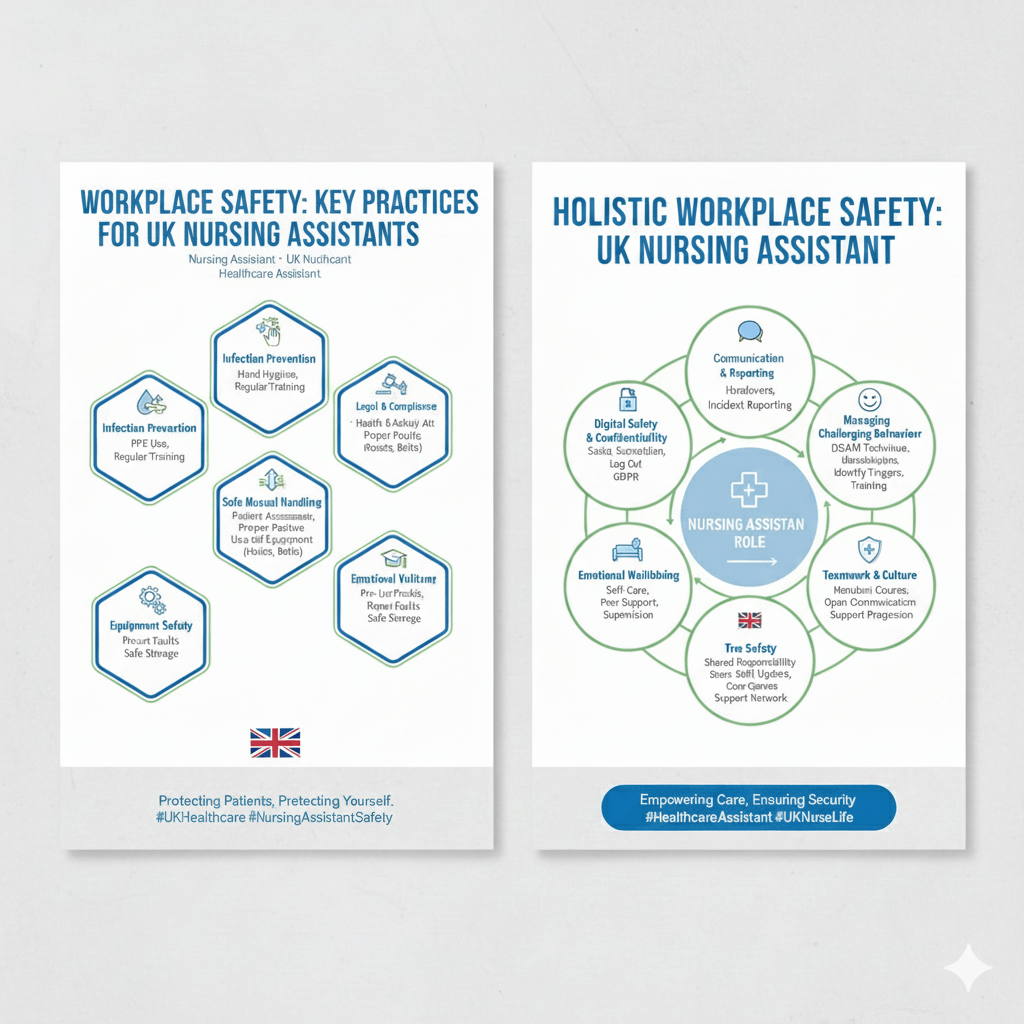
Safe Use of Equipment and Medical Devices
A Nursing Assistant uses a variety of equipment daily, including hoists, mobility aids, pressure-relieving devices and clinical monitoring tools. Because each piece of equipment serves an important function, proper use is essential for maintaining safety.
Training must always be received before operating any device. Using equipment incorrectly can cause harm to both the patient and the staff member. The Healthcare Assistant and Nursing Assistant must check equipment for defects, ensure it is clean and report any faults immediately. Storing equipment safely is also crucial. Clear hallways and organised storage areas help prevent falls and improve emergency response times. Understanding how to handle equipment properly is one of the most valuable skills a Nursing Assistant can develop.
Communication and Reporting Responsibilities
Effective communication is central to workplace safety. A Nursing Assistant spends more time with patients than almost anyone else, which means you are in the best position to notice subtle changes. These observations must be reported clearly, promptly and accurately so senior staff can respond.
Using structured communication systems, such as SBAR, helps ensure you provide complete and relevant information. Documenting important details and sharing updates during handovers also contributes to patient safety. If you see a hazard—whether a spill, a faulty device or a change in a patient’s behaviour—you must report it immediately. Transitioning this information quickly helps prevent accidents and allows the team to act without delay. Clear communication is one of the strongest safety tools available to a Nursing Assistant.

Managing Challenging Behaviour Safely
Some patients may experience confusion, distress, dementia or mental health difficulties. As a Nursing Assistant, you must be able to respond calmly and professionally. Challenging behaviour is not personal; it is usually a sign of discomfort, fear or unmet needs.
De-escalation involves using a calm voice, allowing space, speaking slowly and offering reassurance. Understanding triggers—such as noise, pain or unfamiliar surroundings—helps you respond sensitively. For the Healthcare Assistant and Nursing Assistant, this skill is essential for maintaining safe environments and avoiding unnecessary escalation. Training in behaviour support helps prepare you for these situations and ensures you know how to respond confidently.
Emergency Preparedness and Fire Safety
Healthcare settings must be prepared for emergencies. As a Nursing Assistant, you must know what to do during fire alarms, medical emergencies or evacuation procedures. Recognising the location of fire exits, alarms and extinguishers helps you act swiftly, following the essential principles outlined in the NHS fire safety guidance.
Fire safety training ensures that you understand evacuation priorities, patient mobility considerations and how to remain calm. Although the Healthcare Assistant may not lead emergency responses, your support is essential for helping patients reach safety. Strong emergency awareness helps protect lives and maintain order.
Legal Responsibilities and Compliance
Every Nursing Assistant must understand the legal framework surrounding healthcare safety. Laws such as the Health and Safety at Work Act, Manual Handling Operations Regulations and safeguarding legislation all shape your responsibilities. Following these laws helps prevent harm and ensures care settings remain compliant.
Safeguarding is an especially important responsibility. A Nursing Assistant must be able to recognise concerns and report them immediately. By following law and policy requirements, you help maintain patient trust and uphold professional standards.
Digital Safety and Confidentiality
Nursing now relies heavily on digital systems. A Nursing Assistant must therefore know how to use electronic records safely and responsibly. Protecting patient information, following GDPR, logging out properly and storing data securely help maintain confidentiality.
Digital awareness also protects you, as mistakes in handling patient data can have serious consequences. Whether you work as a Nursing Assistant or as a Healthcare Assistant, maintaining confidentiality is essential for professionalism.
Emotional Wellbeing and Self-Care
Working in healthcare can be emotionally demanding. A Nursing Assistant may support patients during illness, decline or end-of-life care. Because of this, emotional resilience is vital. Speaking with colleagues, taking breaks, using supervision sessions and practising self-care all help maintain wellbeing.
Healthcare organisations increasingly support the emotional health of their staff, recognising that a well-supported Nursing Assistant is better equipped to deliver compassionate care.
Training for Workplace Safety for Nursing Assistants
Training plays a crucial role in workplace safety. Completing infection control training, manual handling training, and other mandatory learning modules ensures that every Nursing Assistant is competent, confident and prepared. Many people entering healthcare assistant jobs also complete introductory training to strengthen their employability.
Structured training improves safety awareness, promotes strong practice and enhances career progression. Whether you work as a Healthcare Assistant or Nursing Assistant, ongoing development helps you deliver safer, more effective care.
Conclusion
Workplace safety is a cornerstone of effective healthcare practice. For every Nursing Assistant, understanding how to prevent infection, manage behaviour, use equipment safely and communicate effectively supports both patient wellbeing and your own professional success. By following safety procedures, investing in training and staying aware of risks, you contribute to a culture of trust, security and high-quality care. As demand for Healthcare Assistants continues to rise across the UK, those who prioritise safety will remain valuable, confident and respected members of the healthcare workforce.
Frequently Asked Questions Workplace Safety for Nursing Assistants: Key Practices to Follow
Manual Handling Training is essential because it helps a Nursing Assistant or Care Assistant reduce the risk of injury when supporting patient movement. Training teaches correct lifting techniques, posture, equipment use and risk assessment, which improves safety for both staff and patients.
Every Nursing Assistant must follow strict infection control practices, including hand hygiene, correct PPE use, safe disposal of waste, and completing regular Infection Control Training. These practices prevent the spread of disease and keep both patients and staff safe in healthcare settings.
Healthcare Assistant Jobs require strong communication skills, safe patient handling, knowledge of infection control, understanding of safeguarding, and the ability to support nurses with day-to-day care tasks. Training in manual handling and infection control greatly improves employability.
A Nursing Assistant can stay safe by using de-escalation techniques, understanding behavioural triggers, keeping an appropriate distance, and following organisational safety procedures. Training in managing challenging behaviour helps reduce risk and promotes a calm care environment.



Level 3 Diploma in Nursing Assistant Complete Training
Certificate:
yes
Accreditation:
Level 3 CPD Certificate
Access:
Lifetime
0 responses on "Workplace Safety for Nursing Assistants: Key Practices to Follow"