





Can You Reheat Chicken Safely? Temperature, Methods & Food Safety Tips
Can you reheat chicken safely, or does reheating it make it dangerous to eat? Many people ask this question when dealing with leftovers. In fact, chicken is one of the most commonly consumed proteins worldwide, which means reheating leftover chicken is something most households do regularly. However, food safety experts often warn that improper reheating can increase the risk of foodborne illness if it is not done correctly.
Fortunately, reheating chicken is perfectly safe when the right food safety practices are followed. The key is ensuring that the chicken was stored properly after cooking and then reheated to the correct internal temperature. When reheated correctly, leftover chicken can remain juicy, flavorful, and safe to eat. Therefore, understanding proper reheating techniques is essential for both taste and safety.
Moreover, knowing the safest reheating methods helps prevent common issues such as dry texture, rubbery meat, or uneven heating. Whether you use an oven, microwave, air fryer, or stovetop, each method can work well if done properly. In this guide, you will learn the safest ways to reheat chicken, the correct temperature it must reach, and the best practices for keeping reheated chicken moist and delicious.
Table of Contents
Is It Safe to Reheat Chicken?
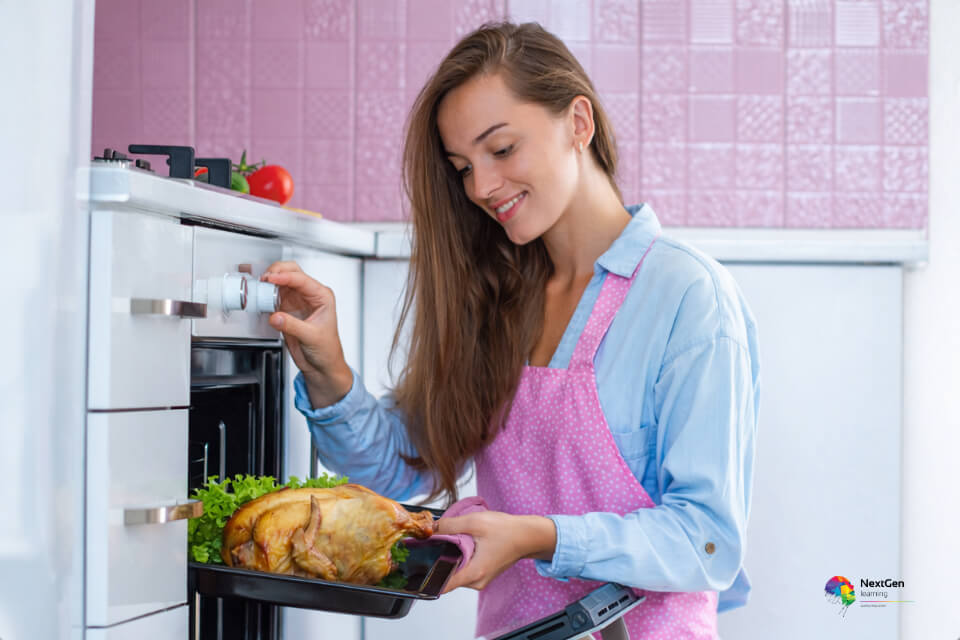
Yes, you can safely reheat chicken as long as it has been stored properly and reheated to the correct internal temperature. In fact, food safety guidelines confirm that leftover cooked chicken can be reheated without risk when handled correctly. However, improper storage or uneven reheating may allow harmful bacteria to survive, which can increase the risk of food poisoning. Therefore, following proper reheating practices is essential to keep your food both safe and enjoyable.
Importantly, cooked chicken should always be refrigerated within two hours of cooking. This prevents bacteria from multiplying while the food sits at room temperature. Once stored correctly, the chicken can typically remain safe in the refrigerator for three to four days. When reheating, the goal is to heat the chicken evenly so that every part becomes piping hot.
Moreover, reheating chicken does not reduce its nutritional value significantly when done properly. Instead, the biggest concern is ensuring that harmful bacteria such as Salmonella or Campylobacter are destroyed during reheating. This is why reaching the correct internal temperature is the most important safety rule.
● Key Safety Rules for Reheating Chicken
- Refrigerate leftovers quickly – Store cooked chicken within two hours to prevent bacterial growth.
- Reheat chicken only once – Repeated reheating increases the time food spends in the bacterial danger zone.
- Heat thoroughly throughout – Ensure the chicken is piping hot with no cold spots.
- Use proper storage containers – Airtight containers help preserve freshness and reduce contamination risk.
- Consume immediately after reheating – Once reheated, chicken should be eaten right away rather than cooled and reheated again.
Following these basic safety practices ensures that reheated chicken remains both safe to eat and enjoyable in taste and texture.
What Temperature Should Reheated Chicken Reach?
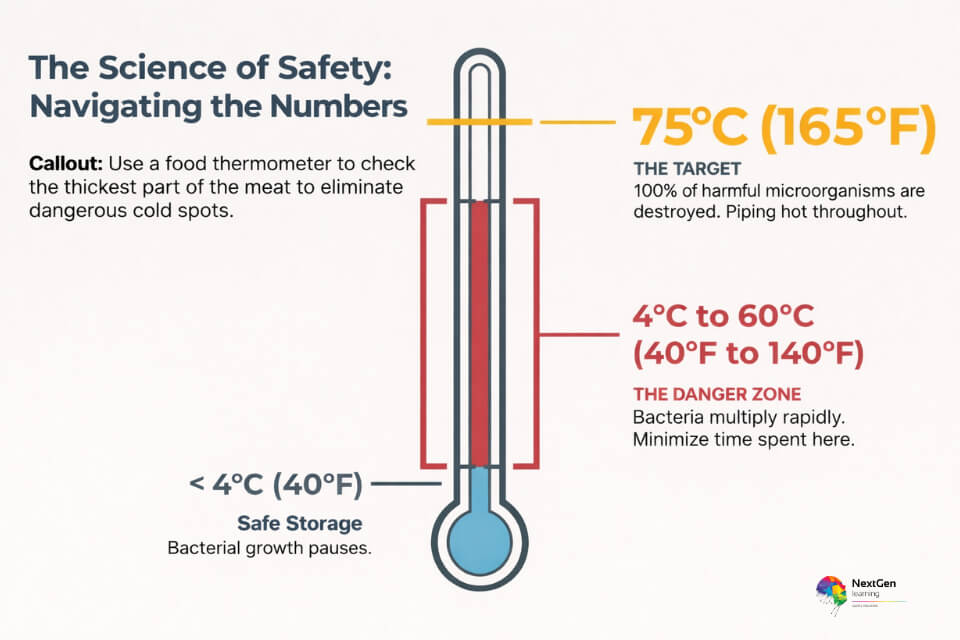
When reheating chicken, reaching the correct internal temperature is the most important food safety rule. Food safety authorities recommend that reheated chicken must reach 75°C (165°F) internally. At this temperature, harmful bacteria that may have developed during storage are destroyed, making the chicken safe to eat.
Moreover, reheating chicken thoroughly ensures that the meat heats evenly and eliminates cold spots where bacteria could survive. While chicken may appear hot on the outside, the inside can sometimes remain cooler, especially when reheated in a microwave. Therefore, checking the internal temperature with a food thermometer is the most reliable way to confirm that the chicken is safe to eat.
In addition, proper reheating does more than improve safety. It also helps maintain the quality of the chicken. Heating slowly and evenly can prevent the meat from becoming dry or rubbery, which often happens when chicken is overheated or reheated unevenly.
● Why Proper Reheating Temperature Is Important
- Kills harmful bacteria – Heating chicken to 75°C (165°F) destroys bacteria such as Salmonella and Campylobacter.
- Prevents food poisoning – Proper reheating reduces the risk of stomach illness caused by contaminated leftovers.
- Ensures even heating – Reaching the correct temperature helps eliminate cold spots inside the meat.
- Maintains food safety standards – Following recommended temperatures aligns with general food safety guidelines used in kitchens and restaurants.
- Improves eating quality – Proper heating prevents undercooked centers while helping the chicken remain tender.
Understanding this simple temperature rule makes reheating chicken much safer. As long as the chicken reaches 75°C (165°F) and was stored properly beforehand, it can be enjoyed without concern.
Why Reheating Chicken Can Be Dangerous If Done Incorrectly
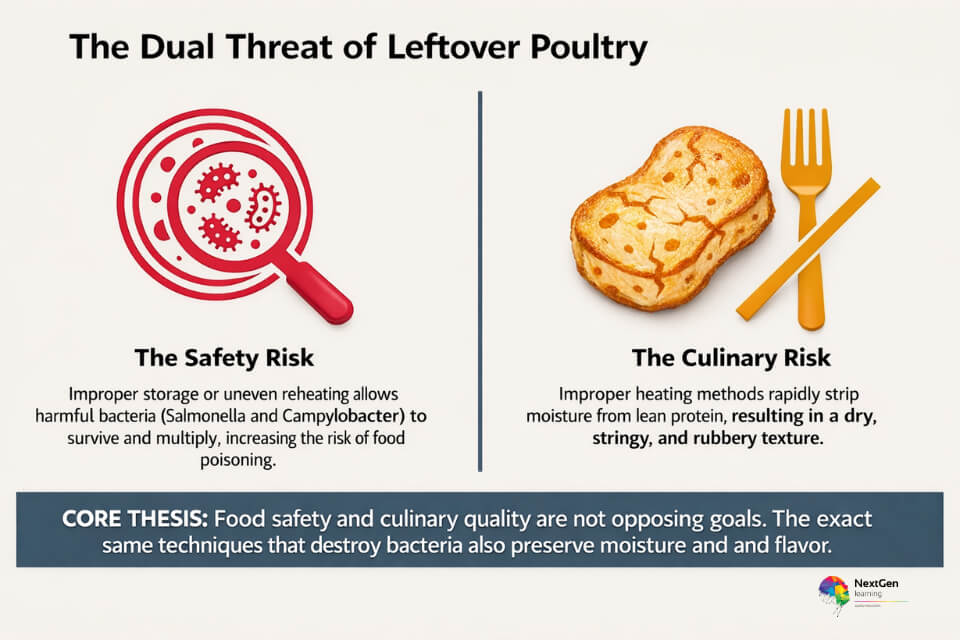
Although reheating chicken is generally safe, problems can occur when the process is done incorrectly. In many cases, food safety risks arise not from the chicken itself but from improper storage, uneven heating, or repeated reheating. As a result, bacteria can grow or survive, which may lead to foodborne illness.
One of the main concerns is the temperature danger zone, which ranges from 4°C to 60°C (40°F to 140°F). Within this temperature range, bacteria multiply rapidly. Therefore, if cooked chicken is left at room temperature for too long or reheated unevenly, harmful bacteria may grow before the chicken becomes hot enough to kill them.
Moreover, certain bacteria commonly associated with poultry can cause illness if food safety guidelines are ignored. For example, bacteria such as Salmonella and Campylobacter can contaminate chicken if it is stored improperly or reheated insufficiently. While reheating to the correct temperature destroys most harmful microorganisms, incomplete reheating may allow them to survive.
In addition, reheating chicken multiple times increases the risk of bacterial growth. Each time the chicken cools and reheats, it may spend more time within the temperature danger zone. Consequently, both food safety and food quality may decline.
● Risks of Improperly Reheating Chicken
- Bacterial growth – Leaving cooked chicken at room temperature encourages bacteria to multiply quickly.
- Food poisoning risk – Consuming improperly reheated chicken may lead to symptoms such as nausea, stomach cramps, or diarrhea.
- Uneven heating – Some reheating methods may leave cold spots where bacteria can survive.
- Texture deterioration – Repeated reheating can make chicken dry, tough, or rubbery.
- Reduced food quality – Flavor and moisture can decline when chicken is reheated improperly.
Understanding these risks highlights why proper storage and reheating techniques are essential. Fortunately, by following the correct methods and temperature guidelines, you can safely enjoy leftover chicken without compromising taste or safety.
Best Ways to Reheat Chicken Without Drying It Out
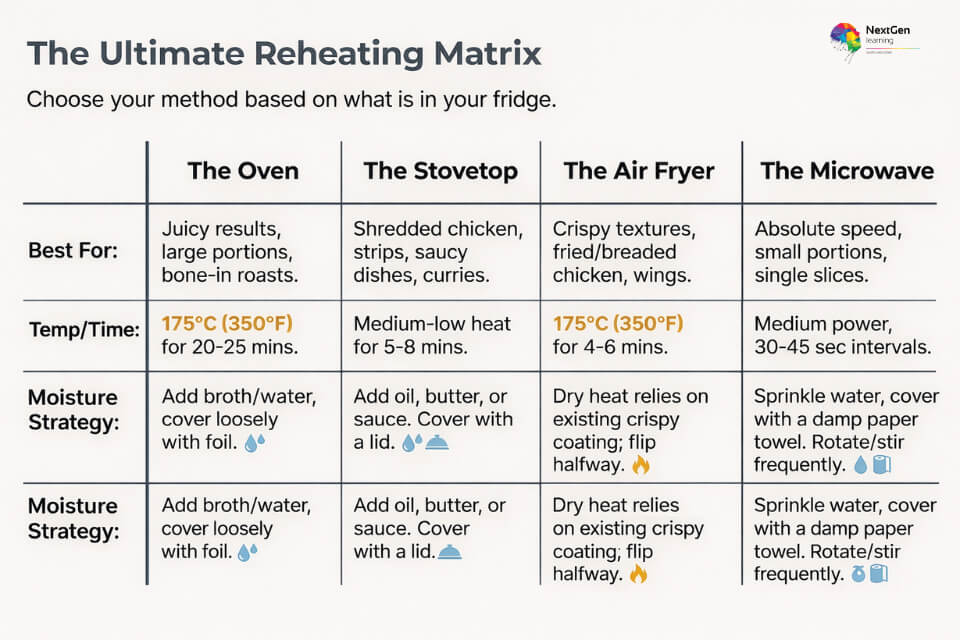
Reheating chicken can sometimes result in dry, rubbery meat. However, this usually happens when the chicken is reheated too quickly or without enough moisture. Fortunately, several reheating methods can warm chicken safely while preserving its flavor and tenderness. The key is to use gentle heat, retain moisture and avoid overheating.
Moreover, different reheating methods work better depending on the type of chicken you are warming. For example, fried chicken benefits from dry heat methods like an air fryer or oven, while chicken in sauces reheats better on the stovetop. Therefore, choosing the right method can make a significant difference in both texture and taste.
In addition, adding a small amount of liquid such as broth, water, or sauce can help prevent moisture loss during reheating. Covering the chicken while reheating also traps steam, which keeps the meat tender and prevents it from drying out.
● Common Methods for Reheating Chicken
- Oven reheating – Provides even heating and helps maintain the chicken’s natural moisture and texture.
- Microwave reheating – The quickest option, suitable for small portions or sliced chicken.
- Air fryer reheating – Restores crispiness, especially for fried or breaded chicken pieces.
- Stovetop reheating – Ideal for chicken strips, shredded chicken, or dishes cooked with sauce.
- Sauce-based reheating – Works well for stews, curries, or casseroles containing chicken.
Each reheating method has its advantages and selecting the right one depends on the type of leftover chicken and the time available. In the following sections, we will explore step-by-step instructions for each reheating method, helping you warm chicken safely while maintaining its best flavor and texture.
How to Reheat Chicken in the Oven (Best for Juicy Results)
Reheating chicken in the oven is one of the best methods for maintaining both flavour and texture. Unlike the microwave, which can sometimes heat unevenly, the oven distributes heat more gradually. As a result, the chicken warms through evenly while retaining moisture. This method works especially well for roasted, baked, grilled, or rotisserie chicken.
Moreover, the oven allows you to reheat larger portions without drying out the meat. By covering the chicken and adding a small amount of liquid, you can create steam that keeps the meat tender. Therefore, although this method takes a little longer than others, it often produces the best quality results.
● Step-by-Step Guide to Reheating Chicken in the Oven
- Preheat the oven – Set your oven to 175°C (350°F) so the chicken heats evenly.
- Place chicken in an oven-safe dish – Arrange the chicken pieces in a single layer to ensure even heating.
- Add moisture – Pour a few tablespoons of water, broth, or sauce into the dish to prevent dryness.
- Cover with foil – Loosely cover the dish with foil to trap steam and keep the chicken moist.
- Heat until piping hot – Reheat for 20–25 minutes, or until the internal temperature reaches 75°C (165°F).
● Pros of Oven Reheating
- Even heating throughout – The oven warms the chicken gradually without creating cold spots.
- Maintains flavour and texture – Properly covered chicken stays juicy and tender.
- Ideal for larger portions – Perfect for reheating whole chicken pieces or multiple servings.
● Limitations of Oven Reheating
- Longer reheating time – The oven takes more time compared to the microwave or air fryer.
- Less convenient for small portions – Heating a full oven may feel unnecessary for a single serving.
Despite these limitations, the oven remains one of the most reliable methods for reheating chicken without compromising taste or moisture.
How to Reheat Chicken in the Microwave
The microwave is the fastest and most convenient way to reheat chicken, especially when you need a quick meal. However, microwaving can sometimes cause uneven heating, which may lead to dry or rubbery meat. Therefore, using the right technique is essential to ensure the chicken reheats evenly and stays moist.
Moreover, microwaves heat food by exciting water molecules inside the food. As a result, some parts of the chicken may heat faster than others. To avoid this issue, cutting the chicken into smaller pieces and reheating in short intervals helps distribute heat more evenly. In addition, covering the chicken during reheating traps moisture and prevents it from drying out.
● Step-by-Step Guide to Reheating Chicken in the Microwave
- Slice the chicken into smaller pieces – Smaller portions heat more evenly and reduce cold spots.
- Place on a microwave-safe plate – Spread the chicken in a single layer for better heat distribution.
- Add moisture – Sprinkle a little water, broth, or sauce over the chicken to keep it moist.
- Cover the chicken – Use a microwave-safe lid or damp paper towel to trap steam.
- Heat in short intervals – Microwave for 30–45 seconds at a time, turning the chicken between intervals until fully heated.
- Check internal temperature – Ensure the chicken reaches 75°C (165°F) before eating.
● Tips to Prevent Dry or Rubbery Chicken
- Use medium power instead of high – Lower power reheats the chicken more gently.
- Avoid overheating – Excessive heating quickly dries out the meat.
- Rotate or stir the chicken between intervals – This helps eliminate cold spots.
- Cover the chicken during reheating – Trapped steam keeps the meat tender.
Although the microwave may not always produce the same texture as oven reheating, it remains a quick and effective option for reheating small portions of chicken safely.
How to Reheat Chicken in an Air Fryer
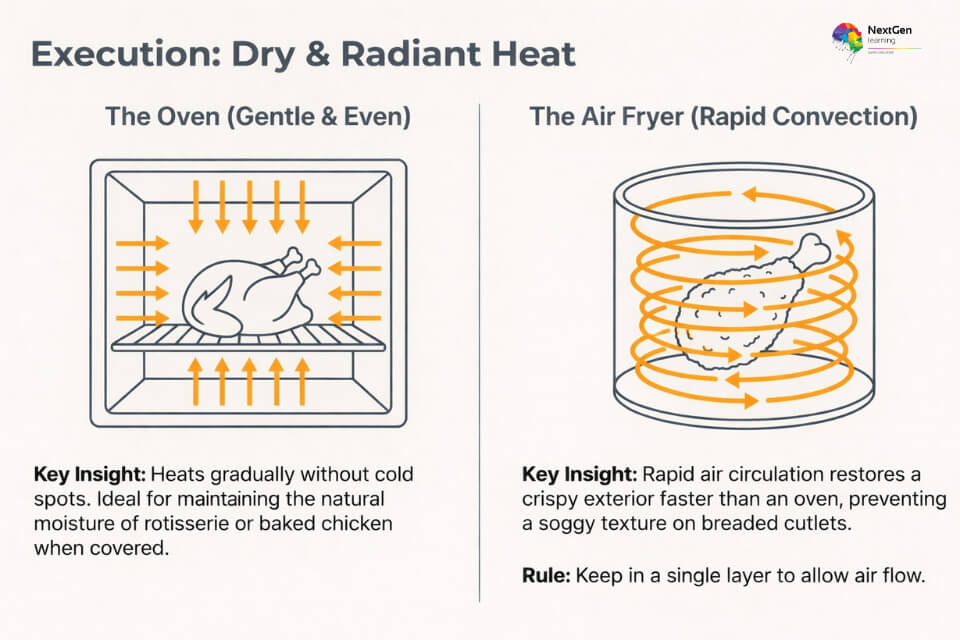
Reheating chicken in an air fryer is an excellent option when you want to restore crispiness and flavour. In recent years, air fryers have become a popular kitchen appliance because they circulate hot air rapidly, which helps reheat food evenly while keeping the exterior crispy. As a result, this method works particularly well for fried chicken, breaded chicken, wings and tenders.
Moreover, the air fryer reheats chicken much faster than the oven while still producing better texture than a microwave. Because hot air circulates around the food, the outside becomes slightly crispy while the inside remains tender. Therefore, if you want reheated chicken that tastes closer to freshly cooked chicken, the air fryer is often one of the best choices.
● Step-by-Step Guide to Reheating Chicken in an Air Fryer
- Preheat the air fryer – Set the air fryer to 175°C (350°F) so the chicken reheats evenly.
- Prepare the basket – Lightly spray the basket with cooking oil to prevent sticking.
- Place chicken in a single layer – Avoid stacking pieces to allow proper air circulation.
- Reheat for 4–6 minutes – Flip the chicken halfway through reheating for even crispiness.
- Check internal temperature – Ensure the chicken reaches 75°C (165°F) before serving.
● When the Air Fryer Works Best
- Fried chicken – Restores the crispy coating effectively.
- Chicken wings or tenders – Maintains both crispiness and moisture.
- Breaded chicken cutlets – Prevents soggy texture during reheating.
- Small portions of leftover chicken – Heats quickly and evenly.
Although the air fryer works exceptionally well for crispy chicken dishes, it may not be the best option for saucy or shredded chicken, which reheats better using stovetop methods.
How to Reheat Chicken on the Stove
Reheating chicken on the stovetop is a great method when you want better control over heat and moisture. Unlike the microwave, which can heat unevenly, the stovetop allows you to warm the chicken gradually while adding liquid to keep it tender. As a result, this method works particularly well for chicken strips, shredded chicken, grilled chicken pieces, or dishes with sauce.
Moreover, reheating on the stove helps restore moisture to the chicken. By adding a small amount of broth, sauce, or oil, the meat stays juicy rather than drying out. Therefore, this technique is ideal for reheating leftover chicken used in stir-fries, wraps, pasta dishes, or rice bowls.
● Step-by-Step Guide to Reheating Chicken on the Stove
- Heat a pan on medium-low heat – Gentle heat prevents the chicken from becoming tough.
- Add a small amount of liquid – Use oil, butter, broth, or sauce to maintain moisture.
- Place the chicken in the pan – Arrange pieces evenly for consistent reheating.
- Cover with a lid – Trapping steam helps warm the chicken evenly and keeps it tender.
- Turn occasionally – Flip the chicken every few minutes to avoid uneven heating.
- Heat for 5–8 minutes – Continue until the chicken reaches 75°C (165°F) internally.
● Tips for Keeping Chicken Moist on the Stove
- Use low to medium heat – High heat can quickly dry out the meat.
- Add broth or sauce gradually – This helps restore moisture during reheating.
- Avoid overcooking – Prolonged heating can make chicken tough.
- Cover the pan while reheating – This traps steam and improves tenderness.
The stovetop method is especially useful for reheating chicken used in saucy dishes or meal-prep recipes, as it allows you to control both heat and moisture while maintaining good texture.
Can You Reheat Chicken More Than Once?
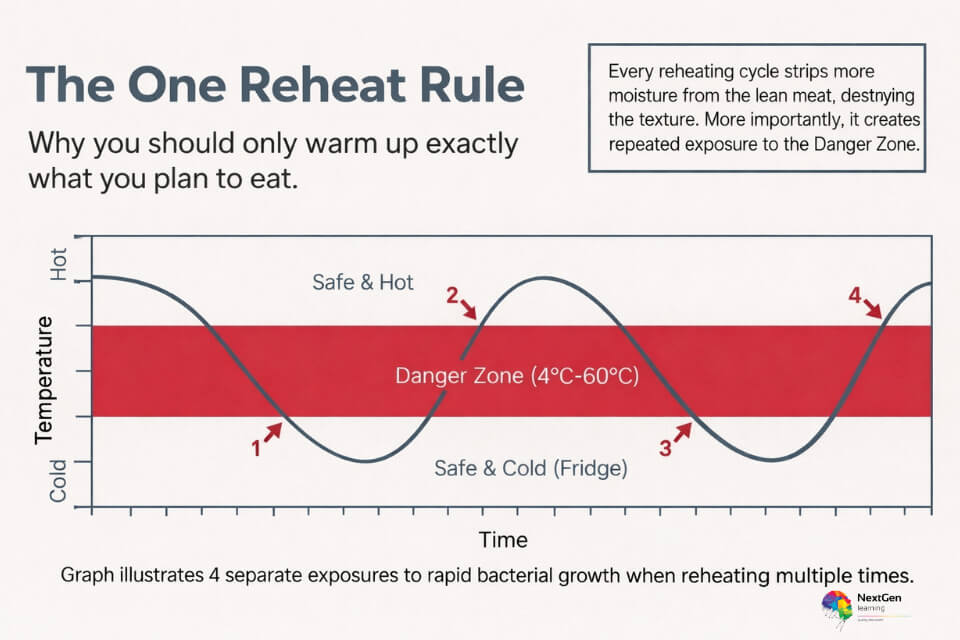
Technically, chicken can be reheated more than once, but food safety experts generally advise avoiding repeated reheating whenever possible. Each time cooked chicken cools and reheats, it passes through the temperature danger zone, which ranges from 4°C to 60°C (40°F to 140°F). Within this range, bacteria can multiply quickly. Therefore, reheating chicken multiple times increases the risk of bacterial growth and potential foodborne illness.
Moreover, repeated reheating affects the quality and texture of the chicken. Every reheating cycle removes moisture from the meat, which can make it dry, tough, or stringy. As a result, even if the chicken remains safe to eat, the taste and texture may decline significantly.
For these reasons, it is best to reheat only the portion you plan to eat rather than reheating the entire batch of leftover chicken. By storing leftovers in smaller portions, you can reduce waste while maintaining both food safety and quality.
● Safety Recommendations for Reheating Chicken
- Reheat chicken only once whenever possible – Multiple reheating cycles increase bacterial risk.
- Reheat only the portion you need – This prevents repeated heating of the same leftovers.
- Ensure the chicken reaches 75°C (165°F) – Proper heating kills most harmful bacteria.
- Consume immediately after reheating – Avoid cooling and reheating the same chicken again.
- Store leftovers correctly before reheating – Refrigerate within two hours of cooking.
By following these safety practices, you can enjoy reheated chicken while minimizing both food safety risks and loss of quality.
How to Store Leftover Chicken Safely
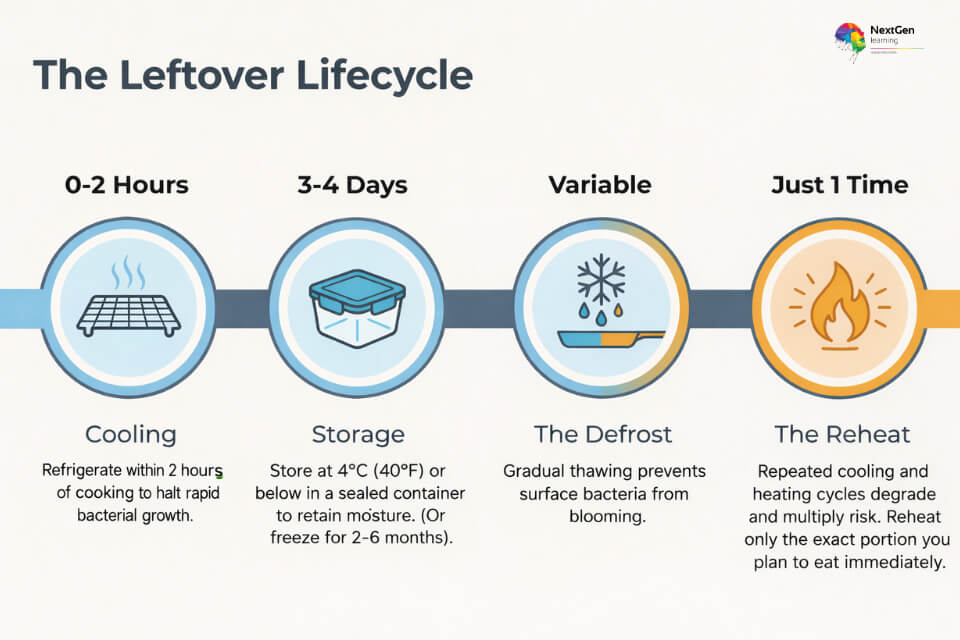
Proper storage is just as important as proper reheating when it comes to food safety. Even if chicken is reheated correctly, it can still become unsafe if it was stored improperly beforehand. Therefore, storing leftover chicken the right way helps prevent bacterial growth while preserving flavour and texture.
Moreover, cooked chicken should never remain at room temperature for too long. Bacteria grow rapidly when food sits within the temperature danger zone between 4°C and 60°C (40°F to 140°F). For this reason, food safety guidelines recommend refrigerating leftover chicken within two hours after cooking. Once refrigerated properly, cooked chicken can typically remain safe for three to four days.
In addition, storing chicken in sealed containers helps retain moisture while protecting the food from contamination. Proper storage also makes reheating easier because well-preserved chicken tends to maintain better texture and flavour.
● Best Practices for Storing Leftover Chicken
- Cool the chicken quickly – Allow the chicken to cool slightly, then refrigerate within two hours of cooking.
- Use airtight containers – Sealed containers or resealable bags help prevent contamination and moisture loss.
- Refrigerate at the correct temperature – Store cooked chicken at 4°C (40°F) or below.
- Consume within 3–4 days – Eating leftovers within this time frame ensures the best safety and quality.
- Freeze for longer storage – If you will not eat the chicken soon, freezing can extend storage for several months.
- Label stored leftovers – Mark containers with the storage date to track freshness easily.
● Freezing Leftover Chicken
Freezing is a great option when you want to preserve cooked chicken for longer periods. When stored properly in freezer-safe packaging, cooked chicken can remain safe for two to six months. However, wrapping the chicken tightly before freezing helps prevent freezer burn and maintains better flavour.
By following these storage guidelines, you ensure that leftover chicken remains safe, fresh and ready for reheating whenever needed.
How to Defrost Chicken Safely Before Reheating
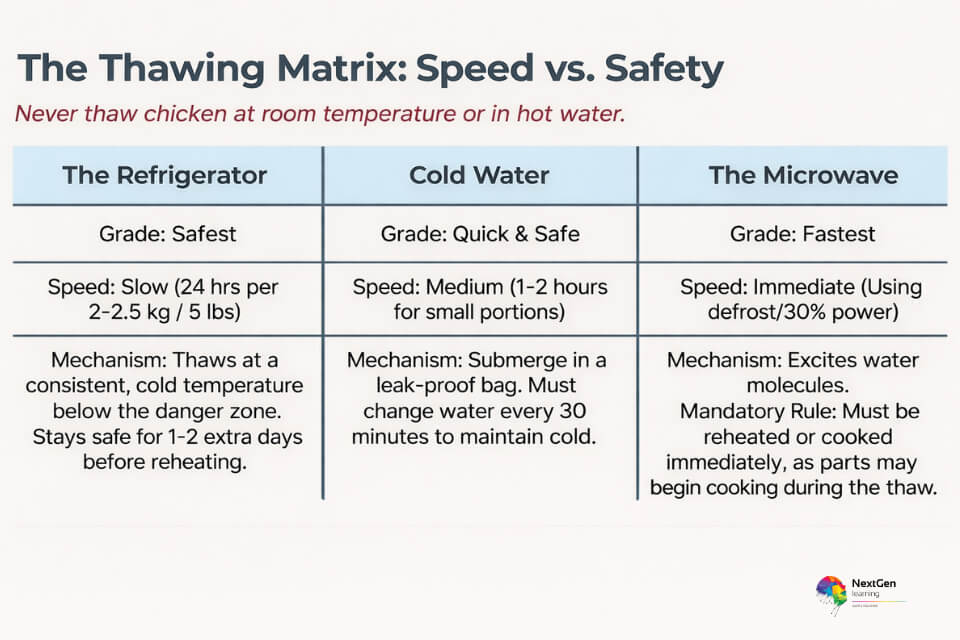
Before reheating frozen chicken, it is important to defrost it safely. Improper thawing can allow bacteria to grow on the surface of the chicken before the inside has fully thawed. Therefore, using safe defrosting methods ensures the chicken remains safe while also reheating evenly.
Moreover, safe defrosting keeps the chicken at controlled temperatures throughout the process. Gradual thawing prevents parts of the meat from entering the temperature danger zone, which reduces the risk of bacterial growth. While several thawing methods exist, some are safer and more reliable than others.
● Defrosting Chicken in the Refrigerator (Safest Method)
Refrigerator thawing is widely considered the safest and most recommended approach. Because the chicken thaws slowly at a consistent cold temperature, bacteria cannot multiply quickly.
- Place the frozen chicken in a sealed container or on a tray to catch any liquid.
- Store it on the bottom shelf of the refrigerator to prevent cross-contamination.
- Allow approximately 24 hours of thawing time for every 2–2.5 kg (5 pounds) of chicken.
- Once thawed, the chicken can remain refrigerated for 1–2 additional days before reheating or cooking.
● Defrosting Chicken in the Microwave (Fastest Method)
If you need to thaw chicken quickly, the microwave can be a useful option. However, because microwave thawing can begin cooking parts of the chicken, it should be reheated or cooked immediately afterward.
- Remove packaging and place the chicken in a microwave-safe dish.
- Use the defrost setting or 30% power to thaw gradually.
- Turn or rotate the chicken every few minutes to ensure even thawing.
- Reheat or cook the chicken immediately after thawing.
● Defrosting Chicken in Cold Water (Quick but Safe)
Cold water thawing is faster than refrigerator thawing while still maintaining food safety when done correctly.
- Place the chicken in a leak-proof plastic bag.
- Submerge the bag in a bowl or sink filled with cold tap water.
- Change the water every 30 minutes to keep it cold.
- Small portions may thaw within 1–2 hours, while larger pieces may take longer.
● Defrosting Methods to Avoid
Some thawing methods may seem convenient but can create serious food safety risks.
- Hot water thawing – Warm temperatures allow bacteria to grow quickly.
- Room temperature thawing – Leaving chicken on the counter can lead to unsafe bacterial growth.
- Slow thawing without temperature control – This increases the time chicken spends in the danger zone.
Using safe defrosting techniques helps ensure the chicken reheats evenly, safely and with better texture.
Common Mistakes When Reheating Chicken
Reheating chicken may seem simple, yet many people make small mistakes that can affect both food safety and quality. Improper reheating can lead to dry meat, uneven heating, or even foodborne illness. Therefore, understanding the most common reheating mistakes can help you avoid these issues and enjoy safer, better-tasting leftovers.
Moreover, many reheating problems occur because chicken is exposed to high heat, poor storage conditions, or repeated reheating cycles. By following proper techniques and paying attention to temperature and timing, these mistakes can easily be prevented.
● Common Reheating Mistakes to Avoid
- Reheating chicken multiple times – Each reheating cycle increases the time the chicken spends in the temperature danger zone.
- Leaving chicken at room temperature too long – Bacteria grow quickly when cooked chicken sits out for extended periods.
- Reheating chicken without adding moisture – Dry heat alone can quickly make chicken tough and rubbery.
- Using very high heat – Excessive heat dries out the meat and can cause uneven reheating.
- Not reheating thoroughly – Chicken that is warm on the outside but cold inside may still contain harmful bacteria.
- Improper storage before reheating – Leaving leftovers uncovered or unrefrigerated increases contamination risk.
● How to Avoid These Mistakes
- Store leftovers promptly – Refrigerate cooked chicken within two hours of cooking.
- Use gentle reheating methods – Lower heat allows the chicken to warm evenly.
- Add a small amount of liquid – Broth, sauce, or water helps maintain moisture.
- Reheat only the portion you need – This prevents repeated reheating of the same leftovers.
- Check the internal temperature – Ensure the chicken reaches 75°C (165°F) before serving.
Avoiding these common mistakes ensures that reheated chicken remains safe, tender and enjoyable to eat.
How to Keep Reheated Chicken Moist and Tender

One of the biggest challenges when reheating chicken is preventing it from becoming dry, tough, or rubbery. Because chicken is a lean protein, it can lose moisture quickly when exposed to high heat. However, with the right techniques, you can reheat chicken while keeping it juicy, tender and flavourful.
Moreover, moisture retention plays a key role in maintaining texture. Adding a small amount of liquid, covering the chicken during reheating and using moderate heat can significantly improve results. In addition, reheating chicken slowly allows the heat to distribute evenly, which prevents the outer layers from drying out before the inside warms.
● Tips to Keep Reheated Chicken Moist
- Add moisture before reheating – A few tablespoons of broth, water, or sauce help prevent dryness.
- Cover the chicken while reheating – Using foil, a lid, or a damp paper towel traps steam and keeps the meat tender.
- Use gentle heat settings – Moderate temperatures warm the chicken evenly without overcooking it.
- Reheat in short intervals – Especially when using a microwave, reheating gradually helps retain moisture.
- Slice larger pieces before reheating – Smaller pieces heat more evenly and reduce moisture loss.
● Extra Tricks for Better Texture
- Reheat chicken with sauce or gravy – This method restores moisture and enhances flavour.
- Use broth in the reheating dish – Steam from the liquid keeps the chicken juicy.
- Avoid overcooking during reheating – Excess heat causes the protein fibers to tighten and lose moisture.
- Choose the right reheating method – Ovens and stovetops often preserve moisture better than microwaves.
By applying these simple techniques, you can transform leftover chicken into a meal that tastes almost as fresh as when it was first cooked.
Signs Reheated Chicken Has Gone Bad
Even when stored and reheated carefully, leftover chicken can eventually spoil. Therefore, it is important to recognise the warning signs that reheated chicken is no longer safe to eat. Consuming spoiled chicken may lead to food poisoning, which can cause symptoms such as stomach pain, nausea, vomiting, or diarrhea.
Moreover, spoiled chicken often shows several noticeable changes in smell, texture and appearance. These changes occur when bacteria break down the proteins in the meat. As a result, checking leftover chicken before reheating or eating it is an important food safety habit.
● Warning Signs That Chicken Has Spoiled
- Unpleasant sour or rotten smell – Fresh cooked chicken should smell mild, not strong or sour.
- Slimy or sticky texture – Spoiled chicken may develop a slippery surface caused by bacterial growth.
- Discoloration – Grey, greenish, or dull patches can indicate that the chicken has begun to spoil.
- Unusual taste – If the chicken tastes sour or off, it should be discarded immediately.
- Stored for too long – Chicken kept in the refrigerator for more than 3–4 days may no longer be safe.
● When to Throw Reheated Chicken Away
- If the smell seems unusual – A strong or unpleasant odor is a clear warning sign.
- If the chicken feels slimy – Texture changes often indicate bacterial growth.
- If the storage date is uncertain – When in doubt, it is safer to discard the food.
- If the chicken was left out too long – Chicken sitting at room temperature for several hours should not be eaten.
Recognising these warning signs helps prevent foodborne illness and ensures that the chicken you eat remains fresh, safe and enjoyable.
Frequently Asked Questions
Yes, reheated chicken can cause food poisoning if it is not stored or reheated properly. However, when chicken is refrigerated within two hours of cooking and reheated to 75°C (165°F), it is generally safe to eat.
Cooked chicken can usually remain safe in the refrigerator for three to four days when stored in an airtight container at 4°C (40°F) or below.
Yes, frozen chicken can be reheated, but it is usually safer and more effective to defrost it first using the refrigerator, microwave, or cold water method. Proper thawing helps ensure even reheating.
The air fryer or oven is often the best method for reheating fried chicken because it restores the crispy outer layer while keeping the inside tender.
Chicken becomes rubbery when it is overheated or reheated too quickly. Using lower heat, adding moisture and reheating gradually can help maintain a better texture.
Final Thoughts
Reheating chicken safely comes down to proper storage, correct temperature and the right reheating method. When cooked chicken is refrigerated promptly and reheated thoroughly, it can remain both safe and delicious to eat. The most important rule is ensuring the chicken reaches an internal temperature of 75°C (165°F), which destroys harmful bacteria that may have developed during storage.
Moreover, choosing the right reheating method can make a noticeable difference in texture and flavour. Ovens and air fryers often help maintain crispiness, while stovetop reheating works well for saucy dishes. Microwaves provide the fastest option, although they require careful heating to avoid dry or uneven results.
By following simple food safety practices and using the correct reheating techniques, you can enjoy leftover chicken without compromising taste, texture, or safety.
● Quick Safety Checklist for Reheating Chicken
● Refrigerate cooked chicken within two hours of cooking.
● Store leftovers in airtight containers to maintain freshness.
● Reheat chicken to at least 75°C (165°F) internally.
● Reheat only the portion you plan to eat to avoid repeated reheating.
● Consume reheated chicken immediately rather than storing it again.
Following these basic guidelines ensures that reheated chicken remains safe, flavourful and satisfying every time.

0 responses on "Can You Reheat Chicken Safely? Temperature, Methods & Food Safety Tips"