




Understanding Child Protection: A Guide for Safeguarding Leads
A missed safeguarding concern can leave a vulnerable child exposed to further harm. In schools, recognising warning signs is only the beginning. Staff must know when to report concerns and how to act without delay.
Child protection involves identifying and responding to children experiencing, or at risk of, significant harm. It is why accurate reporting, timely referrals and professional judgement matter in everyday school life.
In this blog, you will learn how child protection works, the responsibilities of safeguarding leads, how to recognise abuse and the procedures schools must follow.
Key Takeaways
- Child protection focuses on children experiencing or at risk of significant harm.
- Designated safeguarding leads (DSLs) coordinate safeguarding concerns and referrals.
- Abuse may involve physical, emotional or sexual harm, or neglect.
- Schools must record concerns accurately and act without unnecessary delay.
- Effective child protection depends on information sharing and multi-agency cooperation.
- Safeguarding policies, staff training and early intervention strengthen children’s safety.
Table of Contents
What Is Child Protection?
Child protection is the action taken to protect individual children who are suffering, or are likely to suffer, significant harm. In schools, this includes recognising abuse, reporting concerns and ensuring appropriate support reaches vulnerable pupils.
Child Protection vs. Safeguarding
Understanding what safeguarding means helps distinguish these related responsibilities.
| Safeguarding | Child Protection |
|---|---|
| Promotes the welfare of all children | Focuses on children at risk of significant harm |
| Includes prevention and early support | Involves responding to suspected or identified harm |
| Covers school-wide policies and practices | Requires specific protective actions and referrals |
Why Child Protection Matters in Schools
Teachers regularly observe pupils’ behaviour, attendance and wellbeing. Changes in these areas may reveal concerns that remain unnoticed elsewhere.
A pupil repeatedly arriving hungry, withdrawn or frightened may need additional support or protection. Staff should record these observations rather than dismiss them as ordinary behaviour.
What Are the Roles and Responsibilities of a Designated Safeguarding Lead?
A designated safeguarding lead (DSL) is a senior member of school leadership with lead responsibility for safeguarding and child protection, including online safety.
Identifying and Responding to Safeguarding Concerns
DSLs assess information reported by staff, consider the child’s circumstances and determine appropriate next steps.
They also advise colleagues, coordinate referrals and communicate with relevant agencies.
Recording, Reporting and Managing Child Protection Cases
Accurate records should document what happened, when concerns arose, who was informed and which decisions followed.
Records must remain confidential, securely stored and accessible to authorised professionals when necessary.
Develop your safeguarding knowledge with Designated Safeguarding Lead (DSL) Training.
How Can DSLs Recognise Signs of Child Abuse and Neglect?
Child abuse does not always produce visible injuries. A combination of physical, emotional and behavioural changes may indicate potential harm.
Physical, Emotional and Sexual Abuse
Physical abuse may involve unexplained injuries. Emotional abuse can present through persistent fear, low self-esteem or withdrawal.
Sexual abuse may involve inappropriate sexualised behaviour, distress or disclosures. However, children experiencing abuse may show no obvious signs.
The NSPCC’s guidance on recognising child abuse explains these indicators in greater detail.
Neglect and Behavioural Warning Signs
Neglect involves persistent failure to meet a child’s basic needs.
A child frequently arriving without suitable clothing, adequate food or necessary medical attention may require further assessment.
No single indicator proves abuse. Concerns must be recorded and assessed in context.
What Are the Child Protection Procedures in Schools?
Child protection procedures explain how concerns move from initial identification to appropriate protective action.
Recognising and Recording Concerns
Consider a pupil who tells a teaching assistant that they are afraid to return home because an adult has repeatedly hurt them.
The assistant should listen, record the pupil’s words accurately and promptly inform the DSL.
Reporting Concerns and Making Referrals
The DSL considers the information and, where appropriate, refers the concern to local authority children’s social care.
Staff must not wait for proof of abuse before reporting concerns. Anyone can contact children’s social care directly when necessary.
If a child faces immediate danger, contact the police on 999.
Following Up and Monitoring Child Safety
Submitting a referral does not end the school’s responsibilities.
The DSL should monitor developments, communicate additional concerns and escalate matters when a child remains at risk.
What Should a DSL Do When a Child Discloses Abuse?
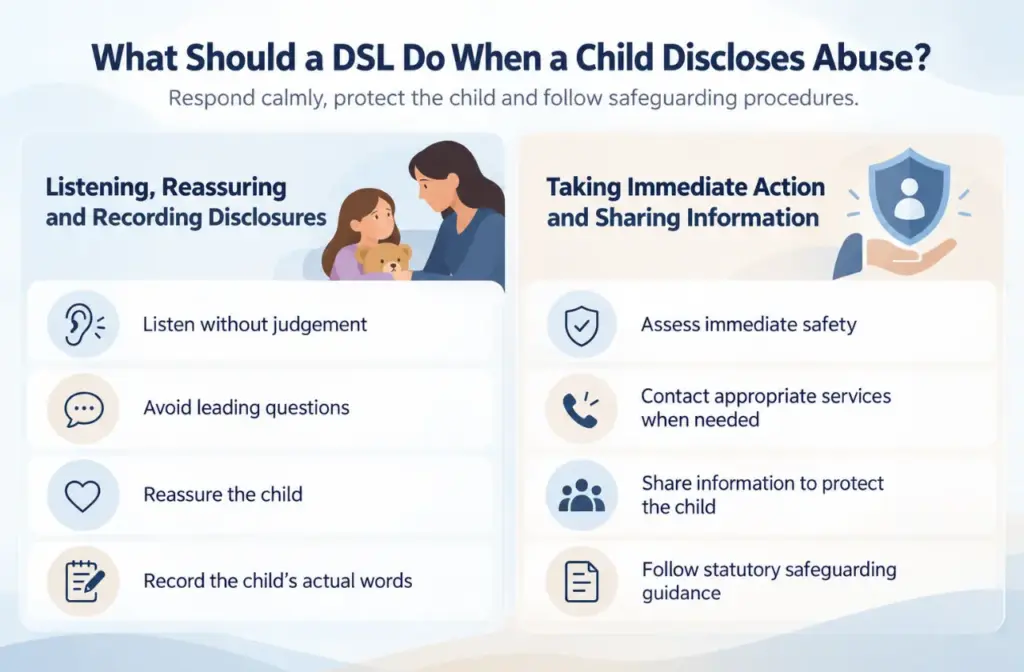
A child’s disclosure requires a calm, supportive response that protects their wellbeing and preserves the accuracy of their account.
Listening, Reassuring and Recording Disclosures
The adult receiving the disclosure should listen without judgement, avoid leading questions and explain that information may need to be shared to keep the child safe.
Records should distinguish the child’s actual words from the adult’s observations.
Taking Immediate Action and Sharing Information
DSLs must assess immediate safety and contact appropriate services when necessary.
Confidentiality must not prevent necessary safeguarding action. Information sharing requires a lawful basis and should follow the Department for Education’s statutory information-sharing guidance.
What Child Protection Laws and Guidance Must DSLs Follow?
In England, schools must follow statutory safeguarding requirements alongside their local safeguarding arrangements.
Children Act 1989 and 2004
Section 47 of the Children Act 1989 requires local authorities to make enquiries where they have reasonable cause to suspect significant harm.
The Children Act 2004 provides further foundations for safeguarding responsibilities and cooperation between agencies.
Keeping Children Safe in Education and Working Together to Safeguard Children
Keeping Children Safe in Education 2026 sets out safeguarding duties for schools and colleges in England.
Working Together to Safeguard Children 2026 explains how agencies should cooperate to support and protect children.
Scotland, Wales and Northern Ireland have separate safeguarding frameworks.
How Does Multi-Agency Working Support Child Protection?
No single professional has a complete understanding of every risk affecting a child.
Working with Children’s Social Care and Other Agencies
Schools, social workers, healthcare professionals and police contribute different information to safeguarding assessments.
Effective [multi-agency working in safeguarding] helps professionals identify risks and coordinate support.
Information Sharing and Child Protection Plans
Where significant harm is suspected, children’s social care may undertake child protection enquiries.
These can lead to a child protection conference and, where appropriate, a protection plan identifying risks, required actions and professional responsibilities.
How Can DSLs Improve Child Protection Practices in Schools?
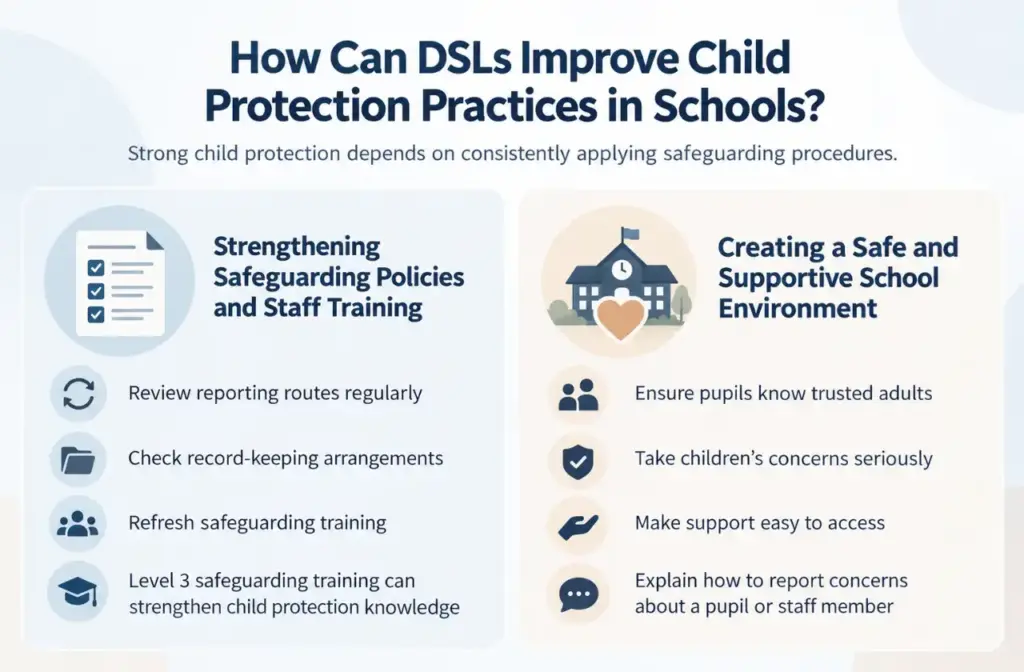
Strong child protection depends on consistently applying safeguarding procedures.
Strengthening Safeguarding Policies and Staff Training
DSLs should review reporting routes, record-keeping arrangements and safeguarding training regularly.
Relevant [Level 3 safeguarding training] can help professionals strengthen their understanding of child protection responsibilities.
Creating a Safe and Supportive School Environment
Children need accessible, trusted adults who take their concerns seriously.
Schools should ensure pupils know how to seek help, including when their concerns involve another pupil or member of staff.
Conclusion
Effective child protection requires more than recognising abuse. Safeguarding leads must coordinate concerns, make timely referrals, maintain reliable records and work closely with other professionals.
Clear procedures and informed decisions help schools respond before risks escalate.
Explore Designated Safeguarding Lead (DSL) Training to strengthen your understanding of child protection responsibilities.
Frequently Asked Questions
Child protection involves identifying and responding to children experiencing, or likely to experience, significant harm, including abuse and neglect.
Safeguarding promotes the welfare of all children, while child protection focuses specifically on those suffering or at risk of significant harm.
DSLs coordinate safeguarding concerns, support staff, maintain confidential records, manage referrals and work with relevant agencies.
Potential signs include unexplained injuries, behavioural changes, fearfulness, persistent hunger, poor hygiene or concerning disclosures. These indicators require careful assessment.
The DSL should ensure the child is safe, arrange accurate recording, assess the concern and make an appropriate referral without investigating the allegation themselves.

0 responses on "Understanding Child Protection: A Guide for Safeguarding Leads"