Popular Courses

Brand Brand Brand Brand
Awarding body image

Overview of the Addiction and Mental Health Dual Diagnosis Course

addiction and mental health course | dual diagnosis training online

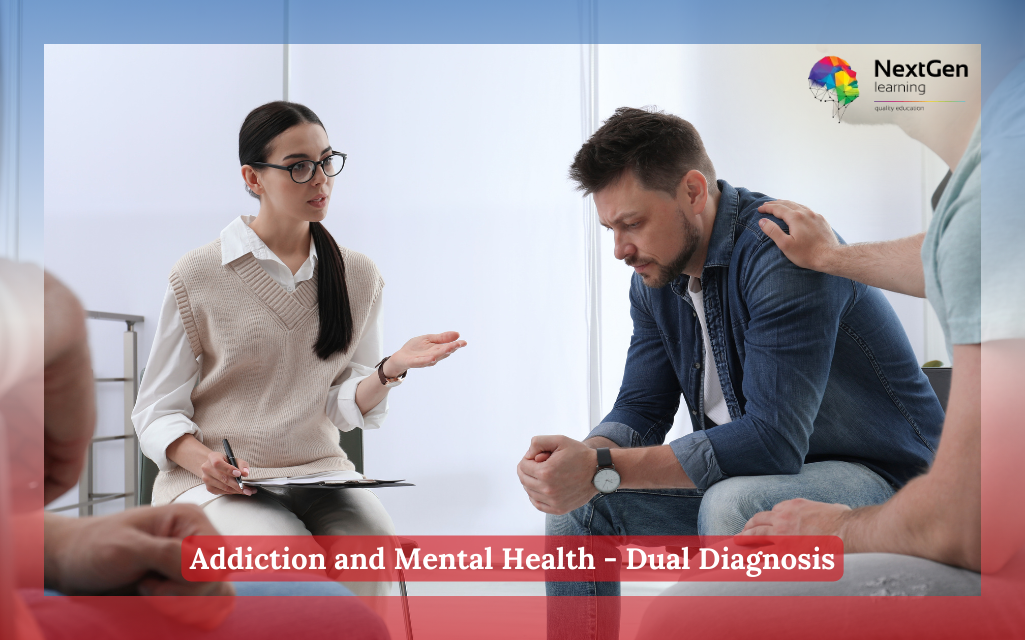
Struggling to understand why addiction and mental health conditions so often overlap is one of the biggest challenges faced by care workers, educators, and support professionals today. Many individuals receive fragmented support because addiction and mental health are treated separately — leading to missed warning signs, delayed intervention, and poorer outcomes. 🧠💔 The Addiction and Mental Health Course Online solves this problem by clearly explaining how substance use and psychological conditions interact, equipping learners with the insight needed to respond effectively and confidently.

Demand for dual diagnosis training online is rising rapidly, with over 70% of people in substance misuse services also experiencing mental health conditions, and global mental health service demand is increasing year on year. 🌍📈 This course delivers a structured, evidence-informed pathway into neurophysiology, trauma influences, addiction cycles, and harm-minimisation strategies, making complex concepts easy to understand and apply. As a result, learners develop career-ready knowledge, a stronger awareness of early intervention models, and the confidence to support individuals with clarity, compassion, and professional understanding.


What You’ll Learn

✅ Understand the foundational concepts of addiction and its effects.
✅ Learn how mental health conditions interact with addictive behaviours.
✅ Explore harm minimisation principles and frameworks for better outcomes.
✅ Gain insight into brain neurophysiology and how it relates to behaviour.
✅ Understand trauma models and their connections to treatment strategies.
✅ Learn early intervention techniques and support frameworks.
✅ Discover the role of integrated support for dual diagnosis care.
✅ Build confidence in applying dual diagnosis principles online.

Why Choose Us?​

addiction and mental health course | dual diagnosis training online

  • Affordable, Accessible, informative and well-structured study materials
  • Earn a globally recognised accredited qualification
  • Lifetime access – learn at your own pace ️
  • Earn instant certificate upon course completion
  • Flexible study – no deadlines
  • Transparent pricing – no hidden fees
  • Fast assessments & instant results
  • Excellent career advancement/career switch opportunities
  • Get 24/7 help or advice from our email and live chat teams

Description of the Addiction and Mental Health Dual Diagnosis Course

addiction and mental health course | dual diagnosis training online

This dual diagnosis training online course introduces the key principles behind addiction and its relationship with mental health. Moreover, it explains how neurobiological, psychological, and environmental factors influence substance use and mental health conditions. Therefore, learners gain a structured framework for understanding complex behaviour dynamics.

In addition, the course covers harm minimisation, trauma models, early intervention, and coordinated support strategies. It also highlights how professionals can apply evidence-informed methods to improve engagement and outcomes. Furthermore, by completing this addiction and mental health course, learners build confidence in both theoretical understanding and application of dual diagnosis frameworks.


Curriculum Overview

  • Module 01: Introduction to Addiction and Dual Diagnosis – This module introduces learners to core concepts of addiction, its effects, and how mental health conditions may be involved.
  • Module 02: Drugs and Their Effects on Behaviour – This section explores the pharmacological effects of substances and how they alter neurological and psychological states.
  • Module 03: Mental Health and Addiction Interactions – This module explains how mental health conditions interact with addictive behaviour patterns and influence wellbeing.
  • Module 04: Harm Minimisation and Optimal Health – This section covers strategies aimed at reducing negative impacts, promoting healthy habits, and supporting resilience.
  • Module 05: Neurophysiology and the Brain’s Role – This module introduces basic neurophysiological concepts and how brain function is affected by addiction and stress.
  • Module 06: Trauma Models and Treatment Keys – This section explores trauma frameworks, recovery pathways, and how trauma influences treatment strategies.
  • Module 07: Early Intervention and Support Systems – This module examines brief intervention methods, support “tripod” models, and early engagement approaches.
  • Module 08: Integrated Support and Practice Frameworks – This section explains coordinated care, holistic support approaches, and multi-dimensional planning.
  • Module 09: Review and Applied Resources – This final module consolidates understanding through resources that support ongoing learning and application.

Certificate of Achievement

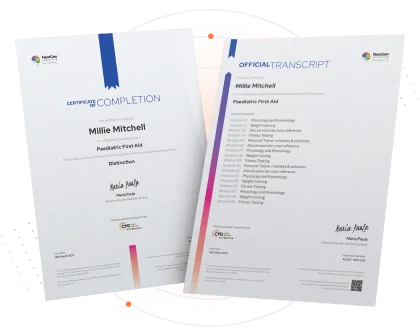
After completing the final exam, you’ll receive a CPD QS Accredited Certificate from NextGen Learning — a recognised credential that strengthens your CV.

  • Digital Certificate: £9.99

📌 Limited-time discounted pricing — secure your certificate while the offer lasts.

Moreover, this course guides learners step by step and helps them move through each topic with clarity. In addition, every lesson follows a logical sequence, so new concepts connect naturally with the previous ones. As learners progress, they build confidence through consistent practice. Furthermore, the course links core ideas with practical, real-world examples, which makes the learning experience more engaging and meaningful. Likewise, the content breaks down complex topics into simple explanations that beginners can easily follow. As a result, learners quickly apply their new skills in real situations. At the same time, individuals with prior knowledge strengthen and refine what they already know. Therefore, the course supports continuous growth for learners at all levels. Ultimately, it offers a structured and

Nextgen Certificate

Who Is This Course For ?

  • Individuals seeking foundational knowledge in addiction and mental health

  • Learners interested in dual diagnosis principles

  • Support workers in health or social care settings

  • Counsellors wanting to strengthen behavioural understanding

  • Anyone exploring mental health and addiction education

Moreover, this course guides learners step by step and helps them move through each topic with clarity. In addition, every lesson follows a logical sequence, so new concepts connect naturally with the previous ones. As learners progress, they build confidence through consistent practice. Furthermore, the course links core ideas with practical, real-world examples, which makes the learning experience more engaging and meaningful. Likewise, the content breaks down complex topics into simple explanations that beginners can easily follow. As a result, learners quickly apply their new skills in real situations. At the same time, individuals with prior knowledge strengthen and refine what they already know. Therefore, the course supports continuous growth for learners at all levels. Ultimately, it offers a structured and

This addiction and mental health course explains substance effects, dual diagnosis concepts, trauma models and treatment strategies. It helps learners understand neurophysiology, harm minimisation and early support frameworks. Designed for global learners who want dual diagnosis training online. A complete online course in addiction and mental health foundations.

Requirements of Addiction and Mental Health Dual Diagnosis Course

The Addiction and Mental Health Dual Diagnosis Course requires no prior degree or experience. Therefore, all you require is English proficiency, numeracy literacy, and a gadget with a stable internet connection. Consequently, you can learn and train for a prosperous career in the thriving and fast-growing industry, without any fuss.

Moreover, this course guides learners step by step and helps them move through each topic with clarity. In addition, every lesson follows a logical sequence, so new concepts connect naturally with the previous ones. As learners progress, they build confidence through consistent practice. Furthermore, the course links core ideas with practical, real-world examples, which makes the learning experience more engaging and meaningful. Likewise, the content breaks down complex topics into simple explanations that beginners can easily follow. As a result, learners quickly apply their new skills in real situations. At the same time, individuals with prior knowledge strengthen and refine what they already know. Therefore, the course supports continuous growth for learners at all levels. Ultimately, it offers a structured and

Career Path​

  • Addiction Support Worker – supports individuals with substance misuse challenges.

  • Mental Health Assistant – assists with mental health care and referral support.

  • Dual Diagnosis Practitioner – combines addiction and mental health frameworks in care planning.

  • Behavioural Health Coordinator – supports integrated care strategy implementation.

  • Wellbeing Support Facilitator – helps individuals navigate recovery and lifestyle strategies.

Moreover, this course guides learners step by step and helps them move through each topic with clarity. In addition, every lesson follows a logical sequence, so new concepts connect naturally with the previous ones. As learners progress, they build confidence through consistent practice. Furthermore, the course links core ideas with practical, real-world examples, which makes the learning experience more engaging and meaningful. Likewise, the content breaks down complex topics into simple explanations that beginners can easily follow. As a result, learners quickly apply their new skills in real situations. At the same time, individuals with prior knowledge strengthen and refine what they already know. Therefore, the course supports continuous growth for learners at all levels. Ultimately, it offers a structured and

Order Your Certificate

To order CPD Quality Standard Certificate, we kindly invite you to visit the following link:

FAQs -

A dual diagnosis means a person experiences both a mental health disorder and a substance use disorder at the same time, such as depression alongside alcohol or drug addiction.

Dual diagnosis can make mental health symptoms more severe and harder to treat, as substance use often worsens anxiety, depression, trauma, or other conditions.

Yes. Addiction is recognised as a mental health condition because it affects brain function, behaviour, decision-making, and emotional regulation.

It can be either. Some people develop addiction as a way to cope with mental illness, while others develop mental health conditions due to prolonged substance use.

The most common disorders linked to substance abuse are depression, anxiety disorders, PTSD, and bipolar disorder.

You will learn about drugs and their effects, the link between addiction and mental health, harm minimisation, brain neurophysiology, trauma-informed treatment models, early intervention strategies, and support frameworks for dual diagnosis care.

Yes. This Addiction and Mental Health Dual Diagnosis course is CPD accredited, and you will receive an official CPD certificate upon completion.

Course Curriculum

Promotional Video
Promotional 5 minute video 00:06:00
SAMHI Dual Diagnosis Intro video
SAMHI Dual Diagnosis Intro video and downloadable worksheet PowerPoint slides 00:04:00
Module 1 - Drugs and Effects
Module 1 – Drugs and Effects: VIDEO PART 1 (content part 1 – 4) 00:16:00
Module 1 – Drugs and Effects: VIDEO PART 2 (content part 5 – 6) 00:19:00
Module 1 – Drugs and Effects: VIDEO PART 3 (content part 7 – 8) 00:20:00
Module 1 – Drugs and Effects: VIDEO PART 4 (content part 9) 00:15:00
Module 1 – Drugs and Effects: VIDEO PART 5 (content part 10) 00:10:00
Module 1 – Drugs and Effects: VIDEO PART 6 (content 10 – 12) 00:18:00
Module 1 – Drugs and Effects: VIDEO PART 7 (content part 13) 00:13:00
Module 1 – Drugs and Effects: VIDEO PART 8 (content part 14) 00:20:00
Module 1 – Drugs and Effects: VIDEO PART 9 (content part 14) 00:20:00
Module 1 – Drugs and Effects: VIDEO PART 10 (content part 15 – 18) 00:19:00
Module 2 - Addictions & Mental Health
Module 2 Addictions & Mental Health: VIDEO PART 1 content part 1 – 2 00:16:00
Module 2 Addictions & Mental Health: VIDEO PART 2 content part 3 – 5 00:18:00
Module 2 Addictions & Mental Health: VIDEO PART 3 content part 6 – 7 00:13:00
Module 2 Addictions & Mental Health: VIDEO PART 4 content part 00:17:00
Module 2 Addictions & Mental Health: VIDEO PART 5 content part 00:18:00
Module 2 Addictions & Mental Health: VIDEO PART 6 content part 00:20:00
Module 2 Addictions & Mental Health: VIDEO PART 7 content part 00:14:00
Module 2 Addictions & Mental Health: VIDEO PART 8 content part 00:12:00
Module 2 Addictions & Mental Health: VIDEO PART 9 content part 00:20:00
Module 2 Addictions & Mental Health: VIDEO PART 10 content part 00:13:00
Module 3 - Harm Minimisation & Optimal Health
Module 3 Harm Minimisation & Optimal Health VIDEO PART 1 content part 00:23:00
Module 3 Harm Minimisation & Optimal Health VIDEO PART 2 content part 00:17:00
Module 3 Harm Minimisation & Optimal Health VIDEO PART 3 content part 00:09:00
Module 3 Harm Minimisation & Optimal Health VIDEO PART 4 content part 00:18:00
Module 3 Harm Minimisation & Optimal Health VIDEO PART 5 content part 00:17:00
Module 3 Harm Minimisation & Optimal Health VIDEO PART 1 content part 6 00:11:00
Module 3 Harm Minimisation & Optimal Health VIDEO PART 7 content part 7 00:12:00
Module 4 - Brain Works - Neurophysiology
Module 4 Brain Works – Neurophysiology 00:17:00
Module 4 Brain Works – Neurophysiology VIDEO PART 1 content part 00:10:00
Module 4 Brain Works – Neurophysiology VIDEO PART 2 content part 00:17:00
Module 4 Brain Works – Neurophysiology VIDEO PART 3 content part 00:19:00
Module 4 Brain Works – Neurophysiology VIDEO PART 4 content part 00:16:00
Module 4 Brain Works – Neurophysiology VIDEO PART 5 content part 00:11:00
Module 5 - Trauma Model & Keys to Treatment
Module 5 Trauma Model & Keys to Treatment VIDEO PART 1 content part 1 – 2a – 2f 00:20:00
Module 5 Trauma Model & Keys to Treatment VIDEO PART 2 content part 2g 00:15:00
Module 5 Trauma Model & Keys to Treatment VIDEO PART 3 content part 2h – 2i 00:15:00
Module 5 Trauma Model & Keys to Treatment VIDEO PART 4 content part 3 00:13:00
Module 5 Trauma Model & Keys to Treatment VIDEO PART 5 content part 4 00:12:00
Module 5 Trauma Model & Keys to Treatment VIDEO PART 6 content part 5 – 7 00:18:00
Module 5 Trauma Model & Keys to Treatment VIDEO PART 7 content part 8 00:17:00
Module 5 Trauma Model & Keys to Treatment VIDEO PART 7 content partVIDEO PART 8 00:16:00
Module 5 Trauma Model & Keys to Treatment VIDEO PART 9 content part 11 00:16:00
Module 5 Trauma Model & Keys to Treatment VIDEO PART 10 content part 12 00:19:00
Module 6 - Brief & Early Intervention and Tripod of Support
Module 6 Brief & Early Intervention and Tripod of Support VIDEO 1 content part 1 00:18:00
Module 6 Brief & Early Intervention and Tripod of Support VIDEO 2 content part 2 00:20:00
Resources
Addiction and Mental Health – Dual Diagnosis 00:00:00
Order Your Certificate
Order Your Certificate 00:00:00

Related Courses

A product of

© 2026 NextGen Learning. All rights reserved

Home Search Cart Offers
Select your currency
GBP Pound sterling