


The duration of the HVAC Technician Course depends on how quickly you choose to study. As the course is delivered online and self-paced, some learners complete it within a few weeks, while others take longer to study alongside work or personal commitments. You have the flexibility to progress at a pace that suits you.

★★★★★ 4.5/5
Based on 79 enrolled learner reviews
Overview of HVAC Technician Course
- Aligned with Industry Standards for HVAC Systems & Maintenance
- 100% Online – Flexible, Self-Paced Learning
- No Prior Experience Required – Start Your HVAC Career Today
- Learn Heating, Ventilation & Air Conditioning Systems from Scratch
- Designed for Beginners and Aspiring HVAC Technicians
- Covers Installation, Maintenance & Troubleshooting Skills
- Instant Digital Certificate on Completion
Last updated by the instructor to ensure accuracy and compliance as of 11th March 2026
If you’re looking to build a career in the UK’s growing heating, ventilation, and air conditioning sector, this HVAC Technician Course provides a clear and accessible starting point. Designed to deliver essential knowledge of HVAC systems, this course helps you understand how heating, ventilation, and air conditioning systems operate in residential and commercial environments.
Through flexible online study, you’ll develop a strong foundation in HVAC principles while working towards a Certificate in HVAC Fundamentals, supporting your progression into entry-level HVAC roles, further training, or apprenticeships. With no prior experience required, this course is ideal for beginners, career changers, and learners seeking industry-relevant HVAC knowledge.
This HVAC Technician Course – Online Level 3 HVAC Training is designed to provide a strong theoretical foundation for anyone looking to enter or progress within the HVAC sector. Whether you are new to the industry, changing careers, or expanding your existing technical knowledge, this course covers the essential concepts behind heating, ventilation, air conditioning, refrigeration, and system maintenance. The content focuses on how HVAC systems operate in both residential and commercial settings, ensuring learners gain industry-relevant knowledge.
Delivered through flexible online learning, this HVAC course allows you to study at your own pace while developing the knowledge employers look for in entry-level and junior HVAC roles. By completing this training, you will gain a clear understanding of HVAC principles, system components, health and safety considerations, and the professional pathways available within the UK HVAC industry.
Exclusive Course Glimpse - HVAC Technician Course
Who Is This HVAC Technician Course For?
This HVAC Technician Course is designed for individuals who want to build a clear and practical understanding of heating, ventilation, and air conditioning systems. The course focuses on HVAC fundamentals, making it suitable for learners with a wide range of backgrounds and career goals.
This course is ideal for:
Beginners with no prior HVAC experience who want to learn core HVAC principles from the ground up
Career changers looking to enter a stable and in-demand technical industry in the UK, and also worldwide
Tradespeople and technical workers seeking to broaden their knowledge of building services systems
Facilities and property management professionals who want to better understand HVAC system operation and performance
Learners preparing for further HVAC training, apprenticeships, or on-the-job experience
The course is structured to explain technical concepts clearly and progressively, making it an excellent starting point for anyone looking to develop foundational HVAC knowledge.
What You’ll Learn in This HVAC Technician Course?
This HVAC Technician Course provides structured, step-by-step training in the core principles that underpin modern heating, ventilation, and air conditioning systems. The curriculum is designed to build knowledge progressively, ensuring learners develop a clear understanding of how HVAC systems operate, how environmental conditions affect performance, and how systems are selected to suit different buildings and usage requirements.
Introduction to Heating, Ventilation & Air Conditioning (HVAC)
The course begins with a comprehensive introduction to HVAC, explaining the purpose, scope, and importance of heating, ventilation, and air conditioning systems in residential and commercial buildings. You will learn key terminology, system functions, and how HVAC contributes to comfort, safety, and indoor environmental control.
Heat Flow and Thermal Behaviour
Understanding heat flow is essential for anyone working with HVAC systems. This module explores how heat is transferred through conduction, convection, and radiation, and how these principles influence heating and cooling performance. You will gain insight into how buildings retain or lose heat and how HVAC systems respond to changing thermal conditions.
Psychrometrics and Air Properties
Psychrometrics focuses on the physical properties of air and how temperature, humidity, and moisture content interact. In this module, you will learn how psychrometric principles are used to assess indoor comfort levels, manage humidity, and support effective HVAC system operation. This knowledge is fundamental for ventilation design and air conditioning control.
HVAC Systems and Components
This module provides a detailed overview of common HVAC system types and their key components. You will explore how different systems are configured, how they function together, and where they are typically applied. The content supports a clear understanding of system operation in both domestic and commercial environments.
Heating Systems and Applications
The heating module examines common heating methods used within HVAC systems, including how heat is generated, distributed, and controlled. You will learn how heating systems integrate with wider HVAC setups and how performance is influenced by building characteristics and usage demands.
Air Conditioning Systems for HVAC Technicians
Air conditioning systems are a central part of modern HVAC installations. This module explains how cooling systems operate, including the role of major components and basic system cycles. You will gain a clear understanding of how air conditioning supports temperature regulation and indoor comfort.
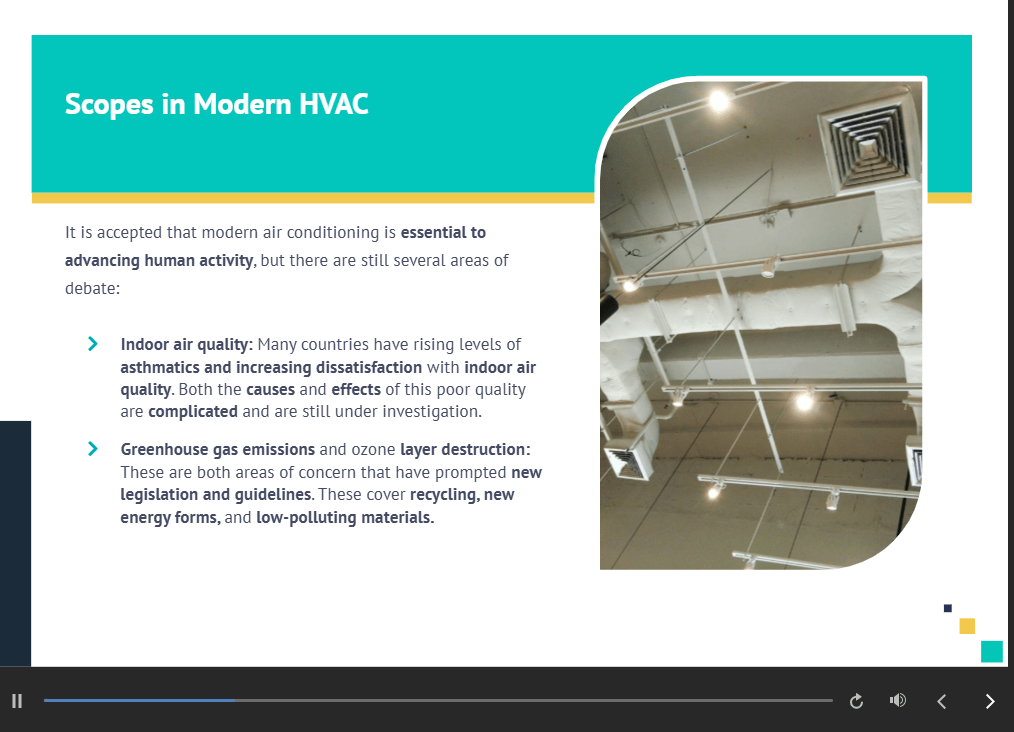
Ventilation and Indoor Air Quality
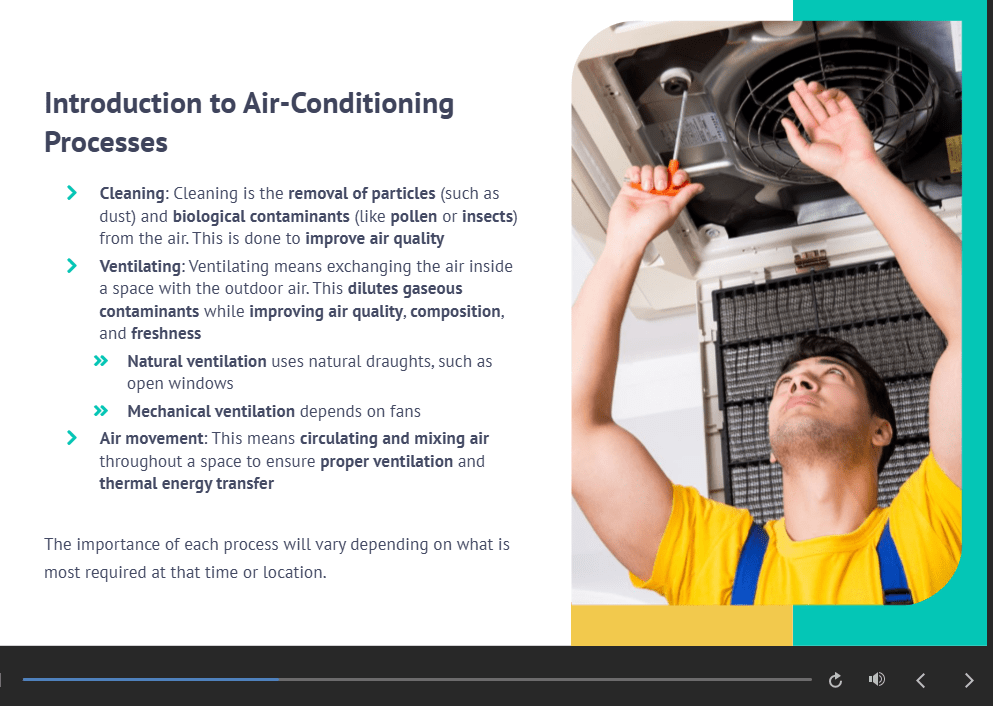
Ventilation plays a critical role in maintaining healthy indoor environments. This module focuses on airflow, air exchange, and indoor air quality, highlighting how ventilation systems help remove contaminants, control moisture, and support occupant well-being.
HVAC System Selection
The final module brings together previous learning by exploring HVAC system selection. You will learn how systems are chosen based on building type, environmental conditions, and performance requirements. This module supports informed decision-making and system evaluation.
Assessments, Readings, and Optional Assignment
Each module includes an assessment to reinforce learning and check understanding. Recommended readings are provided to support deeper study, and an optional assignment allows learners to apply theoretical knowledge in a structured way.
Why Train as an HVAC Technician?
Training as an HVAC technician offers long-term career stability, transferable technical skills, and access to work across multiple sectors. Heating, ventilation, and air conditioning systems are essential in modern buildings, making HVAC knowledge consistently valuable.
Key reasons to pursue HVAC training:
Strong and consistent demand across residential, commercial, and public buildings, regardless of economic conditions
Wide range of employment settings, including homes, offices, healthcare facilities, retail spaces, and industrial sites
Growing focus on energy efficiency, driving demand for technicians who understand modern HVAC system performance
Clear progression opportunities, from entry-level roles to specialist, supervisory, or management positions
Transferable technical skills that remain relevant across different building services and maintenance roles
Opportunities to support sustainability goals, as HVAC systems play a key role in reducing energy consumption and improving indoor environments
Flexible career pathways, allowing progression through employment, further training, or self-employment over time
This combination of demand, stability, and long-term relevance makes HVAC training a practical choice for those seeking a reliable technical career in the UK.
HVAC Technician Course Certification and Accreditation
Completing an HVAC course is not only about gaining knowledge but also about demonstrating your learning through recognised certification. This HVAC Technician Course awards a CPD Certificate in HVAC Fundamentals, confirming your understanding of key heating, ventilation, and air conditioning principles and supporting your continued professional development.
Entry Requirements for the HVAC Technician Course
This HVAC Technician Course is designed to be accessible to a wide range of learners, including those with no previous experience in heating, ventilation, or air conditioning. The course focuses on fundamental HVAC principles and does not require any formal technical background.
Be 16 years of age or older
Have a basic level of literacy to understand course materials and complete assessments
Have access to an internet-enabled device such as a laptop, tablet, or smartphone
No Prior HVAC Experience Required
There are no formal entry requirements for this course. You do not need previous HVAC training, industry experience, or technical qualifications. All core concepts are introduced gradually and explained clearly, making the course suitable for beginners, career changers, and learners returning to education.
HVAC Technician Career Path, Jobs, and Salary (UK)
A career in heating, ventilation, and air conditioning (HVAC) offers strong demand across the UK building services sector. HVAC systems are essential in residential, commercial, and public buildings, creating stable job opportunities and long-term career growth. This course provides a solid theoretical foundation to support entry into HVAC roles and future progression.
Career opportunities include:
Entry-level HVAC technician (installations, inspections, basic system checks)
HVAC maintenance technician (servicing, monitoring, fault identification)
Air conditioning technician (commercial and office cooling systems)
Building services or facilities maintenance technician
HVAC installer (junior to intermediate level)
HVAC engineer (with further training and experience)
Self-employed HVAC contractor
Typical UK HVAC salary ranges:
Entry-level: £22,000 – £28,000
Intermediate: £28,000 – £38,000
Experienced engineer: £35,000 – £50,000+
Self-employed contractor: £40,000 – £60,000+
Earnings and progression depend on:
Experience and technical responsibility
Type and complexity of HVAC systems
Location within the UK
Employment type and additional training
Developing strong HVAC fundamentals supports employability, career progression, and long-term earning potential in the UK HVAC industry.
Enrol Now and Start Building Your HVAC Career
Build in-demand skills with this HVAC Technician Course and take your first step into the UK HVAC industry. Learn essential heating, ventilation, and air conditioning principles valued by employers.
Enjoy instant online access, flexible self-paced study, and earn a Certificate in HVAC Fundamentals on completion.
Enrol now and start your HVAC career with confidence.
Order Your Certificate
To order a CPD Certificate, we kindly invite you to visit the following link:
FAQs About HVAC Courses
Yes, this course is suitable for beginners. No prior HVAC knowledge or technical experience is required. The curriculum starts with core concepts and gradually builds your understanding of heating, ventilation, and air conditioning systems in a clear and structured way.
Yes, the flexible online format allows you to study while working or managing other responsibilities. You can access the course materials at any time and study in short sessions or longer blocks, depending on your schedule.
After successfully completing the assessments, you will receive a Certificate in HVAC Fundamentals. This certificate confirms your understanding of key HVAC principles and supports continued professional development within the building services and facilities sector.
This course focuses on theoretical knowledge and understanding of HVAC systems. It does not include hands-on practical training. However, it provides a strong foundation that can support further practical learning, apprenticeships, or on-the-job experience.
Completing this course can support applications for entry-level roles in HVAC support, building maintenance, facilities management, and related technical positions. It also helps learners prepare for further training or qualifications within the HVAC industry.
HVAC is considered a stable and in-demand career in the UK. Heating, ventilation, and air conditioning systems are essential across homes, workplaces, and public buildings, creating ongoing demand for individuals with HVAC knowledge and skills.
You do not need formal qualifications to start learning HVAC fundamentals in the UK. Many people begin with an introductory HVAC course to understand heating, ventilation, and air conditioning systems before progressing to further training or practical experience. Entry-level HVAC courses are designed for beginners and focus on core principles rather than hands-on installation or licensing requirements.
Getting into HVAC in the UK typically starts with learning the fundamentals through a structured HVAC course. This helps you understand system operation, safety principles, and industry terminology. Many learners then progress to entry-level roles, further technical training, apprenticeships, or on-the-job experience to build practical skills and advance their careers.
HVAC is not considered a hard career to get into, especially at entry level. While the industry is technical, many courses are designed to teach HVAC concepts clearly and progressively. A strong understanding of HVAC fundamentals makes it easier to transition into junior roles or further training, particularly for beginners or career changers.
The best HVAC course for beginners is one that focuses on core principles such as heat flow, psychrometrics, HVAC systems, ventilation, and system selection. Beginner-friendly HVAC courses explain concepts clearly, require no prior experience, and provide a strong theoretical foundation before learners move on to practical training or industry roles.
There is no single “best” HVAC certification, as suitable certifications depend on career goals and experience level. For beginners, a certificate in HVAC fundamentals is a strong starting point, as it demonstrates understanding of key concepts and supports progression into further training, apprenticeships, or entry-level roles within the HVAC and building services sector.
Yes, many HVAC fundamentals courses are available online in the UK. Online HVAC courses allow learners to study theoretical principles such as heating systems, ventilation, air conditioning, and indoor air quality at their own pace. These courses are ideal for beginners and those balancing learning with work or other commitments.
Yes, HVAC skills are in demand across the UK. Heating, ventilation, and air conditioning systems are essential in residential, commercial, and public buildings, creating consistent demand for trained professionals. Growth in construction, refurbishment, and energy efficiency initiatives continues to support long-term opportunities in the HVAC sector.
HVAC is considered a good career choice in the UK due to steady demand, transferable skills, and long-term relevance. HVAC professionals work across multiple industries, including construction, facilities management, and building services. With experience and further training, HVAC careers offer progression opportunities and income growth.
HVAC technician salaries in the UK vary by experience and role. Entry-level positions typically earn between £22,000 and £28,000 per year, while experienced technicians and engineers can earn £35,000 to £50,000 or more. Self-employed HVAC professionals may earn higher amounts depending on workload and contracts.
Senior HVAC engineers and self-employed HVAC contractors are typically among the highest-paid roles in the industry. These positions involve advanced system knowledge, greater responsibility, and experience. Earnings can exceed £50,000 per year, particularly for professionals working on complex commercial systems or managing independent contracts.
What Is HVAC? Heating, Ventilation & Air Conditioning Explained
HVAC stands for Heating, Ventilation, and Air Conditioning. It refers to the systems and technologies used to control temperature, airflow, and indoor air quality within buildings. HVAC systems are designed to create safe, comfortable, and healthy indoor environments by regulating heat, removing stale air, and managing humidity levels throughout the year.
Globally, HVAC systems are used across homes, offices, retail spaces, healthcare facilities, and industrial buildings. From central heating systems and ventilation units to air conditioning and refrigeration equipment, HVAC plays a critical role in ensuring buildings operate efficiently and meet modern comfort and safety expectations.
Heating Systems in HVAC
The heating element of HVAC focuses on maintaining suitable indoor temperatures during colder months. Common heating systems include boilers, heat pumps, radiators, and underfloor heating. HVAC technicians work with these systems to ensure heat is distributed evenly and operates efficiently, helping to reduce energy waste while maintaining comfort.
Ventilation and Airflow Control
Ventilation is responsible for supplying fresh air and removing pollutants, moisture, and odours from indoor spaces. Proper ventilation supports good air quality and reduces the risk of condensation and mould. HVAC technicians must understand airflow principles, ductwork, and mechanical ventilation systems to ensure air circulates correctly in both residential and commercial buildings.
Air Conditioning and Climate Control
Air conditioning systems regulate indoor temperatures during warmer periods and help manage humidity levels. These systems use components such as compressors, condensers, and evaporators to cool and circulate air. Globally, air conditioning is increasingly used in offices, retail environments, and modern homes, making it an important skill area for HVAC technicians.
Online HVAC Training Designed for Flexible Learning
Study at Your Own Pace
One of the key benefits of online HVAC training is the ability to learn at your own pace. You can revisit topics such as heat flow or psychrometrics as often as needed, ensuring you fully understand each concept before moving forward. This self-paced structure is particularly helpful for learners who are new to HVAC or returning to study after a break.
Learn from Any Location or Device
The course is accessible from any internet-enabled device, including laptops, tablets, and smartphones. Whether you prefer to study at home, during commutes, or in short sessions throughout the day, the online platform allows you to continue learning wherever it suits you. This flexibility makes HVAC training more manageable and convenient.
Designed for Beginners and Career Changers
No prior HVAC experience is required to start this course. The content is written in clear, straightforward language and introduces technical concepts gradually. This makes the course well-suited to beginners, career changers, and individuals looking to gain foundational HVAC knowledge before progressing to further training or practical experience.
How You’re Assessed on the HVAC Technician Course
Assessment is designed to support learning and confirm your understanding of key HVAC principles as you progress through the course. Each stage of assessment aligns closely with the course modules, ensuring that your knowledge of heating, ventilation, air conditioning, and system behaviour is reinforced in a structured and manageable way.
Module-Based Assessments
Each learning module includes a dedicated assessment to check your understanding of the topics covered. These assessments focus on core concepts such as heat flow, psychrometrics, HVAC system operation, heating methods, ventilation, and system selection. Completing assessments at regular intervals helps consolidate learning and ensures you are confident with each subject before moving forward.
Clear Pass Requirements and Progress Tracking
The assessment format allows you to track your progress throughout the course. Clear pass requirements help you understand what is expected, while structured feedback supports continued improvement. This approach ensures that learning remains focused and purposeful rather than overwhelming.
Optional Assignment for Deeper Learning
In addition to module assessments, the course includes an optional assignment. This provides an opportunity to apply theoretical knowledge in a more reflective and structured way. Completing the optional assignment can help reinforce understanding and support learners who wish to explore HVAC concepts in greater depth.
Course Curriculum
| Certificate in HVAC Fundamentals | |||
| Module 01: Introduction to Heating, Ventilation & Air Conditioning (HVAC) | |||
| Module 01: Introduction to Heating, Ventilation & Air Conditioning (HVAC) | 00:18:00 | ||
| Assessment Module 01 | |||
| Module 01 Final Quiz Exam – Certificate in HVAC Fundamentals | 00:10:00 | ||
| Module 02: Heat Flow | |||
| Module 02: Heat Flow | 00:21:00 | ||
| Assessment Module 02 | |||
| Module 02 Final Quiz Exam – Certificate in HVAC Fundamentals | 00:10:00 | ||
| Module 03: Psychrometrics | |||
| Module 03: Psychrometrics | 00:22:00 | ||
| Assessment Module 03 | |||
| Module 03 Final Quiz Exam – Certificate in HVAC Fundamentals | 00:10:00 | ||
| Module 04: HVAC Systems | |||
| Module 04: HVAC Systems | 00:18:00 | ||
| Assessment Module 04 | |||
| Module 04 Final Quiz Exam – Certificate in HVAC Fundamentals | 00:10:00 | ||
| Module 05: Heating | |||
| Module 05: Heating | 00:29:00 | ||
| Assessment Module 05 | |||
| Module 05 Final Quiz Exam – Certificate in HVAC Fundamentals | 00:10:00 | ||
| Module 06: Air Conditioning Systems for HVAC Technicians | |||
| Module 06: Air Conditioning Systems for HVAC Technicians | 00:26:00 | ||
| Assessment Module 06 | |||
| Module 06 Final Quiz Exam – Certificate in HVAC Fundamentals | 00:10:00 | ||
| Module 07: Ventilation and Indoor Air Quality | |||
| Module 07: Ventilation and Indoor Air Quality | 00:26:00 | ||
| Assessment Module 07 | |||
| Module 07 Final Quiz Exam – Certificate in HVAC Fundamentals | 00:10:00 | ||
| Module 08: HVAC System Selection | |||
| Module 08: HVAC System Selection | 00:21:00 | ||
| Assessment Module 08 | |||
| Module 08 Final Quiz Exam – Certificate in HVAC Fundamentals | 00:10:00 | ||
| Recommended Readings | |||
| Recommended Readings – Certificate in HVAC Fundamentals | 5 days, 3 hours | ||
| Optional Assignment | |||
| Optional Assignment – Certificate in HVAC Fundamentals | 5 days, 3 hours | ||
| Order Your Certificate | |||
| Order Your Certificate | 00:00:00 | ||
Related Courses

AI for Marketing & Sales – Personalization & Automation
Creating Presentations with AI Tools
AI in Healthcare


All Courses for £49