
County Lines Awareness
Build your awareness and confidence in recognising the risks of county lines exploitation. This course develops essential knowledge of warning signs, safeguarding, child criminal exploitation, vulnerability and appropriate responses to help protect individuals at risk.

251 Students

Overview of County Lines Awareness
County lines exploitation is a serious safeguarding concern in the UK, involving criminal networks that exploit children and vulnerable adults to facilitate drug distribution and other criminal activities. Individuals may be manipulated, groomed, threatened or coerced into situations that put their safety, wellbeing and future at risk.
This course introduces learners to the fundamental principles of county lines awareness, helping them understand how exploitation occurs, who may be vulnerable and how safeguarding concerns can be identified and addressed.
Across seven structured modules, learners will explore the meaning of county lines, child criminal exploitation, vulnerability factors, warning signs, cuckooing, associated risks, safeguarding responsibilities, responding to disclosures, prevention strategies and recovery support.
The course is designed to provide accessible foundational knowledge for individuals interested in safeguarding, child protection, education, health and social care, youth work and community support.
Exclusive Course Glimpse
Description of the Course
Understanding county lines exploitation is essential for recognising when children or vulnerable adults may be at risk of criminal exploitation. Awareness of the methods used by criminal networks can help individuals identify potential warning signs and understand the importance of appropriate safeguarding responses.
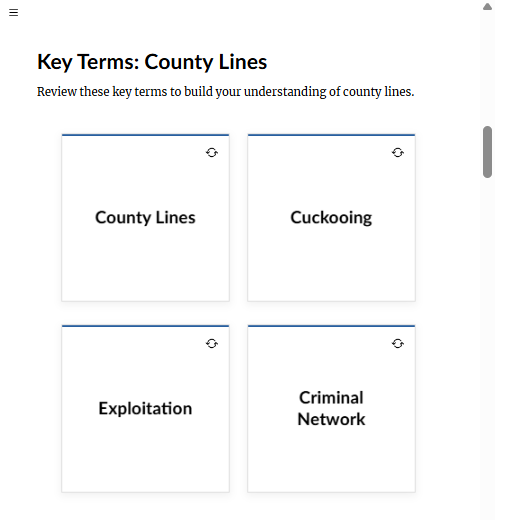
The course begins with Introduction to County Lines, explaining what county lines are, how criminal networks operate and why this form of exploitation presents significant risks to individuals and communities.
Learners then explore Child Criminal Exploitation and Vulnerability, examining how children and young people may be targeted, groomed or manipulated and identifying circumstances that may increase their vulnerability to exploitation.
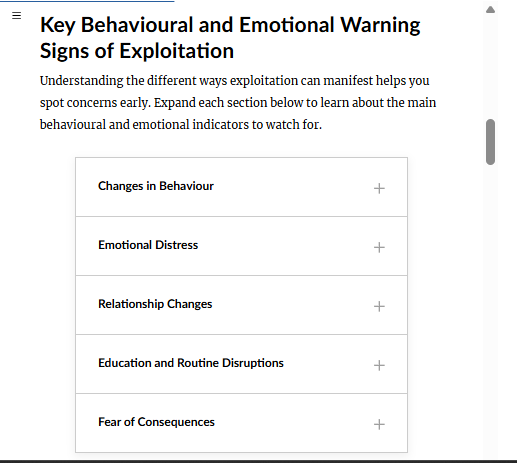
The course progresses to Recognising the Signs of Exploitation, helping learners understand potential behavioural, emotional and environmental indicators, including unexplained possessions, changes in behaviour, missing episodes and concerning relationships.
You will also examine County Lines, Cuckooing and Associated Risks, exploring how offenders may take control of a vulnerable person’s home or property for criminal purposes and the risks this creates for victims, families and communities.
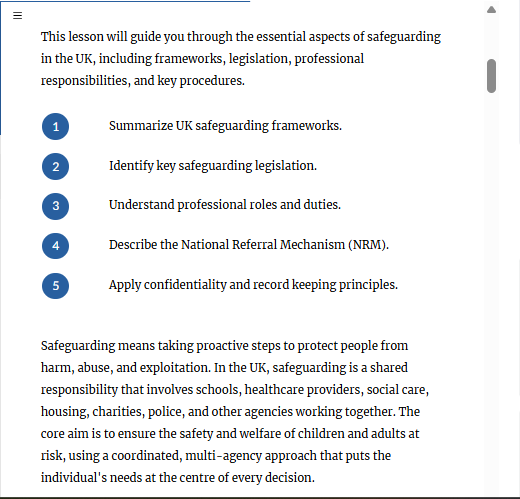
The course then introduces Safeguarding and Legal Responsibilities, explaining the importance of safeguarding procedures, professional responsibilities, appropriate information sharing and the legal context surrounding exploitation.
In Responding to Concerns and Disclosures, learners explore how to respond appropriately when exploitation is suspected or disclosed, including listening carefully, recording factual information and following established reporting procedures.
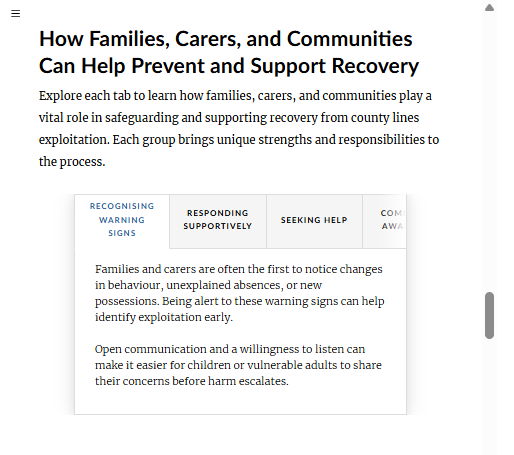
Finally, Prevention, Intervention and Recovery examines approaches to reducing exploitation risks, supporting affected individuals, encouraging early intervention and understanding the importance of coordinated support during recovery.
Course Curriculum
Module 01: Introduction to County Lines
Understand the meaning of county lines, the role of organised criminal networks, how county lines operations may function and why this issue is a significant safeguarding concern.
Module 02: Child Criminal Exploitation and Vulnerability
Explore child criminal exploitation, common vulnerability factors and the methods offenders may use to build trust, manipulate individuals and involve children in criminal activities.
Module 03: Recognising the Signs of Exploitation
Identify potential indicators of exploitation, including changes in behaviour, unexplained money or possessions, missing episodes, concerning associations, emotional distress and signs of coercion.
Module 04: County Lines, Cuckooing and Associated Risks
Understand the connection between county lines and cuckooing, where offenders exploit a person’s home or property for criminal purposes. Explore the potential risks to victims, neighbours, families and the wider community.
Module 05: Safeguarding and Legal Responsibilities
Explore safeguarding principles, relevant legal responsibilities, professional boundaries, confidentiality, appropriate information sharing and the importance of following organisational safeguarding policies.
Module 06: Responding to Concerns and Disclosures
Learn how to respond appropriately to suspected exploitation or disclosures, including listening without judgement, avoiding promises of absolute confidentiality, recording factual information and reporting concerns through appropriate safeguarding channels.
Module 07: Prevention, Intervention and Recovery
Explore ways to raise awareness, reduce vulnerability, support early intervention and understand the recovery process. Recognise the importance of multi-agency cooperation and ongoing, victim-centred support.
Learning Outcomes
After completing this course, learners should be able to:
- Explain the meaning of county lines and describe how criminal networks may operate.
- Understand child criminal exploitation and identify factors that may increase vulnerability.
- Recognise common signs and indicators of exploitation.
- Explain the meaning of cuckooing and identify associated safeguarding risks.
- Understand key safeguarding principles and relevant legal responsibilities.
- Recognise the importance of professional boundaries and appropriate information sharing.
- Describe how to respond appropriately to safeguarding concerns and disclosures.
- Understand the importance of accurate, factual recording and timely reporting.
- Identify approaches to prevention, early intervention and recovery support.
- Recognise the value of coordinated safeguarding support for children and vulnerable adults.
Why Choose This Course?
- Structured seven-module curriculum covering essential aspects of county lines awareness.
- Beginner-friendly learning that explains exploitation and safeguarding concepts clearly.
- Improved awareness of child criminal exploitation, vulnerability and grooming.
- Guidance on recognising warning signs and understanding cuckooing-related risks.
- Foundational knowledge of safeguarding responsibilities and appropriate responses.
- Flexible online study, allowing learners to progress at their own pace.
- Online assessment to help learners review their understanding.
- Accessible learning through a computer, tablet or smartphone with an internet connection.
- Relevant introductory training for individuals interested in safeguarding, education, social care and community support.
Certificate of Achievement
Upon successful completion of the course and assessment, learners can obtain the relevant certificate available with the course.
If this course is being submitted or approved under your CPD Quality Standards provision, you can use your standard CPD certificate wording here once accreditation has been confirmed.
I would not copy the existing “CPD-accredited” claim into the new page until this particular new course has the appropriate approval, even if its source modules came from an accredited course.
Order Your Certificate
To order your CPD Quality Standard Certificate, please visit the following link:
Who Is This Course For?​
This course may be suitable for:
- People exploring plumbing as a possible career direction.
- Beginners seeking an introduction to plumbing systems.
- Property maintenance and facilities staff.
- Caretakers and building-support workers.
- Landlords and property professionals wanting greater technical awareness.
- DIY learners interested in understanding how domestic plumbing systems function.
- Learners considering more advanced plumbing or building-services training.
Requirements​
There are no formal academic entry requirements for this introductory course.
Learners should have:
- Basic English reading and comprehension skills.
- An interest in safeguarding, child protection or community safety.
- A willingness to learn about exploitation, vulnerability and prevention.
- Access to an internet-connected computer, tablet or smartphone.
- An understanding that awareness-level learning does not replace role-specific safeguarding training or professional guidance.
Career and Further-Learning Path
This course provides foundational knowledge of county lines exploitation and safeguarding rather than a professional qualification. It can help learners strengthen their awareness of exploitation risks and explore relevant areas for further education or professional development.
Relevant areas learners may explore include:
- Safeguarding and child protection.
- Child criminal exploitation awareness.
- Youth work and youth support services.
- Health and social care.
- Community safety and outreach support.
- Education and pastoral support.
- Modern slavery and human trafficking awareness.
- Trauma-informed practice.
- Safeguarding vulnerable adults.
- Further vocational training in social care and safeguarding.
Completing this online course does not, by itself, qualify someone to work as a safeguarding specialist or undertake statutory safeguarding responsibilities. Additional training, practical experience and relevant qualifications may be required depending on the role and responsibilities involved.
Frequently Asked Questions About the County Lines Awareness
The County Lines Awareness course is an online training course designed to help learners understand county lines exploitation in the UK. It covers child criminal exploitation, vulnerability, warning signs, cuckooing, safeguarding responsibilities and prevention strategies.
This course is suitable for beginners, teachers, youth workers, social care staff, support workers, community professionals, parents, carers and anyone interested in understanding exploitation and safeguarding.
Yes. The course is designed for online learning, allowing you to study at your own pace using a computer, tablet or smartphone with internet access. This flexibility makes it easier to learn around work and other commitments.
No previous safeguarding experience is generally required for this introductory course. It is designed to help learners develop foundational knowledge of county lines exploitation and safeguarding principles.
You will learn about county lines, child criminal exploitation, vulnerability, recognising signs of exploitation, cuckooing and associated risks, safeguarding and legal responsibilities, responding to concerns and disclosures, and prevention, intervention and recovery.
Possible warning signs include unexplained money or possessions, frequent missing episodes, sudden behavioural changes, concerning relationships, unexplained travel and signs of fear or intimidation. These indicators do not automatically confirm exploitation but may require appropriate safeguarding attention.
Cuckooing occurs when criminals take over or use another person’s home for criminal purposes, often involving drug-related activity. It can expose vulnerable individuals, their families and the wider community to significant risks.
Certificate availability depends on the course provider’s arrangements. Please refer to the course page for details of the certificate offered after successful completion of the course assessment.
This course can help you develop foundational knowledge relevant to safeguarding, youth support, education, community outreach and health and social care. However, it does not replace specialist training, practical experience or professional qualifications required for particular roles.
Course Curriculum
| County Lines Awareness | |||
| Module 01: Introduction to County Lines | 00:20:00 | ||
| Module 02: Child Criminal Exploitation and Vulnerability | 00:17:00 | ||
| Module 03: Recognising the Signs of Exploitation | 00:20:00 | ||
| Module 04: County Lines, Cuckooing and Associated Risks | 00:20:00 | ||
| Module 05: Safeguarding and Legal Responsibilities | 00:00:00 | ||
| Module 06: Responding to Concerns and Disclosures | 00:24:00 | ||
| Module 07: Prevention, Intervention and Recovery | 00:20:00 | ||
Related Courses
Vulnerability, Abuse & Safeguarding
Artificial Intelligence Basics
Energy Engineer Course