




Food Allergy Awareness Course - Highlights
- 4.7/5
- Based on 34 enrolled learner reviews
Food Allergy Awareness Training Online Course
Learn to recognise food allergy risks, common symptoms and UK allergen responsibilities. This beginner-friendly Food Allergy Awareness Training includes six self-paced, instructor-taught video modules, lifetime access and a CPD Certificate. Build practical knowledge to support safer food handling and better customer care.
Food allergies can cause reactions ranging from mild symptoms to serious, potentially life-threatening anaphylaxis. Moreover, food allergy is different from food intolerance: an allergy involves an immune-system response, while food intolerance does not.
This Food Allergy Awareness Training introduces those differences before moving into allergen causes, symptoms, consumer protection, legislation, risk management and food storage.
The subject is particularly relevant in food businesses. The Food Standards Agency states that businesses must ensure staff receive training on allergens. In addition, food businesses need to provide information when any of the 14 regulated allergens are used as ingredients.
Therefore, the course is designed to help you build stronger awareness of the risks behind everyday food-handling decisions.
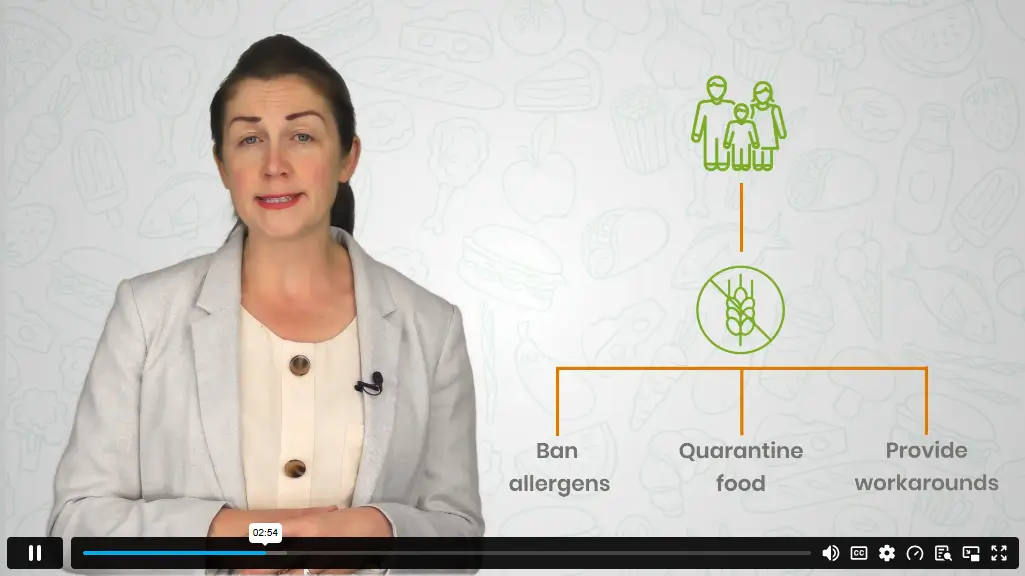
Exclusive Course Glimpse
What You Will Learn
By completing the food allergy awareness course, you should be able to:
- Explain the basic principles of food allergies and how they differ from other food reactions.
- Identify common causes and symptoms associated with food allergies.
- Recognise important food allergens and explain why accurate allergen information matters.
- Explain core UK responsibilities relating to food allergens and consumer information.
- Apply practical precautions that can help reduce avoidable allergen exposure.
- Assess common risks associated with food handling and storage.
- Support more allergy-aware communication and working practices.
What Makes This Course Different?
Rather than treating allergen awareness as a single labelling issue, this course follows the subject from recognition through to practical risk reduction.
- Six focused modules move from allergy fundamentals into legislation, consumer protection and risk management.
- Instructor-taught video gives learners guided explanations while retaining self-paced flexibility.
- Practical precautions are connected with food handling, storage and consumer safety.
- A dedicated legislation module helps learners understand why allergen information is a workplace responsibility.
- Lifetime access allows important concepts to be revisited when responsibilities or workplace situations change.
Therefore, the course is particularly useful for learners who need both awareness and practical context rather than isolated definitions.
Who Is This Course For?
This online allergen awareness training is most relevant to:
- Food handlers and kitchen staff who prepare, handle or store ingredients.
- Restaurant, café and hospitality employees who may receive customer questions about allergens.
- Food retail workers involved in packaged, prepared or served food.
- Supervisors and managers who want stronger awareness of allergen-related workplace risks.
- Catering teams working in commercial, care or educational environments.
- Beginners entering food-related employment who want a foundation in food allergy awareness.
The course supports knowledge development; however, individual workplaces may require additional role-specific training.
Course Curriculum
Build your foundation by examining what food allergies are and why certain foods can trigger reactions. You will develop the terminology needed to approach later topics involving symptoms, allergens and consumer protection.
Explore the causes and possible signs associated with food allergies in greater depth. This module helps you recognise why reactions can differ and why allergy information must be taken seriously.
Learn key facts about food allergens alongside the legal principles affecting allergen information. Consequently, you will gain clearer context for the responsibilities faced by people and organisations providing food.
Examine precautions that can support safer food handling and better consumer protection. The focus moves from knowing about allergens to considering how everyday practices can reduce avoidable risks.
Consider allergen-related risks during food handling and storage. You will explore how organised working practices can support safer environments and reduce opportunities for unintended exposure.
Bring the course together by considering how greater awareness supports individuals affected by food allergies. The module reinforces responsible communication and a more informed approach to allergy-related concerns.
How You Will Learn
The course is delivered online through self-paced, instructor-taught video lessons. Therefore, you can progress through the six modules according to your own schedule rather than attending fixed classroom sessions.
Lifetime access also means you can return to relevant material when you need to refresh your knowledge.
The learning sequence starts with food-allergy fundamentals and then develops towards legislation, precautions, risk management and support. As a result, beginners can build knowledge progressively instead of being introduced immediately to isolated legal terminology.
Certificate and Recognition
The course is supplied as CPD-accredited training and includes a CPD Certificate.
The certificate can provide evidence that you have completed professional-development training in food allergy awareness.
Career Relevance and Professional Application
Food allergy awareness can support people working across catering, hospitality, food retail and other environments where food is prepared, handled, stored or served.
The knowledge may be particularly useful for:
- kitchen assistants and food handlers;
- catering assistants;
- restaurant and café employees;
- front-of-house hospitality staff;
- food retail employees;
- catering supervisors and team leaders.
For experienced workers, the training can also complement broader food hygiene or HACCP development.
Entry Requirements
No previous food-allergy qualification or professional experience is required, making the course suitable for beginners.
To study effectively, you should have:
- Basic written and spoken English;
- Access to a computer, tablet or smartphone;
- A reliable internet connection;
- An interest in food safety, hospitality, catering or consumer protection.
Why Study Food Allergy Awareness with NextGen Learning?
This course combines structured instructor video with flexible online study. Therefore, you can develop relevant allergen awareness without committing to fixed training sessions.
You will receive:
- six focused food allergy awareness modules;
- self-paced online instructor teaching;
- lifetime access to the course;
- CPD-accredited training;
- a CPD Certificate;
- beginner-friendly learning;
- online access for £49.
Most importantly, the content links allergy knowledge with practical issues such as consumer protection, storage and risk management rather than treating allergens as a list to memorise.
Order Your Certificate
To order your Certificate, we kindly invite you to visit the following link
Frequently Asked Questions
Food Allergy Awareness Training teaches you about food allergies, their causes and symptoms, important allergens, relevant legal responsibilities and practical ways to reduce risks. This course also covers consumer protection, food storage and allergy-aware support through six online modules.
Food businesses must ensure their staff receive appropriate allergen training. The Food Standards Agency specifically states that businesses must make sure staff receive training on allergens and understand procedures for handling allergen information. However, the exact training needed depends on the employee’s duties and workplace.
UK allergen rules cover celery, cereals containing gluten, crustaceans, eggs, fish, lupin, milk, molluscs, mustard, peanuts, sesame, soya, sulphur dioxide/sulphites above the specified threshold and tree nuts. Businesses must provide allergen information when these are ingredients in the food they provide.
Yes. Module 03 is specifically titled Allergen Facts and Legislation. Current course materials should remain aligned with applicable UK requirements. For example, PPDS rules commonly known as Natasha’s Law require qualifying food to show its name, a full ingredients list and emphasised allergenic ingredients.
Yes. The course has a beginner entry level and does not require previous food-allergy training. The modules start by explaining food allergies before progressing into symptoms, legal awareness, practical precautions, risk management and consumer support.
You receive lifetime access, allowing you to study at your own pace and return to the lessons later. The exact guided learning duration has not yet been verified, so a specific completion time should not be published until NextGen confirms it.
Build Practical Food Allergy Awareness
Choose this course if you handle, serve, store or work around food and want a clearer understanding of allergy risks, consumer protection and responsible allergen practices.
Study through flexible instructor video, revisit the material whenever needed and document your professional development with a CPD Certificate.
Enrol today and start your Food Allergy Awareness Training online course.
Course Curriculum
| Module 01: Understanding Food Allergies | |||
| Understanding Food Allergies | 00:10:00 | ||
| Module 02: More Causes and Symptoms of Food Allergies | |||
| More Causes and Symptoms of Food Allergies | 00:10:00 | ||
| Module 03: Allergen Facts and Legislation | |||
| Allergen Facts and Legislation | 00:10:00 | ||
| Module 04: Practical Precautions and Consumer Protection | |||
| Practical Precautions and Consumer Protection | 00:12:00 | ||
| Module 05: Managing Risks and Storing Food | |||
| Managing Risks and Storing Food | 00:11:00 | ||
| Module 06: Allergy Awareness and Support | |||
| Allergy Awareness and Support | 00:11:00 | ||
| Order Your Certificate | |||
| Order Your Certificate | 00:00:00 | ||
Related Courses

CBT Tools and Strategies
Diet and Nutrition Diploma
Child Counselling & Development