



Popular Courses

Brand
Awarding body image

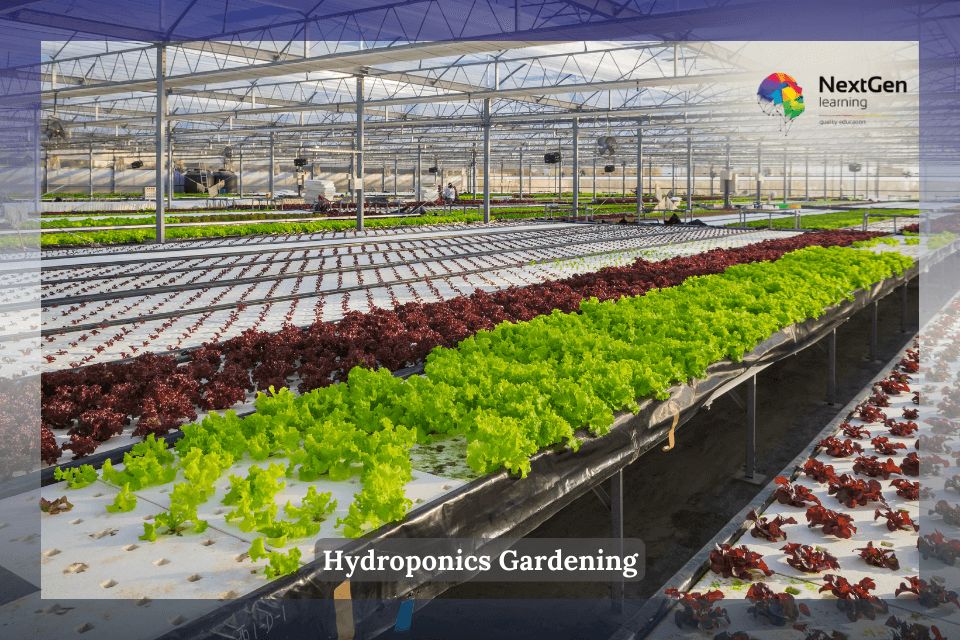
Overview Of Hydroponics Gardening Course

UK interest in soilless growing keeps climbing thanks to food-price pressure and urban living. Industry trackers report the United Kingdom hydroponics market at roughly $226m in 2024 with continued growth through 2030, while analysts project the home hydroponics segment to grow near 16% CAGR to 2030, reflecting intense hobbyist and small-scale demand. At the global level, forecasts show multi-billion-dollar expansion over the next decade, driven by water efficiency, year-round harvests, and compact indoor systems.

This practical hydroponics course turns that demand into hands-on skills. Across concise modules, you’ll set up systems, choose media, balance nutrients, solve deficiencies, and scale into greenhouse contexts. If you want structured, beginner-friendly hydroponics training that gets you growing quickly—and safely—this is your roadmap from first seed to consistent harvests.

By the end of this course, you’ll know how to:

  • Select and assemble the right system (NFT, DWC, drip, ebb & flow) for your space in a hydroponics course context.

  • Mix, monitor, and adjust nutrient solutions (EC/ppm, pH, buffers) during your hydroponics training.

  • Choose rooting media (coco, perlite, rockwool, clay pebbles) and manage transplant shock.

  • Diagnose and fix common problems (lockout, tip-burn, chlorosis, algae, root rot).

  • Plan greenhouse workflows—lighting, ventilation, IPM—for reliable year-round yields.

Course Features:

  • Step-by-step videos, checklists, and printable recipes—ideal for hydroponic gardening starters.

  • Mock exam + final exam to validate your hydroponics training.

  • Tutor Q&A support and lifetime access.

  • Mobile-friendly player; learn anywhere.

  • CPD-ready completion certificate.

Description of Hydroponics Gardening Course

Hydroponics lets you grow high-yield crops with less water and no soil. As a result, it works well on balconies, in sheds, or inside greenhouses. In this hydroponics course, you start with the core ideas: roots, oxygen, and dissolved solids. Then, you move through system types, nutrient basics, and simple media choices. Along the way, you learn to read meters, mix stock solutions, and record each change.

In addition, your hydroponics training covers easy care routines, seedling steps, and common fixes. For example, you practise how to spot issues early and how to adjust pH or EC. After that, you see how to link your small setup to a greenhouse plan. Meanwhile, we stress safe handling, good hygiene, and clear notes. Because demand is rising, shops now stock more kits and nutrients. So, this is a great time to master hydroponic gardening.

Curriculum Overview :

  • Module 1: Introduction to Hydroponics (18m) — fundamentals, benefits, and safety; then a quick map of the hydroponics course.

  • Module 2: Systems of Hydroponic Culture (28m) — DWC, NFT, drip, and ebb & flow. After that, compare pros and cons and choose a system for your space (core hydroponics training).

  • Module 3: Plant Nutrition (30m) — N-P-K and micronutrients. Next, set EC/ppm targets, control pH, and mix stock solutions.

  • Module 4: Equipment (55m) — pumps, air stones, timers, bare LED, and meters. Finally, use a build checklist for hydroponic gardening rigs and sanitation.

  • Module 5: Rooting Media (16m) — rockwool, clay pebbles, and coco/perlite. Also, learn wicking, aeration, and pre-soak steps.

  • Module 6: Seedling & Plant Maintenance (28m) — germination, hardening, and transplanting. Then, prune plants and follow a weekly reservoir care SOP (hydroponics training).

  • Module 7: Nutritional Problems & Solutions (52m) — spot deficiency patterns. Moreover, tell lockout from shortage, control algae, and apply a root-health plan.

  • Module 8: Growing in Greenhouses (44m) — climate control, shading, and IPM. Finally, plan the seasons for a reliable hydroponics course outcome.

  • Mock Exam (20m) — knowledge check with instant feedback.

  • Final Examthereafter, complete your certification assessment.

Why Choose Us?​

Certificate of Achievement

Upon successful completion of this course, learners will receive a CPD-certified PDF certificate for £9.99 or a hard copy for £14.99.

Who Is This Hydroponics Gardening Course For ?

  • Beginners who want a guided hydroponics course with real results.

  • Balcony/indoor growers upgrading from soil to hydroponic gardening.

  • Educators and community gardens need safe, scalable setups.

  • Hobbyists exploring LEDs, nutrients, and greenhouse workflows.
    No prior knowledge is required.Hydroponicss course – CPD accredited online

Hydroponics Gardening course

Requirements of Hydroponics Gardening Course

  • A small, ventilated space with access to power and water.

  • Basic kit: reservoir/tote, pump, air stone, timer, pH and EC meters (recommended).

  • Willingness to maintain logs and follow hygiene SOPs during hydroponics training.

  • Internet access for lessons, mock, and final exams.

Career Path​

  • Home grower → Community garden facilitator.

  • Hobbyist → Micro-greens / salad-leaf seller (local markets).

  • School/college assistant → STEM & sustainability demonstrator.

  • Garden centre staff → In-store hydroponics advisor.

  • Next steps → Controlled-environment agriculture, vertical farming, greenhouse tech.

Order Your Certificate

To order CPD Quality Standard Certificate, we kindly invite you to visit the following link:

FAQs -

This course is ideal for aspiring “agripreneurs,” urban farmers, and anyone interested in starting a commercial venture selling hydroponic produce or systems online. It is suitable for both beginners and those with some prior experience. 

No prior experience is required. The course is structured to cover the basics of hydroponics as well as the essentials of marketing and selling online. 

How to Start a Hydroponics System: 7 Steps
  • Buy or Build a Hydroponics System. …
  • Choose a Growing Medium. …
  • Setup a Water Irrigation System. …
  • Install a Grow Light System. …
  • Give Your Plants the Nutrient Solution They Need. …
  • Prepare for Propagation. …
  • Choose the Right Harvest Tools and Supplies.

This course provides a basic overview of the concept of hydroponics—the production of plants in water, without soil. We will cover four standard systems used to pursue hydroponic production: Deep water culture. Nutrient film technique.

Course Curriculum

Hydroponics Gardening
Module 1: Introduction to Hydroponics 00:18:00
Module 2: Systems of hydroponic culture 00:28:00
Module 3: Plant Nutrition 00:30:00
Module 4: Equipment 00:55:00
Module 5: Rooting media 00:16:00
Module 6: Seedling and Plant Maintenance 00:28:00
Module 7: Nutritional Problems and Solutions in Plant 00:52:00
Module 8: Growing in Greenhouses 00:44:00
Mock
Mock Exam – Hydroponics Gardening 00:20:00
Final
Final Exam – Hydroponics Gardening 00:20:00
Order Your Certificate
Order Your Certificate 00:00:00

Related Courses

A product of

© 2026 NextGen Learning. All rights reserved

Home Search Cart Offers
Select your currency
GBP Pound sterling