

Popular Courses

Brand
Awarding body image

Instrumentation Training Including PID Control – Online Course UK

Overview of Instrumentation Training Including PID Control | CPD Accredited Course

Are you looking to build practical skills in instrumentation training including PID control and understand how modern industrial systems operate? Then, this instrumentation training course is designed to help you develop strong knowledge in process control systems, industrial instrumentation, and automation systems used across engineering industries. As industries increasingly rely on automation and data-driven operations, reports show that industrial automation adoption has grown significantly in the UK manufacturing sector. Therefore, learning PID control and instrumentation is becoming an essential skill for engineers and technicians.

Moreover, this PID control course provides a structured pathway to understand sensors, calibration, and industrial measurement techniques such as pressure measurement, temperature measurement, flow measurement, and level measurement. In addition, you will explore how control loops and feedback systems maintain system stability and efficiency. As a result, learners can confidently understand real-world applications in process industries, including oil and gas, manufacturing, and energy sectors.

Furthermore, this industrial instrumentation course focuses on practical understanding rather than theory alone. You will learn PID controller tuning, fault diagnosis, and process monitoring systems step by step. Consequently, this helps you build job-ready skills in automation and control engineering while improving your ability to work with real industrial systems. Ultimately, this course supports both career growth and technical confidence in instrumentation and process control.

Exclusive Course Glimpse

What You Will Learn in Instrumentation Training Including PID Control

This instrumentation and control course is designed to develop real-world engineering skills step by step. Initially, it builds your foundation in industrial instrumentation, and then it gradually introduces advanced PID control systems and automation techniques. As a result, you can learn clearly and confidently, even if you are new to process control.

By the end of this course, you will be able to:
Understand instrumentation fundamentals: Learn how industrial instrumentation and control systems work
Apply measurement techniques: Use pressure, temperature, flow, and level measurement methods effectively
Interpret P&ID diagrams: Read process and instrumentation diagrams with confidence
Work with sensors and transmitters: Understand calibration and industrial sensor operations
Master PID control systems: Learn proportional integral derivative control principles
Tune PID controllers: Apply PID tuning methods for stable system performance
Analyse control loops: Understand feedback control systems and automation processes
Diagnose system faults: Identify and troubleshoot instrumentation issues effectively

In addition, you will develop a strong understanding of process control systems and industrial automation workflows. Furthermore, you will learn how to combine instrumentation techniques with PID control strategies for better decision-making. Therefore, you will gain the confidence to handle real industrial control systems effectively.

Ultimately, this course equips you with practical knowledge and technical skills required in instrumentation engineering, automation systems, and process control careers.

Why Choose Us?​

Many learners search for the best instrumentation training course in the UK, but not all provide practical and industry-relevant learning. Therefore, this course is designed to simplify complex automation and control systems while maintaining real-world application.

In addition, this course offers key benefits:

  • Affordable Learning: Structured lessons for smooth progress
  • CPD-Certified: Strengthen your CV with recognised credentials
  • Lifetime Access: Learn anytime at your own pace
  • Instant Certificate: Receive certification upon completion
  • Flexible Scheduling: Study around your work or studies
  • Transparent Pricing: No hidden costs
  • Quick Assessments: Monitor your progress easily
  • 24/7 Support: Assistance via chat or email

Thus, this online instrumentation training UK supports both learning and career growth.

Course Curriculum

Instrumentation Training Including PID Control Course

Introduction – Overview of instrumentation training, process control basics, and automation systems

Pressure Measurement – Learn industrial pressure measurement techniques and applications

Level Measurement – Understand level measurement methods used in industrial processes

Temperature Measurement – Explore temperature sensors and measurement systems

Flow Measurement – Study flow measurement techniques including differential pressure and advanced methods

PID Control Explained – Understand PID control systems, feedback loops, and controller tuning methods

Assignment – Complete assessment to validate your instrumentation knowledge

Certificate of Achievement

After completing this instrumentation training course online UK, you will receive a CPD-accredited certificate to confirm your learning professionally.

You can typically choose:

  • PDF Certificate 
  • Hardcopy Certificate 

Moreover, certification helps learners:
📄 Strengthen your CV: Add a recognised instrumentation certification
🎓 Demonstrate skills: Showcase your process control and automation abilities
📈 Boost employability: Stand out in engineering and technical roles
Prove learning: Validate your professional development

Therefore, if you are looking for a certified PID control course in the UK, this is a strong choice.

Who Is This Course For?​

This instrumentation training including PID control course is suitable for anyone interested in industrial automation and process control systems. Moreover, it is designed for both beginners and professionals who want to upgrade their technical skills in a structured way. As industries continue to automate operations, understanding instrumentation and PID control becomes increasingly important. Therefore, this course provides both foundational knowledge and practical insights.

In addition, this course is ideal for:
Beginners: Start learning instrumentation and process control from scratch
Engineering students: Build strong technical foundations for future careers
Technicians: Improve instrumentation and control system skills
Maintenance professionals: Learn fault diagnosis and calibration techniques
Automation learners: Understand industrial automation systems clearly
Career changers: Enter engineering and technical roles confidently

Furthermore, the course is flexible and easy to follow, so learners can study at their own pace. As a result, you can balance your learning with work or other commitments easily.

So, even if you have no prior experience, you can start this instrumentation course online UK and gradually build job-ready skills.

Requirements​

There are no formal requirements for this instrumentation training course in the UK. However, learners should have:
Basic English skills: To understand course materials
Device access: Computer, tablet, or smartphone
Internet connection: For online learning

Because this course is fully online, you can learn at your own pace. Therefore, you can revisit lessons anytime and strengthen your knowledge gradually.

Career Path of Instrumentation Training Including PID Control

Completing this instrumentation training course UK can open doors to a wide range of engineering and automation careers. Moreover, with industrial automation expanding rapidly, these roles are gaining importance across multiple sectors. As a result, developing instrumentation and PID control skills can greatly enhance your career prospects and long-term growth.

Common career paths include:
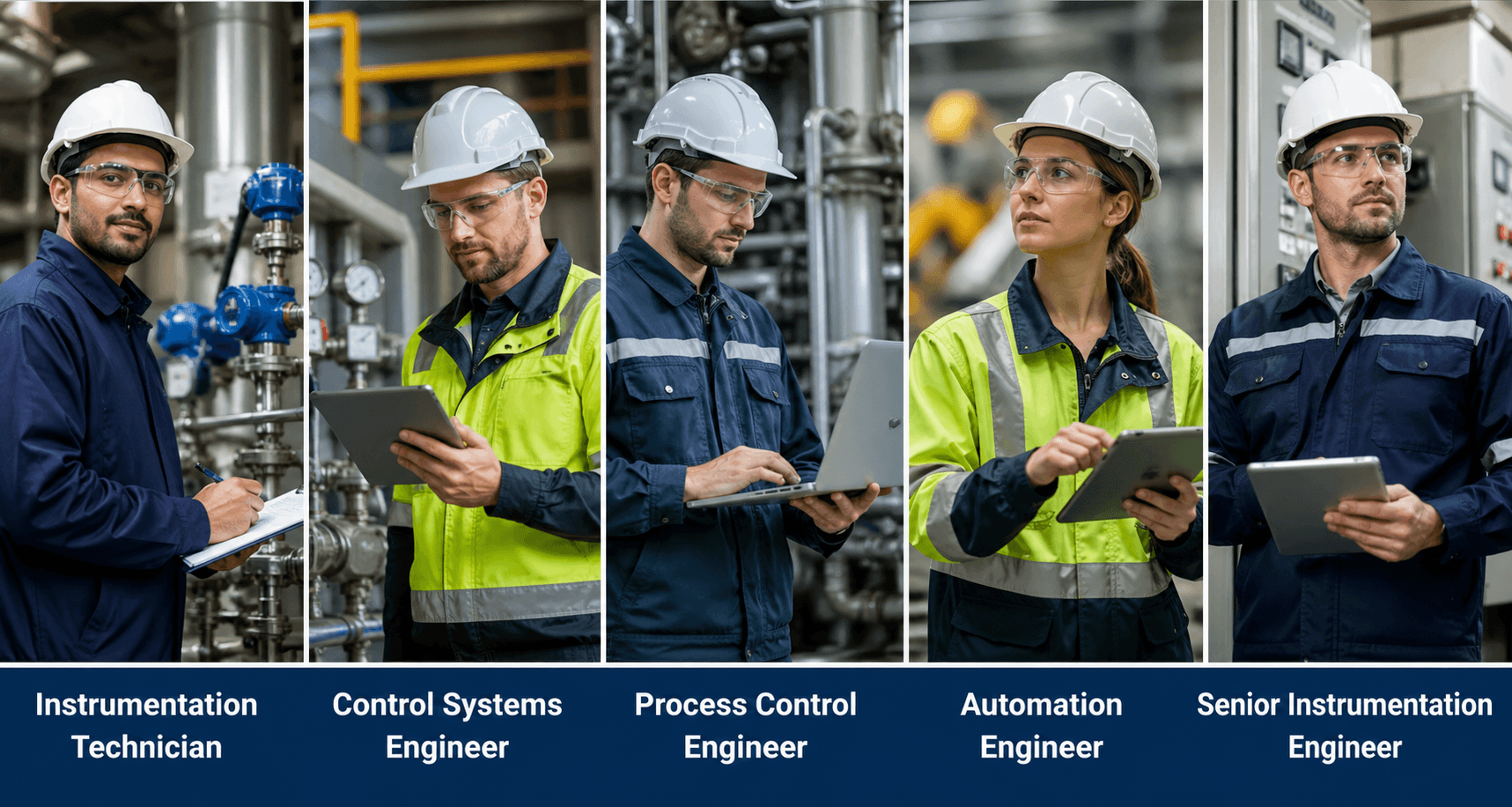
Instrumentation Technician: £28,000 to £42,000
Work with industrial instruments by performing calibration and ensuring accurate system performance

Control Systems Engineer: £35,000 to £55,000
Focus on designing automation systems while managing control processes effectively

Process Control Engineer: £40,000 to £65,000
Improve industrial efficiency by optimising processes using advanced control strategies

Automation Engineer: £38,000 to £60,000
Build and implement automated solutions to enhance productivity and reduce manual effort

Maintenance Engineer (Instrumentation): £28,000 to £45,000
Ensure system reliability by handling maintenance, diagnostics, and troubleshooting tasks

Senior Instrumentation Engineer: £55,000 to £85,000
Take responsibility for leading projects and managing complex instrumentation systems

However, salary levels can vary based on experience, industry sector, and geographical location.

Order Your Certificate

To order your Certificate, we kindly invite you to visit the following link

FAQs About Instrumentation Training Including PID Control

Instrumentation training including PID control teaches how industrial measurement systems and control loops work together. It focuses on sensors, calibration, and PID controller tuning for automation systems. As a result, learners understand how to maintain stable and efficient processes. This knowledge is widely used in engineering and manufacturing industries.

Yes, PID control is essential in process control systems because it helps maintain stability and accuracy. It continuously adjusts system output using feedback loops. Therefore, industries rely on PID controllers for efficient operations. Learning PID control improves your technical and engineering skills.

Yes, beginners can learn instrumentation training online because the course starts with basic concepts. It gradually introduces advanced topics like control loops and PID tuning. Moreover, structured lessons make it easy to follow. As a result, no prior experience is required to begin.

After completing an instrumentation course UK, you can apply for roles like instrumentation technician or control systems engineer. These roles are in demand across industries such as manufacturing and energy. Additionally, automation engineers are also highly sought after. Therefore, this course improves your employability.

Learning PID control basics can take a few hours, depending on your pace. However, mastering PID tuning methods requires practice and real-world understanding. This course provides structured lessons to speed up learning. As a result, you can build skills efficiently.

Course Curriculum

Unit 01: Introduction
Introduction 00:05:00
Unit 02: Pressure Measurement
Pressure Measurement Explained. 00:15:00
Unit 03: Level Measurement for Industrial Applications
Level Measurement for Industry, Lesson One. 00:07:00
Level Measurement for Industry, Lesson Two. 00:17:00
Unit 04: Temperature Measurement
Temperature Measurement. Lesson One. 00:19:00
Temperature Measurement. Lesson Two. 00:12:00
Unit 05: Flow Measurement
Flow Measurement. Lesson One. Types of Flow, Terminology. 00:12:00
Flow Measurement. Lesson Two. Differential Pressure Flow Measurement. 00:15:00
Flow Measurement. Lesson Three. Venturi Tube, Pitot tube and Annubar. 00:10:00
Flow Measurement. Open Channel, Rotameters, Vortex Shedding Meters. 00:16:00
Flow Measurement. Turbine, Positive Displacement, Mag flow. Ultra-sonic Flow. 00:19:00
Unit 06: PID Control Explained
PID control. An explanation of the different types of control and tuning methods 00:18:00
Closed Loop Tuning While in Auto. 00:04:00
Open Loop Tuning While in Manual. 00:05:00

Related Courses

No course found

A product of

© 2026 NextGen Learning. All rights reserved

Select your currency
GBP Pound sterling