Popular Courses

Brand
Awarding body image

Overview​ Of Pandemic Disease Awareness Course

In today’s connected world, pandemic awareness is an essential area of knowledge, not a specialist subject. However, many people still find it difficult to understand how pandemics develop, how infectious diseases spread, and how effective responses are planned. This is not due to a lack of interest or ability. Instead, it is often caused by unclear information, mixed messages, and a lack of structured learning. As a result, people may feel unsure when following public health advice or workplace infection control measures.

Without a clear foundation in pandemic awareness and infection prevention, individuals may rely on news headlines, assumptions, or incomplete guidance. Consequently, this can lead to confusion, delayed action, or poor decisions during health emergencies. Over time, this uncertainty may affect confidence, workplace performance, and everyday behaviour. Therefore, gaining informed knowledge through an infection control course is increasingly important for both personal understanding and professional responsibility.

To address this need, the Pandemic Disease Awareness course offers a clear and accessible learning pathway. Rather than focusing on isolated facts, the course explains how pandemics begin, how risks increase, and how prevention and preparedness reduce harm. In addition, it links historical outbreaks with modern public health responses. As a result, learners develop practical awareness that supports clear thinking, responsible actions, and confident decision-making in both daily life and the workplace.

How This Course Helps You Build Awareness and Understanding

  • Develop a clear understanding of pandemic awareness and global health risks
  • Understand how infectious diseases spread and escalate
  • Learn core infection control and prevention principles
  • Explore pandemic preparedness, mitigation, and response strategies
  • Analyse historical pandemic outbreaks and the lessons they provide

The Outcomes You Can Expect

By completing this course, you will develop structured pandemic awareness supported by practical understanding. As a result, you will feel more confident interpreting health guidance and infection control measures. Consequently, you will be better prepared to respond responsibly in both professional and everyday situations. Overall, this knowledge supports clearer judgement and informed action.

Exclusive Course Glimpse/ Exclusive Sneak Peek

What You Will Learn

This course strengthens pandemic awareness through clear explanations, real-world examples, and structured learning. Throughout the infection control course, learners gain insight into how pandemics affect individuals, organisations, and wider society. In addition, the content is designed to build understanding progressively rather than presenting isolated facts.

By completing this course, you will learn how to:

  • First, understand the difference between pandemics and epidemics
  • Next, recognise how infectious diseases spread across populations
  • Then, identify why early awareness and timely response are critical
  • Additionally, understand core infection control and disease prevention measures
  • Moreover, learn how preparedness and mitigation reduce pandemic impact
  • Furthermore, explore coordinated responses at organisational and global levels
  • As a result, analyse historical pandemics to identify recurring risk patterns
  • Ultimately, develop informed awareness to respond calmly and responsibly during outbreaks

Course Curriculum

  • Introduction to Pandemics

This module introduces the concept of pandemics and explains how they differ from epidemics. It establishes foundational pandemic awareness by defining key terms and outlining global health challenges.

  • Mild Threats to Human Beings

Learners explore how mild or localised health threats can escalate into larger outbreaks. Therefore, this module highlights the importance of early awareness and prevention.

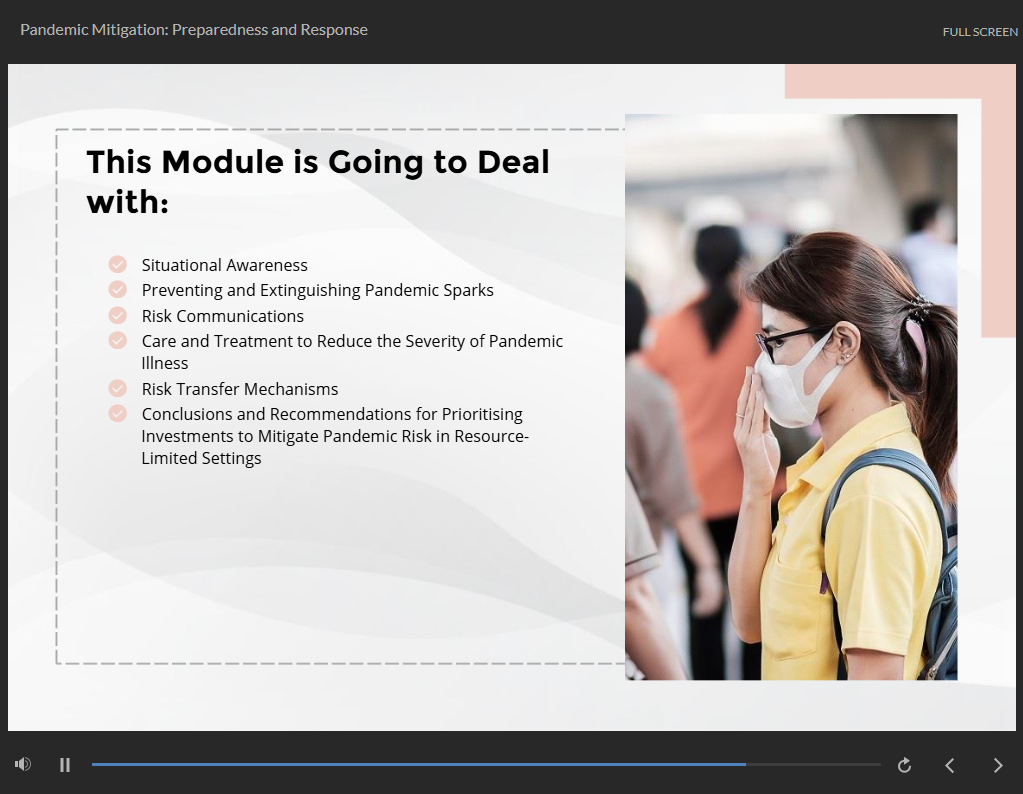
  • Pandemic Mitigation, Preparedness, and Response

This section explains how pandemics are managed through planning, prevention, and response strategies. Consequently, learners understand why preparedness reduces health and social impact.

  • Pandemic Outbreaks from History: Ebola Virus

This module examines Ebola outbreaks to show how rapid transmission challenges healthcare systems. Moreover, it highlights lessons in infection control and global response.

  • Pandemic Outbreaks from History: Influenza

Learners study influenza pandemics to understand mutation, spread, and long-term impact. As a result, awareness of recurring pandemic risks is strengthened.

  • Pandemic Outbreaks from History: Nipah Virus

This module focuses on zoonotic transmission and regional risk factors. Therefore, learners gain insight into early detection and monitoring.

  • Pandemic Outbreaks from History: Plague

Historical plague outbreaks are explored to demonstrate how pandemics shape societies and public health systems over time.

  • Pandemic Outbreaks from History: Smallpox

Learners examine smallpox as a successful example of global disease eradication. Consequently, the value of coordinated infection control becomes clear.

  • Pandemic Outbreaks from History: Viral Meningitis

This section explains transmission patterns and prevention strategies, reinforcing the importance of early awareness.

  • Pandemic Outbreaks from History: Zika Virus

Learners explore vector-borne disease risks and environmental factors influencing outbreaks.

  • Pandemic Outbreaks from History: HIV/AIDS

This module analyses HIV/AIDS as a long-term global pandemic, highlighting education, stigma reduction, and sustained response.

  • Pandemic Risks and Consequences

This module examines health, social, and economic consequences of pandemics. As a result, learners understand why pandemic awareness extends beyond healthcare.

  • Pandemic Risks, Impacts, and Mitigation

Learners explore how mitigation strategies reduce harm. Therefore, awareness supports resilience at both individual and organisational levels.

  • The Novel Coronavirus (2019-nCoV)

This section focuses on COVID-19, examining transmission, infection control measures, and global response lessons.

  • SARS and MERS Factors

Learners explore respiratory disease outbreaks and containment strategies relevant to modern infection control courses.

  • Zoonotic Diseases

This module explains how diseases spread from animals to humans, reinforcing future pandemic risk awareness.


Certification

On successful completion, learners will receive a certificate of completion confirming training in pandemic awareness and infection control. The certificate is suitable for CPD and professional development records. This course does not provide clinical or medical qualifications.

Nextgen Certificate

Entry Requirements

There are no formal entry requirements for this course. It is designed to be accessible and suitable for learners from a wide range of backgrounds.

  • No prior knowledge or experience required
  • Suitable for beginners and non-clinical learners
  • Accessible for experienced professionals seeking awareness training
  • Written in clear, structured, and easy-to-follow language

Who Is This Course For?​

This infection control course is suitable for anyone seeking structured pandemic awareness without the need for clinical or medical training. It is designed for learners who want practical understanding of global health risks.

This course is suitable for:

  • Individuals in public-facing roles
  • Healthcare-adjacent and support staff
  • Education and care professionals
  • Workplace health, safety, or compliance teams
  • Individuals seeking awareness-based infection control training
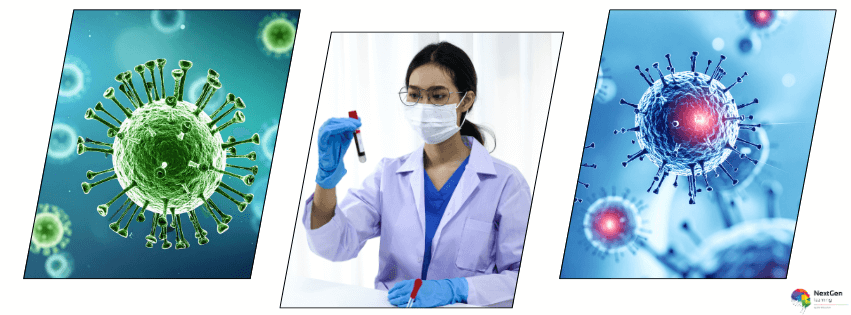
Pandemic disease awareness and infection control training showing virus models and healthcare professional analysing samples

Why Pandemic Awareness Is Important

Pandemic awareness plays a critical role in protecting individuals, workplaces, and communities. In a globally connected environment, infectious diseases can spread rapidly. Therefore, understanding risks and responses supports safer decision-making. As a result, individuals are better prepared to act responsibly during health incidents.

Moreover, infection control knowledge enables individuals to follow guidance confidently rather than react out of fear or misinformation. Consequently, workplaces benefit from improved compliance, preparedness, and resilience. Pandemic awareness is not solely about disease knowledge; instead, it supports responsible behaviour and informed judgement during periods of uncertainty.

Career Benefits and Professional Outcomes

This Pandemic Disease Awareness course supports professional development by strengthening understanding of health risks, infection control principles, and preparedness strategies. Although it is not a clinical qualification, the infection control course delivers valuable awareness applicable across many sectors.

Professional Benefits

  • Improved understanding of infection control and disease prevention
  • Greater confidence in workplace health and safety practices
  • Stronger awareness of pandemic risks and preparedness
  • Better decision-making during health-related incidents
  • Added value to continuing professional development records

Job Roles This Course Supports

  • Healthcare Support Worker
  • Health and Safety Assistant
  • Care or Support Worker
  • Education Support Staff
  • Compliance or Workplace Safety Officer

Order Your Certificate

To order your Certificate, we kindly invite you to visit the following link

FAQs – Pandemic Disease Awareness

Pandemic awareness helps people understand disease spread, reduce risk, and respond responsibly. This course provides structured knowledge to support safer decisions at work and in daily life.

UK pandemic exercises test national preparedness and response systems. This course supports individual understanding of pandemic risks and response planning.

Pegasus September 2025 is a UK pandemic preparedness exercise. Learning pandemic awareness helps individuals understand why such exercises are necessary.

COVID-19 spread globally and required international public health action. This course explains pandemic classification using clear, real-world examples.

Improved infection control, greater health awareness, and stronger preparedness planning. This course builds on these lessons to support long-term awareness.

Pandemic prevention focuses on reducing spread through awareness, early action, and infection control measures. These principles are covered in this course.

A pandemic disease spreads across countries or continents, such as COVID-19 or influenza. These examples are explained throughout the course.

COVID-19 is one of the largest modern pandemics. The course also explores historical pandemics for comparison.

Pandemics often result from new infectious agents, global travel, and zoonotic transmission. This course explains these causes clearly.

An epidemic is regional, while a pandemic spreads globally. This course explains the difference in simple terms.

Course Curriculum

Pandemic Disease Awareness
Introduction to Pandemics 00:23:00
Mild Threats to Human-Being 00:20:00
Pandemic Mitigation Preparedness and Response 00:23:00
Pandemic Outbreaks from History (Ebola Virus)) 00:18:00
Pandemic Outbreaks from History (Influenza) 00:11:00
Pandemic Outbreaks from History (Nipah Virus) 00:15:00
Pandemic Outbreaks from History (Plague) 00:15:00
Pandemic Outbreaks from History (Smallpox) 00:21:00
Pandemic Outbreaks from History (Viral Meningitis) 00:15:00
Pandemic Outbreaks from History (Zika Virus) 00:14:00
Pandemic Outbreaks from History(HIVAids) 00:18:00
Pandemic Risks and Consequences 00:20:00
Pandemics Risks, Impacts, and Mitigation 00:15:00
The Novel Coronavirus (2019-nCoV) 2020 Version of the SARS 00:51:00
The SARS – MERS Factors 00:33:00
Zoonotic Diseases 00:24:00
Order Your Certificate
Order Your Certificate 00:00:00

Related Courses

No course found

A product of

© 2026 NextGen Learning. All rights reserved

Home Search Cart Offers
Select your currency
GBP Pound sterling