


Popular Courses

Brand Brand Brand Brand
Awarding body image

Overview of Play Therapy Course

Play Therapy Course | Play Therapy Training Programme

Children speak through play when words are not enough.

When Daniel, a quiet six-year-old, struggled to express his emotions, traditional conversations offered little insight. However, through toys, drawings, and imaginative play, his feelings slowly emerged. This is the power of play therapy—using play as a natural communication method to help children express emotions, process experiences, and feel understood in a safe environment.

In today’s world, rising levels of childhood anxiety, trauma, and behavioural challenges have created a strong demand for child-centred mental health support across education, healthcare, and wellbeing sectors. Play therapy actively helps children develop emotionally, socially, and psychologically while promoting healing and resilience.

The Play Therapy Course trains learners through structured,  key sessions covering therapeutic play models, intervention approaches, and professional settings. QLS endorses and CPD certifies our course, allowing learners to study flexibly at their own pace with lifetime access. Upon completion, learners earn a recognised certificate. Educators, childcare professionals, and wellbeing practitioners can use this training to enhance their skills and actively support children’s mental health.

Why Choose Us?​

💰 Affordable, accessible, and easy-to-follow study materials
🌍 Earn a globally recognised accredited qualification
🕒 Lifetime access – study anytime, at your own pace
📜 Receive an instant certificate upon course completion
⏳ Flexible learning – no deadlines
💡 Transparent pricing – no hidden fees
⚡ Quick assessments & instant results
🚀 Boost your career or switch to a new path
📧 Get 24/7 support via email or live chat

Description of Play Therapy Course

This Play Therapy Training course introduces learners to the core principles of play-based therapeutic support for children. Moreover, it explains how play therapy helps children process emotions, experiences and trauma in a safe and supportive environment. Therefore, learners gain a clear understanding of how play therapy contributes to emotional healing and behavioural development.

In addition, the course explores various therapeutic models, ethical considerations and child-centred approaches. It also highlights how play therapy is applied in diverse contexts, including abuse recovery, homelessness and disaster-related mental health support. Furthermore, by completing this course, learners develop strong foundational knowledge that supports progression into play therapy-related roles or further study.


Curriculum Overview

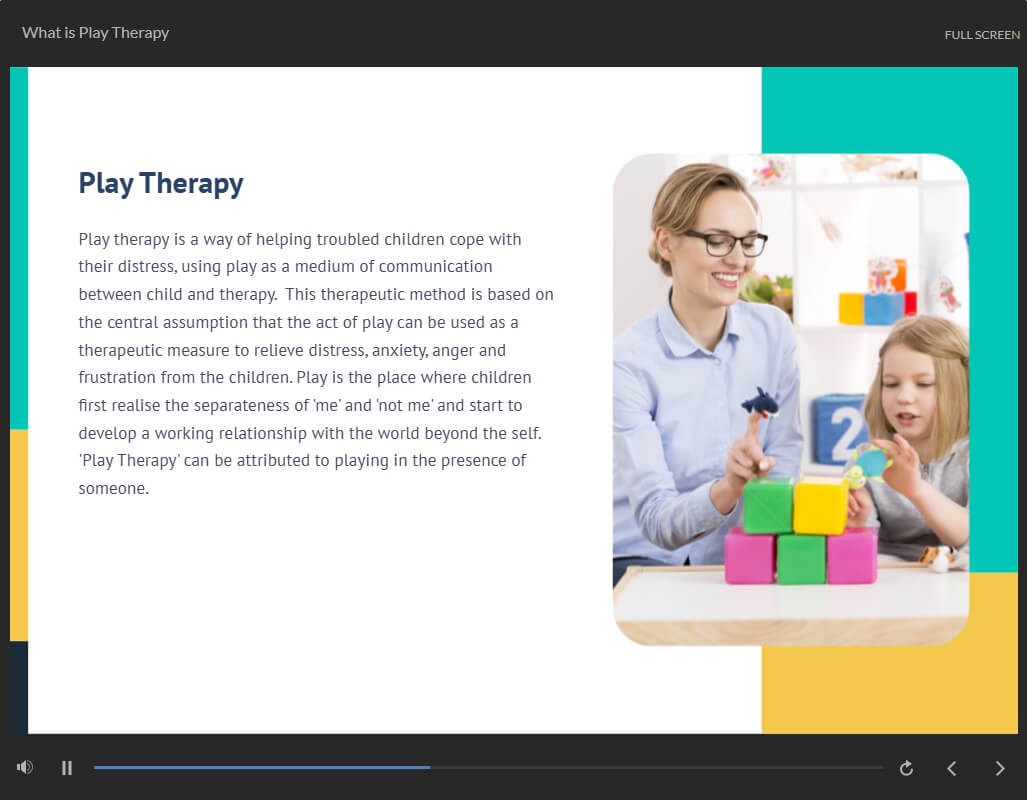
  • Module 01: What Is Play Therapy – This module explains the foundations of play therapy and why play is used as a therapeutic communication tool for children.
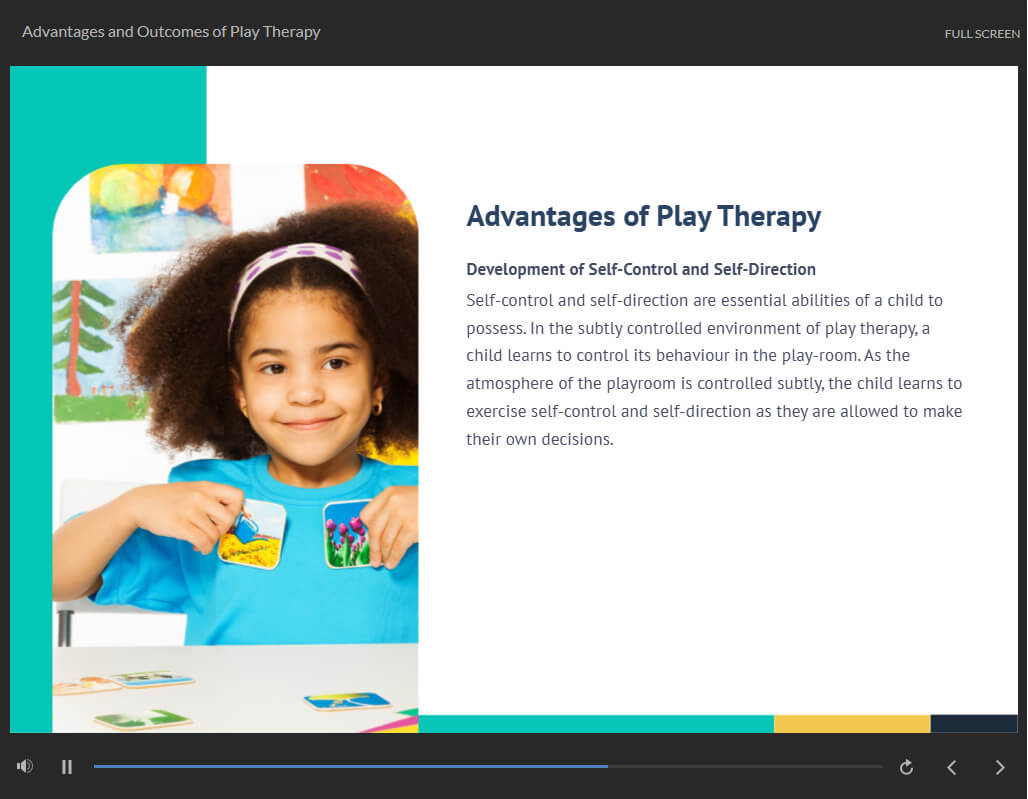
  • Module 02: Advantages and Outcomes of Play Therapy – This section explores the emotional, social and developmental benefits associated with play therapy.
  • Module 03: Models and Approaches of Play Therapy – This module introduces major play therapy models and structured therapeutic approaches.
  • Module 04: The Play Settings: Therapist, Child and Materials – This section explains therapeutic environments, professional roles and the use of play materials.
  • Module 05: Typical Issues in Play Therapy – This module covers behavioural, emotional and developmental challenges commonly addressed through play therapy.
  • Module 06: Play Therapy for Sexually and Emotionally Abused Children – This section explains how play therapy supports trauma recovery and emotional safety.
  • Module 07: Play Therapy for Children Who Are Homeless – This module explores therapeutic support strategies for children facing displacement and instability.
  • Module 08: Play Interventions for Disaster Mental Health – This section examines play-based interventions used during crisis and disaster situations.
  • Module 09: Case Studies and Recent Trends in Play Therapy – This final module provides insight into real-world applications and emerging developments in play therapy.

Certificate of Achievement

After completing the final exam, you’ll receive a CPD QS Accredited Certificate from NextGen Learning — a recognised credential that strengthens your CV.

  • Digital Certificate: £9.99

📌 Limited-time discounted pricing — secure your certificate while the offer lasts.

Nextgen Certificate

QLS Endorsed Certificate of Achievement

Upon completing the course, you can order a QLS-endorsed HardCopy Certificate titled “Diploma in Play Therapy at QLS Level 4”.

 
  • £89 for addresses within the UK. Please note that delivery within the UK is free of charge.
 
Please Note: NextGen Learning is a Compliance Central approved resale partner for Quality Licence Scheme Endorsed courses.

Endorsement

The Quality Licence Scheme (QLS) has endorsed this course for its high-quality, non-regulated training. This UK-based organisation reviews and approves learning programmes, and their endorsement confirms that the course meets strong quality standards.

Who Is This Play Therapy Course For ?

  • Individuals interested in child mental health support

  • Learners seeking play therapy training

  • Care workers and support professionals

  • Education and childcare practitioners

  • People exploring play therapy employment or vacancies

Play therapy course explaining therapeutic play approaches, child emotional support and developmental wellbeing. Covers play therapy models, outcomes and child-focused interventions. Designed for learners interested in child mental health and therapy support roles. Supports foundational understanding of play-based therapeutic practice.

Requirements of Play Therapy Course

The Play Therapy Course requires no prior degree or experience. Therefore, all you require is English proficiency, numeracy literacy, and a gadget with a stable internet connection. Consequently, you can learn and train for a prosperous career in the thriving and fast-growing industry, without any fuss.

Moreover, this course is designed to guide learners step by step. In addition, the lessons are organised in a logical flow, ensuring that each concept builds smoothly on the previous one. Consequently, learners gain confidence as they progress. Furthermore, the content connects theory with practical examples, making the learning experience more engaging. Similarly, complex topics are simplified so that beginners can understand them easily. As a result, learners can apply the knowledge in real situations. On the other hand, those with prior experience can refine their existing skills. Therefore, the course supports continuous improvement for all learners. Ultimately, it provides a structured pathway that helps students achieve their learning goals effectively.online communication skills

Moreover, this course is designed to guide learners step by step. In addition, the lessons are organised in a logical flow, ensuring that each concept builds smoothly on the previous one. Consequently, learners gain confidence as they progress. Furthermore, the content connects theory with practical examples, making the learning experience more engaging. Similarly, complex topics are simplified so that beginners can understand them easily. As a result, learners can apply the knowledge in real situations. On the other hand, those with prior experience can refine their existing skills. Therefore, the course supports continuous improvement for all learners. Ultimately, it provides a structured pathway that helps students achieve their learning goals effectively.online communication skills

Career Path of Play Therapy Course

  • Play Therapy Assistant – supports therapeutic activities and child engagement.

  • Child Support Worker – assists children with emotional and behavioural needs.

  • Mental Health Support Assistant – supports wellbeing initiatives for children.

  • Family Support Worker – helps families navigate emotional and developmental challenges.

  • Play Therapy Support Practitioner – assists in play-based therapeutic programmes.

Moreover, this course is designed to guide learners step by step. In addition, the lessons are organised in a logical flow, ensuring that each concept builds smoothly on the previous one. Consequently, learners gain confidence as they progress. Furthermore, the content connects theory with practical examples, making the learning experience more engaging. Similarly, complex topics are simplified so that beginners can understand them easily. As a result, learners can apply the knowledge in real situations. On the other hand, those with prior experience can refine their existing skills. Therefore, the course supports continuous improvement for all learners. Ultimately, it provides a structured pathway that helps students achieve their learning goals effectively.online communication skills

Order Your Certificate

To order CPD Quality Standard Certificate, we kindly invite you to visit the following link:

FAQs - Play Therapy Course

The five stages are: Building rapport, Assessment, Intervention, Reflection, and Termination.

Types include Directive Play Therapy, Non-Directive (Child-Centred) Play Therapy, Group Play Therapy, and Filial Play Therapy.

Children may have play therapy to cope with trauma, anxiety, behavioural issues, emotional distress, or developmental challenges.

The five stages are: Building rapport, Assessment, Intervention, Reflection, and Termination.

Certified play therapists, child psychologists, counsellors, or trained mental health professionals provide play therapy.

Sessions typically last 30–60 minutes, once or twice a week, with the program duration depending on the child’s needs.

Children from 3 to 12 years old are most commonly supported, but teenagers can also benefit.

Yes, research shows it helps children manage emotions, improve communication, reduce anxiety, and build resilience.

Yes, it is often combined with counselling, family therapy, or educational support for holistic care.

Course Curriculum

Module 01: What is Play Therapy
What is Play Therapy 00:29:00
Module 02: Advantages and Outcomes of Play Therapy
Advantages and Outcomes of Play Therapy 00:17:00
Module 03: Models and Approaches of Play Therapy
Models and Approaches of Play Therapy 00:27:00
Module 04: The Play Settings: Therapist, Abused Child and Materials
The Play Settings: Therapist, Abused Child and Materials 00:32:00
Module 05: Typical Issues in Play Therapy
Typical Issues in Play Therapy 00:37:00
Module 06: Play Therapy for Sexually and Emotionally Abused Children
Play Therapy for Sexually and Emotionally Abused Children 00:33:00
Module 07: Play Therapy for Children Who are Homeless
Play Therapy for Children Who are Homeless 00:20:00
Module 08: Play Interventions for Disaster Mental Health
Play Interventions for Disaster Mental Health 00:22:00
Module 09: Case Studies and Recent Trends in Play Therapy
Case Studies and Recent Trends in Play Therapy 00:25:00
Mock Exam
Mock Exam – Play Therapy 00:20:00
Final Exam
Final Exam – Play Therapy 00:20:00
Assignment
Assignment – Play Therapy 2 weeks, 1 day
Order Your Certificate
Order Your Certificate 00:00:00
Order Your QLS Certificate
Order Your QLS Certificate 00:00:00

Related Courses

A product of

© 2026 NextGen Learning. All rights reserved

Home Search Cart Offers
Select your currency
GBP Pound sterling