


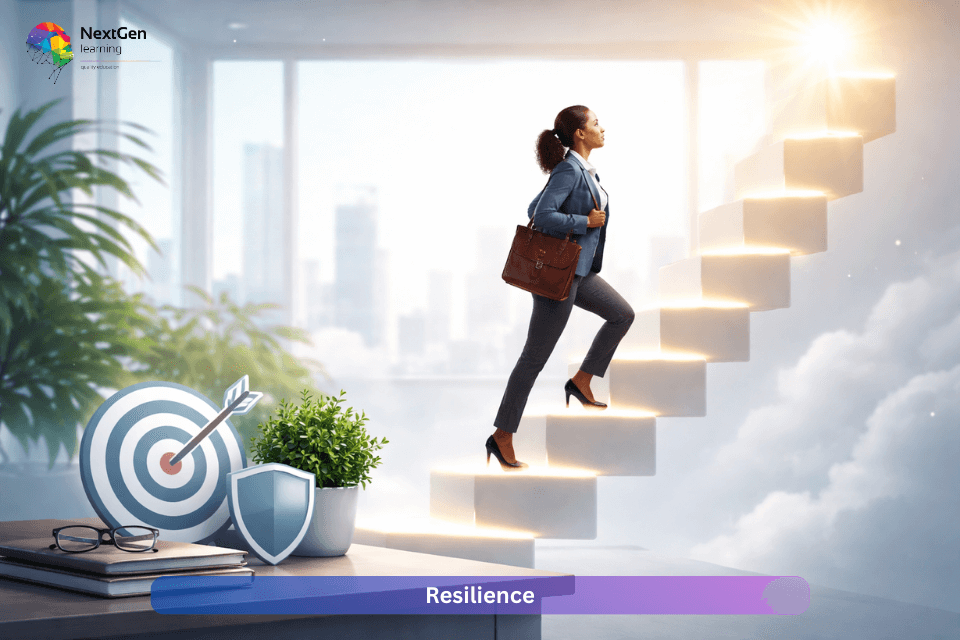


Overview Of Resilience Course
This resilience course helps individuals build the skills needed to cope effectively with adversity, manage setbacks, and stay mentally strong in challenging situations. Resilience goes beyond simply “pushing through” difficulty; learners actively develop it as a practical skill they can apply in everyday life and professional environments.
Through structured learning and evidence-informed approaches, the course shows how resilience strengthens emotional wellbeing, improves decision-making, and supports long-term performance. Learners clearly understand how resilience works, why it matters, and how focused training develops it through practical action rather than fixed personal traits.
As one of our practical resilience training courses, this programme emphasises real-world application. Learners explore emotional resilience, mental toughness, and adaptive coping strategies, then apply these skills to respond constructively to pressure, change, and uncertainty in both personal and professional contexts.
What You Will Learn In This Resilience Course
By completing this resilience course, learners will develop a clear understanding of resilience and how it can be strengthened through practical, evidence-informed techniques. In particular, the course focuses on building skills that can be applied immediately in both personal and professional contexts.
As a result, learners will gain the ability to:
Firstly, understand resilience and its role in managing adversity and setbacks
Secondly, identify common barriers that affect emotional resilience and mental toughness
Moreover, develop practical strategies for coping with pressure, stress, and change
In addition, improve self-awareness and emotional regulation in challenging situations
Finally, apply resilience training techniques to support long-term wellbeing and performance
Furthermore, as one of our structured resilience training courses, this programme emphasises sustainable skill development rather than short-term coping methods. Ultimately, it supports learners in building resilience that lasts and continues to strengthen over time.
Course Curriculum Overview
This resilience course is structured into six focused modules, each designed to build knowledge progressively and support the practical development of resilience skills. The curriculum moves from understanding adversity to strengthening emotional resilience and mental toughness.
Module 01: Resilience – Dealing with Adversity and Setbacks
Introduces the concept of resilience and explores how individuals respond to challenges, stress, and setbacks in personal and professional situations.
Module 02: Pathways to Resilience
Examines different pathways through which resilience develops, helping learners understand behavioural, emotional, and cognitive approaches to coping with difficulty.
Module 03: The Pillars of Resilience
Explores the core pillars that support resilience, providing a structured framework for building emotional balance, motivation, and long-term adaptability.
Module 04: Training for Resilience
Focuses on practical resilience training techniques, enabling learners to actively strengthen resilience through habit-building and reflective practice.
Module 05: Promoting Emotional Resilience – CASMT
Develops emotional resilience skills, supporting learners in managing emotional responses, maintaining control under pressure, and improving self-awareness.
Module 06: Mental Toughness & Resilience
Addresses mental toughness as a key component of resilience, helping learners sustain focus, confidence, and performance in demanding situations.
Certificate of Achievement
After completing this resilience course, learners receive a certificate of completion that demonstrates their knowledge of resilience, emotional resilience, and mental toughness. Learners can use this certificate to support continuing professional development (CPD) and strengthen their personal skills portfolios.
The course aligns with professional development needs across a wide range of roles and industries. As one of our practical resilience training courses, it helps learners evidence their commitment to wellbeing, adaptability, and strong performance under pressure—skills that employers and organisations increasingly value.
Entry Requirements
There are no formal entry requirements for this resilience course. It is designed to be accessible to learners from a wide range of backgrounds, regardless of previous experience or qualifications.
The course is suitable for:
- Beginners exploring resilience for the first time
- Professionals seeking practical resilience training
- Individuals pursuing personal or continuing professional development
All learning materials are presented in clear, straightforward language, making this one of our most accessible resilience training courses for learners at any stage of their personal or professional journey.
Why Resilience Training Is Important
In today’s fast-paced and demanding environments, individuals are frequently required to manage stress, uncertainty, and ongoing change. Without effective coping strategies, prolonged pressure can affect wellbeing, confidence, and performance. This is why structured resilience training courses play an important role in both personal and professional development.
Resilience is not an innate trait that people either have or lack—it is a skill that can be developed through awareness, practice, and the right techniques. Learning how to respond constructively to adversity helps individuals regulate emotions, maintain focus, and make clearer decisions during challenging situations.
This resilience course supports learners in building sustainable resilience by developing emotional strength, mental toughness, and adaptive thinking patterns. These skills are increasingly valued in the workplace and are equally important for maintaining balance, confidence, and wellbeing in everyday life.
What Is This Resilience Course?
This resilience course provides structured, practical training to help learners understand resilience and actively develop it as a skill. At its core, resilience refers to the ability to respond effectively to pressure, adapt to change, and recover from setbacks, while simultaneously maintaining emotional balance and mental clarity.
Rather than focusing on theory alone, this course instead breaks resilience into clear, learnable components. As a result, learners explore how thoughts, emotions, behaviours, and external pressures interact. In addition, they discover how resilience training strengthens self-awareness, emotional regulation, and problem-solving under stress. Meanwhile, the course encourages reflective learning that supports real-world application.
Moreover, as a professional resilience training course, it equips learners with practical techniques they can apply immediately in everyday situations. For example, learners use these skills when managing workplace challenges or navigating personal adversity. Likewise, they apply them to maintain performance in demanding environments. Ultimately, the course builds long-term resilience by helping learners develop sustainable habits rather than relying on short-term coping strategies.
Who This Resilience Course Is For
This resilience course is suitable for individuals at all stages of personal and professional development who want to strengthen their ability to cope with pressure, change, and setbacks.
It is particularly relevant for:
- Professionals experiencing workplace stress, high workloads, or organisational change
- Managers and team leaders seeking to support resilience within themselves and their teams
- Individuals aiming to improve emotional resilience and mental toughness in daily life
- Learners pursuing personal development or CPD-aligned training
- Anyone looking for practical, accessible resilience training courses that focus on real-life application
No prior knowledge or experience is required. The course is designed to be clear, inclusive, and applicable across a wide range of roles, industries, and personal circumstances.
Career & Personal Development Benefits
Completing this resilience course helps learners develop skills that are increasingly valued across modern workplaces and everyday life. The benefits extend beyond theory, supporting practical, long-term personal and professional growth.
Professional benefits include:
Stronger emotional resilience when managing workplace pressure and change
Improved focus and decision-making in demanding or high-responsibility roles
Greater adaptability when facing uncertainty, setbacks, or organisational change
Enhanced ability to contribute positively to teamwork and leadership environments
Clear evidence of commitment to continuous professional development through recognised resilience training
Personal development benefits include:
Improved emotional balance and self-awareness in challenging situations
Increased confidence and mental toughness when facing adversity
More effective strategies for managing setbacks and stress
Greater clarity, control, and resilience in both personal and professional life
Order Your Certificate
To order your Certificate, we kindly invite you to visit the following link
FAQs – Resilience Course
A resilience course helps learners build skills to cope with adversity, manage stress, and adapt to change by strengthening emotional resilience and mental toughness through practical techniques.
This course suits professionals, managers, students, and individuals seeking personal development who want to handle pressure, setbacks, and challenging situations more effectively.
Yes. This resilience training course suits beginners and learners with no prior experience. Clear explanations make the content accessible while remaining valuable for professionals.
You will develop practical skills in emotional resilience, mental toughness, and adaptive coping, supporting confidence, wellbeing, and performance in work and everyday life.
The course provides a certificate of completion suitable for CPD and professional development records. It is not a regulated qualification.
Yes. Completing this course demonstrates commitment to personal development, emotional wellbeing, and adaptability—skills valued by employers across many sectors.
Stress management focuses on reducing stress, while resilience training builds skills to respond effectively to challenges and recover from setbacks long term.
Yes. The course includes focused content on emotional resilience, helping learners manage emotions and maintain balance in demanding situations.
Mental toughness refers to maintaining focus, confidence, and persistence under pressure. It is a key part of resilience and helps individuals perform effectively in challenging professional and personal environments.
The course is self-paced, allowing learners to progress flexibly while achieving meaningful learning outcomes.
Course Curriculum
| Module 01: Resilience - Dealing with Adversity and Setbacks | |||
| Resilience – Dealing with Adversity and Setbacks | 00:24:00 | ||
| Module 02: Pathways to Resilience | |||
| Pathways to Resilience | 00:41:00 | ||
| Module 03: The Pillars of Resilience | |||
| The Pillars of Resilience | 00:44:00 | ||
| Module 04: Training for Resilience | |||
| Training for Resilience | 00:41:00 | ||
| Module 05: Promoting Emotional Resilience – CASMT | |||
| Promoting Emotional Resilience – CASMT | 00:33:00 | ||
| Module 06: Mental Toughness & Resilience | |||
| Mental Toughness & Resilience | 00:26:00 | ||
| Assignment | |||
| Assignment – Resilience | 2 weeks, 1 day | ||
| Order Your Certificate | |||
| Order Your Certificate | 00:00:00 | ||
Related Courses
Comparative Politics: UK and USA
International Relations and Political Economy
The Real and Only New York Cheesecake


All Courses for £49