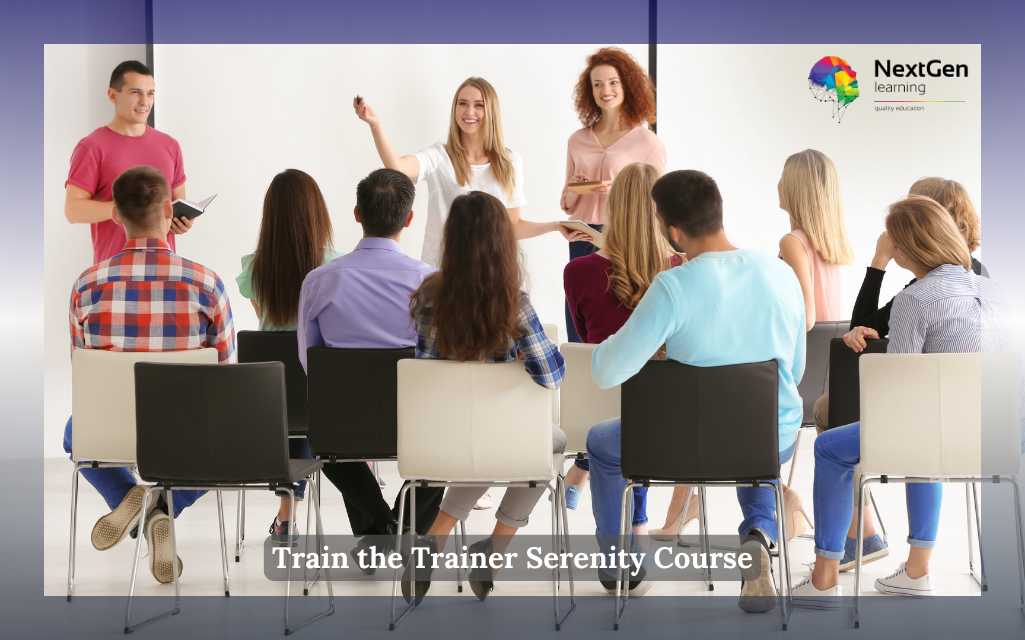
The Train the Trainer Course offers a structured and supportive learning journey designed to help trainers remain calm, confident, and effective in any training environment. Moreover, the course focuses on real-world challenges that trainers often face, such as interruptions, dominant personalities, negativity, inattention, and resistance. Through step-by-step guidance, learners gradually build the facilitation skills needed to manage behaviour smoothly while delivering engaging and productive sessions.
Throughout the programme, you will explore communication techniques, behaviour-management strategies, and group-dynamics principles that strengthen your presence as a trainer. Furthermore, each stage of the learning path is designed to improve clarity, control, and confidence, allowing you to respond to difficult behaviours with professionalism and ease. In addition, the course helps you understand participant psychology so you can guide groups more effectively and maintain positive momentum during training.
Consequently, the Train the Trainer Course prepares you for global training roles by enhancing your ability to lead sessions without disruption, motivate challenging learners, and create environments that support focus and collaboration. As a result, you gain skills that align with international ToT expectations, improve your facilitation quality, and expand your opportunities for personal and professional growth.
Course Modules:
1. Foundations of Calm Training Delivery
Begin by exploring what serenity-based training truly means; moreover, understand how maintaining composure allows trainers to guide groups with confidence.
2. Psychology of Learner Behaviour
Dive into the reasons behind interruptions, resistance, and disengagement; furthermore, analyse how behaviour patterns develop inside a training environment.
3. Communication Strategies for Confident Trainers
Learn to use tone control, assertive language, and strategic redirection; in addition, see how clear communication reduces tension and builds authority.
4. Handling Talkative, Dominant, and High-Energy Learners
Examine practical methods for balancing talkative participants; consequently, discover how to manage over-contributors without discouraging involvement.
5. Managing Resistance, Negativity, and Emotional Pushback
Understand how to transform resentment or pushback into constructive dialogue; furthermore, apply calm de-escalation techniques in real situations.
6. Techniques for Reducing Interruptions and Maintaining Flow
Use structured tools to stop interruptions early; in addition, learn how smooth transitions help maintain consistent training flow.
7. Engaging Passive, Distracted, and Low-Interest Participants
Apply engagement techniques that re-energise passive learners; moreover, strengthen attention levels through supportive and motivational approaches.
8. Group Dynamics and Classroom Energy Control
Explore how group energy forms and shifts; consequently, learn how trainers can guide momentum to maintain focus and collaboration.
9. Professional Presence and Trainer Confidence Building
Improve posture, tone, authority, and empathy; in addition, discover how strong presence leads to more peaceful and controlled training sessions.
10. Designing Training Sessions with Serenity Principles
Develop lesson structures that reduce conflict and stress; furthermore, integrate serenity-based methods into your overall training design.