





Top 16 Best Paying Marine Biology Jobs in 2026: Complete Career Guide for UK Professionals
Marine biology is a dynamic and rewarding field that merges scientific research, environmental stewardship, and hands-on work with marine ecosystems. As the blue economy expands and environmental awareness grows, the demand for skilled marine biologists is increasing in the UK and internationally. Understanding the top-paying marine biology roles helps aspiring professionals identify career paths that match their skills, qualifications, and long-term goals.
Marine biologists don’t just study marine life—they apply scientific knowledge in conservation, research, policy, aquaculture, and marine biotechnology. These roles contribute to protecting ecosystems, managing fisheries sustainably, and developing innovative solutions in the marine sector. For UK professionals, the field offers both career satisfaction and strong earning potential.
This guide provides a comprehensive overview of the top 16 best paying marine biology careers, including:
- Detailed descriptions of each role
- Required skills, education, and qualifications
- Salary expectations and career growth potential
- CPD and professional development opportunities
- UK-focused career insights for aspiring marine scientists
Whether you are a student, early-career researcher, or experienced professional considering a move within marine science, this guide offers actionable insights to help you plan a rewarding and financially sustainable career in 2025–2026.
Key Takeaways from This Guide
- Marine biology careers are growing rapidly in response to environmental, industrial, and research demands.
- High-paying roles often require a combination of specialised skills, advanced education, and practical experience.
- Continuous professional development (CPD) is essential for career advancement and staying competitive in the UK marine science sector.
- Understanding the top-paying roles, their responsibilities, and the skills required allows professionals to target the most rewarding opportunities effectively.
Table of Contents
Why Marine Biology Careers Are Booming

Marine biology is a rapidly growing field due to rising global focus on environmental conservation, sustainable fisheries, and the blue economy. Governments, research institutions, and private companies are investing heavily in marine science to tackle challenges such as climate change, ocean pollution, and marine ecosystem management. This increased demand has led to more high-paying and specialised roles for professionals in the UK and internationally.
Modern marine biology careers go beyond fieldwork and laboratory research. Professionals are needed in areas such as:
- Marine conservation and environmental policy
- Aquaculture and sustainable seafood production
- Marine biotechnology and pharmaceuticals
- Environmental consultancy and blue economy projects
These growing opportunities mean skilled marine biologists can enjoy long-term career stability, diverse work environments, and the chance to work on innovative projects that directly impact marine ecosystems.
Benefits of a Marine Biology Career
- High demand for specialised skills: Employers require expertise in ecology, biotechnology, and conservation science.
- Diverse work environments: From offshore research to laboratory studies and policy roles.
- Global impact: Professionals contribute to conservation, sustainability, and environmental management.
- Competitive salaries: High-demand roles, particularly in consultancy, research, and specialised marine sectors, offer strong earning potential.
The combination of scientific importance, environmental awareness, and high-demand specialisations makes marine biology a financially and professionally rewarding career for UK professionals.


Top 16 Best Paying Marine Biology Jobs – Summary Overview
Marine biology offers a wide range of high-paying and rewarding careers across research, conservation, aquaculture, biotechnology, and environmental policy. The following table summarises the Top 16 best paying marine biology jobs, highlighting their primary focus and typical UK work environments. This overview provides a quick snapshot before diving into the detailed description of each role.
Summary Table
| # | Job Title | Focus / Responsibilities | Typical Work Environment |
|---|---|---|---|
| 1 | Marine Biologist / Research Scientist | Conduct field and lab research, study marine ecosystems, publish findings | Universities, research institutes, government agencies |
| 2 | Marine Conservation Officer | Protect marine habitats, enforce regulations, implement conservation projects | NGOs, government agencies, research organisations |
| 3 | Aquaculture Manager | Oversee production of fish and shellfish, manage staff and operations | Aquaculture farms, commercial facilities |
| 4 | Marine Policy Analyst | Develop and assess marine policies, advise on sustainability | Government agencies, consultancy firms |
| 5 | Marine Environmental Consultant | Conduct environmental assessments, provide sustainability advice | Environmental consultancies, corporate clients |
| 6 | Marine Ecologist | Study interactions between marine organisms and ecosystems | Research institutes, conservation organisations |
| 7 | Marine Biotechnologist | Develop products from marine organisms, apply biotechnology | Biotech and pharmaceutical companies |
| 8 | Oceanographer (Physical/Biological) | Study ocean currents, systems, and marine environments | Research institutes, environmental agencies |
| 9 | Fisheries Scientist | Manage fish stocks, conduct population research, advise on sustainability | Government, research bodies, fisheries |
| 10 | Marine Surveyor | Inspect ships, offshore structures, and marine installations | Marine engineering and consultancy firms |
| 11 | Marine Education Officer | Educate public and students about marine science and conservation | Aquariums, museums, schools |
| 12 | Senior Research Technician | Support research projects, manage lab and field data, mentor junior staff | Universities, research labs, field projects |
| 13 | Environmental Compliance Specialist | Ensure marine operations comply with environmental regulations | Industry, government, consultancy |
| 14 | Marine Safety & Risk Officer | Implement safety protocols, manage risks for marine operations | Offshore projects, aquaculture facilities, research vessels |
| 15 | Commercial Diver | Conduct underwater inspections, research, and maintenance | Marine construction, research, aquaculture |
| 16 | Marine Research Assistant / Technician | Assist in experiments, manage equipment, collect and process data | Research labs, universities, fieldwork |
Short Summary
Marine biology is a growing field with diverse, high-paying career paths. Professionals can work in research, conservation, policy, aquaculture, and biotechnology, across hospitals, laboratories, universities, NGOs, and offshore or fieldwork environments. Each of these 16 roles offers unique responsibilities, skill requirements, and opportunities for career growth, making marine biology both a rewarding and financially viable career for UK professionals.
Marine Biologist / Research Scientist

Marine biologists and research scientists study the oceans, marine life, and ecosystems to understand how environmental factors, human activity, and climate change affect aquatic environments. They play a critical role in both conservation and applied marine science, providing data and insights that guide sustainable practices, policy decisions, and scientific advancement.
Key Responsibilities
- Conduct field research and laboratory experiments to study marine organisms and ecosystems
- Analyse environmental and biological data, often using statistical and modelling tools
- Publish research findings in scientific journals and present at conferences
- Advise governmental agencies, NGOs, and conservation organisations on marine ecosystem management
- Participate in collaborative projects with other researchers, engineers, and policymakers
Required Skills
- Strong knowledge of marine biology, ecology, and environmental science
- Fieldwork experience including sample collection and ecological surveys
- Laboratory skills including data analysis and marine biotechnology techniques
- Excellent written and verbal communication for reports and presentations
- Critical thinking and problem-solving to adapt methods to complex marine environments
Typical Work Environments
- Universities and academic research institutes
- Governmental marine science agencies
- Environmental and conservation organisations
- Marine research vessels and field stations
Career and Salary Insights (UK)
Experienced marine biologists in the UK can earn competitive salaries, especially those in senior research, consultancy, or managerial roles. Entry-level positions may start with moderate pay, but specialized research and industry roles often offer significantly higher compensation.
Marine Conservation Officer
Marine Conservation Officers focus on protecting marine habitats, monitoring endangered species, and implementing conservation projects. They ensure that marine ecosystems are preserved while guiding sustainable practices for communities, governments, and organisations.
Key Responsibilities
- Monitor and manage marine protected areas and habitats
- Conduct surveys to track species populations and ecosystem health
- Develop and implement conservation strategies and policies
- Educate the public, stakeholders, and local communities on marine conservation
- Collaborate with researchers, policymakers, and NGOs on environmental initiatives
Required Skills
- Knowledge of marine ecology, environmental science, and conservation practices
- Strong analytical and research skills for assessing ecosystems
- Effective communication skills for public engagement and advocacy
- Project management and organisational abilities for conservation initiatives
- Teamwork skills for collaborating with scientists, government agencies, and NGOs
Typical Work Environments
- Environmental NGOs and conservation organisations
- Government agencies overseeing marine protection
- Research institutions and academic programmes
- Coastal management authorities and marine reserves
Career and Salary Insights (UK)
Salaries for marine conservation officers vary depending on experience, employer, and location. Experienced officers working in government or consultancy roles often earn competitive salaries, while entry-level positions in NGOs or research may offer moderate compensation. Opportunities exist for progression into senior conservation or policy advisory roles.
Aquaculture Manager
An Aquaculture Manager oversees the production and management of fish, shellfish, and other aquatic species in commercial farms, research facilities, or biotechnology settings. They ensure the health and growth of marine organisms while maintaining operational efficiency, sustainability, and compliance with environmental regulations. This role combines biological expertise with management, problem-solving, and operational skills to run successful aquaculture operations.
Primary Responsibilities
- Plan and manage daily aquaculture operations including feeding schedules, stock growth, and water quality
- Supervise staff and coordinate operational tasks effectively
- Monitor the health of aquatic species and implement disease prevention measures
- Ensure compliance with environmental and animal welfare regulations
- Manage budgets, operational reports, and resource allocation
Essential Skills
- Expertise in aquaculture systems and marine biology
- Strong leadership and team management skills
- Knowledge of sustainability practices and environmental regulations
- Problem-solving and decision-making in dynamic settings
- Operational planning and resource management
Typical Work Environments
- Commercial fish and shellfish farms
- Hatcheries and aquaculture research facilities
- Marine biotechnology companies
Career Path and Salary Insights (UK)
Experienced aquaculture managers in the UK earn an average of around £56,954 per year, with higher salaries possible for those overseeing large-scale operations or working in marine biotechnology. Career progression can lead to senior management, consultancy, research leadership, or specialist technical roles, offering opportunities for professional growth and increased earning potential.
Marine Policy Analyst
A Marine Policy Analyst develops and evaluates policies affecting marine environments, advising government bodies, NGOs, and private organisations on sustainable practices. They combine scientific knowledge, research skills, and policy expertise to influence decision-making that protects ecosystems while supporting economic and environmental goals.
Primary Responsibilities
- Research marine policy, legislation, and regulations
- Analyse environmental impacts and sustainability challenges
- Provide policy recommendations to stakeholders
- Develop and evaluate conservation and management strategies
- Collaborate with researchers, policymakers, and environmental organisations
Required Skills
- Strong knowledge of marine science, policy, and environmental legislation
- Research and analytical skills to assess ecological and regulatory data
- Excellent written and verbal communication for reports and policy briefs
- Strategic thinking to develop actionable recommendations
- Teamwork and collaboration with scientists, government agencies, and NGOs
Typical Work Environments
- Government environmental and marine departments
- Non-governmental organisations (NGOs)
- Consultancy and advisory firms
- Research institutions and academic organisations
Career Path and Salary Insights (UK)
Marine Policy Analysts in the UK typically earn between £35,000 and £55,000 per year, depending on experience and employer. Career progression may include senior policy advisor roles, consultancy positions, or leadership within governmental and environmental organisations, providing opportunities to influence marine conservation strategy and policy development.
Marine Environmental Consultant
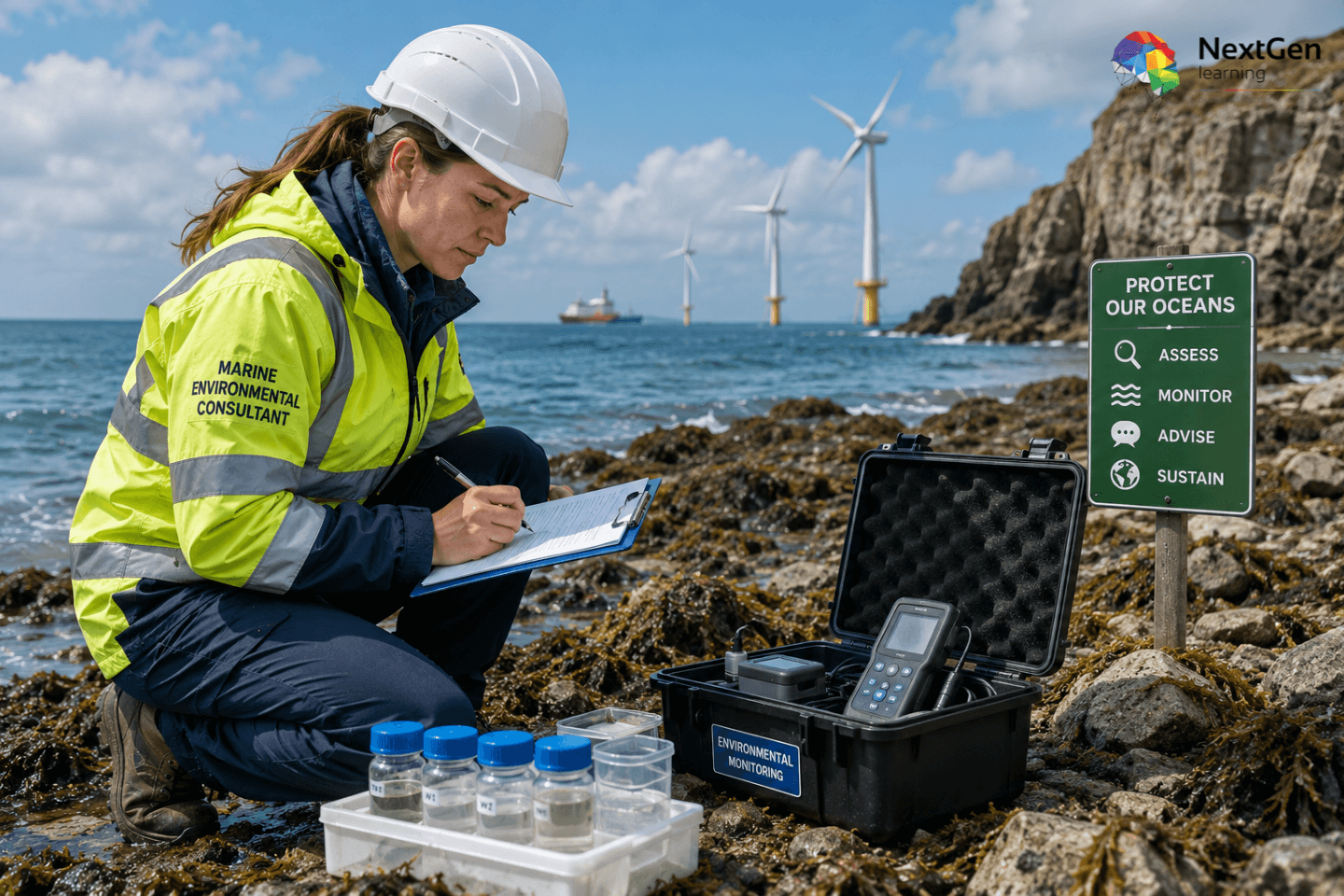
A Marine Environmental Consultant provides expert advice to organisations on the environmental impact of marine projects, ensuring compliance with regulations and promoting sustainable practices. They combine scientific knowledge, environmental law, and consultancy skills to guide clients in responsible marine development and conservation.
Primary Responsibilities
- Conduct environmental impact assessments for marine projects
- Advise clients on sustainability practices and regulatory compliance
- Develop mitigation strategies to minimise ecological impact
- Prepare reports and documentation for stakeholders and authorities
- Collaborate with scientists, engineers, and policymakers on marine projects
Required Skills
- Strong understanding of marine ecosystems and environmental science
- Knowledge of environmental legislation and regulatory frameworks
- Analytical and research skills to assess ecological impacts
- Effective communication for reporting and client engagement
- Project management and problem-solving skills
Typical Work Environments
- Environmental consultancy firms
- Marine infrastructure or development companies
- Government or regulatory agencies
- NGOs focused on marine conservation
Career Path and Salary Insights (UK)
Marine Environmental Consultants in the UK earn approximately £38,000–£60,000 per year, depending on experience, employer, and project complexity. Career progression can lead to senior consultancy, project management, or leadership positions, with opportunities to specialise in sustainability, environmental law, or corporate responsibility within the marine sector.
Marine Ecologist
A Marine Ecologist studies the interactions between marine organisms and their environments, helping to understand ecosystems, monitor biodiversity, and guide conservation efforts. They combine field research, laboratory analysis, and data interpretation to inform environmental management and policy decisions.
Primary Responsibilities
- Conduct ecological surveys and field research to monitor marine species
- Analyse ecological interactions and population dynamics
- Produce scientific reports and publications
- Advise conservation organisations and policy makers
- Collaborate with other researchers and multidisciplinary teams
Required Skills
- Strong knowledge of marine ecosystems and ecological principles
- Field research and laboratory analysis experience
- Data analysis and statistical skills
- Communication skills for reporting findings
- Teamwork and collaboration in research projects
Typical Work Environments
- Research institutes and universities
- Conservation and environmental NGOs
- Marine protected areas and field sites
- Government agencies
Career Path and Salary Insights (UK)
Marine Ecologists in the UK earn approximately £30,000–£50,000 per year depending on experience, sector, and project scope. Career progression can lead to senior research positions, project management, or advisory roles within conservation organisations and government agencies.
Marine Biotechnologist
A Marine Biotechnologist applies biological techniques to develop products and technologies from marine organisms. They work across pharmaceuticals, food, cosmetics, and environmental research, using marine biology knowledge to innovate and create sustainable solutions.
Primary Responsibilities
- Conduct laboratory experiments using marine organisms
- Develop new products such as bioactive compounds, pharmaceuticals, or industrial enzymes
- Analyse experimental data and maintain lab records
- Ensure compliance with safety, ethical, and environmental regulations
- Collaborate with researchers, biotech companies, and industry partners
Required Skills
- Expertise in molecular biology, genetics, and marine biotechnology
- Laboratory techniques and experimental design
- Data analysis and scientific reporting
- Knowledge of environmental and ethical regulations
- Teamwork and collaboration with multidisciplinary teams
Typical Work Environments
- Biotech and pharmaceutical companies
- Research laboratories and universities
- Marine conservation and aquaculture research facilities
- Environmental consultancies
Career Path and Salary Insights (UK)
Marine Biotechnologists in the UK typically earn £35,000–£55,000 per year, depending on experience, employer, and industry sector. Career progression can include senior research roles, project leadership, or specialist biotechnology positions in pharmaceutical, industrial, or environmental sectors.
Oceanographer (Physical/Biological)
An Oceanographer studies the physical, chemical, and biological aspects of oceans to understand marine ecosystems, ocean currents, and environmental processes. They combine field research, laboratory analysis, and computational modelling to inform conservation, resource management, and climate studies.
Primary Responsibilities
- Conduct fieldwork and collect oceanographic data
- Analyse physical and biological ocean systems
- Monitor environmental changes and marine ecosystems
- Produce scientific reports and publications
- Collaborate with research teams, government agencies, and NGOs
Required Skills
- Strong understanding of oceanography and marine science
- Field research and laboratory analysis skills
- Data modelling and statistical analysis
- Communication and scientific reporting
- Teamwork and collaboration in multidisciplinary projects
Typical Work Environments
- Universities and research institutes
- Government environmental agencies
- Marine conservation organisations
- Offshore research vessels and laboratories
Career Path and Salary Insights (UK)
Oceanographers in the UK typically earn £32,000–£55,000 per year, depending on experience, employer, and project complexity. Career progression may include senior researcher roles, project management, or advisory positions in government, research, and environmental organisations.
Fisheries Scientist

A Fisheries Scientist studies fish populations and aquatic ecosystems to ensure sustainable fishing practices and maintain healthy marine biodiversity. They conduct research, monitor stock levels, and provide guidance on sustainable harvesting to governments, regulatory bodies, and fisheries.
Primary Responsibilities
- Monitor fish populations and assess the health of aquatic ecosystems
- Conduct field surveys and research on fisheries resources
- Advise on sustainable harvesting methods and management strategies
- Analyse data and produce scientific reports for regulatory agencies
- Collaborate with environmental organisations, government agencies, and research teams
Required Skills
- Expertise in marine biology, ecology, and fisheries science
- Field research and data collection skills
- Analytical and statistical analysis abilities
- Communication skills for scientific reporting and stakeholder engagement
- Teamwork and collaboration across multidisciplinary projects
Typical Work Environments
- Government fisheries departments and regulatory agencies
- Research institutes and universities
- Environmental and conservation organisations
- Aquaculture companies and commercial fisheries
Career Path and Salary Insights (UK)
Fisheries Scientists in the UK typically earn £30,000–£50,000 per year, depending on experience, employer, and project responsibilities. Experienced professionals can progress to senior research roles, policy advisory positions, or consultancy opportunities within sustainable fisheries and marine conservation sectors.
Marine Surveyor
A Marine Surveyor inspects vessels, offshore structures, and marine equipment to ensure compliance with safety, environmental, and operational standards. They play a critical role in maintaining marine safety and supporting regulatory requirements for commercial, research, and industrial operations.
Primary Responsibilities
- Inspect ships, boats, and offshore installations for structural integrity and safety
- Evaluate marine equipment and operational procedures
- Prepare detailed inspection reports for clients or regulatory bodies
- Advise on compliance with environmental and safety regulations
- Collaborate with engineers, marine operators, and regulatory agencies
Required Skills
- Strong knowledge of marine engineering, structural integrity, and safety standards
- Attention to detail and analytical assessment skills
- Communication skills for reporting findings and advising stakeholders
- Problem-solving and decision-making under complex conditions
- Ability to work independently and as part of multidisciplinary teams
Typical Work Environments
- Marine engineering and consultancy firms
- Offshore research and industrial projects
- Government regulatory agencies
- Commercial shipping companies
Career Path and Salary Insights (UK)
Marine Surveyors in the UK typically earn £35,000–£55,000 per year, depending on experience, certification, and the complexity of projects. Senior surveyors, or those specialising in offshore or industrial inspections, can earn higher salaries and may progress to consultancy or management roles.
Marine Education Officer
A Marine Education Officer develops and delivers educational programmes that increase public understanding of marine science and conservation. They work to inspire students, communities, and professionals while promoting environmental awareness and stewardship.
Primary Responsibilities
- Design and implement educational workshops, courses, and outreach programmes
- Engage schools, universities, and community groups to promote marine science
- Develop educational materials, presentations, and interactive activities
- Evaluate the impact of educational programmes and provide reports
- Collaborate with scientists, aquariums, museums, and conservation organisations
Required Skills
- Strong knowledge of marine biology, ecology, and environmental science
- Excellent communication and presentation skills
- Ability to develop engaging and accessible educational materials
- Project management and organisational abilities
- Teamwork and collaboration with scientists and educators
Typical Work Environments
- Aquariums and museums
- Universities and educational institutions
- Non-governmental organisations focused on conservation
- Community outreach programmes and field stations
Career Path and Salary Insights (UK)
Marine Education Officers in the UK typically earn £28,000–£45,000 per year, depending on experience, employer, and programme responsibility. Career progression can lead to senior education roles, outreach coordination, or policy and conservation leadership positions.
Senior Research Technician
A Senior Research Technician supports marine research projects by managing field and laboratory work, collecting and analysing data, and mentoring junior staff. They ensure that research operations run smoothly and that scientific standards are maintained.
Primary Responsibilities
- Assist in planning and conducting fieldwork and laboratory experiments
- Collect, process, and analyse marine samples and ecological data
- Maintain and calibrate research equipment
- Prepare reports and summaries for senior researchers
- Mentor and supervise junior research staff
Required Skills
- Strong knowledge of marine biology and research methods
- Laboratory and fieldwork proficiency
- Data analysis and statistical skills
- Organisation and time management
- Teamwork and mentoring abilities
Typical Work Environments
- Universities and research laboratories
- Marine conservation organisations
- Government research institutions
- Field stations and marine observatories
Career Path and Salary Insights (UK)
Senior Research Technicians in the UK earn approximately £28,000–£45,000 per year, depending on experience, sector, and research specialisation. Career advancement can lead to senior research roles, project management, or leadership positions within marine research and conservation institutions.
Environmental Compliance Specialist
An Environmental Compliance Specialist ensures that marine projects and operations adhere to environmental laws, regulations, and sustainability standards. They play a key role in protecting ecosystems while helping organisations operate responsibly.
Primary Responsibilities
- Conduct environmental audits and compliance assessments
- Advise organisations on regulatory requirements and sustainability practices
- Prepare reports for regulatory authorities and stakeholders
- Develop mitigation strategies to reduce environmental impacts
- Collaborate with engineers, scientists, and policy makers
Required Skills
- Knowledge of environmental law and marine regulations
- Analytical and research skills to assess compliance and risks
- Strong written and verbal communication
- Problem-solving and project management abilities
- Ability to work collaboratively with multidisciplinary teams
Typical Work Environments
- Environmental consultancies
- Government regulatory agencies
- Marine infrastructure and offshore projects
- NGOs focused on marine conservation
Career Path and Salary Insights (UK)
Environmental Compliance Specialists in the UK typically earn £35,000–£55,000 per year, depending on experience, employer, and project complexity. Experienced professionals can progress into senior consultancy roles, project management, or regulatory advisory positions within environmental and marine sectors.
Marine Safety & Risk Officer

A Marine Safety & Risk Officer ensures that all marine operations, including research, aquaculture, and offshore projects, comply with safety standards and risk management protocols. They protect both personnel and the environment by identifying hazards and implementing preventative measures.
Primary Responsibilities
- Develop and implement safety protocols for marine operations
- Conduct risk assessments and safety audits
- Monitor compliance with health, safety, and environmental regulations
- Train staff on safety procedures and emergency response
- Respond to incidents and coordinate mitigation actions
Required Skills
- Knowledge of marine safety regulations and risk management
- Strong analytical and problem-solving abilities
- Excellent communication and training skills
- Attention to detail and observational skills
- Ability to work collaboratively with teams in high-risk environments
Typical Work Environments
- Offshore research and aquaculture facilities
- Marine construction and industrial projects
- Government and regulatory agencies
- Research vessels and marine laboratories
Career Path and Salary Insights (UK)
Marine Safety & Risk Officers in the UK typically earn £38,000–£58,000 per year, depending on experience, project complexity, and employer. Career progression can lead to senior safety management, compliance leadership, or consultancy roles within marine operations and offshore industries.
Commercial Diver
A Commercial Diver performs underwater inspections, research, and maintenance in marine environments. They combine technical diving expertise with marine science knowledge to support construction, research, and conservation projects.
- Conduct underwater inspections of marine structures and vessels
- Collect samples and conduct scientific research underwater
- Perform maintenance and repair of offshore installations
- Follow strict safety protocols and emergency procedures
- Collaborate with engineers, scientists, and marine teams
Required Skills
- Professional diving certification and experience
- Knowledge of marine environments and equipment
- Strong physical fitness and problem-solving abilities
- Ability to work under challenging and hazardous conditions
- Teamwork and communication for complex underwater operations
Typical Work Environments
- Offshore construction and aquaculture facilities
- Research vessels and marine laboratories
- Environmental and conservation projects
- Commercial diving and inspection companies
Career Path and Salary Insights (UK)
Commercial Divers in the UK typically earn £32,000–£50,000 per year, with higher salaries for specialised roles in offshore construction, research expeditions, or hazardous environments. Career progression can include supervisory positions, technical consultancy, or specialist diving operations.
Marine Research Assistant
A Marine Research Assistant / Technician supports marine science research projects by assisting in field and laboratory work, collecting and analysing data, and maintaining research equipment. This entry-level role is essential for enabling senior researchers and scientists to conduct high-quality studies.
Primary Responsibilities
- Assist in field surveys, sample collection, and environmental monitoring
- Maintain laboratory and field equipment, ensuring accurate data collection
- Process, record, and analyse marine data
- Support senior researchers in experiments and reporting
- Collaborate with multidisciplinary research teams
Required Skills
- Basic knowledge of marine biology and ecology
- Fieldwork and laboratory experience
- Data collection and analytical skills
- Communication and teamwork abilities
- Attention to detail and organisational skills
Typical Work Environments
- Universities and research institutes
- Marine conservation organisations
- Government research facilities
- Field stations and research vessels
Career Path and Salary Insights (UK)
Marine Research Assistants in the UK typically earn £25,000–£38,000 per year, depending on experience, employer, and level of responsibility. Career progression can lead to Senior Research Technician, specialist research roles, or further academic opportunities in marine biology, ecology, or environmental science.
Skills, Education, and Qualifications for Marine Careers
Marine biology careers require a combination of academic qualifications, technical expertise, and practical experience. Professionals must develop strong scientific knowledge, fieldwork capabilities, and analytical skills to succeed in research, conservation, aquaculture, and policy roles.
Essential Qualifications
- Bachelor’s Degree in Marine Biology, Oceanography, or Environmental Science: Required for most entry-level roles
- Master’s or PhD: Needed for senior research, policy, or academic positions
- Professional Certifications: Diving, lab safety, GIS, or marine technology certifications improve employability
- Continuing Professional Development (CPD): Keeps skills current and enhances career progression
Core Skills
Marine biologists need a combination of technical and soft skills:
- Field Research Skills: Sample collection, ecological surveys, and data recording
- Laboratory and Analytical Skills: Processing specimens, analysing data, and reporting findings
- Communication Skills: Writing reports, presenting results, and liaising with stakeholders
- Teamwork: Collaborating with multidisciplinary teams of scientists, engineers, and policymakers
- Problem-Solving and Critical Thinking: Adapting to unexpected challenges in research and fieldwork
- Technical Skills: GIS, remote sensing, and marine monitoring software
Importance of Practical Experience
Hands-on experience through internships, fieldwork, or volunteering is crucial to:
- Apply theoretical knowledge in real-world marine settings
- Gain familiarity with research equipment and methodologies
- Build professional networks within marine science
- Improve employability for specialised and high-paying roles
Career Insight
Combining formal education, practical experience, and CPD allows marine biologists to specialise in areas such as conservation, aquaculture, marine biotechnology, or policy. These skills are critical to access senior research, consultancy, and leadership roles while maximising salary potential.
Career Progression and Opportunities in Marine Biology
Marine biology offers a wide range of career progression opportunities for professionals who combine scientific expertise with practical experience. With the increasing demand for marine conservation, sustainable fisheries, and biotechnology, marine biologists can specialise in research, policy, education, or industry roles while accessing high-paying positions across the UK.
Career Advancement Opportunities
Marine biologists can progress into:
- Senior Research Scientist: Leading projects, supervising research teams, and managing lab or field studies
- Marine Policy Advisor: Developing environmental policies and advising governmental or NGO organisations
- Specialist Roles: Focusing on aquaculture, biotechnology, or conservation projects
- Leadership Roles: Managing teams in research institutes, aquaculture facilities, or environmental consultancies
- Education and Training: Teaching, mentoring, or developing educational programmes for future marine scientists
Benefits of Career Progression
Advancing in marine biology allows professionals to:
- Lead innovative research and conservation projects
- Increase earning potential in specialised or senior roles
- Gain recognition within the scientific and environmental community
- Influence policy and sustainability decisions
- Build expertise in niche areas of marine science
Continuous professional development (CPD) and postgraduate education are key to reaching these roles, offering both personal growth and financial rewards.
CPD and Professional Development Courses for Marine Biologists

Continuing professional development (CPD) is essential for marine biologists to maintain expertise, stay updated on the latest research, and improve career prospects. CPD courses enhance skills, provide certifications, and support progression into specialised or senior roles in research, aquaculture, conservation, or policy.
Benefits of CPD and Professional Development
Marine biologists who pursue CPD can:
- Stay updated on advances in marine science and technology
- Gain recognised certifications to enhance employability
- Develop specialised skills in aquaculture, marine biotechnology, or conservation
- Improve career progression and access higher-paying positions
- Network with professionals across research, policy, and environmental sectors
Common CPD and Training Opportunities
- Marine Research Courses: Improve laboratory and fieldwork techniques
- Conservation and Sustainability Training: Learn the latest strategies for protecting marine ecosystems
- Technical Workshops: GIS, remote sensing, marine monitoring equipment, and biotechnology applications
- Leadership and Project Management: For those aiming to manage research teams or large-scale marine projects
Career Benefits of CPD
By combining CPD with practical experience, marine biologists can:
- Qualify for senior research or consultancy roles
- Specialise in high-demand areas such as aquaculture, biotechnology, or marine policy
- Improve salary potential through advanced skills and certifications
- Strengthen credibility within UK and international marine science sectors
Lifelong learning ensures marine biologists remain adaptable, skilled, and competitive, supporting both personal and professional growth in the ever-evolving field of marine science.
FAQs About Marine Biology Careers
The highest paying marine biology roles typically include Marine Biologist/Research Scientist, Aquaculture Manager, Marine Biotechnologist, Marine Policy Analyst, and Senior Conservation or Consultancy positions. Salaries depend on experience, specialisation, and employer type.
Most marine biology roles require at least a bachelor’s degree in Marine Biology, Oceanography, or Environmental Science. Advanced roles often require a master’s or PhD. Professional certifications, CPD courses, and fieldwork experience improve employability and access to high-paying positions.
Yes. Entry-level roles may start with moderate pay, but specialised roles in aquaculture, marine biotechnology, consultancy, or senior research positions offer competitive salaries, especially for professionals with experience and advanced qualifications.
Marine biologists require both hard and soft skills, including field research, laboratory analysis, data interpretation, technical skills (like GIS), communication, teamwork, and problem-solving. Specialised technical expertise increases employability in high-paying roles.
Career progression may involve specialising in areas such as marine biotechnology, aquaculture, conservation policy, or research leadership. Continuing professional development (CPD), postgraduate education, and practical experience are essential to advance into senior or specialist positions.
Yes. Experienced marine biologists often find roles in international research institutes, NGOs, aquaculture companies, and environmental consultancy firms. Global collaboration and research projects are common, especially for senior specialists.
Absolutely. Hands-on fieldwork, lab experience, internships, or volunteer opportunities are essential to demonstrate competence and readiness for specialised roles. Practical experience is highly valued alongside formal education and CPD courses.



0 responses on "Top 16 Best Paying Marine Biology Jobs in 2026: Complete Career Guide for UK Professionals"