




How to Become an IQA in the UK: Level 4 Guide
Becoming an Internal Quality Assurer can help you progress from assessment into a more senior quality-focused role. IQAs monitor assessment decisions, support assessors and help training providers maintain fair, consistent standards. Therefore, the role is essential across colleges, apprenticeship providers, employers and vocational training centres.
In most cases, aspiring practitioners complete the Level 4 Award in the Internal Quality Assurance of Assessment Processes and Practice. However, gaining the qualification alone may not be enough. You also need suitable occupational knowledge, an understanding of assessment practice and access to real assessment activity.
This guide explains how to become an IQA in the UK, which Level 4 qualification to choose, how assessment works and what career opportunities you can pursue afterwards.
Table of Contents
What Is an Internal Quality Assurer?

An Internal Quality Assurer, often called an IQA, checks whether assessment decisions meet the required standards. In addition, they help assessors apply assessment criteria fairly and consistently. As a result, learners receive reliable outcomes, while training providers maintain strong quality and compliance.
An IQA does not simply review paperwork. Instead, they examine how assessments take place, sample learner evidence and identify areas for improvement. They may also observe assessors, provide feedback and support standardisation across a team.
IQA, Assessor and EQA: What Is the Difference?
Although these roles work together, each one has a different purpose:
- Assessors evaluate learners: They judge whether learners have met the required knowledge, skills or occupational standards.
- IQAs monitor assessors: They review assessment decisions, sample evidence and help maintain consistent practice within a centre.
- EQAs review centres: External Quality Assurers check whether approved centres meet awarding organisation requirements.
- The GOV.UK guidance for assessors and quality assurers further explains that IQAs support assessors and review learner evidence, while EQAs monitor approved centres and their assessment processes.
Therefore, an IQA acts as the internal link between assessors, centre managers and external quality assurance teams.
What Does an IQA Do?
An IQA protects the quality and consistency of assessment within a training centre. Therefore, they review how assessors make decisions, whether learner evidence meets the required standards and whether assessment records remain accurate. Moreover, they help prevent inconsistent marking, weak evidence and unfair outcomes.
In practice, an Internal Quality Assurer combines monitoring, support and compliance. They do not simply look for mistakes. Instead, they help assessors improve their practice and ensure that the centre follows awarding organisation requirements.
Key IQA responsibilities include:
- Sample assessment decisions: Review a planned selection of learner work across assessors, units, methods and learner groups.
- Observe assessor practice: Watch assessments and check whether assessors follow fair, safe and valid procedures.
- Lead standardisation: Help assessors interpret criteria consistently and agree on acceptable evidence.
- Provide constructive feedback: Highlight strengths, identify gaps and agree on practical improvement actions.
- Maintain accurate records: Document sampling, observations, feedback, risks and completed corrective actions.
- Support external quality assurance: Prepare evidence and respond to actions raised by an External Quality Assurer.
- Develop assessor competence: Identify training needs and encourage relevant continuing professional development.
- For further professional guidance, the City & Guilds guidance on internal quality assurance explains sampling, assessor monitoring, standardisation and centre quality procedures in greater detail.
As a result, a skilled IQA strengthens learner confidence, assessor performance and the training provider’s overall quality system.
How to Become an IQA in the UK in Six Steps

The route into internal quality assurance depends on your experience and intended role. However, most aspiring IQAs follow these six steps.
- Build occupational competence: Develop current knowledge and experience in the vocational sector you want to quality assure, such as health and social care, construction or business administration.
- Gain assessment experience: Learn how assessors plan assessments, judge evidence and provide feedback. A CAVA qualification can help, although providers may not always require it.
- Choose the correct Level 4 qualification: Select the knowledge-only Award, practitioner Award or Lead IQA Certificate according to your responsibilities and career goals.
- Secure access to assessment activity: Practitioner qualifications normally require access to assessors, learner evidence and real internal quality assurance activities.
- Complete the required evidence: Depending on the qualification, you may complete written assignments, sampling plans, assessor observations, feedback records, professional discussions and a portfolio.
- Apply for IQA roles and maintain CPD: After qualifying, seek opportunities with colleges, apprenticeship providers, employers and training organisations. In addition, keep your knowledge current through standardisation, sector updates and continuing professional development.
Therefore, the qualification forms only one part of the journey. Employers also value occupational credibility, sound judgement, communication skills and practical experience of assessment quality.
How RQF Level 3 Replaced NVQ Level 3
There are three recognised Level 4 routes. Therefore, choosing the right one depends on whether you want theoretical knowledge, practical IQA responsibility or a leadership role.
| Qualification | Best Suited To | Practical Requirement |
|---|---|---|
| Level 4 Award in Understanding Internal Quality Assurance | Learners who need theory only | No practical IQA activity |
| Level 4 Award in the Internal Quality Assurance of Assessment Processes and Practice | Practising or aspiring IQAs | Requires real IQA evidence |
| Level 4 Certificate in Leading Internal Quality Assurance | Lead IQAs and quality managers | Requires leadership and practical evidence |
For most people who want to work as an Internal Quality Assurer, the practitioner Level 4 Award is the most suitable option. In contrast, the knowledge-only Award does not usually qualify someone to carry out full IQA duties. Meanwhile, the Certificate suits professionals who manage quality systems, support IQA teams and communicate with awarding organisations.
Before enrolling, check the exact qualification title, units and evidence requirements. According to the GOV.UK Level 4 IQA qualification handbook, the practitioner qualification develops the knowledge and occupational competence needed to internally quality-assure assessment decisions. These can vary between awarding organisations and training providers.
Do You Need CAVA Before an IQA Qualification?

You do not always need a CAVA qualification before starting an IQA course. However, assessment experience can make the transition much easier because IQAs must understand how assessors plan, judge and record learner evidence.
CAVA is particularly useful if you want to:
- Understand assessment practice: Learn how assessors make fair and valid decisions.
- Build workplace credibility: Show employers that you understand both assessment and quality assurance.
- Progress gradually: Move from assessor responsibilities into an IQA role.
- Strengthen your evidence: Use practical assessment experience to support your Level 4 IQA development.
However, entry requirements can vary between providers and awarding organisations. Therefore, you should check whether your chosen course requires prior assessor experience, a recognised assessor qualification or access to current assessment activity.
How Is a Level 4 IQA Qualification Assessed?
Assessment normally combines written knowledge with practical workplace evidence. Therefore, learners who choose the practitioner Award must usually demonstrate real internal quality assurance activities rather than complete theory alone.
Evidence may include:
- Written assignments: Explain IQA principles, legal duties and quality assurance procedures.
- Sampling plans: Show how you select assessors, learners, units and assessment methods.
- Assessor observations: Demonstrate how you monitor assessment practice.
- Feedback records: Prove that you provide clear and constructive guidance.
- Standardisation evidence: Show how assessors maintain consistent decisions.
- Professional discussions: Confirm your knowledge and practical understanding.
- Portfolio evidence: Organise reports, records and completed IQA activities.
However, exact requirements vary between qualifications and providers. Before enrolling, confirm that you can access assessors, learner evidence and genuine assessment activity.
Skills You Need to Become an Effective IQA
Yes, employers across the UK recognise the Level 3 qualifications. In fact, many employers now prefer RQF Level 3 diplomas because they align with current standards and inspections.
Because This Level 3 qualification qualifications assess both competence and understanding, they prepare learners effectively for senior care roles. As a result, holding Level 3 Health and Social Care can significantly improve employability and career progression.
How Level 3 Care Qualifications Compare Academically
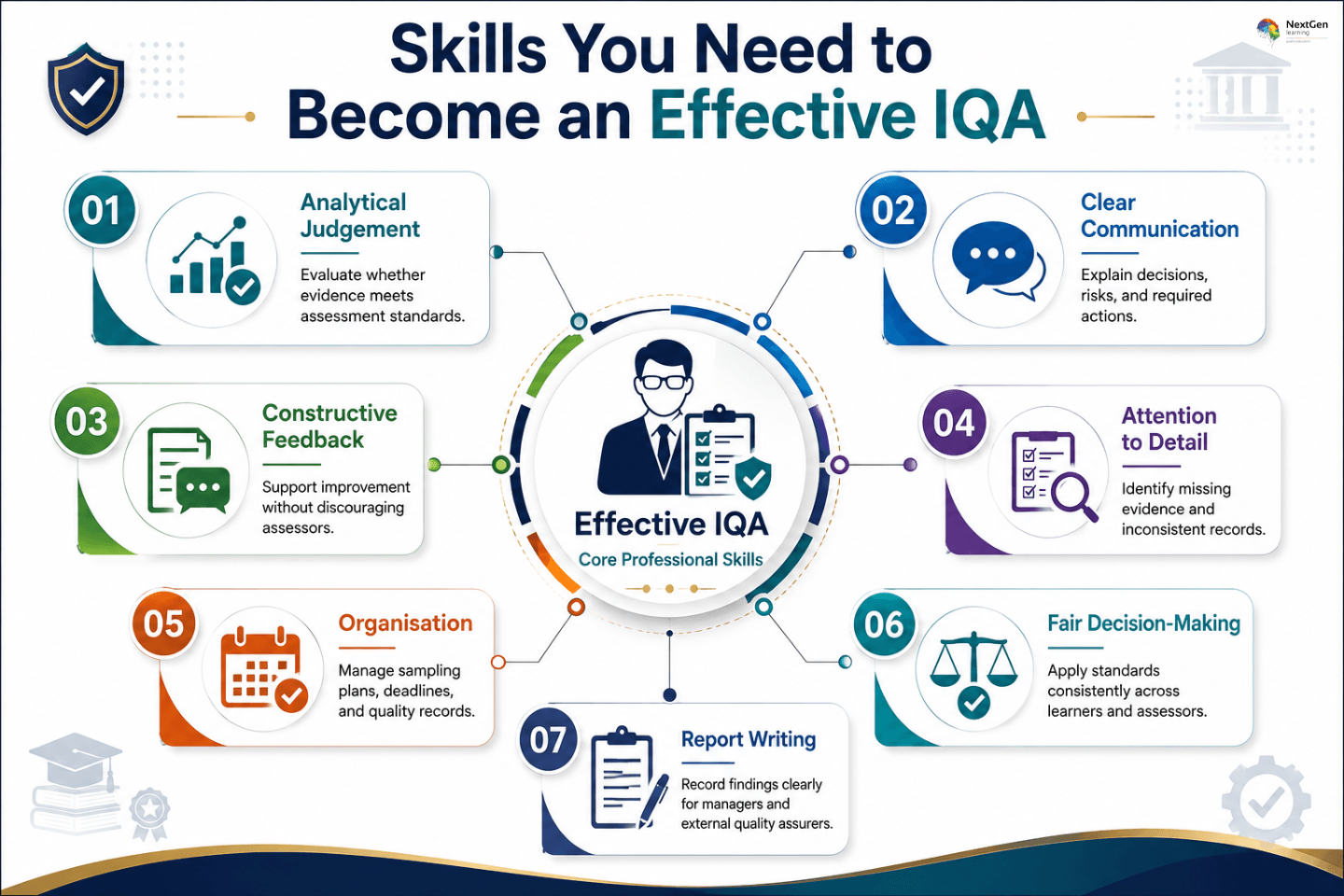
A Level 4 qualification provides essential knowledge. However, employers also expect strong communication, organisation and professional judgement. An effective IQA must review evidence objectively while helping assessors improve their practice.
Important skills include:
- Analytical judgement: Evaluate whether evidence meets assessment standards.
- Clear communication: Explain decisions, risks and required actions.
- Constructive feedback: Support improvement without discouraging assessors.
- Attention to detail: Identify missing evidence and inconsistent records.
- Organisation: Manage sampling plans, deadlines and quality records.
- Fair decision-making: Apply standards consistently across learners and assessors.
- Report writing: Record findings clearly for managers and external quality assurers.
IQA Jobs, Salary and Career Progression in the UK
Qualified IQAs can work for colleges, apprenticeship providers, private training organisations, employers and assessment centres. In addition, opportunities exist across health and social care, construction, education, business, engineering and other vocational sectors.
| Role | Typical UK Salary | Main Focus |
|---|---|---|
| Internal Quality Assurer | £28,000–£36,000 | Sampling, assessor support and compliance |
| Senior or Lead IQA | £33,000–£42,000+ | Leading IQA teams and quality systems |
| Quality Manager | £35,000–£50,000+ | Audits, governance and continuous improvement |
However, salary levels vary by sector, location, experience and contract type. Freelance and part-time IQA work may also be available, particularly for experienced professionals who support several training centres.
Career progression may lead to roles such as Lead IQA, Quality Manager, External Quality Assurer or Head of Quality. Therefore, maintaining CPD and developing leadership experience can improve long-term career prospects.
Is the Old V1 Qualification Still Recognised?
The V1 qualification was replaced by newer Level 4 IQA qualifications. However, many employers may still accept V1 where the holder can demonstrate current knowledge, recent experience and ongoing professional development.
The modern equivalent is generally the Level 4 Award in the Internal Quality Assurance of Assessment Processes and Practice. Therefore, V1 holders should keep evidence of CPD, standardisation activity and recent IQA work.
Refresher training may be useful if you have not worked in quality assurance for several years. In addition, always check the current requirements of the employer, centre or awarding organisation before applying for an IQA role.
Final Checklist for Becoming an IQA

Before applying for IQA roles, make sure you can demonstrate both knowledge and practical competence.
- Confirm sector expertise: Maintain current knowledge of the vocational area you want to quality assure.
- Understand assessment practice: Build experience of assessment decisions, evidence requirements and learner feedback.
- Choose the right qualification: Select the practitioner Level 4 Award if you plan to carry out IQA duties.
- Secure workplace access: Arrange access to assessors, learner evidence and genuine quality assurance activities.
- Complete your portfolio: Include sampling plans, observations, feedback records and standardisation evidence.
- Maintain CPD: Keep up with awarding organisation guidance, qualification changes and sector standards.
- Prepare for employment: Target colleges, apprenticeship providers, employers and private training organisations.
Completing these steps will help you move into internal quality assurance with stronger professional credibility and practical readiness.
Frequently Asked Questions
Yes, in some cases. However, assessment experience gives you a stronger understanding of evidence, assessment decisions and feedback. Therefore, many employers prefer candidates with assessor knowledge or a qualification such as CAVA.
Completion time depends on your experience, study pace and access to practical evidence. Some learners finish within a few months, while others take longer because they need to arrange assessor observations and portfolio evidence.
You can complete much of the theory online. However, the practitioner qualification also requires genuine IQA activity. Therefore, you usually need access to assessors, learner evidence and assessment records.
Yes, if you take the practitioner Level 4 Award or Lead IQA Certificate. You must normally observe, support or quality-assure assessors as part of your practical evidence.
Many recognised IQA qualifications sit within the Regulated Qualifications Framework. However, always check the awarding organisation, qualification number and current registration status before enrolling.
You can apply for IQA roles with colleges, apprenticeship providers, employers and private training organisations. Moreover, with experience, you may progress to Lead IQA, Quality Manager or External Quality Assurer roles.


0 responses on "How to Become an IQA in the UK: Level 4 Guide"