



Safeguarding for Youth Workers: Responsibilities and Training
A young person stays behind after a youth club session and shares something concerning about their home life. You want to help, but what should you say? Who should you tell? And what happens next?
Safeguarding for youth workers means recognising potential harm, maintaining safe professional relationships, responding appropriately to concerns and following safeguarding procedures. These responsibilities apply whether you support young people through a charity, community programme or youth service.
Understanding your responsibilities is essential, but having appropriate training matters just as much. This guide explains what UK youth workers should know, how to handle safeguarding concerns and how to choose safeguarding training that suits their role.
Table of Contents
What Does Safeguarding Mean for Youth Workers?
Safeguarding involves protecting children and young people from harm, promoting their welfare and creating environments where they feel safe and supported.
For a broader understanding of safeguarding across different settings, explore how safeguarding works in care, schools and healthcare
In youth work, this includes supervising activities, recognising possible abuse or exploitation, maintaining professional boundaries and reporting concerns appropriately.
Safeguarding vs Child Protection in Youth Work
Although closely connected, safeguarding and child protection have different purposes.
- Safeguarding includes the wider actions taken to prevent harm and promote children’s welfare.
- Child protection focuses on protecting individual children who are suffering or likely to suffer significant harm.
Youth workers contribute to both through their everyday interactions with young people.
In England, Working Together to Safeguard Children 2026 provides statutory guidance on how organisations and agencies work together to protect children.
Youth work can also involve people aged 18 and over. In these situations, workers may need to consider adult safeguarding arrangements alongside the relevant organisational procedures.
What Are the Safeguarding Responsibilities of a Youth Worker?
Youth workers often develop trusted relationships with young people. This places them in a valuable position to notice changes in behaviour, identify potential risks and help young people access appropriate support.
The National Youth Agency’s safeguarding standards provide a practical framework for safeguarding across youth organisations.
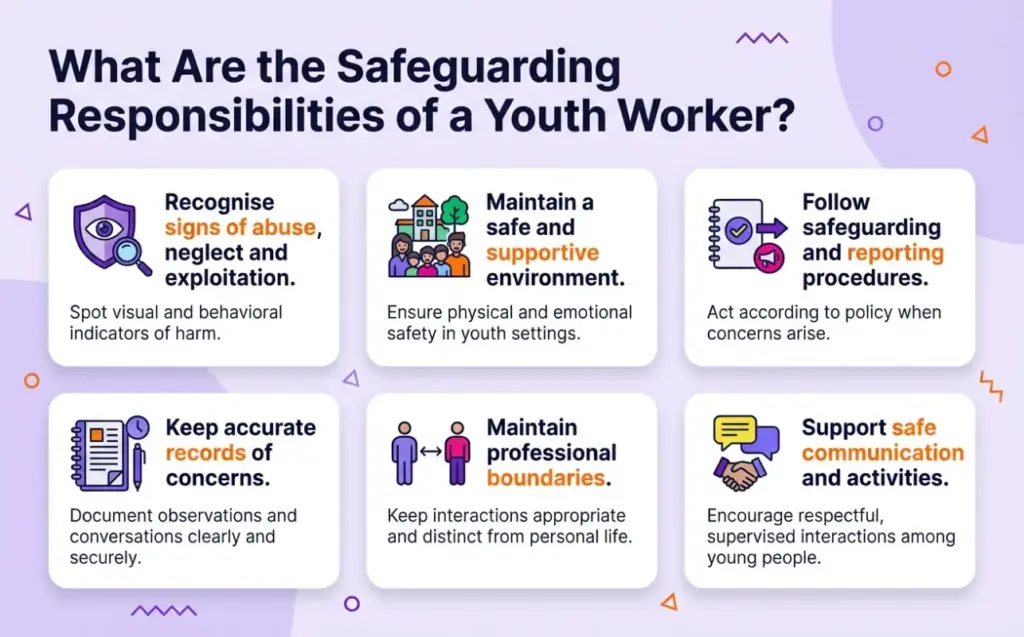
Recognising Signs of Abuse, Neglect and Exploitation
Youth workers should understand possible indicators of physical, emotional and sexual abuse, neglect and exploitation.
Warning signs may include unexplained injuries, sudden withdrawal, persistent anxiety, significant behavioural changes or concerning relationships.
A single behavioural change does not necessarily indicate abuse. The youth worker’s responsibility is to recognise and report concerns appropriately rather than independently investigate them.
Maintaining a Safe and Supportive Environment
Good safeguarding practice involves:
- Providing appropriate supervision during activities, outings and trips.
- Treating young people respectfully and without discrimination.
- Maintaining clear professional boundaries.
- Following agreed procedures for one-to-one meetings.
- Identifying potential risks before activities begin.
- Encouraging young people to raise concerns in a supportive environment.
These responsibilities are relevant to both paid and volunteer youth workers.
Following Safeguarding and Reporting Procedures
Every youth worker should know who handles safeguarding concerns within their organisation and how to contact them.
Concerns should be recorded accurately and reported through established procedures. Workers should also understand what to do when their usual safeguarding contact is unavailable or involved in a concern.
For charity-run youth services, safeguarding responsibilities also form part of wider organisational arrangements. This makes safeguarding training within charities an important consideration for managers, staff and volunteers.
What Safeguarding Risks Should Youth Workers Recognise?
Youth work takes place in community centres, schools, outdoor spaces, sports facilities and online environments. Each setting can present different safeguarding considerations.
Abuse, Exploitation and Harmful Behaviour
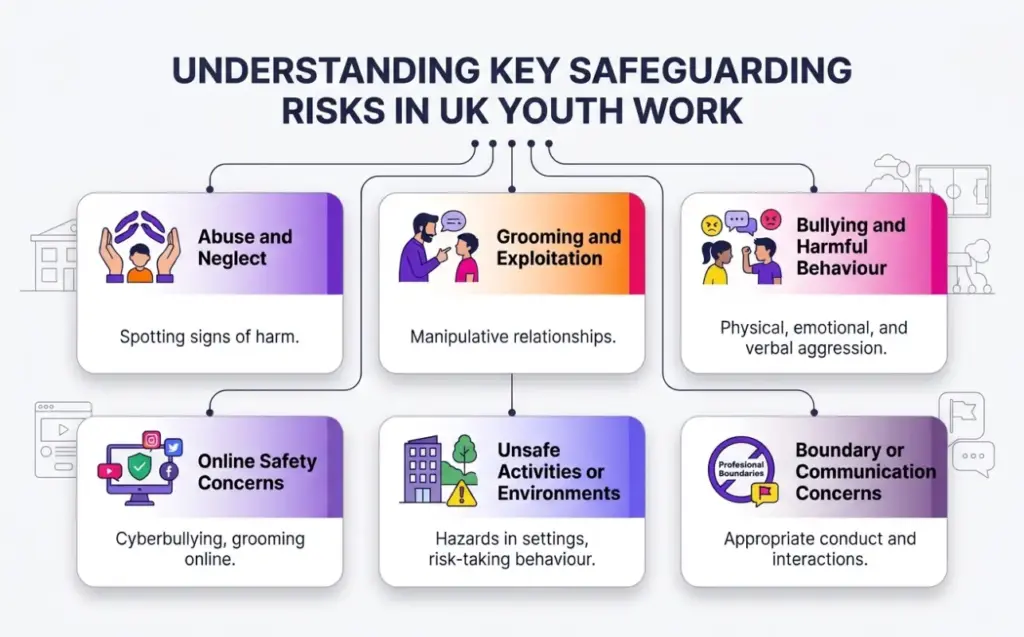
Youth workers may encounter concerns involving bullying, grooming, neglect, sexual exploitation or harmful behaviour between young people.
Some risks develop outside organised activities. For example, a young person may experience online harassment, coercion or exploitation within their wider community.
Recognising these concerns requires awareness, attentive listening and familiarity with reporting procedures.
Online Safety, Activities and Professional Boundaries
Digital communication plays an important role in modern youth work, but it requires appropriate boundaries.
Workers should use approved communication channels, avoid inappropriate private conversations and follow organisational guidance on messaging and social media.
Activities and trips also require suitable supervision and risk assessments.
For example, someone organising a youth football session should consider supervision arrangements, changing facilities, appropriate staff conduct and procedures for responding to incidents.
Those involved in coaching or physical activities should also understand safeguarding responsibilities in sports clubs, where additional activity-specific procedures may be relevant.
What Should a Youth Worker Do About a Safeguarding Concern?
Recognising a concern is the first step. Youth workers also need to understand how to respond appropriately and involve the people responsible for safeguarding decisions.
How to Respond When a Young Person Discloses Abuse
Imagine a young person tells you they feel unsafe at home.
Your response can influence whether they feel comfortable sharing information and accessing support.
The NSPCC’s guidance on recognising and responding to abuse emphasises listening carefully, showing understanding and responding supportively.
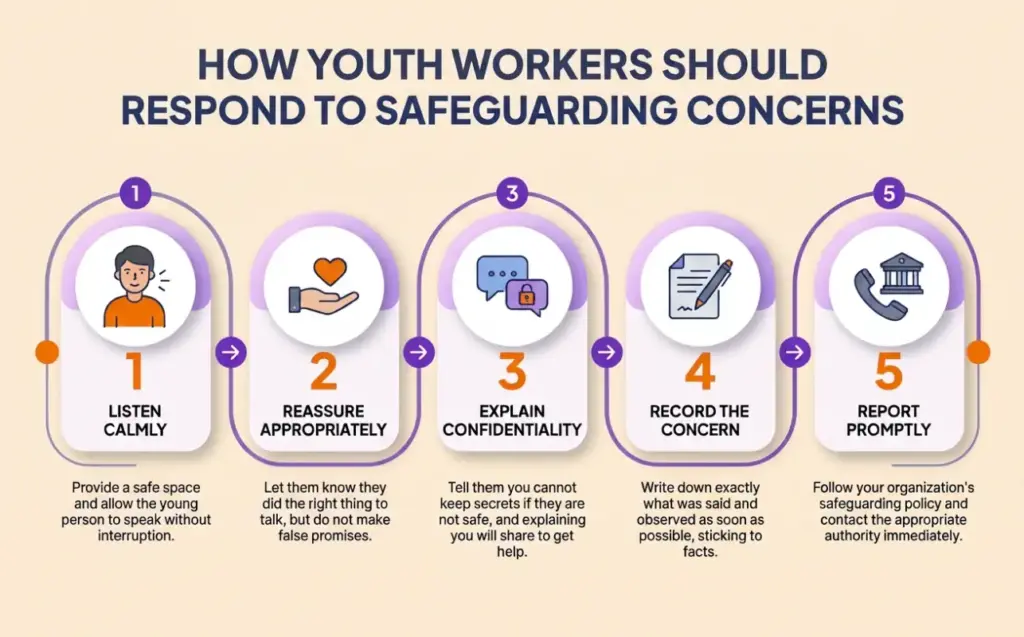
A practical approach involves five steps:
- Listen calmly. Allow the young person to speak without interrupting or asking leading questions.
- Reassure appropriately. Acknowledge their decision to speak up and explain that their concern will be taken seriously.
- Explain confidentiality. Be clear that relevant information may need to be shared with appropriate safeguarding professionals.
- Record the concern. Document factual details, including the young person’s own words wherever possible.
- Report promptly. Follow organisational safeguarding procedures and escalate concerns through the appropriate channels.
Youth workers should avoid conducting their own investigations or confronting an alleged perpetrator.
Recording, Reporting and Escalating Concerns
Safeguarding records should be factual, timely and stored securely.
Include relevant dates, observations, statements and actions taken. Avoid speculation or personal assumptions.
The designated safeguarding lead or appropriate safeguarding contact will normally advise on the next steps.Understanding the role of a designated safeguarding lead can also help youth workers know who coordinates concerns and referrals. Workers should also know the alternative reporting arrangements if that person is unavailable or implicated.
Where someone faces immediate danger, contact emergency services. In the UK, call 999 for an emergency.
Information must also be handled appropriately. England’s government guidance on sharing safeguarding information explains the relevant framework for practitioners and organisations.
Effective safeguarding depends on sharing necessary information appropriately while respecting privacy and confidentiality.
Safeguarding Policies and Professional Boundaries in Youth Work
Safeguarding policies provide a framework for responding to concerns, maintaining professional standards and protecting young people during activities.
Following Your Organisation’s Safeguarding Policy
Before starting a youth work role, familiarise yourself with:
- The designated safeguarding contact and reporting procedures.
- Arrangements for recording concerns.
- Rules for supervision and communication.
- Emergency and escalation procedures.
- Expectations for professional conduct.
For organisations establishing or reviewing their procedures, understanding how to write a safeguarding policy can help ensure that responsibilities and reporting arrangements are clearly documented.
Smaller youth organisations may also benefit from using a safeguarding policy template as a starting point, adapting it to their activities, safeguarding risks and legal responsibilities.
Maintaining Clear Professional Boundaries
Professional boundaries help establish respectful and trustworthy working relationships.
Youth workers should use approved communication channels, follow procedures for one-to-one contact and maintain appropriate relationships with young people.
For example, if a young person contacts a worker through a personal social media account, the worker should respond according to organisational procedures rather than establishing an informal private communication arrangement.
What Safeguarding Training Do Youth Workers Need?
Safeguarding training helps youth workers develop the knowledge needed to recognise concerns, follow reporting procedures and respond appropriately in different situations.
The most suitable training depends on the responsibilities involved.
Is Safeguarding Training Mandatory for Youth Workers?
There is no single safeguarding course or certificate universally prescribed for every youth worker across the UK.
Training requirements depend on the role, organisation, activities and applicable safeguarding framework.
For example, a volunteer supporting supervised youth activities may require introductory safeguarding training and organisational induction. Someone responsible for leading safeguarding arrangements will generally need more specialised learning.
For those entering voluntary youth work, understanding the wider safeguarding training requirements for volunteers can help establish which training options are relevant.
What Should Youth Worker Safeguarding Training Cover?
A suitable safeguarding course should help learners understand:
- Different forms and indicators of abuse and neglect.
- Grooming, exploitation and online safeguarding risks.
- Responding to disclosures appropriately.
- Reporting and recording safeguarding concerns.
- Risk assessment and professional boundaries.
- Relevant safeguarding policies and procedures.
Structured training can be particularly useful for new youth workers, existing volunteers and professionals looking to refresh their safeguarding knowledge.
For those interested in developing these skills online, NextGen Learning offers a Child Protection and Safeguarding course.
The course covers key areas including child abuse, child sexual exploitation, responding to disclosures, risk assessment, actions following referral and safeguarding record keeping.
Learners can study the material online and, upon successful completion, access the course’s certification options, including a CPD certificate and an optional QLS-endorsed certificate.
The Quality Licence Scheme endorsement recognises the course’s non-regulated training provision.
If you want to strengthen your safeguarding knowledge, exploring the course curriculum is a useful starting point. Compare the learning outcomes with your organisation’s training expectations to determine whether the course suits your responsibilities.
How to Choose Appropriate Safeguarding Training
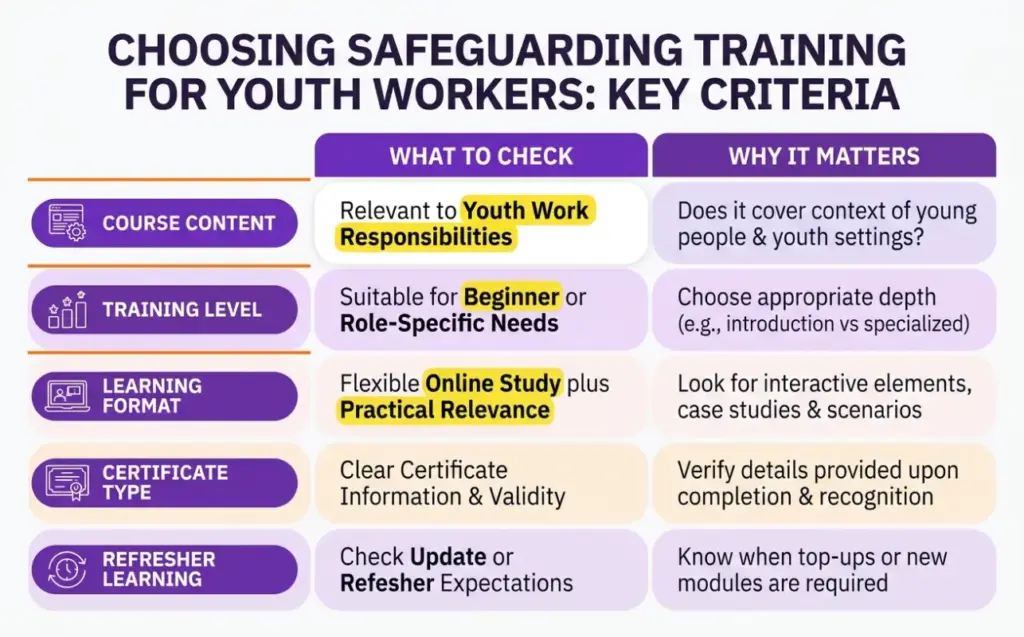
Before selecting a safeguarding course, consider the following:
| What to check | Why it matters |
|---|---|
| Course content | The training should address safeguarding concerns relevant to your role. |
| Learning level | Introductory courses and specialist safeguarding lead training serve different purposes. |
| Learning format | Online learning can support theoretical knowledge, while some roles also require practical induction. |
| Certificate type | Understand what the certificate demonstrates and whether your organisation accepts it. |
| Refresher learning | Check when your organisation expects safeguarding knowledge to be updated. |
Youth workers comparing broader programmes may also benefit from understanding what safeguarding courses for volunteers cover, including their learning outcomes, formats and typical study commitments.
Choosing relevant training can help you approach safeguarding responsibilities with greater confidence and a clearer understanding of professional expectations.
UK Safeguarding Requirements and Background Checks for Youth Workers
Safeguarding training is one part of responsible youth work practice. Recruitment checks and organisational safeguarding arrangements are also important considerations.
In England and Wales, DBS eligibility depends on the responsibilities and activities associated with a particular role.
The government’s DBS eligibility guidance for roles working with children explains when different levels of checking may be appropriate.
Scotland uses the Protecting Vulnerable Groups (PVG) Scheme for regulated roles, while Northern Ireland operates separate AccessNI arrangements.
Organisations should assess the applicable requirements for each role and jurisdiction.
It is also useful to distinguish safeguarding training certificates from professional youth work qualifications. Safeguarding courses can support professional development, while eligibility for particular youth work positions may depend on additional qualifications, experience or employer requirements.
Frequently Asked Questions
Volunteer youth workers should receive safeguarding information and training appropriate to their responsibilities. Specific arrangements depend on the organisation, activities and applicable safeguarding requirements.
Refresher requirements vary between organisations and roles. Youth workers should follow their organisation’s training policies and any relevant statutory or sector-specific requirements.
Yes. Online safeguarding courses can help youth workers develop knowledge of child protection, recognising abuse and reporting concerns. Depending on the role, practical induction and supervision may also be required.
A safeguarding certificate provides evidence of relevant learning. Professional youth work positions may also require recognised qualifications, practical experience and appropriate recruitment checks.
Concerns should normally be reported through the organisation’s designated safeguarding arrangements. Workers should follow appropriate escalation procedures and contact emergency services where immediate danger exists.
Conclusion
Safeguarding is an important part of everyday youth work. Recognising risks, maintaining professional boundaries and responding appropriately to concerns all contribute to safer environments for young people.
Developing these skills through suitable training can support both new and experienced youth workers.
If you are ready to build your knowledge, explore NextGen Learning’s Child Protection and Safeguarding course and consider how its learning outcomes fit your youth work responsibilities.