




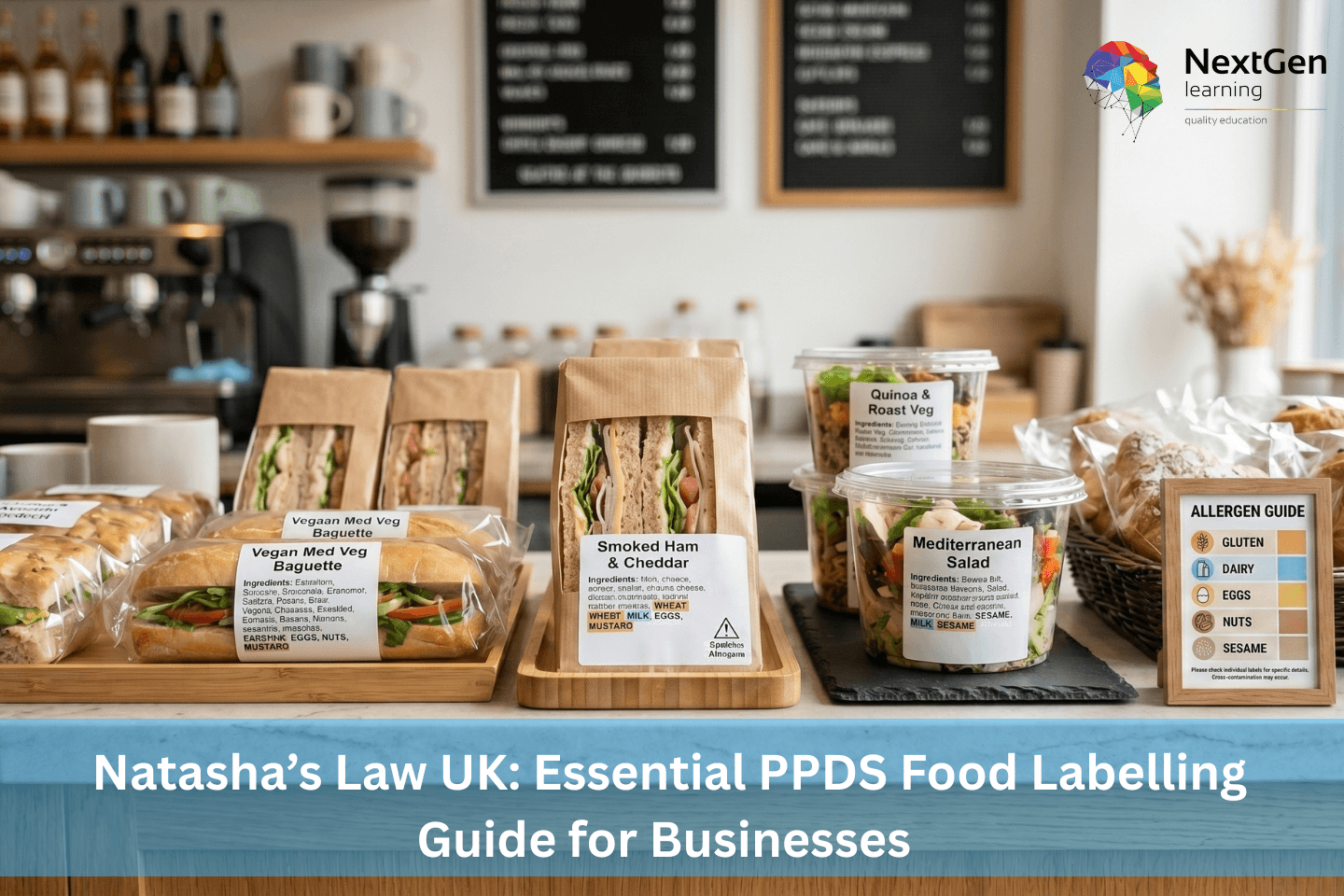
Natasha’s Law UK: Essential PPDS Food Labelling Guide for Businesses
Food allergies can become life-threatening within minutes. Therefore, clear allergen information is not just good customer service — it is a critical food safety responsibility. To improve consumer protection across the UK, the government introduced Natasha’s Law to strengthen allergen labelling requirements for pre-packed for direct sale (PPDS) food.
Since the law came into effect in October 2021, cafés, restaurants, bakeries, delis, caterers, and other food businesses have faced stricter responsibilities regarding food allergen labelling. As a result, businesses must now provide full ingredient lists and clearly identify allergens on qualifying food packaging.
This guide explains Natasha’s Law in simple terms. Moreover, it covers PPDS food rules, allergen labelling requirements, business responsibilities, compliance tips, and common mistakes food businesses should avoid. Whether you run a café, takeaway, catering company, or commercial kitchen, understanding Natasha’s Law is essential for protecting customers and maintaining food safety compliance.
Table of Contents
What Is Natasha’s Law?
Natasha’s Law is a UK food safety law that requires businesses to provide full ingredient and allergen labelling on pre-packed for direct sale (PPDS) food. The law officially came into effect on 1 October 2021 and applies to food businesses across England, Wales, Scotland, and Northern Ireland.
The purpose of the law is to help consumers with food allergies make safer and more informed decisions when purchasing food. Therefore, businesses that prepare and package food on-site for direct sale must clearly display allergen information on the packaging.
Under Natasha’s Law, PPDS food must include:
- The name of the food: Clearly identify the product being sold
- A full ingredients list: Include every ingredient used in the product
- Highlighted allergens: Emphasise allergens clearly within the ingredients list
Importantly, allergen information must remain accurate, visible, and easy to read. If businesses fail to provide correct allergen details, consumers with allergies may face serious health risks.
Natasha’s Law mainly affects businesses that prepare and package food before customers select or order it. Common examples include:
- Packaged sandwiches and wraps: Prepared and displayed for direct sale
- Bakery items: Such as pastries, cakes, and muffins packaged on-site
- Pre-packed salads or pasta pots: Sold from display fridges or counters
- Grab-and-go food products: Ready for customers to purchase immediately
However, the law does not apply in exactly the same way to all food products. Therefore, understanding the difference between PPDS and non-PPDS food is essential for compliance.
Additionally, Natasha’s Law forms part of wider UK food safety and allergen regulations. As a result, businesses must also manage allergen risks carefully, train staff properly, and provide accurate information to consumers at all times.
By improving allergen transparency, Natasha’s Law helps protect lives, strengthen food safety standards, and increase customer trust across the food industry.
Why Was Natasha’s Law Introduced?

Natasha’s Law was introduced to improve food allergen safety and help prevent fatal allergic reactions caused by unclear food labelling. The law was created following the tragic death of Natasha Ednan-Laperouse, a teenager who suffered a severe allergic reaction after eating a baguette that contained sesame seeds not clearly labelled on the packaging.
Natasha purchased the food from Pret A Manger at Heathrow Airport in 2016. Although sesame was baked into the bread, the packaging did not clearly display the allergen information. As a result, Natasha experienced a fatal anaphylactic reaction shortly after eating the product.
Following the incident, Natasha’s parents campaigned for stronger allergen labelling laws across the UK. Their campaign highlighted serious gaps in food labelling regulations and raised national awareness about food allergy safety.
The introduction of Natasha’s Law aimed to:
- Improve allergen transparency: Help consumers identify allergens easily
- Protect people with food allergies: Reduce the risk of severe allergic reactions
- Strengthen food business accountability: Ensure accurate allergen labelling practices
- Increase consumer confidence: Improve trust in food safety standards
- Raise awareness across the food industry: Encourage safer allergen management
Before Natasha’s Law, some pre-packed foods prepared and sold on the same premises did not require full ingredient labelling. Consequently, many consumers relied heavily on verbal information from staff, which sometimes created confusion or inconsistencies.
The law changed this by requiring food businesses to provide written allergen information directly on PPDS food packaging. Therefore, customers can now make safer and more informed food choices without relying solely on verbal communication.
Importantly, Natasha’s Law also encouraged businesses to improve their allergen management systems, staff training, and food safety procedures. As a result, the legislation has significantly increased awareness of allergen risks throughout the UK food industry.
Today, Natasha’s Law is recognised as a major step forward in protecting people with food allergies and improving food safety compliance across cafés, restaurants, bakeries, delis, and catering businesses.
What Is PPDS Food Under Natasha’s Law?
PPDS stands for Pre-Packed for Direct Sale. Under Natasha’s Law, PPDS food refers to food that is prepared, packaged, and sold on the same premises before the customer selects or orders it.
This category of food requires full ingredient and allergen labelling because customers may not have the opportunity to ask staff about allergen contents before purchasing the product. Therefore, businesses must clearly display allergen information directly on the packaging.
A food item is usually considered PPDS if:
- The food is packaged before the customer orders it: Packaging is already sealed or prepared
- The food is sold on the same premises where it was packed: Preparation and sale happen at the same location
- The packaging cannot be altered without opening it: The food remains enclosed before purchase
Understanding whether food qualifies as PPDS is extremely important because the legal labelling requirements differ significantly between PPDS and non-PPDS food.
Common Examples of PPDS Food
Many everyday food products fall under PPDS regulations. Businesses often prepare these items in advance for convenience and quick sale.
Examples include:
- Packaged sandwiches and wraps: Prepared and placed in refrigerated displays
- Salad boxes and pasta pots: Packed before customers purchase them
- Bakery products: Such as pastries, cakes, and muffins wrapped on-site
- Pre-packed grab-and-go meals: Sold from cafés, delis, or convenience counters
- Packaged confectionery items: Prepared and sealed before display
For these products, businesses must provide:
- The food name: Clearly identify the product
- A complete ingredients list: Include all ingredients used
- Highlighted allergen information: Make allergens easy to identify
Why PPDS Food Rules Matter
PPDS food regulations exist to improve allergen safety and reduce the risk of accidental allergic reactions. Before Natasha’s Law, some PPDS products did not require full ingredient labelling because they were prepared and sold on the same premises.
However, this created serious risks for consumers with food allergies. As a result, Natasha’s Law introduced stricter requirements to improve transparency and food safety.
The rules now help:
- Consumers make safer choices: Clear labels improve allergen awareness
- Businesses improve food safety practices: Accurate labelling reduces compliance risks
- Reduce allergen-related incidents: Customers receive clearer information
- Strengthen customer trust: Transparency improves business reputation
Importantly, businesses should regularly review recipes, packaging, and ingredient changes to ensure allergen information remains accurate at all times.
PPDS vs Non-PPDS Food: What’s the Difference?
One of the most important parts of Natasha’s Law compliance is understanding the difference between PPDS and non-PPDS food. Although both categories involve food sales, the allergen labelling requirements are different. Therefore, food businesses must correctly identify which products fall under each category.
In simple terms, PPDS food is packaged before the customer orders it and sold on the same premises. In contrast, non-PPDS food is usually prepared after the customer orders it or packaged elsewhere before sale.
PPDS vs Non-PPDS Food Comparison
| Feature | PPDS Food | Non-PPDS Food |
|---|---|---|
| Packaging Time | Packaged before customer selects it | Usually packaged after ordering or elsewhere |
| Sale Location | Sold on the same premises where prepared | May be sold elsewhere or prepared to order |
| Full Ingredient List Required | Yes | Not always |
| Allergen Information Required | Yes | Yes |
| Natasha’s Law Applies | Yes | Different allergen rules apply |
Examples of PPDS Food
PPDS food is commonly found in cafés, bakeries, delis, and grab-and-go food counters.
Examples include:
- Packaged sandwiches: Prepared and wrapped before display
- Salad pots: Sealed before customers select them
- Bakery products: Wrapped cakes, pastries, or muffins
- Pre-packed pasta or rice boxes: Sold from refrigerated shelves
For these products, businesses must provide a full ingredients list with allergens clearly highlighted.
Examples of Non-PPDS Food
Non-PPDS food does not follow the exact same packaging requirements. However, businesses must still provide allergen information to customers.
Examples include:
- Restaurant meals prepared after ordering: Freshly cooked dishes
- Takeaway food prepared to order: Meals packed after customer requests
- Food sold online or through distance selling: Subject to separate allergen rules
- Catering food prepared for events: Depending on packaging and service method
Although full ingredient labels may not always be required for non-PPDS food, allergen information must still remain accurate and accessible.
Why the Difference Matters
Misunderstanding the difference between PPDS and non-PPDS food can create serious compliance problems. Consequently, businesses may accidentally fail to meet legal allergen labelling requirements.
Correct classification helps businesses:
- Avoid legal penalties: Reduce the risk of non-compliance
- Improve allergen safety: Protect customers with food allergies
- Provide clearer customer information: Improve trust and transparency
- Strengthen food safety systems: Improve operational consistency
Businesses should also train staff regularly to ensure everyone understands which products require full PPDS labelling and how allergen information should be communicated.
What Does Natasha’s Law Require Businesses to Do?

Natasha’s Law requires food businesses to provide clear, accurate, and accessible allergen information on all qualifying PPDS food products. Since the law came into effect in October 2021, businesses that prepare and package food on-site for direct sale must follow stricter food labelling requirements.
The main goal of the law is to help customers with food allergies identify allergens quickly and safely before purchasing food. Therefore, businesses must take allergen management and food labelling much more seriously.
Main Requirements Under Natasha’s Law
Food businesses that sell PPDS food must ensure every qualifying product includes:
- The name of the food: Clearly identify the product being sold
- A full ingredients list: Include every ingredient used in the food item
- Highlighted allergens: Make allergens stand out clearly within the ingredients list
Importantly, allergen information must remain easy to read, accurate, and updated whenever recipes or ingredients change.
Businesses Must Ensure Accurate Allergen Information
Providing allergen labels alone is not enough. Businesses must also ensure the information remains correct at all times.
This means businesses should:
- Review recipes regularly: Update labels when ingredients change
- Check supplier information carefully: Confirm allergen details from manufacturers
- Maintain allergen records: Keep accurate ingredient documentation
- Train staff properly: Ensure employees understand allergen risks and procedures
- Monitor packaging processes: Prevent incorrect labels from being applied
Even small mistakes in allergen labelling can create serious health risks for consumers with allergies.
Which Businesses Must Comply?
Natasha’s Law applies to many food businesses across the UK that prepare and package food before customers select it.
Affected businesses commonly include:
- Cafés and coffee shops: Selling packaged sandwiches or pastries
- Bakeries and delis: Offering wrapped food items for direct sale
- Takeaways with grab-and-go products: Selling pre-packed meals or snacks
- Supermarket in-store counters: Preparing food on-site for customers
- Catering businesses: Depending on how food is packaged and sold
Businesses that fail to comply with allergen labelling rules may face enforcement action, legal penalties, reputational damage, and loss of customer trust.
Why Compliance Matters
Food allergies can cause severe and sometimes life-threatening reactions. Therefore, Natasha’s Law plays a critical role in improving food safety standards throughout the UK food industry.
Strong compliance helps businesses:
- Protect customer health: Reduce allergen-related risks
- Build consumer trust: Show commitment to food safety
- Improve operational consistency: Strengthen allergen management systems
- Avoid legal and financial penalties: Reduce compliance risks
- Strengthen business reputation: Demonstrate professionalism and responsibility
Additionally, businesses that prioritise allergen awareness and staff training often create safer and more trusted customer experiences.
The 14 Allergens Businesses Must Declare
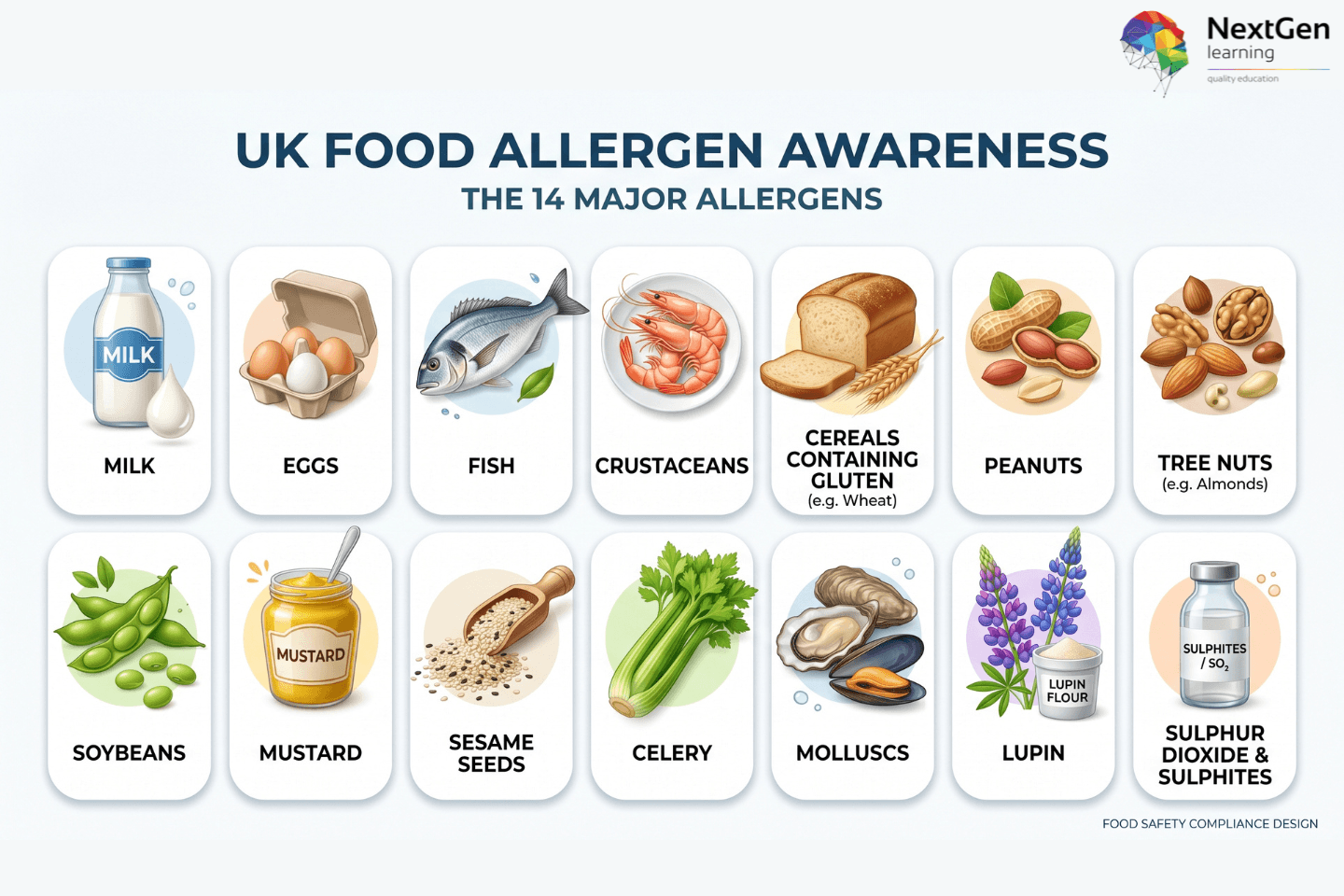
Under UK food safety regulations, businesses must clearly identify 14 major allergens that commonly cause allergic reactions. Natasha’s Law strengthens these requirements for PPDS food by making allergen information more visible and accessible to consumers.
For people with food allergies, even a small amount of an allergen can trigger serious health complications. Therefore, businesses must understand which allergens require declaration and ensure they are highlighted correctly on food labels.
The 14 Major Allergens
Food businesses in the UK must declare the following allergens whenever they are present in food products:
- Celery: Including celery stalks, leaves, seeds, and celeriac
- Cereals containing gluten: Such as wheat, rye, barley, and oats
- Crustaceans: Including prawns, crab, lobster, and shrimp
- Eggs: Used in baked goods, sauces, and many prepared foods
- Fish: Including fish sauces and fish-based ingredients
- Lupin: Commonly used in some flour products
- Milk: Including dairy products such as cheese, butter, and cream
- Molluscs: Such as mussels, oysters, squid, and clams
- Mustard: Often found in sauces, dressings, and seasonings
- Peanuts: Common in snacks, desserts, and sauces
- Sesame: Frequently used in bread, oils, and dressings
- Soybeans: Found in soy sauce, tofu, and processed foods
- Sulphur dioxide and sulphites: Used as preservatives in some foods and drinks
- Tree nuts: Including almonds, walnuts, hazelnuts, pistachios, and cashews
These allergens must be clearly emphasised within the ingredients list, usually through bold text, capital letters, or another distinct format.
Why Accurate Allergen Declaration Matters
Incorrect allergen information can have severe consequences for customers with allergies. As a result, businesses must treat allergen management as a major food safety responsibility rather than a simple labelling task.
Accurate allergen declaration helps businesses:
- Protect consumers from allergic reactions: Reduce serious health risks
- Improve customer confidence: Build trust through transparency
- Support legal compliance: Meet UK food safety regulations
- Reduce operational mistakes: Improve ingredient management processes
- Strengthen brand reputation: Demonstrate commitment to food safety
Additionally, allergen information should remain updated whenever recipes, suppliers, or ingredients change.
Common Allergen Management Mistakes
Many allergen-related incidents happen because businesses overlook small operational details. Therefore, strong allergen controls and staff awareness are essential.
Common mistakes include:
- Failing to update labels after recipe changes: Create inaccurate allergen information
- Cross-contamination during preparation: Transfer allergens between foods unintentionally
- Using incorrect packaging labels: Display wrong allergen details
- Poor staff communication: Employees provide inaccurate allergen advice
- Not checking supplier ingredient updates: Miss newly introduced allergens
Regular allergen training and careful ingredient monitoring help businesses reduce these risks significantly.
Who Does Natasha’s Law Apply To?
Natasha’s Law applies to food businesses across the UK that prepare and package food on the same premises before customers select or purchase it. Therefore, many businesses within the food industry must review their packaging, allergen management systems, and staff training procedures to remain compliant.
Although the law mainly focuses on PPDS food, allergen information responsibilities extend across the wider food sector. As a result, businesses should understand exactly how the regulations apply to their operations.
Restaurants
Restaurants are not always directly affected by Natasha’s Law in the same way as cafés or grab-and-go retailers. This is because most restaurant meals are prepared after customers place their orders.
However, restaurants must still provide accurate allergen information to customers. Therefore, staff should understand ingredients, allergens, and cross-contamination risks clearly.
Restaurants commonly provide allergen information through:
- Menus with allergen details: Highlight major allergens clearly
- Allergen information sheets: Help customers check ingredients safely
- Trained staff communication: Provide accurate allergen guidance
- Verbal allergen support: Assist customers with allergy concerns
Importantly, restaurants offering pre-packed grab-and-go food may also fall under PPDS requirements.
Cafés and Delis
Cafés and delis are among the businesses most affected by Natasha’s Law because they often prepare, package, and display food for direct sale.
Examples include:
- Packaged sandwiches and wraps: Prepared before customer selection
- Bakery products: Such as cakes, pastries, and muffins
- Salad pots and snack boxes: Displayed in refrigerated units
- Grab-and-go meals: Ready for immediate purchase
These products usually qualify as PPDS food. Therefore, cafés and delis must provide full ingredient lists and clearly highlighted allergens on packaging.
Caterers and Commercial Kitchens
Catering businesses and commercial kitchens may also need to comply with Natasha’s Law depending on how food is packaged and sold.
For example:
- Individually packaged food items: May require PPDS labelling
- Pre-packed buffet or event meals: Could fall under allergen labelling rules
- Grab-and-go catering products: Often require full allergen declarations
Additionally, caterers must manage allergen risks carefully because large-scale food preparation increases the possibility of cross-contamination.
Other Businesses Affected by Natasha’s Law
Several other businesses may also fall under Natasha’s Law requirements depending on their food preparation and packaging methods.
This may include:
- Supermarket in-store bakeries: Preparing packaged food on-site
- Coffee shops: Selling pre-packed snacks or sandwiches
- School and college food services: Offering packaged meals or snacks
- Hospital cafés and food counters: Providing grab-and-go food products
Because food preparation methods vary between businesses, companies should regularly review whether their products meet the PPDS definition.
Why Businesses Must Take Compliance Seriously
Failure to comply with Natasha’s Law can lead to serious consequences for both customers and businesses. Therefore, allergen management should become a core part of food safety operations.
Strong compliance helps businesses:
- Protect customer health: Reduce allergen-related incidents
- Improve consumer trust: Show commitment to food safety
- Reduce legal risks: Avoid penalties and enforcement action
- Strengthen business reputation: Build credibility within the food industry
Businesses that prioritise allergen awareness, accurate labelling, and staff training create safer environments for customers and improve long-term trust.
Natasha’s Law Compliance Checklist

Complying with Natasha’s Law requires more than simply adding labels to food packaging. Businesses must create reliable allergen management procedures, train staff properly, and regularly review food safety practices to ensure allergen information remains accurate.
A structured compliance process helps businesses reduce legal risks, improve customer safety, and maintain stronger food safety standards. Therefore, every business handling PPDS food should follow a clear allergen compliance checklist.
Essential Natasha’s Law Compliance Checklist
Use the following checklist to help ensure your business meets allergen labelling requirements effectively.
- Identify all PPDS food products: Review which products qualify under Natasha’s Law
- Create full ingredient lists: Include every ingredient used in each product
- Highlight all allergens clearly: Make allergens easy to identify on packaging
- Review recipes regularly: Update labels whenever ingredients change
- Check supplier allergen information: Confirm ingredient details remain accurate
- Train staff on allergen awareness: Ensure employees understand allergen risks
- Prevent cross-contamination: Use safe food handling procedures consistently
- Monitor packaging and labelling processes: Avoid incorrect labels or missing information
- Maintain allergen documentation: Keep records organised and updated
- Conduct regular compliance reviews: Identify and correct issues quickly
Staff Training Is Essential
Even accurate labels can become ineffective if staff provide incorrect allergen information. Therefore, allergen awareness training plays a major role in Natasha’s Law compliance.
Employees should understand:
- The 14 major allergens: Recognise allergen ingredients confidently
- Cross-contamination risks: Prevent allergen transfer during food preparation
- PPDS food requirements: Know which products require full labels
- Customer communication procedures: Respond accurately to allergy questions
- Emergency response basics: Understand allergic reaction risks
Regular refresher training also helps staff stay updated when menus, recipes, or food suppliers change.
Cross-Contamination Controls Matter
Many allergen incidents happen because allergens unintentionally transfer between foods during preparation or packaging. Consequently, businesses should implement strict cross-contamination controls.
Effective controls include:
- Separate preparation areas: Reduce allergen contact between foods
- Dedicated utensils and equipment: Prevent accidental contamination
- Clear cleaning procedures: Remove allergen traces properly
- Proper ingredient storage: Avoid mixing allergenic ingredients
Strong allergen controls improve both food safety and customer confidence.
Why Compliance Benefits Your Business
Natasha’s Law compliance is not only about avoiding penalties. It also helps businesses create safer customer experiences and build stronger reputations.
Good compliance practices help businesses:
- Protect customers with allergies: Reduce serious health risks
- Improve consumer trust: Demonstrate professionalism and responsibility
- Reduce legal and financial risks: Avoid enforcement action and complaints
- Strengthen operational consistency: Improve food safety management systems
- Support long-term business growth: Build customer loyalty through transparency
Businesses that prioritise allergen safety often stand out as more trusted and responsible food providers.
Common Natasha’s Law Mistakes Businesses Make
Many food businesses understand the importance of Natasha’s Law, yet compliance mistakes still happen regularly. In some cases, even small allergen labelling errors can place customers at serious risk. Therefore, businesses should identify common mistakes early and strengthen their allergen management procedures consistently.
Most compliance problems happen because of poor communication, outdated ingredient information, or weak staff training. However, businesses can significantly reduce these risks through proper systems and regular reviews.
Failing to Update Allergen Labels
One of the most common mistakes is failing to update labels when recipes or ingredients change. Even a minor ingredient substitution may introduce new allergens into a product.
Businesses sometimes:
- Change suppliers without reviewing allergen information: New ingredients may contain allergens
- Modify recipes informally: Labels no longer match the actual product
- Use temporary substitute ingredients: Allergen details become inaccurate
Therefore, businesses should review allergen labels immediately whenever ingredients or suppliers change.
Misunderstanding PPDS Food Rules
Some businesses incorrectly assume that Natasha’s Law does not apply to their products. However, misunderstanding the definition of PPDS food can create serious compliance issues.
Common misunderstandings include:
- Assuming grab-and-go food is exempt: Many packaged items qualify as PPDS food
- Confusing PPDS with made-to-order food: Packaging timing matters
- Applying inconsistent labelling practices: Some products remain incorrectly labelled
Businesses should carefully assess how food is prepared, packaged, and sold to determine whether full allergen labelling is required.
Poor Staff Training
Even accurate packaging can become ineffective if staff provide incorrect allergen information to customers. Consequently, insufficient staff training remains a major food safety risk.
Common training failures include:
- Employees not understanding the 14 allergens: Incorrect customer guidance
- Poor communication between kitchen and front-of-house staff: Conflicting allergen information
- Lack of refresher training: Staff forget procedures over time
Regular allergen awareness training helps businesses maintain safer and more consistent food safety practices.
Cross-Contamination Problems
Cross-contamination can occur when allergens unintentionally transfer between foods during preparation, storage, or packaging. Although labels may appear correct, contamination risks can still create dangerous situations.
Common causes include:
- Shared utensils and equipment: Allergens transfer between products
- Improper cleaning procedures: Residual allergens remain on surfaces
- Poor ingredient storage: Ingredients mix accidentally
Strong food handling controls help reduce these risks significantly.
Relying Too Much on Verbal Information
Some businesses rely heavily on verbal allergen communication instead of maintaining accurate written records and labels. However, verbal information alone can easily become inconsistent or incorrect.
Businesses should avoid:
- Guessing ingredient information: Staff should always verify details
- Providing uncertain allergen advice: Customers require accurate information
- Using outdated allergen sheets: Incorrect records create serious risks
Clear written allergen information improves consistency, accuracy, and customer confidence.
Why Avoiding These Mistakes Matters
Failure to comply with Natasha’s Law can damage customer trust and expose businesses to legal penalties, reputational harm, and serious food safety incidents.
Avoiding common mistakes helps businesses:
- Protect customers with allergies: Reduce life-threatening risks
- Improve food safety standards: Strengthen operational procedures
- Reduce compliance risks: Avoid enforcement action and complaints
- Build customer confidence: Demonstrate professionalism and transparency
Businesses that actively manage allergen safety create safer customer experiences and stronger long-term trust.
Why Food Allergen Awareness Training Matters

Food allergen awareness training plays a critical role in helping businesses comply with Natasha’s Law and improve overall food safety. Even with correct allergen labels, mistakes can still happen if staff do not understand allergen risks, cross-contamination, or proper customer communication procedures.
Therefore, businesses should treat allergen training as an essential part of their food safety management system rather than a one-time requirement.
How Allergen Training Improves Food Safety
Well-trained employees can identify allergen risks more accurately and respond to customer concerns with greater confidence. As a result, businesses reduce the likelihood of dangerous allergen-related incidents.
Effective allergen awareness training helps staff:
- Recognise the 14 major allergens: Identify allergens in ingredients and recipes
- Prevent cross-contamination: Follow safer food preparation practices
- Understand PPDS labelling requirements: Apply Natasha’s Law correctly
- Communicate clearly with customers: Provide accurate allergen information
- Handle ingredient changes safely: Update allergen information properly
Importantly, consistent staff knowledge improves both compliance and customer trust.
Businesses Benefit from Better Allergen Training
Strong allergen awareness training supports businesses far beyond legal compliance. It also helps create a safer, more professional environment for both staff and customers.
Businesses that invest in allergen training can:
- Improve customer confidence: Customers feel safer purchasing food products
- Reduce operational mistakes: Staff follow clearer allergen procedures
- Lower legal and reputational risks: Prevent avoidable compliance failures
- Strengthen food safety culture: Encourage responsibility across teams
- Support long-term business growth: Build trust and customer loyalty
Additionally, trained employees are often more confident handling allergy-related questions and concerns.
What Food Allergen Awareness Training Should Cover
A high-quality allergen awareness course should provide both legal knowledge and practical workplace guidance.
Important training topics include:
- Understanding Natasha’s Law: Learn current allergen labelling requirements
- The 14 mandatory allergens: Identify common allergen ingredients
- Cross-contamination prevention: Reduce allergen transfer risks
- PPDS food regulations: Understand packaging and labelling responsibilities
- Customer communication procedures: Respond accurately to allergen enquiries
- Emergency awareness: Recognise the seriousness of allergic reactions
Regular refresher training is also important because recipes, suppliers, and regulations may change over time.
Food Allergen Awareness Training Course
Strengthen your food safety knowledge with our Food Allergen Awareness Training course. Learn about Natasha’s Law, allergen labelling requirements, cross-contamination prevention, PPDS food regulations, and safe food handling practices for UK food businesses.
Upon successful completion, you will receive a CPD-accredited digital certificate that can help enhance your CV, demonstrate your food safety knowledge, and support career progression in catering, hospitality, food production, and food safety compliance roles.
FAQs About Natasha’s Law
Natasha’s Law is a UK food safety law that requires businesses to provide full ingredient lists and clearly highlighted allergen information on pre-packed for direct sale (PPDS) food. The law was introduced to help protect people with food allergies and improve food labelling transparency. It officially came into effect on 1 October 2021 across the UK.
PPDS stands for Pre-Packed for Direct Sale. It refers to food that is prepared, packaged, and sold on the same premises before the customer selects or orders it. Common examples include packaged sandwiches, salad boxes, pastries, and grab-and-go meals prepared on-site. These products must display full ingredient and allergen information on the packaging.
Natasha’s Law does not usually apply to restaurant meals prepared after a customer places an order. However, restaurants must still provide accurate allergen information to customers either verbally or in writing. Additionally, restaurants that sell packaged grab-and-go food products may still need to comply with PPDS labelling requirements.
UK food businesses must declare 14 major allergens, including milk, eggs, peanuts, tree nuts, sesame, fish, shellfish, soybeans, cereals containing gluten, mustard, celery, lupin, molluscs, and sulphites. These allergens must be clearly highlighted within the ingredients list on qualifying food packaging. Accurate allergen declaration helps protect customers from severe allergic reactions.
Failure to comply with Natasha’s Law can result in legal penalties, enforcement action, reputational damage, and serious food safety risks. Inaccurate allergen information may also put customers’ health in danger. Therefore, businesses should regularly review labels, train staff properly, and maintain strong allergen management systems.
Although Natasha’s Law mainly focuses on PPDS food sold directly on-site, food businesses selling products online or through distance selling must still provide allergen information under wider UK food information regulations. Customers should receive allergen details before purchasing food and again upon delivery where required.
Food allergen awareness training helps employees understand allergen risks, cross-contamination prevention, customer communication, and legal compliance requirements. Well-trained staff are more likely to provide accurate allergen information and follow safer food handling practices. As a result, businesses improve food safety standards and reduce the risk of allergen-related incidents.
Businesses can improve compliance by reviewing recipes regularly, updating allergen labels, training staff consistently, checking supplier ingredient information, and implementing strong cross-contamination controls. Additionally, businesses should conduct regular allergen audits and ensure all packaging information remains accurate and easy to read.



0 responses on "Natasha’s Law UK: Essential PPDS Food Labelling Guide for Businesses"