




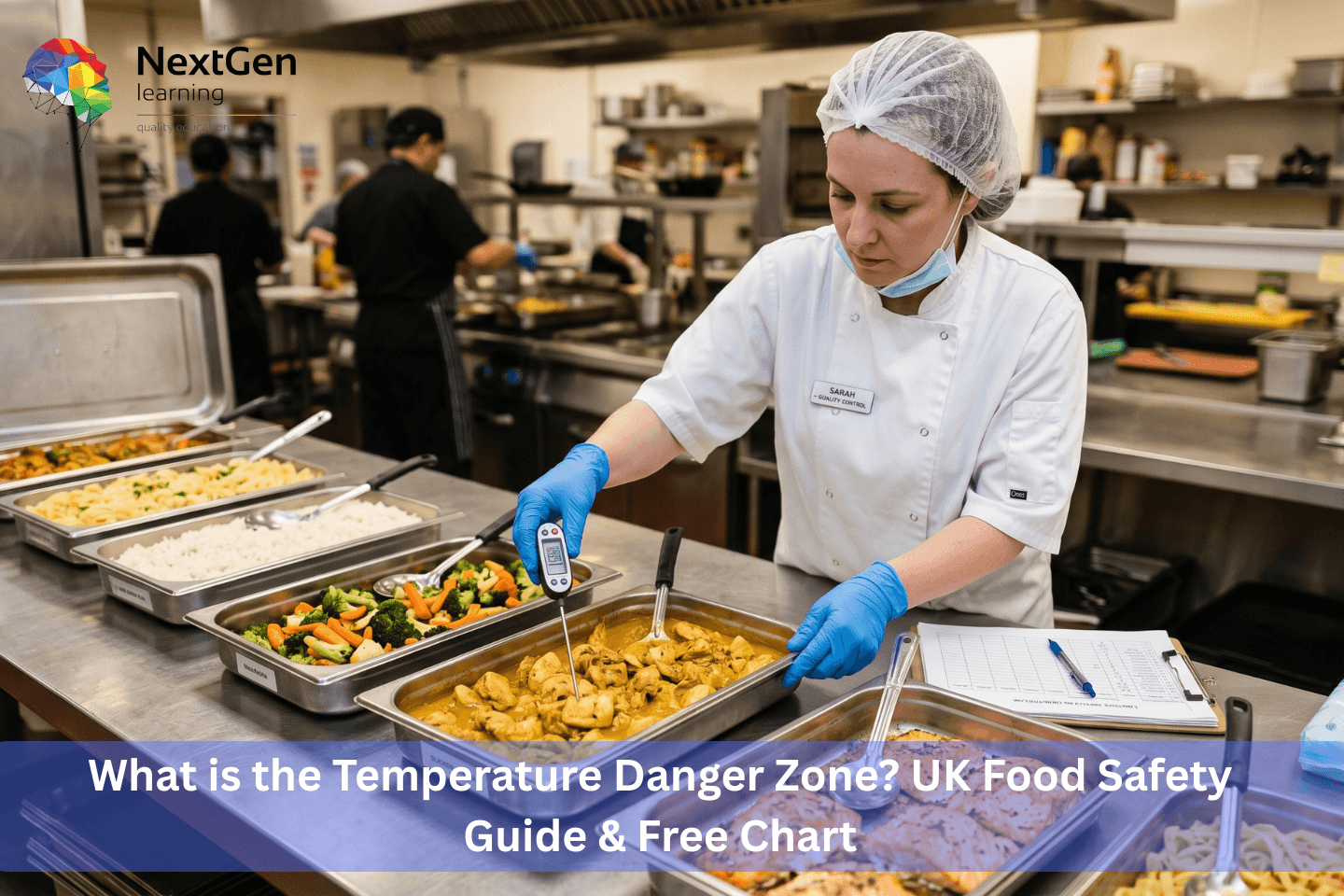
What is the Temperature Danger Zone? UK Food Safety Guide & Free Chart
Every year in the UK, millions of people suffer from foodborne illness — and in the vast majority of cases, incorrect food temperatures are a primary cause. Whether you work in a professional kitchen or cook at home for your family, understanding the temperature danger zone is one of the most important food safety skills you can have.
The temperature danger zone is the range within which harmful bacteria multiply most rapidly on food. When food spends too long within this range, it can become seriously unsafe to eat — even if it looks, smells, and tastes completely normal. This is precisely what makes it so dangerous. There are no visible warning signs until the damage is already done.
In this guide, we explain exactly what the temperature danger zone is, what the Food Standards Agency (FSA) recommends for the UK, and how to keep food safe at every stage — from delivery and storage through to cooking and serving. Moreover, we break down safe internal temperatures for specific foods, cover the 2-hour rule, and explain what food businesses must do to meet their legal obligations.
To help you put this into practice immediately, we have also included a free temperature danger zone chart that you can download and display in your kitchen.
Whether you are a home cook, a chef, or a catering manager responsible for food safety compliance, this guide gives you everything you need to protect the people you feed.
Table of Contents
What Is the Temperature Danger Zone for Food?
What Is the Temperature Danger Zone for Food?
The temperature danger zone refers to the specific range of temperatures at which harmful bacteria grow most rapidly on food. Within this range, a single bacterium can multiply into millions in just a matter of hours. As a result, food that spends too long at these temperatures can quickly become a serious health hazard — regardless of how fresh it was to begin with.
In the UK, the Food Standards Agency (FSA) defines the temperature danger zone as 8°C to 60°C. This means that any perishable food held between these two temperatures is at risk. Consequently, your goal at every stage of food handling — whether storing, preparing, cooking, or serving — is to keep food out of this range for as long as possible.
It is important to understand that the danger zone is not simply about avoiding one specific temperature. Rather, it describes an entire range where conditions become progressively more favourable for bacterial growth. The warmer the food gets within this zone, the faster bacteria multiply. Therefore, the closer food is to the middle of the danger zone, the more urgent it becomes to act.
What Does the FSA Say About the Temperature Danger Zone?
The Food Standards Agency is the UK’s leading authority on food safety. According to FSA guidance, food is considered safe when it is kept either below 8°C or above 60°C. However, as best practice, the FSA recommends cooking or reheating food to 70°C in England and 82°C in Scotland, as these higher temperatures destroy bacteria far more reliably and in a much shorter time.
These guidelines are not simply recommendations — they underpin legal food safety requirements for businesses operating in the UK. Under the Food Safety Act 1990 and Regulation (EC) No 852/2004 on food hygiene, food businesses are legally required to control the temperature of food at all stages of production, storage, and service. Failing to do so not only puts customers at risk but also exposes businesses to enforcement action, including improvement notices, fines, and prosecution.
For home cooks, these guidelines serve as a highly reliable framework for safe food preparation. For food professionals, they form the foundation of any effective Hazard Analysis and Critical Control Points (HACCP) system.
Why Do Bacteria Thrive in This Temperature Range?
To understand why the danger zone matters so much, it helps to understand what bacteria actually need in order to grow. Like all living organisms, bacteria require the right conditions to multiply — and unfortunately, the temperature range between 8°C and 60°C provides exactly those conditions.
Bacteria multiply most rapidly between 20°C and 50°C. Within this narrower range, the rate of reproduction accelerates significantly. The optimal temperature for bacterial growth is 37°C — which is, notably, the same as the average human body temperature. This is not a coincidence. Many of the bacteria most dangerous to humans, including Salmonella, E. coli, and Listeria monocytogenes, have evolved to thrive at precisely the temperatures found inside the human body.
Under ideal conditions, a single bacterium can divide every 10 to 20 minutes. Therefore, within just two hours at an optimal temperature, one bacterium can become thousands. Within four hours, contamination levels can reach a point where food becomes genuinely hazardous to eat. This is why time spent in the danger zone is just as important as temperature itself — a point we will return to in detail later in this guide.
It is also worth noting that bacteria do not announce their presence. Contaminated food rarely looks, smells, or tastes different from safe food. Consequently, temperature control is your most reliable defence — not your senses.
Here is a quick summary of why each part of the danger zone presents a specific risk:
- 8°C to 20°C — Bacteria grow steadily. Food left at cool room temperature falls squarely in this range.
- 20°C to 50°C — Bacterial growth accelerates rapidly. This includes typical room temperature in a warm kitchen.
- 37°C — The peak danger point. Bacteria multiply at their fastest rate at this temperature.
- 50°C to 60°C — Growth slows considerably, but bacteria remain active and food is still unsafe.
- Above 60°C — Bacteria begin to die. However, the rate of destruction depends on both temperature and time.
Understanding these distinctions helps you make smarter decisions in the kitchen. For example, it explains why leaving cooked chicken on a warm worktop for two hours is genuinely dangerous — not merely inconvenient.
UK Food Temperature Danger Zone Chart
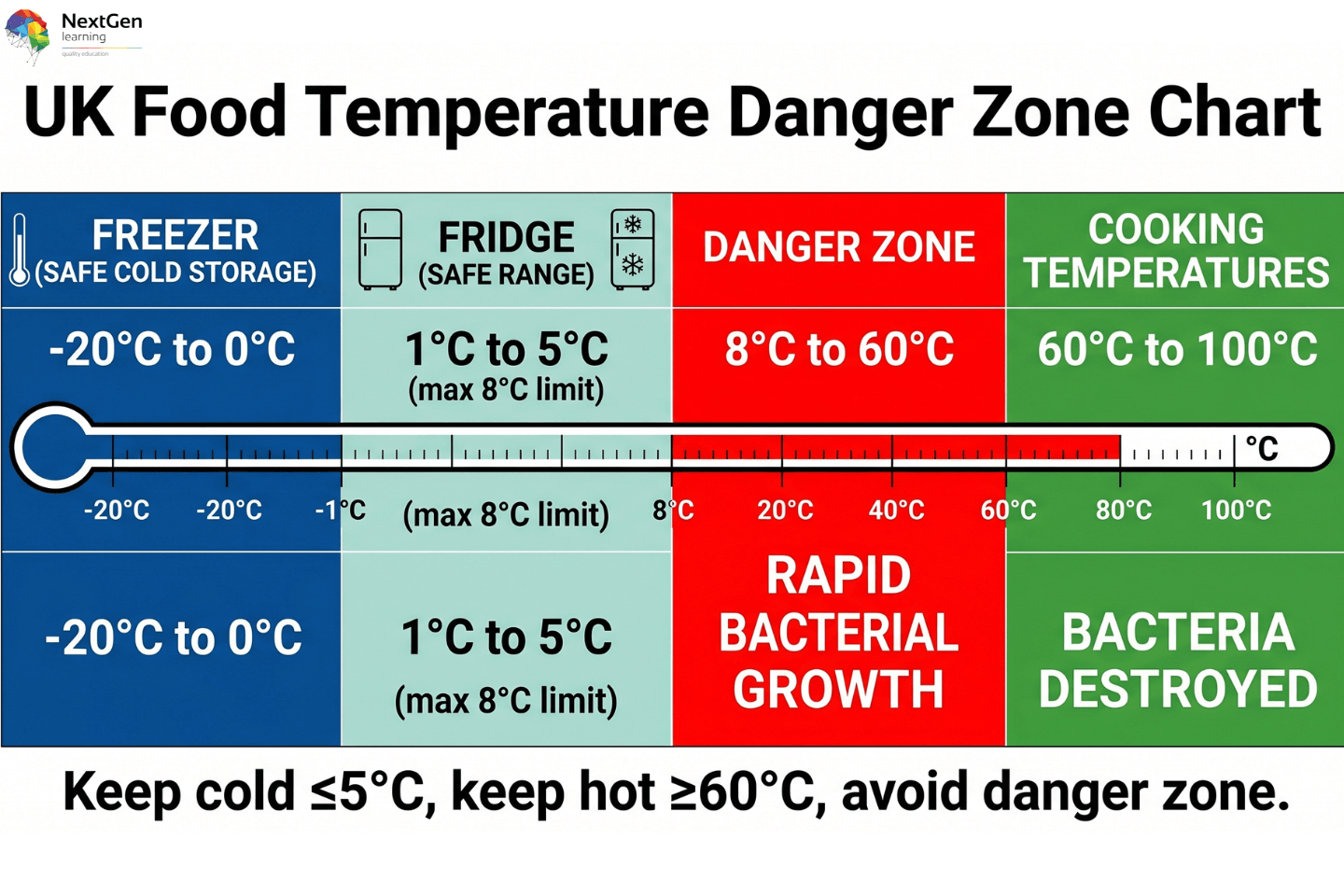
Having a clear visual reference for food safety temperatures makes a genuine difference in a busy kitchen. When you are managing multiple dishes, supervising a team, or working under pressure during a service, a quick glance at a well-designed chart is far more practical than trying to recall figures from memory. For this reason, we have created a free, downloadable UK temperature danger zone chart that you can print and display prominently in your kitchen.
The chart covers every critical temperature point — from freezer storage through to cooking and serving — and is designed to be immediately useful for both home cooks and food professionals. Moreover, it aligns fully with current FSA guidance, so you can be confident that the information it displays is accurate and compliant.
However, a chart alone is only part of the picture. To truly understand food safety temperatures, you also need to know what each temperature point means in practice. Therefore, the reference table below expands on every key temperature, explains which zone it falls into, and tells you exactly what action it requires.
Complete UK Food Temperature Reference Table
| Temperature | Zone | What It Means | Required Action |
|---|---|---|---|
| -20°C to -18°C | Freezer | Ideal freezer storage range | Keep all frozen food within this range |
| -5°C | Freezer (caution) | Some bacteria can still multiply slowly | Monitor frozen deliveries carefully |
| 0°C | Freezing point | Water freezes; bacterial activity near zero | Safe for frozen storage |
| 1°C to 5°C | Fridge (ideal) | Best range for chilled food storage | Set your fridge within this range |
| 8°C | Upper fridge limit | Maximum safe chilled storage temperature | Do not store perishable food above this |
| 8°C to 60°C | ⚠️ Danger Zone | Rapid bacterial growth occurs here | Minimise all food exposure to this range |
| 20°C to 50°C | Peak danger range | Fastest bacterial multiplication | Never leave perishable food here |
| 37°C | Optimal bacterial growth | Bacteria multiply at maximum speed | Critical — never leave food at this temp |
| 60°C | Lower cooking threshold | Bacteria begin to die — slowly | Requires 45 minutes to be safe |
| 70°C | England cooking standard | Bacteria destroyed reliably | Hold for 2 minutes minimum |
| 75°C | Rapid safety threshold | Faster bacterial destruction | Hold for 30 seconds |
| 82°C | Scotland cooking standard | High-temperature destruction | Standard for Scottish food businesses |
| 100°C | Boiling point | Bacteria destroyed almost instantly | Safe for cooking and sterilisation |
How to Read and Use This Table
The table above gives you a complete picture of the UK food temperature landscape. However, understanding how to apply it in practice is just as important as knowing the figures themselves.
The most critical takeaway is this: temperature and time always work together. A food item reaching 60°C is not automatically safe — it must remain at that temperature for a sufficient period. Similarly, food stored at 5°C is not at zero risk — it is simply at low risk, provided it does not remain there beyond its recommended storage life. Therefore, you should always consider both factors simultaneously, not in isolation.
For food professionals, this table should inform your HACCP temperature control procedures, your core temperature records, and your hot and cold holding practices. For home cooks, it provides a reliable reference point for every stage of food handling — from checking your fridge setting to confirming your roast chicken has reached a safe internal temperature before serving.
Understanding the Three Temperature Zones
To make this even clearer, it helps to think in terms of three distinct zones rather than a single scale:
The Cold Zone (Below 8°C)
Food stored below 8°C is in the safe cold zone. Bacterial activity slows significantly at these temperatures and, in most cases, becomes too slow to pose a meaningful short-term risk. However, cold storage does not eliminate bacteria — it simply keeps them dormant. Importantly, once food returns to the danger zone during thawing or preparation, bacterial activity resumes. This is why defrosting food correctly is such a critical step, and why food that has been thawed should never be refrozen without cooking first.
The ideal fridge temperature is 1°C to 5°C. The upper safe limit is 8°C. Any warmer than this and your fridge is effectively contributing to bacterial growth rather than preventing it. For freezers, the target range is -18°C to -20°C.
The Danger Zone (8°C to 60°C)
This is the range that demands your full attention. Within this zone, bacteria not only survive but actively multiply — and the rate of multiplication increases the closer food gets to 37°C. Consequently, your aim should always be to move food through this zone as quickly as possible, whether you are heating it up or cooling it down.
The most common kitchen mistakes — leaving cooked food on the counter to cool slowly, serving food that has not reached the correct internal temperature, or storing food in a fridge that is too warm — all result in food spending excessive time in this zone. Each of these mistakes significantly increases the risk of foodborne illness.
The Hot Zone (Above 60°C)
Above 60°C, bacterial growth slows and begins to reverse. However, reaching 60°C is only the beginning of the process. As the reference table shows, food must remain at 70°C for at least 2 minutes in England to be considered safely cooked. In Scotland, the standard rises to 82°C. The hotter the food, the less time it needs to hold that temperature for bacteria to be destroyed. This is a key principle that informs both professional cooking standards and domestic food safety guidance.
Safe Internal Cooking Temperatures by Food Type (UK Guide)
One of the most significant gaps in the competitor’s article — and one of the most commonly searched food safety topics — is the question of safe internal temperatures for specific types of food. Knowing that food should reach 70°C is a useful starting point. However, in practice, different foods carry different bacterial risks, have different structures, and therefore require specific guidance to be cooked safely.
This section covers every major food category, with the correct target internal temperature for each. Furthermore, it explains why each food type carries its particular risk — because understanding the reason behind a rule makes you far more likely to follow it consistently and correctly.
Always use a calibrated probe thermometer to verify internal temperatures. Visual cues such as colour change or texture are useful indicators, but they are never a reliable substitute for an accurate temperature reading.
Poultry — Chicken, Turkey, and Duck
Poultry is one of the highest-risk food categories in any kitchen. Raw chicken and turkey are among the most common carriers of Salmonella and Campylobacter — two bacteria responsible for the majority of foodborne illness cases in the UK every year. Consequently, poultry must always be cooked thoroughly, with no exceptions.
The FSA recommends cooking all poultry to a core temperature of 70°C, held for at least 2 minutes. In practice, most food safety professionals recommend targeting 75°C to provide an additional margin of safety. It is especially important to check the temperature at the thickest part of the meat — typically the breast or the innermost part of the thigh — and to ensure the probe does not touch any bone, as this will produce an inaccurate reading.
Key rules for cooking poultry safely:
- Always cook from fully defrosted unless the packaging explicitly states it is safe to cook from frozen
- Never wash raw chicken — this spreads bacteria to surfaces, utensils, and other foods
- Check the temperature in the thickest part of the meat, away from bones
- Ensure juices run completely clear before serving — though always confirm with a probe
- Never partially cook poultry and finish cooking later, as this creates ideal bacterial growth conditions
Beef, Lamb, and Pork
Red meats carry their own specific risks, though the guidance varies depending on whether you are cooking whole cuts or minced meat. Understanding this distinction is essential for anyone responsible for food safety.
Whole cuts of beef and lamb — such as steaks, joints, and chops — carry bacteria primarily on their outer surface rather than throughout the meat. Therefore, when the surface is seared at high heat, the bacteria are effectively destroyed even if the centre remains pink. This is why rare or medium-rare beef steaks are considered safe to serve in professional settings, provided the outside has been properly sealed.
However, minced beef, lamb, and pork are an entirely different matter. The mincing process distributes any surface bacteria throughout the entire product. As a result, burgers, meatballs, and minced meat dishes must always be cooked to a core temperature of 70°C for 2 minutes — with no pink remaining in the centre.
Pork requires particular care as a whole cut, as it can carry Trichinella parasites, though this risk has diminished significantly in UK-farmed pork. Nevertheless, the FSA recommends cooking pork to 70°C throughout as standard practice.
Key rules for red meat safety:
- Whole beef and lamb steaks: Surface searing is sufficient, but follow your establishment’s specific guidance if serving anything below well-done
- Minced beef, lamb, and pork: Must reach 70°C throughout — no pink, no exceptions
- Pork joints and chops: Cook to 70°C at the thickest point
- Burgers: Must be cooked through completely — serving pink minced beef burgers requires specific FSA variance guidance and is not standard practice
Fish and Seafood
Fish and seafood are highly perishable and deteriorate rapidly when not kept at the correct temperature. Moreover, they carry specific risks from bacteria such as Listeria monocytogenes and Vibrio species, as well as parasites in some raw fish varieties.
Cooked fish should reach a core temperature of 70°C and should flake easily when tested. The flesh should transition from translucent to fully opaque throughout. For shellfish such as prawns, mussels, and clams, cooking until the shells open and the flesh is fully opaque is the standard visual indicator — however, a probe check is always the most reliable method.
Raw fish served in dishes such as sushi or ceviche falls outside standard cooking temperature guidance. In professional settings, this requires specific risk assessment, approved sourcing, and in some cases prior freezing to eliminate parasites. Home cooks should exercise significant caution with raw fish preparations.
Key rules for fish and seafood safety:
- Cook all fish to a core temperature of 70°C
- Ensure shellfish shells open fully during cooking — discard any that remain closed
- Store raw fish at the bottom of the fridge to prevent drip contamination onto other foods
- Keep chilled fish below 5°C and use within the manufacturer’s recommended timeframe
- Never leave cooked fish or seafood at room temperature for more than 2 hours
Eggs and Egg Dishes
Eggs present a specific and well-documented risk from Salmonella enteritidis, which can be present both on the shell and inside the egg itself. However, the risk profile of eggs in the UK has changed significantly since the introduction of the British Lion Code of Practice, under which hens are vaccinated against Salmonella. Eggs produced under this scheme are now considered lower risk, and the FSA has updated its guidance accordingly.
For fully cooked egg dishes — such as scrambled eggs, omelettes, frittatas, and quiches — the target is a core temperature of 70°C throughout. The yolk and white should both be fully set with no liquid remaining.
For vulnerable groups — including pregnant women, the elderly, young children, and immunocompromised individuals — the FSA recommends avoiding runny or lightly cooked eggs unless they carry the British Lion mark. For everyone else, Lion-marked eggs can be consumed with a runny yolk without significant risk under current FSA guidance.
Key rules for egg safety:
- Cook egg dishes fully to 70°C as standard practice
- Use British Lion marked eggs wherever possible for reduced Salmonella risk
- Avoid runny eggs for vulnerable groups unless Lion-marked
- Never use cracked or dirty eggs in food preparation
- Store eggs in the fridge below 5°C and away from strong-smelling foods
Reheated Food
Reheating food is one of the highest-risk activities in any kitchen — and one of the areas where food safety mistakes are most commonly made. Many people assume that because food was cooked safely the first time, warming it through gently is sufficient. This is incorrect and potentially dangerous.
When food cools after cooking, any bacteria that survived the initial cooking process — or that contaminated the food during storage — will begin to multiply again as the food passes back through the danger zone. Therefore, reheating must be treated with exactly the same rigour as initial cooking.
The FSA requires reheated food to reach a core temperature of 70°C for at least 2 minutes in England. Critically, food should only ever be reheated once. Repeatedly cooling and reheating food creates multiple opportunities for bacterial growth and significantly increases the risk of foodborne illness.
Key rules for reheating food safely:
- Always reheat food to a core temperature of 70°C — not merely until it is “hot”
- Use a probe thermometer to verify the temperature at the centre of the dish
- Reheat food only once — discard anything that has been reheated and not consumed
- Stir dishes such as soups, stews, and curries during reheating to ensure even temperature distribution
- Never reheat rice more than once — cooked rice carries Bacillus cereus spores that survive cooking and can produce toxins during storage
Quick Reference: Safe Internal Cooking Temperatures by Food Type
| Food Type | Minimum Core Temperature | Hold Time | Key Risk |
|---|---|---|---|
| Chicken and turkey | 70°C (75°C recommended) | 2 minutes | Salmonella, Campylobacter |
| Duck and game birds | 70°C | 2 minutes | Salmonella, Campylobacter |
| Whole beef/lamb cuts | Surface searing sufficient | — | Surface bacteria only |
| Minced beef and lamb | 70°C throughout | 2 minutes | Salmonella, E. coli O157 |
| Pork (all cuts) | 70°C | 2 minutes | Trichinella, Salmonella |
| Fish (cooked) | 70°C | Until flesh is opaque | Listeria, Vibrio |
| Shellfish | Cook until shells open | Until flesh opaque | Vibrio, Norovirus |
| Egg dishes (fully cooked) | 70°C throughout | Until fully set | Salmonella |
| Reheated food (all types) | 70°C | 2 minutes | Multiple pathogens |
How Long Can Food Stay in the Temperature Danger Zone?
Most people understand that hot food should be kept hot and cold food should be kept cold. However, far fewer people understand the equally critical role that time plays in food safety. Temperature alone does not tell the whole story. The longer food spends within the danger zone — regardless of exactly where within that range it sits — the greater the risk it poses to anyone who eats it.
This is why food safety professionals and regulatory bodies do not simply ask “what temperature is the food at?” They also ask “how long has it been there?” Both questions matter equally. Consequently, understanding the relationship between time and temperature is one of the most important food safety concepts you can apply in any kitchen setting.
The 2-Hour / 4-Hour Rule Explained
The 2-hour / 4-hour rule is one of the most practical and widely applied food safety guidelines available to both home cooks and food businesses. It provides a clear, time-based framework for deciding what to do with perishable food that has spent time in the temperature danger zone. Moreover, it is grounded in robust food science and is recognised by food safety authorities across the UK and internationally.
The rule works as follows:
- Less than 2 hours in the danger zone — The food is still safe. You can continue to use it, refrigerate it for later, or serve it without concern, provided it has been handled correctly throughout.
- Between 2 and 4 hours in the danger zone — The food is still safe to consume immediately, but it must not be refrigerated and used later. Once food has spent this long in the danger zone, it should be served and consumed straight away or discarded.
- More than 4 hours in the danger zone — The food is no longer safe. At this point, bacterial contamination has almost certainly reached levels that pose a genuine health risk. The food must be discarded immediately, regardless of how it looks or smells.
It is essential to understand that this time is cumulative, not continuous. In other words, if food spends 90 minutes in the danger zone during preparation, is then refrigerated, and later spends another 45 minutes at room temperature during service, the total time in the danger zone is 135 minutes — not two separate, independent periods. Therefore, you must track the total accumulated time, not simply the most recent exposure.
Why the 4-Hour Limit Is Non-Negotiable
Some people assume that food which has spent four hours or more in the danger zone is safe as long as it is then cooked to a high temperature. Unfortunately, this assumption is incorrect — and acting on it can have serious consequences.
Certain bacteria, including Staphylococcus aureus and Bacillus cereus, produce heat-stable toxins as they multiply. These toxins remain in the food even after cooking destroys the bacteria themselves. As a result, cooking contaminated food to 70°C will kill the bacteria but will not neutralise the toxins they have already produced. This is precisely why the 2-hour / 4-hour rule applies to all perishable food — not just food that will be consumed cold.
Furthermore, even bacteria that do not produce toxins can reach such high levels within four hours that the risk of illness becomes unacceptably high. Therefore, the 4-hour limit exists as an absolute boundary, not a guideline to be weighed against other factors.
How to Track Time in the Danger Zone
In a professional kitchen, tracking cumulative time in the danger zone is a formal part of HACCP temperature control procedures. However, even in a home kitchen, a few simple habits make this entirely manageable.
Practical steps for tracking danger zone time effectively:
- Label food with the time it was prepared or removed from temperature control. A simple sticky label or piece of masking tape with a written time is sufficient for home use. In professional kitchens, date and time labels are a legal due diligence requirement.
- Use a kitchen timer during service. If you are serving food at a buffet, a party, or during a prolonged meal service, set a timer to alert you when food has been out for 90 minutes. This gives you time to act before the 2-hour threshold is reached.
- Never assume food is safe based on appearance. As noted earlier, bacterial contamination produces no reliable visual or olfactory signs. Time and temperature records are your only trustworthy indicators.
- When in doubt, throw it out. This principle is not wasteful — it is the only responsible approach when the safety of food cannot be confirmed.
The Temperature and Time Relationship: A Practical Summary
To bring together the FSA’s temperature-time guidance into a single, usable reference, the table below outlines the key combinations you need to know:
| Cooking Temperature | Required Hold Time | Safety Level |
|---|---|---|
| 60°C | 45 minutes | Minimum safe threshold — impractical for most settings |
| 70°C | 2 minutes | England's standard recommended combination |
| 75°C | 30 seconds | Faster destruction — useful for thin or small items |
| 80°C | 6 seconds | Near-instant bacterial destruction at this temperature |
| 82°C | Momentary | Scotland's recommended cooking standard |
| 100°C | Instantaneous | Complete bacterial destruction |
This table illustrates a fundamental principle of food safety: higher temperature compensates for shorter time, and vice versa. However, it is important to note that 60°C for 45 minutes, while technically safe, is entirely impractical in most real kitchen environments. Therefore, targeting 70°C for 2 minutes remains the most reliable and achievable standard for the vast majority of cooking situations in England.
Danger Zone Time Limits for Specific Situations
Different kitchen scenarios present different time-in-danger-zone challenges. The following guidance addresses the most common situations where the 2-hour / 4-hour rule is most relevant:
Buffets and Self-Service Settings
Buffet environments are among the highest-risk settings for danger zone exposure. Food is frequently placed out at room temperature, served over extended periods, and topped up with fresh portions that mix with food already in the danger zone. Consequently, food businesses operating buffets must:
- Keep hot food above 63°C at all times using appropriate hot holding equipment
- Keep cold food below 8°C using refrigerated display units or ice beds
- Replace entire dishes rather than topping up existing food with fresh portions
- Discard any food that has been on display for more than 2 hours at ambient temperature
Cooling Cooked Food
Cooling food after cooking is one of the most overlooked danger zone risks. When a large batch of soup, stew, or rice is cooked and then left to cool at room temperature, it passes slowly through the entire danger zone — often spending several hours between 60°C and 8°C. During this time, bacterial growth can reach dangerous levels before the food even reaches the fridge.
The correct approach is to cool food as rapidly as possible. In professional kitchens, blast chillers achieve this quickly and efficiently. In home kitchens, you can accelerate cooling by:
- Dividing large portions into smaller, shallower containers to increase surface area
- Placing containers in a sink of cold or iced water and stirring regularly
- Leaving the container loosely covered in a cool area rather than sealed at room temperature
- Moving food to the fridge once it has cooled to approximately room temperature — ideally within 90 minutes of cooking
Food should reach 8°C or below within 90 minutes wherever possible. In professional settings, the target is to cool food from 60°C to 8°C within 90 minutes.
Transporting Food
Transporting food — whether for catering, delivery, or simply bringing a dish to a friend’s home — creates a window of danger zone exposure that is easy to overlook. During transit, food is rarely kept at a controlled temperature, which means every minute of travel counts toward the cumulative danger zone time.
To minimise risk during food transport:
- Use insulated cool bags or boxes with ice packs for cold food
- Use insulated thermal containers for hot food, ensuring food is above 63°C before placing it in the container
- Plan routes and timings to minimise transit time
- Never transport hot and cold food in the same uninsulated container
How to Keep Food Out of the Temperature Danger Zone
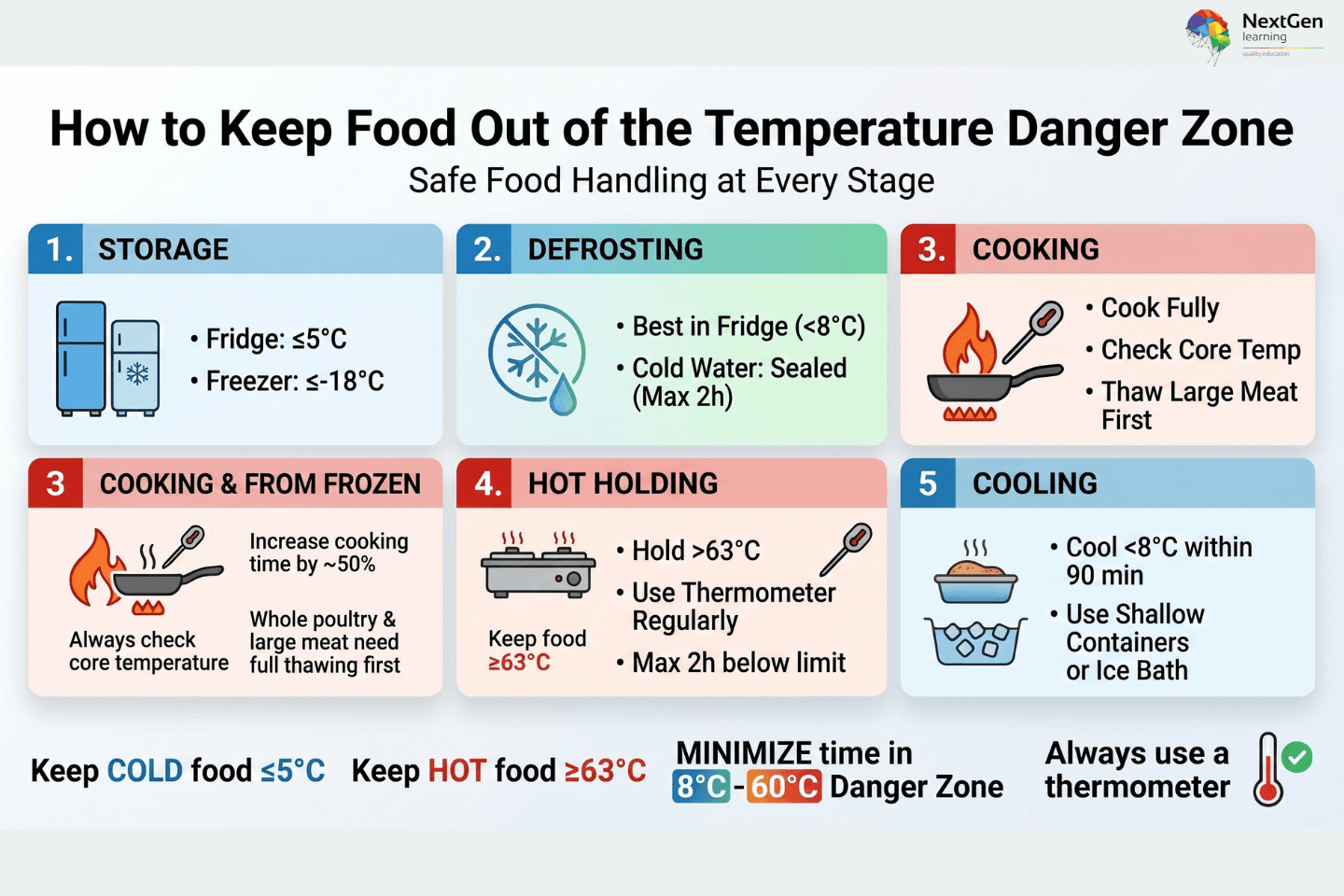
Understanding the temperature danger zone is only half the challenge. The other half is knowing precisely what to do — at every stage of food handling — to ensure food spends as little time as possible within that range. This section covers each critical stage of the food journey, from delivery and storage through to defrosting, cooking, hot holding, and cooling. Together, these practices form the backbone of effective temperature control in any kitchen.
Safe Fridge and Freezer Storage
Correct refrigeration is your first and most consistent line of defence against bacterial growth. However, many home kitchens — and even some commercial ones — operate fridges that are warmer than they should be, often without anyone realising it.
The ideal fridge temperature is 1°C to 5°C. The FSA sets the upper safe limit at 8°C. Any warmer than this and perishable food enters the lower boundary of the danger zone, where bacteria begin to multiply at a meaningful rate. Therefore, checking and recording your fridge temperature regularly is not merely good practice — for food businesses, it is a legal due diligence requirement.
Several factors can cause fridge temperatures to rise unexpectedly. Overloading a fridge restricts airflow and reduces its ability to maintain a consistent temperature throughout. Placing hot food directly into a fridge raises the internal temperature and can affect other stored items. Leaving fridge doors open for extended periods during busy service periods has the same effect. Each of these is a common and easily avoidable mistake.
Best practices for safe fridge storage:
- Set your fridge between 1°C and 5°C and verify the temperature with a thermometer regularly
- Store raw meat, poultry, and fish on the lowest shelves to prevent drip contamination onto other foods
- Keep cooked and ready-to-eat foods on higher shelves, away from raw products
- Never place hot food directly into the fridge — allow it to cool first, within the 90-minute guideline
- Avoid overloading the fridge, as this restricts airflow and creates uneven temperatures
- Check door seals regularly to ensure the fridge maintains its set temperature efficiently
- In professional kitchens, record fridge temperatures at least twice daily as part of your HACCP due diligence
For freezers, the target temperature range is -18°C to -20°C. At these temperatures, bacterial activity is effectively suspended — though, critically, not eliminated. Bacteria remain dormant in frozen food and resume activity once the food begins to thaw. This is why defrosting food correctly is so important, as we will cover in the next section.
Defrosting Food Safely
Defrosting is one of the most commonly mishandled stages of food preparation. When frozen food thaws, it passes through the temperature danger zone as it warms from -18°C toward fridge temperature. During this transition, any bacteria present on or within the food become active again and begin to multiply. Consequently, the method and environment in which you defrost food has a direct and significant impact on its safety.
The safest method for defrosting food is always to thaw it slowly in a refrigerator. By keeping the food below 8°C throughout the defrosting process, you ensure it never enters the danger zone — even as it transitions from frozen to chilled. This method requires planning ahead, as large items such as a whole turkey or a large joint of beef may take 24 to 48 hours to defrost fully in the fridge.
For food businesses, defrosting in a fridge is the only method that fully complies with FSA temperature control requirements without additional risk assessment. For home cooks, it is strongly recommended as the default approach.
If time constraints make fridge defrosting impractical, the following alternative methods are acceptable under specific conditions:
- Microwave defrosting — Acceptable only if the food will be cooked immediately afterwards. Microwave defrosting creates uneven temperature distribution, with some parts of the food potentially reaching the danger zone before others have thawed. Therefore, cooking must follow without delay.
- Cold running water — Acceptable for smaller items such as prawns or thin fillets. The food must be kept in sealed packaging, and the water must remain cold throughout. This method should not exceed 2 hours of total defrost time.
- Room temperature defrosting — This method is not recommended under any circumstances for meat, poultry, fish, or dairy products. Defrosting at room temperature places food squarely in the middle of the danger zone for an extended period, creating ideal conditions for rapid bacterial growth.
Additional rules for safe defrosting:
- Never refreeze food that has been defrosted without cooking it first
- Always defrost food in a container to catch any liquid released during thawing
- Keep defrosting food covered and stored on the lowest fridge shelf
- Discard any liquid produced during defrosting — it may contain high levels of bacteria
- Check that food is fully defrosted before cooking, as partially frozen food may not reach a safe core temperature during cooking
Cooking from Frozen
For many food items, cooking directly from frozen is not only safe but actively preferable from a food safety perspective. When you cook from frozen, the food moves directly from the freezer to high heat — bypassing the danger zone almost entirely. This significantly reduces the window of risk compared to defrosting first.
However, cooking from frozen requires careful attention to ensure the food reaches a safe core temperature throughout. Because the food starts from a much lower temperature, cooking times are typically 50% longer than for fresh or fully defrosted equivalents. Consequently, it is essential to verify the core temperature with a probe thermometer rather than relying solely on cooking time.
Foods that are generally safe to cook from frozen include:
- Frozen vegetables (peas, sweetcorn, broccoli, spinach)
- Frozen fish fillets and seafood, provided packaging confirms this is safe
- Frozen chips and potato products
- Some frozen ready meals, where the packaging explicitly states “cook from frozen”
Foods that should not be cooked from frozen without specific manufacturer guidance include:
- Whole poultry (chicken, turkey) — the size makes it impossible to guarantee safe core temperatures throughout
- Large joints of meat — same issue as whole poultry
- Stuffed frozen products — the stuffing insulates the centre and significantly increases the risk of undercooking
- Any product whose packaging states “defrost before cooking”
Always follow manufacturer instructions when cooking from frozen, and always verify the core temperature with a calibrated probe thermometer before serving.
Hot Holding Temperatures for Buffets and Food Service
Hot holding refers to the practice of keeping cooked food at a safe temperature during service — for example, at a buffet, carvery, or food counter. This is a critical control point in any food service environment, because food that is cooked to a safe temperature but then allowed to cool during service can quickly re-enter the danger zone.
In England and Wales, the Food Hygiene (England) Regulations 2006 require that hot food on display or being held for service must be kept at 63°C or above. This applies to all food businesses without exception. Scotland follows the same standard under equivalent Scottish regulations.
There is a limited exception to this rule — known as the “hot food” defence — which permits food to be held below 63°C for a single period of up to 2 hours, provided it is served and consumed within that window. However, this exception is narrow and should not be treated as a routine workaround. Once that 2-hour period has elapsed, the food must either be brought back above 63°C or discarded.
Best practices for hot holding during service:
- Preheat all hot holding equipment before placing food in it — never use hot holding equipment to heat food from cold
- Check and record hot holding temperatures every 2 hours at a minimum
- Use a probe thermometer to verify the temperature of the food itself, not just the equipment display
- Never mix freshly cooked food with food that has already been in hot holding
- Discard food that has dropped below 63°C and cannot be immediately reheated to 70°C
- Train all kitchen and service staff to understand and apply hot holding requirements
Cooling and Chilling Food Safely After Cooking
Rapid cooling is one of the most important — and most frequently overlooked — elements of temperature control. When large quantities of food are cooked in advance and then cooled for later use, the cooling process itself creates a significant danger zone exposure window. If food cools too slowly, bacteria that survived cooking or contaminated the food during handling will multiply rapidly as the temperature drops through the danger zone.
The FSA recommends that cooked food be cooled from 60°C to below 8°C as quickly as possible — and ideally within 90 minutes. In professional kitchens, this is typically achieved using a blast chiller, which rapidly reduces the temperature of food through forced cold air circulation. Blast chillers are the gold standard for cooling cooked food in a catering environment, and their use is considered best practice under HACCP guidelines.
In home kitchens, a blast chiller is not a practical option. However, several effective techniques achieve a similar result:
- Divide large portions into smaller containers. A large pot of soup cools far more slowly than the same soup divided into four shallow containers. Increasing the surface area dramatically accelerates heat loss.
- Use an ice bath. Place the container of hot food into a larger container or sink filled with cold water and ice. Stir the food regularly to release heat evenly. This is the most effective home cooling method available.
- Use a cold water stir. For liquid dishes such as soups, stocks, and sauces, place a sealed bag of ice directly into the liquid and stir continuously. This pulls heat out of the food extremely rapidly.
- Avoid sealing containers until the food has cooled. Sealing hot food traps heat and significantly slows the cooling process. Instead, cover loosely with a clean cloth or lid set ajar until the food reaches approximately room temperature.
- Move food to the fridge once it has reached approximately 30°C. Placing very hot food directly into a fridge raises the ambient temperature inside and can affect other stored items. Cooling briefly at room temperature before refrigerating is acceptable, provided the total time outside the fridge does not exceed 90 minutes.
Critical rules for cooling food safely:
- Never leave cooked food to cool at room temperature for more than 90 minutes
- Always cool food to below 8°C before placing it in the fridge for storage
- Never place large, deep containers of hot food directly into the fridge without pre-cooling
- Label all cooled food with the date and time of cooking before refrigerating
- Consume refrigerated cooked food within 2 to 3 days, or freeze it promptly
- Never cool and reheat the same food more than once
A Note on Cross-Contamination and Temperature Control
Temperature control and cross-contamination prevention are closely linked — and both are essential components of effective food safety. Even food that has been stored and cooked at the correct temperatures can become unsafe if it comes into contact with contaminated surfaces, utensils, or raw food during preparation.
The most common cross-contamination risks in a temperature-controlled context include:
- Using the same chopping board or knife for raw meat and ready-to-eat food without cleaning and sanitising in between
- Allowing raw meat juices to drip onto cooked or ready-to-eat food during fridge storage
- Reusing probe thermometers without cleaning and sanitising between uses
- Handling raw and cooked food with the same unwashed hands or gloves
Therefore, effective temperature control must always be practised alongside rigorous hand hygiene, correct food storage hierarchy, and thorough cleaning and sanitisation of all equipment and surfaces. Temperature management alone is not sufficient to guarantee food safety — it must form part of a complete and consistent approach to food hygiene.
How to Check Food Temperature Correctly
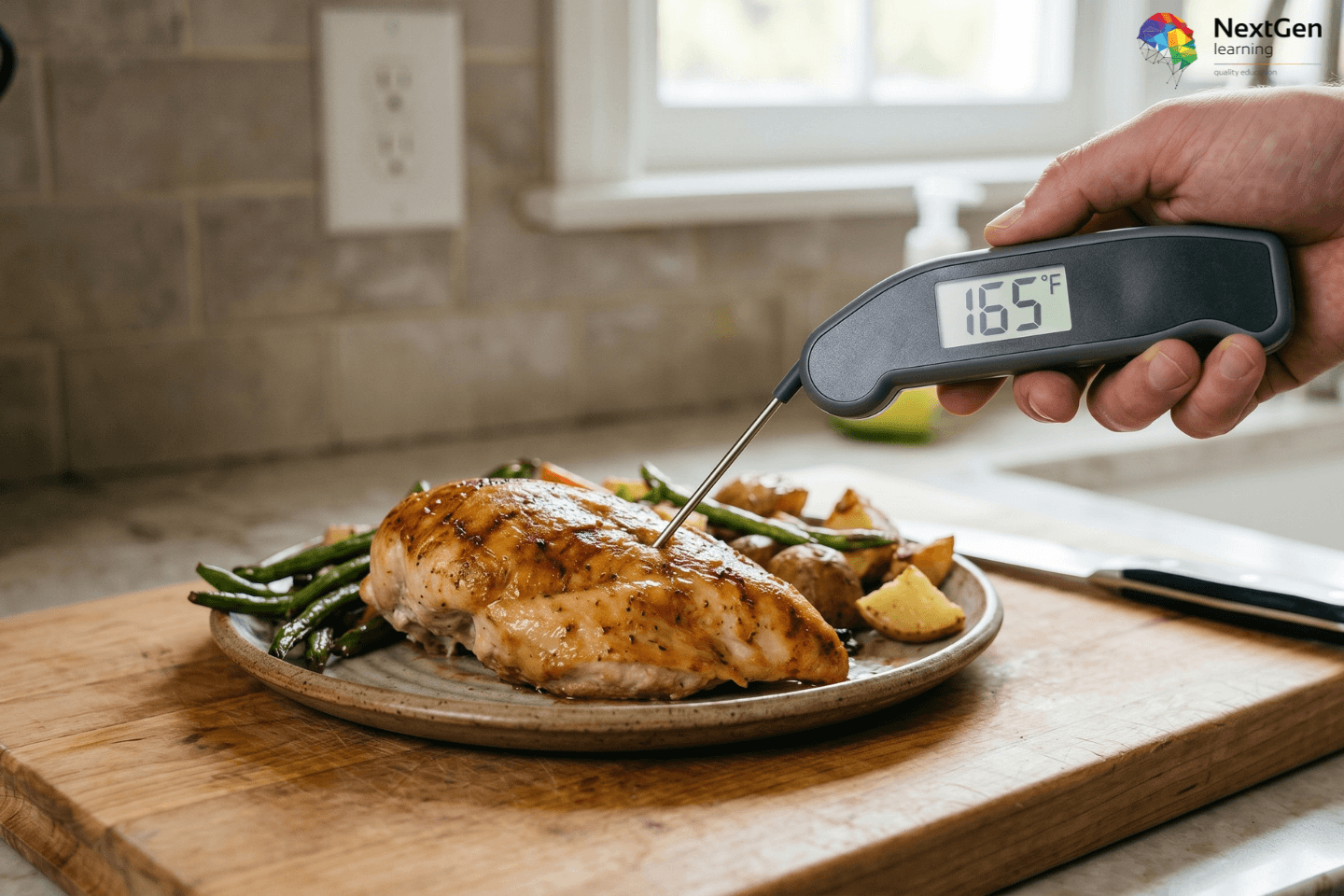
Knowing the correct temperatures for food safety is essential. However, that knowledge is only useful if you have a reliable method for measuring those temperatures accurately in practice. A thermometer is therefore not an optional kitchen accessory — it is a fundamental food safety tool. Moreover, using it correctly is just as important as having one in the first place.
This section covers every aspect of food temperature checking — from choosing the right thermometer for each situation, to using it correctly, to maintaining it in a way that does not itself become a source of contamination.
Why Visual Checks Are Never Enough
Before covering thermometer types and techniques, it is worth addressing a common misconception directly. Many cooks — both professional and domestic — rely on visual cues to judge whether food is cooked safely. Colour change, texture, and the appearance of juices are all frequently used as indicators. However, none of these methods is reliable enough to guarantee food safety on its own.
Consider the following examples. Chicken can appear fully white and cooked on the outside while remaining dangerously undercooked at its core — particularly in thick cuts or when cooking from frozen. Burgers can brown on the outside due to the Maillard reaction at surface temperatures well below 70°C, while the centre remains pink and unsafe. Fish can appear opaque and flaky before reaching a safe internal temperature, particularly when cooked at lower temperatures for longer periods.
Furthermore, some pathogens — including certain strains of E. coli O157 — can cause serious illness at very low infectious doses. In these cases, even a brief period of undercooking can have severe consequences. Consequently, visual checks should always be used as a supplementary indicator, never as a primary confirmation of food safety. A calibrated probe thermometer is the only reliable method for verifying that food has reached a safe core temperature.
Types of Food Thermometers
Several types of thermometers are available for food temperature checking, and each has specific strengths depending on the application. Understanding which tool to use in which situation helps you check temperatures accurately, efficiently, and without compromising food safety.
Probe Thermometers (Digital Instant-Read)
The probe thermometer is the most widely used and most versatile food temperature checking tool in both professional and domestic kitchens. It consists of a thin metal stem — the probe — connected to a digital display unit. You insert the probe directly into the food, and the display shows the core temperature within seconds.
Probe thermometers are ideal for:
- Checking the core temperature of meat, poultry, and fish during cooking
- Verifying the temperature of reheated dishes, soups, and sauces
- Confirming that food in hot holding has maintained a safe temperature
- Spot-checking individual portions during service in a professional kitchen
When choosing a probe thermometer, look for one with:
- A fast response time of 3 to 5 seconds or less
- A temperature range of at least -40°C to +200°C to cover all kitchen applications
- Waterproof or splash-resistant construction for durability in a kitchen environment
- NSF certification or equivalent food safety approval for professional use
Thermocouple Thermometers
Thermocouple thermometers are a more advanced version of the standard probe thermometer, offering faster response times — often less than 1 second — and higher accuracy across a wider temperature range. They are particularly useful in professional catering environments where speed and precision are critical during a busy service.
Thermocouples are also the preferred tool for checking the temperature of chilled or frozen products without penetrating the packaging. By placing the probe tip between layers of packaging, you can assess the temperature of the product without compromising its integrity or creating a contamination risk.
Infrared Thermometers
Infrared thermometers measure surface temperature by detecting the infrared radiation emitted by the surface of an object. They are entirely non-contact — you simply point the device at the food or surface and read the temperature on the display.
Infrared thermometers are most valuable for:
- Quickly checking the surface temperature of incoming frozen or chilled deliveries
- Scanning the temperature of buffet or hot holding surfaces
- Verifying fridge and freezer surface temperatures during routine checks
However, it is important to understand their limitations. Infrared thermometers measure surface temperature only — they cannot assess the core temperature of a food item. Therefore, they should never be used as the sole method for confirming that food has been cooked to a safe internal temperature. They are most appropriately used as a quick screening tool, with probe confirmation following where necessary.
Fridge and Freezer Thermometers
Monitoring the temperature of storage units is as important as monitoring the food itself. Most commercial refrigeration units include a built-in digital thermometer display. However, these displays show the air temperature within the unit, which can differ from the actual temperature of the food stored inside — particularly immediately after the door has been opened or when the unit has been restocked.
For greater accuracy, a freestanding fridge thermometer placed within the food storage area provides a more reliable ongoing reading. In home kitchens, an inexpensive standalone thermometer is a worthwhile investment that gives you confidence your fridge is operating within the safe range of 1°C to 5°C.
Liquid Crystal Strip Thermometers
These adhesive strip thermometers are attached to the outside of fridge or freezer units and change colour to indicate the approximate temperature range. They are simple, inexpensive, and useful as a basic monitoring tool. However, they are not sufficiently accurate for food safety critical measurements and should be used only as a general indicator rather than a primary temperature control method.
How to Use a Probe Thermometer: Step-by-Step
Using a probe thermometer correctly is a skill that takes only moments to learn but makes a significant difference to the accuracy and reliability of your temperature readings. The following step-by-step process applies to all standard digital probe thermometers used in food safety temperature checking.
Step 1 — Clean and sanitise the probe before use. Before inserting the probe into any food, clean it thoroughly with a food-safe antibacterial wipe or sanitising spray. This prevents the transfer of bacteria from previous uses or from handling. In a professional kitchen, probe sanitisation between each use is a non-negotiable requirement.
Step 2 — Switch on the thermometer and allow it to stabilise. Turn on the thermometer and allow a few seconds for the display to stabilise before use. Some thermometers require a brief warm-up period to ensure accurate readings.
Step 3 — Insert the probe into the correct location. For meat and poultry, insert the probe into the thickest part of the food — typically the centre of the thickest muscle. Ensure the probe tip does not touch any bone, as bone conducts heat more rapidly than meat and will produce an artificially high reading. For liquid dishes such as soups, sauces, or stews, insert the probe into the centre of the liquid rather than near the base of the pan, where direct heat contact will produce an inaccurate reading.
Step 4 — Wait for the reading to stabilise. Hold the probe in position and wait for the displayed temperature to stabilise — this typically takes between 3 and 10 seconds depending on the thermometer model. Do not remove the probe until the reading has stopped rising or fluctuating.
Step 5 — Record the temperature and the time. Note the temperature reading and the time it was taken. In a professional kitchen, this should be recorded in your core temperature log as part of your HACCP due diligence records. In a home kitchen, a simple mental or written note is sufficient.
Step 6 — Verify against the target temperature. Compare the reading against the relevant target temperature for the food type being checked. If the food has not reached the required temperature, return it to the heat source and check again after a further 2 to 3 minutes.
Step 7 — Clean and sanitise the probe immediately after use. Once you have finished using the probe, clean and sanitise it immediately before setting it down. This prevents cross-contamination between different food items and ensures the probe is ready for its next use without risk.
How to Calibrate Your Probe Thermometer
Even the most reliable probe thermometer can drift over time — particularly if it has been dropped, subjected to extreme temperatures, or used heavily in a busy kitchen environment. Consequently, regular calibration is essential to ensure your readings remain accurate. For food businesses, thermometer calibration should be carried out at least monthly and recorded as part of your quality control procedures.
The two most common calibration methods are:
The Ice Point Method
This method calibrates the thermometer at 0°C — the freezing point of water.
- Fill a container with crushed ice and add just enough cold water to create an ice slurry
- Insert the probe into the centre of the slurry, ensuring it does not touch the sides or bottom of the container
- Wait for the reading to stabilise — it should read 0°C (±0.5°C)
- If the reading differs by more than 0.5°C, adjust the thermometer according to the manufacturer’s instructions or replace it
The Boiling Point Method
This method calibrates the thermometer at 100°C — the boiling point of water at sea level.
- Bring a pot of water to a full, rolling boil
- Insert the probe into the centre of the boiling water, away from the sides and base of the pot
- Wait for the reading to stabilise — it should read 100°C (±0.5°C) at sea level
- Note that boiling point decreases slightly at higher altitudes — adjust expectations accordingly
In professional kitchens, calibration records should include the date, the method used, the reading obtained, and the name of the person who carried out the calibration. This documentation forms part of your due diligence evidence in the event of a food safety inspection.
Thermometer Hygiene: A Critical but Overlooked Step
A probe thermometer that is not cleaned and sanitised between uses does not protect food safety — it actively undermines it. Every time a probe is inserted into food and then used again without sanitising, there is a direct risk of transferring bacteria from one food item to another. This is a form of cross-contamination that is entirely avoidable with a simple, consistent hygiene routine.
In practice, probe hygiene requires the following:
- Always clean the probe with a food-safe antibacterial wipe before and after each use
- Never place a used probe on a worktop, chopping board, or other surface without sanitising it first
- Store probe thermometers in a clean, dry location — ideally in a protective case — when not in use
- Replace probes or entire thermometers when the probe tip becomes damaged, bent, or corroded, as physical damage compromises both accuracy and hygiene
- In professional kitchens, consider using colour-coded probe covers to align thermometer use with your existing colour-coded equipment system — for example, a red probe cover for raw meat and a white cover for ready-to-eat food
Additionally, it is worth noting that probe thermometers should never be used to check the temperature of food still in sealed packaging. Penetrating the packaging creates a contamination risk and compromises the integrity of the product. Instead, use an infrared thermometer or a thermocouple placed between layers of packaging for these checks.
Temperature Checking in a HACCP Context
For food businesses, temperature checking is not simply a best practice — it is a legal requirement embedded within the HACCP (Hazard Analysis and Critical Control Points) framework. Temperature is a Critical Control Point (CCP) in virtually every food safety management system, because it is the primary mechanism through which biological hazards — bacteria, in particular — are controlled.
Under HACCP principles, each CCP must have:
- A defined critical limit — for example, a minimum core temperature of 70°C for cooked food
- A monitoring procedure — for example, probe checking every batch of cooked food during service
- A corrective action — for example, returning undercooked food to the heat source until the critical limit is reached
- Records demonstrating that monitoring has taken place — for example, a completed core temperature log
Food businesses that cannot demonstrate effective temperature monitoring during an Environmental Health inspection risk enforcement action, including improvement notices and, in serious cases, prosecution. Therefore, investing in reliable, calibrated thermometers and training all relevant staff to use them correctly is not merely a food safety decision — it is a legal and commercial necessity.
Temperature Control and HACCP — What Food Businesses Must Know
For home cooks, temperature control is a matter of personal and family safety. For food businesses, however, it is also a legal obligation. Every food business operating in the UK — from a small café to a large catering operation — must have a documented food safety management system in place. In practice, this means implementing HACCP principles, with temperature control sitting at the very heart of that system.
This section explains what HACCP means in plain language, why temperature is its most critical control point, and what food businesses must do in practice to remain compliant and protect their customers.
What Is HACCP and Why Does It Matter?
HACCP stands for Hazard Analysis and Critical Control Points. It is a systematic, science-based approach to identifying and controlling food safety hazards before they cause harm. Rather than reacting to problems after they occur, HACCP is designed to prevent hazards from reaching consumers in the first place.
In the UK, implementing a food safety management system based on HACCP principles is a legal requirement under Regulation (EC) No 852/2004 on the hygiene of foodstuffs. The Food Standards Agency provides guidance to help businesses comply, but the responsibility for implementation lies firmly with the business owner or manager.
HACCP identifies Critical Control Points (CCPs) — specific stages in the food production process where a hazard can be prevented, eliminated, or reduced to a safe level. Temperature is a CCP at virtually every stage of the food journey, including:
- Delivery — checking incoming food arrives at the correct temperature
- Storage — maintaining correct fridge and freezer temperatures
- Defrosting — ensuring food thaws safely without entering the danger zone
- Cooking — verifying food reaches the required core temperature
- Hot holding — keeping cooked food above 63°C during service
- Cooling — reducing cooked food temperature rapidly after preparation
- Reheating — bringing food back to 70°C before serving
Why Temperature Logs Are a Legal Requirement
Recording temperatures is not optional for food businesses — it is a core component of due diligence. In the event of a food safety complaint, an illness outbreak, or an Environmental Health inspection, temperature records provide documentary evidence that your business has taken all reasonable precautions to keep food safe.
Without adequate records, a food business cannot demonstrate compliance — even if its practices are entirely correct. Consequently, accurate and consistent temperature logging is both a legal safeguard and a practical management tool.
At a minimum, food businesses should record:
- Fridge and freezer temperatures — checked and logged at least twice daily, ideally at the start and end of each service period
- Delivery temperatures — recorded for every incoming delivery of chilled or frozen food
- Core cooking temperatures — recorded for each batch of food cooked, including the time and the name of the person who checked it
- Hot holding temperatures — checked and recorded at regular intervals during service
- Cooling temperatures — recorded during the cooling process to demonstrate food passed through the danger zone within the required timeframe
- Reheating temperatures — recorded each time food is reheated before service
What to Record and How to Store Records
Effective temperature records do not need to be complex. A simple, clearly laid out log sheet — whether paper-based or digital — is entirely sufficient, provided it captures the essential information consistently.
Each temperature record should include:
- The date and time the temperature was checked
- The food item or storage unit being checked
- The temperature reading obtained
- The action taken if the temperature was outside the acceptable range
- The name or initials of the person who carried out the check
Food businesses are required to keep temperature records for a minimum of 3 months for most operations, though some regulators recommend retaining records for up to 12 months as best practice. Digital temperature monitoring systems — which automatically log readings from fridge and freezer probes at set intervals — are increasingly popular in commercial kitchens, as they remove the risk of human error and provide a continuous, tamper-evident audit trail.
Staff Training: The Human Element of Temperature Control
Even the most robust HACCP system will fail if the people responsible for implementing it do not understand what they are doing and why. Therefore, staff training is a non-negotiable element of effective temperature control in any food business.
All food handlers should understand:
- What the temperature danger zone is and why it matters
- How to use a probe thermometer correctly, including cleaning and calibration
- The correct temperatures for cooking, hot holding, cooling, and storage
- How to complete temperature log sheets accurately
- What corrective action to take when a temperature falls outside the acceptable range
In the UK, food businesses are legally required to ensure that food handlers receive adequate supervision and training in food hygiene, commensurate with their role. The Level 2 Award in Food Safety is the standard entry-level qualification for food handlers, while supervisors and managers should hold a Level 3 Award or equivalent. Regular refresher training — at least every three years — helps ensure that knowledge remains current and consistently applied.
High-Risk Foods and the Temperature Danger Zone
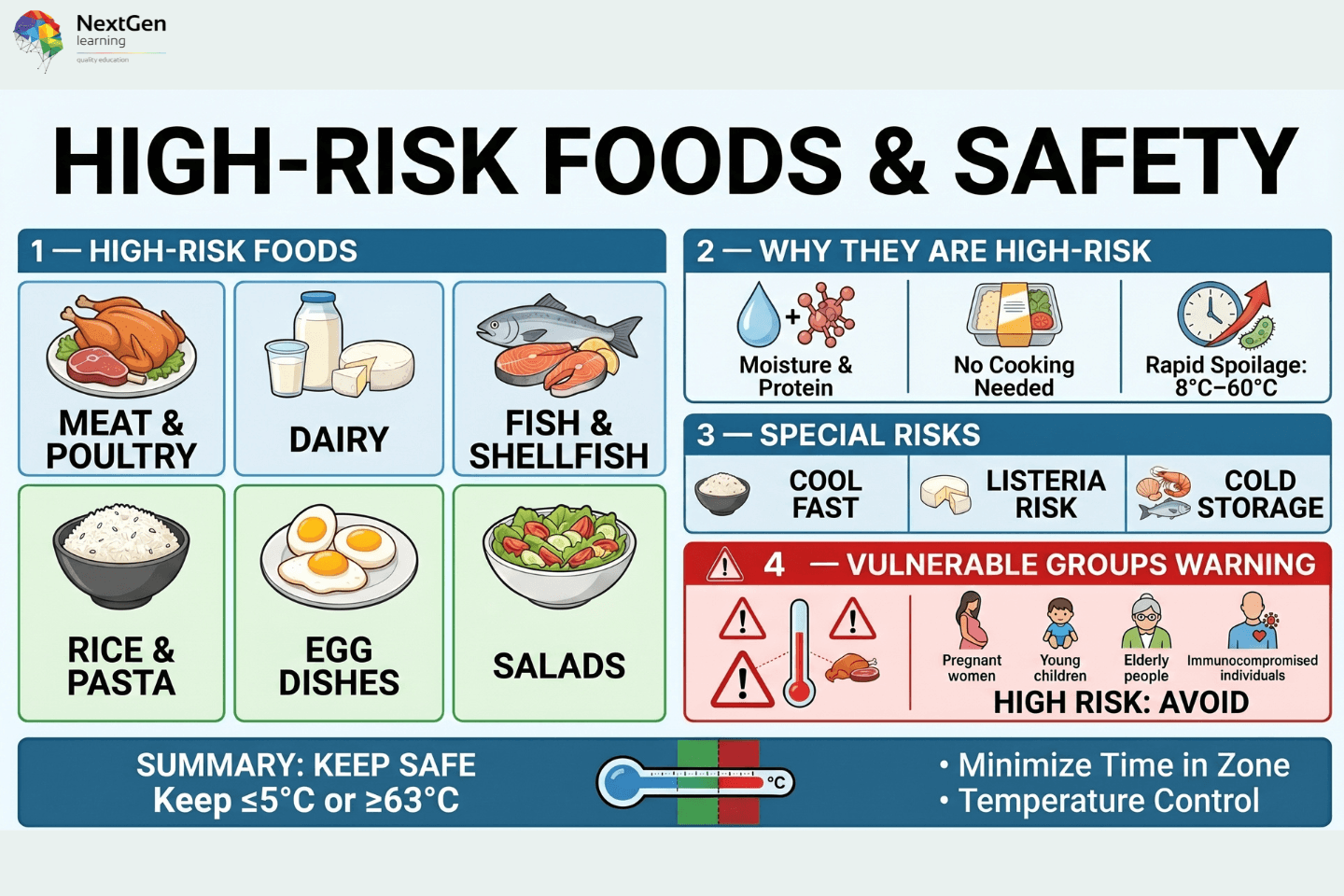
Not all foods carry the same level of bacterial risk. Certain foods provide ideal conditions for bacterial growth — the right moisture content, nutrient levels, and pH — making them significantly more dangerous when they enter the temperature danger zone. Understanding which foods fall into this high-risk category helps you prioritise your temperature control efforts where they matter most.
What Makes a Food High-Risk?
High-risk foods share a common set of characteristics. They are typically high in protein and moisture, which creates an ideal environment for bacterial multiplication. They are also usually ready-to-eat — meaning they will not undergo any further cooking process that might destroy bacteria before consumption. Consequently, if these foods spend excessive time in the danger zone, the bacteria they contain go directly to the consumer.
The foods most consistently identified as high-risk by the FSA include:
- Cooked meat and poultry — particularly chicken, turkey, and processed meat products
- Raw meat and poultry — carries surface bacteria that must be destroyed through cooking
- Dairy products — milk, soft cheese, cream, and custard are particularly vulnerable
- Cooked fish and shellfish — deteriorates rapidly and carries specific pathogens including Listeria and Vibrio
- Cooked rice and pasta — carries Bacillus cereus spores that survive cooking and produce toxins during cooling
- Cooked eggs and egg dishes — particularly quiches, mousses, and mayonnaise-based products
- Prepared salads and coleslaws — ready-to-eat and frequently held at ambient temperature during service
- Stocks, gravies, and sauces — liquid dishes that cool slowly and distribute bacteria evenly throughout
Cooked Rice: A Frequently Underestimated Risk
Cooked rice deserves specific attention because it is one of the most consistently mishandled high-risk foods in both domestic and professional kitchens. Raw rice commonly contains spores of Bacillus cereus — a bacterium that produces two types of toxin capable of causing vomiting and diarrhoea.
Importantly, Bacillus cereus spores survive normal cooking temperatures. Therefore, when cooked rice is left to cool slowly at room temperature, the spores germinate and the bacteria multiply rapidly — particularly between 15°C and 50°C. Furthermore, the toxins produced are heat-stable, meaning that reheating the rice will not make it safe once toxin production has occurred.
To handle cooked rice safely:
- Cool cooked rice as rapidly as possible — ideally within 30 minutes — by spreading it thinly or using an ice bath
- Refrigerate cooled rice within 1 hour of cooking and store below 5°C
- Never leave cooked rice at room temperature for more than 1 hour
- Reheat rice only once, ensuring it reaches 70°C throughout
- Discard any cooked rice that has been left at room temperature for an extended period
Soft Cheeses, Pâté, and Ready-to-Eat Chilled Foods
Soft cheeses — including brie, camembert, ricotta, and blue-veined varieties — along with pâté and pre-prepared chilled ready meals, present a specific risk from Listeria monocytogenes. Unlike most foodborne bacteria, Listeria can grow at refrigerator temperatures — making correct fridge management especially important for these products.
While Listeria grows slowly below 5°C, it remains active even at 1°C. Consequently, these products must be:
- Stored at the coldest part of the fridge, consistently below 5°C
- Consumed within the manufacturer’s use-by date without exception
- Kept away from raw meat and other potential contamination sources
- Avoided entirely by pregnant people, Older, and uncompromising individuals, for whom listeriosis can be life-threatening
Shellfish and Raw Fish
Shellfish are filter feeders that concentrate whatever is present in their surrounding water — including bacteria, viruses, and toxins. As a result, they carry a higher inherent contamination risk than most other protein sources. Vibrio bacteria and Norovirus are among the most common pathogens associated with shellfish consumption in the UK.
Moreover, shellfish deteriorate extremely rapidly once removed from temperature control. A prawn that was perfectly safe at 2°C can reach dangerous bacterial levels within 2 hours at room temperature. Therefore, shellfish require particularly strict temperature management at every stage — from delivery through to service.
Key rules for shellfish and raw fish safety:
- Accept deliveries only when shellfish arrives at 8°C or below
- Store shellfish and raw fish at the bottom of the fridge at 1°C to 5°C
- Use within the shortest recommended timeframe — ideally the same day for fresh shellfish
- Never serve shellfish that has been at ambient temperature for more than 1 hour
- Discard any mussels, clams, or oysters that do not open during cooking
Vulnerable Groups and High-Risk Foods
For most healthy adults, exposure to a moderate level of foodborne bacteria results in an unpleasant but manageable illness. However, for certain groups, the same exposure can cause severe illness, hospitalisation, or even death. These vulnerable groups require an even more stringent approach to high-risk food management.
Vulnerable groups include:
- Pregnant women — at significantly elevated risk from Listeria and Salmonella, which can cause miscarriage, stillbirth, or serious neonatal illness
- Young children under 5 — immune systems are not yet fully developed, making them highly susceptible to E. coli O157 and Salmonella
- Elderly individuals — reduced immune function increases both the likelihood and severity of foodborne illness
- Immunocompromised individuals — including those undergoing chemotherapy, living with HIV, or taking immunosuppressant medications
When preparing food for any of these groups, apply the most conservative interpretation of all temperature control guidance. Furthermore, avoid serving high-risk foods such as soft cheeses, pâté, raw or lightly cooked eggs, and rare meat to vulnerable individuals entirely — regardless of how carefully temperature has been controlled.
Summary: Key Temperature Danger Zone Rules to Remember
Food safety temperature control does not need to be complicated. However, it does need to be consistent. The following summary brings together the most important rules from this guide into a single, scannable reference that you can apply immediately in any kitchen setting.
The Essential Temperature Reference
| Temperature | What It Means |
|---|---|
| -18°C to -20°C | Safe freezer storage range |
| 1°C to 5°C | Ideal fridge temperature |
| 8°C | Maximum safe chilled storage temperature |
| 8°C to 60°C | ⚠️ Temperature danger zone — minimise all food exposure |
| 63°C | Minimum hot holding temperature during service |
| 70°C | England's recommended cooking and reheating temperature |
| 82°C | Scotland's recommended cooking temperature |
The Ten Rules Every Food Handler Must Know
These ten principles summarise everything covered in this guide. Moreover, they apply equally in a home kitchen and a professional catering environment.
- Keep cold food cold — store chilled food below 5°C and frozen food at -18°C or below
- Keep hot food hot — maintain hot food above 63°C during service at all times
- Move food through the danger zone quickly — whether heating or cooling, speed is essential
- Follow the 2-hour / 4-hour rule — track cumulative danger zone time and act before the limit is reached
- Always use a probe thermometer — never rely on visual checks alone to confirm food is safe
- Cook to the correct core temperature — 70°C for 2 minutes in England; 82°C in Scotland
- Defrost in the fridge — slow, controlled defrosting in a refrigerator is always the safest method
- Cool food rapidly after cooking — target below 8°C within 90 minutes using small containers or an ice bath
- Reheat food only once — always to 70°C throughout, with no exceptions
- Clean your probe between every use — thermometer hygiene is as important as the reading itself
A Final Word on Food Safety Culture
Temperature control is ultimately a matter of habit and culture. The rules are straightforward. The tools are accessible and affordable. What makes the difference — in both professional and domestic kitchens — is the consistent, disciplined application of these principles every single time food is handled.
In a food business, this means investing in staff training, maintaining accurate records, and fostering a culture where food safety is everyone’s responsibility — not just the manager’s. In a home kitchen, it means taking a few extra minutes to check temperatures, label leftovers, and cool food correctly before refrigerating.
The consequences of getting it wrong — foodborne illness, lost income, reputational damage, and in serious cases, prosecution — are entirely disproportionate to the effort required to get it right. Therefore, the investment in understanding and applying correct temperature control is always worthwhile.
We hope this guide has given you the knowledge, confidence, and practical tools to keep every meal you prepare genuinely safe to eat.
Frequently Asked Questions About the Food Temperature Danger Zone
The temperature danger zone in the UK is 8°C to 60°C, as defined by the Food Standards Agency. Within this range, harmful bacteria multiply rapidly on perishable food. Consequently, all food handling practices — storage, cooking, serving, and cooling — should aim to keep food outside this range for as long as possible.
Bacteria begin to die at 60°C, but the process is slow at this temperature — requiring 45 minutes to be effective. At 70°C, bacteria are destroyed within 2 minutes, which is why this is England’s recommended cooking temperature. At 82°C, destruction is near-instantaneous, which is Scotland’s standard. Higher temperatures kill bacteria progressively faster.
The 2-hour / 4-hour rule applies. Food in the danger zone for less than 2 hours is safe to use or refrigerate. Between 2 and 4 hours, it must be consumed immediately and not refrigerated for later. Beyond 4 hours, the food must be discarded. Importantly, this time is cumulative across all danger zone exposure periods.
The FSA recommends keeping your fridge between 1°C and 5°C. The absolute maximum safe storage temperature for chilled food is 8°C. Therefore, if your fridge consistently reads above 5°C, adjust the setting immediately and monitor it with a standalone thermometer to verify.
Yes. Freezing suspends bacterial activity but does not destroy bacteria. Once frozen food begins to thaw and re-enters the temperature danger zone, bacteria resume multiplying. This is precisely why defrosting food correctly — slowly in a refrigerator — is so important. It also explains why food should never be refrozen after thawing without cooking it first.
The 2-hour rule states that perishable food should not remain in the temperature danger zone for more than 2 hours without action. After 2 hours, food should either be consumed immediately, returned to temperature control, or discarded. Moreover, this 2-hour window is cumulative — meaning all previous danger zone exposure counts toward the total.
Hot food must be kept at 63°C or above during service, in accordance with the Food Hygiene (England) Regulations 2006. Food that drops below 63°C during service may be held for a single period of up to 2 hours under the hot food exception — but must then be served immediately or discarded. It must never be returned to hot holding after this point.
No. Food should only ever be reheated once. Each cooling and reheating cycle creates additional danger zone exposure, increasing the cumulative risk of bacterial growth to unsafe levels. Furthermore, some bacteria produce heat-stable toxins during storage that cooking cannot neutralise. Always reheat food to 70°C throughout and discard any portion that is not consumed.
While probe thermometers are a legal requirement in food businesses, they are strongly recommended for home use as well. They are inexpensive, easy to use, and provide the only reliable confirmation that food has reached a safe core temperature. Visual checks alone — colour, texture, and juices — are not sufficient to guarantee food safety.



0 responses on "What is the Temperature Danger Zone? UK Food Safety Guide & Free Chart"