





Career Change into Education and Training: The Regulated Qualifications You Need at Every Stage (Assessor, Trainer, IQA, TA)
Changing careers into education does not always mean becoming a qualified school teacher. Depending on your experience and goals, you could support pupils as a Teaching Assistant, progress into an HLTA role, assess vocational learners, teach adults or monitor assessment quality as an IQA.
However, each pathway needs different knowledge, practical evidence and occupational experience. Therefore, choosing a course before choosing a role can lead to wasted time and unsuitable training.
Regulated qualifications provide recognised levels and defined learning outcomes within the UK qualifications system. Nevertheless, they do not automatically guarantee employment, promotion or Qualified Teacher Status.
This guide maps the main routes from entry-level school support to advanced training and quality assurance. It also explains where STLS, HLTA, CAVA, CET and Level 4 IQA qualifications fit into a realistic education career plan.
Table of Contents
Start by Choosing the Education Role, Not the Course
Before enrolling, decide what type of learner you want to support and where you want to work. Although these roles sit within education and training, they involve different responsibilities, settings and qualification requirements.
| Role | Main Setting | Core Responsibility | Relevant Qualification |
|---|---|---|---|
| Teaching Assistant | Primary, secondary or specialist schools | Support pupils, teachers and classroom learning | Level 3 STLS Award |
| Higher Level Teaching Assistant | Schools | Lead advanced support, interventions and planned learning | Level 4 HLTA Certificate |
| Vocational Assessor | Workplaces and training providers | Assess occupational competence and vocational achievement | Level 3 CAVA |
| Trainer or Tutor | Adult education, further education and workplace learning | Plan, deliver and assess structured teaching | Level 4 CET |
| Internal Quality Assurer | Colleges and training organisations | Monitor assessors and maintain assessment standards | Level 4 IQA |
For example, someone with childcare or school experience may prefer the Teaching Assistant pathway. In contrast, an experienced care worker, manager or tradesperson may use their industry expertise to become a vocational assessor or trainer.
Therefore, choose the role first. Then check whether you already have the experience, workplace access and practical opportunities required to complete the relevant qualification.
Route One—Start as a Teaching Assistant

A Teaching Assistant pathway can suit career changers who want to work directly with pupils in primary, secondary or specialist schools. The National Careers Service Teaching Assistant profile explains that Teaching Assistants support teachers and help pupils with reading, writing and classroom learning activities. Moreover, it provides a practical entry point for people who do not yet want to become qualified teachers.
The Level 3 Award in Supporting Teaching and Learning in Schools introduces essential knowledge in:
- Safeguarding: Recognise concerns and follow reporting procedures.
- Child development: Understand how pupils develop at different stages.
- Professional communication: Work effectively with children, teachers and families.
- School organisation: Understand staff roles, policies and responsibilities.
However, this Award is mainly knowledge-based. Therefore, it may not prove full workplace competence or guarantee employment. Volunteering, classroom experience and suitable references can strengthen your applications.
For beginners without a placement, the Focus Awards Level 3 Award in Supporting Teaching and Learning in Schools can provide a recognised foundation before progressing into practical school-support experience.
Route Two—Progress from Teaching Assistant to HLTA

The HLTA pathway suits experienced Teaching Assistants who want greater responsibility in school. For example, an HLTA may lead interventions, deliver planned learning activities, support assessment and guide other classroom-support staff.
The Level 4 Certificate for Higher Level Teaching Assistants is an approved Level 4 qualification in direct learning support. Moreover, current career guidance presents HLTA progression as a route for Teaching Assistants who have already built relevant experience.
Before progressing, you should usually consider:
- School experience: Build confidence in everyday classroom support.
- Employer support: Discuss whether an HLTA opportunity exists.
- Practical evidence: Access suitable duties, observations and workplace records.
- Advanced responsibility: Prepare to lead activities and support pupil progress.
However, completing the qualification does not automatically guarantee an HLTA appointment, higher salary or Qualified Teacher Status. Therefore, it offers the strongest value when your school supports a realistic progression plan.
The Level 4 Higher Level Teaching Assistant Course can support experienced TAs who are ready to develop advanced classroom knowledge and competence.
Route Three—Use Industry Experience to Become an Assessor

The assessor pathway is ideal for professionals who want to use their existing industry knowledge to support vocational learners. The National Careers Service RQF assessor profile explains that assessors check vocational learning and help trainees meet required qualification standards. For example, an experienced care worker, construction supervisor or business professional may assess learners working towards apprenticeships, NVQs or other vocational qualifications.
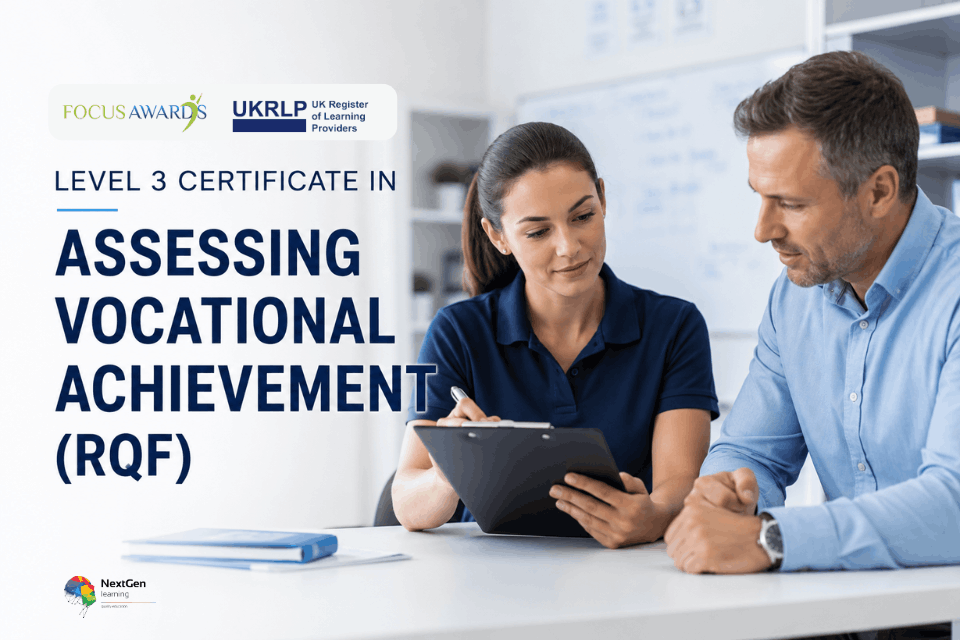
The Level 3 Certificate in Assessing Vocational Achievement (CAVA) develops skills in:
- Planning assessments: Choose methods that match the learner and qualification requirements.
- Observing competence: Judge practical performance in real workplace settings.
- Reviewing evidence: Check portfolios, work products and witness statements.
- Giving feedback: Explain strengths, gaps and next steps clearly.
- Recording decisions: Maintain accurate and auditable assessment records.
However, CAVA does not replace occupational competence. Therefore, you still need relevant experience in the subject you plan to assess. In addition, practical completion usually requires access to suitable learners and real assessment opportunities.
The Level 3 CAVA Assessor Course can provide the recognised assessment qualification needed to move from industry practice into vocational education and training.
Route Four—Move into Teaching and Training

The trainer pathway suits professionals who want to teach adults, employees or vocational learners in further education, workplace learning or private training. Moreover, it can help experienced industry practitioners turn their subject knowledge into structured teaching.Educators interested in community-led learning models can also explore how organisations such as Apni Pathshala support people who want to start a microschool and build structured learning environments.
The Level 4 Certificate in Education and Training (CET) develops broader teaching competence than an introductory trainer course. It commonly covers:
- Lesson planning: Set clear outcomes and organise learning effectively.
- Inclusive teaching: Adapt delivery for different abilities and support needs.
- Assessment: Check progress and use feedback to improve achievement.
- Learning resources: Select materials that support engagement and understanding.
- Reflective practice: Review teaching performance and improve future sessions.
However, CET is not the same as Qualified Teacher Status. It also does not automatically qualify someone for every school-teaching role. Instead, it is particularly relevant to adult education, vocational training and further-education settings.
The Level 4 Certificate in Education and Training (RQF) can support trainers and tutors who want a recognised route into more substantial teaching responsibilities.
Route Five—Progress from Assessor to IQA

The IQA pathway suits experienced assessors who want to monitor assessment quality rather than assess learners directly. An Internal Quality Assurer checks whether assessors apply standards fairly, consistently and accurately across a training organisation.
The Level 4 IQA qualification commonly develops skills in:
- Sampling assessment decisions: Review selected learner evidence and assessor records.
- Monitoring assessors: Observe practice and identify development needs.
- Standardisation: Help assessors apply qualification requirements consistently.
- Risk-based quality assurance: Focus monitoring on higher-risk assessors, learners or programmes.
- Constructive feedback: Explain strengths, concerns and required improvements.
- Record keeping: Maintain clear evidence for internal and external quality reviews.
However, practical IQA qualifications usually require access to real assessors, learners and assessment decisions. Therefore, they are most appropriate for people who already understand vocational assessment and can complete genuine quality-assurance activity.
The Level 4 IQA Course can support assessors who want to progress into Lead IQA, Quality Coordinator or training-quality management roles.
Which Qualification Should You Take First?
The right starting point depends on your current experience, preferred setting and long-term goal. Therefore, avoid choosing the highest-level course simply because it appears more advanced.
| Your Current Position | Recommended Next Step | Longer-Term Progression |
|---|---|---|
| No school experience | Level 3 STLS Award | Gain school experience, then consider HLTA |
| Experienced Teaching Assistant | Level 4 HLTA Certificate | Lead or specialist classroom-support roles |
| Industry expert supporting learners | Level 3 CAVA | Progress into IQA or training roles |
| Existing trainer or tutor | Level 4 CET | Broader teaching and curriculum responsibilities |
| Experienced vocational assessor | Level 4 IQA | Lead IQA, quality coordination or management |
For example, a complete beginner interested in schools may start with STLS and volunteering. In contrast, an experienced workplace professional may move directly towards CAVA if they already have occupational competence and learner access.
Importantly, progression is not always linear. Some professionals hold both CAVA and CET because they assess and teach. Similarly, experienced assessors may complete IQA once they begin monitoring other assessors. Consequently, choose the qualification that matches the responsibilities you are ready to perform now.
What Does “Regulated Qualification” Mean?
A regulated qualification follows defined standards within the UK qualifications system. The GOV.UK guide to qualification levels in England, Wales and Northern Ireland explains how regulated qualifications are organised by difficulty, from entry level through to Level 8. An approved awarding organisation designs and awards it, while the qualification includes a recognised level, learning outcomes and assessment requirements.
In practical terms, a regulated qualification should provide:
- A clear RQF level: Show the qualification’s relative difficulty.
- Defined learning outcomes: Explain what learners must know or demonstrate.
- Formal assessment: Require evidence that meets awarding-body standards.
- Quality assurance: Check that centres assess learners consistently.
- A qualification number: Help learners verify the exact course and awarding organisation.
However, “regulated” does not mean that every employer must accept the qualification. It also does not guarantee a job, promotion or professional status. Therefore, always check the full qualification title, awarding body, practical requirements and relevance to your intended role before enrolling.
Practical Requirements to Check Before Enrolling
Before choosing a regulated education qualification, check whether you can meet both the academic and practical requirements. Although many courses offer online study, some still require workplace activity, observations or access to learners.
Confirm the following before enrolling:
- Occupational competence: Show relevant knowledge and experience in the subject you want to teach or assess.
- Learner access: Arrange suitable candidates for CAVA assessment activity.
- Teaching practice: Check whether CET requires planned teaching hours and observed delivery.
- School access: Confirm whether HLTA evidence must come from your current role.
- IQA activity: Ensure you can monitor real assessors and assessment decisions.
- Employer recognition: Ask whether the qualification supports your intended role or progression.
- Exact qualification details: Use the Register of Regulated Qualifications to verify the title, awarding organisation, RQF level, qualification number and current recognition status.
Therefore, do not rely only on the course level or online format. Instead, choose a qualification you can complete properly and use realistically in your intended education career.
Can You Study These Qualifications Online?
Many regulated education and training qualifications offer online learning for theory, assignments, tutor support and portfolio submission. Therefore, career changers can often study around existing work and family commitments.
However, online delivery does not remove practical requirements. Depending on the qualification, you may still need:
- CAVA: Access vocational learners and complete genuine assessment activity.
- Level 4 CET: Deliver teaching sessions and meet any observation requirements.
- Level 4 IQA: Monitor assessors, sample evidence and quality-assure real decisions.
- Level 4 HLTA: Gather school-based evidence and demonstrate advanced support practice.
- Level 3 STLS: Complete knowledge-based assignments, often without a placement.
Consequently, check how observations happen, whether recordings are accepted and which evidence you must collect. A flexible online course remains useful only when you can meet every practical requirement.
Frequently Asked Questions
Not for every role. Teaching Assistant, assessor, trainer and IQA pathways may accept relevant experience and regulated vocational qualifications. However, specific employers can set additional requirements.
Yes, provided you have suitable occupational competence in the subject you want to assess. However, you will also need an assessor qualification such as CAVA and access to vocational learners.
CAVA is not always a formal entry requirement. Nevertheless, practical assessment experience provides the knowledge needed to monitor assessors and judge assessment quality effectively.
No. The Level 4 Certificate in Education and Training supports adult, vocational and further-education teaching. However, it does not automatically provide Qualified Teacher Status for maintained school teaching.
STLS can build useful school-support knowledge. However, HLTA progression normally requires relevant classroom experience, advanced responsibilities and employer support.
Choose STLS for an entry-level school-support pathway. In contrast, career changers with strong industry experience may begin with CAVA or CET when they have suitable learners or teaching opportunities.


0 responses on "Career Change into Education and Training: The Regulated Qualifications You Need at Every Stage (Assessor, Trainer, IQA, TA)"