


Popular Courses

Brand
Awarding body image

Course Overview

The aviation industry is one of the most dynamic and globally interconnected sectors, and effective airport management is critical to ensuring smooth operations, passenger satisfaction, and overall safety. Yet, many professionals and aspiring managers face challenges due to a lack of specialised knowledge rather than a lack of ability. Misunderstandings about airport operations, security protocols, and passenger handling can lead to inefficiencies, operational delays, and compromised service quality.

Airport management directly impacts career progression for aviation professionals. Skilled managers are highly sought after in airlines, airport authorities, and aviation consulting firms. Knowledge gaps in areas such as terminal management, cargo handling, and sustainable practices can limit advancement opportunities and reduce workplace effectiveness. This course addresses those gaps by equipping learners with the expertise needed to excel in a highly competitive environment.

Beyond professional growth, airport management skills influence daily operations and personal effectiveness. From understanding peak scheduling and weather impacts to applying best practices in security and customer service, well-rounded knowledge ensures smoother workflows and higher satisfaction for passengers and colleagues alike. Competent airport managers contribute to safer, more efficient, and environmentally conscious operations.

This Airport Management course provides a practical and structured solution. Through a mix of theory, real-world applications, and exam-based assessments, learners gain not only knowledge but confidence in implementing best practices across airport operations. By completing this course, participants enhance their professional value, opening doors to diverse career paths while improving operational performance and strategic decision-making in airport environments.

Whether you are a newcomer to the aviation sector or an experienced professional seeking to update your skills, this course empowers you to make informed, impactful decisions. With a focus on industry-relevant strategies, innovation, and sustainability, learners acquire expertise that is immediately applicable, fostering career growth and long-term professional success.

Sneak Peek

Course Description

The Airport Management course is a comprehensive, online, self-paced program designed to equip learners with the essential skills and knowledge required for effective airport operations. Professionally structured and accessible for both beginners and experienced professionals, this course provides a clear path to mastering airport management principles, operational processes, and strategic decision-making.

Key features of the course include:

  • Online, self-paced format: Learn at your own convenience, with full flexibility to fit around your schedule.
  • Professional course design: Structured modules covering every critical aspect of airport management.
  • Accessibility for all learners: Suitable for beginners with no prior aviation experience, as well as industry professionals seeking advanced knowledge.
  • Accreditation placeholder: CPD / QLS recognised (where applicable), ensuring quality and credibility.
  • Practical focus: Real-world examples, case studies, and mock exams enhance applied learning.

This course is ideal for:

  • Aspiring airport managers seeking to enter the aviation industry.
  • Current aviation professionals aiming to enhance operational knowledge and leadership skills.
  • Students pursuing aviation, logistics, or transport management qualifications.
  • Career switchers interested in airport operations, airline management, or aviation consulting.

By the end of the course, learners will have a robust understanding of airport operations, passenger handling, cargo management, security protocols, and sustainability practices. They will gain confidence in applying industry best practices, improving operational efficiency, and making informed management decisions.

What You Will Learn (Curriculum Breakdown)

This course covers all core areas of airport operations, providing clear, practical insights into airport management. Each module is designed to build your knowledge step by step:

  • Module 01: Introduction to Airport Management
    Gain a foundational understanding of airport operations, management roles, and industry structure.
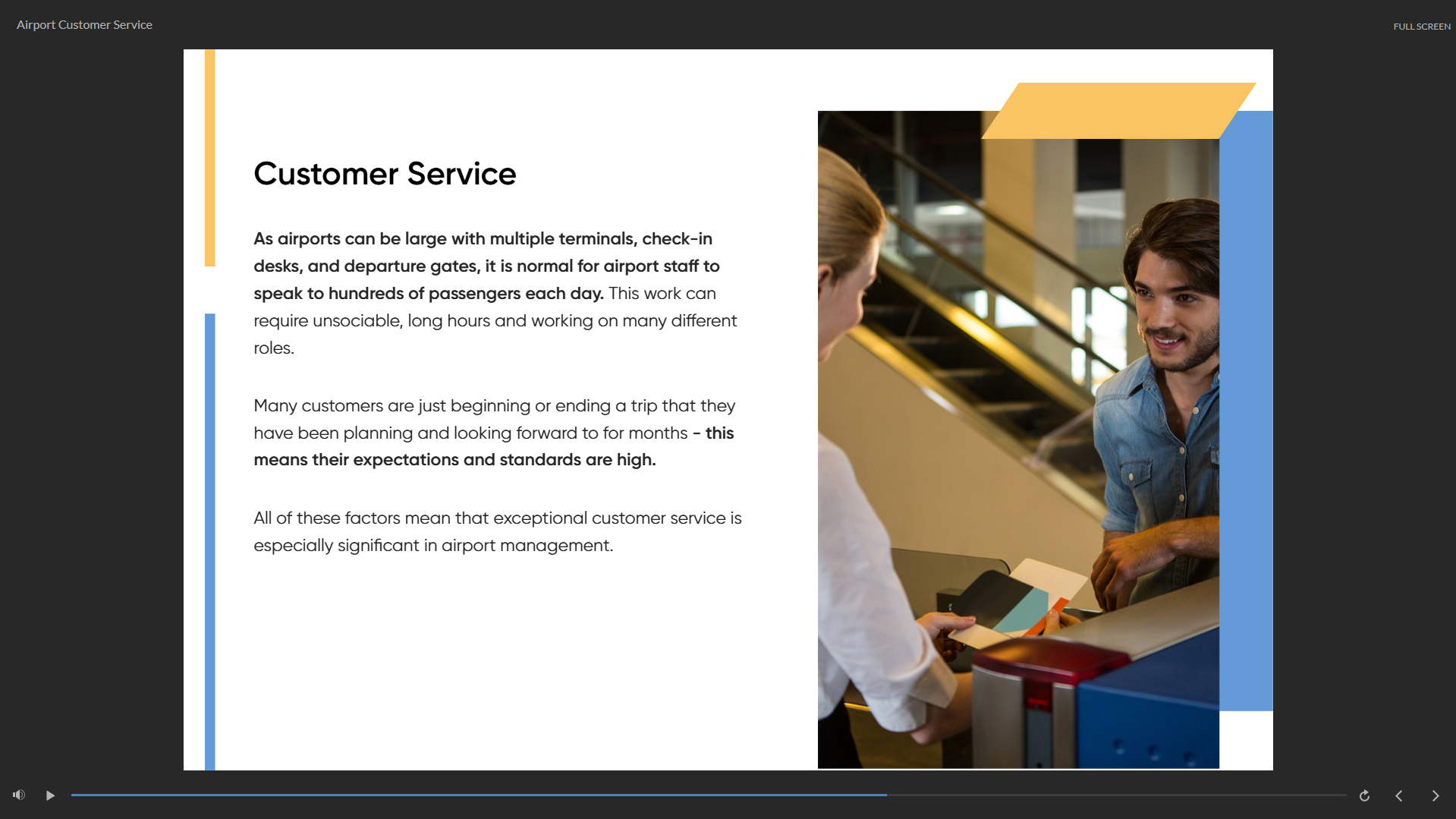
  • Module 02: Airport Customer Service
    Learn best practices for enhancing passenger experience, handling inquiries, and managing service quality.
  • Module 03: Passenger Terminal Management
    Explore terminal design, flow management, and strategies for efficient passenger movement.
  • Module 04: Airport Components
    Understand key infrastructure elements including runways, aprons, terminals, and support facilities.
  • Module 05: Airport Peaks and Airline Scheduling
    Examine traffic patterns, peak periods, and scheduling techniques to optimise operations.
  • Module 06: Cargo Management
    Study cargo handling processes, logistics, and compliance with regulatory requirements.
  • Module 07: Aviation Noise Control
    Learn strategies for managing noise impact and adhering to environmental standards.
  • Module 08: Weather Control
    Explore the influence of weather on airport operations and risk mitigation strategies.
  • Module 09: Sustainable Airport Management
    Discover sustainability practices, eco-friendly operations, and energy-efficient technologies.
  • Module 10: Security Management
    Understand airport security protocols, risk assessment, and emergency preparedness.
  • Module 11: Innovation and Growth
    Examine emerging trends, technology adoption, and strategic growth opportunities in airport operations.
  • Mock Exam – Airport Management
    Test your understanding and readiness with a comprehensive practice exam.

Final Exam – Airport Management
Assess your knowledge and earn a certificate demonstrating your expertise.

Learning Experience & Skills Gained

This Airport Management course offers a practical and immersive learning experience designed to prepare learners for real-world airport operations. Through interactive modules, case studies, and assessments, participants develop both theoretical knowledge and applied skills that are immediately valuable in professional settings.

Learners will gain practical insights into:

  • Managing airport operations efficiently, including terminals, runways, and cargo handling.
  • Enhancing passenger experience through customer service excellence and terminal flow management.
  • Implementing security protocols and emergency response strategies effectively.
  • Applying sustainability practices and innovative solutions for modern airport management.

Key skills developed through the course include:

  • Operational decision-making: Confidently handle day-to-day airport management challenges.
  • Analytical and planning skills: Optimise schedules, resources, and airport peak operations.
  • Communication and leadership: Collaborate with teams, airlines, and stakeholders effectively.
  • Problem-solving: Address real-world operational issues with evidence-based solutions.

By the end of the course, learners not only understand airport management principles but also develop transferable skills that enhance career prospects, improve workplace performance, and contribute to professional credibility.

Why Choose This Course

Choosing the right course is critical for building expertise and advancing your career in aviation. This Airport Management course offers a combination of quality, flexibility, and professional relevance, ensuring you gain maximum value.

Key benefits include:

  • Affordable pricing: High-quality professional training without breaking the budget.
  • Lifetime access: Learn at your own pace and revisit materials whenever needed.
  • Flexible learning: Study online, anytime, from anywhere.
  • Instant certificate: Receive a digital certificate immediately upon completion.
  • Transparent fees: No hidden costs; what you see is what you pay.
  • Fast assessments: Quick grading to track progress and readiness.
  • Career benefits: Build skills recognised by employers in the aviation and airport sectors.
  • 24/7 learner support: Access help whenever you need guidance or clarification.

This course is structured to provide both knowledge and confidence, equipping learners with practical insights and professional skills that are directly applicable in airport management roles. The combination of flexible learning, expert-led content, and career-focused outcomes makes this course a trusted choice for aspiring and current aviation professionals.

Certificate of Achievement

Upon successful completion of the Airport Management course, learners receive a professional Certificate of Achievement that recognises their expertise in airport operations and management. This certificate is designed to enhance your CV, demonstrate your industry knowledge, and increase your credibility with employers.

Key highlights of the certificate:

  • Professional recognition: Endorsed by a UK-based quality organisation (placeholder for accreditation body).
  • Career value: Showcases your skills in airport operations, customer service, cargo management, and security protocols.
  • Optional hard copy: Learners may order a printed version for display or professional purposes.
  • Quality assurance: Reflects industry-standard knowledge and demonstrates commitment to continuous professional development.

Holding this certificate signals to employers and colleagues that you possess practical, up-to-date expertise in airport management. It strengthens professional profiles, supports career progression, and provides a tangible validation of your learning and applied skills.

Nextgen Certificate

Who Is This Course For

This course is designed to be accessible, practical, and valuable for a wide range of learners interested in airport operations and aviation management:

  • Beginners: Individuals seeking foundational knowledge in airport management and operations.
  • Aviation Professionals: Current employees aiming to enhance their skills in terminal management, security, and cargo handling.
  • Students: Those studying aviation, logistics, or transport management who want industry-relevant insights.
  • Career Switchers: Professionals exploring opportunities in airport management, airline operations, or aviation consulting.
  • Passion-Driven Learners: Enthusiasts interested in the aviation industry and airport operations.

The course is suitable for anyone who wants to develop practical skills, understand real-world airport management challenges, and gain a recognised qualification to advance their career in aviation.

Requirements​

This Airport Management course is designed to be inclusive and accessible, ensuring anyone with an interest in aviation can participate. There are no strict prerequisites, making it suitable for beginners and professionals alike.

Key requirements include:

  • No formal prerequisites: Open to learners with any educational or professional background.
  • Age recommendation: Suitable for learners aged 16 and above.
  • Language requirement: Basic proficiency in English to follow course materials.
  • Digital skills: Basic computer and internet skills to access online modules.
  • Interest in the subject: A keen interest in airport operations, aviation management, or related fields.

The course provides all the foundational knowledge needed, while encouraging learners to develop applied skills at their own pace in a supportive and professional online environment.

Career Path & Progression

Completing the Airport Management course opens doors to a range of career opportunities within the aviation and transport sectors. The knowledge and skills gained are immediately applicable, enabling learners to enhance workplace performance, advance professionally, and pursue specialised roles.

Career advancement options include entry-level positions, mid-management roles, and specialised operational functions. Learners also gain transferable skills applicable to related industries such as logistics, transportation, and customer service management.

Potential career roles include:

  • Airport Operations Manager
    Oversee daily airport activities, coordinate staff, and ensure efficient passenger and cargo operations.
  • Passenger Terminal Supervisor
    Manage terminal operations, improve passenger flow, and maintain high service standards.
  • Cargo and Logistics Coordinator
    Supervise cargo handling, optimise storage and transport processes, and ensure compliance with regulations.
  • Airport Security Officer / Security Manager
    Implement security protocols, monitor compliance, and manage emergency preparedness.

Further study pathways may include advanced aviation management, airline operations, or specialised certifications in airport safety, sustainability, or aviation logistics. By mastering airport management principles, learners gain not only technical knowledge but also leadership, decision-making, and operational skills that support long-term career growth in aviation and beyond.

With this course, your journey in the aviation industry begins with a solid foundation, preparing you to take on complex operational challenges, pursue promotions, and make a tangible impact in the dynamic world of airport management.

Order Your Certificate

To order your Certificate, we kindly invite you to visit the following link

FAQs

Airport management involves overseeing complex operations, ensuring safety, and maintaining high passenger satisfaction. Common challenges include:

  • Operational complexity: Coordinating flights, ground services, and terminal functions efficiently.

  • Security management: Implementing robust security protocols to prevent threats.

  • Peak traffic handling: Managing passenger flow during busy periods to avoid delays.

  • Regulatory compliance: Meeting international aviation standards and local government rules.

  • Sustainability: Reducing environmental impact through energy-efficient and eco-friendly practices.

For example, effective scheduling during peak hours requires balancing airline needs with passenger convenience. Nextgen Learning’s Airport Management course helps learners understand these challenges and equips them with practical strategies for managing airport operations.

Airports conduct various checks to ensure safety, security, and compliance with travel regulations. Common questions include:

  • Travel documentation: “May I see your passport and visa?”

  • Security checks: “Do you have any liquids, electronics, or restricted items?”

  • Customs and immigration: “What is the purpose of your visit?”

  • Baggage inquiries: “Are you carrying items for others or commercial goods?”

These questions are standard for passenger safety and regulatory compliance. Understanding airport processes, as taught in structured programs like Nextgen Learning’s Airport Management course, helps professionals anticipate operational needs and provide smoother customer experiences.

Airports are classified based on function and operations:

  1. Commercial Airports: Handle scheduled passenger and cargo flights (e.g., Heathrow, JFK).

  2. General Aviation Airports: Support private, recreational, and business flights.

  3. Military Airports: Dedicated to armed forces operations.

  4. Cargo Airports: Focus primarily on freight and logistics operations.

These classifications influence airport management practices, including staffing, security, and scheduling, which are core modules in airport management education.

Airport management professionals need a blend of technical, operational, and interpersonal skills:

  • Leadership and team management – guiding diverse teams efficiently.

  • Communication skills – liaising with airlines, passengers, and authorities.

  • Problem-solving – handling operational disruptions and emergencies.

  • Analytical skills – interpreting traffic data and peak load patterns.

  • Knowledge of aviation regulations – understanding safety, security, and environmental laws.

  • Customer service orientation – ensuring smooth passenger experience.

Courses like Nextgen Learning’s Airport Management program focus on these skills, providing practical scenarios and case studies for applied learning.

Seven core management skills applicable to airport management include:

  1. Planning: Setting operational goals and schedules.

  2. Organising: Coordinating resources and staff effectively.

  3. Leading: Motivating teams to achieve operational excellence.

  4. Controlling: Monitoring processes and ensuring compliance.

  5. Decision-making: Responding to disruptions and emergencies.

  6. Communication: Clear instructions and stakeholder engagement.

  7. Problem-solving: Addressing challenges efficiently and proactively.

These skills help airport managers balance operational efficiency with passenger satisfaction.

Airports are typically managed by Airport Managers or Airport Authorities, who oversee daily operations, coordinate with airlines, and ensure compliance with aviation regulations. Key responsibilities include:

  • Terminal and runway operations management

  • Scheduling and resource allocation

  • Security and emergency preparedness

  • Staff supervision and passenger services

Depending on the country, management may be public (government-run) or private (corporate-managed).

Airport security is a multi-layered system managed by:

  • Airport Security Officers: Conduct passenger, baggage, and perimeter checks.

  • Government Agencies: E.g., Civil Aviation Authorities, Customs, and Border Protection.

  • Private Security Contractors: Provide supplementary surveillance and enforcement.

  • Emergency Services: Firefighters and medical teams for immediate response.

Effective protection requires coordination, training, and adherence to international aviation security standards.

The primary functions of airport management include:

  • Operations Management: Ensuring smooth flight scheduling, baggage handling, and terminal activities.

  • Safety and Security: Maintaining compliance with aviation regulations and protecting passengers.

  • Customer Service: Enhancing passenger experience through effective information, signage, and assistance.

  • Resource Planning: Coordinating staff, equipment, and infrastructure efficiently.

  • Sustainability Management: Implementing eco-friendly practices and noise reduction strategies.

These functions are critical for airport efficiency, profitability, and passenger satisfaction.

Airports are controlled by a combination of authorities and systems:

  • Civil Aviation Authorities: Oversee regulatory compliance, air traffic, and safety standards.

  • Airport Operations Control Centers: Manage daily operational logistics, runway schedules, and emergencies.

  • Air Traffic Controllers (ATC): Control aircraft movements on runways and airspace.

  • Airport Management Team: Coordinates resources, staff, and passenger services.

This layered control structure ensures both safety and efficiency in complex airport operations.

Course Curriculum

Airport Management
Module 01: Introduction to Airport Management 00:17:00
Module 02: Airport Customer Service 00:13:00
Module 03: Passenger Terminal Management 00:16:00
Module 04: Airport Components 00:18:00
Module 05: Airport Peaks and Airline Scheduling 00:19:00
Module 06: Cargo Management 00:20:00
Module 07: Aviation Noise Control 00:12:00
Module 08: Weather Control 00:16:00
Module 09: Sustainable Airport Management 00:18:00
Module 10: Security Management 00:18:00
Module 11: Innovation and Growth 00:17:00
Mock Exam
Mock Exam – Airport Management 00:20:00
Final Exam
Final Exam – Airport Management 00:20:00
Order Your Certificate
Order Your Certificate 00:00:00

Related Courses

A product of

© 2026 NextGen Learning. All rights reserved

Home Search Cart Offers
Select your currency
USD United States (US) dollar