


Popular Courses

Brand
Awarding body image

Overview of Anaphylaxis and BLS Training

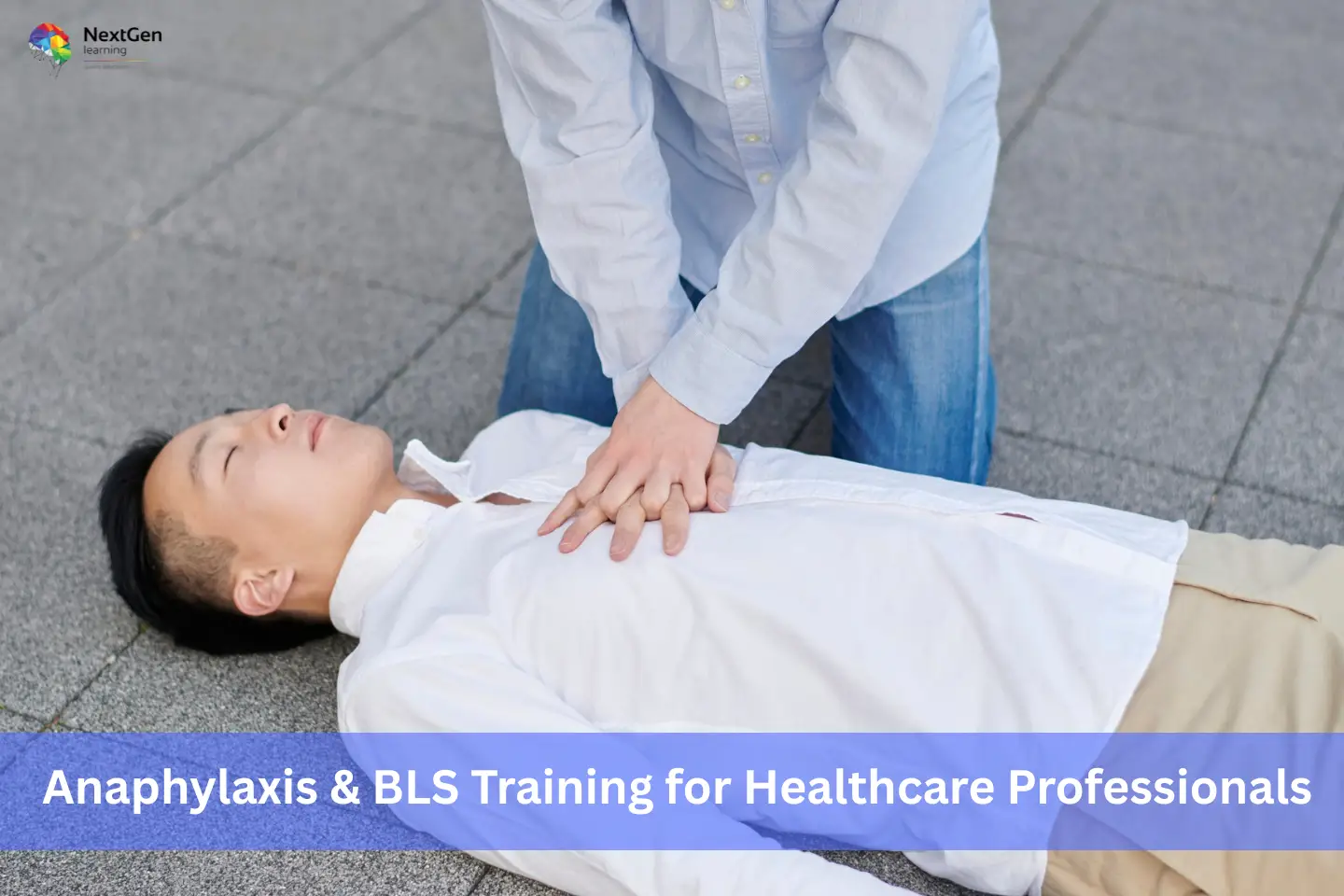
Healthcare emergencies require calm observation, clear communication and timely action. This Anaphylaxis and BLS Training helps learners understand how allergic reactions can progress and how a structured response may support patient safety. Moreover, it develops knowledge of cardiac arrest recognition, CPR, defibrillation, choking and post-emergency positioning. Learners will explore how each intervention fits within an effective emergency response rather than viewing the techniques separately. As a result, healthcare professionals can strengthen their confidence, recognise when urgent assistance is required and contribute more effectively until advanced clinical support becomes available.

By completing this course, you will be able to:

  • Explain what anaphylaxis is and why it is life-threatening
  • Recognise common signs associated with severe allergic reactions
  • Identify situations that require immediate emergency escalation
  • Understand the role of adrenaline in anaphylaxis treatment
  • Support everyday planning for people at risk of anaphylaxis
  • Recognise an unresponsive person who may require BLS
  • Explain the principles of effective cardiopulmonary resuscitation
  • Understand when and why an AED may be used
  • Respond appropriately to a suspected choking emergency
  • Place a suitable casualty into the recovery position
  • Communicate clearly during an emergency
  • Follow organisational emergency procedures and clinical guidance

Exclusive Course Glimpse

Learning Outcomes

After completing the training, learners will confidently understand how to:

  • Distinguish anaphylaxis from less severe allergic symptoms
  • Recognise airway, breathing and circulation concerns
  • Explain the importance of early emergency assistance
  • Describe the correct sequence of basic life support actions
  • Understand how AED prompts support rescuers
  • Identify appropriate responses to choking
  • Monitor an unresponsive person who is breathing
  • Apply emergency knowledge within healthcare settings

Why Choose This Anaphylaxis and BLS Course?

This course offers focused emergency-care learning for healthcare and support professionals.

  • Combined training: Study anaphylaxis and BLS within one programme
  • Healthcare relevance: Build knowledge applicable to patient-facing settings
  • Practical focus: Explore realistic emergency-response situations
  • Step-by-step learning: Progress through clear, structured modules
  • Flexible study: Complete the training online around work commitments
  • Professional development: Strengthen emergency awareness and confidence
  • Broad coverage: Learn CPR, AED, choking and recovery-position principles
  • UK guidance awareness: Develop knowledge aligned with recognised emergency priorities

Resuscitation Council UK’s 2025 adult BLS guidance emphasises early recognition of cardiac arrest, calling 999 and beginning chest compressions promptly. It recommends compressions at 100–120 per minute and a depth of approximately 5–6 cm for adults.

Certificate of Achievement

  • CPD Accredited Certificate
  • Digital Certificate
  • Professional Recognition
  • CV and LinkedIn Enhancement
  • Proof of Professional Skills
Nextgen Certificate

Who Is This Course For?​

This training is suitable for:

  • Healthcare assistants and support workers
  • Nurses, nursing associates and student nurses
  • Care-home and domiciliary care staff
  • Medical reception and clinical support staff
  • Dental and pharmacy team members
  • School nurses and healthcare staff
  • Community health and support professionals
  • Anyone seeking healthcare emergency training

Career Opportunities in the UK

This Anaphylaxis and BLS Training supports continuing professional development for healthcare and care-related roles. However, it is an awareness-based online programme and does not independently qualify learners for clinical practice or replace employer-required practical assessment.

Healthcare Assistant

Healthcare assistants support patients with personal care, observations and daily clinical needs. Emergency awareness can help them identify deterioration and seek prompt assistance from registered professionals.

Average UK Salary: £25,000 – £27,000 per year

Emergency Care Assistant

Emergency care assistants work alongside paramedics when responding to accidents and medical emergencies. They support patient assessment, equipment preparation, transport and urgent care activities.

Average UK Salary: £26,000 – £31,000 per year

Nursing Associate

Nursing associates provide direct care under the leadership of registered nurses. They work in hospitals and community settings, where BLS and emergency-response awareness can support safe patient care.

Average UK Salary: £26,000 – £31,000 per year

Ambulance Care Assistant

Ambulance care assistants transport patients to appointments and treatment centres. They must monitor patient wellbeing and communicate promptly when a person’s condition changes.

Average UK Salary: £25,000 – £27,000 per year

Senior Care Worker

Senior care workers provide direct support while supervising care assistants. They may coordinate emergency procedures, report incidents and help ensure that staff follow individual care plans.

Average UK Salary: £24,000 – £29,000 per year

Healthcare Science Assistant

Healthcare science assistants support clinical and technical teams with tests, equipment and patient monitoring. Emergency knowledge can strengthen their awareness when working near patients or within clinical departments.

Average UK Salary: £25,000 – £31,000 per year

Paramedic

Paramedics assess patients, deliver emergency treatment and respond to life-threatening incidents. This role requires an approved professional training route and registration, while anaphylaxis and BLS knowledge forms part of wider emergency-care competence.

Average UK Salary: £32,000 – £48,000 per year

Entry Requirements

  • No formal qualifications are required
  • Suitable for beginners and healthcare professionals
  • Basic written English is recommended
  • Internet access and a suitable digital device are required
  • An interest in emergency care and patient safety is helpful

Order Your Certificate

To order your Certificate, we kindly invite you to visit the following link

Frequently Asked Questions -

Anaphylaxis and BLS Training teaches learners how to recognise severe allergic reactions and understand essential emergency-response principles. It also covers CPR, AED awareness, choking and the recovery position. Therefore, it offers broad knowledge relevant to healthcare environments.

Anaphylaxis may involve sudden airway, breathing or circulation problems after exposure to an allergen. Possible signs include throat or tongue swelling, breathing difficulty, wheezing, dizziness or collapse. The condition can progress quickly and requires emergency action.

Emergency assistance should be requested immediately, and an available prescribed adrenaline auto-injector should be used according to its instructions. The person should usually lie down, although breathing difficulty may require a supported position. NHS guidance advises calling 999 and clearly stating that anaphylaxis is suspected.

Yes, the course is designed for healthcare staff, care workers and professionals who may encounter emergencies. It can refresh existing knowledge or introduce key principles to new workers. However, employers may also require face-to-face practical competency training.

Yes, the curriculum includes dedicated modules on CPR and the role of an AED. Learners explore how these interventions support a person in suspected cardiac arrest. Practical competence should still be developed and assessed using suitable equipment and instructor-led practice.

The recovery position may be used for an adult or child with reduced responsiveness who does not meet the criteria for CPR. Breathing should continue to be monitored because the person’s condition can change. It should not be used instead of CPR when breathing is absent or abnormal.

Yes, the course is delivered online and can be accessed through a compatible internet-connected device. The supplied modules total approximately two hours and sixteen minutes. Consequently, learners can study flexibly around work and personal commitments.

No, online learning builds theoretical understanding but cannot fully assess hands-on CPR, AED or choking competence. Healthcare employers may require practical training that follows workplace policy and recognised standards. Therefore, learners should complete any additional practical assessment required for their role.

Course Curriculum

Module 01: What Is Anaphylaxis?
What is Anaphylaxis 00:16:00
Module 02: Treatment for Anaphylaxis
Treatment for Anaphylaxis 00:15:00
Module 03: Everyday Management of Anaphylaxis
Everyday Management of Anaphylaxis 00:15:00
Module 04: An Introduction to Basic Life Support (BLS)
An Introduction to Basic Life Support (BLS) 00:20:00
Module 05: Cardiopulmonary Resuscitation (CPR)
Cardiopulmonary Resuscitation (CPR) 00:17:00
Module 06: The Role of an Automated External Defibrillator (AED)
The Role of an Automated External Defibrillator (AED) 00:17:00
Module 07: Choking
Choking 00:19:00
Module 08: Recovery Position and First Aid Techniques
Recovery Position and First Aid Techniques 00:17:00
Assignment
Assignment – Anaphylaxis & BLS Training for Healthcare Professionals 00:00:00
Order Your Certificate
Order Your Certificate 00:00:00

Related Courses

No course found

A product of

© 2026 NextGen Learning. All rights reserved

Home Search Cart Offers
Select your currency
GBP Pound sterling