




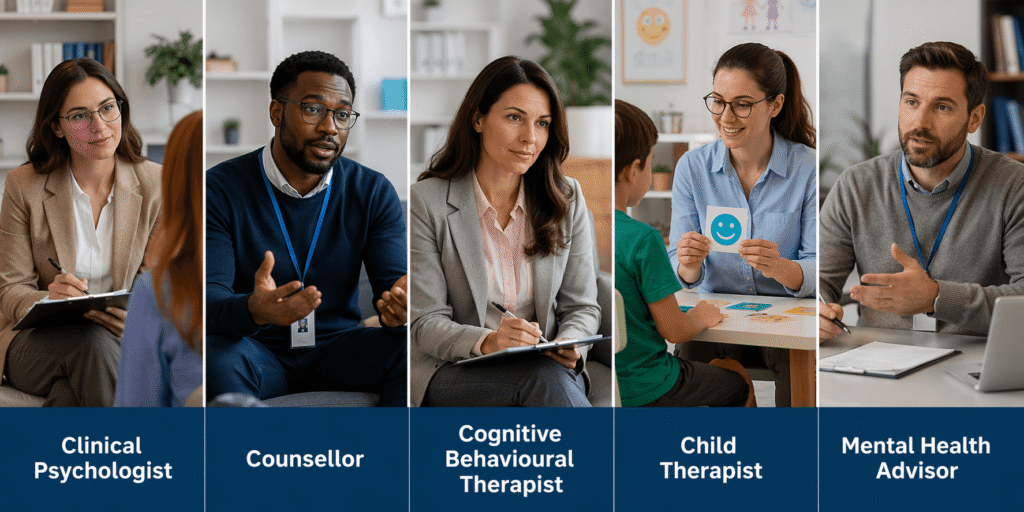
A CBT course with role playing teaches cognitive behavioural therapy techniques while allowing learners to practice real-life therapist-client scenarios. Moreover, it helps build practical skills alongside theory. Therefore, it is highly effective for understanding therapy in action.



Course Curriculum
| Section 01: CBT Introduction for Children | |||
| What is Cognitive Behavioral Therapy (CBT)? How Does CBT for Children Work? | 00:05:00 | ||
| ADHD, Anxiety, Mood Disorders, Autism Spectrum Disorder, Trauma and PTSD | 00:04:00 | ||
| Is CBT an Effective Form of Therapy for Children? Eating Disorder, Defiant | 00:10:00 | ||
| Substance Misuse, Researching on Using CBT | 00:04:00 | ||
| Benefits of Using Cognitive Emotional Therapy | 00:06:00 | ||
| Effectiveness of CBT in 3-7 years old Anxious Children | 00:05:00 | ||
| Section 02: What is Cognitive Behavioral Therapy (CBT)? | |||
| What is Cognitive Behavioral Therapy (CBT)? Epictetus, Areas of CBT App. 2 | 00:25:00 | ||
| What is Cognitive Behavioral Therapy (CBT)? Epictetus, Areas of CBT App. 2 | 00:01:00 | ||
| Interventions, Cognitive Restructuring, Exposure, Relapse Prevention, Factors! | 00:24:00 | ||
| What are case conceptualization and treatment planning? | 00:12:00 | ||
| Orienting the Patient to Brief CBT, Initial Sessions, Patient Expectations | 00:26:00 | ||
| Problem Solving, Strategies, PMR (Progressive Muscle Relaxation), Deep Breathing, İmagery | 00:25:00 | ||
| Section 03: Role Plays: Psychologist and Client | |||
| Interview 1: Clarification (00.00-00.43 Minutes) and Paraphrasing and Reflection | 00:02:00 | ||
| Interview 2: Explaining Automatic Thoughts to Your Patient | 00:01:00 | ||
| Interview 3: Automatic Thoughts in Session | 00:01:00 | ||
| Interview 4: Automatic Thoughts between Sessions | 00:01:00 | ||
| Interview 5: What is behavioral activation, and why is it important? | 00:01:00 | ||
| Order Your Certificate | |||
| Order Your Certificate | 00:00:00 | ||
Related Courses