


Popular Courses

Brand
Awarding body image

Easy to Advanced Data Structures

Overview of Easy to Advanced Data Structures Course

Data structures are the foundation of efficient programming and software development. This data structures course is designed to help learners understand how information is organised, stored, managed, and processed within modern computer systems and software applications.

The course explains the principles behind data organisation and how developers use different structures to solve programming challenges efficiently. You will learn about arrays, linked lists, stacks, queues, trees, graphs, hashing techniques, sorting methods, and searching algorithms.

Moreover, this data structures and algorithms course introduces important concepts related to computational efficiency, logical thinking, optimisation, algorithm design, and performance analysis that are essential for modern software development.

In addition, the training focuses on helping learners understand how selecting the right data structure can improve application performance, scalability, memory usage, and overall system efficiency.

Furthermore, the course highlights practical approaches used in software development, algorithm implementation, technical problem-solving, coding assessments, and technical interview preparation.

The course also explains how data structures support real-world applications across web development, mobile applications, databases, cloud systems, artificial intelligence, and enterprise software solutions.

Additionally, learners will explore how algorithms interact with data structures to process information efficiently, solve complex computational problems, and improve software performance.

By the end of the course, learners will have a strong understanding of learn data structures concepts, algorithmic thinking, and advanced programming techniques that support success in computer science and software engineering.

Exclusive Course Glimpse

Description of Easy to Advanced Data Structures Course

This DSA course online explains how data structures and algorithms work together to create efficient, scalable, and reliable software solutions used in modern computing and application development.

You will also explore programming data structures course topics related to sorting algorithms, searching methods, recursion, complexity analysis, graph traversal, tree structures, hashing techniques, and problem-solving strategies commonly used in software engineering.

Moreover, the course introduces important concepts such as data organisation, algorithm design, memory management, computational efficiency, and performance optimisation that form the foundation of computer science and programming.

In addition, learners will gain an understanding of how different data structures are selected and applied to solve specific programming challenges while improving code efficiency and execution performance.

What You Will Learn

  • Understand data structure fundamentals
  • Learn arrays and linked lists
  • Explore stacks and queues
  • Understand trees and graph structures
  • Learn sorting and searching algorithms
  • Improve logical problem-solving skills
  • Understand time and space complexity
  • Develop efficient programming techniques
  • Learn recursion and algorithm design concepts
  • Explore graph traversal methods
  • Understand hashing and data organisation techniques
  • Build confidence in software development and coding challenges

Why Choose Us?​

  • Beginner-to-advanced learning path
  • Simple and easy-to-understand lessons
  • Flexible online study access
  • Practical coding examples
  • Industry-relevant concepts
  • Supports software development careers
  • Focus on real-world problem-solving

Certificate of Achievement

Upon successful completion, you will qualify for the UK and internationally-recognised CPD certificate.

This helps you:

  • Improve your CV
  • Demonstrate programming knowledge
  • Support software engineering applications
  • Build confidence in problem-solving
  • Strengthen technical development
Nextgen Certificate

Who Is This Course For?​

  • Programming beginners
  • Computer science students
  • Software developers
  • Coding enthusiasts
  • Technical interview candidates
  • Anyone interested in algorithms and programming

Requirements of Easy to Advanced Data Structures Course

  • Basic English understanding
  • Interest in programming
  • Internet connection
  • Any digital device
  • Basic coding knowledge is helpful but not essential

Career Path​ of Easy to Advanced Data Structures Course

Completing this data structures course can support opportunities across software engineering, application development, data engineering, and technology-related fields. Moreover, knowledge of data structures is fundamental for building efficient software, solving complex programming problems, and improving system performance.

Common roles include:

Software Developer:
Design, develop, test, and maintain software applications for a variety of platforms and industries

Junior Software Engineer:
Support software development projects by writing code, debugging applications, and collaborating with development teams

Application Developer:
Create and maintain applications that meet user requirements and business objectives

Backend Developer:
Develop and manage server-side systems, databases, and application logic to support software functionality

Programming Analyst:
Analyse technical requirements, develop software solutions, and support system improvements

Technical Support Engineer:
Provide technical assistance, troubleshoot software issues, and support users with system-related challenges

Career opportunities may vary depending on qualifications, experience, programming expertise, and technical skills.

Order Your Certificate

To order your Certificate, we kindly invite you to visit the following link

Frequently Asked Questions - of Easy to Advanced Data Structures Course

A data structures course teaches how data is organised, stored, managed, and processed efficiently within computer programs, software applications, and computing systems.

Yes, this data structures and algorithms course begins with fundamental concepts and gradually progresses to intermediate and advanced topics in a structured and easy-to-follow manner.

You will learn arrays, linked lists, stacks, queues, trees, graphs, sorting algorithms, searching techniques, recursion, hashing, and complexity analysis concepts.

Data structures are essential for efficient programming, software development, problem-solving, technical interviews, algorithm design, and computer science education.

Yes, online learning allows you to study data structures and algorithms from anywhere while progressing at your own pace.

This course is suitable for students, developers, coding enthusiasts, computer science learners, software engineering candidates, and anyone interested in programming.

Course Curriculum

Unit 01: Introduction
Module 01: Promo Video 00:02:00
Module 02: Data Structure Introduction 00:05:00
Module 03: Computational Complexity Analysis 00:13:00
Unit 02: Arrays
Module 01: Static and Dynamic Arrays 00:12:00
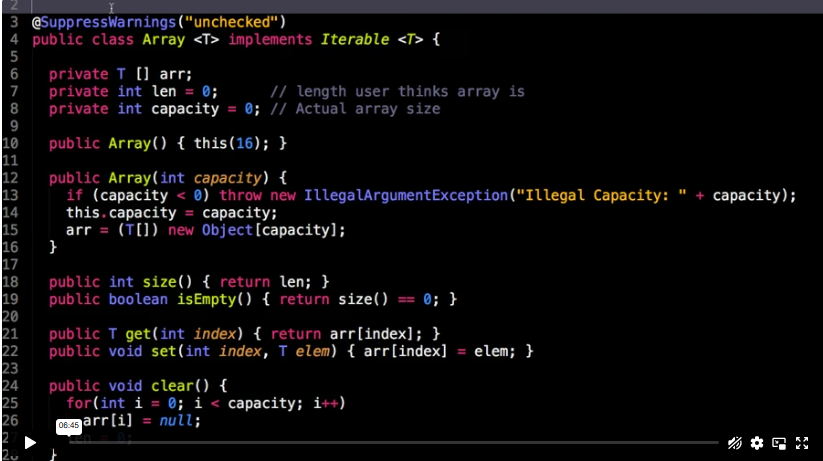
Module 02: Dynamic Arrays Source Code 00:07:00
Unit 03: Linked List
Module 01: Singly and Doubly Linked Lists 00:15:00
Module 02: Doubly Linked Lists Source Code 00:10:00
Unit 04: Stack
Module 01: Stack 00:12:00
Module 02: Stack Implementation 00:04:00
Unit 05: Queues
Module 01: Queues (Part-1) 00:06:00
Module 02: Queues (Part-2) 00:06:00
Module 03: Queue Source Code 00:04:00
Unit 06: Priority Queues (PQs)
Module 01: Priority Queues (PQs) with an interlude on heaps 00:13:00
Module 02: Turning Min PQ into Max PQ 00:06:00
Module 03: Adding Elements to Binary Heap 00:10:00
Module 04: Removing Elements from Binary Heap 00:14:00
Module 05: Priority Queue Binary Heap Source Code 00:16:00
Unit 07: Union Find
Module 01: Disjoint Set 00:06:00
Module 02: Kruskal’s Algorithm 00:06:00
Module 03: Union and Find Operations 00:11:00
Module 04: Path Compression Union Find 00:07:00
Module 05: Union Find Source Code 00:08:00
Unit 08: Binary Search Trees
Module 01: Binary Trees and Binary Search Trees (BST) 00:13:00
Module 02: Inserting Element into a Binary Search Tree (BST) 00:06:00
Module 03: Removing Element from a Binary Search Tree (BST) 00:14:00
Module 04: Tree Traversals 00:12:00
Module 05: Binary Search Source Code 00:13:00
Unit 09: Fenwick Tree
Module 01: Fenwick Tree Construction 00:06:00
Module 02: Point Updates 00:06:00
Module 03: Binary Indexed Tree 00:14:00
Module 04: Fenwick Tree Source Code 00:06:00
Unit 10: Hash Tables
Module 01: Hash Table 00:17:00
Module 02: Separate Chaining 00:08:00
Module 03: Separate Chaining Source Code 00:12:00
Module 04: Open Addressing 00:11:00
Module 05: Linear Probing 00:14:00
Module 06: Quadratic Probing 00:09:00
Module 07: Double Hashing 00:15:00
Module 08: Removing Element Open Addressing 00:08:00
Module 09: Open Addressing Code 00:15:00
Unit 11: Suffix Array
Module 01: Introduction 00:03:00
Module 02: The Longest Common Prefix (LCP) Array 00:03:00
Module 03: Using SA/LCP Array to Find Unique Substrings 00:05:00
Module 04: Longest Common Substring (LCS) 00:11:00
Module 05: Longest Common Substring (LCS) Full Example 00:07:00
Module 06: Longest Repeated Substring (LRS) 00:05:00
Unit 12: AVL Trees
Module 01: Balanced Binary Search Trees (BBSTs) 00:09:00
Module 02: Inserting Elements into an AVL Tree 00:10:00
Module 03: Removing an AVL Tree 00:09:00
Module 04: AVL Tree Source Code 00:17:00
Unit 13: Indexed Priority Queue
Module 01: Indexed Priority Queue (Part-1) 00:25:00
Module 02: Indexed Priority Queue Source Code 00:09:00
Unit 14: Sparse Tables
Module 01: Sparse Table 00:26:00
Module 02: Sparse Table Source Code 00:07:00
Assignment
Assignment – Easy to Advanced Data Structures 00:00:00
Order Your Certificate
Order Your Certificate 00:00:00

Related Courses

A product of

© 2026 NextGen Learning. All rights reserved

Home Search Cart Offers