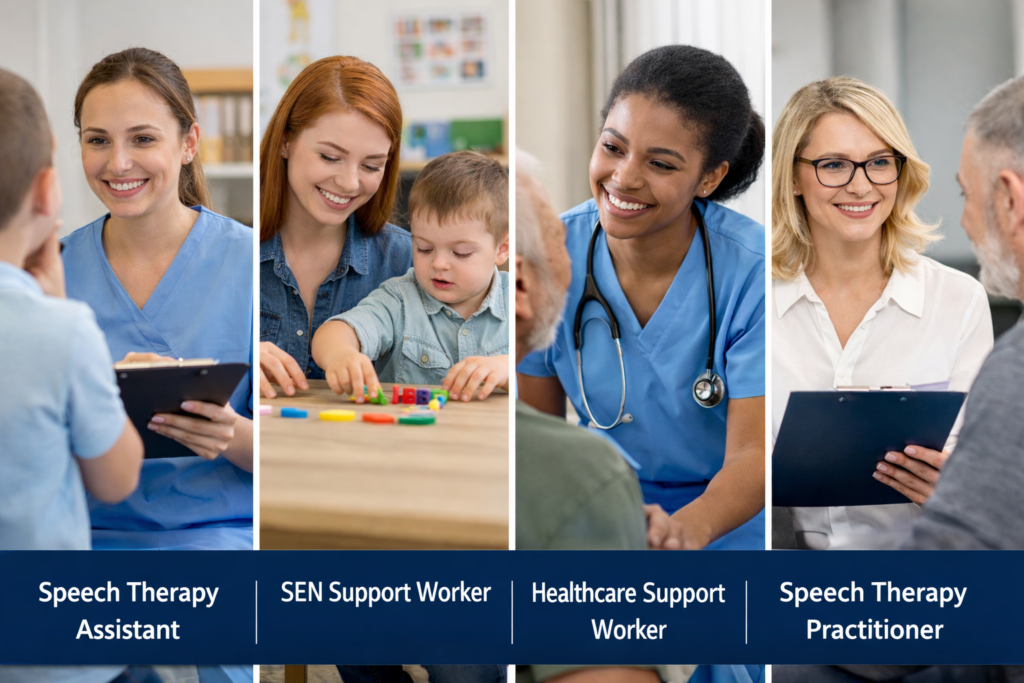



Speech and language therapists help children develop clearer communication skills. For example, they assess speech delays, articulation problems, and language development issues. Moreover, they use speech therapy exercises and communication therapy techniques to improve pronunciation, vocabulary, and understanding. As a result, children gain confidence in speaking and social interaction.

Speech and Language Therapy: Communication Disorders – CPD Accredited
➤ 100% Online Speech and Language Therapy Course – Study Anytime
➤ Learn Speech Therapy Techniques for Communication Disorders
➤ Understand Speech Disorders, Dysphagia and Language Development
➤ Recognised by Healthcare Employers & Care Providers
➤ Self-Paced Learning with Structured Modules
➤ Instant Digital Certificate on Completion
➤ Beginner Friendly – No Previous Experience Required
Overview of Speech and Language Therapy: Communication Disorders
Communication is a vital part of daily life. However, many children and adults experience speech and language difficulties that affect how they express ideas, understand language, or interact with others. Therefore, learning speech and language therapy techniques can help professionals and caregivers support people with communication disorders.
This speech and language therapy course introduces the foundations of communication disorder therapy training and speech therapy support strategies. Moreover, you will explore how speech disorders, language delays, and swallowing difficulties (dysphagia) affect individuals across different age groups. As a result, learners gain a clearer understanding of speech therapy assessment methods and communication therapy techniques used in modern healthcare.
In addition, the course explains how speech therapists support children, adults, and elderly patients with communication impairments. Consequently, you will learn about speech therapy exercises, communication rehabilitation strategies, and language development techniques. Therefore, this speech therapy training course provides a strong foundation for anyone interested in communication therapy, healthcare support, or professional development.
Exclusive Course Glimpse
What You Will Learn in Speech and Language Therapy Course
This speech therapy training course focuses on essential knowledge used in communication disorder therapy and speech therapy support roles.
By the end of this speech and language therapy course, you will be able to:
● Understand communication disorders – Learn the causes and types of speech and language difficulties
● Identify speech disorders in children and adults – Recognise signs of stuttering, articulation problems and language delays
● Explore dysphagia and swallowing disorders – Understand how speech therapists assess eating and swallowing difficulties
● Learn speech therapy assessment techniques – Discover how professionals evaluate communication disorders
● Apply speech therapy exercises and techniques – Explore methods used to improve speech clarity and communication
● Understand literacy and language development – Learn how language skills develop in children and adults
● Support individuals with communication difficulties – Understand practical therapy strategies used in speech therapy practice
● Explore communication rehabilitation approaches – Learn how therapy improves quality of life for patients
As a result, learners develop strong foundational knowledge of speech therapy techniques and communication disorder therapy training.
Why Choose Us?
There are many healthcare training programmes available. However, this speech and language therapy course online focuses on clear, practical knowledge that beginners can understand easily.
In addition, the course includes:
- Affordable Learning: Structured lessons for smooth progress
- CPD-Certified: Strengthen your CV with recognised credentials
- Lifetime Access: Learn anytime at your own pace
- Instant Certificate: Receive certification upon completion
- Flexible Scheduling: Study around your work or studies
- Transparent Pricing: No hidden costs
- Quick Assessments: Monitor your progress easily
- 24/7 Support: Assistance via chat or email
Therefore, this communication disorder therapy course is suitable for learners interested in healthcare, education, and therapy support roles.
Certificate of Achievement
After successfully completing this speech and language therapy course,you will receive a CPD-accredited certificate to confirm your learning professionally.
You can typically choose:
- PDF Certificate
- Hardcopy Certificate
- QLS Certificate (Optional Upgrade)
Moreover, the certificate can help you:
- Strengthen your CV and professional profile
- Demonstrate knowledge of speech therapy techniques and communication disorders
- Support career development in healthcare and support services
- Show proof of structured CPD learning
Therefore, this speech therapy certification course provides both educational and professional value.
Who Is This Course For?
This speech and language therapy training course is suitable for anyone interested in understanding communication disorders and speech therapy support.
This course is ideal for:
- Individuals interested in speech and language therapy courses
- Healthcare assistants supporting patients with communication disorders
- Teachers and teaching assistants working with children with speech difficulties
- Care workers supporting adults with communication impairments
- Parents wanting to understand speech development and therapy techniques
- Learners exploring careers in speech therapy or allied health professions
Therefore, this speech therapy course online offers valuable knowledge for both personal learning and professional development.
Requirements
There are no formal entry requirements for this speech and language therapy course. However, to study comfortably you should have:
- Basic English reading skills
- A computer, tablet, or smartphone
- Internet access
Because this is an online speech therapy training course, you can learn at your own pace and access lessons anytime.
Career Path of Speech and Language Therapy
Completing this speech therapy training course can support career development in healthcare, education, and therapy support environments.
Common career directions include:
Speech Therapy Assistant – £22,000 to £30,000
Support speech therapists by assisting with therapy exercises, communication assessments, and patient care.
Healthcare Support Worker – £21,000 to £28,000
Help patients with communication disorders, language difficulties, and rehabilitation support.
Special Educational Needs (SEN) Support Worker – £22,000 to £32,000
Assist children with speech delays, learning difficulties, and communication challenges in educational settings.
Care Worker for Communication Disorders – £20,000 to £28,000
Support adults with neurological conditions such as stroke, dementia, or aphasia.
Speech Therapy Support Practitioner – £24,000 to £35,000
Work alongside therapists to deliver communication therapy programmes and rehabilitation exercises.
Salary figures are approximate and may vary by experience and location.
Order Your Certificate
To order your Certificate, we kindly invite you to visit the following link
Frequently Asked Questions -
Yes, speech therapy training techniques can help manage stuttering or stammering. Speech therapists use strategies such as breathing control, fluency exercises, and communication practice. Furthermore, therapy helps individuals build confidence when speaking. Therefore, many people experience improved speech fluency and communication comfort.
Common speech disorders in children include stuttering, articulation disorder, speech sound disorder, apraxia of speech, and dysarthria. Each condition affects how a child produces or organises speech sounds. Therefore, speech therapy assessment is important for identifying the specific difficulty. Early intervention through speech therapy can significantly improve communication skills.
Speech therapy helps children improve speech clarity, language understanding, and social communication. Therapists use interactive exercises, storytelling activities, and pronunciation practice. In addition, therapy supports literacy and language development. Consequently, children become more confident when communicating at school and home.
Children can be referred to a speech therapist whenever communication difficulties are noticed. However, many specialists recommend assessment if speech delays continue beyond age two or three. Early intervention is important because therapy can support language development during key learning stages. Therefore, early speech therapy often leads to better outcomes.
Course Curriculum
| Speech and Language Therapy: Communication Disorders | |||
| Module 1: Communication Disorders | 00:25:00 | ||
| Module 2: Child Communication Disorders | 00:26:00 | ||
| Module 3: Adult Communication Disorders | 00:23:00 | ||
| Module 4: Diagnosing and Treating Communication Disorders | 00:12:00 | ||
| Module 5: Overcoming Language Disorder by Speech Therapy | 00:12:00 | ||
| Module 6: Literacy & Language Development | 00:21:00 | ||
| Module 7: Overcoming Other Communication Disorders | 00:19:00 | ||
Related Courses
Chatbots and AI in Customer Service
AI for Project Management & Scheduling in Construction
Construction Risk Management & Compliance


All Courses for £49