


Popular Courses

Brand
Awarding body image

Understand Piping & Instrumentation Diagrams P&IDs – Online Course UK

Overview of Understand Piping & Instrumentation Diagrams P&IDs | CPD Accredited Course

Have you ever looked at a complex engineering diagram and wondered how professionals instantly understand every valve, pipe, and control system? In today’s fast-growing industrial sector, the ability to read piping and instrumentation diagrams (P&ID) is a highly valued skill. In fact, industries such as oil & gas, manufacturing, and automation increasingly rely on professionals who can interpret P&ID diagrams accurately. Therefore, enrolling in a piping and instrumentation diagrams course is a smart step towards building in-demand technical expertise and improving your career opportunities.

Moreover, this P&ID course online UK is carefully designed to turn complex engineering drawings into simple, understandable concepts. You will learn how process equipment, instrumentation symbols, and control loops connect within real systems. In addition, the course covers essential topics such as P&ID symbols, diagram standards, and process control systems, allowing you to build strong foundational knowledge. As a result, you will gradually develop confidence in reading, analysing, and applying process and instrumentation diagrams in real-world scenarios.

Furthermore, this process and instrumentation diagram course focuses on practical learning and industry relevance. You will explore safety instrumented systems, alarm systems, and industrial automation concepts that are widely used in engineering environments. At the same time, structured lessons and real examples help you understand how these diagrams support safe operations, troubleshooting, and system design. Ultimately, this course equips you with the skills needed to interpret P&ID diagrams professionally while enhancing your technical understanding and employability in the UK engineering sector.

Exclusive Course Glimpse

What You Will Learn in Understand Piping & Instrumentation Diagrams P&IDs

This piping and instrumentation diagrams training course is structured to help you build practical and job-ready engineering skills step by step. Moreover, it starts with basic concepts and gradually moves towards advanced process control and safety systems. As a result, you can develop strong technical knowledge with clarity and confidence.

By the end of this course, you will be able to:

Understand P&ID fundamentals: Learn how piping and instrumentation diagrams represent industrial systems
Interpret P&ID symbols: Identify valves, pumps, compressors, and instrumentation symbols accurately
Apply P&ID standards: Understand ISA and ISO standards used in engineering diagrams
Analyse control loops: Learn process control systems including feedback and feedforward control
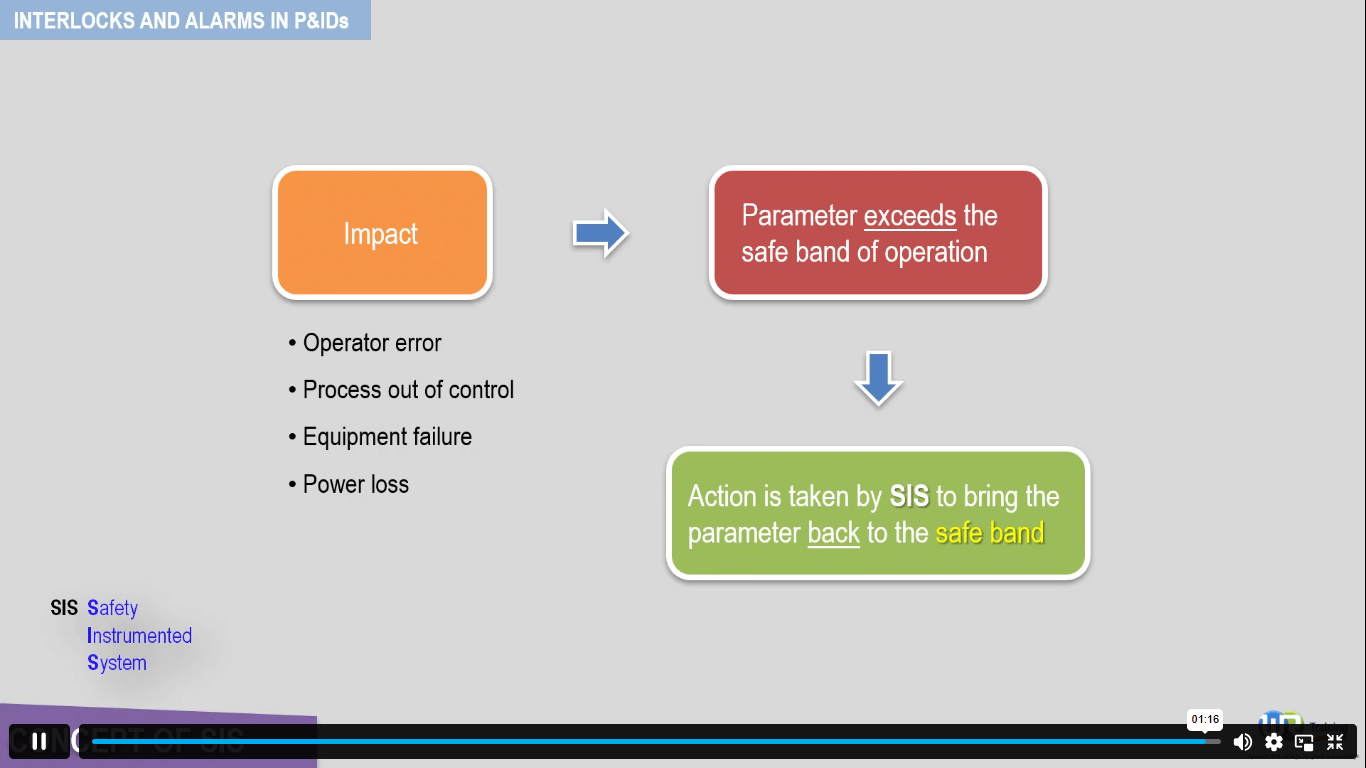
Understand safety systems: Explore safety instrumented systems (SIS), alarms, and detection systems
Identify equipment functions: Recognise process equipment and flow paths in real-world diagrams
Work with designation codes: Understand piping, equipment, and instrument coding systems
Improve technical communication: Develop skills for documentation and engineering analysis

In addition, you will strengthen your ability to read industrial diagrams and understand system behaviour. Furthermore, you will gain confidence in applying process control knowledge in engineering environments. Therefore, this course helps you build both technical expertise and practical understanding required in modern industries.

Why Choose Us?​

Many learners search for the best P&ID course online UK, but not all provide practical and structured training. Therefore, this course focuses on simplifying complex engineering concepts while ensuring real-world relevance.

In addition, this course offers key benefits:

  • Affordable Learning: Structured lessons for smooth progress
  • CPD-Certified: Strengthen your CV with recognised credentials
  • Lifetime Access: Learn anytime at your own pace
  • Instant Certificate: Receive certification upon completion
  • Flexible Scheduling: Study around your work or studies
  • Transparent Pricing: No hidden costs
  • Quick Assessments: Monitor your progress easily
  • 24/7 Support: Assistance via chat or email

Thus, this online P&ID training course supports both learning and career growth.

Course Curriculum

Understand Piping & Instrumentation Diagrams P&IDs Course

Introduction – Overview of course structure and engineering concepts
About P&IDs – Learn what P&ID diagrams are and why they are essential
P&ID Reading Basics – Understand anatomy, title blocks, grids, and legends
P&ID Symbols – Identify valve symbols, piping symbols, and instrumentation elements
Practical Exercises – Apply knowledge through real P&ID examples
Designation Codes – Learn piping, equipment, and instrument coding systems
Process Control Basics – Understand control loops and process systems
Control Systems (BPCS) – Learn feedback, feedforward, and advanced control methods
Advanced Process Control – Explore pumps, compressors, and heat exchanger control
Safety Systems (SIS) – Understand safety instrumented systems, alarms, and detection
Real-World Examples – Analyse industrial P&ID diagrams for practical understanding

Certificate of Achievement

After completing this piping and instrumentation diagrams course online, you will receive a CPD-accredited certificate to confirm your learning professionally.

You can typically choose:

  • PDF Certificate 
  • Hardcopy Certificate 

Moreover, certification helps learners:

📄 Strengthen your CV: Add a recognised engineering certification
🎓 Demonstrate skills: Showcase your P&ID and process control knowledge
📈 Boost employability: Stand out in engineering and automation roles
Prove learning: Validate your professional development

Therefore, if you are looking for a certified P&ID course in the UK, this is a strong choice.

Who Is This Course For?​

This piping and instrumentation diagrams training course is suitable for anyone interested in engineering, process control, and industrial systems. Moreover, it is designed for both beginners and professionals who want to build or upgrade their technical skills in a structured way.

In addition, this course is ideal for:

Beginners: Start learning P&ID diagrams from scratch
Engineers: Improve process control and instrumentation knowledge
Technicians: Enhance system understanding and troubleshooting skills
Maintenance professionals: Learn to interpret diagrams for plant operations
Students: Build strong engineering fundamentals
Career changers: Enter industrial and automation roles confidently

Furthermore, the course is flexible and easy to follow. As a result, you can learn at your own pace while balancing work or study commitments.

Requirements​

There are no formal requirements for this P&ID course UK. However, learners should have:

Basic English skills: To understand course materials
Device access: Computer, tablet, or smartphone
Internet connection: For online learning

Because this course is fully online, you can study anytime. Therefore, you can revisit lessons and improve your skills gradually.

Career Path of Understand Piping & Instrumentation Diagrams P&IDs

Completing this piping and instrumentation diagrams course can significantly expand your opportunities in engineering and industrial sectors. As automation, manufacturing, and process industries continue to evolve, professionals with strong P&ID knowledge are increasingly in demand. Therefore, gaining these technical skills can give you a clear advantage when applying for roles in modern engineering environments.

Common career paths include:

Process Engineer: £35,000 to £55,000
Focus on designing, improving, and optimising industrial process systems for efficiency and safety

Piping Designer: £30,000 to £50,000
Work on creating detailed piping layouts and technical engineering drawings

Instrumentation Engineer: £40,000 to £60,000
Handle the development, installation, and maintenance of control and instrumentation systems

Control Systems Engineer: £38,000 to £58,000
Design and manage automation systems to ensure smooth and reliable operations

Maintenance Technician: £25,000 to £35,000
Carry out system maintenance, fault diagnosis, and equipment troubleshooting

Project Engineer: £36,000 to £55,000
Oversee engineering projects, ensuring proper planning, execution, and documentation

Salaries can vary depending on experience level, industry sector, and geographic location, but overall demand for these roles remains strong across the UK.

Order Your Certificate

To order your Certificate, we kindly invite you to visit the following link

FAQs About Understand Piping & Instrumentation Diagrams P&IDs

To understand a P&ID diagram, you should start by learning the basic symbols, control loops, and equipment representations. Then, focus on flow directions and how components interact within the system. In addition, practising with real examples improves your understanding over time. Therefore, a structured piping and instrumentation diagrams course helps you learn faster and more effectively.

The best piping design course is one that covers both theory and practical applications of P&ID diagrams. Moreover, a CPD-accredited P&ID course online UK provides recognised certification and industry-relevant skills. It should also include real-world examples and control system training. As a result, you gain both knowledge and job-ready expertise.


Yes, you can draw P&ID diagrams in AutoCAD using specialised tools like AutoCAD P&ID or Plant 3D. These tools allow you to create professional engineering diagrams using standard symbols and layouts. In addition, learning P&ID standards makes the process easier and more accurate. Therefore, combining software skills with training improves your design capabilities.


Common P&ID mistakes include incorrect symbols, missing control loops, and unclear flow directions. In addition, poor labelling and ignoring standard conventions can lead to confusion in real projects. Therefore, understanding ISA standards and practising regularly helps reduce errors. A structured course ensures you avoid these common issues.


Common software used for P&ID drawings includes AutoCAD P&ID, AVEVA Diagrams, SmartPlant P&ID, and Microsoft Visio. Each tool offers different features for creating and managing engineering diagrams. Moreover, cloud-based tools like Lucidchart are also popular for beginners. As a result, learning these tools alongside theory enhances your technical skills.


Course Curriculum

INTRODUCTION
Introduction 00:04:00
ABOUT P&ID's
What’s a P&ID ? 00:03:00
Why is a P&ID so important ? 00:02:00
Who uses P&ID’s ? 00:06:00
How do P&ID’s look like ? 00:08:00
INTRODUCTION TO P&ID READING
Introduction- PID READING 00:02:00
Anatomy of a P&ID 00:01:00
The title block 00:03:00
The drawing scale 00:03:00
The grid system 00:02:00
The revision block 00:03:00
Changes 00:02:00
Notes and legends 00:03:00
BASIC P&ID SYMBOLS
Valve symbols 00:14:00
Valve actuator symbols 00:09:00
Control valve designations 00:02:00
Standards and conventions for valve status 00:07:00
Process equipment symbols 00:12:00
Piping symbols 00:03:00
Pipe fitting symbols 00:03:00
Isolating, venting & draining symbols for ease of maintenance 00:05:00
Instrumentation 00:03:00
Sensing devices and detectors 00:04:00
Location symbols 00:04:00
Modifiers and transmitters 00:05:00
Indicators and recorders 00:03:00
Controllers 00:03:00
LET'S GET SOME PRACTICE : BASIC P&ID SYMBOLS
Example #1 : Identifying process equipment and flow paths 00:05:00
Example #2 : Identifying valve position and failure mode 00:03:00
Example #3 : Identifying the symbols 00:02:00
P&ID DESIGNATION CODES
Piping designation code 00:06:00
Equipment designation code 00:03:00
Instrument designation code 00:02:00
Miscellaneous designation codes 00:02:00
THE IMPORTANCE OF PROCESS CONTROL
The process 00:01:00
Process control 00:06:00
CONTROL THEORY BASICS
The control loop 00:02:00
Process control terms 00:10:00
BASIC PROCESS CONTROL SYSTEMS (BPCS)
Control loops : Feedback control 00:02:00
Pressure control loops 00:01:00
Flow control loops 00:01:00
Level control loops 00:01:00
Temperature control loops 00:01:00
Multi-variable loops 00:02:00
Feedforward control 00:02:00
Feedforward + Feedback 00:01:00
Cascade control 00:08:00
Split range control 00:03:00
Operations on control signals 00:02:00
Ratio control 00:02:00
Batch control 00:01:00
Selective control 00:01:00
ADVANCED PROCESS CONTROL
Do we need to control at all ? 00:01:00
Principles of equipment-wise control 00:10:00
Pipe control system 00:02:00
Control of a single pipe 00:02:00
Control of pressure in a pipe 00:03:00
Control of flow in a pipe 00:04:00
Flow merging 00:09:00
Flow splitting 00:05:00
Centrifugal pump control 00:04:00
Control valve vs Variable Frequency Drive (VFD) for centrifugal pumps 00:03:00
Minimum flow control for centrifugal pumps 00:09:00
Positive displacement pump control 00:02:00
Control by a recirculation pipe for PD pumps 00:03:00
Variable Speed Drive (VSD) control for PD pumps 00:01:00
Control by stroke adjustment for PD pumps 00:01:00
Compressor control system 00:02:00
Compressor capacity control 00:12:00
Compressor anti-surge control 00:03:00
Heat transfer equipment control 00:02:00
Heat exchanger direct control system 00:04:00
Heat exchanger bypass control system 00:04:00
Reactor temperature control 00:06:00
Air cooler control 00:02:00
Heat exchanger for heat recovery 00:01:00
Heat exchanger back pressure control 00:02:00
Basic fired heater control 00:08:00
Complex fired heater control 00:05:00
Container and vessel control 00:07:00
Container blanket gas control 00:02:00
SAFETY INSTRUMENTED SYSTEMS (SIS), INTERLOCKS AND ALARMS
Safety strategies 00:01:00
Concept of Safety Instrumented Systems (SIS) 00:01:00
SIS actions and types 00:14:00
SIS extent 00:02:00
SIS requirement 00:03:00
Anatomy of a SIS 00:02:00
SIS element symbols 00:01:00
SIS primary elements : Sensors 00:03:00
SIS final elements 00:04:00
Switching valve actuator arrangements 00:02:00
Valve position validation 00:02:00
Merging a switching valve and a control valve 00:03:00
SIS logics 00:01:00
Showing safety instrumented functions on P&ID’s 00:07:00
Discrete control 00:05:00
Alarm system 00:02:00
Anatomy of alarm systems 00:02:00
Alarm requirements 00:06:00
Alarm system symbology in P&ID’s 00:06:00
Concept of common alarms 00:01:00
Fire and Gas Detection Systems (FGS) 00:03:00
Electric motor control 00:07:00
P&ID representation of commands and responses 00:05:00
P&ID representation of inspection and repair 00:05:00
P&ID example of electro-motor control 00:04:00
P&ID EXAMPLES : LET’S GET SOME PRACTICE
P&ID example #1 : Legend and specifications 00:05:00
P&ID example #2 : Hydrogen delivery station 00:16:00
P&ID example #3 : Acid system 00:13:00
P&ID example #4 : Centrifugal pump 00:09:00
P&ID example #5 : Utility station 00:04:00
P&ID example #6 : Waste water filter 00:08:00
P&ID example #7 : Steam separator 00:15:00
P&ID example #8 : Flare knock-out drum 00:14:00
P&ID example #9 : Centrifugal compressor 00:05:00
P&ID example #10 : Hydrogen production from shale gas 00:11:00
P&ID example #11 : Fired heater 00:07:00

Related Courses

A product of

© 2026 NextGen Learning. All rights reserved

Select your currency
GBP Pound sterling