




Safeguarding vs Child Protection: What’s the Difference?
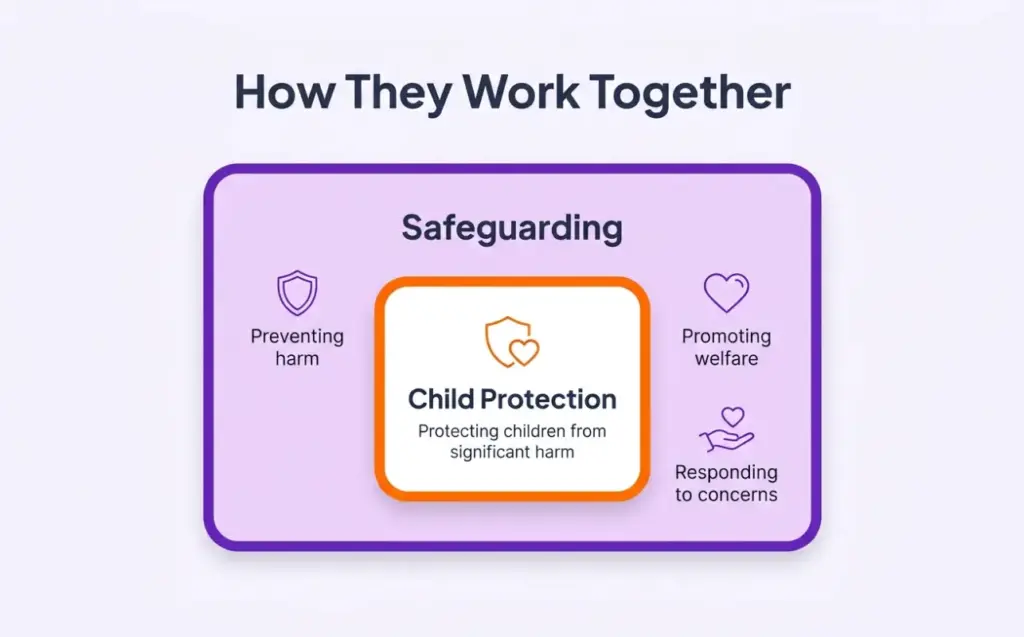
Safeguarding and child protection are closely connected, but they do not mean the same thing. The main difference between safeguarding and child protection is their scope. Safeguarding covers the wider responsibility of keeping children safe, promoting their welfare and preventing harm. Child protection focuses specifically on children who are suffering, or are likely to suffer, significant harm.
For teachers, teaching assistants, nursery practitioners and anyone working with children, understanding this distinction is important. It helps them recognise concerns, follow appropriate procedures and understand when specialist intervention may be needed.
This guide explains how safeguarding and child protection differ, with practical examples and relevant UK guidance.
Table of Contents
What Is Safeguarding and How Is Child Protection Different?
Both safeguarding and child protection aim to keep children safe. However, safeguarding covers a broader range of responsibilities, while child protection focuses on particular risks to individual children.
What Is Safeguarding?
Safeguarding means taking action to protect children from harm, support their wellbeing and create environments where they can develop safely.
It includes preventing abuse and neglect, recognising potential risks, maintaining safe environments and responding appropriately when concerns arise.
For example, a school that checks staff suitability, maintains safeguarding policies and provides appropriate supervision is carrying out safeguarding responsibilities.
These activities form part of everyday practice, even when no particular child is suspected of being at risk.
Exploring what safeguarding means helps explain why these responsibilities extend beyond responding to individual incidents.
What Is Child Protection?
Child protection is the part of safeguarding concerned with protecting individual children who are suffering, or are likely to suffer, significant harm.
It may involve assessing serious concerns, making referrals to children’s social care and taking action to protect a child from further harm.
England’s Working Together to Safeguard Children 2026 provides statutory guidance on how organisations work together to safeguard and protect children.
Child protection can also involve preventing anticipated harm, rather than responding only after abuse has occurred.
Key Differences Between Safeguarding and Child Protection
The easiest way to understand safeguarding vs child protection is to compare their purpose, scope and practical responsibilities.
| Area | Safeguarding | Child Protection |
|---|---|---|
| Scope | Covers children’s overall safety, welfare and protection. | Focuses on children suffering or likely to suffer significant harm. |
| Main purpose | Promote welfare, prevent harm and respond to concerns. | Protect children from significant harm. |
| Who it concerns | All children. | Children experiencing or at risk of significant harm. |
| Typical activities | Safe recruitment, supervision, policies and early support. | Referrals, assessments, enquiries and protective measures. |
| Who is involved | Everyone with responsibilities towards children. | Relevant staff, safeguarding professionals and statutory agencies. |
| Approach | Preventative and responsive. | Focused on identifying and addressing significant harm. |
Although these differences are useful, safeguarding involves both prevention and responding to concerns. Child protection can also involve taking action before actual harm occurs.
The essential distinction is that child protection sits within the wider safeguarding framework. Both contribute to children’s safety and wellbeing.
Examples of Safeguarding and Child Protection in Practice
Everyday situations make the distinction easier to recognise. The following examples show how safeguarding measures and child protection concerns may arise in different settings.
Example 1: Safeguarding in a Primary School
A primary school requires visitors to sign in, supervises pupils during breaks and trains staff to recognise safeguarding concerns.
These measures help provide a safe environment for all pupils. They are examples of routine safeguarding.
Now imagine a teaching assistant notices an unexplained injury and a child makes a concerning disclosure.
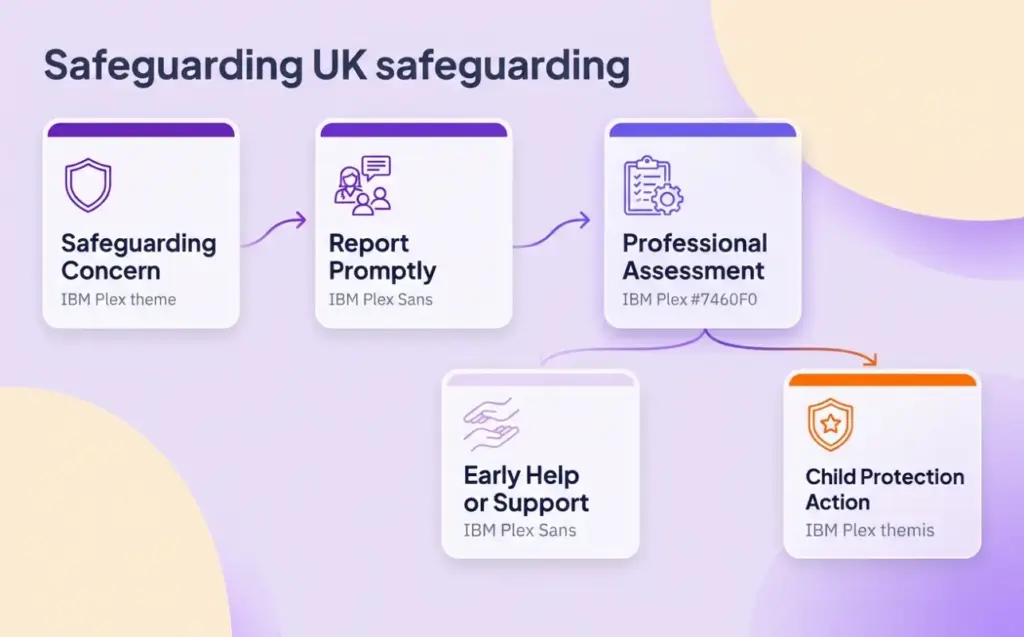
The assistant should take the information seriously and report it promptly through the school’s safeguarding procedures. Depending on the information and professional assessment, the situation may require child protection action.
Staff awareness of the four categories of child abuse—physical abuse, emotional abuse, sexual abuse and neglect—can help them recognise different forms of potential harm.
The teaching assistant’s responsibility is to respond appropriately and pass the concern to the relevant safeguarding professional.
Example 2: Online Safety and Possible Exploitation
A secondary school teaches pupils about privacy settings, inappropriate messages and safe online behaviour.
These activities form part of everyday safeguarding because they help reduce potential risks.
Parents and school staff can also support keeping children safe online by discussing potential risks, encouraging open communication and providing appropriate supervision.
A different situation arises when a pupil tells a teacher that an unknown adult has been pressuring them to share personal photographs.
This may indicate grooming or exploitation and requires prompt reporting through the school’s safeguarding procedures.
Recognising warning signs of online grooming can help adults identify concerning behaviour and respond appropriately.
Example 3: Safeguarding in a Childcare Setting
A nursery maintains safe collection procedures, appropriate staff supervision and clear arrangements for responding to concerns.
These measures form part of its general safeguarding responsibilities.
If a practitioner becomes concerned that a child may be experiencing serious neglect, they should follow the setting’s reporting procedures so the concern can be assessed.
In England, the Early Years Foundation Stage statutory framework establishes safeguarding and welfare requirements for registered early years providers.
For those working in home-based childcare, understanding safeguarding responsibilities for childminders is essential to maintaining safe environments and responding appropriately to concerns.
When Does a Safeguarding Concern Become a Child Protection Concern?
Not every safeguarding concern results in formal child protection intervention.
For example, a child experiencing difficulties with attendance or family circumstances may need additional support. Depending on the situation, this could involve early help or other appropriate safeguarding arrangements.
However, concerns involving suspected significant harm may require statutory child protection action.
Under Section 47 of the Children Act 1989, local authorities in England and Wales have duties to make enquiries where there is reasonable cause to suspect that a child is suffering, or is likely to suffer, significant harm.
The appropriate response depends on the child’s circumstances, the available information and the assessment of relevant professionals.
What Should You Do If You Are Concerned About a Child?
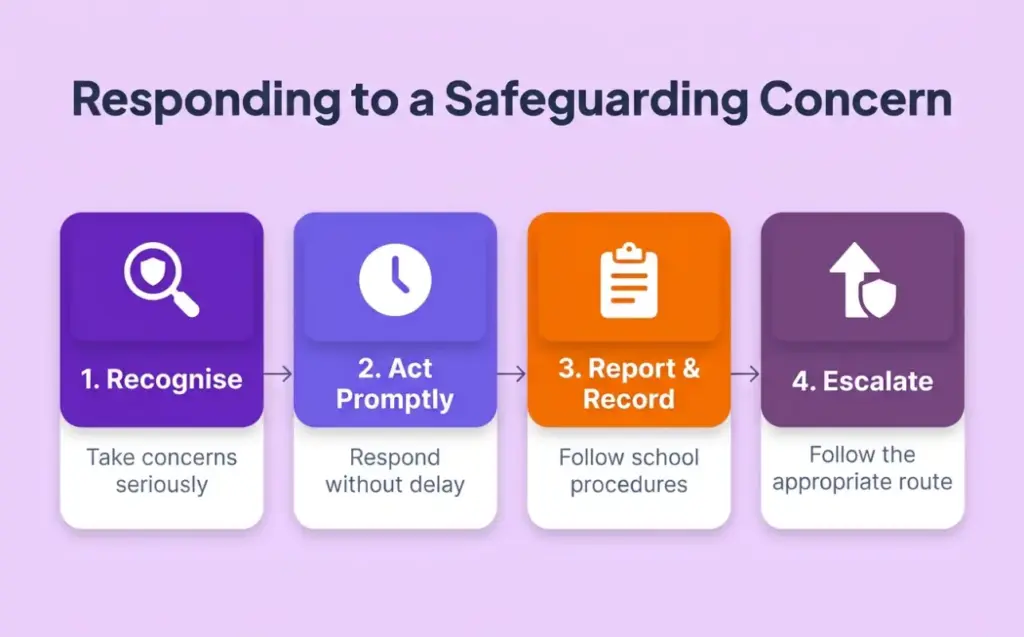
For school staff, the appropriate response generally involves four actions:
- 1. Recognise the concern. Take disclosures, observations or other worrying information seriously.
- 2. Act promptly. Raise concerns without waiting for proof of abuse or repeated incidents.
- 3. Report and record appropriately. Inform the designated safeguarding lead (DSL) or deputy and follow the school’s procedures for recording information.
- 4. Follow escalation procedures. If concerns remain unresolved, follow the appropriate reporting route. If a child is in immediate danger, call 999.
The Department for Education’s Keeping Children Safe in Education 2026 explains the safeguarding responsibilities of staff working in schools and colleges in England.
Following these procedures helps ensure concerns reach the appropriate professionals promptly.
Who Is Responsible for Safeguarding and Child Protection?
Safeguarding is a shared responsibility. Everyone working with children has a role in recognising concerns and maintaining a safe environment.
However, specific duties depend on professional roles and the setting.
Responsibilities of Teachers, Teaching Assistants and Childcare Staff
Teachers, teaching assistants, nursery practitioners and other staff need to understand their organisation’s safeguarding arrangements.
Their responsibilities commonly include:
- Recognising possible signs of abuse, neglect or other harm.
- Listening appropriately when a child raises a concern.
- Reporting concerns promptly.
- Recording information accurately and confidentially.
- Following relevant safeguarding policies and procedures.
When a child discloses a concern, staff should listen calmly, explain that information may need to be shared with appropriate professionals and follow the setting’s reporting procedures.
The Role of Safeguarding Leads and Statutory Agencies
In schools and colleges in England, the designated safeguarding lead plays a central role in coordinating safeguarding arrangements, supporting staff and liaising with relevant agencies.
For a closer look at how schools manage concerns and referrals, it helps to understand the responsibilities of a designated safeguarding lead
Where necessary, children’s social care may assess a child’s circumstances and determine whether statutory intervention is required.
Police, health professionals and other services may also become involved depending on the situation.
Safeguarding arrangements differ across England, Scotland, Wales and Northern Ireland. Practitioners should follow the national guidance and organisational procedures applicable to their setting.
Why Safeguarding Training Matters
Understanding safeguarding and child protection is particularly important for people entering education, childcare and other child-facing roles.
Appropriate training can help learners recognise concerns, understand reporting responsibilities and respond effectively within their professional roles.
When choosing a suitable online safeguarding course, it is useful to consider the topics covered and how the learning relates to workplace responsibilities.
NextGen Learning’s Safeguarding Children course covers safeguarding principles, child abuse, responding to disclosures, reporting and recordkeeping.
The course offers CPD certification and an optional QLS-endorsed certificate for its non-regulated training provision. Learners should check which training and certification arrangements are appropriate for their role.
Frequently Asked Questions
Yes. Child protection is a specific part of safeguarding. While safeguarding covers children’s overall safety, welfare and protection, child protection focuses on children who are suffering or likely to suffer significant harm.
Yes. Schools and childcare providers carry out safeguarding activities every day, including safe recruitment, supervision, risk management and maintaining appropriate policies. These measures support children’s safety even when no individual child protection concern has been identified.
No. Different concerns require different responses, including early help or additional support. Staff should report concerns through appropriate procedures so that the child’s needs and any risks can be assessed.
No. Child protection also concerns children who are likely to suffer significant harm. Appropriate intervention may therefore be needed before actual harm occurs, depending on the circumstances and professional assessment.
Conclusion
The difference between safeguarding and child protection lies mainly in their scope. Safeguarding covers the wider responsibility of promoting children’s welfare and protecting them from harm, while child protection focuses on children experiencing or at risk of significant harm.
Both are essential to keeping children safe. Understanding how they work together helps professionals recognise concerns, act promptly and support children’s wellbeing.

0 responses on "Safeguarding vs Child Protection: What's the Difference?"